
Fall colours starting to sneak in

Links that interest me and maybe you

From Cara Giaimo for Atlas Obscura: “Tony Diamond can’t remember exactly why he first shone a blacklight on a puffin. It was around 2010 or 2011, and the ecology professor was helping a graduate student investigate some questions about beak coloration. “For some reason, a colleague had brought a UV light,” he says now. “We thought, ‘Well, why don’t we see what happens.’” So they pointed the light at the bird in question—a preserved specimen—and switched it on. “We got a big surprise,” Diamond says. Under the blacklight, parts of the bird’s beak glowed brightly, as though it had been striped with fluorescent paint.” Such a glowy nose is certainly impressive. But if you threw a best-dressed contest at an all-bird disco, puffins would have some competition. As it turns out, a lot of avian species—from parrots and penguins to owls and nightjars—glow in ways we can’t see. What’s more, they do so using at least two different methods—and for a whole lot of different reasons, some of which remain mysterious to researchers.”

From Jay Owens for The Guardian: “Nobody normally thinks about dust, what it might be doing or where it should go: it is so tiny, so totally, absolutely, mundane, that it slips beneath the limits of vision. But if we pay attention, we can see the world within it. What do I mean by dust? I want to say everything: almost everything can become dust, given time. The orange haze in the sky over Europe in the spring, the pale fur that accumulates on my writing desk and the black grime I wipe from my face in the evening after a day traversing the city. Dust gains its identity not from a singular material origin, but instead through its form (tiny solid particles), its mode of transport (airborne) and, perhaps, a certain loss of context, an inherent formlessness. If we knew precisely what it was made of, we might not call it dust, but instead dander or cement or pollen. “Tiny flying particles,” though, might suffice as a practical starting definition.”
Editor’s note: If you like this newsletter, I’d be honoured if you would help me publish it by contributing whatever you can via my Patreon. Thanks!

From Jason Kottke: “Going to the movies used to be a somewhat different experience than it is today: people wandered into a theater at any point in a film and would just watch until it looped back around when they came in. This began to change in the 40s and 50s for a variety of reasons — theater owners and movie studios didn’t like it, movies were getting more complex, the rise of TV, etc. — but the real shift occurred with the premiere of Psycho in 1960. The studio put out a promotional blitz before it’s release stating that no one would be allowed entrance to the theater after the start of the film. In a practice later to be known as “fill and spill,” exhibitors hustled audiences in and out with military efficiency. Uniformed Pinkerton guards were on hand to enforce the policy.”
Note: This is a version of my personal newsletter, which I send out via Ghost, the open-source publishing platform. You can see other issues and sign up here.
Continue reading “Why do some birds glow under fluorescent light? Scientists aren’t sure”


From Katie Hafner and Ashraya Gupta for Scientific American: “Meitner’s realization drew upon recent work that Niels Bohr and other scientists had been doing on the structure of the atom. They proposed a liquid-drop model of the nucleus, where subatomic particles were held together by strong nuclear forces. Meitner realized that the nucleus was not indivisible after all. She seemed open to this insight in a way that other scientists weren’t– even Bohr himself. Together, Meitner and her nephew, Otto Robert Frisch, wrote and submitted a paper to the journal Nature. That paper was the first to use the term fission for the splitting apart of the nucleus. But because of the Nazi regime, her name is stripped off of every publication they ever submitted, ever published.”

From Karuna Eberl for Atlas Obscura: “The first time maritime archaeologist Joshua Marano stood at the mouth of Caesar Creek, something smelled fishy. Overlooking a snaking waterway of tangled emerald mangroves and silver-flanked snapper stood a lone interpretive sign. It featured a drawing of a courageous Black man wearing a tricornered hat and looking wistfully toward the horizon. Marano had heard about the pirate Black Caesar: an African chieftain shanghai’d into pirate life, or perhaps an escaped slave. Either way, the stories claimed that he plied the waters of southeastern Florida’s Biscayne Bay. He would lie in wait by careening his ship on its side, to conceal its mast below the mangroves of Caesar Creek. The rope looped through an iron ring fixed in a limestone boulder now known as Caesar’s Rock. When a vulnerable vessel came into view, he would chop the rope, set sail, and begin pursuit.”
Editor’s note: If you like this newsletter, I’d be honoured if you would help me publish it by contributing whatever you can via my Patreon. Thanks!

From Alex Corey for Londonist: “Jeremy Bentham was a philosopher and political radical, who formulated the theory of utilitarianism. In his will, Bentham requested that his body be preserved and fashioned into what he called an “auto-icon”, a task which was carried out by surgeon Thomas Southwood Smith. His body was given to the university in 1850, 18 years after his death. For decades, Bentham’s body was on display in a corridor of the Wilkins Building at UCL, housed inside a wooden cabinet. The head is made of wax, but the rest of his real skeleton lurks beneath his clothes. While the skeletal remains and wax head of Bentham remain in the Student Centre, his actual head remains out of public view elsewhere at UCL. The head was once stolen in a prank by students from the rival King’s College, and has ever since been kept under lock and key.”
Note: This is a version of my personal newsletter, which I send out via Ghost, the open-source publishing platform. You can see other issues and sign up here.
Continue reading “She discovered how to split the atom but was denied a Nobel Prize”
When Elon Musk first expressed interest in buying Twitter (now known as X) last year, a number of observers (including us) wondered what the world’s richest man could possibly want with an unprofitable social-media platform. Musk said that his interest in Twitter was driven in part by a desire to turn the platform—which he called the world’s “de facto town square”—into a bastion of free speech, and that he would see it as a victory if commenters from both the left and the right felt uncomfortable there. After his acquisition was finally completed in October, however, most of the changes Musk made seemed to favor the right. By December, the Atlantic tech writer Charlie Warzel had concluded that Musk had become a “far-right activist.”
Last week, we learned a little more about Musk’s motivations for buying Twitter when the Wall Street Journal published an excerpt from a new biography of Musk by Walter Isaacson, a former president of CNN and the author of a number of biographies, perhaps most notably of Steve Jobs. (The book will be released next week.) In April 2022, Isaacson reports, things were going well for Musk; shares of Tesla, his electric-vehicle company, had increased in value by about fifteen times in five years, and SpaceX, his other company, was also doing well. “It promised to be a glorious year, if only Musk could leave well enough alone,” Isaacson writes. “But that was not in his nature.” Instead, Musk’s nature was to behave impulsively. Per Isaacson, Musk decided to take over Twitter because it was “an addictive playground” and owning it would make him “king of the school yard.”
Musk told Isaacson that there was another aspect to his desire to acquire Twitter: his concern that American society had become infected with a “woke mind virus,” which he characterized as a “fundamentally anti-science, anti-merit, and anti-human in general” belief system. Unless it was stopped, he said, civilization would “never become multiplanetary.” According to Isaacson, Musk’s concern was triggered in part by Jenna, his eldest child, transitioning to a different gender and cutting off all contact with him. Jenna “went beyond socialism to being a full communist and thinking that anyone rich is evil,” Musk told Isaacson. He blamed her private school.
Continue reading “Elon Musk looks for someone to blame for Twitter’s decline, and this week it’s the ADL”
From Molly Rains for Science.org: “What has tusks, bristly hair, and is contaminated with dangerous levels of radiation? Visit Germany’s Bavarian mountain towns and you just may find out. The wild boars (Sus scrofa) that snuffle through the region’s forests are so radioactive that the country has ruled them unsafe to eat—but why these animals are so contaminated has proved a puzzle. The enduring radioactivity of Bavaria’s boars has traditionally been blamed on the 1986 meltdown of the Chernobyl nuclear power reactor, some 1300 kilometers away, but in a new study published recently in Environmental Science & Technology, scientists report that at least some of the radioactive elements in the bodies of the boars are likely the result of fallout from atomic bombs that detonated in our atmosphere more than 60 years ago.”
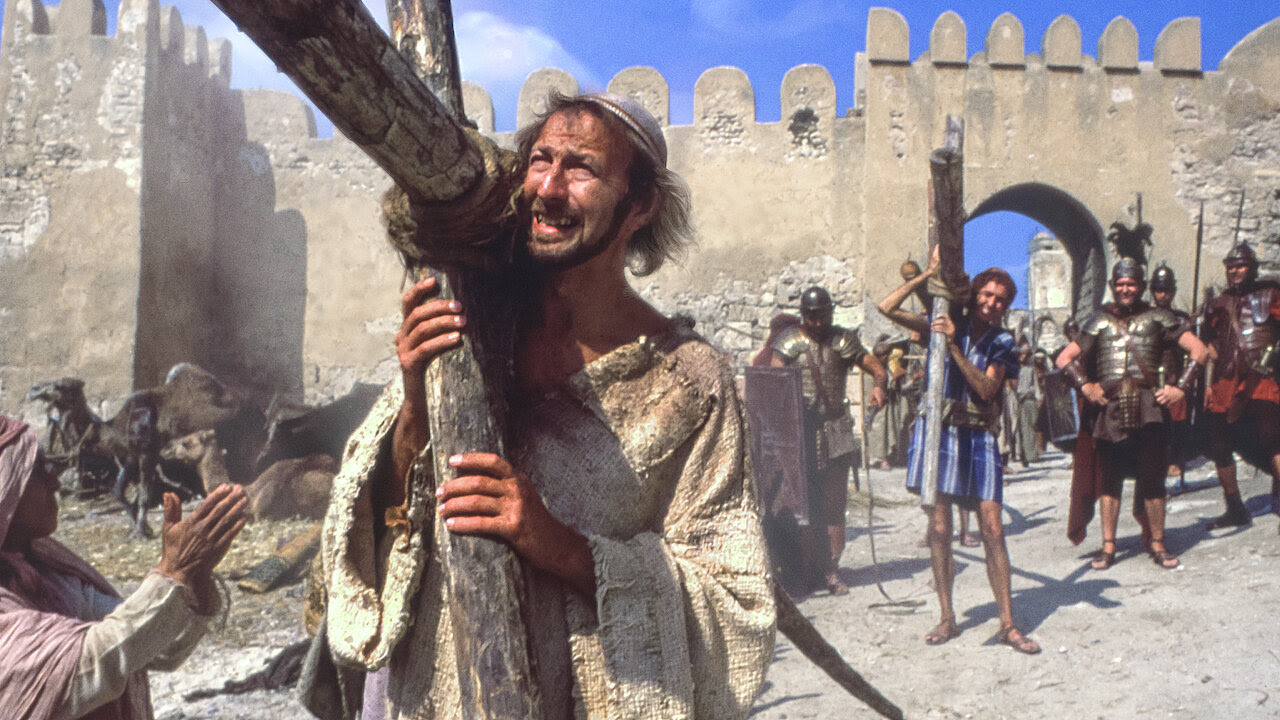
From the Los Angeles Times: “It was the late-1970s, and producer John Goldstone and Monty Python’s Flying Circus founding member Eric Idle trekked across the Atlantic with caps in hand to scramble together the money to make “Monty Python’s Life of Brian.” EMI Films had summarily backed out of the project. Some of the Python crew had become friendly with George Harrison over the years, “so Eric said ‘Why don’t we see whether George could help?” Goldstone remembered. “We went to his house in the Hollywood Hills, and he said, ‘Yeah, I’ll do it.’ And that was it.” Harrison put his English estate, Friar Park, up as collateral against a bank loan that covered the other half of the film’s $4-million budget.”
Editor’s note: If you like this newsletter, I’d be honoured if you would help me publish it by contributing whatever you can via my Patreon. Thanks!

From Emine Saner for The Guardian: “Chris Lewis, 43, didn’t intend to be stranded alone on an island, but when Covid hit during his walk of Britain’s coastline, he was in Shetland. Someone offered him and his dog, Jet, the use of a basic house on Hildasay, an uninhabited island more than a mile off the mainland. It had no running water, gas or electricity. He thought he would be on the island for three weeks or so, but he ended up living there for three months. He collected firewood and built ovens around the island, depending on that day’s wind direction. A boat would come every two or three weeks, weather allowing, to deliver coal and fresh water – he would have to lug it to the other side of the island – but Lewis lived largely off foraged food. On some days, he could catch lobsters in shallow water, but mainly he survived by eating whelks and limpets.”
Note: This is a version of my personal newsletter, which I send out via Ghost, the open-source publishing platform. You can see other issues and sign up here.
Continue reading “Scientists try to figure out why Germany’s wild boars are radioactive”

Editor’s note: This is so full of amazing parts it’s hard to pick just one! Please read it, even if you don’t know who Werner Herzog is. The link should hopefully take you around the paywall.
From Werner Herzog in The New Yorker: “Pittsburgh turned out to be a bad idea. For a start, the steel industry was almost dead, and the shuttered plants were rusting away. Second, Duquesne University was an intellectually impoverished place. Quitting school would have meant losing my visa and having to leave the United States. So I kept my registration. I slept on the sofas of various acquaintances and of my original host, a professor, forty but terrified of his mother, who forbade contact with female students and perhaps with women in general. A freak encounter changed everything. One day, it started raining, and the car drew up beside me. The woman wound down her window. She could give me a lift, she said. It was a two-minute drive to Fox Chapel. She said I’d do better staying with her; she had a spare room in her attic. Her place was just a quarter of a mile from his. And so I found myself adopted by a family.”
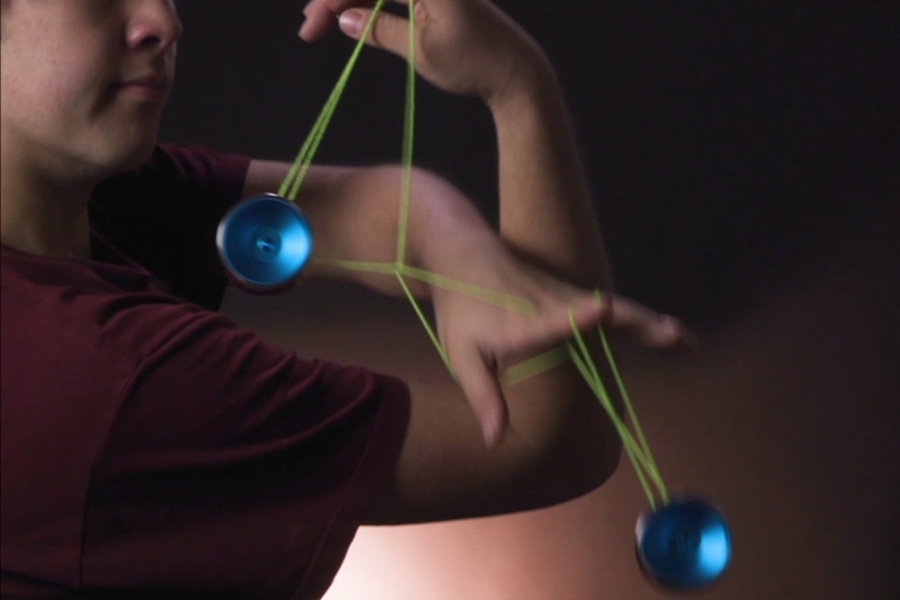
From Dan Lewis at Now I Know: “In late 1932, Syria experienced a significant lack of rainfall, and the results were dramatic. As Time magazine reported at the time, a handful of Muslim priests believed that the start of the drought coincided with the introduction of the yo-yo into Syrian society, or at least, with the newfound popularity of the toy in Syrian communities. (It’s not exactly clear when the yo-yo first came to Syria, but according to the CBC, there’s evidence that the Greeks used them as early as 500 BCE, so they probably weren’t brand new to Syria at the time.) So, as Time Magazine reported at the time, the priests approached the government and argued that “the up-and-down movement of these infidel tops counteracts the prayers of the pious for rain. [ . . .] Rain will never fall again in Syria while the wicked play with yo-yos.”
Note: This is a version of my personal newsletter, which I send out via Ghost, the open-source publishing platform. You can see other issues and sign up here.
Continue reading “Werner Herzog on the mysteries of Pittsburgh and his second family”
From Michael Levenson for The New York Times: “Let this be a warning to those of you who long to hit the open road with a 2,200-pound steer riding shotgun: Observe all traffic laws, especially when passing through Norfolk, Neb. Lee Meyer, 63, a retired machinist, learned that lesson on Wednesday. For seven years, Mr. Meyer has been chauffeuring his 2,200-pound Watusi-longhorn mix (whose name is Howdy Doody) with its horns and head exposed to the open air in a customized Ford Crown Victoria with the license plate “Boy & Dog.” But he had never been stopped by the police, he said, until Wednesday morning as he drove Howdy Doody into Norfolk from his 15-acre ranch.”

From Adam Mann for Quanta magazine: “It sounds like one of the easiest experiments possible: Take two cups of water, one hot, one cold. Place both in a freezer and note which one freezes first. Common sense suggests that the colder water will. But luminaries including Aristotle, Rene Descartes and Sir Francis Bacon have all observed that hot water may actually cool more quickly. Yet for more than half a century, physicists have been arguing about whether something like this really occurs. The modern term for hot water freezing faster than cold water is the Mpemba effect, named after Erasto Mpemba, a Tanzanian teenager who, along with the physicist Denis Osborne, conducted the first scientific studies of it in the 1960s. While they were able to observe the effect, follow-up experiments have failed to consistently replicate that result.”
Note: This is a version of my personal newsletter, which I send out via Ghost, the open-source publishing platform. You can see other issues and sign up here.
Continue reading “Why yes, officer, that is a longhorn steer sitting in the passenger seat”
(via Kottke.org) Market researcher Clotaire Rapaille was interviewed for an episode of Frontline on advertising and marketing back in 2003, and he talked about the differences in how the French and Americans think about cheese:
For example, if I know that in America the cheese is dead, which means is pasteurized, which means legally dead and scientifically dead, and we don’t want any cheese that is alive, then I have to put that up front. I have to say this cheese is safe, is pasteurized, is wrapped up in plastic. I know that plastic is a body bag. You can put it in the fridge. I know the fridge is the morgue; that’s where you put the dead bodies. And so once you know that, this is the way you market cheese in America.
I started working with a French company in America, and they were trying to sell French cheese to the Americans. And they didn’t understand, because in France the cheese is alive, which means that you can buy it young, mature or old, and that’s why you have to read the age of the cheese when you go to buy the cheese. So you smell, you touch, you poke. If you need cheese for today, you want to buy a mature cheese. If you want cheese for next week, you buy a young cheese. And when you buy young cheese for next week, you go home, [but] you never put the cheese in the refrigerator, because you don’t put your cat in the refrigerator. It’s the same; it’s alive. We are very afraid of getting sick with cheese. By the way, more French people die eating cheese than Americans die. But the priority is different; the logic of emotion is different. The French like the taste before safety. Americans want safety before the taste.

From Corey Killgannon for the New York Times: “Thomas Fitzpatrick turned a barroom bet into a feat of aeronautic wonder by stealing a plane from a New Jersey airport and landing it on St. Nicholas Avenue in northern Manhattan, in front of the bar where he had been drinking. As if that were not stupefying enough, the man did nearly the exact same thing two years later. Both landings were pulled off in incredibly narrow landing areas, in the dark – and after a night of drinking in Washington Heights taverns and with a well-lubricated pilot at the controls. Both times ended with Mr. Fitzpatrick charged with wrongdoing. The first of his flights was around 3 a.m. on Sept. 30, 1956, when Mr. Fitzpatrick, then 26, borrowed a single-engine plane from the Teterboro School of Aeronautics in New Jersey and landed on St. Nicholas Avenue near 191st Street.”

From Samantha Cole for Vice: “Researchers at Carnegie Mellon University developed a method for detecting the three dimensional shape and movements of human bodies in a room, using only WiFi routers. To do this, they used DensePose, a system for mapping all of the pixels on the surface of a human body in a photo. DensePose was developed by London-based researchers and Facebook’s AI researchers. From there, according to their recently-uploaded preprint paper published on arXiv, they developed a deep neural network that maps WiFi signals’ phase and amplitude sent and received by routers to coordinates on human bodies. The Carnegie Mellon researchers wrote that they believe WiFi signals “can serve as a ubiquitous substitute” for normal RGB cameras, when it comes to “sensing” people in a room. Using WiFi, they wrote, overcomes obstacles like poor lighting and occlusion that regular camera lenses face.”
Note: This is a version of my personal newsletter, which I send out via Ghost, the open-source publishing platform. You can see other issues and sign up here.
Continue reading “He landed a plane on a New York street outside a bar – twice”

In 2018, a new European law called the General Data Protection Regulation, or GDPR, took effect. With the stroke of a pen, a host of common online practices—used by everyone, from big tech companies like Google to small web publishers, for everything, from showing popup ads to requiring an email address to enter a website—suddenly became illegal in the European Union, or at least heavily regulated. Consent was required before any personal information could be collected or used—and the EU’s definition of personal information was considerably broader than the US definition. Elizabeth Denham, the information commissioner for the UK, called the GDPR “the biggest change to data protection law for a generation.” Others were less diplomatic: one critic described the law as a “clunky bureaucracy” and a regulatory minefield that shackled businesses with “unnecessary red tape.”
If tech platforms thought that the GDPR was the end of their problems in the EU, they were mistaken: the law was only the lip of a wave of European regulatory activity aimed at the online world, and specifically the behavior of digital giants like Meta, Google, and Apple. These new laws have targeted everything from alleged anti-competitive practices to the ways in which personal data is used to customize search results and news feeds. Brian Wieser, a technology analyst and former investment banker, told the Wall Street Journal recently that the laws are a “Glass-Steagall moment for big tech,” a reference to a Depression-era law that supporters believe was instrumental in reining in anti-competitive behavior by banks. As a result, Wieser said, tech platforms are going from “effectively no regulation to heavy regulation.”
Unlike the GDPR, which targeted all online activity, the new European laws are focused primarily on the largest digital platforms and services. Two of the most significant new regulations are the Digital Services Act, or DSA, and the Digital Markets Act, or DMA. Under the former, which governs everything from the removal of illegal or harmful content to the retention of personal user data, any time a service such as Facebook removes content, they have to file that decision with the EU, as part of a public database. Platforms with more than forty-five million users in the EU—a figure equivalent to roughly 10 percent of the bloc’s population—are subject to the highest level of regulation. (The EU has listed nineteen companies covered by the Act but there is still debate as to who should be included; according to the Associated Press, some EU insiders have pointed to notable omissions such as eBay, Airbnb, Netflix, and even PornHub.) TikTok, which is on the list, said earlier this month that users in the EU will soon be able to turn off the service’s recommendation algorithm, because, under the DSA, users have the right to refuse any feature that relies on personal data-tracking. Likewise, Meta has said that EU users of Facebook and Instagram will be allowed to opt out of their algorithmic news feeds.
Note: This was originally published as an email newsletter for the Columbia Journalism Review, where I am the chief digital writer
Continue reading “European regulatory vise tightens around digital platforms”
From Jesse Hyde for Town and Country: “The heist had been planned for months. They had run through the scenarios, studied the streets and bridges and tunnels, scouted the escape routes, purchased the burner phones, and secured the getaway cars. Most important, they had uncovered secrets about the museum. It was November 25, 2019, in Dresden, Germany. The night was dark and cold, the air carrying the musky scent of the nearby Elbe River. Three centuries earlier, Augustus the Strong had built his palace on the banks of the river and stuffed it full of jewels: mother-of-pearl goblets, gilded ostrich eggs, coconuts inlaid with gemstones, and knives of gold etched with wild boars and the heads of lions. Rooms and rooms of sapphires, emeralds, and rubies. By 1723, Augustus, the Elector of Saxony and King of Poland, had turned part of his Dresden castle into a museum, one of the first in Europe. He named it the Green Vault.”
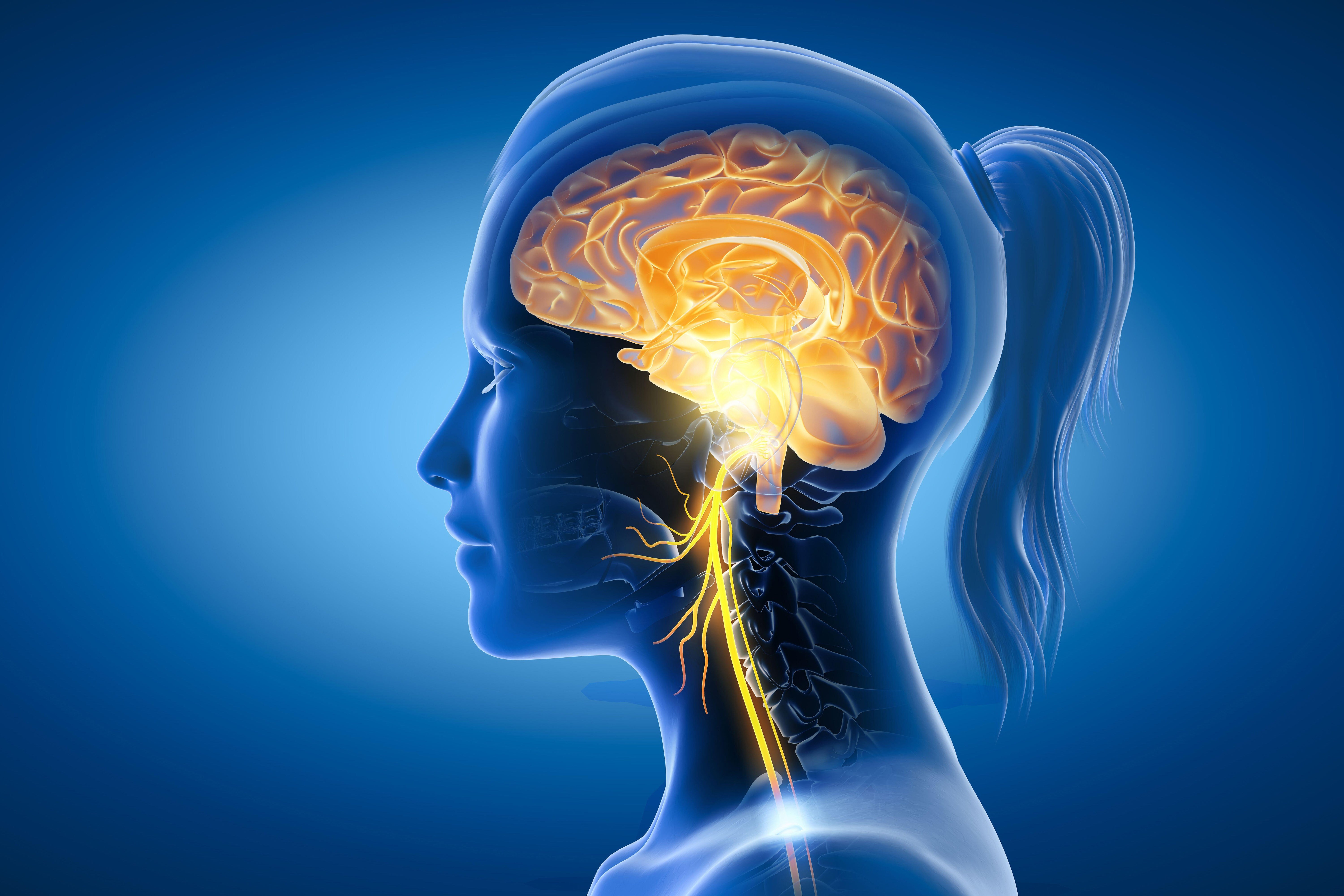
From Linda Geddes for The Guardian: “Scientific interest in vagus nerve stimulation is exploding, with studies investigating it as a potential treatment for everything from obesity to depression, arthritis and Covid-related fatigue. So, what exactly is the vagus nerve, and is all this hype warranted? The vagus nerve is, in fact, a pair of nerves that serve as a two-way communication channel between the brain and the heart, lungs and abdominal organs, plus structures such as the oesophagus and voice box, helping to control involuntary processes, including breathing, heart rate, digestion and immune responses. They are also an important part of the parasympathetic nervous system, which governs the “rest and digest” processes, and relaxes the body after periods of stress or danger that activate our sympathetic “fight or flight” responses.”
Note: This is a version of my personal newsletter, which I send out via Ghost, the open-source publishing platform. You can see other issues and sign up here.
Continue reading “The real story behind the great Green Vault jewelery heist”