
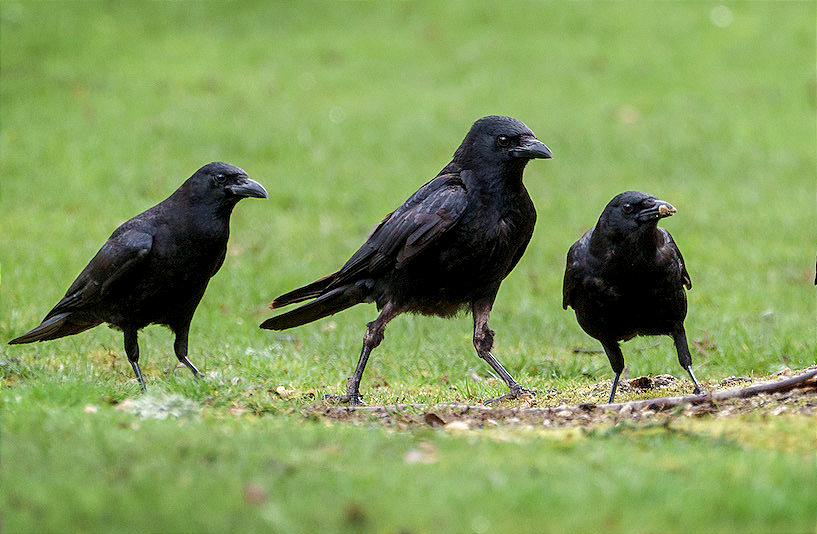
CrowTrax, a website started eight years ago by Jim O’Leary, a Vancouver resident, has received more than 8,000 reports of crow attacks in the leafy city, where crows are relatively abundant. And such encounters stretch well beyond the Pacific Northwest. A Los Angeles resident described crows attacking his house, slamming their beaks against his glass door to the point where he was afraid it would shatter. An artist in Brunswick, Maine said crows destroyed the wiper blades of dozens of cars in the parking lot of his senior living apartment complex. Crows can mimic human speech, use tools and gather for what seem to be funeral rites when a member of their group dies or is killed. They can identify and remember faces, even among large crowds. When a murder of crows singles out a person as dangerous, its wrath can be passed along beyond an individual crow’s life span of up to a dozen years, creating multigenerational grudges.(via the NYT)
In 1828 serial killers sold the bodies of their victims to medical schools
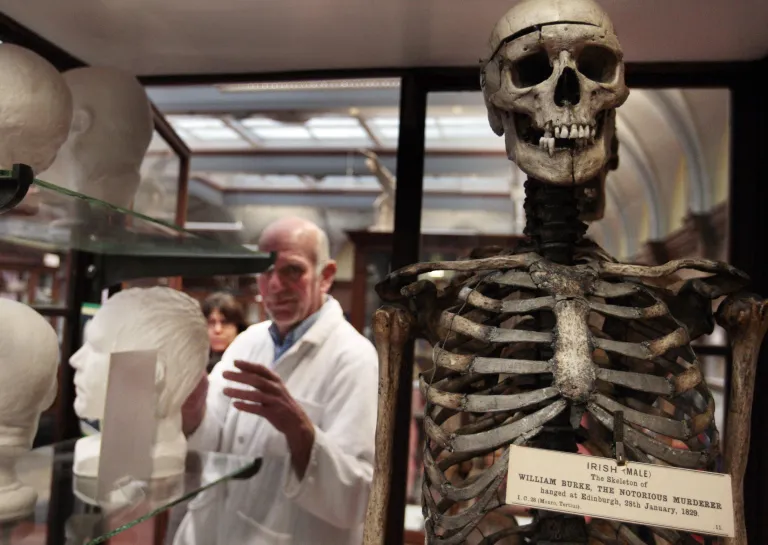
In the early 1800s, surgery was booming. Scottish surgeon John Hunter had helped bring a scientific view to Western medicine. One of the leading lights in this burgeoning field was Hunter’s compatriot Robert Knox, who ran an anatomy school in Edinburgh. But by 1827, Knox had hit a roadblock. A change to regulations meant that dissection had become an important part of the medical curriculum. Knox’s school would require more than 400 bodies the following year. Citizens had no legal way to donate their bodies to medical science. But where there’s a demand, supply will follow. Across the city, two other men also had a problem. William Hare owned a lodging house with his wife near Edinburgh’s Grassmarket and made friends with William Burke. One day in early 1828, Hare discovered one of his tenants had died overnight. Even worse, the dead man still owed him rent. They carried the corpse to Knox’s door. There, he paid them £7 and 10 shillings; more than a month’s wages. (via Popular Science)
Note: This is a version of my When The Going Gets Weird newsletter, which I send out via Ghost, the open-source publishing platform. You can see other issues and sign up here.
Continue reading “Scientists say crows pass their grudges down to their offspring”