
Renaissance horses

Links that interest me and maybe you
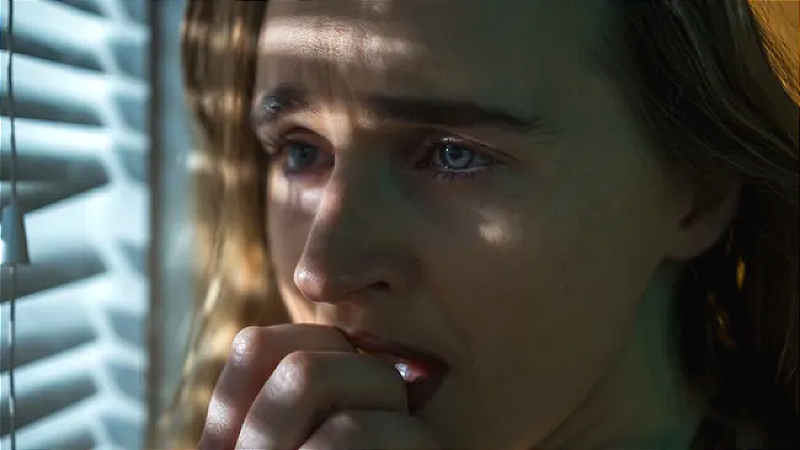
As the woman was reading, she heard an unfamiliar voice say, “Please don’t be afraid. I know it must be shocking for you to hear me speaking to you like this, but this is the easiest way I could think of. My friend and I used to work at the Children’s Hospital, Great Ormond Street, and we would like to help you.” The woman said the disembodied voice then attempted to convince her of its sincerity by providing three pieces of information and suggesting that she check their veracity as proof. The woman confirmed that they were correct. At the clinic, a psychiatrist diagnosed the woman with “functional hallucinatory psychosis.” The patient then went on vacation. Although she was still taking thioridazine, the voices came back, telling her she needed to go home immediately for medical treatment. These voices gave her the address of a hospital, and urged her to schedule a brain scan because she had a tumor. (via Live Science)
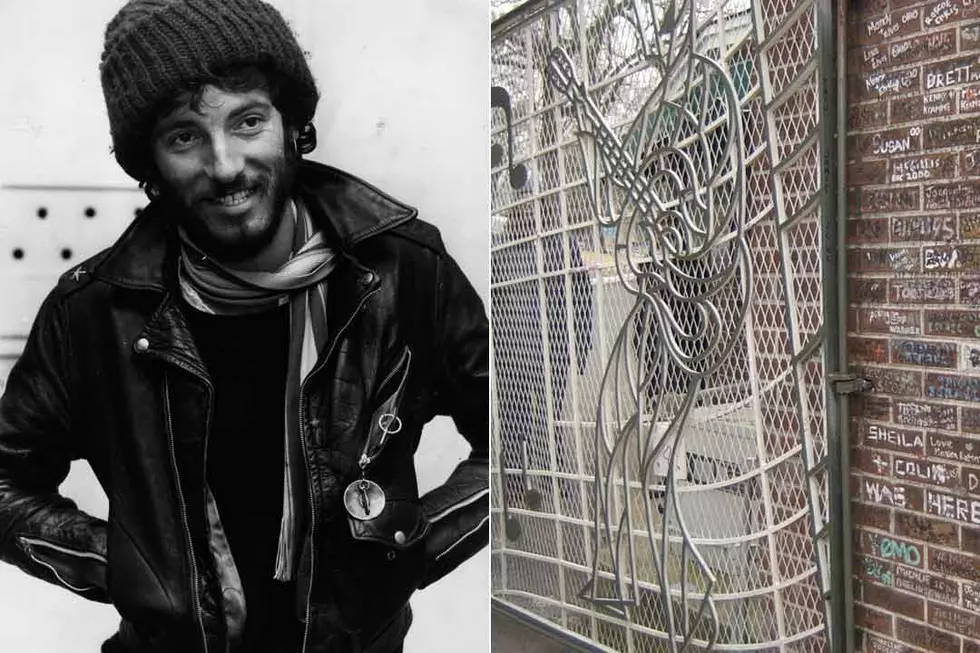
Things were a lot different in 1976. For one thing, Bruce Springsteen wasn’t a huge star yet. For another, Elvis Presley, one of his biggest musical heroes, was still alive. All of this came crashing together on April 29 of that year, when Springsteen tried to get into Graceland, Presley’s mansion in Memphis. Springsteen took a late-night cab ride to the King’s home following his show in town supporting Born to Run, his third album and the one that would launch him into the spotlight. Noticing a light on inside, Springsteen jumped the gated wall and ran to the front door in hopes of meeting his lifelong idol. But security stopped Springsteen before he had a chance to even knock on the door and asked what was going on. Springsteen inquired, “Is Elvis home?” He was told, “No, Elvis isn’t home, he’s in Lake Tahoe” – which was true. It was also 3AM, so even if he was home, he probably wasn’t going to open his door. (via Ultimate Classic Rock)
Note: This is a version of my When The Going Gets Weird newsletter, which I send out via Ghost, the open-source publishing platform. You can see other issues and sign up here.
Continue reading “The voices told her she had a brain tumor and they were right”As the woman was reading, she heard an unfamiliar voice say, “Please don’t be afraid. I know it must be shocking for you to hear me speaking to you like this, but this is the easiest way I could think of. My friend and I used to work at the Children’s Hospital, Great Ormond Street, and we would like to help you.” The woman said the disembodied voice then attempted to convince her of its sincerity by providing three pieces of information and suggesting that she check their veracity as proof. The woman confirmed that they were correct. At the clinic, a psychiatrist diagnosed the woman with “functional hallucinatory psychosis.” The patient then went on vacation. Although she was still taking thioridazine, the voices came back, telling her she needed to go home immediately for medical treatment. These voices gave her the address of a hospital, and urged her to schedule a brain scan because she had a tumor. (via Live Science)
Things were a lot different in 1976. For one thing, Bruce Springsteen wasn’t a huge star yet. For another, Elvis Presley, one of his biggest musical heroes, was still alive. All of this came crashing together on April 29 of that year, when Springsteen tried to get into Graceland, Presley’s mansion in Memphis. Springsteen took a late-night cab ride to the King’s home following his show in town supporting Born to Run, his third album and the one that would launch him into the spotlight. Noticing a light on inside, Springsteen jumped the gated wall and ran to the front door in hopes of meeting his lifelong idol. But security stopped Springsteen before he had a chance to even knock on the door and asked what was going on. Springsteen inquired, “Is Elvis home?” He was told, “No, Elvis isn’t home, he’s in Lake Tahoe” – which was true. It was also 3AM, so even if he was home, he probably wasn’t going to open his door. (via Ultimate Classic Rock)
Note: This is a version of my When The Going Gets Weird newsletter, which I send out via Ghost, the open-source publishing platform. You can see other issues and sign up here.
Continue reading “The voices told her she had a brain tumor and they were right”
The FBI is looking for any connections among the recent deaths and disappearances of at least 10 scientists who had ties to government science projects or other sensitive information. Those who have died or disappeared include a nuclear physicist and MIT professor fatally shot outside his Massachusetts residence, a retired Air Force general missing from his New Mexico home, and an aerospace engineer who disappeared during a hike in Los Angeles. The announcement comes after the cases were highlighted by President Donald Trump and Republican lawmakers; growing online speculation hinted at a link between the incidents, although there is no known evidence of any connections among the individual researchers other than the nature of their respective jobs and the fact that none of the incidents occurred before 2022. The most recent case involves retired Air Force Maj. Gen. William Neil McCasland, who disappeared, along with a gun and his wallet, in February. (via Scientific American)

It was a Wednesday morning in April, and Annie Judis had transformed the kitchen of her Beverly Hills mansion into a film set. With her iPhone balanced on a stand, the 82-year-old adjusted the lighting and smoothed her costume: an aqua spandex workout set that revealed a hint of cleavage, a matching head wrap and tinted glasses. When it was showtime, her housekeeper hit play on her adopted theme song, the peppy anthem “Good Morning,” by Max Frost. Smiling from ear to ear, Ms. Judis started jumping rope and didn’t stop for a full minute. “Come on, everybody, let’s move it, let’s go!” she said to the camera. She does this routine nearly every morning, greeting her 187,000 Instagram followers and reminding them: “You’re going to need that energy for the grandkids.” Ms. Judis currently holds the Guinness World Record for oldest competitive rope skipper. She also thrives on having an audience: If she doesn’t share a workout, she said, it’s like it never happened. (via the New York Times)
Note: This is a version of my When The Going Gets Weird newsletter, which I send out via Ghost, the open-source publishing platform. You can see other issues and sign up here.
Continue reading “FBI is looking into the suspicious deaths of 10 top scientists”
I recently wrote a feature piece for a new Canadian-owned media outlet called Be Giant about Gander Social, a new Canadian-owned and operated social-media app that is still in beta testing, and the broader debate around what some call “digital sovereignty.”
Here’s an excerpt:
Over the past few decades, the vast majority of our essential communications infrastructure has become entirely American. From the Slack messages we send at work to our X posts and our Instagram stories and Facebook Reels to the search engines and shopping platforms we use: all American. Even the undersea cables over which our digital communications flow were built by U.S. companies. That reality has become a lot more uncomfortable of late, and many Canadians are now thinking about what’s come to be called “digital sovereignty.” Should we have our own homegrown services? Is that even possible at this point? And if we had Canadian alternatives, would anyone use them?
You can read the rest here: https://www.begiant.ca/stories/ideas/canada-digital-sovereignty-gander-social


It was 2004. I was 31. I was up for several days on meth and drinking heavily for the past month or so. I decide to go rob a bank and take my son to Tijuana, Mexico to see my biological father – his new grandpa. I’ve recently been discharged from parole. I take this new freedom as a chance to use drugs uncontrollably and drink like a mad man. I sit down on my chair and snatch a piece of scratch paper off my desk and write a bank robbery note. Later, as we proceed with the trial, I sit in the courtroom in a suit and tie, looking as innocent as possible. The D.A. walks in with a huge poster board and easel. He turns to the audience, then back to the jury and asks the judge for permission to enter exhibit D. The judge grants this wish. It’s my banknote. Written in big bold black letters on a torn piece of a brown paper bag that I get from liquor stores. “Please give me all of your money,” it reads, “or i will tickle you to death put the money in the paper bag i have a pisol in my pocket. Have a nice day the paper bag bandit.” (via Dreamland)

In 89 B.C.E., Pompeii was under siege. An invading army of tens of thousands of soldiers led by Lucius Cornelius Sulla stormed the town’s walls with slings and catapults. The siege subdued the rebellious city back beneath the thumb of the Roman Republic. Recently discovered damage on Pompeii’s fortification walls likely resulted from this fateful siege — and some of it may have come from a deeply mysterious ancient “machine gun,” researchers reported recently. Excavations and surveys conducted since 2024 have revealed several clusters of gouges in Pompeii’s northern fortification walls that were pristinely preserved by the eruption of Mount Vesuvius in C.E. 79. The marks are arrayed in a way that suggests they may have been left by a repeating dart-thrower called a polybolos. “It was an antipersonnel weapon used to strike archers emerging from the battlements above and the postern below,” says study lead author Adriana Rossi. The machine “had been described in detail but had never before been unearthed in any archaeological find or material evidence.” (via Scientific American)
Note: This is a version of my When The Going Gets Weird newsletter, which I send out via Ghost, the open-source publishing platform. You can see other issues and sign up here.
Continue reading “A strange bank robbery with one of the great notes of all time”

In 1966, when seamstresses at the International Latex Corporation arrived at its new Apollo Suit shopfloor in Frederica, Delaware, they were essentially “taught to sew again from scratch.” And for good reason: Compared to the company’s bras and girdles, the craftsmanship needed to fashion a spacesuit was, in every sense, out of this world. The journey to this point had been improbable for a company whose grand name had initially belonged to a single founder and salesman, Abram Spanel, selling mail-order girdles through magazine ads. It was only thanks to one of Spanel’s first employees — his own TV repairman, MIT dropout Leonard (Lenny) Shepard — that ILC maintained a small “industrial” division researching government contracts. Shepard was optimistic that the firm’s expertise in rubber, nylon, and strapping could provide an answer to work in space. (via MIT Press)

Canadian-born actor Michael J. Fox, while working on a CBC sitcom as a teenager, contracted a virus that some researchers say may have caused him to later develop Parkinson’s disease. Fox worked on show Leo and Me in Vancouver in 1977. Researchers studying the degenerative disease theorize that exposure to viruses or environmental toxins can trigger its onset years later. According to Dr. Donald Calne, director of the Neurodegenerative Disorders Centre at the University of B.C. Hospital, Parkinson’s can develop in clusters of people. Fox is one of four Leo and Me workers who have been diagnosed with Parkinson’s, which leads to muscle rigidity, tremors and involuntary movements. Japanese researchers have established that a virulent form of the flu, caused by a virus, can make its way into the same part of the brain that Parkinson’s attacks. (via the CBC)
Note: This is a version of my When The Going Gets Weird newsletter, which I send out via Ghost, the open-source publishing platform. You can see other issues and sign up here.
Continue reading “When a bra maker got the job of making the first NASA spacesuit”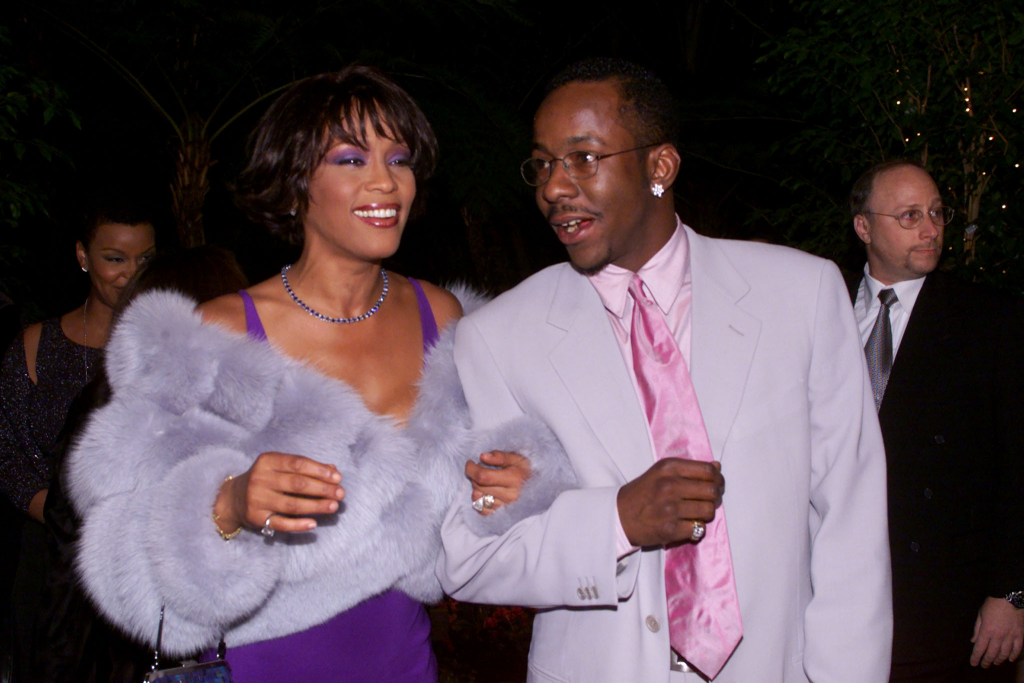
Brown says he was unaware his mother sold cocaine to support the family and while away, he decided to fry chicken, a meal his mother taught him to cook. He grabbed a bag of what he believed was flour to coat the chicken. His mother would later return, elated he took initiative to cook dinner, but soon realized he mistook the bag of cocaine for flour. “I was 10. So I didn’t recognize the strange smell emanating from the pan,” Brown writes. “After I had taken a few bites and feeling weirder with each bite, my mother walked in. With horror she realized what I had done,” he wrote. “I fried chicken in her cocaine — a radical new addition to the family’s culinary offerings. Cocaine chicken.” Brown says his mother never explained to him what he did, but months later he figured it out. (via Vibe)
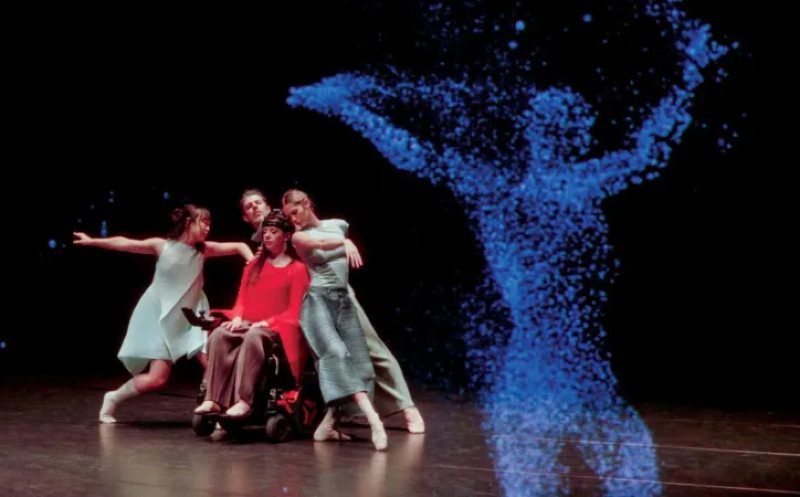
A ballerina with Amyotrophic Lateral Sclerosis (ALS) says she was able to dance again after her brainwaves were used to power an avatar live on-stage in Amsterdam. Breanna Olson, a mother of three, found out two and a half years ago she had ALS, the most common form of motor neurone disease (MND) and which, with no known cure, weakens muscles and over time affects speech, swallowing and breathing. However, using sensors to measure the electrical activity transmitted from her brain, her motor signals could be converted into an digital avatar. Breanna used an electroencephalogram (or EEG) headset to capture her brain activity and specific motor signals associated with imagining certain dance movements. A brainwave interface translating these signals into computer instructions then allowed her to convey which of these movements she wanted her mixed-reality avatar to dance in real-time. (via the BBC)
Note: This is a version of my When The Going Gets Weird newsletter, which I send out via Ghost, the open-source publishing platform. You can see other issues and sign up here.
Continue reading “Bobby Brown fried chicken in cocaine when he was 10”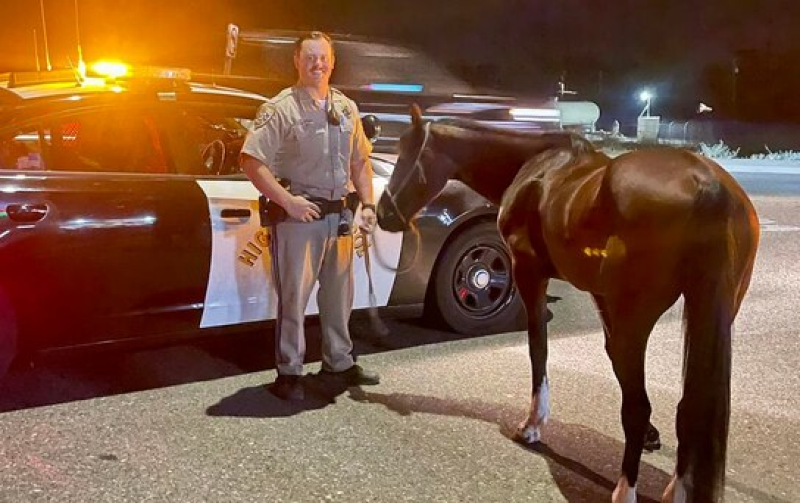
The driver, Kentucky cops say, had just left a liquor store, smelled of alcohol, and was found “partially slumped over” the controls of his brown vehicle. As a result, Jorge Hernandez, 48, was arrested for galloping under the influence (GUI) through a residential neighborhood in Bowling Green. According to an arrest report, an officer spotted the sagging Hernandez atop a horse around 6 PM Thursday. When Hernandez began to ride on the sidewalk, the cop performed a traffic stop. Hernandez reportedly smelled of alcohol, had bloodshot eyes, and his speech was slurred. He told police that he had just left a liquor store and was returning home. Tied to the horse’s saddle was a liquor store bag, the report states. He was arrested for operating a non-motor vehicle under the influence of intoxicants. The paperwork describes his vehicle’s make and model as “other.” The vehicle’s year is listed as 2024 and its color as brown. The report does not indicate who took custody of the equine post-arrest. (via The Smoking Gun)

Located in Adams County, Ohio, the ancient site features a massive, undulating serpent whose coiled tail and gaping jaws have stood as an impressive monument to the Buckeye State’s ancient past, prompting serious investigations by archaeologists that have spanned nearly two centuries. First documented in the landmark work Ancient Monuments of the Mississippi Valley in 1848 by Ephraim Squier and Edwin Davis, the famous site features many peculiarities, including the large oval-shaped feature positioned within the serpent’s open mouth. “This oval is formed by an embankment of earth, without a perceptible opening,” Squier and Davis wrote, noting that the feature “is perfectly regular in outline” and “slightly elevated” while also containing an area of “large stones, much burned once, [that] existed in its center.” (via The Debrief)
Note: This is a version of my When The Going Gets Weird newsletter, which I send out via Ghost, the open-source publishing platform. You can see other issues and sign up here.
Continue reading “Kentucky cops arrest man for riding a horse while drunk”
Twenty-two people went on trial in France on Monday on charges of murder and other serious crimes centred on members of a Masonic lodge accused of running hit squads. Thirteen of the defendants face life imprisonment. Those in the dock include four military personnel from France’s foreign intelligence service (DGSE), two police officers, a retired domestic intelligence officer, a security guard and two business executives. They are accused of the murder of a racing driver, the attempted murders of a business coach and a trade unionist, aggravated assault and criminal conspiracy – all on behalf of a mafia network inside the former Athanor Masonic Lodge in the Paris suburb of Puteaux. Several freemasons from the 20 or so members of the lodge are in the dock. Most of the accused, aged between 30 and 73, have no previous criminal records. (via France24)

In 1976, Chris Espinosa rode his moped a mile and a half every Wednesday afternoon, parked it and went to work. Just 14 years old, he still had to go to school and didn’t have a driver’s license. But his employer, Apple Computer, had customers who wanted to try its earliest computer, and Espinosa was responsible for demonstrating it. Espinosa’s job has changed many times in the 50 years since. But he still works for Apple. At 64 he is one among an increasingly rare breed in today’s economy: people who have spent all of their lives working for one company. When Steve Jobs and Steve Wozniak signed the documents to start Apple in 1976, Silicon Valley’s fruit orchards hadn’t yet been taken over by office parks. Espinosa became employee No. 8 at the scrappy start-up that assembled computers by hand in Mr. Jobs’s home. (via the New York Times)
Note: This is a version of my When The Going Gets Weird newsletter, which I send out via Ghost, the open-source publishing platform. You can see other issues and sign up here.
Continue reading “A Masonic lodge in France harbored a mafia hit squad”