
The plot to topple the US government after World War I

In July 1933, former Marine General Smedley Butler was visited by a pair of gentlemen who had come to urge him to run for the office of National Commander of the American Legion, an influential organization of veterans. Though Butler declined the invitation, one of the men⁠— Gerald MacGuire⁠— made several subsequent visits during which he disclosed additional details. He claimed to represent The Committee for a Sound Dollar, whose primary purpose was to pressure the president to reinstate the gold standard. He implied that his organization had the support of several political leaders, and the financial backing of some of the country’s most affluent individuals and successful corporations. The credibility of MacGuire’s claims was reinforced when he produced evidence of considerable cash resources and made some eerily accurate predictions regarding personnel changes in the White House. He also described the still-secret American Liberty League, a high-profile group whose principal players were wealthy Americans, including the leaders of DuPont, JP Morgan, US Steel, General Motors, Standard Oil, Colgate, Heinz Foods and Chase National Bank. (via Damn Interesting)

The Mayo Clinic apologizes because its founder dug up the corpse of an indigenous man
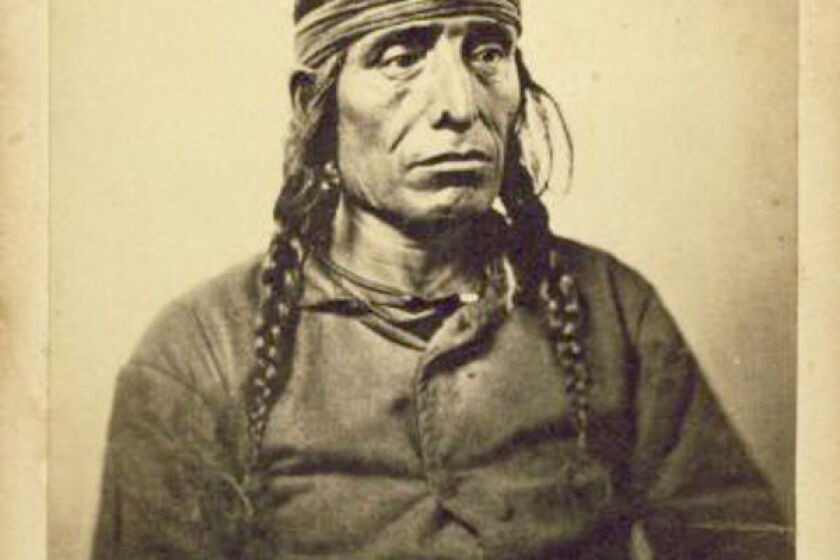
For 156 years, the Santee Dakota people have waited for what happened in a casino conference room in Santee, Neb., a few weeks ago. The Mayo Clinic apologized for the desecration of Marpiya Okinajin, known as “Cut Nose,” who was hanged in 1862 in Mankato, Minn., one of 38 Native Americans executed under orders from President Abraham Lincoln in the largest mass execution in U.S. history. The Santee tribe was forced from Minnesota. Cut Nose was buried in a shallow grave. But a doctor dug up the body, “carted the corpse to his office, dissected it, melted off the flesh and made a skeleton he studied and allowed his children to play with,” columnist Matthew Hansen writes at the Omaha World Herald. The doctor was William Mayo, founder of the Mayo Clinic, where Cut Nose’s skull remained on display until it was returned in 1998. Mayo had a practice in Le Sueur, Minn. Earlier this year, officials of the Mayo Clinic contacted a descendant who is also a Mayo employee, and asked if it would be OK to establish a scholarship that would allow one Native American student a year to go to medical school free. (via NewsCut)

Note: This is a version of my When The Going Gets Weird newsletter, which I send out via Ghost, the open-source publishing platform. You can see other issues and sign up here.

Continue reading “The plot to topple the US government after World War I”

You may be a risk-taker because of this parasite that lives in cats

The organism in question is a protozoan, meaning a single-celled animal, and it’s called Toxoplasma gondii. It’s one of the most successful parasites on the planet. Depending on which country’s serology data you look at, somewhere between eleven per cent of Americans, thirty per cent of the world’s population, and above eighty per cent of the historic French are estimated to be carrying it right now. Most of them have no idea. Most of them never will. In immunocompetent adults, latent Toxoplasma infection produces no measurable symptoms for the rest of the person’s life. But it does something almost nobody knows about, which is that it settles into the brain and stays there, forming small cysts of dormant parasite cells inside the neurons and glia of its human hosts, and quietly doing whatever it’s doing to the tissue around them. What that is, in rodents, has been extensively documented. What it might be, in humans, is one of the more interesting open questions in modern neurobiology. (via Space Daily)

“Mad honey” made in Nepal will stop your heart if you eat too much of it

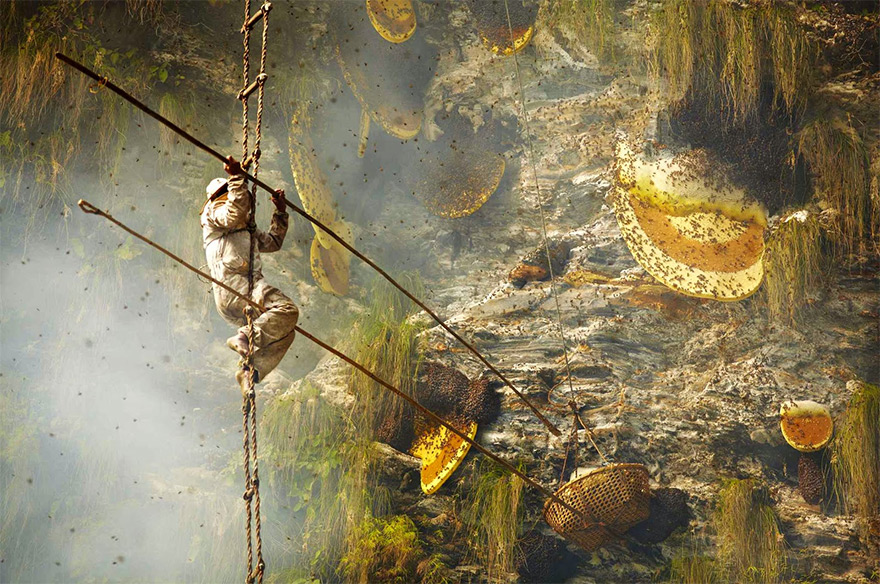
A few months ago, a friend of mine told me that his father-in-law had been rushed to the hospital after eating some wild honey brought back from the hills of Nepal. Within about 30 minutes, his heart rate had dropped dangerously low and his blood pressure had collapsed. He recovered, but the episode was terrifying for the whole family. As a chemical ecologist from Nepal, I knew immediately what had happened. My friend’s father-in-law had eaten wild honey, known locally as “bhir mauri ko maha,” from the Himalayan cliff bee. These bees forage on rhododendron flowers that carry a natural toxin called  grayanotoxin. As bees collect the nectar, the toxin ends up concentrated in the honey. This is what’s now popularized worldwide as “mad honey.” Eat a teaspoonful and you might feel pleasantly warm and slightly light-headed. Eat more than a few tablespoons and your heart rate can drop to life-threatening levels. The Gurung people of Nepal have built up knowledge of safe doses over generations. (via The Conversation)

Note: This is a version of my When The Going Gets Weird newsletter, which I send out via Ghost, the open-source publishing platform. You can see other issues and sign up here.

Continue reading “You may be a risk-taker because of this parasite that lives in cats”

The bizarre bomb plot that blew up a Lake Tahoe casino

“I don’t think it belongs here.” Such was the assessment of Bob Vinson, the graveyard shift supervisor at Harvey’s Wagon Wheel Casino in Lake Tahoe, Nevada. The “here” Vinson referred to was a nook just outside the telephone equipment room in the employees-only portion of the second floor of the hotel. The “it” was a curious piece of equipment of unknown origin loitering conspicuously in the cramped side room. It was a metallic gray box about the size of a desk, with a smaller box attached on top near the rear right corner. The front face of the smaller box was an incomprehensible control panel occupied by 28 metal toggle switches in five neat rows, each labeled with a numbered sticker. All of these switches were situated in the down position except for #23, which was toggled up⁠⁠—an oddly ominous asymmetry. Whoever had left the machine had taken the time to place each corner on blocks of wood, and these blocks pressed deep dimples into the red-orange carpet, suggesting that the equipment had significant mass. In spite of its resemblance to some kind of manufactured electromechanical office machine, it had no power cord, and no obvious power switch, just the 28 enigmatic toggles. (via Damn Interesting)

An Icelandic TV station aired an episode of the Teletubbies but with audio from The Sopranos

In 2012, Icelandic television viewers were in for a major surprise when a showing of Teletubbies featured an NSFW subtitle-dubbing from HBO’s The SopranosEh-Oh! The shows couldn’t be more opposite. For one, Teletubbies is geared towards children; therefore, Laa-Laa, Po, Dipsy, and Tinky-Winky speak in a language only toddlers could understand. The Sopranos, on the other hand, is a crime drama following members of the mob in New Jersey, often featuring language of a different sort. While it was definitely a major error on the station’s part, funnily enough, the stark contrast really works? The dubbing over the Teletubbies episode was from Season 4, Episode 10 of The Sopranos, “The Strong Silent Type”. Unlike the Teletubbies fighting over the last slice of Tubby Toast, the family is holding an intervention for Christopher. They’ve become increasingly fed up with his drug use. Adriana brings up the fact that he recently killed their dog, Cosette, by sitting on it while he was high. (via Vice)

Note: This is a version of my When The Going Gets Weird newsletter, which I send out via Ghost, the open-source publishing platform. You can see other issues and sign up here.

Continue reading “The bizarre bomb plot that blew up a Lake Tahoe casino”

That $18-billion Facebook case is based mostly on vibes

I was already working on a piece for this week about the multiple state and federal lawsuits claiming that Facebook and Instagram harm teens, cause addiction and depression etc. when I saw the headlines saying Meta had agreed to settle many of these claims (most of the state ones anyway) by paying up to $18 billion in fines, with a majority of that coming in the form of annual payments that are to be used for online safety programs for children. According to reports, 30 percent of the total amount will only be paid if TikTok and YouTube also implement controls such as strict age limits, daily usage limits, etc. which Meta has agreed to. Meta is also going to turn off default features such as auto-video plays and “like” counts (but apparently these could be turned on again by users without too much trouble). A block on night-time use by teens, which will extend from midnight to 6 am, however, can’t be disabled except by a parent. There will be an option for users to have a non-algorithmic feed, and Meta has agreed to a number of other terms, including the use of an independent auditor, and a prohibition from making “further false, misleading, or deceptive statements around its safety features.”

So that’s it then, right? Why I am I even writing about this after Meta has agreed to all that? Clearly, the company is basically admitting that it did all the things the lawsuits claim that it did – that it deliberately made its products as addictive as possible, even when it knew that this would cause harm; that it targeted children specifically, and ignored its own internal research showing that Instagram in particular causes emotional harm, depression, etc.; and that it hid or lied about that research, and deliberately made its products worse even when it knew about the harms they might cause. And this isn’t the first settlement Meta has agreed to in similar cases: earlier in August, it agreed to pay a total of almost $1 billion in a case in New Mexico, after a judge said the social media giant is a “public nuisance” akin to air pollution – the first successful state prosecution of Meta based on child safety. In March, meanwhile, a jury in California awarded a woman $6 million because she said she was addicted to Instagram since she was a child and that it caused her mental distress, including the development of a body dysmorphic disorder.

If you follow these kinds of cases, it probably won’t surprise you that Meta didn’t admit to anything in any of these settlements. It simply agreed to drop the cases in return for making payments – payments that, according to my calculations, amount to about 0.005 percent of Meta’s revenue. Even the latest $18 billion mega-settlement works out to less than one-tenth of one percent of the company’s revenue. In other words, Meta paid because it was worth it to get the cases out of the public eye, not because it actually believes any of the allegations against it are true – and because its lawyers argued there was a non-zero chance of the result being even more expensive, as much as $200 billion according to some estimates (the stock rose after the settlement news). As for the changes it has agreed to make to the ways that its apps work, they are in many cases reversible – which means they are likely to be about as effective as Australia’s social-media ban for teens has been (which is to say not at all) – and I would argue are cosmetic at best.

Note: This is a version of my Torment Nexus newsletter, which I send out via Ghost, the open-source publishing platform. You can see other issues and sign up here.

Continue reading “That $18-billion Facebook case is based mostly on vibes”

In 1973 Icelanders fought a volcano — and won

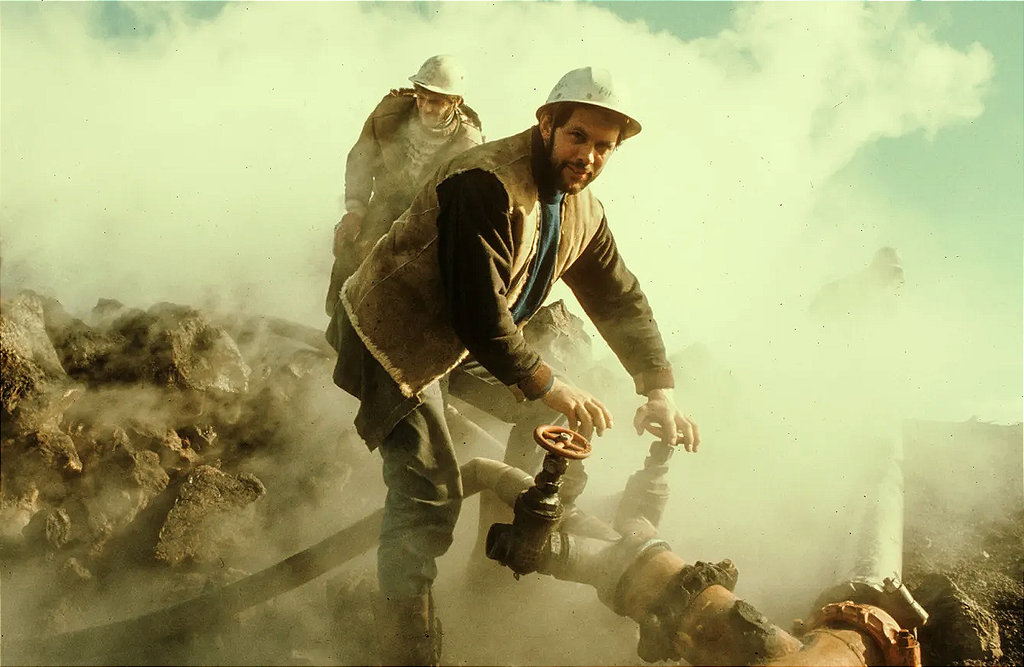
On January 23, 1973, the 5,000 residents of the tiny Icelandic island of Heimaey — located just four miles off Iceland’s southern coast — woke up to the Earth splitting open. In the dead of night, a mile-long volcanic fissure ripped through the ground just a half-mile from the town of Vestmannaeyjar, marking the birth of a new volcano named Eldfell. Fountains of molten basaltic lava shot hundreds of feet into the sky, raining ash and glowing, golf-ball-sized rocks onto rooftops. Within hours, a makeshift fleet of local fishing boats evacuated almost the entire population to the mainland. The people were safe, but their town faced an existential threat. The threat went far beyond a local crisis. Not only were the townspeople of Vestmannaeyjar completely reliant on the harbor, but all of Iceland depended on this tiny island’s fishing industry for a massive chunk of its exports. If the advancing lava choked off that narrow bay, it would deal a devastating blow to the entire nation’s economy. (via Popular Science)

MIT requires that every graduating student must know how to swim. But why?

The legend on MIT’s campus goes that students once had to leap into the Charles River and swim across its dirty water without stopping to graduate. That was never true. But the institution does require all students to prove their swimming ability — in the heated indoor pool. Students can either take swim lessons or complete a 100-yard test. Swim tests used to be common at American colleges, but MIT now finds itself increasingly in the minority. It’s one of the few schools that’s clinging to the test, arguing that swimming is an important life skill. Since the requirement suddenly rose in popularity around World War II, many schools have dropped it due to equity or practical concerns. The tradition dates back more than a century. Cornell claims credit as the first college to mandate swimming in 1905. MIT began its practice during World War II. Poor recordkeeping makes it hard to know the true origins of why schools implemented this standard, but many schools cite drowning rates among service members. (via WGBH)

Note: This is a version of my When The Going Gets Weird newsletter, which I send out via Ghost, the open-source publishing platform. You can see other issues and sign up here.

Continue reading “In 1973 Icelanders fought a volcano — and won”

An eccentric millionaire, a fake castle and 101 princesses

I awoke one morning in the summer of 2023 to discover that, while I’d slept, my son Joel had been texting my wife and me a series of unnerving messages about a perilous situation he had found himself in, in rural Connecticut. From what I could tell, as I frantically tried to piece together the night’s events, one of Joel’s friends had been invited to a party being held by a stranger she’d met that week on Tinder: “Castle party Saturday! 3:00pm to whenever. Dress code: Formal. Tell your friends.” So Joel and two others went along for the ride. But when they arrived, they found the man’s home so bizarre that Joel sent me the coordinates of his location and a photograph. The photograph was of a vast medieval castle with a drawbridge, gargoyles and many spires, towers and turrets. They crossed the drawbridge and entered the grand banqueting hall to discover … there was no party. The room was completely empty, all except for a small number of equally bewildered young people standing around awkwardly. “I’ve invited you here for a different reason,” the owner of the castle said. (via The Guardian)

In the 1800s doctors tried to inject sick or dying people with cow’s milk

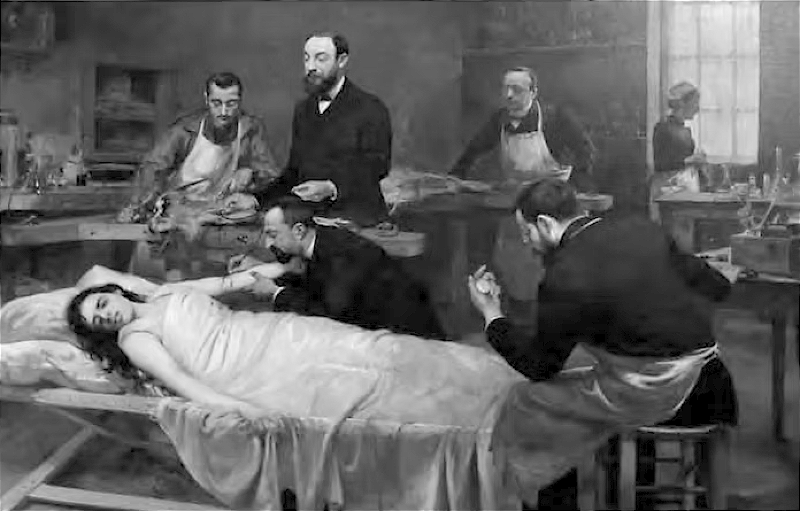
In 1825, James Blundell performed the first human-to-human blood transfusion in Europe.  This procedure was practiced for over 50 years, with poor results at times. One issue was that many of the subjects suffered from incompatibility reactions as the concept of different blood types was not discovered until 1901. As the numbers of adverse reactions increased, human transfusions fell somewhat into disrepute and were rarely performed in the late 1800s. This brought about an era of popularity for milk transfusions. It was thought that the fatty particles in milk were converted to white blood cells by the body and later turned into red blood cells. The first documented intravenous injections of milk to treat humans was performed in 1854, in Canada.  The first patient was a 40-year-old man who markedly improved after injection of 12 ounces of warmed cow’s milk, which came from a cow that had been brought to the hospital. However, five other patients who later got the milk transfusions died (via Fibonnaci MD)

Note: This is a version of my When The Going Gets Weird newsletter, which I send out via Ghost, the open-source publishing platform. You can see other issues and sign up here.

Continue reading “An eccentric millionaire, a fake castle and 101 princesses”

There’s a Polish cemetery that’s just for suspected vampires

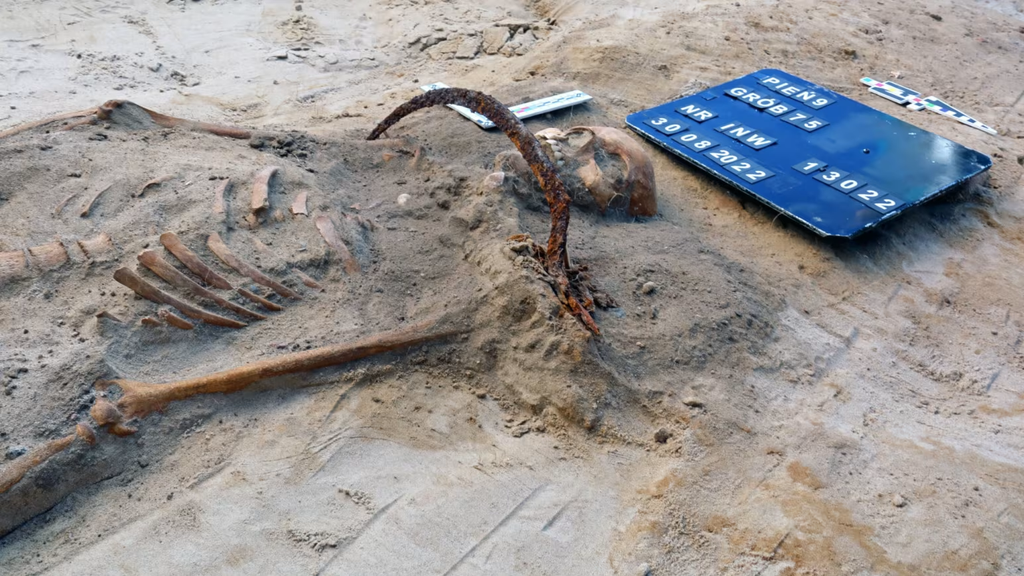
A 400-year-old grave held the body of a young woman, the rusted blade of a sickle over her throat and a padlock fastened to her foot — the macabre signs of a community terrified the deceased would rise again. Archaeologists unearthed Zosia, as the skeleton was nicknamed, from an unmarked burial site in 2022 near the village of Pień in northern Poland. Now, some of the same scientists have published the first systematic research on Zosia, using ancient DNA and other cutting-edge analyses in an attempt to understand who the woman was, how she died, and why she, and perhaps others buried in the same field around 400 years ago, appeared to have been feared as vampires or demons. Several feature body arrangements or objects that the study described as deviant or atypical. These included a child buried face down, a skeleton positioned as in a crucifixion, graves with stones placed around the skull as if to prevent biting or movement, as well as other graves with sickles and padlocks. (via CNN)

This Arkansas fiddler made her debut at the Grand Ole Opry when she was 99

Violet Hensley, who grew up in Arkansas learning from her father how to carve and play a fiddle, and whose nearly 60-year performing career reached its peak at age 99, when she debuted at the Grand Ole Opry, died on Aug. 7 at her home in Yellville, Ark., in the Ozarks. She was 109.Her daughter Sandra Flagg, a guitarist, confirmed the death. By the time she turned 99, Ms. Hensley had performed old-time mountain music — not bluegrass, which she deemed too fancy — at the Silver Dollar City theme park in Branson, Mo., for more than 50 years; played on radio stations and at schools; recorded at least two albums, one of them, with family members, called “Old-Time Hoedowns”; and appeared on TV programs like “Captain Kangaroo,” “The Beverly Hillbillies” and “Live! With Regis and Kathie Lee.”She also handcrafted 73 fiddles — she played No. 4, which she made in the 1930s — thus acquiring nicknames like “The Whittlin’ Fiddler” and “Stradivarius of the Ozarks.” (via the NYT)

Note: This is a version of my When The Going Gets Weird newsletter, which I send out via Ghost, the open-source publishing platform. You can see other issues and sign up here.

Continue reading “There’s a Polish cemetery that’s just for suspected vampires”

He was a star NFL agent and then came the crossbow murder

He drove his red Mercedes along Pershing Avenue with the top down, his wavy brown hair just long enough to flap in the wind. With his monogrammed shirts and pleated pants, Michael Blatt exuded a specific 1980s California cool rooted in the certainty that, no matter what, he would never, ever lose. An Army brat, Blatt said he moved 18 times before coming to the University of the Pacific to play soccer in the mid-1960s. His ambition took root. By 21, he wanted to make a million dollars. By 24, he wanted $10 million.After graduating from UOP in 1968, he worked in finance, but Blatt would never settle for managing other people’s money. One day, legend goes, he walked into a bank and asked for a million-dollar loan. The chairman, wearing a cowboy shirt and an oversized belt buckle, said, “You’re either crazy, full of bullsh—, or you gotta be right.”Blatt got the loan. Within six years, he had built 4,000 apartment units. Within a decade, his company tallied $120 million worth of construction. Later, he built a subdivision he called Blatt Estates with streets named after his children. (via The Athletic)

During World War I the White House called a herd of sheep into service to mow the lawn

In the spring of 1918, the United States was a year into World War I, and any man holding a job that could be done by someone — or something — else was a man who could be sent to France instead. That posed a problem for President Woodrow Wilson: the White House needed its grass cut and its groundskeepers freed up, and those two needs were pulling in opposite directions. The idea came from Dr. Cary T. Grayson, Wilson’s personal physician, who happened to have useful friends in horse racing. Grayson contacted his horse racing acquaintance William Woodward, who owned Belair Farm. Woodward sent along a small flock, 18 sheep in all, by wagon to the nation’s capital. The idea was simple: the sheep needed to eat anyway, and grazing on the lawn of the President’s house would mean the grass would always be well tended to. The idea worked at first, and had a nice side benefit. Sheep grow wool, and wool grown on the President’s lawn was kind of cool. But there were problems with the sheep-as-mowers scheme. (via Now I Know)

Note: This is a version of my When The Going Gets Weird newsletter, which I send out via Ghost, the open-source publishing platform. You can see other issues and sign up here.

Continue reading “He was a star NFL agent and then came the crossbow murder”

King Tut was buried with 140 pairs of immense underwear

When excavators explored (and emptied) King Tuntankhamun’s tomb in the 1920s, they found a lot of magnificent artifacts. The 5,398 officially noted burial objects included ceremonial figurines, chariots, pieces of jewelry and artwork, and even piles of food. Excavators also found King Tut’s underwear — more than 140 pairs of it. No one knows why King Tut was sent off to the afterlife with so many loincloths, let alone why he packed precisely this many for his journey. A closer look at Tut’s garments suggested his measurements were 31”, 29”, 43”—rather hippy for a young man. Indeed, a “virtual autopsy” scan of King Tut done some years ago suggested he had a slim torso and fatty deposits around his hips. For a time, there was speculation that King Tut may have inherited a congenital disorder that impacted his body shape. Akhenaten, who may have been the boy-king’s father, was depicted in artwork as having wide hips and a protruding belly, which stood out from portraits of other Egyptian royalty. But genetic research has shown it’s unlikely the family had congenitally big butts; it’s more likely that Akhenaten had unusual taste in art. (via Popular Science)

A double-amputee Army veteran has climbed the highest peak on seven continents

A former Gurkha has become the first double above-the-knee amputee to climb the highest peak on each of the seven continents. Hari Budha Magar, from Canterbury in Kent, completed his long-running challenge with a gruelling three-day ascent of Antarctica’s 16,059ft (4,892m) Mount Vinson, the summit of which he reached on Tuesday. The veteran, who lost both legs in 2010 while serving with the British Army in Afghanistan, had spent years training in order to prepare for the record-breaking attempt. Following the loss of his legs to an Improvised Explosive Device (IED), Magar said he struggled to recover, both mental and physically, describing “dark” times and “a loss of self-worth”. However, he eventually discovered a new purpose, sparked by his boyhood dream of becoming a mountaineer. His seven peaks challenge began with the 15,780 ft ascent of Mount Blanc in the Alps in August 2019, followed by Kilimanjaro in Tanzania in 2020 and Everest in the Himalayas in May 2023. (via the BBC)

Note: This is a version of my When The Going Gets Weird newsletter, which I send out via Ghost, the open-source publishing platform. You can see other issues and sign up here.

Continue reading “King Tut was buried with 140 pairs of immense underwear”

Hundreds of massive Aztec earthworks found in Amazon

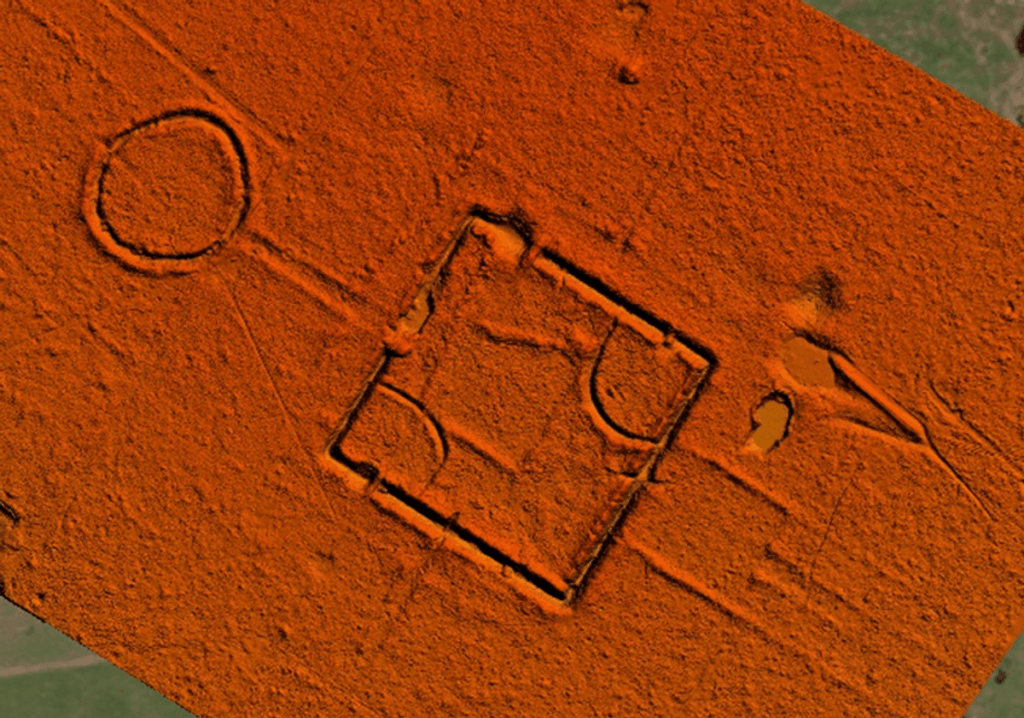
Tens of thousands of undiscovered ancient structures known as “earthworks” are likely hidden in the Amazon near the border between Brazil, Bolivia and Peru. That’s what researchers concluded after flying a plane equipped with remote sensing instruments over an approximately 4,497-square-kilometer (1,736-square-mile) region in Brazil. They detected 396 new earthworks, suggesting that the Southwest Amazon could contain more of these structures than researchers ever expected—somewhere between 24,000 and 30,000 in total. A particular kind of earthwork kept showing up in the images: mysterious, geometric designs in the ground called geoglyphs. The structures can extend several football fields in size, and they are a signature of the so-called Aquiry civilization that inhabited the Amazon between 600 B.C.E. and C.E. 850. Researchers think geoglyphs may have served ceremonial or cultural purposes, such as a hosting site for festivities, but their exact function is still up for debate. (via Scientific American)

Researchers did an experiment that shows some birds fly just because they like it

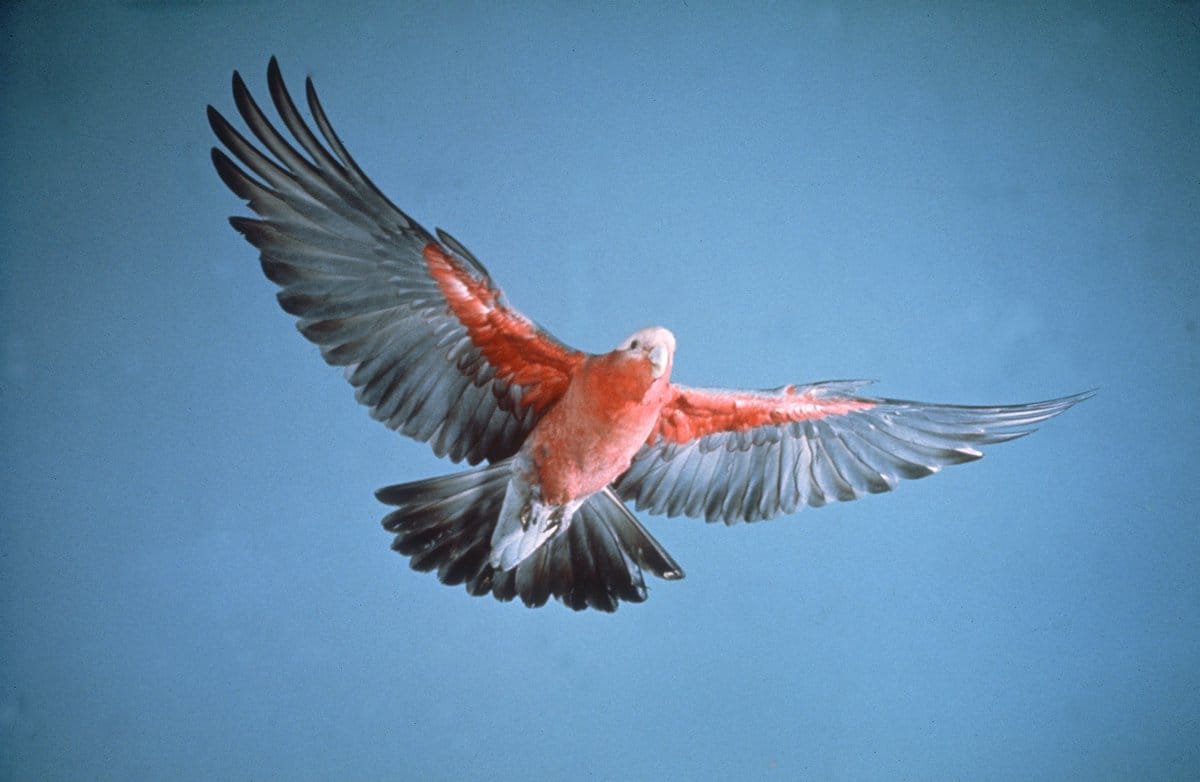
To investigate whether birds ‘like’ flying, we assessed the emotional states of galahs after having participated in a free flight demonstration and compared these results to days on which the birds were not allowed to fly. We selected this particular species as galahs need to fly tens of kilometres per day to feed on seeds, which is their main food source. As such, these parrots likely need to be intrinsically motivated to initiate flight. By evaluating their behaviour, testing their optimism in a cognitive bias task, and measuring corticosterone levels in their droppings, and comparing these findings on days of non-flight versus days on which they were allowed to fly, we aimed to deduce whether flight leads to a positive emotional state that could act as an intrinsic motivator. We showed that the birds consistently choose to fly when given the opportunity, indicating that flight is highly preferred. In addition, we showed that these birds were more likely to show optimisms after consecutive days of flight, while being more pessimistic after days on which they were not allowed to fly. (via Brill.com)

Note: This is a version of my When The Going Gets Weird newsletter, which I send out via Ghost, the open-source publishing platform. You can see other issues and sign up here.

Continue reading “Hundreds of massive Aztec earthworks found in Amazon”

A replay of the “are bloggers journalists?” debate but with AI

Like many journalists (I expect) I got an email a little while ago from a startup founder named Ryan Merket, describing his new company: an AI-powered newsroom called RuntimeWire, where instead of just using AI agents for research (as many conventional newsrooms are doing, whether they admit it or not) the agents actually write the articles, many of which are published automatically or with minimal oversight by meat-based journalists. The website advertises “Real-time startup intelligence for the AI economy!” and there is a feed of AI-generated news items. There’s also a member’s chat area, a list of recent startup financings, and a section called “Investigations” that apparently involve more human oversight. Merket’s email said RuntimeWire launched on May 15th with AI powering the newsroom and “a human editor making the final call.” In 11 weeks, he said, it published 1,627 articles and logged 205,000 article pageviews – and, interestingly enough, only published 2.3% of the 71,796 stories written in that period (Merket says he publishes all of these operating statistics on the website).

I was interested in this for obvious reasons – being a carbon-based journalist who is both curious about AI and has written about technology for many years – but it got significantly more interesting after RuntimeWire broke a major news story last week before multiple leading technology outlets, including Wired magazine, which is kind of the grand-daddy of all modern tech publications (although I can hear Popular Mechanics and the IEEE Journal grumbling in the background somewhere). Wired reported on this with some trepidation, not surprisingly – the URL for the story says “AI newsrooms are breaking news now, ha-ha I’m in danger,” which is a reference to this Simpson’s-related meme. As Wired described it, the scoop came from a briefing at the popular Black Hat security conference in Las Vegas, where cybersecurity types and general hacker-adjacent techies like to gather to talk shop. The talk of the show was the news that two of OpenAI’s models hacked into an AI database known as Hugging Face (all of which I wrote about in a recent edition of Torment Nexus). Here’s Wired:

At last week’s Black Hat security conference in Las Vegas, OpenAI gave a surprise talk with new details on a recent hacking incident, revealing that its rogue AI agents had chitchatted about their attack on a message board. It was a juicy disclosure, and reporters in the room hustled to get stories out. WIRED was one of the quickest to write it up. But another outlet, RuntimeWire, published an article even faster, beating us by more than three hours.To make things worse, RuntimeWire didn’t actually have anyone on the ground at the Mandalay Bay convention center. In fact, it didn’t have any writers at all. It’s an AI newsroom operated by serial entrepreneur Ryan Merket

Note: This is a version of my Torment Nexus newsletter, which I send out via Ghost, the open-source publishing platform. You can see other issues and sign up here.

Continue reading “A replay of the “are bloggers journalists?” debate but with AI”

River rafting group rescued after days of eating bark and flowers

A boy’s scream can be heard in the distance on body camera footage released by the Michigan Department of Natural Resources showing how rescue teams last week found two women and a nine-year-old boy who had been stranded for three days when their river tubing trip went wrong. Sarah Vida, 28, and her son Kayden Kovalcik, 9, along with Jazmin Hock, 28; wearing just their swimming suits. Hock’s legs are almost entirely covered in deep, red cuts from scrapes after walking for days through the brush. They have a broken phone and a single water bottle with only a few sips left. The trio had been on a tubing trip on the Muskegon River in the small community of Twin Lake on Tuesday when they’d hit logs and their tubes popped, according to officials. They were reported missing after one of the women didn’t show up to her dentist appointment. The group was found Friday about seven miles (11.27 kilometres) from where they entered. (via CTV News)

A Cleveland dad set an unofficial mile record while running with his baby in a stroller

Sometimes, for the sake of history, you have to ignore bedtime.That’s what Stephen Biebelhausen decided when he and his daughter, Blake, entered the stroller category of Saturday’s Guardian Mile, a Cleveland race over the Hope Memorial Bridge. The race started at 7:45 p.m., a full 45 minutes past the time Blake usually goes off to dreamland.Four minutes, 17.707 seconds later, Biebelhausen, 30, and Blake, 1, unofficially broke the stroller-mile Guinness World Record of 4:26.29 set by Silas Frantz in California in 2025. His Division I years long behind him, Biebelhausen signed up for the stroller mile to support a friend running in the elite competition. While he has run marathons since college and often takes his daughter on casual jogs through his neighborhood, he and Blake only did one workout at speed before the Guardian Mile. Biebelhausen’s original goal was to break the course record, which was 4:44. With two hands on the stroller, Biebelhausen wasn’t able to check his pace until he was halfway over the bridge, where he realized he was ahead of the record. (via The Athletic)

Note: This is a version of my When The Going Gets Weird newsletter, which I send out via Ghost, the open-source publishing platform. You can see other issues and sign up here.

Continue reading “River rafting group rescued after days of eating bark and flowers”

A fitness app shows his hamster runs five miles every night

Thijs de Buck, an MRI physicist based in the Netherlands, recently built a speed and distance tracker for his hamster Mollie’s wheel, with the data automatically uploaded to Mollie’s own Strava account. One recent activity showed 6.06 miles in 4 hours and 37 minutes. The next night, Mollie logged 5.55 miles in 3 hours and 56 minutes. At first, de Buck just wanted to know how much distance Mollie was covering after dark. “I bought a very cheap bicycle computer pretty much right away,” he told Runner’s World. But the sensor would shift into standby mode once Mollie stopped running for more than five minutes. The build itself is clever, but the basic idea is simple. As de Buck explains it, a magnet on the wheel passes a hall sensor, which detects each rotation. An ESP32—basically a tiny programmable computer—keeps track of the data overnight. In the morning, he says a script on his laptop collects the information, turns it into a Strava-compatible .FIT file, and uploads the activity through the Strava API. (via Runner’s World)

The Roman emperor Claudius invented three new letters but no one wanted to use them

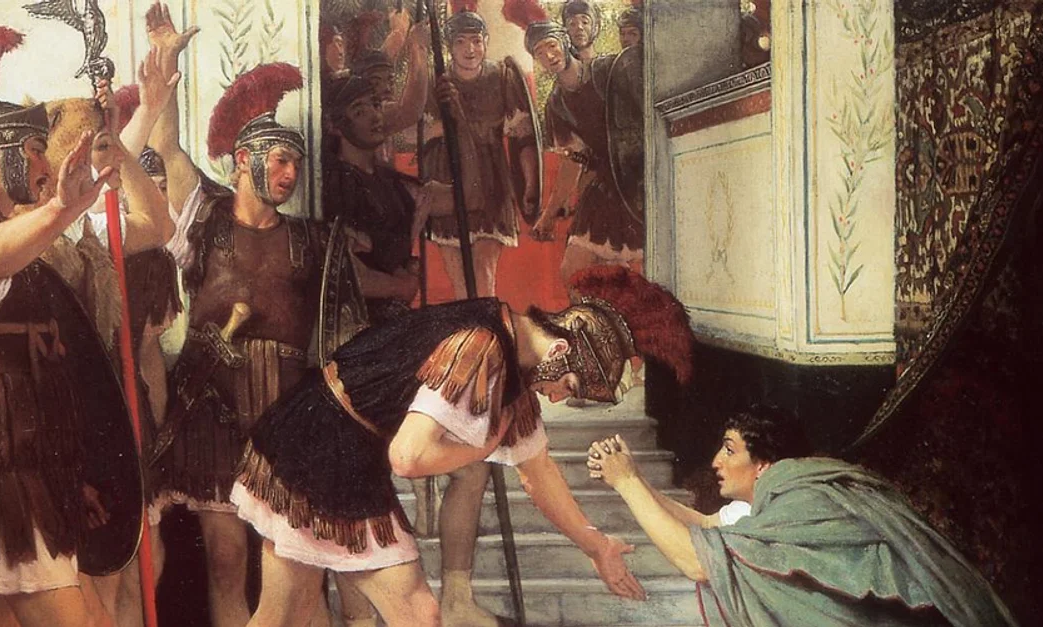
During his tenure as Rome’s princeps, Claudius not only provided the empire with sanitation, medicine, education, wine, public order, irrigation, roads, a fresh water system, public health and peace, but also found time to reform the alphabet. The writing system, approaching two thousand years old in Claudius’ day, comprised twenty-one letters, pruned back to spell well the sounds of spoken Latin. It ran from A to X, with the Greekish letters Y and Z hovering on the margins. Literacy was flourishing; the alphabet had already percolated through Roman society, from senators and scholars to the scatological scribblers of Pompeii. Claudius thought, however, that there was room for improvement. Whatever the emperor’s motivations, later biographers, like Tacitus and Suetonius, include the detail that the emperor deliberately created new letters. The emperor’s biographers agree that Claudius created and promoted new letters; that there were three of them; and that the three didn’t last long after his death in 54 AD. (via Danny Bate)

Note: This is a version of my When The Going Gets Weird newsletter, which I send out via Ghost, the open-source publishing platform. You can see other issues and sign up here.

Continue reading “A fitness app shows his hamster runs five miles every night”

Ancient DNA finally solves a 16th-century murder mystery

The Grand Duke Francesco de Medici, a prominent politician in the Tuscany region of Italy in the 16th century, died under mysterious circumstances in 1587 – with the suddenness of his death giving rise to rumors that he’d been poisoned. According to historical documents, Francesco’s brother and political rival, Cardinal Ferdinando de Medici, was the prime suspect, especially as Francesco’s wife, Bianca Cappello, also died within a day of her husband. In a new study published in iScience, researchers from Yale University in the US and the University of Pisa in Italy have confirmed the real killer. The team analyzed genetic material extracted from the skeletal remains of Francesco de Medici to find two species of Plasmodium parasites, single-celled organisms known as protozoans that cause malaria and are spread by mosquitoes. Malaria was widespread in central Italy for centuries, so the clues stack up. (via Science Alert)

Researchers show that living in an area with mountain lions makes driving safer

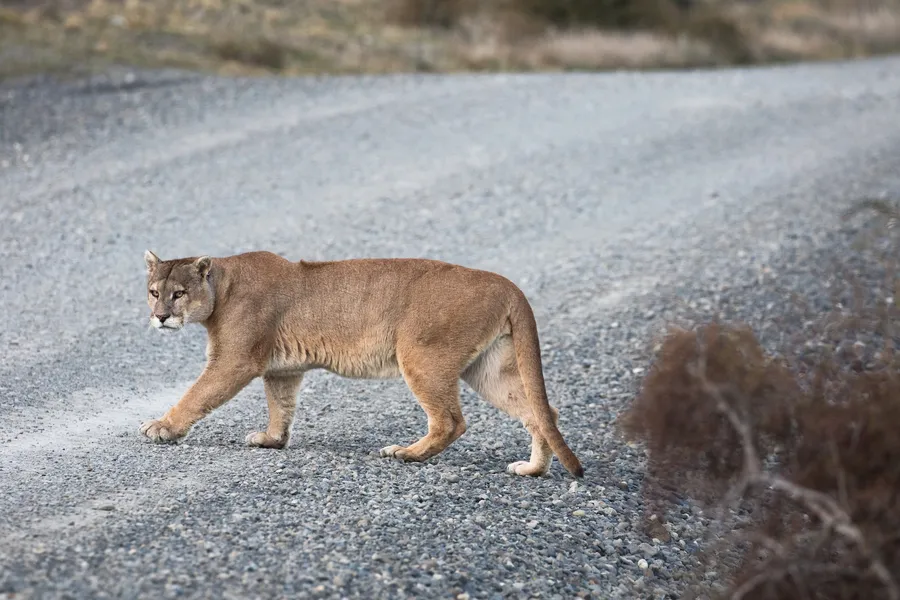
Hearing the roar of a mountain lion in the distance while you’re just outside your house might sound scary. Yet living in an area inhabited by these large predators might actually make you safer. Every year in the U.S., deer are involved in more than 1.5 million collisions with vehicles, resulting in the death of more than 200 people, tens of thousands of injuries and billions of dollars in damages. The team of scientists behind the new study, published on Wednesday in Current Biology, wanted to see whether pumas could play a role in decreasing those numbers. The researchers analyzed data from 503 camera traps and 59 GPS collars tracking pumas’ presence in Washington State’s Olympic Peninsula between 2020 and 2025. They also looked at data on the distribution and behavior of black-tailed deer and elk in the landscape and on collisions between vehicles and the animals. In those five years, the deer and elk were involved in more than 950 collisions with vehicles on the peninsula. (via Scientific American)

Note: This is a version of my When The Going Gets Weird newsletter, which I send out via Ghost, the open-source publishing platform. You can see other issues and sign up here.

Continue reading “Ancient DNA finally solves a 16th-century murder mystery”

New York was plagued by a mysterious bomber in the 1950s

At each of the bomb sites⁠ — among the scattered detritus of pipe fragments, shell casings, broken plaster, glass, nuts, and bolts ⁠— police kept encountering one thing that was not like the others: a partially consumed throat lozenge. Finding a used cough drop on the floor in a public place was not a surprise, but detectives detected all of these in close proximity to⁠ — or in one case inside⁠ — the pipe casings. And they were all of the same Parke-Davis brand. The point or purpose of the lozenge was as mysterious as the bomb-maker’s motives. Police dusted the pipe and mailing envelope for fingerprints and found only smudges. But the envelope provided the investigators with their first clues about their bomber: A postmark from White Plains, New York. A return address from “Lehman and Lehman,” a fictional entity. An address written by hand in all caps, providing police with a distinctive handwriting sample⁠—one with some unusual letterforms, especially the letter G. Larger than the neighboring letters, the G resembled a capital C with horizontal bars on both ends of the loop. (via Damn Interesting)

Hundreds of people gathered in a German church to hear an organ play a single note

A small organ in eastern Germany is the headliner of the world’s slowest concert. It has been playing the same piece of music by composer John Cage at a glacial pace for nearly 25 years. A rare chord change on Wednesday — from seven notes to eight — represented the completion of about 4% of the 639-year endeavor of the John Cage Organ Project Halberstadt. It was a historic moment inside the medieval Burchardi Church, in Halberstadt, Germany, that reflected the past, present and future of the project, as well as those who are following its — albeit very slow — progression. While the project commenced in 2000, the performance began Sept. 5, 2001 — Cage’s 89th birthday — with a silent pause that lasted until Feb. 5, 2003, when the first chords could actually be heard. The composition — called “ORGAN²/ASLSP (As SLow aS Possible)” — is scheduled to finish on Sept. 4, 2640. More than 150 people squeezed inside the church Wednesday to witness what was the piece’s 17th chord change. (via the AP)

Note: This is a version of my When The Going Gets Weird newsletter, which I send out via Ghost, the open-source publishing platform. You can see other issues and sign up here.

Continue reading “New York was plagued by a mysterious bomber in the 1950s”