
Drilling company or two-word review by aliens?

Links that interest me and maybe you


If you are Canadian, the name Purolator is probably a familiar one — and possibly even if you are American, but for a different reason. For those who don’t know, it’s the name of a Canadian courier company, which is now majority owned by Canada Post. For some reason I started wondering where the name came from, since it’s kind of an odd word, so I looked it up, and it was originally the name of an American company that made oil filters (apparently it was supposed to be a contraction of the phrase “pure oil later” or something like that). The founders of the company invented the first commercially available oil filter in the 1920s. It still exists but it is a subsidiary of a German industrial supply company now.
For some reason, Purolator decided to buy a Canadian package delivery company called Trans Canada Couriers in 1967 (maybe it seemed like an extension of the oil filter business because they use a lot of trucks?) and they renamed it Purolator, even though it had nothing to do with the oil filter business. In 1987 the package company was bought by Canadian investors — and eventually wound up being acquired by Canada Post — but they decided to keep the name. Pretty glad I looked it up, because I love weird corporate stories like that! Like Nokia, for example, which started out running pulp mills and making rubber, and Nintendo which was founded as a maker of playing cards in the late 1800s.


From Scientific American: “Frances Glessner Lee discovered her true calling later in life. An heiress without formal schooling, she was in her 50s when she transformed her fascination with true crime and medicine into the foundation of a new field: forensic science. In the late 1920s she drew inspiration from a family friend, a medical examiner who was involved in notorious cases—including the infamous trial of Nicola Sacco and Bartolomeo Vanzetti. For Glessner Lee, the puzzle of untangling the truth about violent deaths proved irresistible. She recognized that solving crimes demanded both rigorous methods and professional training. She helped found the Department of Legal Medicine at Harvard. Her most unusual teaching tool: intricately crafted dollhouse dioramas that depicted grisly crime scenes. She pioneered new death investigation techniques, forged unlikely alliances, faced social and cultural obstacles, and helped foster what would become our lasting obsession with true crime.”
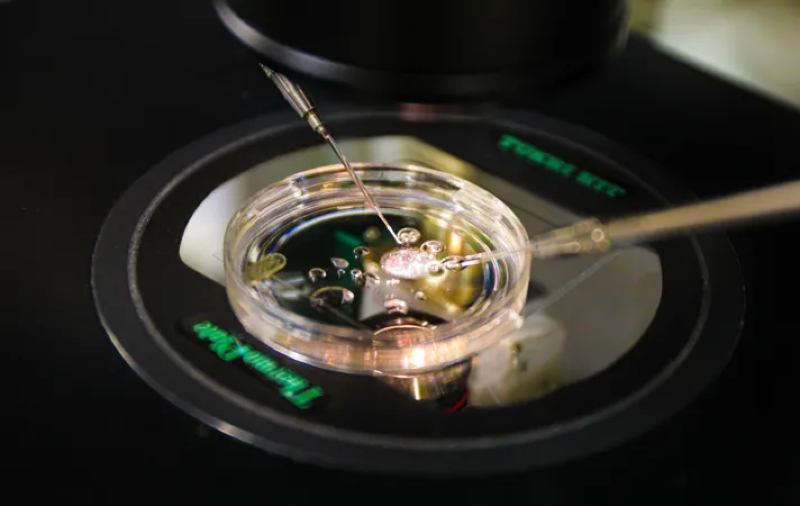
From the BBC: “US scientists have, for the first time, made early-stage human embryos by manipulating DNA taken from people’s skin cells and then fertilising it with sperm. The technique could overcome infertility due to old age or disease, by using almost any cell in the body as the starting point for life. It could even allow same-sex couples to have a genetically related child. The method requires significant refinement – which could take at least a decade – before a fertility clinic could even consider using it. Experts said it was an impressive breakthrough, but there needed to be an open discussion with the public about what science was making possible. The Oregon Health and Science University research team’s technique takes the nucleus – which houses a copy of the entire genetic code needed to build the body – out of a skin cell. This is then placed inside a donor egg that has been stripped of its genetic instructions.”
Note: This is a version of my When The Going Gets Weird newsletter, which I send out via Ghost, the open-source publishing platform. You can see other issues and sign up here.
Continue reading “She pioneered the field of forensic science using dolls”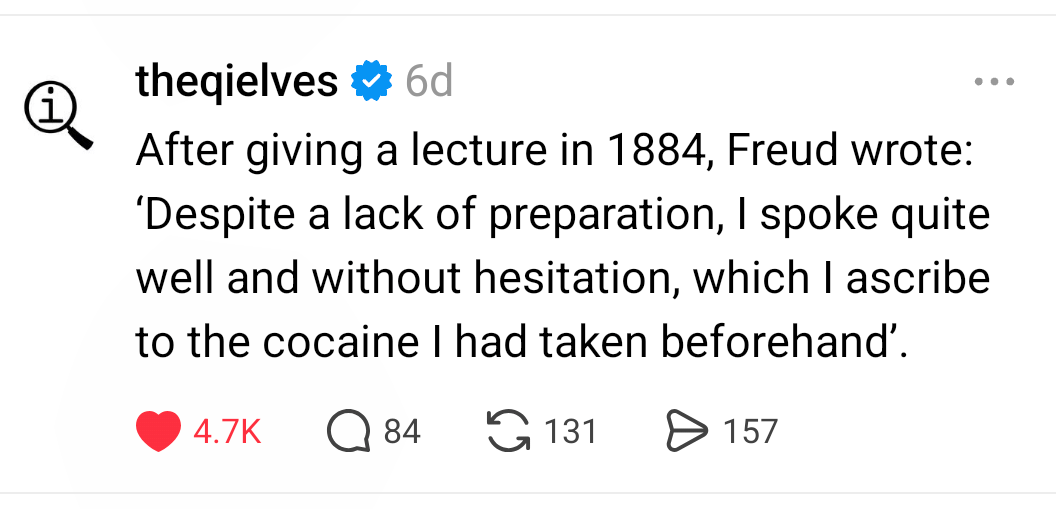

If you pay attention to the news at all, you may have seen a host of alarming headlines recently about how the number of Americans who say they read for pleasure has declined sharply over the past 20 years, from a peak of 28 percent in 2004 to 16 percent in 2023. That conclusion comes from a study done by a number of sociologists at the University of Florida, who looked at two decades worth of responses to a benchmark survey called the American Time Use Survey, which asks 10,000 randomly selected Americans every year how they spent the day prior to when they took the survey. The Florida researchers looked at how many people said they read “for personal interest,” including books, magazines, newspapers, audiobooks, and e-readers (they also asked how many read a book with a child). It’s worth noting that — like a lot of consumer surveys — the American Time Use Survey relies on people answering the questions truthfully, and because of the way it is conducted, it also relies on people who are a) willing to pick up the phone when it’s an unknown number, and b) willing to answer a survey.
This dramatic decline in the numbers of people reading for pleasure is “deeply concerning,” according to one of the study’s co-authors, who called reading “a low-barrier, high-impact way to engage creatively and improve quality of life.” According to some neuroscientists, reading not only stimulates your brain in ways that other types of pleasure or activity don’t, but it can also lower your blood pressure, reduce stress, help with sleeping, and even help you live longer. Other experts noted that in addition to the data cited by the Florida study, different studies have shown that there has been a generational decline in students reading for fun, which some argue is a result of social-media addiction, poor literacy training, overly busy after-school scheduling by parents, or some combination of all three. For others, this decline in reading is part of a disturbing trend that they believer represents the dawn of a “post-literate” society, a return to the largely oral cultures of primitive societies, and therefore pretty much represents the end of modern civilization as we know it.

Note: This is a version of my Torment Nexus newsletter, which I send out via Ghost, the open-source publishing platform. You can see other issues and sign up here.
Continue reading “So what’s so great about reading books?”
From Rolling Stone: “On March 19, 2000, Florian Reither stepped out of the 91st floor of the North Tower of the World Trade Center through a hollowed-out window and stood on a makeshift wooden balcony. This vertiginous performance wasn’t the act of a brazen stuntman, crazed trespasser, or suicidal employee. It was the work of the Austrian art collective known as Gelitin, which consists of Florian Reither, Ali Janka, Wolfgang Gantner, and Tobias Urban. Titled the B-Thing, the feat saw the four men, now all in their fifties, secretly construct a balcony inside the World Trade Center, temporarily attach it, and briefly stand on top of it, floating dreamily above New York City. In the 25 years since, those involved have largely avoided speaking about the event again. Outside of esoteric circles, it’s still relatively obscure. For a long time, many skeptics believed it never even happened and claimed that it was a hoax on a vast scale.”
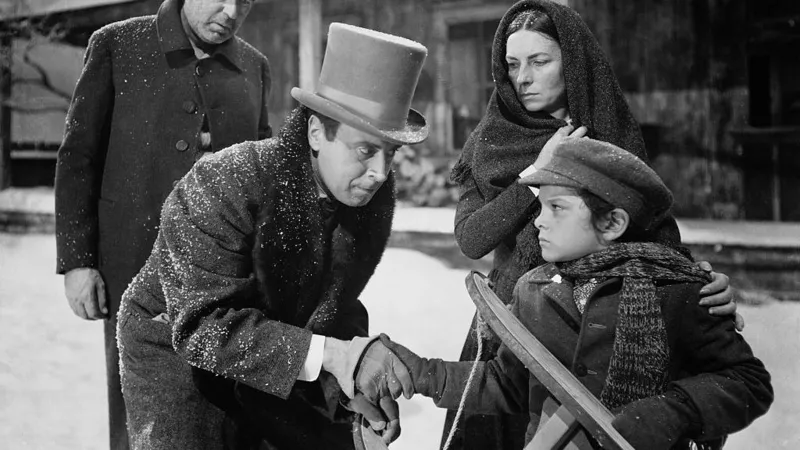
From the BBC: “A prop central to the celebrated opening scene of Citizen Kane – widely regarded as one of the best films ever made – has sold at auction for $14.75m. The wooden Rosebud sled, one of at least three known to have survived, was long thought to have been lost until it was given to director Joe Dante in 1984, saving it from destruction. It is now the second most expensive piece of memorabilia to have ever been sold – a pair of ruby slippers used in The Wizard of Oz sold for $32m in December. The version sold on Thursday had not been seen for many years until it ended up in the hands of Dante. He told Heritage auctions how he was making the film Explorers in 1984 on the same studio that was formerly owned by RKO Radio Pictures, which produced Citizen Kane. Dante said crews were on site clearing out storage areas when one worker, who knew he liked vintage films, asked if he wanted it.”
Note: This is a version of my When The Going Gets Weird newsletter, which I send out via Ghost, the open-source publishing platform. You can see other issues and sign up here.
Continue reading “They built a balcony on the WTC and started a conspiracy theory”

From Popular Mechanics: “Megan Barroso was looking forward to her Fourth of July plans in 2001. Perhaps because the 20-year-old Moorpark College student had no intention to be alone: She was going to attend a friend’s family barbecue in the suburbs northwest of Los Angeles, then watch the fireworks with friends at Silver Strand Beach. The gatherings began to blend into one another, in the way college-age social events do: The friends got milkshakes; they ended up at another party at a friend’s house in Thousand Oaks. Somebody sprinkled red glitter over everyone’s heads.Around 2:45 a.m., the group decided to head home. Barroso departed in her Pontiac Sunfire, a rental she was driving while her car was in the shop, and drove about 15 minutes before a friend called to let her know she’d accidentally left with someone else’s cellphone in her purse. Barroso turned around to bring the phone back. She never made it.”

From Now I Know: “In early 1978, a couple of boys were hanging out in their yard in Los Angeles, digging in the dirt. Their family had just moved into the home – a rental – a few months earlier, and the kids were exploring as kids do. As they dug, they hit something oddly metallic and definitely not something that should have been buried in their yard: a 1974 Dino 246 GTS, an expensive sports car made by Ferrari. The car was wrapped in plastic, albeit imperfectly. Towels were stuffed in the exhaust pipe, as if to keep soil-dwelling bugs from getting in. There was even a carpet placed along part of the top of the car, to protect it from, well, who knows what. It looked like whoever buried the car had tried to preserve it, in hopes of recovering it later. But who, and why? And how do you bury a fancy sports car in the middle of Los Angeles without anyone noticing?”
Note: This is a version of my When The Going Gets Weird newsletter, which I send out via Ghost, the open-source publishing platform. You can see other issues and sign up here.
Continue reading “How glitter helped solve a brutal crime in California”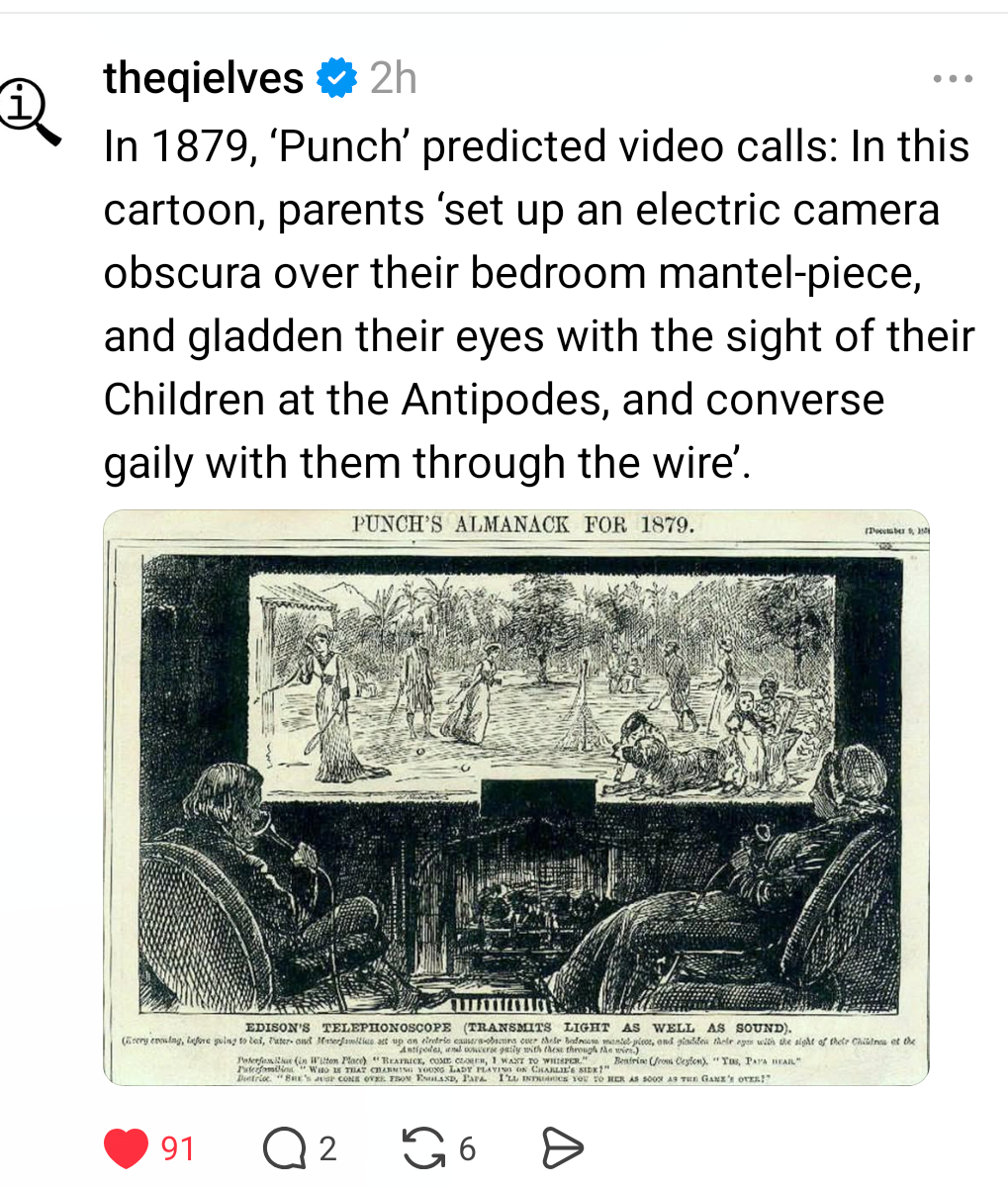

From Wikipedia: “The Mocking of Christ is a small 13th-century panel painting by the Italian artist Cimabue. It depicts the mocking of Jesus and is one of three panels known from Cimabue’s Diptych of Devotion. The painting was discovered hanging above the hotplate in the kitchen of an elderly woman living in Compiègne, northern France. The woman was in her nineties and was selling the house, which had been built in the 1960s, and moving from the area. Ahead of the move in June 2019 the owner called in a local auctioneer to determine if any of her possessions were worth selling; the remainder were to be thrown away. The work was put up for auction in 2019 and reached a hammer price of 19.5 million Euros, which reached 24 million Euros once selling fees were included. The winning bid was placed on behalf of two anonymous collectors, and set a new world record for a pre-1500 artwork sold at auction.”
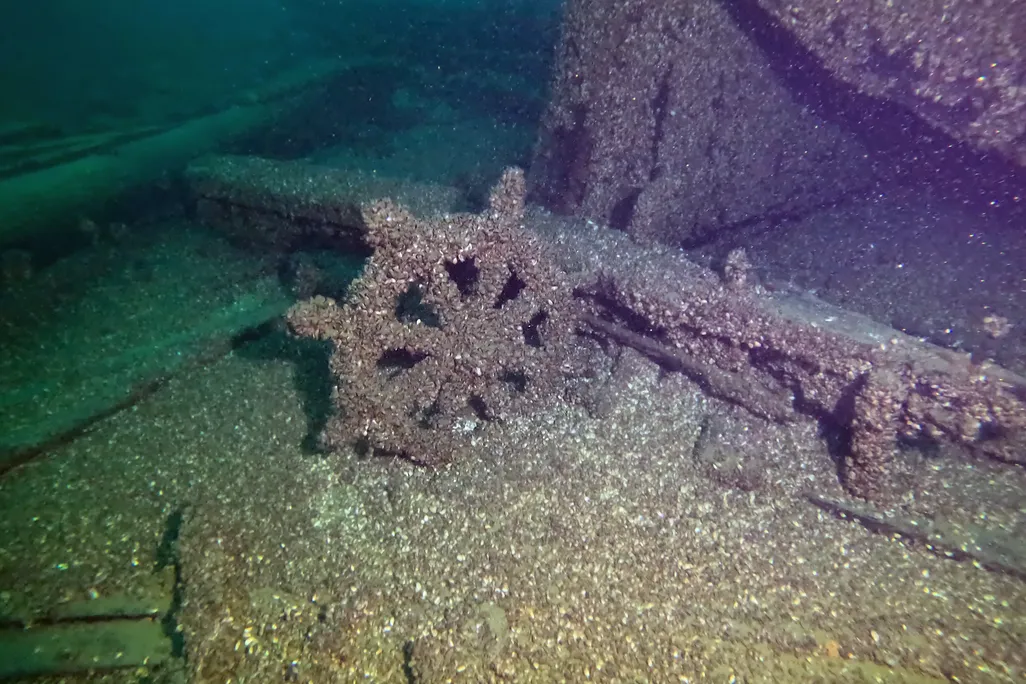
From the Smithsonian: “On September 15, 1886, the F.J. King was transporting a load of iron ore across Lake Michigan when the ship encountered a storm and started leaking. The crew tried to pump out the water, but the three-masted schooner eventually became so flooded that Captain William Griffin ordered everyone to abandon ship. They clambered onto the ship’s yawl boat and headed for shore, where they were later picked up by a nearby schooner, La Petite. In the early morning hours, they watched the F.J. King sink bow-first beneath the waves. For decades, shipwreck hunters searched for the vessel without success. The F.J. King proved so elusive she even earned a reputation as a “ghost ship.” Brendon Baillod, president of the Wisconsin Underwater Archaeology Association, led the efforts to find the F.J. King along with his research partner Bob Jaeck. They decided to invite 20 citizen scientists and historians along for the search, to share in the excitement of looking for a missing wreck.”
Note: This is a version of my When The Going Gets Weird newsletter, which I send out via Ghost, the open-source publishing platform. You can see other issues and sign up here.
Continue reading “A painting worth $30 million was almost thrown in the trash”

From Air Mail: “Nick’s storied surname, sterling credentials, and high-level associations put him in the upper reaches of the American establishment. After graduating from Yale Law School in 1987 and clerking on the Ninth Circuit Court of Appeals, he became a partner in the Los Angeles office of Perkins Coie. Nick founded the Rockefeller Asia Advisory Group, RockVest Development, Rockefeller Pacific Ventures, Rockefeller Resources International, and the Rockefeller International Fund. He mingled with George and Barbara Bush, had the Reagans’ private numbers at both their home in Bel Air and their ranch in Santa Barbara. He was a Davos man, naturally, appearing on an Asia-related panel there with Klaus Schwab, founder of the elite business conclave. But after he died, when Kim phoned the Rockefeller Global Family Office, in New York — a call that dozens of people should have made over the previous 40 years — she was told that Nick was “not recognized as a member of the Rockefeller family.”

From Garden & Gun: “The plant should be called the Carolina spidertrap, because it’s got nothing to do with Venus and hardly, if ever, catches flies. The most common victims are wolf and lynx spiders, carpenter ants, and daddy long-legs. For reasons biologists still don’t fully understand, flytraps’ native range is limited to a roughly eighty-mile strip of the eastern Carolinas, concentrated in North Carolina. Today they are known and grown the world over, turning up in botanical gardens, in the home collections of carnivorous plant enthusiasts, and in pop culture. Like many highly specialized species, they are fighting extinction as development steadily encroaches. They once grew in stunning abundance across their small range. Today, less than one hundred distinct populations remain in North Carolina, half of them harboring fewer than five hundred plants and some with less than a dozen. Still, some hotspots exist, and the rapidly growing town of Boiling Spring Lakes is one of them.”
Note: This is a version of my When The Going Gets Weird newsletter, which I send out via Ghost, the open-source publishing platform. You can see other issues and sign up here.
Continue reading “For 40 years he convinced everyone he was a Rockefeller”We happened to be up in Muskoka recently, visiting a friend who lives near Lake Rousseau, so I brought my kayaks and went out for a paddle with a friend who is getting back into kayaking. It was a perfect day for it — warm (around 19 Celsius) and sunny, with hardly any waves at all. So we set out from the public boat launch on the east side of the lake near the highway and spent a great couple of hours paddling around and chatting. Like a lot of Muskoka, Lake Rousseau is a combination of multimillion-dollar “cottages” — the kind with three fireplaces and a boathouse with four bays — and tiny old shacks like the kind that used to populate the lake before the rich people came 🙂 unfortunately we couldn’t wave to Kurt Russell and Goldie Hawn because they apparently sold their place recently.


A hilarious coda to this story: I was so busy chatting with my friend as we were packing up at the end of the paddle that I forgot to tie the kayaks onto the car, and we drove away and made it about half a mile before one of the kayaks flew off the top of the car. Luckily it didn’t hit anyone driving behind us, and it didn’t wind up in the road — in fact, at first we couldn’t find it! We walked up and down the highway looking in the bushes and finally someone who owns a house right on the highway noticed us wandering around her property and found it lying in some underbrush!
It was a little banged up, but I bought plastic ones for a reason — not because I thought one would fly off the car, but because they get dropped on rocks and pulled across roots etc. and I didn’t want to have to worry about damaging it. There’s a dent in the kayak where I assume it hit the road and it is scraped up, and there appears to be a small pea-sized hole where it hit a rock or something, but I figure I can epoxy that pretty easily. And my friend got a cheap lesson in paying attention when you are supposed to be tying your kayaks onto your car! So it was a win-win IMO.