Baby rainbow tripod fish


Links that interest me and maybe you



A biologist told me once that in the fall, the trees that are under the most stress produce the most beautiful colours, and I feel like that’s a metaphor for something but I haven’t figured out what yet

From LitHub: “When Bruce Lee met Kareem Abdul-Jabbar, a month after the 1968 national college basketball championship, he was still known as Lew Alcindor, the most hyped young basketball star in history. Weeks after the 1967 championship, the NCAA banned the dunk — in what became known as the “Alcindor rule” — an effort he believed was racist. One night after watching a Zatoichi flick, he was struck by the idea that the blind swordsman’s grace, control, and precision might be exactly what he needed. Instead of brute force, he thought, I will slide and roll and slip by them without fouling. In New York City, Alcindor started training in aikido. That fall Alcindor visited the Black Belt offices to meet a fellow aikido adept, Mito Uyehara, and ask him if he knew someone with whom he could continue his martial arts training. Alcindor had become especially curious about tai chi. “This guy Bruce Lee—he’s really good at it,” Mito told him. “He knows more about those things than I do.”

From the Kitchen Sisters: “In a laboratory, deep under a mile high stretch of the Alps on the French-Italian border, Philippe Hubert, a physicist at the University of Bordeaux, tests a suspect bottle of wine.“I put the bottle close to the detector. Then I close the shielding and we start to record the gamma rays,” says Hubert. “We are looking for radioactivity in the wine. Most of the time the collectors send me bottles of wine because they want to know if it is fake or not.” What Hubert is looking for is the radioactive isotope cesium-137, which doesn’t exist in nature but was produced by the dropping of the atomic bombs on Hiroshima and Nagasaki, and by the Cold War nuclear tests done by both the US and Russia. The accident at the Chernobyl nuclear reactor also released a lot of cesium-137. “It is in the atmosphere,” says Hubert. “And with rain this radioactivity falls on the grapes. When you make the wine this comes into the wine.”
Note: This is a version of my When The Going Gets Weird newsletter, which I send out via Ghost, the open-source publishing platform. You can see other issues and sign up here.
Continue reading “Kareem Abdul-Jabbar trained in martial arts with Bruce Lee”
The current battle over regulating speech online seems new, in part because the Trump government and its allies are going to extreme lengths to police speech about the murder of Charlie Kirk (a man who trumpeted the benefits of free speech, but is now the reason why people are losing their jobs for saying negative things about him). This is a twisted situation, to be sure, a kind of right-wing pretzel logic that many Trump acolytes seem to be able to internalize without even noticing that their position contradicts itself in multiple ways. But it is only the latest bizarre spin on a struggle that has been going on almost since the internet was invented: How should we – internet users as well as technological entities like social-media platforms and political entities like governments – behave in a world where the problem is not how to protect free speech, but how to cope with an excess of speech, especially one driven by algorithms whose internal workings we have little knowledge of and even less control over.
I’m bringing all this up not just because of the Charlie Kirk situation, which is quite obviously a case of “Free speech for me but not for thee,” but because YouTube just announced that it is going to reinstate the accounts that it banned for spreading disinformation, whether about the dangers of COVID-19, the results of the 2020 election, or about the riots on January 6th. One of the accounts that was banned, of course, belonged to the current president of the United States, whose account was blocked because he posted comments that were perceived as inciting violence (his account was restored in 2023). YouTube’s decision also comes at the same time as it is fighting a lawsuit launched by Trump over the ban on his account, and the company has no doubt been following other lawsuits in which Meta, X, ABC and Paramount all paid huge sums of money even though there was arguably no legal basis whatsoever for Trump’s claims.
Note: This is a version of my Torment Nexus newsletter, which I send out via Ghost, the open-source publishing platform. You can see other issues and sign up here.
Continue reading “It’s not that we lack free speech it’s that there’s too much of it”
From Ironic Sans: “George Nissen didn’t invent the first ever trampoline, but he popularized trampolines for sports and recreation from the 1950s through the 1980s, and came up with new designs. One story tells how George and his son Ron tried to get a trampoline up to the top of one of the Great Pyramids in Egypt. At some point in its history, the very top of the Great Pyramid of Khufu was taken off, and left the top of the pyramid with a flat surface. In 1977, since Ron and George were going to be in Egypt for a trampoline event anyway, they wondered if they could get one up to the top of the pyramid. They carried a mini-trampoline to the top of the pyramid, where 63 year old George Nissen did flips. But that wasn’t the dream. The dream was a full-size trampoline. Inspired by how the pyramid had been built one stone at a time, they came up with a way to bring a full size trampoline to the top of the pyramid in pieces.”

From NPR: “Dr. Oliver Sacks, famous author and neuroscientist, was at a party a few years ago and he was introduced to another neuroscientist named Susan Barry. They got talking and she said that she had been born cross-eyed, so she had never been able to see with both eyes at the same time – no stereoscopic vision. Sacks asked if she could imagine what it’s like to see the world with two eyes, and she said yes. Three months later she wrote him a letter and said she was wrong, and described how she had started training her brain to see in three dimensions and it had suddenly worked. After three weeks, one morning she got into her car. She glanced down at the steering wheel and the steering wheel was floating in front of the dashboard. “It was in its own three-dimensional space,” she wrote. “I had never had that type of perception before and I didn’t believe it, cause I knew that this was impossible. So I tried to put it out of my mind.”
Note: This is a version of my When The Going Gets Weird newsletter, which I send out via Ghost, the open-source publishing platform. You can see other issues and sign up here.
Continue reading “They carried a trampoline up one of the Great Pyramids”
From The Guardian: “For years, scientists have known that several species spontaneously align their bodies with the earth’s magnetic field when engaging in certain behaviours. A team of 12 scientists from universities in Germany and the Czech Republic came together in a unique study that observed 37 breeds of dog over a two-year period. Exactly 1,893 defecations and 5,582 urinations later, the team reach one incredible finding: “dogs preferred to excrete with the body being aligned along the north–south axis.” Dogs join cattle, roe deer, red deer, hunting red foxes, red foxes, coyotes and grey wolves as yet another mammal to have a mechanism of “magnetoreception.” Although their behaviour was only evident under calm conditions, it was a breakthrough in demonstrating changes in dog behaviour in response to the Earth’s magnetic field.”

From Scientific American: “You’re unlikely to open a medicine cabinet in the U.S. without seeing a bottle of Tylenol, the brand name of a pain reliever and fever reducer also sold generically as acetaminophen. A health care trade association estimates that 52 million consumers use a product containing acetaminophen every week in the U.S. The drug is in the news after Robert F. Kennedy, Jr., head of the Department of Health and Human Services, implied that acetaminophen that is taken when a person is pregnant can cause autism in that person’s offspring. His statements run counter to the most conclusive scientific evidence to date. The drug is safe and effective when used as directed, but there is something surprising about it: no one is certain how acetaminophen works to relieve pain and fever. There are at least two theories about the mechanism of the drug, which was first synthesized in the late 1800s, but debate continues.”
Note: This is a version of my When The Going Gets Weird newsletter, which I send out via Ghost, the open-source publishing platform. You can see other issues and sign up here.
Continue reading “Dogs line up with Earth’s magnetic field when they poop”
From TechSpot: “In a freak series of seemingly random events, a Switch owner’s pet fish accessed his eShop account and added funds to it using his credit card. The crime was caught on video during an unsupervised live stream. Hundreds of viewers watched as the little fish stole their owner’s identity while he was gone. The entire heist started as an experiment to see if fish could complete Pokémon Scarlet and Violet unassisted. To do it, Japanese YouTuber “Mutekimaru Channel” set up a webcam focused on his fish bowl. Motion-tracking software monitored the fish as they swam across an overlaid grid populated with controller inputs. If a fish paused or changed direction, the correlating controller input registered in the game. Mutekimaru had done this experiment before. In 2020, his fish successfully completed the test, finishing Pokémon Sapphire in about 3,195 hours — something an actively playing human could do in around 30. However, this time around, things did not go as quite as planned.”

From Nautilus: “It was a little before 7 in the morning in western Russia when Major Tom reentered the atmosphere. Though he had no window to see the approaching Earth, the return had been announced earlier that day, when the braking engines were activated for six minutes, and his recovery capsule separated from the rest of the spacecraft. After having endured 30 days in space, it was about time to come back. As soon as the capsule reached the atmosphere, the heating and the G forces began. Major Tom was thrown against the roof of his compartment while the air slowed the capsule and the outside temperature rose to about 3,600 degrees Fahrenheit (2,000 degrees Celsius). At 7:11 a.m. on Sunday, May 19, 2013, the Bion-M1 spacecraft finally landed in the green field of a Russian farm. Alexander Andreev-Andrievskiy would arrive 10 minutes later. The 30-year-old biologist had been awake all night worrying. “I was very anxious,” he told me. “I did not know if the mice were doing well.”
Note: This is a version of my When The Going Gets Weird newsletter, which I send out via Ghost, the open-source publishing platform. You can see other issues and sign up here.
Continue reading “How a pet fish committed bank fraud using a Nintendo Switch”
I realize this probably isn’t a penetrating insight unique to me, but I’ve come to the conclusion that what Donald Trump and the right-wing machine that supports him really want is to be seen as strong and powerful, like the US is supposed to be in the comic-book version of US history these people are fond of. The easiest way to achieve this is to throw your weight around oppressing people while rationalizing this oppression as a fight for freedom and justice, and the quickest and most obvious way to do this is to declare war on someone and then bomb them back into the Stone Age.
There is no obvious opportunity to do this, however — someone is already doing it in Gaza, for example, and in Ukraine, and Russia and China are too big a target. So the next best thing is to oppress your own people! All you have to do is find — or better yet, create — enemies within, a strategy that has worked very well for plenty of dictators in the past. Invent a reason why they are bad, hold them up as an example, imprison or rendition them, and brag about the result. And it seems that some proportion of the US population is more than willing to accept this as a substitute for real strength.

From Nautilus: “Nikola Tesla — the Serbian-American scientist famous for designing the alternating current motor and the Tesla coil — had, for years, regularly been spotted skulking through the nighttime streets of midtown Manhattan, feeding the birds at all hours. He was known to keep baskets in his room as nests, along with caches of homemade seed mix, and to leave his windows perpetually open so the birds could come and go. Once, he was arrested for trying to lasso an injured homing pigeon in the plaza of St. Patrick’s Cathedral, and had to convince the officers that he was — or had been — one of the most famous inventors in the world. It had been years since he’d produced a successful invention. He was gaunt and broke, having been kicked out of a string of hotels. Tesla said that he and one bird could speak to one another mind to mind, and that sometimes beams of light would shoot from her eyes.”

From Bogdan the Geek: “The idea of hosting a web server on a vape didn’t come to me instantly. In fact, I have been playing around with them for a while. Semi-hosting is basically syscalls for embedded ARM microcontrollers. YMost people just use this to get some logs printed from the microcontroller, but they are actually bi-directional. If you are older than me, you might remember a time before Wi-Fi and Ethernet, the dark ages, when you had to use dial-up modems to get online. You might also know that the ghosts of those modems still linger all around us. Almost all USB serial devices actually emulate those modems: a 56k modem is just 57600 baud serial device. Data between some of these modems was transmitted using a protocol called SLIP (Serial Line Internet Protocol). This may not come as a surprise, but Linux supports SLIP.”
Note: This is a version of my When The Going Gets Weird newsletter, which I send out via Ghost, the open-source publishing platform. You can see other issues and sign up here.
Continue reading “Tesla thought he could talk telepathically with a pigeon”

From The Guardian: “When I first discovered chess, after watching the movie Searching for Bobby Fischer on HBO, I was a nine-year-old kid living in a tiny village in the mountains of Arizona. Searching for Bobby Fischer was to me what Star Wars was for kids a few years older. I was dirt poor. Tonto Village, where my sister, my brother and I lived, had nothing but dirt roads, and we’d run around barefoot most of the time. We’d disappear in the forest for hours, playing cops and robbers, building magnificent forts, making our own worlds. For most children, the challenge of living in such a small, remote place would be loneliness, only having a handful of others like yourself to play with. But that was never the case in Tonto Village. On any given summer day, there were probably around 100 of us, all under the age of 12, running around shirtless and barefoot in the dusty streets and hills and streams and forests, because we were all being raised in the Church of Immortal Consciousness – a cult.”

From Damn Interesting: “As night fell over the East German town of Pössneck on the evening of 14 September 1979, most of the town’s citizens were busy getting ready for bed. But not Günter Wetzel. The mason was in his attic, hunched over an old motor-driven sewing machine, desperately working to complete his secret project. Wetzel and his friend H. Peter Strelzyk and their families had been working on their plan for more than a year and a half, and by now the authorities were looking for them. Earlier in the day, a strong wind had arisen from the north. These were exactly the conditions that the two families had been waiting for. Around 10:00pm, Wetzel put the finishing touches on the massive patchwork project, then rounded up Strelzyk and prepared to leave. Two hours later the families were en route to a predetermined clearing on a hill. The other components of their project—a steel platform, a homemade gas burner, and a powerful fan—were already packed and ready to go. It was time.”
Note: This is a version of my When The Going Gets Weird newsletter, which I send out via Ghost, the open-source publishing platform. You can see other issues and sign up here.
Continue reading “He was a chess prodigy but he was trapped in a religious cult”
If you’ve been following the online discourse at all (and I would encourage you not to do too much of that, especially now) you may have seen a number of journalists and other commentators arguing that the blame for a big part of the unrest that we are seeing in the United States should be laid at the feet of social media (if social media had feet). Tools like X and Instagram and TikTok and Bluesky, or so the theory goes, serve only to inflame political divisions and empower the loudest and stupidest opinions out there. When combined with the bots — some of which appear to be driven by foreign agents who want to sow discord wherever possible — and the algorithms that seek engagement above all else, the whole system becomes a chaos engine, critics say. As some loyal readers of The Torment Nexus may know, I don’t really buy this argument, at least not entirely, and I went into some of the reasons why in a recent piece. But does social media help to enflame some of the political divisions and hatreds that already exist? No question.
Given all of this debate, I was fascinated to watch what happened recently in Nepal. You can read a lot more about the background to the events there at the usual news sites, including the New York Times and CNN, but the short version is that a popular uprising appears to have been ignited in part by the government’s decision in early September to ban more than 25 social-media platforms, including Facebook and YouTube, both of which are very popular with Nepalese citizens, especially younger people. The nominal reason for the ban was that the social platforms had failed to meet a requirement to register with the government — something that a number of other countries including Turkey and Brazil have also implemented in the past. Nepal’s government justified the rule and the subsequent ban in the same way that these other countries did: by arguing that the social-media platforms are filled with fake news and hate speech.

Note: This is a version of my Torment Nexus newsletter, which I send out via Ghost, the open-source publishing platform. You can see other issues and sign up here.
Continue reading “On Nepal’s Discord election and social-media driven uprisings”
From Engelsberg Ideas: “The first winter was the bloodiest. Some estimates suggest that Rosa Zemlyachka’s crew shot as many as 96,000 people in the space of four months (a tenth of the total population). Though Bela Kun’s attempt at revolution in Hungary had collapsed, he remained true to Lenin’s cause; in Soviet Sevastopol, he was credited with shooting 8,000 people in one week. Gender, it seems, was no bar to common sadism, but Rosalia was housewife enough to be concerned about the wanton use of bullets. Her solution disgusted even some Bolsheviks. Instead of shooting unarmed Whites, she tied them up on makeshift barges (or even just a few thin planks) and drowned them wholesale in the Black Sea. Lenin was delighted – hence her coveted Order of the Red Banner – and her return to civilian life was smoothed by national acclaim.”
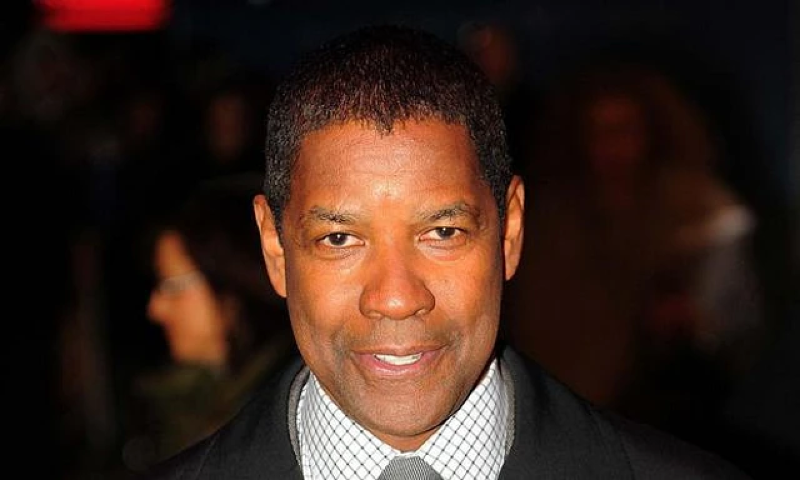
From Entertainment.ie: “Black Panther star Chadwick Boseman revealed in an interview in Rolling Stone magazine that Oscar-winning actor Denzel Washington paid for a then unknown Boseman to study at the University of Oxford. It came about when Boseman was in college and Phylicia Rashad, star of The Cosby Show, was his mentor. The actor applied to a summer program to study theatre at Oxford and while he was accepted, he couldn’t afford to go so Rashad called upon some friends in the entertainment business to help out. Boseman later realised that Washington was the one who financed his trip, although he kept it secret because he wanted to talk to Denzel about it first. He got the opportunity at the New York premiere of Black Panther and Denzel’s reaction was priceless, telling Boseman, “Oh so that’s why I’m here, you owe me money!”
Note: This is a version of my When The Going Gets Weird newsletter, which I send out via Ghost, the open-source publishing platform. You can see other issues and sign up here.
Continue reading “She executed thousands and her nickname was Demon”