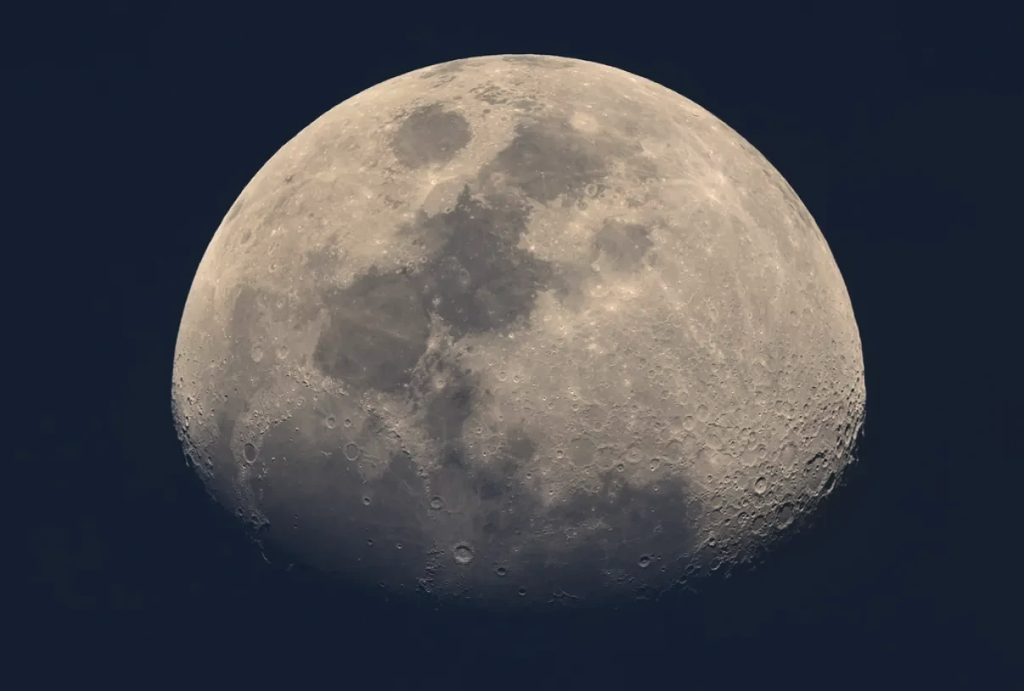

As the Cold War simmered between the US and the Soviet Union, both nations proposed some pretty outlandish ideas, but one of the most mind-boggling was the once-classified plan to detonate a nuclear bomb on the moon. After the USSR made cosmic history by sending the world’s first artificial satellite, Sputnik, to space in 1957, the U.S. hoped to follow up with an unprecedented display of power. “Specific positive effects would accrue to the nation first performing such a feat,” according to a 1959 report that was declassified in 2000. These bizarre plans might have remained under wraps to this day if not for Carl Sagan, the celebrated astronomer. At the time a Ph.D. student at the University of Chicago, Sagan was recruited by renowned Dutch astronomer Gerard Kuiper to help spearhead what became known as Project A119. (via Nautilus)
Inside a cave in the Balkans scientists found the world’s largest spider web
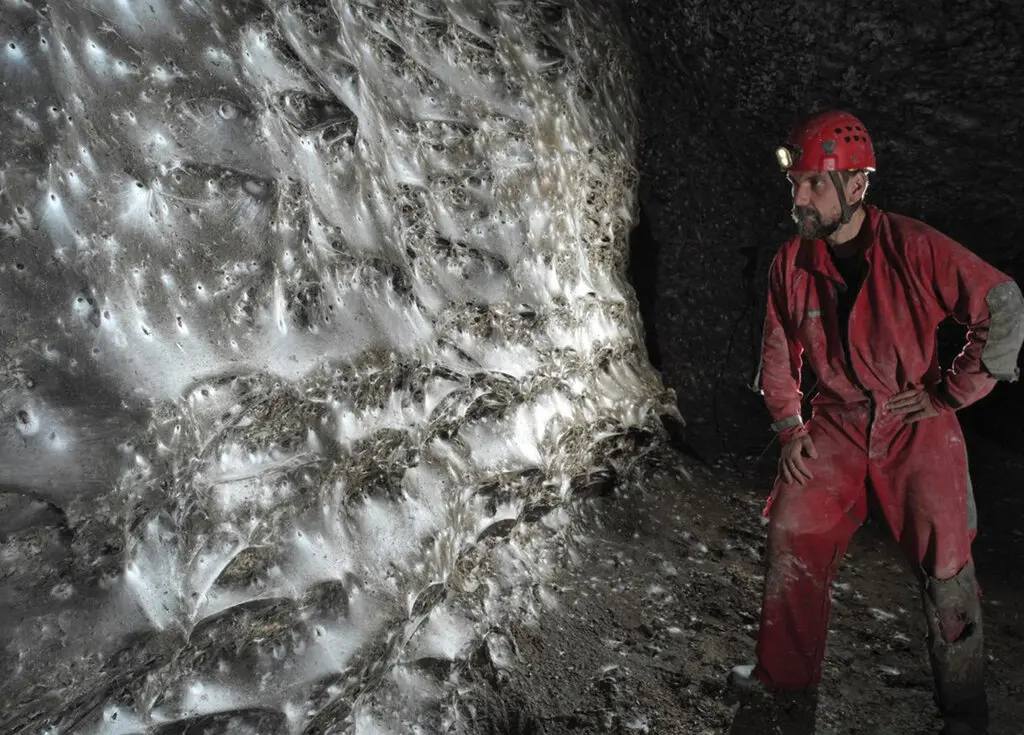
Even in a pitch-black cave, what appears to be the world’s largest spider web is hard to miss.It stretches for about 1,140 square feet, about the size of a small home, hanging in a low and narrow passage in a cave spanning the border between Albania and Greece.But what scientists recently found in Sulfur Cave, a network of rooms and passages carved from limestone by the Sarantaporos River, surprised them even more than the size of the web. Inside the spider metropolis — population 111,000 — were two species that had not been known to live together harmoniously, mainly because one species tends to eat the other.The team of scientists discovered that 69,000 Tegenaria domestica, known as the barn funnel weaver, were living with about 42,000 Prinerigone vagans, which inhabit wet places. Usually the barn funnel weavers prey on P. vagans, which are smaller. The cave itself was hollowed out by sulfuric acid formed from the oxidation of hydrogen sulfide in the groundwater. (via the NYT)
Note: This is a version of my When The Going Gets Weird newsletter, which I send out via Ghost, the open-source publishing platform. You can see other issues and sign up here.
Continue reading “The US planned to detonate an atomic bomb on the moon”