

As one medieval Italian father puts its: “a student’s first song is a demand for money, and there will never be a letter which does not ask for cash.” Here is a typical example from the 1220s: “B. to his venerable master A., greeting This is to inform you that I am studying at Oxford with the greatest diligence, but the matter of money stands greatly in the way of my promotion, as it is now two months since I spent the last of what you sent me. The city is expensive and makes many demands; I have to rent lodgings, buy necessaries, and provide for many other things which I cannot now specify. Wherefore I respectfully beg your paternity that by the promptings of divine pity you may assist me, so that I may be able to complete what I have well begun. For you must know that without Ceres and Bacchus Apollo grows cold.” (via Medievalists.net)
At the World Nomad Games athletes compete in sports like horseback archery
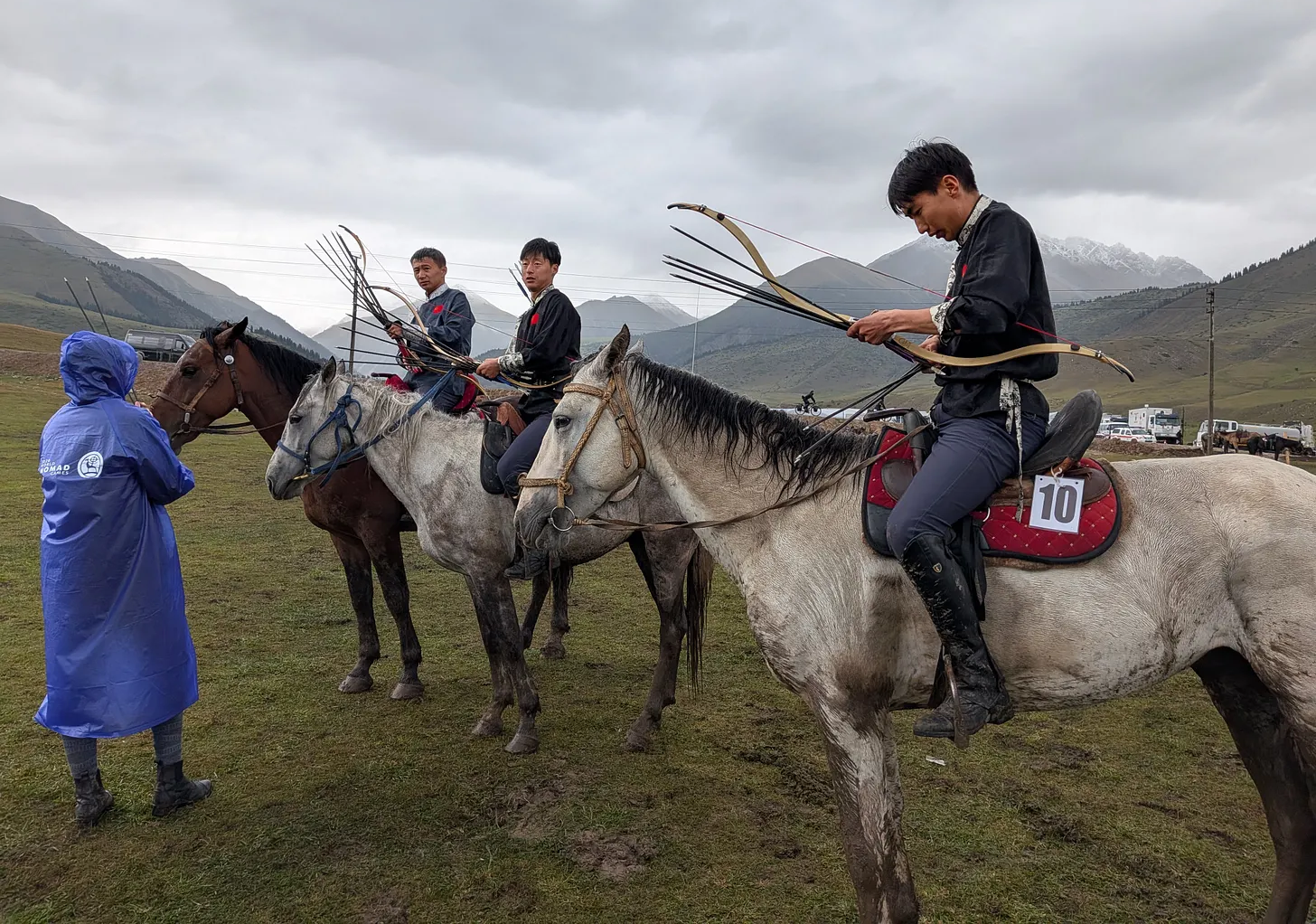
On a rainy day at the beginning of September, I found myself standing under the giant sky at the foot of the mountains in rural Kyrgyzstan, shouting “add oil! (加油) from the sidelines of a horseback archery track. I was back in Central Asia for the World Nomad Games, an Olympics-style celebration where China reluctantly lets some of its minorities compete. The World Nomad Games were first conceived in Kyrgyzstan in 2014 and are held every two years. After being hosted by Türkiye in 2022 and Kazakhstan in 2024, the Games have finally returned home to the mountains of Kyrgyzstan. And these were the largest Games ever, with 200,000+ visitors piling into Kyrchyn Gorge, one of the Games’ six venues, by the third day of the Games to watch 3,000+ athletes from 109 countries (compared to 583 athletes from 19 countries in 2014). (via China Talk)
Note: This is a version of my When The Going Gets Weird newsletter, which I send out via Ghost, the open-source publishing platform. You can see other issues and sign up here.
Investigating the strange science of how the end of a whip or chain moves
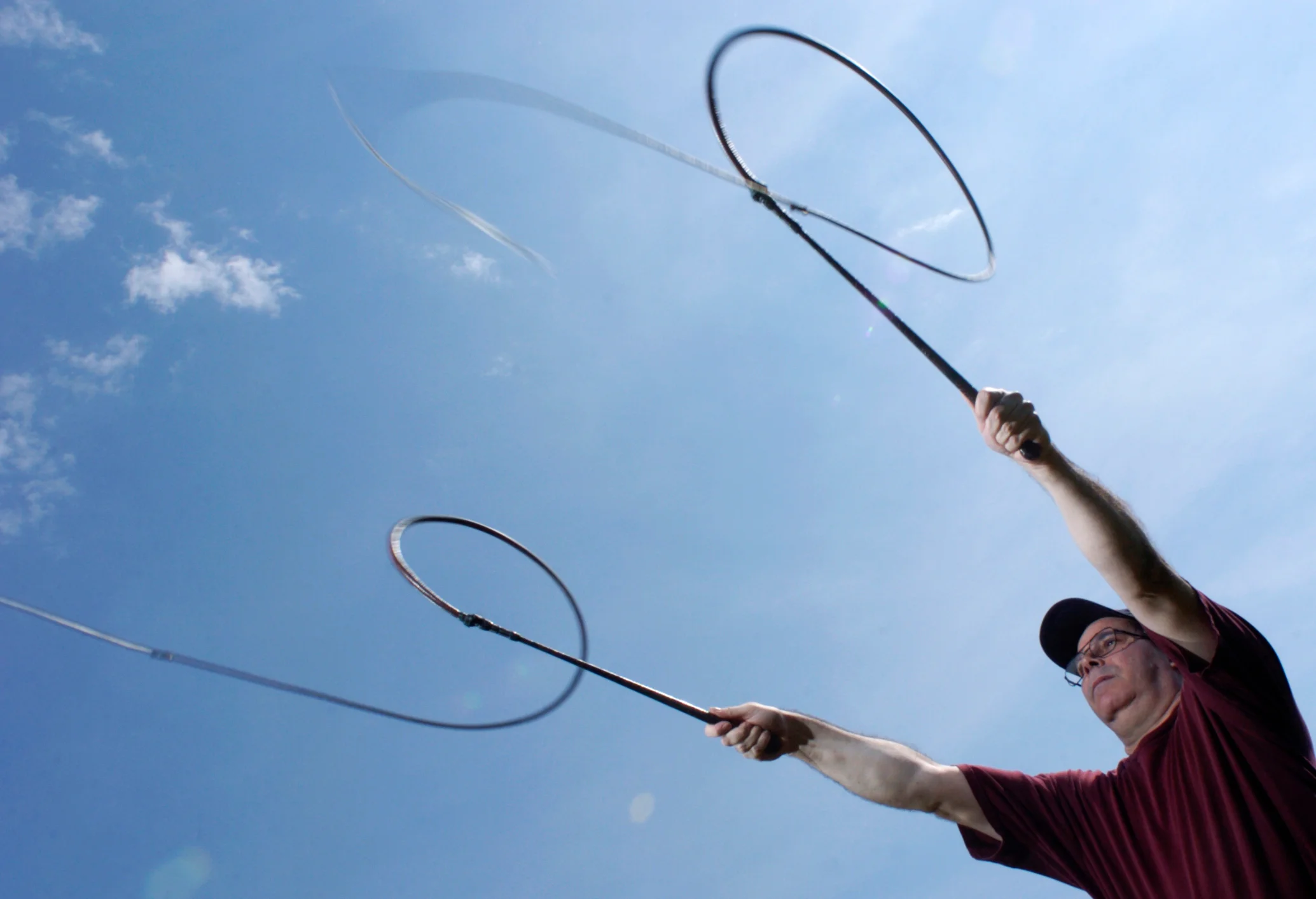
John Aitken is the first scientist I know of who studied what I’ve been calling KdK (Kinetik der Kontinua) – the physics of moving chains. Aitken lived from 1839 to 1919 and spent most of his life in Falkirk, a town halfway between Glasgow and Edinburgh. Unlike other KdK researchers like Carriere and Kucharski, who studied systems in which one end was free to move – so whips, basically – Aitken studied the movement of closed loops of chain, which he set in motion using a series of machines that he built in his home laboratory in Falkirk. When I discovered his 1878 paper “An account of some Experiments on Rigidity produced by Centrifugal Force,” I began constructing similar machines so that I could see for myself the phenomena that were so interesting to Aitken. Out of respect for his achievements I called these machines Aitkenators. My wife dubbed them chain-flingers, which is the name that actually stuck. (via Neal Stephenson)
Hi everyone! Mathew Ingram here. I am able to continue writing this newsletter in part because of your financial help and support, which you can do either through my Patreon or by upgrading your subscription to a monthly contribution. I enjoy gathering all of these links and sharing them with you, but it does take time, and your support makes it possible for me to do that. I also write a weekly newsletter of technology analysis called The Torment Nexus.
Archaeologists keep finding the remains of women where men were supposed to be
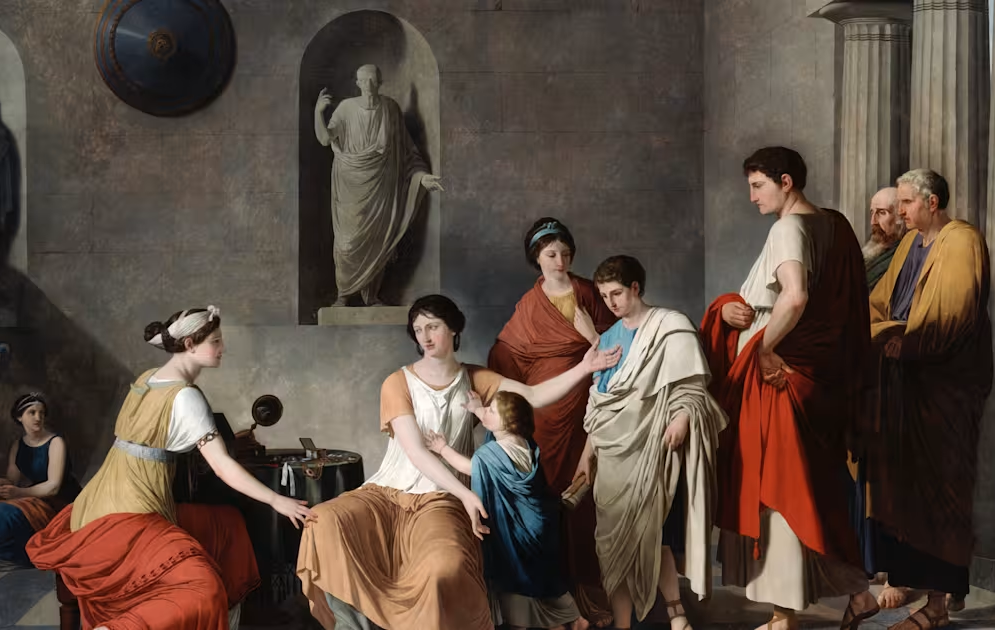
History has a funny way of becoming decidedly less male-dominated the moment we stop assuming it always was. Take ancient Rome, for instance. Despite the legal, economic, political, and social restrictions imposed on Roman women, many did play roles other than wife, mother, and daughter — including priestess, empress, midwife, shop owner, captain, and merchant. In a dedication dating to around 200CE, uncovered by archaeology professor Carrie Atkins, two Roman women described themselves as ‘distinguished matrons, Red Sea ship owners and merchants.’ Just-published research by archaeologist Tamara Lewit adds yet another profession to that list: wine and olive oil producer. By analysing various Roman texts — laws, business records, grave inscriptions— spanning five centuries, Lewit found that the vilica, previously dismissed by historians as little more than a housekeeper, was actually a farm manager overseeing wine and olive oil production, bookkeeping, and other operations. (via The Noösphere)
In the movie Poltergeist a scene with skeletons used real ones but didn’t tell the actors

The scene that the skeletons show up in is when JoBeth Williams’ character, Diane Freeling, falls in the pool that is being put in and the skeletons start popping up out of the water around her and she is utterly terrified. The reason that real skeletons were used in the movie is because it was actually cheaper and more cost-effective than creating and using plastic fake ones. JoBeth Williams was not made aware that there were real skeletons were used in the scene until after she finished shooting it. In an interview that aired as part of the TV Land show TV Land: Myths & Legends back in 2008, Williams said: “In my innocence and naiveté, I assumed that these were not real skeletons. I assumed that they were prop skeletons made out of plastic or rubber. I found out — as did the whole crew — that they were using real skeletons, because it’s far too expensive to make fake skeletons out of rubber.” in 1982 special effects artist Craig Reardon confirmed the story as part of a lawsuit filed against Spielberg. (via Geek Tyrant)
The pelican that thought it should be going to elementary school in Japan

Acknowledgements: I find a lot of these links myself, but I also get some from other places that I rely on as “serendipity engines,” such as The Morning News from Rosecrans Baldwin and Andrew Womack, Jodi Ettenberg’s Curious About Everything, Dan Lewis’s Now I Know, Robert Cottrell and Caroline Crampton’s The Browser, Clive Thompson’s Linkfest and Why Is This Interesting by Noah Brier and Colin Nagy. If you come across something you think should be included here, feel free to email me at mathew @ mathewingram dot com