From Andreas Babst for Neue Zircher Zeitung: “In 1969, the Intercontinental Hotel, Afghanistan’s first luxury hotel, opened. It was built in a time that feels much further away than the year suggests. Afghanistan was at war for more than forty years. Rulers came and went, and every one of them was here, at the Intercontinental. Its former luxury has faded, but the Intercontinental has remained a symbol: Those who rule Kabul rule Afghanistan, and those who rule Kabul rule the Intercontinental. Today, the hotel is run by the Taliban. The new government is forcing Taliban and non-Taliban to work together – in the administration and in government-related businesses. Young men share an office with young fighters they once feared, and young fighters sit next to young men they once despised. A lot depends on this experiment.”
The first algorithmically generated music was developed in the seventeenth century
From Amelia Soth for JSTOR Daily: “The first device for algorithmically composing music comes to us surprisingly early: in the 1600s. Looking something like an overcomplicated and miniaturized chest of drawers, it allowed even complete amateurs to compose four-part church music. They could start with a text in verse to set to music, choose whether they wanted music in a simple or florid style, and the rest was achieved by mixing and matching the entries carved into the device’s many little wooden tablets, ultimately converting the results into musical notes. Only a few examples of the device, known as the Arca musarithmica or “Musical Ark,” remain today. The famous diarist Samuel Pepys owned one, as did Ferdinand III of the Holy Roman Empire. The idea for the device came from polymath and all-around oddball Athanasius Kircher.”
Note: This is a version of my personal newsletter, which I send out via Ghost, the open-source publishing platform. You can see other issues and sign up here.
From Emily Zarevich for JSTOR Daily: “Flamboyant, swashbuckling cross-dressing was nothing new in late nineteenth-century France. Paris’s unique and bohemian lesbian subculture allowed these women to thrive, though it was still illegal for French women to wear pants in public. Yet despite the dangers and the occasional assaults, Belle Époque aristocrat and performer Mathilde de Morny (1863–1944)—better known by her alias “Missy”—still committed to her daring butch look, cutting her hair short, donning tailored three-piece suits, and smoking as many cigars as she pleased. Missy built her artistic career on the publicity raked in from her mannish attire and character, her queer-coded tendencies, and her adoption of masculine nicknames. Besides “Missy,” she answered to “Oncle (Uncle) Max” and “Monsieur de Marquis.” Like the French writer George Sand, who bunked down with composer Frédéric Chopin and poet Alfred de Musset, Missy selected her lovers from among France’s creative elite.”
At Japan’s dementia cafes, forgotten orders are all part of the service
From Michele Ye Hee Lee for the Washington Post: “The 85-year-old server was eager to kick off his shift, welcoming customers into the restaurant with a hearty greeting: “Irasshaimase!”or “Welcome!” But when it came time to take their orders, things got a little complicated. He walked up to a table but forgot his clipboard of order forms. He gingerly delivered a piece of cake to the wrong table. One customer waited 16 minutes for a cup of water after being seated. But no one complained or made a fuss about it.Each time, patrons embraced his mix-upsand chuckled along with him. That’s the way it goes at the Orange Day Sengawa, also known as the Cafe of Mistaken Orders. This 12-seat cafe in a suburb in Tokyo, hires elderly people with dementia to work as servers. A former owner has a parent with dementia, and the new owner agreed to let them rent out the space each month as a dementia cafe. The organizers now work with the local government to get connected to dementia patients in the area.”
The World Brain: H.G. Wells’ prophetic 1930s vision for the internet
From Maria Popova at The Marginalian: “On August 20, 1937 H.G. Wells addressed the archivists, librarians, and bibliographers gathered at the World Congress on Universal Documentation in Paris, where the encyclopedia had been invented two centuries earlier. Wells made a daring proposition: Saving humanity from itself calls for the creation of a new system for “universal organisation and clarification of knowledge and ideas.” He called it a World Brain — a “permanent central Encyclopaedic organisation with a local habitat and a world-wide range,” democratizing that supreme antidote to propaganda and manipulation: knowledge. The World Brain would be readily available to every human being, no matter their income level or the political rule of their society “a sort of cerebrum for humanity, a cerebral cortex which will constitute a memory and a perception of current reality for the entire human race.”
Editor’s note: If you like this newsletter, I’d be honoured if you would help me by contributing whatever you can via my Patreon. Thanks!
The lost history of Sextus Aurelius Victor
From Justin Stover for Antigone Journal: “Around 380 AD, the famous and irascible translator, Christian theologian, and general polymath, St Jerome, sat down to write a letter. Unsurprisingly, it was about books. One of them was the History of Sextus Aurelius Victor. Born in rural poverty in North Africa to an unlettered father, Victor rocketed to fame in 361, when he was summoned to Naissus by the Emperor Julian. Julian was so impressed by the North-African historian that he commissioned a bronze statue to be set up in his honour and made him governor of the province of Pannonia Secunda. It is no exaggeration to suggest that Victor was the Latin historian of the later 4th century. Most readers might reasonably wonder, therefore, why they have never heard of him.”
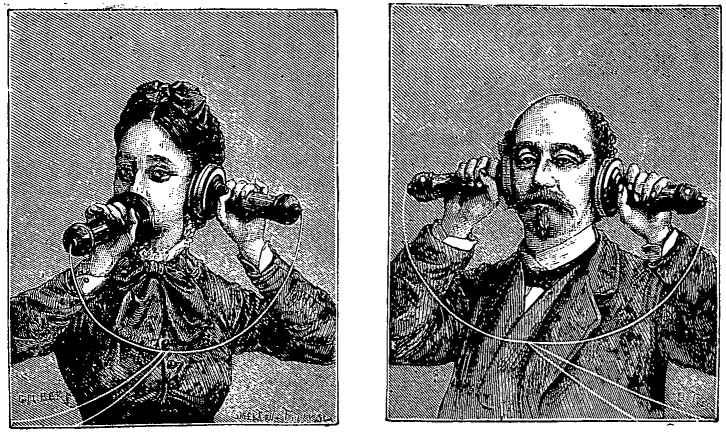
Instructions on how to use the new device known as a telephone, from 1896
From Futility Closet: “To Listen: Place the telephone fairly against the ear, with an upward motion, so that the lower extremity or lobe of the ear is gathered in, into the cavity of the telephone; in this position it will be found to fit snugly and comfortably — the lobe of the ear acting as a cushion and at the same time closing out all ulterior sounds, thus enabling the voice to be heard with clearness and precision.” AT&T promoted a Telephone Pledge that read, “I believe in the Golden Rule and will try to be Courteous and Considerate over the Telephone as if Face to Face.” The winner of a 1910 Bell essay contest wrote, “Would you rush into an office or up to the door of a residence and blurt out ‘Hello! Hello! Who am I talking to?’ No, one should open conversations with phrases such as ‘Mr. Wood, of Curtis and Sons, wishes to talk with Mr. White. In America Calling (1992), Claude S. Fischer notes, “Companies cut off service to abusers and obtained legislation that fined or even jailed profane customers.”
The perils of Pearl and Olga: A true crime story from 1950s Manhattan
From St. Clair McKelway in the New Yorker, in 1953: “On the morning of December 31, 1946, two young women got on a subway train separately at the Fifty-fifth Street station in Brooklyn, and sat down across from each other in a car as the train moved off. They had never met, had never spoken, but their lives had been drawn together and the entwinement was a sinister one. They were both working girls and more than ordinarily attractive. One of them was tall, with pale, clear skin and large, dark eyes and shining black hair; she was twenty-eight years old. She had noticed that the other girl was carrying a gift-wrapped package about the size of a large shoe box. It had an aperture at one end, from which protruded what looked like the lens of a camera. The other girl was barely nineteen and was small and blond. Her name was Pearl Lusk.”
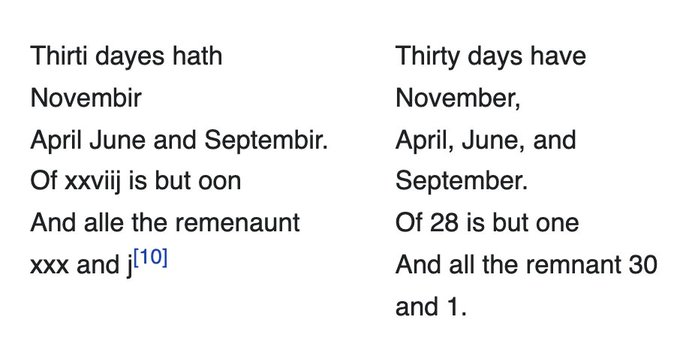
The “Thirty Days Hath November” rhyme dates back to the 1400s
Misinformation and disinformation have arguably never been as prominent or widely distributed as they are now, thanks to smartphones, the social web, and apps such as Facebook, X (formerly Twitter), TikTok, and YouTube. Unfortunately, as the US draws closer to a pivotal election in which trustworthy information is likely to be more important than ever, various researchers and academic institutions are scaling back or even canceling their misinformation programs, due to legal threats and government pressure. At the same time, a number of large digital platforms have laid off hundreds or even thousands of the employees who specialized in finding and removing hoaxes and fakes, in some cases leaving only a skeleton staff to handle the problem. And all of this is happening as the quantity of fakes and conspiracy theories is expanding rapidly, thanks to cheap tools powered by artificial intelligence that can generate misinformation at the click of a button. In other words, a perfect storm could be brewing.
Over the weekend, Naomi Nix, Cat Zakrzewski, and Joseph Menn described, in the Washington Post, how academics, universities and government agencies are paring back or even shutting down research programs designed to help counter the spread of online misinformation, because of what the Post calls a “legal campaign from conservative politicians and activists, who accuse them of colluding with tech companies to censor right-wing views.” This campaign—which the paper says is being led by Jim Jordan, the Republican Congressman from Ohio who chairs the House Judiciary Committee, and his co-partisans—has “cast a pall over” programs that study misinformation online, the Post says. Jordan and his colleagues have issued subpoenas demanding that researchers turn over their communications with the government and social-media platforms as part of a Congressional probe into alleged collusion between the White House and the platforms.
The potential casualties of this campaign include a project called the Election Integrity Partnership, a consortium of universities and other agencies, led by Stanford and the University of Washington, that has focused on tracking conspiracy theories and hoaxes about voting irregularities. According to the Post, Stanford is questioning whether it can continue participating because of ongoing litigation. (“Since this investigation has cost the university now approaching seven [figure] legal fees, it’s been pretty successful, I think, in discouraging us from making it worthwhile for us to do a study in 2024,” Alex Stamos, a former Facebook official who founded the Stanford Internet Observatory, said.) Meanwhile, the National Institutes of Health shelved a hundred-and-fifty-million-dollar program aimed at correcting medical misinformation because of legal threats. In July, NIH officials reportedly sent a memo to employees warning them not to flag misleading social-media posts to tech companies.
From Middle East Monitor: “In an effort to modernise while maintaining its Islamic character, Iran is exploring the use of artificial intelligence to assist its religious seminaries. The initiative is centred in the holy city of Qom, home to half of its 200,000 Shia clerics and Iran’s foremost hub of Islamic learning. The clerical establishment sees AI as a way to be more responsive to calls for progress while holding onto traditional values. Qom’s seminaries hope advanced technology can help parse Islamic texts faster and allow religious rulings, known as fatwas, to keep pace with Iran’s rapidly evolving society. “Robots can’t replace senior clerics, but they can be a trusted assistant that can help them issue a fatwa faster,” Mohammad Ghotbi, who heads a tech group in Qom, is reported saying in the Financial Times. While Qom’s clerics have protected traditional values, Iranians increasingly demand technological progress, Ghotbi said.”
In the 1820s, a boat full of scientists set off to build a utopia in Indiana called New Harmony
From Matthew Wills at JSTOR Daily: “In the winter of 1825–1826, the president, librarian, and several members of the Philadelphia Academy of Sciences headed west from Pittsburgh on the Ohio River. Academy President William Maclure, “father of American geology,” had gathered them all aboard the keelboat Philantropist [they used the French spelling]: scientists, artists, musicians, and educators, some bringing along their students, and all were eager to settle in Robert Owen’s New Harmony community on the Indiana frontier. Owen described it as a “Boatload of Knowledge.” A Welsh-born Scottish textile mill owner, social reformer, utopian, and early socialist, the already-renowned Owen wanted to establish a “New Moral World” in the New World, a world of enlightenment and prosperity leading to human happiness.”
Note: This is a version of my personal newsletter, which I send out via Ghost, the open-source publishing platform. You can see other issues and sign up here.
From Anika Burgess for Atlas Obscura: “They were known as the “book women.” They would saddle up, usually at dawn, to pick their way along snowy hillsides and through muddy creeks with a simple goal: to deliver reading material to Kentucky’s isolated mountain communities. The Pack Horse Library initiative was part of President Franklin Roosevelt’s Works Progress Administration, created to help lift America out of the Great Depression, during which, by 1933, unemployment had risen to 40 percent in Appalachia. Roving horseback libraries weren’t entirely new to Kentucky, but this initiative was an opportunity to boost both employment and literacy at the same time. The WPA paid the salaries of the book carriers—almost all the employees were women, making the initiative unusual among WPA programs—but very little else. Counties had to have their own base libraries from which the mounted librarians would travel.”
Scientists working in Antarctica unwittingly started to develop a new accent
From Tom Hale at IFL Science: “Antarctica has no native population or permanent residents, but it does have a transitory community of scientists and support staff who live there for part of the year on a rotational basis. In the summer months, there are typically around 5,000 people living in Antarctica, but that drops to just 1,000 in the winter. In 2019, a team from the University of Munich studied the phonetic change in accents among 11 “winterers” recruited from the British Antarctic Survey. This included eight people born and raised in England (five in the south and three in the north), one person from the northwest US, another from Germany, and lastly an Icelandic person. They recorded their voice at the beginning of the study, then made four more re-recordings at approximately six weekly intervals. Over the course of the stay, the researchers noticed significant changes in their accents.”
Note: This is a version of my personal newsletter, which I send out via Ghost, the open-source publishing platform. You can see other issues and sign up here.
From Phil Hoad for Atlas Obscura: “Months after he buried it in darkness, Régis Hauser still dreamed of the hole he dug at 3:30 a.m. on April 24, 1993, three feet deep somewhere in France. How he lugged the hunk of metal from his car trunk and placed it in the dirt. When he told his tale to the French newspaper Libération, he made the entombment sound faintly gothic: “I hadn’t even finished, and my hands were bloody. When it was done, I went far away, to get breakfast. I looked at myself in the mirror at the cafe. I was barely recognizable, disheveled, covered in earth.” No one had seen him in the act, or so Hauser hoped. The object Hauser buried that night was a bronze sculpture of an owl. He had promised that whoever found it could exchange it for an identical owl cast in gold, silver, onyx, diamonds, and rubies, worth about one million francs. Its location could be divined by solving 11 puzzles, a combination of riddles and illustrations, published shortly afterward in a book he wrote called On the Trail of the Golden Owl.”
Airlines are really just banks with airplanes now, thanks to the rise of point programs
From Ganesh Sitaraman at The Atlantic: “Here’s how the system works now: Airlines create points out of nothing and sell them for real money to banks with co-branded credit cards. The banks award points to cardholders for spending, and both the banks and credit-card companies make money off the swipe fees from the use of the card. Cardholders can redeem points for flights, as well as other goods and services sold through the airlines’ proprietary e-commerce portals. For the airlines, this is a great deal. They incur no costs from points until they are redeemed—or ever, if the points are forgotten. This setup has made loyalty programs highly lucrative. A 2020 analysis found that Wall Street lenders valued the major airlines’ mileage programs more highly than the airlines themselves. United’s MileagePlus program, for example, was valued at $22 billion, while the company’s market cap at the time was only $10.6 billion.”
Note: This is a version of my personal newsletter, which I send out via Ghost, the open-source publishing platform. You can see other issues and sign up here.
From Robert Worth for The Atlantic: “On the last morning of his life, Shinzo Abe arrived in the Japanese city of Nara, famous for its ancient pagodas and sacred deer. His destination was more prosaic: a broad urban intersection across from the city’s main train station, where he would be giving a speech to endorse a lawmaker running for reelection to the National Diet, Japan’s parliament. Abe had retired two years earlier, but because he was Japan’s longest-serving prime minister, his name carried enormous weight. No one seems to notice the youngish-looking man about 20 feet behind Abe, dressed in a gray polo shirt and cargo pants, a black strap across his shoulder. Unlike everyone else, the man is not clapping. Abe started to speak. Moments later, his remarks were interrupted by two loud reports, followed by a burst of white smoke. He collapsed to the ground. His security guards ran toward the man in the gray polo shirt, who held a homemade gun—two 16-inch metal pipes strapped together with black duct tape.”
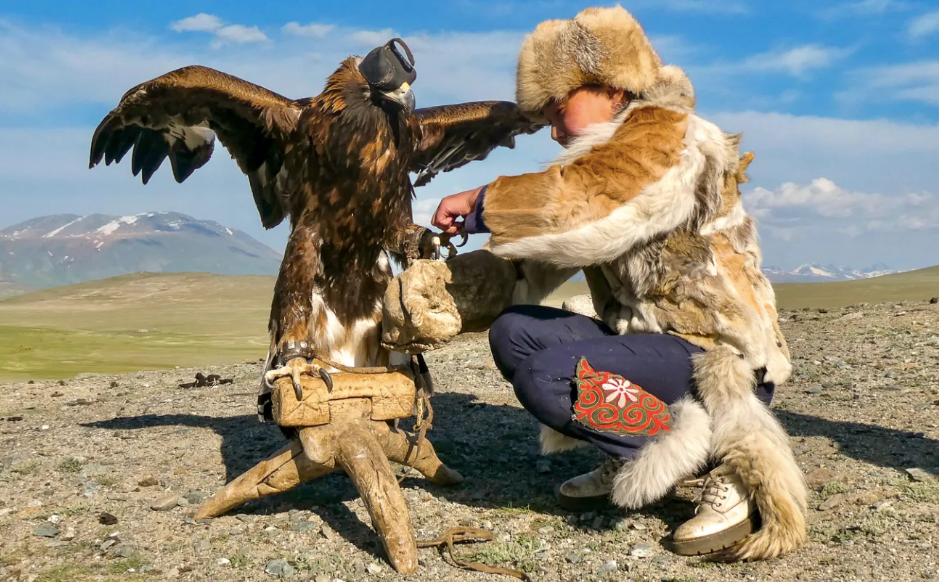
In search of the legendary female eagle hunters of Mongolia
From Asha Tanna for Al Jazeera: “In 2013, Kazakh women in Mongolia captured global attention when a young eagle huntress, Aisholpan Nurgaiv, became the subject of a viral photograph taken by Israeli photographer Asher Svidensky. He returned to the country in 2014 with director Otto Bell, who made a documentary about the teenager. The storyline focused on her being an outlier in Kazakh culture in what Bell described as an isolated community with “a certain kind of ignorance about what woman can do”. These remarks were made during a press interview on CBS’s Mountain Morning Show in January 2016, where he also said she was the “first woman to eagle hunt in the 2,000-year-old male-dominated history”. But Kazakhs and historians say this is not true. “Eagle hunting always included women,” says Adrienne Mayor, a historian at Stanford University.”
Editor’s note: If you like this newsletter, I’d be honoured if you would help me by contributing whatever you can via my Patreon. Thanks!
From David Shiffman at Hakai magazine: “Long before they started chomping on yachts, killer whales were making headlines for a rash of attacks on South African great white sharks. The killings were as gruesome as they were impressive. The killer whales were showing a deliberate sense of culinary preference, consuming the sharks’ oily, nutrient-rich livers but leaving the rest of the shark to sink or wash up on a nearby beach. From the initial news of the attacks, the situation only got weirder. Great white sharks started disappearing from some of their best-known habitat around South Africa’s False Bay. “The decline of white sharks was so dramatic, so fast, so unheard of that lots of theories began to circulate,” says Michelle Jewell, an ecologist at Michigan State University Museum.”
How the Underground Railroad got its name
From Scott Shane at The New York Times: “Thomas Smallwood was a busy man in the summer of 1842. Born into slavery outside Washington, D.C., in 1801, he had largely educated himself and bought his own freedom 11 years before. By day, he ran a shoemaking business from the little house he shared with his wife and four children a short walk from the U.S. Capitol. By night, he was organizing daring, dangerous escapes from slavery — not by ones and twos but by the wagonload — from Washington, Baltimore and the surrounding counties. Yet somehow he found time every week or two to write a new dispatch for an abolitionist newspaper in Albany, N.Y. His letters mercilessly mocked enslavers and celebrated those fleeing from them. One day early that August he took up his pen and made literary history, becoming the first to use a phrase that would resound through the decades of slavery and to the present day: underground railroad.”
Note: This is a version of my personal newsletter, which I send out via Ghost, the open-source publishing platform. You can see other issues and sign up here.
In July, Terry Doughty, a federal judge in Louisiana, ruled that discussions between the federal government and social-media platforms as to what content they should or shouldn’t allow—around the efficacy of COVID vaccines, for example—constituted an attempt to coerce the platforms, and as such were a violation of the First Amendment’s protection against government interference in speech. Indeed, Doughty described this kind of conduct as the “most massive attack against free speech in United States’ history.” He ordered officials from a range of government agencies to stop talking to tech companies about content moderation, and also prohibited these officials from “collaborating, coordinating, partnering, switchboarding, and/or jointly working with” certain academics whose work focuses on social media.
As I explained at the time, the allegation that the government has colluded with social media companies to censor speech is not new; in the case in which Doughty ruled, the attorneys general of Louisiana and Missouri argued that officials had begun a “systematic campaign” to control speech on social media as early as 2017. The federal government subsequently appealed Doughty’s ruling, arguing that in talking with the social platforms, officials were merely trying to promote “responsible actions to protect public health, safety, and security.” Two weeks ago, the case moved forward again: the Court of Appeals for the Fifth Circuit agreed with Doughty that the White House, the surgeon general, the Centers for Disease Control and Prevention, and the FBI coerced the platforms into suppressing speech, and that this was a violation of the First Amendment.
Although the appeals court upheld the general thrust of Doughty’s decision, however, it didn’t agree with a number of the restrictions that he imposed. Of the ten specific prohibitions on government behavior, the Fifth Circuit threw out nine as being too broad, and modified the tenth, according to the Washington Post, limiting it to efforts to “coerce or significantly encourage social-media companies to remove, delete, suppress, or reduce… posted social-media content containing protected free speech.” The appeals court also said that Doughty erred by including the State Department and a number of other agencies in his injunction, when there was no evidence that they had coerced any platforms.
Note: This was originally published as the daily newsletter for the Columbia Journalism Review, where I am the chief digital writer
From Simon Parkin for The Guardian: “This much is certain: Ashraf Marwan, a man some describe as the 20th century’s greatest spy, was alive when he tumbled from the fifth-floor balcony of his £4.4m London flat. The Egyptian businessman landed, shortly after 1.30pm on 27 June 2007, in the private rose garden at number 24 Carlton House Terrace, a street whose former occupants include three prime ministers (Palmerston, Earl Grey and Gladstone) and which lies a few hundred metres from Piccadilly Circus. Overhead, the lunchtime sky was obnoxious with helicopters, swarming above Tony Blair’s Teflon-plated convoy as it carried the prime minister to Buckingham Palace, where he would hand in his resignation. A woman screamed. Someone called the police. The paramedics arrived too late. Marwan died from a ruptured aorta.”
What it’s like learning to live without a tongue
From Jake Seliger: “On May 25, I had a massive surgery that made me feel like I should be dead; the surgery left me without a tongue, without some teeth in the bottom of my jaw, and without important nerves in my neck. No sane person wants their tongue removed, but having it out and not being able to swallow has particularly awful resonances for me: I’ve been into food and cooking since I was a teenager, and “going out to dinner” was the most common form of going out for Bess and me. “Having friends over for dinner” was our most common form of socializing. I chronically experimented with new food and gadgets in the kitchen. What can I make with fish sauce? Is the sous vide machine worth it? Can an air fryer replace the oven for many dishes? Will the capers in cauliflower piccata alienate our guests?”
Editor’s note: If you like this newsletter, I’d be honoured if you would help me by contributing whatever you can via my Patreon. Thanks!
When America was obsessed with the idea that aliens were creating crop circles
From James MacDonald at JSTOR Daily: “For a period of time in the 1980s and 1990s, much of the US was baffled by a mystery known as crop circles — areas in fields where crops had been flattened in circular, geometric patterns. These patterns would appear mysteriously out of nowhere, usually overnight, especially in the UK, but later in parts of the U.S., Japan, and a handful of other places. The phenomenon had no known cause, baffling experts but providing plenty of work for producers of TV specials. Researchers assumed the crop circles were caused by a weather event, such as a localized whirlwind, electrical phenomenon, or some combination of the two. But reality ended up being brutally embarrassing to the crop circle research community.”
Editor’s note: If you like this newsletter, I’d be honoured if you would help me by contributing whatever you can via my Patreon. Thanks!
From NPR’s All Things Considered: “Born in Boston in 1898, William James Sidis made the headlines in the early 20th century as a child prodigy with an amazing intellect. His IQ was estimated to be 50 to 100 points higher than Albert Einstein’s. He could read the New York Times before he was 2. At age 6, his language repertoire included English, Latin, French, German, Russian, Hebrew, Turkish and Armenian. Sidis was accepted to Harvard at age 9, but the school wanted him to wait until he was 11. Five years later, he graduated cum laude. But as an adult, he purposefully faded into the shadows. Sidis biographer Amy Wallace says he despised media attention. “He became a household name, and he hated it.” After a brief stint as a mathematics professor, Sidis went into hiding from public scrutiny, moving from city to city, job to job, often using an alias.”
I’m completely blind, but a lot more capable than most people think
From Jeffry Ricker for Psyche magazine: “I have been completely blind for several years. After a series of eye surgeries and the development of glaucoma, I started to lose my vision in early 2017. The last time I saw my face was February 2019. By the end of that year, I could see nothing but some colour and a few specks of light. And I soon lost even that. I lived near a centre that taught the skills needed to live independently as a blind person. All I needed, I thought, was to learn the technology and skills that would allow me to function in everyday life. Especially disruptive were the sudden and striking changes in my interactions with others. Strangers often seemed anxious around me. Even people I had known for years sometimes avoided me. Other blind people told me of family members who were embarrassed by their blindness.”
Editor’s note: If you like this newsletter, I’d be honoured if you would help me by contributing whatever you can via my Patreon. Thanks!
There’s a massive cavern underneath a plaza in South Korea, and no one knows why
From Rapael Rashid for The Guardian: “If you look in the right place, beneath the bustling streets in the heart of Seoul, you will come across something unexpected: stalactites. They hang ominously from the dank ceiling, a witness to the passage of time and decades of neglect. These mineral deposits have gathered under Seoul Plaza, probably one of South Korea’s most well-known spaces, famous for hosting everything from protests to concerts, in a vast mysterious underground tunnel the purpose of which even city officials are unsure of. The tunnel – which stretches on for 335 metres and covers an impressive 3,000 square metres – has remained hidden for decades, until now. After pulling on a dust mask, safety helmet, and protective shoe covers, we enter through the backdoor of a now-demolished toy library in an underground arcade, stepping into complete darkness.”
Note: This is a version of my personal newsletter, which I send out via Ghost, the open-source publishing platform. You can see other issues and sign up here.
From Molly Olmstead at Slate: “There’s a strange saga unfolding in Texas. It involves allegations and accusations of illicit sexual relationships, drug use, theft, abuse, spying, planted evidence, and plots to steal a multimillion-dollar property. The people involved are Catholic priests, bishops, and some pretty fired-up nuns. What has become an open, bitter feud between the bishop of Fort Worth and 10 cloistered nuns in Arlington, Texas, has scandalized and thrilled American Catholics. The cops, the courts, and the Vatican are involved. Onlookers are taking sides. It’s still unclear who’s going to come out on top. And it all started with a startling confession from a devout nun. The series of events began in December 2020, shortly after Mother Teresa Agnes Gerlach, the 43-year-old prioress of the Discalced Carmelite nuns of the Monastery of the Most Holy Trinity in Arlington, had a seizure. At some point during that month, she told a priest and her caregiver that she had committed some kind of sexual sin with another priest.”
When you have to make a momentous decision in your first day on the job
From Dan Lewis at Now I Know: “On September the 11th, 2001, terrorists hijacked four commercial jets with the intention of crashing them into buildings in both Washington, D.C., and New York City. As we all know, the terrorists were successful in three of the four cases; the fourth plane’s assault on the US Capitol was thwarted by the heroic passengers on board. While we now believe that no other planes were targeted, at the time, each of the other 4,000-plus flights scheduled to be in American air space at the time were at risk. But Ben Sliney, the Federal Aviation Commission’s National Operations Manager on duty that morning, prevented future harm. How? He made an unprecedented decision, making the call to ground every single commercial airplane in the country. But as incredible as his story is, one particular fact makes it even more jaw-dropping: September 11, 2001, was Ben Sliney’s first day on the job.”
Editor’s note: If you like this newsletter, I’d be honoured if you would help me by contributing whatever you can via my Patreon. Thanks!
Afghanistan has seen thousands of cases of what appears to be mass delusion
From Lynzy Billing for Undark: “Anita was lying on a stained bed in the women’s room of the psychiatric ward in Herat Regional Hospital, a government-run facility in western Afghanistan. Stiff and covered in sweat, the 20-year-old was unresponsive. Before Anita was admitted to the hospital, she had gotten into a fight with her brother. After the fight, she fell unconscious. Then Anita started seizing. When she arrived at the hospital, though, doctors did not see any sign of a neurological condition or other physical cause that could explain the sudden collapse. Anita’s case was far from unique. According to hospital records, the women’s ward in Herat saw 900 such cases that April. In 2021, the facility recorded 12,678 cases, up from 10,800 cases in 2020. These mysterious ailments — often entailing loss of consciousness, convulsions, paralysis — have plagued women and girls in Afghanistan for more than a decade.”
Note: This is a version of my personal newsletter, which I send out via Ghost, the open-source publishing platform. You can see other issues and sign up here.
From Ben Taub for The New Yorker: “For more than decade, a man named Mustafa quietly served as the deputy chief of Syria investigations for the Commission for International Justice and Accountability, a group that has captured more than a million pages of documents. Using these files, lawyers at the cija have prepared some of the most comprehensive war-crimes cases since the Nuremberg trials, targeting senior Syrian regime officers—including the President, Bashar al-Assad. For as long as Mustafa had been working, the group had kept his identity secret. According to one estimate, Mustafa either directly obtained or helped obtain more than two hundred thousand pages of internal Syrian regime documents, likely making him—by sheer volume of evidence collected—the most prolific war-crimes investigator in history.”
The wild quest to create a fake Indian cricket league was just the beginning
From Sean Williams for Sports Illustrated: “Molipur, a village of 5,200 in India’s northwestern state of Gujarat, is not the kind of place where sporting dreams are made. Yet in May 2022, as temperatures soared above 110°, one Molipuri man toiled around the clock on a hangdog farming plot a five-minute walk outside the village. The man’s name was Shoeb Davda, a 35-year-old beanpole of a bangle merchant and a father of five. He’d recently returned from a two-month trip to Moscow, where he had become entangled with a group of shadowy but well-financed men. They had an idea, inspired by the rise of the Indian Premier League, a quick-fire, eight-week-long cricket tournament every spring watched by some half a billion people globally. Were Davda to establish his own, livestreamed cricket tournament, they suggested, wagers would follow, and he could cleave a slice of the sport’s newfound betting riches for himself.”
Editor’s note: If you like this newsletter, I’d be honoured if you would help me by contributing whatever you can via my Patreon. Thanks!
What it’s like to work on a drug abuse hotline
From Aymann Ismail and Mary Harris for Slate: “I met Jessica Blanchard on the front patio of her home in Albany, Georgia. I was about 15 minutes early, and she was still in her pajamas, poking only her head out from the front door to greet us. “I’m on a call now,” she told us, waving us inside. That call, and others like it, was why we came to this backwoods area of Southwest Georgia, the “trailer hood,” as Blanchard called it, about a three-hour drive from Atlanta. Blanchard, known by her friends as Jessie B., is an operator and education director for Never Use Alone, a safe-use hotline for drug users. It was conceived of four years ago by a “bunch a drug users sick of their friends dying,” as she put it. The hotline serves people who worry using alone makes them vulnerable to dying by overdose. Total overdose deaths have climbed to nearly 110,000 in 2022.”
Note: This is a version of my personal newsletter, which I send out via Ghost, the open-source publishing platform. You can see other issues and sign up here.
From Jasna Hodžić for JSTOR Daily: “A little after midnight in the late summer of 1859, campers dozing beneath the night sky in the Colorado Rockies woke to a display of auroral light so bright one could easily read a newspaper. In their account of the event, published in the Rocky Mountain News, the party recalled that some insisted it was daylight and began the preparation of breakfast. Thousands of miles away, crowds gathered in the streets of San Francisco with eyes turned skyward. “The whole sky appeared to undulate something like a field of grain in a high wind,” wrote one journalist in the San Francisco Herald. The two-day celestial event did more than inspire poetic musings and temporarily confuse songbirds who began chirping in the night. Almost immediately, the world’s 100,000 miles of telegraph lines fell silent, victim to a wave of space-borne electric current strong enough to fry the systems.”
The time Eleanor Roosevelt disappeared for 10 days
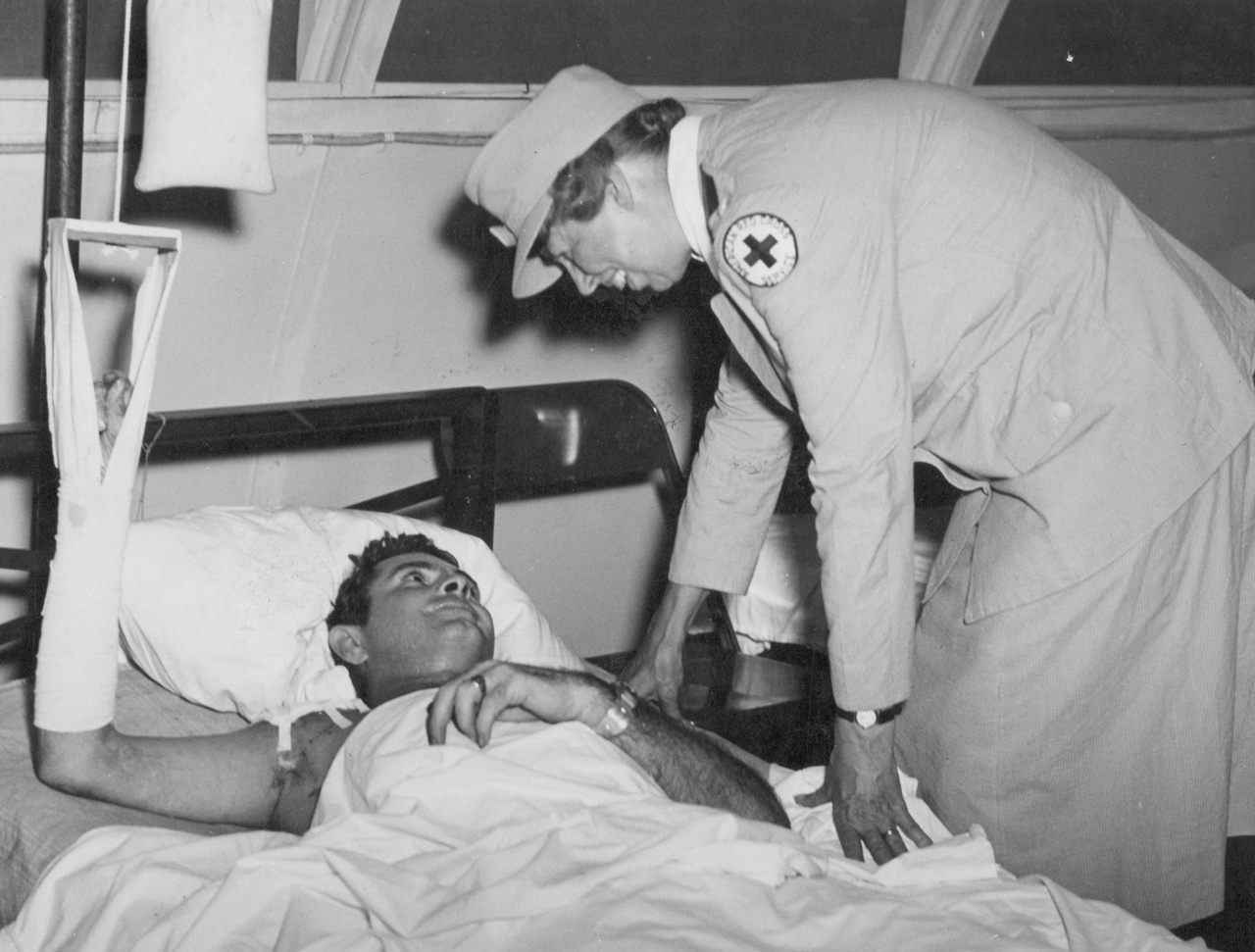
From Sarah Durn for Atlas Obscura: Soldiers nicknamed it “The Island of Death.” Hot, humid, and buzzing with mosquitoes, Guadalcanal was a tiny speck of land northeast of Australia in the Solomon Islands. American soldiers unlucky enough to be stationed there during World War II faced constant threats, from malnutrition to Japanese bombardment to tropical diseases. But none of that deterred First Lady Eleanor Roosevelt from visiting the island—she wanted, as always, to see things for herself. In August 1943, she disappeared for 10 days, only to turn up in one of the world’s most dangerous war zones halfway around the globe. During her five weeks in the Pacific, she traveled to 11 islands, gave countless speeches, and met 400,000 soldiers. Admiral William “Bull” Halsey, later said: “She alone had accomplished more good than any other person, or any group of civilians, who had passed through my area.”
Editor’s note: If you like this newsletter, I’d be honoured if you would help me by contributing whatever you can via my Patreon. Thanks!
The long and tangled story of what happened to John Lennon’s Patek Philippe watch
From Anthony Traina for Hodinkee: “This photo is watch-collector catnip: John Lennon, one of the most famous people of all time, wearing a Patek Philippe ref. 2499 perpetual calendar chronograph, one of the most important watches ever. Patek made just 349 examples of the 2499 over its 35-year production run. It’s complicated, rare, and collectible. Yoko Ono bought the watch for Lennon’s 40th birthday, just two months before he was murdered in New York City outside his and Ono’s apartment. Just months after this photo, the former Beatle was murdered, and the watch hasn’t been seen since. Thanks to an ongoing lawsuit in Geneva, new information about the mythical Patek’s history and whereabouts has surfaced. But the lawsuit is only the beginning of a story of extortion, theft, and a stolen Patek that traveled from New York to Turkey to Germany to Geneva and, perhaps, back home, as well as the legacy Lennon left behind.”
Note: This is a version of my personal newsletter, which I send out via Ghost, the open-source publishing platform. You can see other issues and sign up here.
In 1998, the US Department of Justice sued Microsoft, alleging that the company had abused its monopoly over personal computing by forcing users of its Windows operating system to adopt Internet Explorer as their browser, among other things. In 2001, the two sides settled the case. The government initially asked for Microsoft to be broken up. That outcome was overturned on appeal, but some experts argued that the glare of the legal spotlight nonetheless slowed Microsoft down in key ways. These, in turn, allowed an upstart named Google—founded a month before the trial was launched—to eventually dominate the internet search market.
Two decades later, Google is ten times the size that Microsoft was in the nineties, with a market value of almost two trillion dollars and control over more than 90 percent of online search and related advertising. On Tuesday, the first major antitrust case since the Microsoft trial got underway in a DC courtroom—with Google in the role of defendant. The Justice Department intends to prove that Google has misused its search monopoly to harm its competitors and that it has maintained that monopoly through illegal means, such as paying smartphone companies like Apple billions of dollars to make Google the default search engine on their products. (Google’s dominance in advertising is the subject of a separate lawsuit that has yet to reach trial.) Kenneth Dintzer, a Justice Department lawyer, opened by arguing that Google viewed these default search deals as a “powerful strategic weapon” to cut out rivals. The resulting feedback loop, Dintzer argued, is a wheel that has been turning for more than twelve years, always “to Google’s advantage.”
Google’s lawyer hit back, arguing that “users today have more search options and more ways to access information online than ever before.” The crux of the company’s defense was outlined in a pretrial filing arguing that the Justice Department has defined the search market too narrowly, that Google doesn’t have a monopoly (which it defines as “the ability to raise prices beyond a competitive level”), and that its dominance in that market actually helps consumers. According to Google, its status as the default browser on products like Apple’s did not result from massive payments but because Google “successfully competed on the merits—that is, on the basis of product quality and price.” Breaking up the company, or forcing it to divest itself of certain software operations, would make the global technology landscape poorer for everyone, Google says. The trial continues, and could take as long as ten weeks to conclude.
Note: This was originally published as the daily newsletter for the Columbia Journalism Review, where I am the chief digital writer




:format(jpeg)/cdn.vox-cdn.com/uploads/chorus_image/image/45737616/3177001.0.0.jpg)