From The Economist: “Hansen’s disease, better known as leprosy, is a tropical malady that is rare in America. In 2020, just 159 cases were reported. Only 5% of people seem to be susceptible to infection. Because it is so rare, Americans seldom think about leprosy, and many clinicians have never seen it outside a textbook. This is starting to change. Nearly 17% of leprosy cases were in Florida in 2020, and over 80% of those were in central Florida, and this year the state has 16 cases. In the past, Americans with leprosy usually caught it while travelling to countries where it is more common, such as Brazil or India, or had been in close contact with people from such places. Armadillo wrestlers are also at risk—the nine-banded armadillo can carry the disease. This latest outbreak is unusual in that the patients are neither travelers nor armadillo wrestlers.”
Letters describe what life was like for a twenty-something in 18th century London
From The Smithsonian: “When Ben Browne was 27, he traded his small English town for the bustling streets of London to work as a law clerk. There, he led the typical life of a 20-something in a big city: His social life flourished, he fell in love and he was constantly stressed about money. The year was 1719. Some 65 letters that Browne sent to his father during this period are the focus of a new display at the historic Browne family home in Cumbria, England. In his letters, Browne described his new job training as a clerk to a lawyer, and complained about working long hours, copying legal documents from 8 a.m. to 8 p.m. In one letter, he expressed frustration with his father’s decision to apprentice him to his employer for five years, rather than a shorter training period. Browne wrote that he needed money to pay rent—and to purchase stockings, breeches, wigs and other items he deemed necessary for his life in London.”
Note: This is a version of my personal newsletter, which I send out via Ghost, the open-source publishing platform. You can see other issues and sign up here.
From Medium: “Songwriter, producer, and McCann Erickson executive Roquel “Billy” Davis, conceived and co-wrote “I’d Like To Buy the World A Coke” for that famous 1971 campaign. Davis’s biography is every inch as remarkable as the fictional Don Draper or any other character from Mad Men. Born in Detroit in 1932, he wrote songs in the 1950s for Jackie Wilson with his partner, Berry Gordy. Early in his career, Davis also worked with Chuck Berry, Bo Diddley, and other blues and rock pioneers on the Chess label. Later, Davis and Gordy started the Detroit R&B label Anna Records and recruited a teenaged Aretha Franklin, along with Mary Wilson, Smokey Robinson and the Miracles, and what became the Four Tops. As Gordy took more control over the growing company, Davis’s work was increasingly marginalized. He began to look elsewhere.”
If sound could travel through space, the sun would be as loud as a jet airplane
From Reddit: “The Sun is immensely loud. The surface generates thousands to tens of thousands of watts of sound power for every square meter. That’s something like 10x to 100x the power flux through the speakers at a rock concert, or out the front of a police siren. Except the “speaker surface” in this case is the entire surface of the Sun, some 10,000 times larger than the surface area of Earth. Most of that sound energy just gets reflected right back down into the Sun, but some of it gets out into the solar chromosphere and corona. None of us (professional solar physicists) can be sure, yet, just how much of that sound energy gets out, but it’s most likely between about 30 and about 300 watts per square meter of surface, on average.”
Note: This is a version of my personal newsletter, which I send out via Ghost, the open-source publishing platform. You can see other issues and sign up here.
From the Swiss National Museum: “In the middle of the First World War, diplomats in Switzerland, Austria and the Vatican were trying to resolve the Roman question. The issue, as the representative of the Holy See in Bern wrote to the Ministry of Foreign Affairs in Austria in 1916, was “one of the most complicated seen in world politics for a considerable time”. After Italy conquered the Papal States in 1870 and incorporated the Vatican into the nation state of Italy, efforts were made to resolve the situation. The Principality of Liechtenstein came up among the proposals put forward: Rome and Vienna developed a particular interest in a secret plan, whereby the Principality would be offered to the pontiff. The rationale behind the idea was that the Pope would acquire ‘global sovereignty,’ facilitating negotiations with the Italian government.”
American hockey players start to develop a Canadian accent the longer they play
From Ars Technica: “University of Rochester linguist Andrew Bray started out studying the evolution of the trademark sports jargon used in hockey for his master’s thesis. For instance, a hockey arena is a “barn,” while the puck is a “biscuit.” When he would tell people about the project, however, they kept asking if he was trying to determine why American hockey players sound like “fake Canadians.” Intrigued, Bray decided to shift his research focus to find out if hockey players did indeed have distinctively Canadian speech patterns and, if so, why this might be the case. He discovered that US hockey players borrow certain aspects of the Canadian English accent. But they don’t follow the typical rules of pronunciation. “American hockey players are not trying to shift their speech to sound more Canadian,” Bray said. “They’re trying to sound more like a hockey player. That’s why it’s most evident in hockey-specific terms.”
Note: This is a version of my personal newsletter, which I send out via Ghost, the open-source publishing platform. You can see other issues and sign up here.
From Interconnected: “Thirty years ago, a company called Etak released the first commercially available computerized navigation system for automobiles. Spearheaded by an engineer named Stan Honey and bankrolled by Nolan Bushnell, the cofounder of Atari, the company’s Navigator was ahead of its time. Benj Edwards, a technology historian, discovered that the dart-shaped arrow that Etak used for location is the same arrow that Google Maps uses to show your current location. But Edwards’ research went even further back: He discovered that an engineer who worked in a nearby office had shown the team a vector-based video game called Asteroids, and Etak’s on-screen representation of the car in its naviation system wound up using a vector triangle almost identical to the ship from Asteroids. Google then adopted something very similar for the car in its next-generation car navigation system product.”
Why hearing “The Stars and Stripes Forever” sometimes made people run for the exits
From Now I Know: “Circuses, historically, haven’t been the safest form of entertainment. Wild animals, random pyrotechnics, people on tightropes, etc. A loose animal or a fire can not only put guests in harm’s way, but once customers begin to react, others may panic — and that’s a recipe for disaster. To combat this, circuses had to find a way to let everyone know that something was urgently wrong, without alerting the audience. Music became an easy solution. Circuses back then often had bands that regaled patrons with all sorts of tunes, and everyone could hear the band. At some point, the management of one of the circuses decided to use the band as an alert system — if the band played a previously specified tune, that was a signal to the circus personnel that something bad was happening. And the song they chose? “The Stars and Stripes Forever.” The idea of using “The Stars and Stripes Forever” as the so-called “Disaster March” spread throughout the circus industry.”
Note: This is a version of my personal newsletter, which I send out via Ghost, the open-source publishing platform. You can see other issues and sign up here.
From The Cut: “Fifty miles northwest of New York City is a town built as a kind of experiment: an attempt to insulate a religious community from the vagaries of time and assimilation. There, the women serve Sabbath meals that would not be out of place in 19th-century Eastern Europe — gefilte fish, golden challah, buttery kokosh cake — and the men dress in black coats and long sidelocks. In that town, a girl grew up to be a woman, and she got married, and the marriage turned bad. For four years, 30-year-old Malky Gold Berkowitz has been fighting to be freed from her husband, Wolf Berkowitz, a man who she says has subjected her to extensive harassment and physical assault. Malky lives in Kiryas Joel, or the City of Joel, an ultra-Orthodox enclave whose strictures on women make it an outlier even among other ultra-Orthodox sects — a world within a world.”
The rocket scientist who invented the Super Soaker water gun in his spare time
From The Smithsonian: “You might think it doesn’t take a rocket scientist to invent a squirt gun like the Super Soaker. But Lonnie Johnson, the inventor who devised this hugely popular toy that can drench half the neighborhood with a single pull of the trigger, actually worked on the Galileo and Cassini satellite programs and at NASA’s Jet Propulsion Laboratory, where he helped develop the B2 stealth bomber. Johnson is a prodigious creator, holding more than 120 patents on a variety of products and processes, including designs for lithium batteries and electrochemical conversion systems, heat pumps and a ceramic proton-conducting electrolyte. But Johnson has also patented such amusing concepts as a hair drying curler apparatus, wet diaper detector, and Nerf Blasters, the rapid-fire system with foam darts that tempts the child in all of us.”
Note: This is a version of my personal newsletter, which I send out via Ghost, the open-source publishing platform. You can see other issues and sign up here.
From Popular Science: “When Concetta Antico looks at a leaf, she sees much more than just green. “Around the edge I’ll see orange or red or purple in the shadow; you might see dark green but I’ll see violet, turquoise, blue,” she said. “It’s like a mosaic of color.” Antico doesn’t just perceive these colors because she’s an artist who paints in the impressionist style. She’s also a tetrachromat, which means that she has more receptors in her eyes to absorb color than the average person. The difference lies in Antico’s cones, structures in the eyes that are calibrated to absorb particular wavelengths of light and transmit them to the brain. The average person has three cones, which enables him to see about one million colors. But Antico has four cones, so her eyes are capable of picking up dimensions and nuances of color—an estimated 100 million of them—that the average person cannot. “It’s shocking to me how little color people are seeing,” she said.
He has climbed Mount Everest every year since 1994 and holds the record at 29 times
From the BBC: “Kami Rita Sherpa, 54, scaled the world’s tallest mountain for a 29th time. Already the world-record holder, he beat his own landmark in setting the new standard. A guide for over two decades, he first climbed the summit in 1994 and has made the peak almost every year since. The climbing season has just started on Mount Everest, which is expecting hundreds of climbers to make the trek over the coming weeks. Sherpa reached the 29,000ft summit on Sunday. Last week, he had posted to Instagram from Everest base camp saying he was back to try a 29th summit “to the top of the world”. The sherpa has said his climbs are just work – but he did do the trek twice last year to reclaim his crown from long-time rival and compatriot Pasang Dawa Sherpa.”
Note: This is a version of my personal newsletter, which I send out via Ghost, the open-source publishing platform. You can see other issues and sign up here.
Facebook users are probably aware that what they see in their news feeds is determined by the company’s recommendation algorithms. (Well, most users.) Many are accustomed to this fact, but some believe that there are alternatives to this kind of centralized control. Ethan Zuckerman is among them—and that’s why he and the Knight First Amendment Institute at Columbia recently filed a lawsuit against Meta, Facebook’s parent company, asking a court to empower users to employ third-party tools to filter their news feeds. The suit relies on a novel interpretation of Section 230 of the Communications Decency Act, which was initially designed to protect digital platforms from legal liability for content posted by users.
Zuckerman is not just any Facebook user: He is an associate professor of public policy at the University of Massachusetts Amherst and director of the school’s Initiative for Digital Public Infrastructure; previously, he led the Center for Civic Media at the Massachusetts Institute of Technology and was a fellow at the Berkman Klein Center for Internet and Society at Harvard. In a New York Times op-ed published last week, Zuckerman wrote that the Facebook algorithm “forgets friends I want to hear from, becomes obsessed with people to whom I’m only loosely connected, and generally feels like an obstacle to how I’d like to connect with my friends.” But his lawsuit is about more than that, he says. If it succeeds, he argues, “we can decide how social media works for us and for our children through tools we can control,” instead of being at the mercy of The Algorithm.
Zuckerman told me this week that he got the idea for the lawsuit after Louis Barclay, a British software developer, came up with a browser extension called Unfollow Everything, which allowed users to undo some of the workings of Facebook’s algorithm. Meta blocked the extension, describing it as a breach of its terms of service, and banned Barclay from the platform permanently. The more he looked into the decision, the more Zuckerman felt that it was wrong—not only ethically, but legally. Barclay “produced something genuinely helpful,” Zuckerman said, “and I felt there should be a legal argument about whether he could do that or not.”
Note: this post was originally published as the daily newsletter for the Columbia Journalism Review, where I am the chief digital writer
From The Smithsonian: “An upcoming show at Galerie Canesso features two paintings by a mysterious artist who was active in northern Italy in the 1600s. The painter’s oil canvases depict early iterations of the stiff blue fabric beloved today, as worn by Italian peasants. According to a statement, the pieces have proved to be important artifacts in garment history, pushing back the provenance of blue jeans by centuries. When Levi Strauss started selling denim work pants in the late 1800s, he merely added metal rivets and structure to a fabric that already boasted a storied European past. Jeans come from Genoa, while denim comes from the French city of Nîmes. Until the 11th century, no one could wear blue fabric because they didn’t know how to make blue color adhere; the genius of the Genoese was to find the indigo stone in India and make it a low-cost process.”
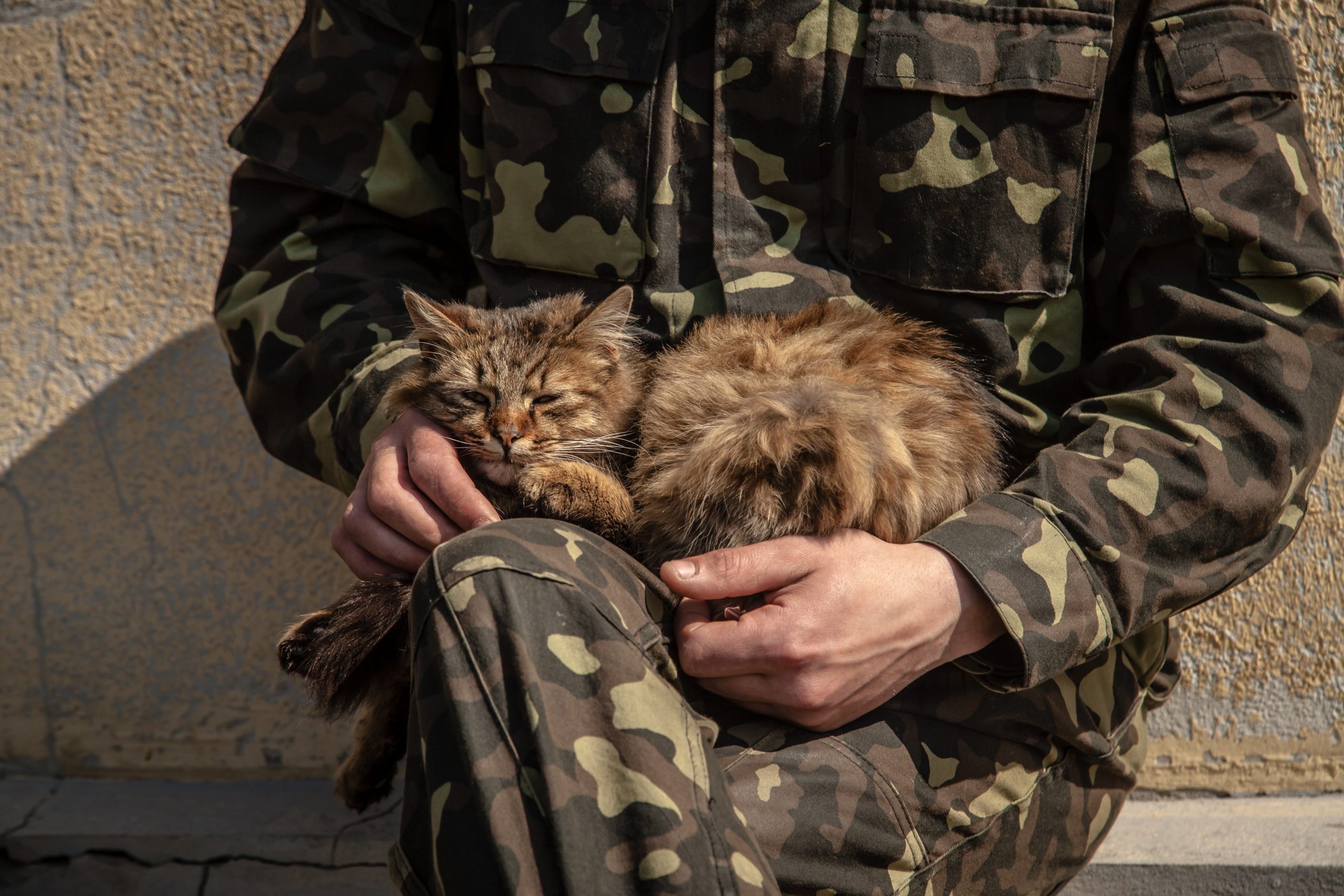
General Weyler and the New York City Army Cats of 39 Whitehall Street
From Hatching Cat: “General Weyler was a cat. Not just any cat, but a veteran in a troop of Army cats who served their country in the commissary storehouse in New York City’s Army Building at 39 Whitehall Street. In Old New York, most warehouses and other large buildings in Lower Manhattan were infested with mice and rats. The best soldiers cut out for the job of extermination were the Army cats. Cats were first employed by the U.S. Army shortly after the end of the Civil War. In July 1898, America was involved in the short-lived Spanish-American War. During this time, many of the Army cats had names affiliated with Spain and the war. One of the cats serving in New York City was Queen Regent (named for the queen regent of Spain, Maria Cristina De Habsburgo-Lorena). There was also General Blanco (named for Ramón Blanco, the Captain-General of Cuba).”
Note: This is a version of my personal newsletter, which I send out via Ghost, the open-source publishing platform. You can see other issues and sign up here.
From the New York Times: “Why did Beethoven go deaf? A cottage industry of fans and experts has debated various theories. Was it Paget’s disease of bone, which in the skull can affect hearing? Did irritable bowel syndrome cause his gastrointestinal problems? Or might he have had syphilis, pancreatitis, diabetes or renal papillary necrosis, a kidney disease? After 200 years, a discovery of toxic substances in locks of the composer’s hair may finally solve the mystery. This particular story began a few years ago, when researchers realized that DNA analysis had advanced enough to justify an examination of hair said to have been clipped from Beethoven’s head by fans as he lay dying.”
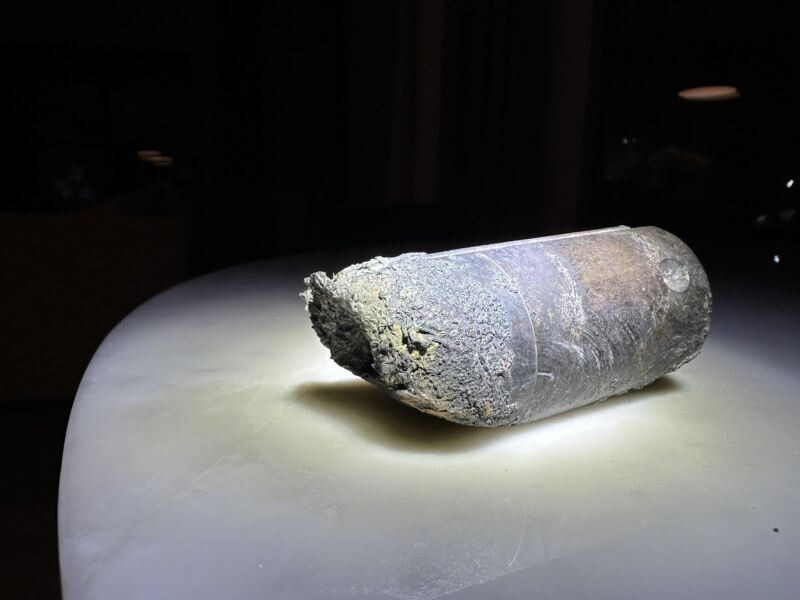
A chunk of trash from the International Space Station hit a house in Florida
From Ars Technica: “Something from the heavens came crashing through the roof of Alejandro Otero’s home, and it seems likely that the nearly 2-pound object came from the International Space Station. Otero said it tore through the roof and both floors of his house in Naples, Florida. Otero wasn’t home at the time, but his son was. A Nest home security camera captured the sound of the crash at 2:34 pm local time on March 8. That’s a close match for the time that US Space Command recorded the reentry of a piece of space debris from the space station, depleted batteries from the ISS, attached to a cargo pallet that was originally supposed to come back to Earth in a controlled manner.”
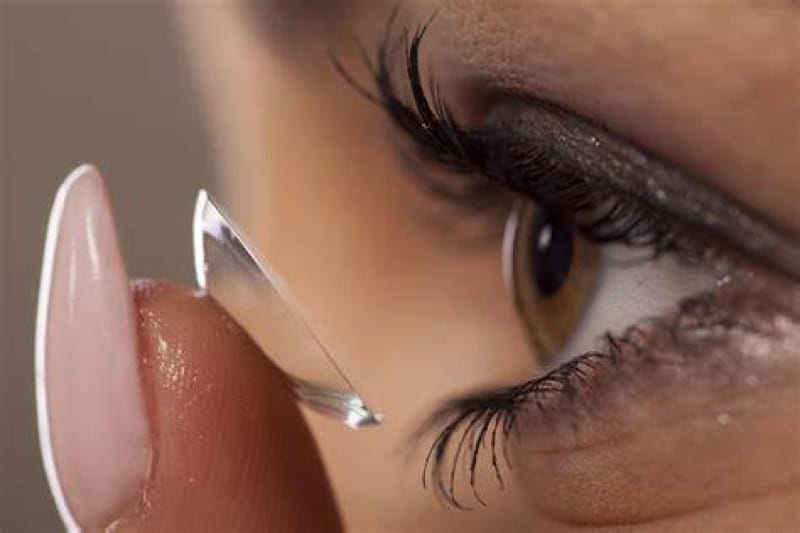
These prototype smart contact lenses are powered by your tears
From the IEEE Spectrum: “The potential use cases for smart contacts are compelling and varied. Pop a lens on your eye and monitor health metrics like glucose levels; receive targeted drug delivery for ocular diseases; experience augmented reality and read news updates. But the eye is a challenge for electronics design: With one of the highest nerve densities of any human tissue, the cornea is 300 to 600 times as sensitive as our skin. Researchers have developed small, flexible chips, but power sources have proved more difficult. Now, a team from the University of Utah says they’ve developed an all-in-one hybrid energy-generation unit specifically designed for eye-based tech, powered by tears.”
Editor’s note: If you like this newsletter, please share it with someone else. And if you really like it, perhaps you could subscribe, or contribute something via my Patreon. Thanks for being a reader!
Recovering the dead from Mount Everest is both expensive and dangerous
From Outside: “Every few years, groups of climbers embark on missions to remove bodies from Mount Everest and other peaks above 8,000 meters. These expeditions are arduous and sometimes deadly. This year, the Nepali Army is sending a crew of 12 recovery specialists up Mount Everest to bring down five bodies located high on the peak. No one knows for sure just how many corpses remain on Mount Everest, but a 2015 study by the BBC placed the estimate at more than 200. The highest concentration of bodies lie between Camp IV at 26,600 feet and the summit. Karki estimates the price tag for the 2024 mission to be between $75,000 and $80,000 per body recovered.”
Why do we call it Wi-Fi? It’s a made-up phrase that means nothing
From Gizmodo: “Have you ever thought about where the term Wi-Fi comes from? Most people would logically assume it’s a shortened version of some highly technical description for the tech that allowed computers to access the internet wirelessly. But those people would be wrong. The term Wi-Fi isn’t an abbreviated version of wireless fidelity, as many people believe. Wi-Fi is a pun on Hi-Fi, which was coined in the 1950s by audio equipment manufacturers as a shortened version of “high fidelity.” But there’s no such thing as wireless fidelity. The term was created by the marketing firm Interbrand, which also came up with Prozac and the computer company Compaq.”
The secret history of the Gibson Guitar factory in Kalamazoo, Michigan
From Atlas Obscura: “The classic Gibson guitar might bring to mind its current Nashville home, the guitar’s roots are actually in the Michigan city of Kalamazoo. Built in 1917, the Gibson Factory there created some of the most iconic guitars ever made. But beyond the instruments, the factory was also home to the “Kalamazoo Gals,” a group of over 200 women who kept the guitar manufacturer going during World War II. With the men gone, the factory began hiring women to make munitions. In fact, between 1942 and 1946, it hired more women than any other guitar-turned-munitions manufacturer. But secretly, these women weren’t just making bullets. They were making guitars.”
This container ship doesn’t look that big until you see the people
The size of this cargo ship, people for perspective, unloading large bags of rice pic.twitter.com/vkkF8ehZ9Q
Acknowledgements: I find a lot of these links myself, but I also get some from other newsletters that I rely on as “serendipity engines,” such as The Morning News from Rosecrans Baldwin and Andrew Womack, Jodi Ettenberg’s Curious About Everything, Dan Lewis’s Now I Know, Robert Cottrell and Caroline Crampton’s The Browser, Clive Thompson’s Linkfest, Noah Brier and Colin Nagy’s Why Is This Interesting, Maria Popova’s The Marginalian, Sheehan Quirke AKA The Cultural Tutor, the Smithsonian magazine, and JSTOR Daily. If you come across something interesting that you think should be included here, please feel free to email me at mathew @ mathewingram dot com
From the MIT Press: “In water nearly 6 kilometers deep, the scientists drilled 100 meters into the seafloor. They found microbes all the way to the bottom of the cores, albeit not as many as in the richer areas closer to the surface. The scientists estimated that the deepest microbes were at least 100 million years old, making it seem they could only be fossils. Surely nothing could survive, whatever that means exactly, for 100 million years. But when brought back to the lab and offered nutrients, the microbes began to grow and multiply. This seemingly fantastic discovery raised the question of what the microbes beneath the gyre had been doing for 100 million years, and where they got their energy.”
An escaped convict lived for six months inside a secret room in a Circuit City
From SFGate: “She had recently ended a 20-year marriage and was juggling work and life as a single mom. One day in October 2004, John appeared at her church. He was funny and romantic. They were soon dating, sharing dinners at Red Lobster and evenings at her home watching movies. At Christmas time, he donated more items to the church toy drive than anyone else in the congregation. Then a police officer approached her at work. He had a photograph of John in his hand. His real name was Jeffrey Manchester, the officer told her, and he was an escaped convict who had been living for the last six months inside hidden rooms he’d created in a nearby Toys R Us and Circuit City.”
Note: This is a version of my personal newsletter, which I send out via Ghost, the open-source publishing platform. You can see other issues and sign up here.
In December, the New York Times fired an early shot in the battle over whether it is legal for artificial intelligence engines such as OpenAI’s ChatGPT to scrape content from the web as fodder for their databases. The Timesmade clear that it believes the answer is no: the paper sued OpenAI and Microsoft, which has partnered with the company, claiming that their tools used millions of Times articles to train “automated chatbots that now compete with the news outlet as a source of reliable information,” and that, in doing so, they were trying to “free-ride” on the Times‘ investment in journalism. The lawsuit, which I wrote about for CJR back in January, claimed that OpenAI and Microsoft were responsible for “billions of dollars” in damages, and that they should be forced to destroy any data that was based on copyrighted material scraped from the Times.
Last week, eight newspapers owned by Alden Global Capital—the New York Daily News, the Chicago Tribune, the Orlando Sentinel, the South Florida Sun Sentinel, the San Jose Mercury News, the Denver Post, the Orange County Register, and the St. Paul Pioneer Press—filed a similar lawsuit against OpenAI and Microsoft claiming copyright infringement, in the same New York court district where the Times made its complaint. The Alden papers did not follow entirely in the Times’ footsteps: A source told Axios that the Alden papers chose to sue OpenAI without first trying to negotiate a licensing deal with the company, a route that the Times pursued prior to taking legal action. But they did join a growing club: since the Times filed suit against OpenAI, Raw Story, Alternet, and The Intercept have done likewise, citing similar grounds. Those sites are reportedly seeking damages of at least two thousand five hundred dollars per violation.
The Alden complaint accuses OpenAI and Microsoft of using millions of its papers’ articles to train AI products, including ChatGPT and Microsoft’s Copilot, without permission. Much like the Times‘ lawsuit, Alden’s claim doesn’t specify a desired amount of monetary damages, but says that the publishers are entitled to compensation for the illegal use of their content. The Alden suit also echoes the Times’ in claiming that ChatGPT and Copilot have regularly reproduced the entire text of articles from Alden papers in response to users’ prompts—and that, in most cases, those engines did not link back to the original source, depriving the publishers of revenue.
Note: this post was originally published as the daily newsletter for the Columbia Journalism Review, where I am the chief digital writer
From CBS News: “Two high school seniors had proved a mathematical puzzle that was thought to be impossible for 2,000 years. Ne’Kiya Jackson and Calcea Johnson were working on a school-wide math contest that came with a cash prize. The seniors were familiar with the Pythagorean Theorem, a fundamental principle of geometry. You may remember it from high school: a² + b² = c². When you know the length of two sides of a right triangle, you can figure out the length of the third. What no one told them was there had been more than 300 documented proofs of the Pythagorean Theorem using algebra and geometry, but a proof using trigonometry was thought to be impossible.”
Susan Bennett, the voice of Siri, was also the voice of the first ATM
From The Hustle: “I did jingle and voice-over work for hundreds of companies — Coca-Cola, McDonald’s, Macy’s, Goodyear, Papa John’s, IBM. I am the voice you hear over the loudspeaker at Delta Airlines gates, and also on a bunch of GPS and phone systems. And then in the early ‘70s, The First National Bank of Atlanta, now Wells Fargo, started introducing some of the earliest ATM machines, but nobody would use them! People didn’t trust computers yet. So, they decided to personalize the machine by putting a little face of a smiling girl on it. They called her “Tillie the All-Time Teller,” and they hired me to sing a jingle in her voice. It became the first successful ATM machine in the United States.”
Note: This is a version of my personal newsletter, which I send out via Ghost, the open-source publishing platform. You can see other issues and sign up here.
From JSTOR Daily: “Before he became the founder of chiropractic, Daniel David Palmer was a Spiritualist and practitioner of animal magnetism. Palmer claimed to have received communication from a deceased physician who taught him the principles of chiropractic—a term he invented in 1896, combining the Greek words cheir and praktos to mean “done by hand.” Palmer considered introducing Chiropractic as a religion in its own right but ultimately settled on describing it as an amalgamation of Christian Science and modern medicine. He wrote that it was based on adjusting the body to permit the free flow of “Innate Intelligence,” or just “Innate,” which he explained as “a segment of that Intelligence which fills the universe.”
One of the casualties of the Ukraine war is a seed bank that was founded in 1908
From LongNow: “An early victim of Russia’s invasion of Ukraine was the genetic riches of one of the traditional breadbaskets of humanity. In the first months of the conflict, Russian shells hit the Plant Genetic Resources Bank in Kharkiv. Founded in 1908, the gene bank preserved the seeds of 160,000 varieties of crops and plant seeds from around the world, and was the repository for many unique cultivars of Ukrainian barley, peas, and wheat. Tens of thousands of samples, some of them centuries old, were reduced to ash. Even under Nazi Germany, when the whole of Ukraine was under occupation, the bank was not destroyed. They knew their descendants might need it. After all, every country’s food security depends on such banks of genetic resources.”
Note: This is a version of my personal newsletter, which I send out via Ghost, the open-source publishing platform. You can see other issues and sign up here.
From the NYT: “Most people think of endangered languages as far-flung or exotic. “You go to some distant mountain or island, and you collect stories,” the linguist Ross Perlin says, describing a typical view of how such languages are studied. But of the 700 or so speakers of Seke, most of whom can be found in a cluster of villages in Nepal, more than 150 have lived in or around two apartment buildings in Brooklyn. Bishnupriya Manipuri, a minority language of Bangladesh and India, has become a minority language of Queens. There are more endangered languages in and around New York City than have ever existed anywhere else, says Perlin, who has spent 11 years trying to document them.”
A project designed to help save coral reefs backfired and made things worse
From Now I Know: “In the 1970s, fishermen near Fort Lauderdale found the area’s natural coral reefs were dying, so some of them had an idea: they decided to throw a lot of automobile tires in the water. In the preceding few years, a number of places around the world had done something similar, with a seemingly positive effect. Someone — it’s unclear who was first — postulated that discarded tires could function as artificial reefs. It was a win-win situation, and one that seemed to make sense. Small reefs made of discarded tires were created in multiple places throughout the world. But over time, this idea turned into a disaster, causing the type of harm they were supposed to remediate.”
Note: This is a version of my personal newsletter, which I send out via Ghost, the open-source publishing platform. You can see other issues and sign up here.
From Now I Know: “In 2006, 21-year-old Kris married Brandon Smith, the boy she had been dating throughout most of high school and beyond. But two years into their marriage, tragedy struck. Brandon was in a car accident and barely survived. It took two months before Brandon regained consciousness, but he wasn’t the same person. He had post-traumatic amnesia and now needed constant care with no hopes of recovery. For the next few years, Kris took care of Brandon, putting her life on hold as a result. He needed around-the-clock care, so she moved him into a nursing home nearby, and then she filed for divorce. But Kris didn’t abandon Brandon. She adopted him.”
High-school science students discovered that Epi-Pens don’t work in space
From U of Ottawa: “Students from St. Brother André Elementary School’s Program for Gifted Learners (PGL) were interested in the effects of cosmic radiation on the molecular structure of epinephrine, a medication found in EpiPens used in emergencies to treat severe allergic reactions. The PGL students had their experiment accepted by the Cubes in Spaceprogram, meaning that it was sent into space with NASA. The John Holmes Mass Spectrometry Core Facility in the uOttawa’s Faculty of Science analyzed the returned samples to find the epinephrine sent into space returned only 87% pure, with the remaining 13% transformed into extremely poisonous benzoic acid derivatives.”
Note: This is a version of my personal newsletter, which I send out via Ghost, the open-source publishing platform. You can see other issues and sign up here.


:focal(1851x658:1852x659)/https://tf-cmsv2-smithsonianmag-media.s3.amazonaws.com/filer_public/26/74/267413ea-8fac-47b0-b20c-b92716c79254/letters.jpeg)







/https://tf-cmsv2-smithsonianmag-media.s3.amazonaws.com/filer/bd/80/bd808ab0-9c75-478d-810b-200f17ee9959/super_soaker-edit.jpg)