From The Smithsonian: “An upcoming show at Galerie Canesso features two paintings by a mysterious artist who was active in northern Italy in the 1600s. The painter’s oil canvases depict early iterations of the stiff blue fabric beloved today, as worn by Italian peasants. According to a statement, the pieces have proved to be important artifacts in garment history, pushing back the provenance of blue jeans by centuries. When Levi Strauss started selling denim work pants in the late 1800s, he merely added metal rivets and structure to a fabric that already boasted a storied European past. Jeans come from Genoa, while denim comes from the French city of Nîmes. Until the 11th century, no one could wear blue fabric because they didn’t know how to make blue color adhere; the genius of the Genoese was to find the indigo stone in India and make it a low-cost process.”
General Weyler and the New York City Army Cats of 39 Whitehall Street
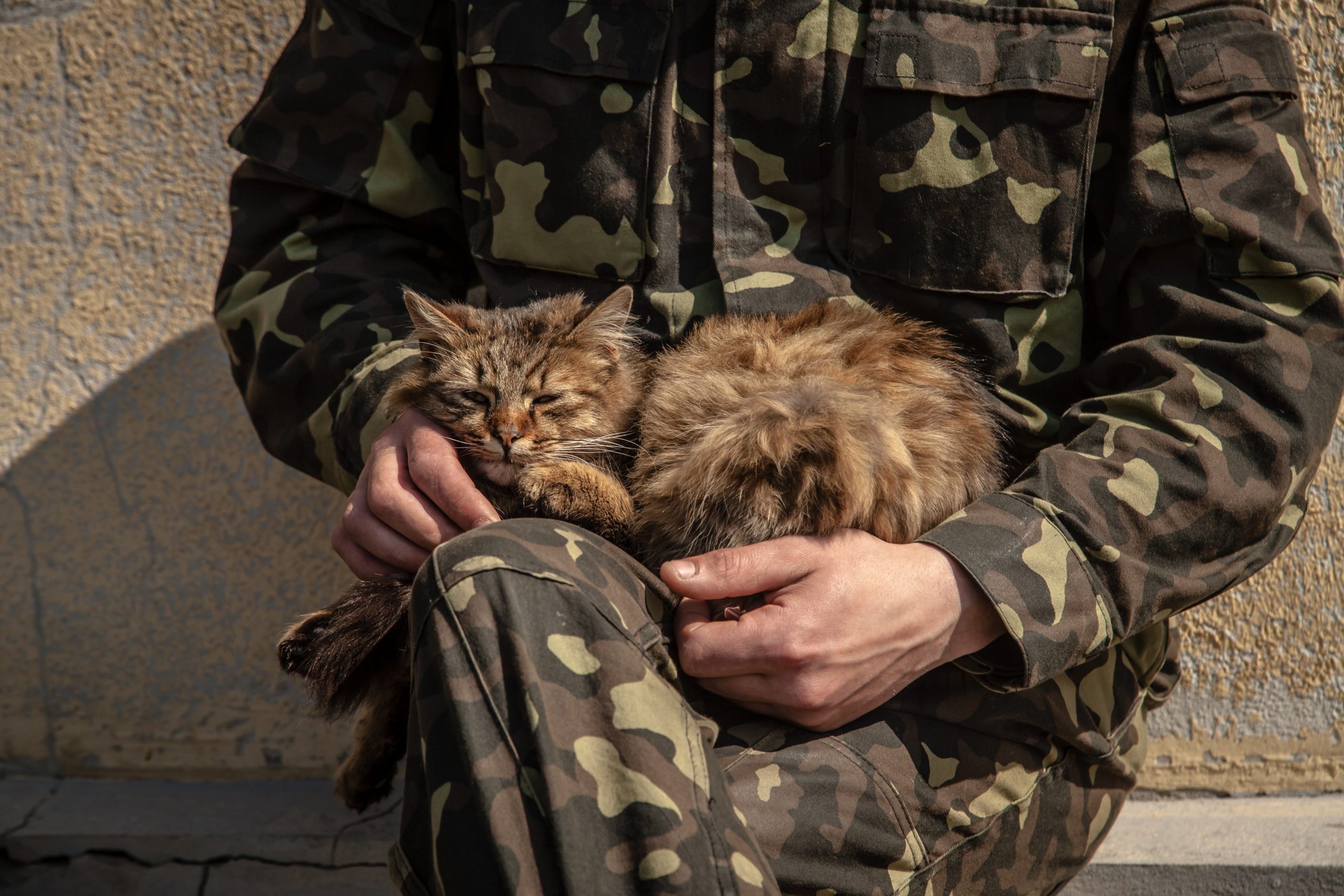
From Hatching Cat: “General Weyler was a cat. Not just any cat, but a veteran in a troop of Army cats who served their country in the commissary storehouse in New York City’s Army Building at 39 Whitehall Street. In Old New York, most warehouses and other large buildings in Lower Manhattan were infested with mice and rats. The best soldiers cut out for the job of extermination were the Army cats. Cats were first employed by the U.S. Army shortly after the end of the Civil War. In July 1898, America was involved in the short-lived Spanish-American War. During this time, many of the Army cats had names affiliated with Spain and the war. One of the cats serving in New York City was Queen Regent (named for the queen regent of Spain, Maria Cristina De Habsburgo-Lorena). There was also General Blanco (named for Ramón Blanco, the Captain-General of Cuba).”
Note: This is a version of my personal newsletter, which I send out via Ghost, the open-source publishing platform. You can see other issues and sign up here.
From the New York Times: “Why did Beethoven go deaf? A cottage industry of fans and experts has debated various theories. Was it Paget’s disease of bone, which in the skull can affect hearing? Did irritable bowel syndrome cause his gastrointestinal problems? Or might he have had syphilis, pancreatitis, diabetes or renal papillary necrosis, a kidney disease? After 200 years, a discovery of toxic substances in locks of the composer’s hair may finally solve the mystery. This particular story began a few years ago, when researchers realized that DNA analysis had advanced enough to justify an examination of hair said to have been clipped from Beethoven’s head by fans as he lay dying.”
A chunk of trash from the International Space Station hit a house in Florida
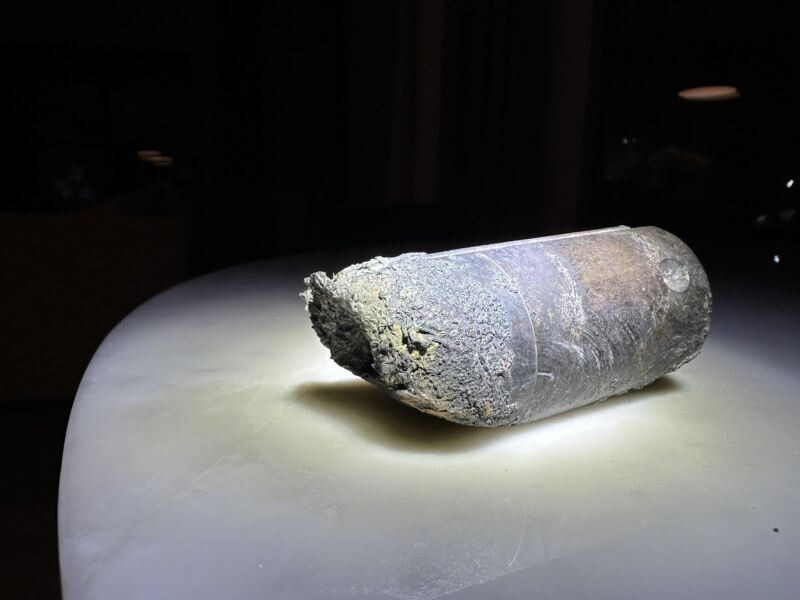
From Ars Technica: “Something from the heavens came crashing through the roof of Alejandro Otero’s home, and it seems likely that the nearly 2-pound object came from the International Space Station. Otero said it tore through the roof and both floors of his house in Naples, Florida. Otero wasn’t home at the time, but his son was. A Nest home security camera captured the sound of the crash at 2:34 pm local time on March 8. That’s a close match for the time that US Space Command recorded the reentry of a piece of space debris from the space station, depleted batteries from the ISS, attached to a cargo pallet that was originally supposed to come back to Earth in a controlled manner.”
These prototype smart contact lenses are powered by your tears
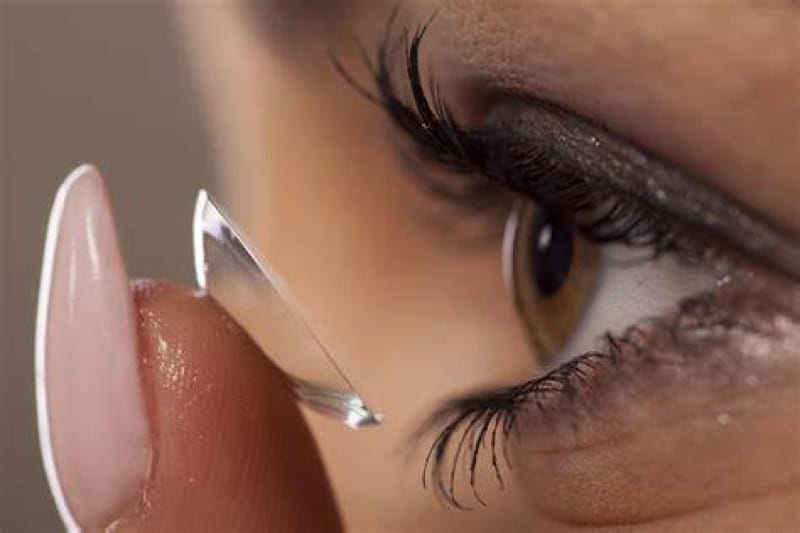
From the IEEE Spectrum: “The potential use cases for smart contacts are compelling and varied. Pop a lens on your eye and monitor health metrics like glucose levels; receive targeted drug delivery for ocular diseases; experience augmented reality and read news updates. But the eye is a challenge for electronics design: With one of the highest nerve densities of any human tissue, the cornea is 300 to 600 times as sensitive as our skin. Researchers have developed small, flexible chips, but power sources have proved more difficult. Now, a team from the University of Utah says they’ve developed an all-in-one hybrid energy-generation unit specifically designed for eye-based tech, powered by tears.”
Editor’s note: If you like this newsletter, please share it with someone else. And if you really like it, perhaps you could subscribe, or contribute something via my Patreon. Thanks for being a reader!
Recovering the dead from Mount Everest is both expensive and dangerous
From Outside: “Every few years, groups of climbers embark on missions to remove bodies from Mount Everest and other peaks above 8,000 meters. These expeditions are arduous and sometimes deadly. This year, the Nepali Army is sending a crew of 12 recovery specialists up Mount Everest to bring down five bodies located high on the peak. No one knows for sure just how many corpses remain on Mount Everest, but a 2015 study by the BBC placed the estimate at more than 200. The highest concentration of bodies lie between Camp IV at 26,600 feet and the summit. Karki estimates the price tag for the 2024 mission to be between $75,000 and $80,000 per body recovered.”
Why do we call it Wi-Fi? It’s a made-up phrase that means nothing
From Gizmodo: “Have you ever thought about where the term Wi-Fi comes from? Most people would logically assume it’s a shortened version of some highly technical description for the tech that allowed computers to access the internet wirelessly. But those people would be wrong. The term Wi-Fi isn’t an abbreviated version of wireless fidelity, as many people believe. Wi-Fi is a pun on Hi-Fi, which was coined in the 1950s by audio equipment manufacturers as a shortened version of “high fidelity.” But there’s no such thing as wireless fidelity. The term was created by the marketing firm Interbrand, which also came up with Prozac and the computer company Compaq.”
The secret history of the Gibson Guitar factory in Kalamazoo, Michigan
From Atlas Obscura: “The classic Gibson guitar might bring to mind its current Nashville home, the guitar’s roots are actually in the Michigan city of Kalamazoo. Built in 1917, the Gibson Factory there created some of the most iconic guitars ever made. But beyond the instruments, the factory was also home to the “Kalamazoo Gals,” a group of over 200 women who kept the guitar manufacturer going during World War II. With the men gone, the factory began hiring women to make munitions. In fact, between 1942 and 1946, it hired more women than any other guitar-turned-munitions manufacturer. But secretly, these women weren’t just making bullets. They were making guitars.”
This container ship doesn’t look that big until you see the people
The size of this cargo ship, people for perspective, unloading large bags of rice pic.twitter.com/vkkF8ehZ9Q
Acknowledgements: I find a lot of these links myself, but I also get some from other newsletters that I rely on as “serendipity engines,” such as The Morning News from Rosecrans Baldwin and Andrew Womack, Jodi Ettenberg’s Curious About Everything, Dan Lewis’s Now I Know, Robert Cottrell and Caroline Crampton’s The Browser, Clive Thompson’s Linkfest, Noah Brier and Colin Nagy’s Why Is This Interesting, Maria Popova’s The Marginalian, Sheehan Quirke AKA The Cultural Tutor, the Smithsonian magazine, and JSTOR Daily. If you come across something interesting that you think should be included here, please feel free to email me at mathew @ mathewingram dot com
From the MIT Press: “In water nearly 6 kilometers deep, the scientists drilled 100 meters into the seafloor. They found microbes all the way to the bottom of the cores, albeit not as many as in the richer areas closer to the surface. The scientists estimated that the deepest microbes were at least 100 million years old, making it seem they could only be fossils. Surely nothing could survive, whatever that means exactly, for 100 million years. But when brought back to the lab and offered nutrients, the microbes began to grow and multiply. This seemingly fantastic discovery raised the question of what the microbes beneath the gyre had been doing for 100 million years, and where they got their energy.”
An escaped convict lived for six months inside a secret room in a Circuit City
From SFGate: “She had recently ended a 20-year marriage and was juggling work and life as a single mom. One day in October 2004, John appeared at her church. He was funny and romantic. They were soon dating, sharing dinners at Red Lobster and evenings at her home watching movies. At Christmas time, he donated more items to the church toy drive than anyone else in the congregation. Then a police officer approached her at work. He had a photograph of John in his hand. His real name was Jeffrey Manchester, the officer told her, and he was an escaped convict who had been living for the last six months inside hidden rooms he’d created in a nearby Toys R Us and Circuit City.”
Note: This is a version of my personal newsletter, which I send out via Ghost, the open-source publishing platform. You can see other issues and sign up here.
In December, the New York Times fired an early shot in the battle over whether it is legal for artificial intelligence engines such as OpenAI’s ChatGPT to scrape content from the web as fodder for their databases. The Timesmade clear that it believes the answer is no: the paper sued OpenAI and Microsoft, which has partnered with the company, claiming that their tools used millions of Times articles to train “automated chatbots that now compete with the news outlet as a source of reliable information,” and that, in doing so, they were trying to “free-ride” on the Times‘ investment in journalism. The lawsuit, which I wrote about for CJR back in January, claimed that OpenAI and Microsoft were responsible for “billions of dollars” in damages, and that they should be forced to destroy any data that was based on copyrighted material scraped from the Times.
Last week, eight newspapers owned by Alden Global Capital—the New York Daily News, the Chicago Tribune, the Orlando Sentinel, the South Florida Sun Sentinel, the San Jose Mercury News, the Denver Post, the Orange County Register, and the St. Paul Pioneer Press—filed a similar lawsuit against OpenAI and Microsoft claiming copyright infringement, in the same New York court district where the Times made its complaint. The Alden papers did not follow entirely in the Times’ footsteps: A source told Axios that the Alden papers chose to sue OpenAI without first trying to negotiate a licensing deal with the company, a route that the Times pursued prior to taking legal action. But they did join a growing club: since the Times filed suit against OpenAI, Raw Story, Alternet, and The Intercept have done likewise, citing similar grounds. Those sites are reportedly seeking damages of at least two thousand five hundred dollars per violation.
The Alden complaint accuses OpenAI and Microsoft of using millions of its papers’ articles to train AI products, including ChatGPT and Microsoft’s Copilot, without permission. Much like the Times‘ lawsuit, Alden’s claim doesn’t specify a desired amount of monetary damages, but says that the publishers are entitled to compensation for the illegal use of their content. The Alden suit also echoes the Times’ in claiming that ChatGPT and Copilot have regularly reproduced the entire text of articles from Alden papers in response to users’ prompts—and that, in most cases, those engines did not link back to the original source, depriving the publishers of revenue.
Note: this post was originally published as the daily newsletter for the Columbia Journalism Review, where I am the chief digital writer
From CBS News: “Two high school seniors had proved a mathematical puzzle that was thought to be impossible for 2,000 years. Ne’Kiya Jackson and Calcea Johnson were working on a school-wide math contest that came with a cash prize. The seniors were familiar with the Pythagorean Theorem, a fundamental principle of geometry. You may remember it from high school: a² + b² = c². When you know the length of two sides of a right triangle, you can figure out the length of the third. What no one told them was there had been more than 300 documented proofs of the Pythagorean Theorem using algebra and geometry, but a proof using trigonometry was thought to be impossible.”
Susan Bennett, the voice of Siri, was also the voice of the first ATM
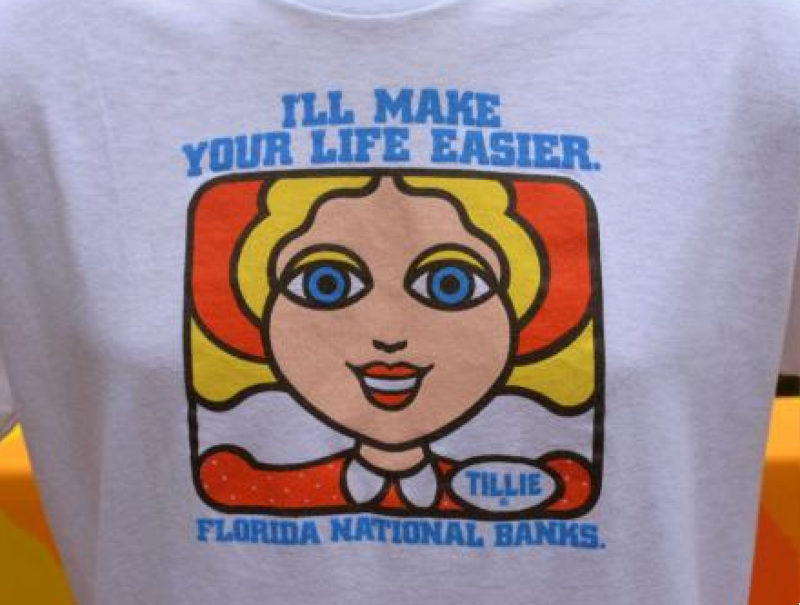
From The Hustle: “I did jingle and voice-over work for hundreds of companies — Coca-Cola, McDonald’s, Macy’s, Goodyear, Papa John’s, IBM. I am the voice you hear over the loudspeaker at Delta Airlines gates, and also on a bunch of GPS and phone systems. And then in the early ‘70s, The First National Bank of Atlanta, now Wells Fargo, started introducing some of the earliest ATM machines, but nobody would use them! People didn’t trust computers yet. So, they decided to personalize the machine by putting a little face of a smiling girl on it. They called her “Tillie the All-Time Teller,” and they hired me to sing a jingle in her voice. It became the first successful ATM machine in the United States.”
Note: This is a version of my personal newsletter, which I send out via Ghost, the open-source publishing platform. You can see other issues and sign up here.
From JSTOR Daily: “Before he became the founder of chiropractic, Daniel David Palmer was a Spiritualist and practitioner of animal magnetism. Palmer claimed to have received communication from a deceased physician who taught him the principles of chiropractic—a term he invented in 1896, combining the Greek words cheir and praktos to mean “done by hand.” Palmer considered introducing Chiropractic as a religion in its own right but ultimately settled on describing it as an amalgamation of Christian Science and modern medicine. He wrote that it was based on adjusting the body to permit the free flow of “Innate Intelligence,” or just “Innate,” which he explained as “a segment of that Intelligence which fills the universe.”
One of the casualties of the Ukraine war is a seed bank that was founded in 1908
From LongNow: “An early victim of Russia’s invasion of Ukraine was the genetic riches of one of the traditional breadbaskets of humanity. In the first months of the conflict, Russian shells hit the Plant Genetic Resources Bank in Kharkiv. Founded in 1908, the gene bank preserved the seeds of 160,000 varieties of crops and plant seeds from around the world, and was the repository for many unique cultivars of Ukrainian barley, peas, and wheat. Tens of thousands of samples, some of them centuries old, were reduced to ash. Even under Nazi Germany, when the whole of Ukraine was under occupation, the bank was not destroyed. They knew their descendants might need it. After all, every country’s food security depends on such banks of genetic resources.”
Note: This is a version of my personal newsletter, which I send out via Ghost, the open-source publishing platform. You can see other issues and sign up here.
From the NYT: “Most people think of endangered languages as far-flung or exotic. “You go to some distant mountain or island, and you collect stories,” the linguist Ross Perlin says, describing a typical view of how such languages are studied. But of the 700 or so speakers of Seke, most of whom can be found in a cluster of villages in Nepal, more than 150 have lived in or around two apartment buildings in Brooklyn. Bishnupriya Manipuri, a minority language of Bangladesh and India, has become a minority language of Queens. There are more endangered languages in and around New York City than have ever existed anywhere else, says Perlin, who has spent 11 years trying to document them.”
A project designed to help save coral reefs backfired and made things worse
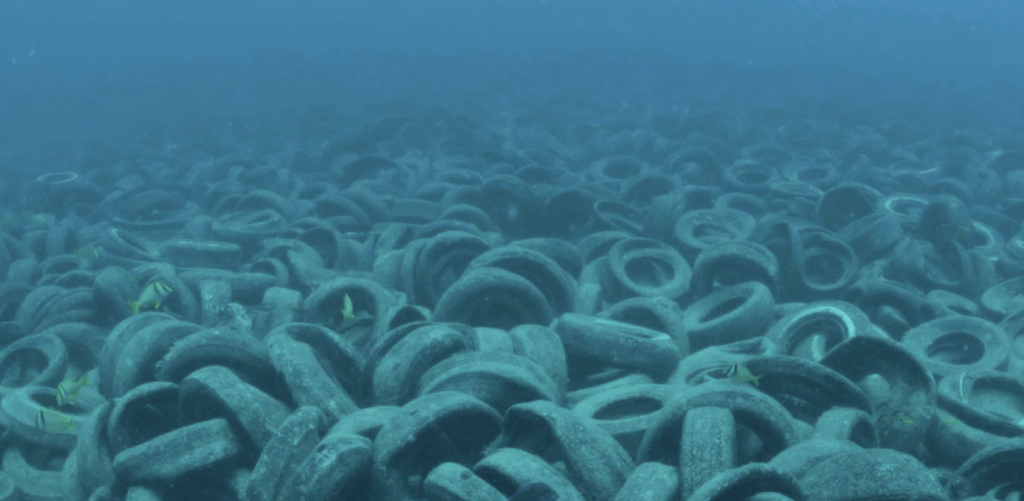
From Now I Know: “In the 1970s, fishermen near Fort Lauderdale found the area’s natural coral reefs were dying, so some of them had an idea: they decided to throw a lot of automobile tires in the water. In the preceding few years, a number of places around the world had done something similar, with a seemingly positive effect. Someone — it’s unclear who was first — postulated that discarded tires could function as artificial reefs. It was a win-win situation, and one that seemed to make sense. Small reefs made of discarded tires were created in multiple places throughout the world. But over time, this idea turned into a disaster, causing the type of harm they were supposed to remediate.”
Note: This is a version of my personal newsletter, which I send out via Ghost, the open-source publishing platform. You can see other issues and sign up here.
From Now I Know: “In 2006, 21-year-old Kris married Brandon Smith, the boy she had been dating throughout most of high school and beyond. But two years into their marriage, tragedy struck. Brandon was in a car accident and barely survived. It took two months before Brandon regained consciousness, but he wasn’t the same person. He had post-traumatic amnesia and now needed constant care with no hopes of recovery. For the next few years, Kris took care of Brandon, putting her life on hold as a result. He needed around-the-clock care, so she moved him into a nursing home nearby, and then she filed for divorce. But Kris didn’t abandon Brandon. She adopted him.”
High-school science students discovered that Epi-Pens don’t work in space
From U of Ottawa: “Students from St. Brother André Elementary School’s Program for Gifted Learners (PGL) were interested in the effects of cosmic radiation on the molecular structure of epinephrine, a medication found in EpiPens used in emergencies to treat severe allergic reactions. The PGL students had their experiment accepted by the Cubes in Spaceprogram, meaning that it was sent into space with NASA. The John Holmes Mass Spectrometry Core Facility in the uOttawa’s Faculty of Science analyzed the returned samples to find the epinephrine sent into space returned only 87% pure, with the remaining 13% transformed into extremely poisonous benzoic acid derivatives.”
Note: This is a version of my personal newsletter, which I send out via Ghost, the open-source publishing platform. You can see other issues and sign up here.
From John Hawks: “The poster is a dentist and visited his parents house to see the new travertine they installed. It’s no surprise that he recognized something right away: A section cut at a slight angle through a very humanlike jaw. The Reddit user who posted the story has followed up with some updates over the course of the day. The travertine was sourced in Turkey, and a close search of some of the other installed panels revealed some other interesting possible fossils, although none are as strikingly identifiable as the mandible. This naturally raises a broader question: How many other people have installed travertine with human fossils inside? Travertine is known to commonly include fossils, of algae, plants, and small animals—and humans as well, it seems.”
A Danish museum returned hundreds of gems that were stolen over decades
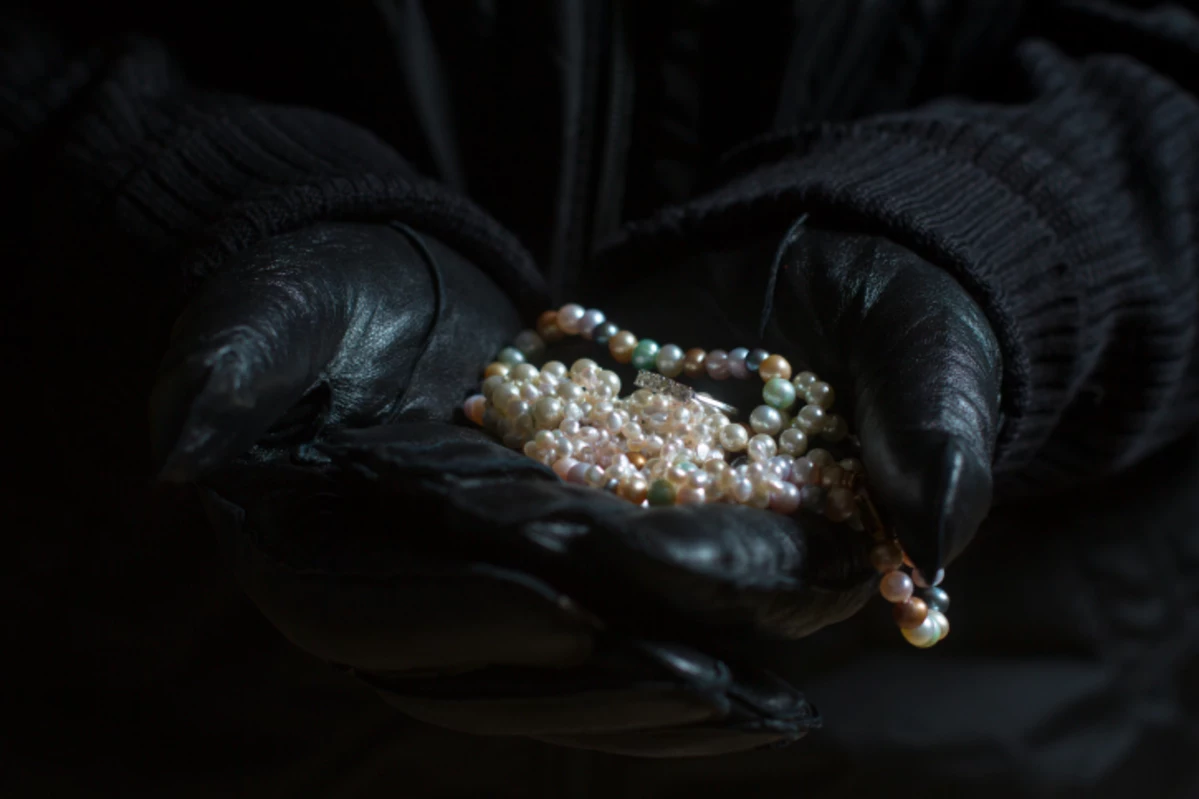
From The Art Newspaper: “A Danish museum has assisted the British Museum in securing the return of 290 Greek and Roman gems which had been stolen over a 25-year period. The theft was revealed by the London museum a few weeks after a senior curator was quietly suspended. Last October, 290 stolen items were handed over to the Thorvaldsens Museum in Copenhagen for safekeeping and these were returned to the BM in January. The 290 items had been deposited at the Copenhagen museum by Ittai Gradel, the Danish antique gem collector and dealer who had acquired them from a single source between 2010 and 2013. At that time, Gradel had no idea that they might have been stolen.”
Note: This is a version of my personal newsletter, which I send out via Ghost, the open-source publishing platform. You can see other issues and sign up here.
From The New Yorker: “There are more than four hundred startups in what is called the advanced air mobility industry. The term covers everything from actual flying-car-ish contraptions to more traditional-looking airplanes, but it generally refers to evtols. For the most part, these crafts bear a greater resemblance to helicopter-plane hybrids than to automobiles, and they can’t be driven on the road; they might better be described as electric aerial vehicles with the ability to hover and the no-fuss point-to-point flexibility of a car. Some are single-seat playthings: Jetson One, a Swedish company, has developed a craft that looks like a little aerodynamic cage and handles like Luke Skywalker’s X-wing. Others fly themselves: EHang, a Chinese company, has been testing an autonomous passenger drone with a quadcopter design.”
The world’s most remote triathlon involves bird eggs, a volcano, and bananas
From Atlas Obscura: “Spectators on shore point with outstretched fingers to the nearing athletes as they furiously raft towards land. Paddling past the numerous sea turtles that glide around the bay, Tumaheke Durán Veri Veri arrives first. He heaves his hand-woven raft onto the sand and runs barefoot up to the island’s main road. He then hoists a 44-pound bundle of bananas over his shoulders and begins to run. This is the Tau’a Rapa Nui; a demanding sporting event that honors the Rapa Nui’s ancestral tradition. It begins with the rafting, called Vaka Ama; followed by the banana-weighted run, the Aka Venga; and ends with a bodyboard-type paddle race: Natación con Pora.”
Note: This is a version of my personal newsletter, which I send out via Ghost, the open-source publishing platform. You can see other issues and sign up here.
After almost four years of debating a law that would force ByteDance, the Chinese company that owns TikTok, to sell the app or be banned in the US, Congress finally passed legislation that does exactly that (I’ve written for CJR a number of times over the years about the back-and-forth in Washington regarding a TikTok ban, including here and here and here.) So what happens now? Before ByteDance either sells TikTok or is banned, there are a number of hurdles, roadblocks, and potential landmines that stand in the way—including the Chinese government, which has made it clear that it will not allow ByteDance to relinquish control of TikTok without a fight.
Just a few weeks ago, a sale-or-ban law looked to be doomed. The House of Representatives voted overwhelmingly in favor of one version of the law on March 13, but then it seemed to lose momentum in the Senate. Some senators said they supported the ban, but Maria Cantwell—a Democrat who chairs the Senate Commerce Committee—seemed skeptical of the law, saying she wasn’t sure that it could withstand a legal challenge. She also criticized the House bill for only giving ByteDance six months to find a buyer or face a ban, but when the House introduced a new version of the TikTok bill that increased the length of time that ByteDance had to find a buyer to as long as a year, Cantwell and others changed their minds and voted in favor.
Washington sources believe that ByteDance made a “series of miscalculations” in its attempts to forestall the passage of such a law. They told the Wall Street Journal that Shou Zi Chew, TikTok’s CEO, failed to build support on Capitol Hill, and instead relied on negotiations with the Committee on Foreign Investment in the U.S. over “a complex restructuring that never panned out.” Chew testified before Congress and ByteDance felt that he did well, and the company got support from the Club for Growth, a group backed by Jeff Yass, a major TikTok shareholder. But despite these successes, the Journal wrote, opinion on Capitol Hill was “already shifting against” the company.
Note: This was originally published as the daily email newsletter for the Columbia Journalism Review, where I am the chief digital writer
From AirMail: “Scott Thorson is now 65. In late 2020, he was granted an early release after serving nearly seven years in a Nevada state prison for credit-card fraud. Last year I began interviewing him for a book project and quickly understood why he’s been referred to as the “Zelig of Awful.” Thorson was a teenage runaway bouncing around West Hollywood when he met Liberace, who at the time was the highest-paid entertainer in the world. Liberace was 57 and Scott had just turned 18. Liberace suggested that he go into business with Eddie Nash—a Palestinian immigrant who was the No. 1 club owner in Los Angeles at the time. He also happened to be the biggest drug lord in all of Los Angeles.”
Why this temple priest is one of India’s most highly-prized voters
From IndiaTV: “Mahant Bharatdas Darshandas is the lone voter in the midst of Gujarat’s Gir forest, home to the Asiatic lion, for whom an entire election team sets up a polling booth every election – and will do so again on April 30. Darshandas, in his early 60s, is the lone occupant of a hamlet called Banej in Gir forest. He has been casting his vote for the past elections, including the 2004 and 2009 parliamentary elections and the 2007 and 2012 state elections. This time too, the Election Commission of India is making all arrangements to ensure that Darshandas, a temple priest, gets to cast his precious single vote. Darshandas lives in Banej Tirthdham and looks after an ancient Shiva temple there.”
Note: This is a version of my personal newsletter, which I send out via Ghost, the open-source publishing platform. You can see other issues and sign up here.
From the NYT: “A man was charged with drunken driving after crashing his truck and spilling 11,000 salmon onto a highway. Another was secretly recorded by his wife, who was convinced he was a closet alcoholic. A brewery worker was pulled over and given a breathalyzer test, which said that his blood alcohol level was more than four times the legal limit for drivers. The problem? None of those men had been drinking. Instead, they all were diagnosed with a rare condition known as auto-brewery syndrome, in which a person’s gut ferments carbohydrates into ethanol. This week, the man in Belgium was acquitted of drunk driving — the court found his body was essentially making its own beer.”
In the 1400s people in Europe were convinced that the British had tails
From JSTOR Daily: “Tails, tails!” That was the taunt the people of Paris flung at the English army in 1436 as the soldiers vacated the city that they had occupied for sixteen years. It was common knowledge among Parisians that each English person, under their clothes, concealed a secret tail. French literature was peppered with references to this hidden appendage. In his history of the taunt written the end of the nineteenth century, George Neilson argued that the Scottish boasted in 1332 that they would “make ropes of the tails of the English to tie them with.” An Italian book of the fourteenth century also described England as an island whose inhabitants were born with short tails, like deer.”
Note: This is a version of my personal newsletter, which I send out via Ghost, the open-source publishing platform. You can see other issues and sign up here.
From IFLScience: “Like many other scrolls recovered from the historic site, the papyrus in question is in good condition but largely blackened, thus rendering it virtually unreadable. Using an array of techniques including infrared and ultraviolet optical imaging, molecular and elemental imaging, thermal imaging, and digital microscopy, researchers were able to make out over 1,000 words from the burnt parchment, equalling around 30 percent of the complete text. Previously, it was well known that Plato was buried within the grounds of the Academy, but after analyzing the ancient scroll, researchers have now pinpointed the famous philosopher’s final resting place. Other details indicate that Plato was sold into slavery on the island of Aegina.”
Genetically engineered bacteria could end tooth decay if you are willing to take a risk
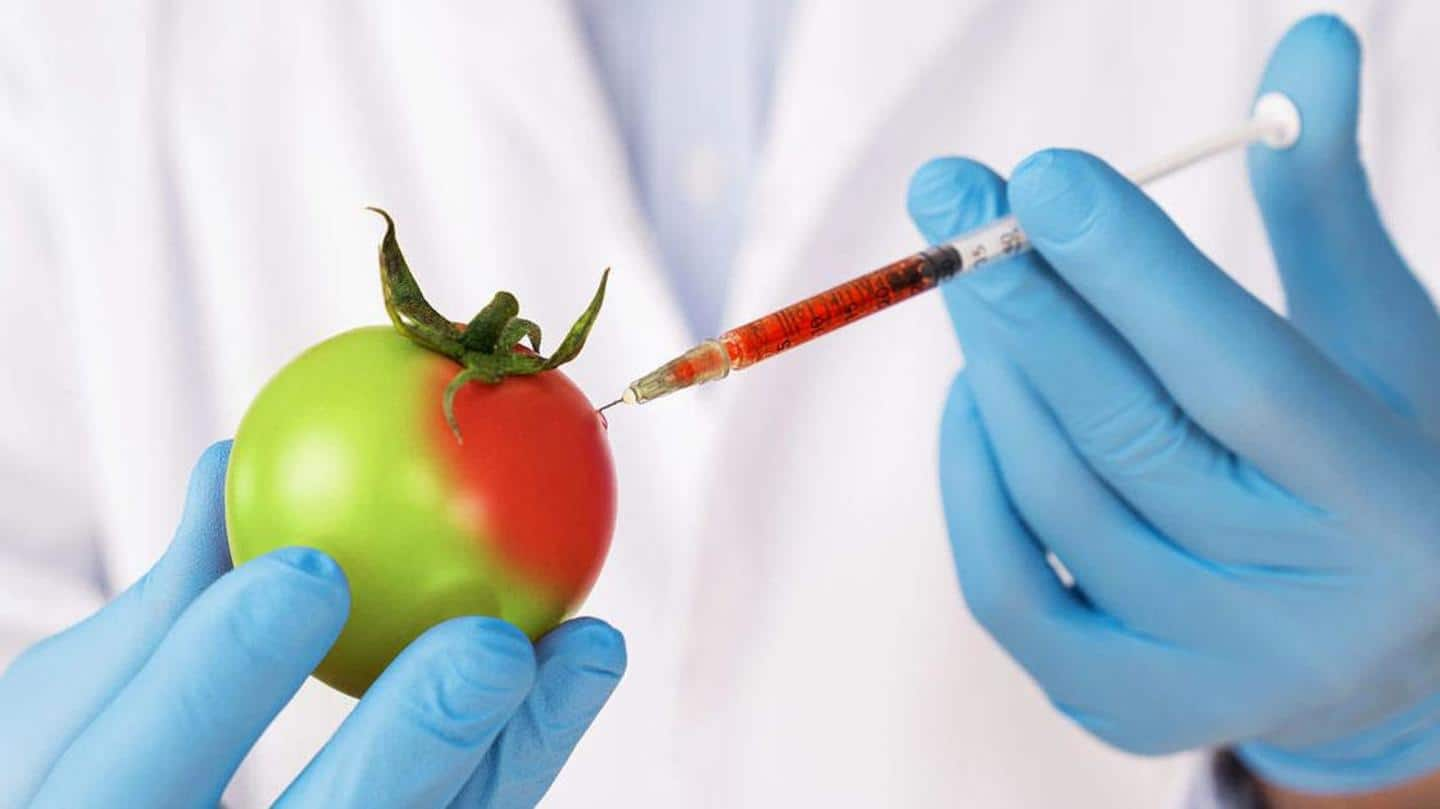
From Undark: “About seven years ago, Aaron Silverbook and his then-girlfriend, a biologist, were perusing old scientific literature online. “A romantic evening,” joked Silverbook. That night, he came across a study from 2000 that surprised him. Scientists had genetically engineered an oral bacterium that they said could possibly prevent tooth decay. So, Silverbook tracked down the primary author, Jeffrey Hillman, a now-retired oral biologist formerly at the University of Florida. In 2023, Silverbook founded Lantern Bioworks, which made a deal with Hillman’s company and then launched the genetically engineered bacteria as a ‘probiotic,’ which doesn’t require FDA approval.”
Note: This is a version of my personal newsletter, which I send out via Ghost, the open-source publishing platform. You can see other issues and sign up here.
From VinePair: “In the spring, rumors began circulating that Chartreuse, the much-ballyhooed French herbal liqueur, had suddenly become hard to find. Countless fans took to social media to decry the shortage, question if others had any leads on bottles, posit conspiracies, or flex when they actually found a bottle. Demand had risen in the last two decades, as the liqueur went from the domain of wealthy U.S. Francofiles to little-discussed mystery elixir to college party drink. By last year, global Chartreuse sales were at 1.6 million bottles per year — the highest number since the late-1800s — with Chartreuse sales having doubled in the U.S. ever since the pandemic started in 2020.”
Rosalind Franklin’s overlooked role in the discovery of DNA’s double helix
From History.com: “It’s one of the most famous moments in the history of science: On February 28, 1953, Cambridge University molecular biologists James Watson and Francis Crick determined that the structure of deoxyribonucleic acid, or DNA was a double helix polymer. Nearly 10 years later, Watson and Crick, along with biophysicist Maurice Wilkins, received the 1962 Nobel Prize in Physiology or Medicine for uncovering what they called the “secret of life.” Yet another person was missing from the award ceremony: Rosalind Franklin was a chemist and X-ray crystallographer who studied DNA, and her unpublished data paved the way for Watson and Crick’s breakthrough.”
Note: This is a version of my personal newsletter, which I send out via Ghost, the open-source publishing platform. You can see other issues and sign up here.