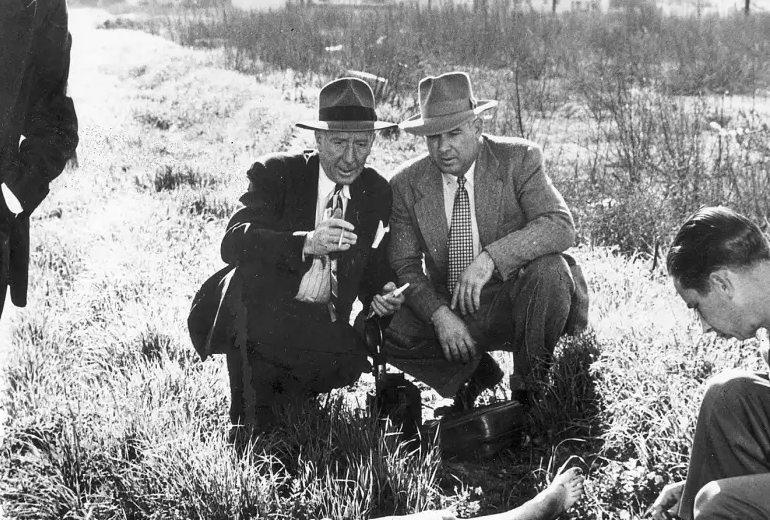

Social media and teen mental health: There is no smoking gun

As I wrote in a previous edition of Torment Nexus, the Australian law banning kids under 16 from using social media is the first of its kind, but it was not the last by any means. The French parliament just voted to pass a similar law, and Malaysia’s new law went into effect January 1, and the communications minister said the government is looking to Australia for guidance on implementing it. Denmark also appears to be moving toward a ban for users under 15, with parental consent allowed from age 13, and Norway is raising the minimum age to 15. The EU recently voted by an overwhelming majority to set a minimum age of 16 for social media, video-sharing platforms, and AI companions, and France, Spain, Italy, Denmark, and Greece are all testing a European age-verification app. These laws are being driven by concern that social-media use is responsible for an increase in rates of teen depression, anxiety and other mental-health related issues. But is there any proof that this is the case? In a word, no — or at least not enough to justify a complete ban on social media use for teens.

As I noted in an earlier post on this alleged connection — which I think approaches the level of a moral panic — the conventional wisdom is diametrically opposed to the vast majority of research on social media and teen depression. So why do so many people believe it causes harm? Because there seems to be a never-ending stream of news articles claiming this to be true. “Smartphones and social media are destroying children’s mental health,” the Financial Times wrote, while the Guardian described the smartphone as “a pocket full of poison.” Many of these articles are based on books such as The Anxious Generation, by Jonathan Haidt, a psychologist at the Stern School of Business, which talks about how smartphone use and social media have caused an epidemic of anxiety among young people. Haidt provides research that he says backs up his case, but virtually every other study that has been done on this topic disagrees.

Note: This is a version of my Torment Nexus newsletter, which I send out via Ghost, the open-source publishing platform. You can see other issues and sign up here.

Continue reading “Social media and teen mental health: There is no smoking gun”

People who have Alzheimer’s almost never get cancer

For decades, researchers have noted that cancer and Alzheimer’s disease are rarely found in the same person, fuelling speculation that one condition might offer some degree of protection from the other. Now, a study in mice provides a possible molecular solution to the medical mystery: a protein produced by cancer cells seems to infiltrate the brain, where it helps to break apart clumps of misfolded proteins that are often associated with Alzheimer’s disease. The study, which was 15 years in the making, was published on 22 January in Cell and could help researchers to design drugs to treat Alzheimer’s disease. Weaver has been interested in that puzzle ever since he began his medical training, when a senior pathologist made an offhand comment: “If you see someone with Alzheimer’s disease, they’ve never had cancer.” (via Nature)

A security guard stole $400,000 he was guarding and still hasn’t been found

It sounds like the plot of a movie: A long-time employee of a cash handling firm snatched nearly $400,000 from three banks whose money he was tasked to protect, then quit his job and disappeared. This appears to be what happened on Kauaʻi on July 19, 2023, according to previously unreported documents from civil and criminal cases filed in the 5th Circuit Court. In September 2025, Kauaʻi prosecutors filed criminal theft charges against Kody Corbett, a former employee of global cash handling firm Loomis. Earlier that year, Loomis also filed a lawsuit against Corbett, which lays out how the alleged crime occurred, largely based on an affidavit from David Bailey, Loomis’s corporate risk manager. Following the incident, Loomis reimbursed the three banks for the lost funds, but the money has not been discovered. Corbett’s whereabouts are also a mystery. A warrant was issued for his arrest this September. (via Civil Beat)

Note: This is a version of my When The Going Gets Weird newsletter, which I send out via Ghost, the open-source publishing platform. You can see other issues and sign up here.

Continue reading “People who have Alzheimer’s almost never get cancer”

Michael Jackson’s pet chimp Bubbles is now in his 40s

Bubbles is a chimpanzee once kept as a pet by the American singer Michael Jackson, who bought him from a Texas research facility in the 1980s. Bubbles frequently traveled with Jackson, drawing attention in the media. In 1987, during the Bad world tour, Bubbles and Jackson drank tea with the mayor of Osaka, Japan. Bubbles was initially kept at the Jackson family home in Encino, Los Angeles, but was moved to Jackson’s home, Neverland Ranch, in 1988. There, he slept in a crib in Jackson’s bedroom, used Jackson’s toilet and ate Jackson’s candy in the Neverland movie theater. By 2003, Bubbles had matured into a large and aggressive adult chimpanzee unsuitable as a pet, like many captive chimpanzees, and was sent to a California animal trainer. When the trainer closed his operation in 2004, Bubbles was moved to the Center for Great Apes, a sanctuary in Florida, where he has lived since 2005. (via Wikipedia)

He thought he had a new job as a soccer coach in Saudi Arabia and then he disappeared

Adrian Heath couldn’t help but think of the places football had taken him. The sport first lifted him out of Knutton, the iron-forging village in Newcastle-under-Lyme, England. It carried him to Stoke City, and then into becoming Everton’s most expensive signing at the time in 1982. He became one of the first English footballers to venture to Spain’s La Liga, signing with Espanyol in 1988. And when his playing days were done, the sport brought him to the United States through coaching stints at Austin Aztex, Orlando City and Minnesota United. For those clubs, he traveled the globe looking for players. He coached a Ballon d’Or winner in Brazilian legend Kaká. This trip to Morocco was supposed to be another adventure: an interview for a coaching job in Saudi Arabia. Heath thought of it as a chance to work on a new continent, experience a different part of the world. Another chapter that football would write in his life. (via The Athletic)

Note: This is a version of my When The Going Gets Weird newsletter, which I send out via Ghost, the open-source publishing platform. You can see other issues and sign up here.

Continue reading “Michael Jackson’s pet chimp Bubbles is now in his 40s”

Pizza-parlor owner got shot and invented the bulletproof vest

Wearing a green hat, spectacles and ear protectors, a man loads .44 Magnum bullets into the chamber of a gun. He hands his car keys to another man and twirls the gun cylinder while invoking Matt Dillon, the fictional marshal of Dodge City in Gunsmoke. He proceeds to turn the gun on himself and, after a tense pause relieved only by birdsong, fires into his chest. The bullet had been stopped by body armour. Davis was the inventor of the modern-day bulletproof vest and shot himself point blank 192 times to prove that it worked. The ex-Marine, bankrupt pizzeria owner and born showman also mythologised his work by producing his own low-budget movies popular with police across America. At its zenith Davis’s company, Second Chance, was worth more than $50m with products being worn by police, soldiers and even the president. (via The Guardian)

An amateur cryptographer claims he has solved the Black Dahlia and Zodiac killer cases

When police questioned Marvin Margolis following the murder of Elizabeth Short, also known as the Black Dahlia, he lied about how well he had known her. The 22-year-old Short had been found mutilated in a weedy lot in South Los Angeles, cut in half with what detectives thought was surgical skill. A generation later and hundreds of miles north, a killer who called himself the Zodiac terrorized the San Francisco Bay Area with five seemingly random murders from 1968 to 1969, taunting police and media for years with letters and cryptograms. A letter he sent in April 1970 to the San Francisco Chronicle said “My name is —” followed by a 13-character string of letters and symbols. It came to be called the Z13 cipher, and its brevity has stymied generations of PhDs. Alex Baber, a 50-year-old West Virginia man who dropped out of high school and taught himself codebreaking, now says he has cracked the Zodiac killer’s identity. (via the LA Times)

Note: This is a version of my When The Going Gets Weird newsletter, which I send out via Ghost, the open-source publishing platform. You can see other issues and sign up here.

Continue reading “Pizza-parlor owner got shot and invented the bulletproof vest”

Two ships were named after Ed Fitzgerald and they both sank

You probably never knew there were TWO Fitzgeralds, did you? No one did. See, that was the problem. If they had known about the first one, things might have been different. The first Fitzgerald survived thirteen years on the Great Lakes, the second one, seventeen years. One was made of wood, the other of steel. One was powered by wind. The other ran on oil-fired engines. But none of that mattered to the waters of the Great Lakes. Both boats were lost . . . just four days short of 92 years apart. One was lost on November 14, 1883. The other on November 10, 1975. Both went down near shoals. One was lost at Long Point, the other near Whitefish Point. Not a single member of the crew on either boat survived. Any sailor will tell you, you never name a boat after one that was lost. They shouldn’t have called the second one the Edmund Fitzgerald. That was bad luck. You don’t build another Titanic, if you know what I mean. (via Great Lakes People)

The secret of US hydrogen bomb research was leaked on a TV show by a senator

In September 1949, the United States detected radioactive residues which indicated that the Soviet Union had detonated their first atomic bomb. What should the US response be to the loss of its nuclear monopoly? This question raged in the weeks afterwards. This “H-bomb debate,” as it was called, was originally completely within the secret sphere. The fact that it was taking place was not known to the broader public. Eventually, on November 1949, it would leak to the public. The way in which that happened is one of the most bizarre and absurd situations in American nuclear secrecy. On November 1, 1949, at 8:00pm Eastern Time, a television show called “Court of Current Issues” aired on the WABD-TV and Dumont Television Network. The show was essentially a debate program, framed as a courtroom in which various experts would argue as if they were prosecuting the “current issue” as a court case. This episode’s subject was: “Is there too much secrecy in our atomic program?” (via Restricted Data)

Note: This is a version of my When The Going Gets Weird newsletter, which I send out via Ghost, the open-source publishing platform. You can see other issues and sign up here.

Continue reading “Two ships were named after Ed Fitzgerald and they both sank”

An heir to the Hermès empire was swindled out of $15B

In September 2022 the board of the Isocrates foundation gathered in Florence for its annual meeting. Its founder, Nicolas Puech, was the largest individual shareholder in Hermès. From 2004 he owned nearly 6% of the company, a stake that would now be worth €13bn ($15bn). Puech, who is part of the Hermès family, has no children. The entirety of his vast fortune was destined for the Isocrates foundation, which he had set up in 2011 on the advice of his Swiss banker of 24 years, Eric Freymond. What followed came as a shock to everyone involved. Freymond returned home to find a letter dismissing him from the board. By October Puech had revoked the powers he had granted Freymond to manage his money. He later filed a criminal complaint in Geneva, accusing Freymond of “massive fraud”. Puech had realised that his Hermès shares were nowhere to be found. Worse still, they had been missing for more than a decade. Hermès itself had no idea where they were. (via The Economist)

She grew up on a farm in Virginia and changed the world by inventing GPS

Gladys West knew from a young age that she didn’t want to be a farmer. But the mathematician, born in 1930 in Dinwiddie County, Virginia, still had to help harvest crops on her family’s small farm. The hard work started before daybreak and lasted well into the blistering heat of the afternoon. She hated the dirt but, while she worked, she kept her mind on the building behind the trees at the end of the farm. It was her school, and even then she knew it would be her ticket to freedom. “I was gonna get an education and I was going to get out of there. I wasn’t going to be stuck there all my life,” West, 89, says firmly, via an interview on Zoom in her home in Virginia. What she could not have guessed was that this focus would shatter the perceptions of black women of the time and even lead to the invention of one of our most widely used inventions – GPS, the global positioning system. (via The Guardian)

Note: This is a version of my When The Going Gets Weird newsletter, which I send out via Ghost, the open-source publishing platform. You can see other issues and sign up here.

Continue reading “An heir to the Hermès empire was swindled out of $15B”

Why blogging is better than social media

A few weeks ago, I wrote a post for The Torment Nexus called “The social web is dying. Is that a good thing? in which I looked at the decline of what we used to call social networking back in the day, or “micro-blogging” even further back (yes, I am dating myself, but just wait until I get going!). Evidence has been growing steadily that social media as we have known it in the past — Twitter, Facebook, Instagram, Snapchat, even TikTok — is not growing at anything like the pace it did before, and in some cases is already shrinking. The Financial Times recently reported that a study it commissioned – an analysis of the online habits of 250,000 adults in more than 50 countries — found social media use peaked in 2022 and has since gone into steady decline. Adults aged 16 and older spent an average of two hours and 20 minutes per day on social platforms at the end of 2024, down by almost 10 per cent since 2022. The share of people who report using social platforms to stay in touch with their friends, express themselves or meet new people has fallen by more than a quarter since 2014. Instead, it has become television.

Why has this happened? Plenty of people have theories, and some of them may even be right. One of the obvious culprits is the corporatization of social media, in which giant tech corporations fueled solely by the profit motive took over, something that the decline and fall of Twitter more or less sums up, at least for me. When it launched in 2007, it was just a somewhat ridiculous toy designed by a handful of people who had no real idea what they were doing — which was part of the fun! Random people shared random thoughts, and it was a great tool for meeting new people from all walks of life. I not only got a job using it, but made some great friends. As it grew, the folks who ran it remained committed to their core beliefs, and among other things helped fuel popular uprisings known collectively as the Arab Spring (most of which failed, but that’s a separate story). As social media grew and became more valuable, corporate raiders with no principles whatsoever took over, and the end result was what my friend Cory Doctorow has colorfully termed “enshittification.”

There are other problems, however — ones that corporations and/or billionaires are not entirely responsible for. Could it be that the dream of social networking, where millions of people could share their innermost thoughts with millions of other people instantaneously, wasn’t actually something worth striving for, and in fact wasn’t beneficial in any way, either for those individuals or for society? In my previous post, I wrote: “It’s entirely possible that social media in the early 2000s worked in part because there were weren’t a lot of people using it, and the real problems started when everybody showed up. Not just because that brought people with widely diverging and in come cases horrible opinions and the urge to share them, but because those massive numbers of people attracted the Facebooks of the world, who then proceeded to enshittify everything.”

Note: This is a version of my Torment Nexus newsletter, which I send out via Ghost, the open-source publishing platform. You can see other issues and sign up here.

Continue reading “Why blogging is better than social media”

The former hustler who is Willie Nelson’s drummer and enforcer

For almost fifty years, Paul English has spent his nights literally watching Willie Nelson’s back, as his drummer. The rest of the time he has functioned as Willie’s more figurative back—a job that runs 24/7. From the drummer’s chair, English sees everything, just like the catcher on a baseball team. His oversight goes far beyond maintaining the odd, minimalist beats that guide Willie’s music. For him, the drummer’s chair is the perfect perspective for running the most storied touring organization in country music. More important than being Willie’s drummer is Paul English’s combined role as the road boss of Willie’s traveling company, tour accountant, protector, collector, and enforcer, roles embellished by his proud past as a hoodlum, pimp, and police character. There’s an understanding shared by one and all: Mess with Willie Nelson and the next thing you’ll see is the wrong end of a gun held by the Devil himself. (via the Oxford American)

This Japanese shrine has been rebuilt every 20 years for over 1,300 years

Deep in the forests of the Japanese Alps, Shinto priests keep watch as woodsmen dressed in ceremonial white chop their axes into two ancient cypress trees, timing their swings so that they strike from three directions. An hour later, the head woodcutter shouts, “A tree is falling!” as one of the 300-year-old trees crashes down, the forest echoing with a deep crack. A moment after, the other cypress topples over. The ritualistic harvesting of this sacred timber is part of a remarkable process that has happened every two decades for the last 1,300 years at Ise Jingu, Japan’s most revered Shinto shrine. Each generation, the Ise complex is knocked down and rebuilt from scratch, a massive, $390 million construction job that takes about nine years. It requires the country’s finest carpenters, woodcutters, builders and artisans to pour their hearts into the smallest details of structures that are doomed from the moment the work begins.(via AP)

Note: This is a version of my When The Going Gets Weird newsletter, which I send out via Ghost, the open-source publishing platform. You can see other issues and sign up here.

Continue reading “The former hustler who is Willie Nelson’s drummer and enforcer”