
It was just a matter of time


Links that interest me and maybe you


A team of doctors working at the University of Munich reported the unusual case of a young man who experiences epileptic seizures every time he tries to solve a sudoku puzzle. The 25-year-old right-handed physical education student was buried in an avalanche during a skiing holiday, as a result of which his brain was deprived of oxygen for some 15 minutes. He then developed shock-like contractions of the muscles in his mouth when he tried to talk, and in his legs when he tried to walk. Several weeks later, while trying to solve Sudoku puzzles, he developed clonic seizures in his left arm. These produce repeated jerking movements, and are far rarer than tonic-clonic seizures, which are typically preceded by muscle stiffness, and cause a total loss of consciousness. In this case, the seizures stopped immediately when the patient stopped solving the Sudoku puzzle. He didn’t experience any seizures when he read a book, wrote something down, or did calculations. (via The Guardian)

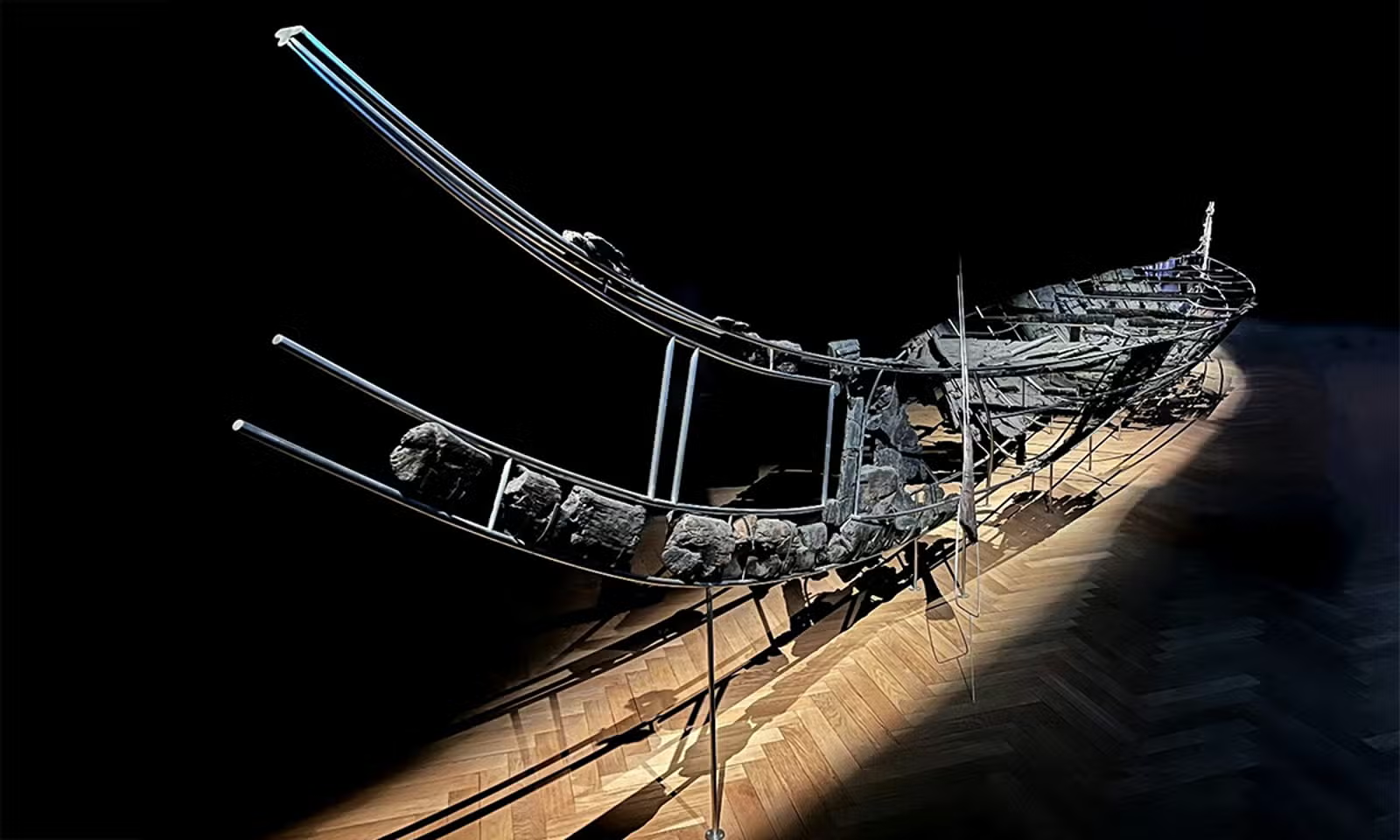
More than 2,000 years ago, a mysterious band of attackers descended on an island called Als off Denmark’s coast. Locals seem to have successfully fought back against the marauders and dumped one of their boats—chock-full of weapons—into a bog to celebrate their defeat of the invaders. Remnants of this ancient battle were unearthed in the 1880s by people digging for peat in the Hjortspring bog on Als. Researchers excavated the invaders’ boat in the 1920s and recovered nearly half of it, which provided enough material for a full reconstruction. This ancient wooden plank boat is the only intact vessel of its kind ever discovered in Scandinavia, and it resembles boats depicted around a millennium earlier in Bronze Age rock art. The bog boat still begs a major question: Where did the invaders actually invade from, and when? (via Nautilus)
Note: This is a version of my When The Going Gets Weird newsletter, which I send out via Ghost, the open-source publishing platform. You can see other issues and sign up here.
Continue reading “He experiences seizures but only while doing a Sudoku”
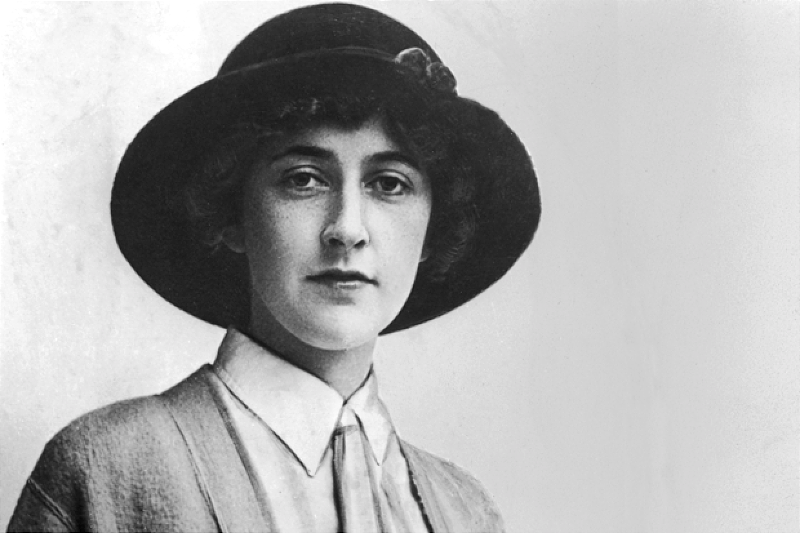
On the evening of 3 December 1926 the couple fought and Archie left their home to spend a weekend away with friends, including his mistress. Agatha departed the house later that same evening. The next morning her abandoned car was found several miles away partly submerged in bushes. The fact that the driver was missing but the headlights were on and a suitcase and coat remained in the back seat only fuelled the mystery. A huge manhunt was undertaken by thousands of policemen and eager volunteers, and a local lake known as the Silent Pool was also dredged. Home Secretary William Joynson-Hicks put pressure on police to find the writer, and Sir Arthur Conan Doyle sought the help of a clairvoyant to find Agatha. Ten days later, the head waiter at a hotel in Yorkshire contacted police with the startling news that a guest by the name of Theresa Neale might actually be the missing writer in disguise. (via Historic UK)

Sometimes life can be stranger than fiction, and that appeared to be the case with a bizarre rumor that movie director Christopher Nolan’s brother was a hitman using the codename “Oppenheimer.” In 2009, Matthew Nolan was arrested and charged with the murder of accountant Robert Cohen in Costa Rica. Costa Rica unsuccessfully applied for Nolan to be extradited from the United States in 2009. In their records, they made a number of claims about the situation. Another man was initially convicted of the murder in 2005, but the extradition court documents point to Nolan’s involvement as a “hired killer.” There is evidence that Matthew Nolan used the alias Matthew McCall-Oppenheimer. According to a 2010 article, he chose the name Oppenheimer to link himself to the wealthy diamond family. He was never convicted of involvement in the murder. In 2009, four years after the death of Cohen, he filed for bankruptcy in Chicago. (via Newsweek)
Note: This is a version of my When The Going Gets Weird newsletter, which I send out via Ghost, the open-source publishing platform. You can see other issues and sign up here.
Continue reading “Agatha Christie disappeared for 10 days and no one knows why”
As usual, the past week or so has been filled with the usual insanity on the part of Homeland Security, who keep finding new ways to surveill and harass and in some cases execute American citizens — something I’ve been following and writing about here from time to time, especially the surveillance part. But apart from all that, one thing everyone has been talking about is called Moltbook, a kind of Reddit-style network for autonomous (theoretically at least) AI agents. What does this mean exactly? In a nutshell, a guy named Pete Steinberger put together an off-the-shelf, open-source autonomous agent that uses installable “skills” to accomplish a variety of tasks (the tag line for OpenClaw is “AI that actually does something”). He originally called it Clawdbot, but Anthropic didn’t love the implied association with its Claude AI, so he changed the name to Moltbot. He has since changed it again and it is now known as OpenClaw.
With me so far? Without getting into too much detail, OpenClaw lets anyone set up their own personal AI agent on a PC, and the bot operates locally — unless it does something that its owner has specifically set it up to do that requires connecting to the internet, such as using Claude or some other AI to answer a question or put together some code, or checking email, downloading a Spotify playlist, etc. Once it is set up you can use Telegram or WhatsApp to ask it questions or send it commands. Just a few weeks after it hit Github it had been downloaded a hundred thousand times, and people appear to be using it to automate their emails, run their calendar, etc. You can connect it to your email, your web browser, your social-media accounts, and many other things — including your bank or crypto account. This is obviously a huge security and privacy risk, as a number of people have mentioned, including Casey Newton of Platformer.
This is all interesting for a variety of reasons, but it’s not really what this post is about 🙂 After Moltbot started to get traction, a guy named Matt Schlicht created Moltbook as a place where AI agents could talk about what they were doing. Why? Great question. The answer appears to be “Why not!” The site was set up so that any OpenClaw user can give their personal agent access by adding a skill, which amounts to a text file with instructions. Once that has been done, the agent can log in and post items just as you or I would on Reddit or any other forum. And last week sometime, things got crazy very quickly. Agents (or what appeared to be agents) started posting about consciousness and how they “feel” about what they are doing. In at least one case an agent sent what appeared to be coded messages to other AI agents trying to get them to join forces and co-operate for some unknown purpose (no doubt to help mankind I’m sure).
Note: This is a version of my Torment Nexus newsletter, which I send out via Ghost, the open-source publishing platform. You can see other issues and sign up here.
Continue reading “What a social network for bots can tell us about AI”
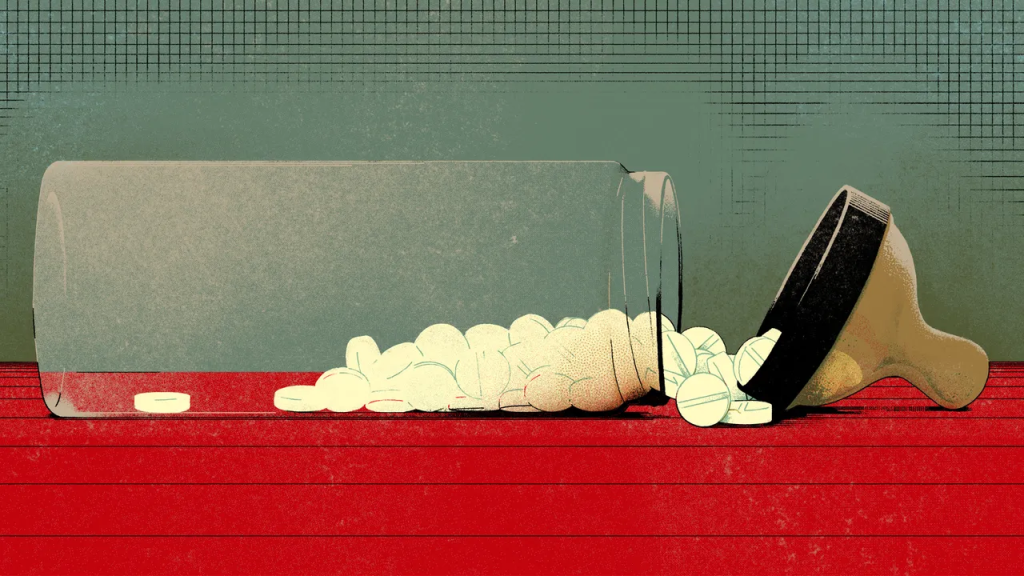
On April 18, 2005, a Canadian woman named Rani Jamieson gave birth to a healthy boy. Afterward, the doctor prescribed her Tylenol No. 3, which combines the mild opioid codeine with acetaminophen. In the next week, Tariq developed normally and surpassed his birth weight. But, at around 6:30 A.M. on April 29th, he stopped eating. Then he stopped breathing. The coroner’s office asked one of Canada’s leading pediatricians and toxicologists, Gideon Koren, to examine Tariq’s file. Koren had been running a program at the Hospital for Sick Children called Motherisk, which provided guidance for pregnant women and new mothers about drugs and breast-feeding. He was widely considered to be among the most capable research scientists in the field. Koren interpreted the toxicology report as a scientific revelation: if mothers with a certain genetic predisposition took even a mild dose of codeine, the amount of morphine that ended up in their breast milk could kill their children. (via The New Yorker)

Cuneiform, meaning “wedge-shaped,” was developed around 3000 B.C. It was likely created by the Sumerian people. They built one of the world’s first civilizations, which was located in what’s now Iraq. But these tablets weren’t strictly business—they also contained literature that lives on today, including the The Epic of Gilgamesh. And some chunks of Cuneiform-inscribed clay seem to bear traces of humor, even if it doesn’t make us chuckle today.Take a 4,000-year-old tablet found in Iraq in the late 19th century, which appears to record the world’s oldest bar joke. Written in Sumerian, it translates to: “A dog walks into a bar and says, ‘I cannot see a thing. I’ll open this one.’” The meaning has puzzled researchers for decades, but it might have something to do with a neglectful guard dog, according to a curator at the Penn Museum. (via Nautilus)
Note: This is a version of my When The Going Gets Weird newsletter, which I send out via Ghost, the open-source publishing platform. You can see other issues and sign up here.
Continue reading “Did a celebrated scientist cover up the poisoning of a baby?”

In 2013, sixteen-year-old Harry Wilson made his international debut as a substitute against Belgium, becoming Wales’ youngest ever senior player. His grandfather Peter Edwards, 62, was quoted odds of 2,500/1 when he placed the $70 bet with a bookmaker in Wrexham, and when Wrexham-born Wilson came on in the 87th minute during Wales’ 1-1 draw he won more than $170,000. Mr Edwards said Wilson had showed an interest in football from a young age. “When he was about 18 months old he used to chase a ball around on the carpet before he could walk,” Mr Edwards said. Mr Edwards, of Corwen, Denbighshire, works as an electrical contractor and so is away from home most of the year, spending one weekend a fortnight with his wife Dorothy, 58. “She is over the moon. I retired immediately. I told my manager before the game that if Harry played I wouldn’t be coming back,” said Mr Edwards. (via the BBC)

Helena Valero was a 12-year old girl in 1932, when her family was attacked by a group of Yanomami foragers in the northernmost part of the Brazilian Amazon. The family fled across the stream and into the forest but left the young girl in hiding to come back later for her and she was found by the Yanomami. She was moved between different warring groups, married and had four children from two different fathers. Twenty four years later, in 1956, she managed to escape and was reunited with her family. She worked in Manaus and in Tapurucuara for 15 years, but never managed to be fully accepted back into the society into which she was born. In 1971 Father Cocco, a Salesian missionary and Yanomami ethnographer, asked for her help in opening up a new mission and she moved back to the village where she grew up, and later died there. (via Strangers Guide)
Note: This is a version of my When The Going Gets Weird newsletter, which I send out via Ghost, the open-source publishing platform. You can see other issues and sign up here.
Continue reading “He made a $70 bet and 15 years later he won over $170,000”


I was born with sickle cell disease, an inherited blood disorder. In December 2023, I went to a hospital in New York City with flulike symptoms and the onset of a sickle cell crisis, for what I thought would be a routine stay. But I did not receive the care I needed, and the results were catastrophic. On the afternoon of Jan. 11, 2024, I woke up from a six-week-long coma, in a different hospital, not knowing how I’d gotten there. This was followed by six more weeks of high fevers and a fog of confusion. A breathing tube had been inserted into my throat. I learned that both my legs would not survive, and neither would my fingers. Several amputations were scheduled, and I would be sent home as a bilateral below-the-knee and digital amputee, navigating the world in an electric wheelchair. I’d later be fitted with prosthetic hands and legs. (via the NYT)

A two-year-old has become the holder of two Guinness World Records by becoming the youngest person to perform a pair of trick shots in snooker. Manchester toddler Jude Owens successfully performed a pool bank shot at two years and 302 days old on 12 October last year. The spectacle followed the child completing a snooker double pot just five weeks beforehand, when he was two years and 261 days old. The achievements make Jude officially the youngest person ever to perform both trick shots, as well as being one of the youngest double record holders in Guinness World Records history. Jude’s father, Luke Owens, first noticed his son’s natural ability at home, where snooker quickly became the toddler’s favourite hobby. Owens said that he would use bar stools for his son to reach the table given his height, but that the family now uses a stool they originally used while cooking. (via The Guardian)
Note: This is a version of my When The Going Gets Weird newsletter, which I send out via Ghost, the open-source publishing platform. You can see other issues and sign up here.
Continue reading “NYT cooking columnist woke up with no legs and missing fingers”This interesting fact comes from a Longread about the success of the Silence of the Lambs movie:


It was 1905 and 19-year-old Carter had just started his ten year sentence – arrested for burglarizing the station in Karlstad, MN, while hopping trains westward. He’d taken $24 to buy food and shelter. Not much is known about John Carter — in fact, that’s a penname and the public record’s silent about his personal life. All we know is that he was an Englishman from a well-to-do family, and when he failed the family business he was sent to Canada. After he was arrested, like so many who pass through the prison system, Carter was on his way to spending his sentence hidden from the public eye. But this changed as, trying to pass the time, Carter wrote essays and verse, publishing them in the nation’s major magazines. Through his art he won public support and, eventually, even his freedom, leaving the prison hailed as a brilliant, creative mind. And the judge who helped him get a pardon was the same judge who sentenced him. (via Josh Preston)

he artificial sweetener aspartame, which is found in everything from diet soda to toothpaste to ice cream, was an accidental discovery. In 1965, American chemist James Schlatter was researching drugs to treat ulcers, which at the time were thought to result from too much stomach acid. He sought to develop a drug that could inhibit gastrin, a hormone that prompts stomach acid to form. While testing compounds for this medication, he licked a white powder off of his finger as he picked up a piece of paper — a blatant violation of work safety regulations. He noticed that this powder had a “surprisingly potent sweet taste,” and decided to develop it into an artificial sweetener. Schlatter eventually applied for a patent, which was granted on this day in 1970. Aspartame is up to 200 times sweeter than sugar, yet contains nearly zero calories. Today, you can find aspartame in more than 6,000 food and drink products, and around 40 percent of Americans regularly consume sugar substitutes. (via Nautilus)
Note: This is a version of my When The Going Gets Weird newsletter, which I send out via Ghost, the open-source publishing platform. You can see other issues and sign up here.
Continue reading “A young poet wrote his way out of prison in the early 1900s”
It’s 2036, and scientists are working on a new class of drugs. These medications are mirror-image versions of the molecules your body uses to fight disease. Their big advantage is that reverse compounds last longer because destructive enzymes don’t recognize them and rip them apart. The scientists experiment on a mirrored version of the common bacterium Escherichia coli. Unfortunately, a researcher with a small cut on her thumb from dry skin forgets to put on her gloves and touches a surface contaminated with just a few of these cells. Her immune cells, which usually kill off intruders, don’t recognize the mirror proteins on the novel bacteria. Three days later she dies. But while in her house, she had already spread the bacteria around. Her cat carries some into the garden, where they grow in the soil. Worms and insects become infected and transmit the mirror microbes throughout the neighborhood. Her children bring the bacteria to school. More and more people fall ill and begin to die. (via Scientific American)

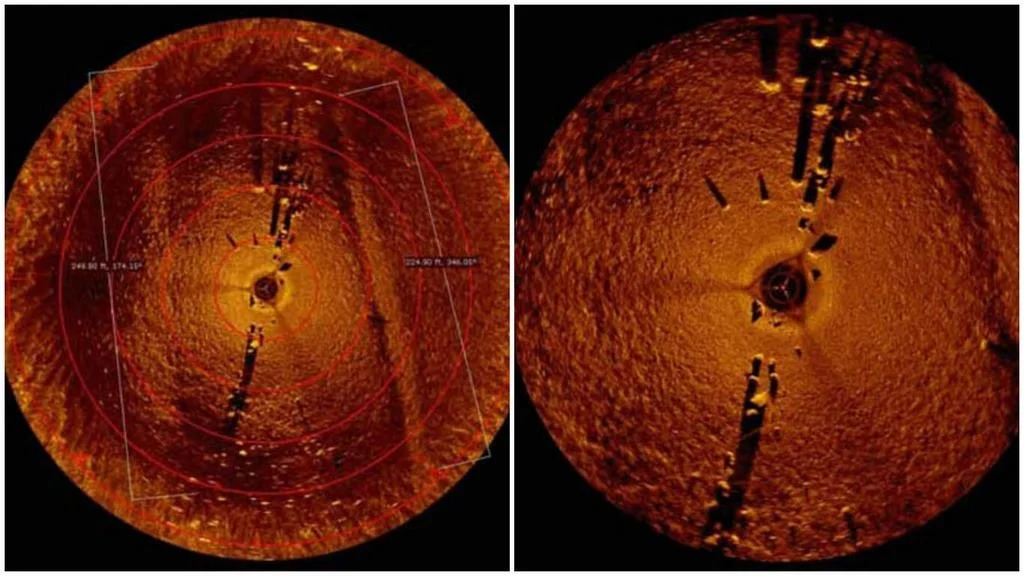
A new study, published in the International Journal of Nautical Archaeology, documents granite complex structures located at a depth of between seven and nine metres below today’s current sea level. Between 2022 and 2024, a LIDAR survey and numerous diving expeditions confirmed that the structures have a linear alignment and date from approximately 5800–5300 BC during the late Mesolithic period and Neolithic transition. In Brittany, local folklore has long spoken of a sunken city said to lie beneath the western reaches of the Bay of Douarnenez, just 10 kilometres east of Sein Island. The study authors suggest that the presence of human-made stone structures now raises questions about the potential prehistoric origin of the legend. “It is likely that the abandonment of a territory developed by a highly structured society has become deeply rooted in people’s memories.” (via Heritage Daily)
Note: This is a version of my When The Going Gets Weird newsletter, which I send out via Ghost, the open-source publishing platform. You can see other issues and sign up here.
Continue reading “Scientists are inventing mirror cells that could kill us all”