
A lizard at the 7-11

Links that interest me and maybe you

Hi everyone! Just wanted you to know that I’ve launched a newsletter about technology and society called “The Torment Nexus,” where I will be writing analysis and commentary about technology and culture. I was recently laid off from my job as the chief digital writer for the Columbia Journalism Review, where I have been writing since 2017 about the intersection of technology, media, and culture, so I decided to run this up the old flagpole and see if anyone salutes 😄
I’m publishing The Torment Nexus via Ghost, an open-source publishing system, as I do my other newsletter, a collection of interesting, odd, and/or unusual links called When The Going Gets Weird. If you’re more comfortable with Substack, I’m also publishing it through that software as well, and if you prefer to read it the old-fashioned way, I will also be posting some or all of the posts here on my website, as I do with almost everything I write. Feel free to share this and other posts with anyone you think might have an interest in these kinds of topics!
In case the name Torment Nexus doesn’t ring a bell, it comes from a hilarious meme that Alex Blechman—a writer for The Onion—came up with awhile back, and I think it sums up so much about where we are right now in terms of our relationship with technology. Here Alex’s original tweet:



From Esquire: “Heidi Guilford rode shotgun in her boyfriend’s white Dodge Charger. Her stepsister and a couple friends sat in the back, with the windows rolled down for the smokers. It was a cool night in June—sweatshirt weather—an unremarkable Sunday on an island off the coast of Maine. Roger seemed upset, bordering on frantic, going on about Dorian and Briannah Ames, a married couple who lived down on Roberts Cemetery Road, about a half mile out of town. He said the Ameses had been harassing him, that he was sick of it, and that nothing was being done about it.It all happened so fast. Less than twenty minutes after leaving the parking lot, Roger was bleeding to death in the back seat of Isles’s car. The group of friends, stunned, believed they had just witnessed a homicide—one lobsterman killing another with an ax in a bloody brawl. But did they? A man died—was killed, in what the state itself said was a homicide—and yet to this day, no one has been charged with a single crime related to his death.”

From People: “Abraham Lincoln was, by most accounts, the greatest president the United States has ever had. He led the country through the Civil War and played a pivotal role in the emancipation of enslaved Black Americans. But through his professional and political triumphs, he is said to have suffered from crippling, lifelong depression. It’s a side of the great American president that history books don’t typically dwell on, and the new documentary Lover of Men: The Untold History of Abraham Lincoln takes a look at another aspect of Lincoln’s life that often has gone overlooked: his sexuality. The documentary covers Lincoln’s relationships with several men over the years, most notably Joshua Speed, the co-owner of a general store with whom the future U.S. president shared a bed — for four years. The film features interviews with more than a dozen scholars and historians and offers letters and never-before-seen photos, while laying out the thesis that Lincoln was probably gay or at least bisexual.”
Note: This is a version of my personal newsletter, which I send out via Ghost, the open-source publishing platform. You can see other issues and sign up here.
Continue reading “They saw a man killed with an ax but no one was ever charged”

From Curbed: “Sometimes Wu remembers how his family balked when he told them he was going to start ratting out lawbreakers in New York City. But for a chance at making nearly $90 for a minute of his time, he found he could push their skepticism to the bottom of his consciousness.The source of the money was the city itself, thanks to the Citizens Air Complaint Program, which allows members of the public to claim a reward by sending in videos of buses and trucks that idle illegally. The statutory limit for leaving your engine running is three minutes. But on a block with a school, that drops to 60 seconds, which is what has now drawn Wu several times to this particular block in Manhattan that’s being poisoned by the pooling diesel exhaust of nearly a dozen yellow school buses. Wearing a mask to filter out the acrid tang of sulfates and carbon soot, Wu uses his phone’s camera to capture the license plates and company markings on the buses.”

From History.com: “On September 29, 1913, Rudolf Diesel, inventor of the engine that bears his name, disappears from the steamship Dresden while traveling from Antwerp, Belgium to Harwich, England. On October 10, a Belgian sailor aboard a North Sea steamer spotted a body floating in the water; upon further investigation, it turned out that the body was Diesel’s. There was, and remains, a great deal of mystery surrounding his death: It was officially judged a suicide, but many people believed (and still believe) that Diesel was murdered. Diesel patented a design for his engine on February 28, 1892 and at the time of his death, he was on his way to England to attend the groundbreaking of a new diesel-engine plant—and to meet with the British navy about installing his engine on their submarines. Conspiracy theories began to fly almost immediately: “Inventor Thrown Into the Sea to Stop Sale of Patents to British Government,” read one headline.”
Note: This is a version of my personal newsletter, which I send out via Ghost, the open-source publishing platform. You can see other issues and sign up here.
Continue reading “You can make six figures in New York by reporting idling trucks”

From CBS News: “Jan Dell is a former chemical engineer who has spent years telling an inconvenient truth about plastics. “So many people, they see the recyclable label, and they put it in the recycle bin,” she said. “But the vast majority of plastics are not recycled.” About 48 million tons of plastic waste is generated in the U.S. each year; only 5 to 6 percent of it is actually recycled, according to the Department of Energy. The rest ends up in landfills or is burned. Dell founded a non-profit, The Last Beach Cleanup, to fight plastic pollution. Inside her garage in Southern California is all sorts of plastic with those little arrows on it that make us think they can be recycled. But, she said, “You’re being lied to.” Those so-called chasing arrows started showing up on plastic products in 1988, part of a push to convince the public that plastic waste wasn’t a problem because it can be recycled. Davis Allen, an investigative researcher, said the industry didn’t need for recycling to work: “They needed people to believe that it was working.”

From The Atlantic: “Brandon Sausele is 27 years old. Shaggy-haired, tattooed, and muscular, he is a devoted practitioner of an extreme sport known as “wetsuiting,” which is both easy to describe and impossible for the uninitiated to understand. When I was first getting into the sport a few years ago, the advice I received from another fisherman was simply: Don’t. Wetsuiting is a form of saltwater fishing that involves wearing a wetsuit and wading or swimming out to offshore rocks—almost exclusively at night, often during storms—to access deeper water or faster currents than can be reached in traditional waders. The quarry are striped bass, a fish that migrates every spring to as far north as Maine, and the largest come close to shore at night. Stripers prefer inclement weather and rough water, which make ambushing their prey easier, but also make conditions more dangerous for the men—wetsuiters are nearly all men—who chase them.”
Note: This is a version of my personal newsletter, which I send out via Ghost, the open-source publishing platform. You can see other issues and sign up here.
Continue reading “Plastic recycling is a hoax and the industry knows it”

From Lori Emerson: “In need of a practical way to overcome social isolation; communicate emergencies, weather, and crop prices, farmers began to take advantage of the growing ubiquity of both telephone sets and barbed wire fencing. They would hook up telephones to wire strung from their homes to a nearby fence; at the time, telephones had their own battery which produced a DC current that could carry a voice signal; turning a crank on the phone would generate an AC current to produce a ring at the end of the line. These networks had no central exchange, no operators–and no monthly bill. Instead of ringing through the exchange to a single address, every call made every phone on the system ring. Soon each household had its own personal ringtone…but anyone could pick up. Reportedly, the quality of the signal traveling over the heavy wire was excellent, but weather would frequently cause short circuits.”
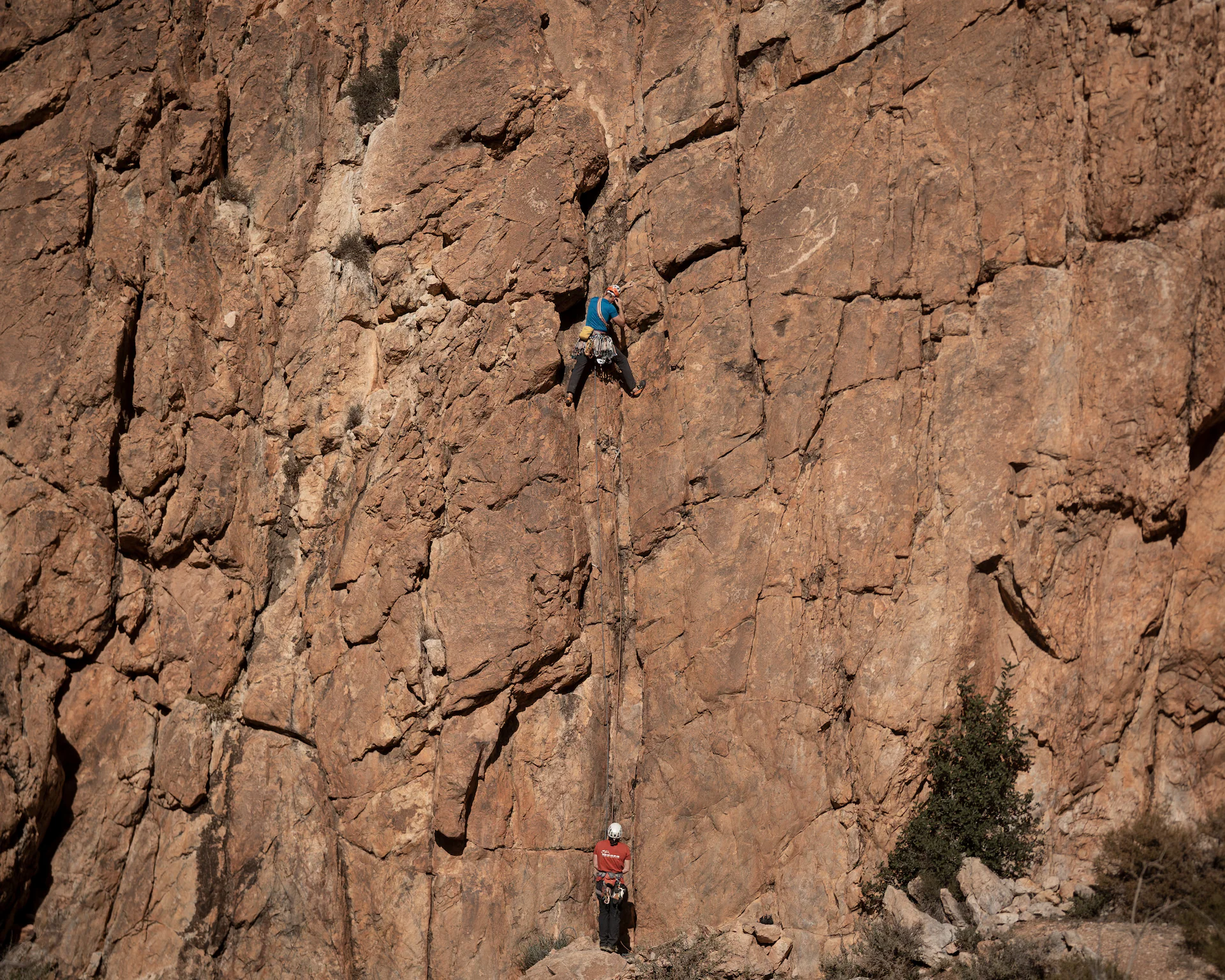
From the Washington Post: “Molly Thompson craned her neck so she could make out the man climbing the tower of red rock. Squinting into the desert sun, she tried to identify a crack he could grab on to or a ledge wide enough for his foot. The climber, struggling to keep his grip, was her husband, Jesse Dufton. His left arm trembled from the effort. His foot probed for a more secure hold, but found nothing. “A little bit higher there should be a foothold,” Molly said into a headset. When Jesse extended his foot again, it missed the tiny outcropping. He returned his foot to its original position and tiptoed on three millimeters of quartzite, 200 feet above the ground. He did not look down. He did not look anywhere. Jesse has advanced rod-cone dystrophy. Put another way: He is completely blind. And another: He is one of the world’s few elite blind rock-climbers.”
Note: This is a version of my personal newsletter, which I send out via Ghost, the open-source publishing platform. You can see other issues and sign up here.
Continue reading “Farmers used to use barbed-wire fences as a phone network”


From Afar: “Gary Beeck’s island had all the basic ingredients of a tropical daydream: swaying palms, epoxy-clear water, a blond frill of sand fading to jungle. But a surge of trepidation hit when Beeck, a retiree from Perth, Australia, neared the uninhabited island off Sumatra’s volcano-pocked coast in May. Later that day, the boat and crew that carried him would return to shore; Beeck would stay behind, alone. Beeck had booked a “castaway” stay on the island though the travel company Docastaway. For 12 days and with just a few basic survival supplies, he planned to live off wild coconuts, plus whatever food he could catch and forage. During the drive to the boat launch that morning, a local guide had offered a final chance to purchase provisions before leaving civilization behind—there were ripe mangoes, sweetly starchy bananas. He said no. Later, and only when it was too late to change his mind, Beeck would reconsider.”

From Moss and Fog: “The oldest hotels in Europe have nothing on Nisiyama Onsen Keiunkan, a traditional Japanese Ryokan that has been family run for an astonishing 52 generations. Operating since 705 AD, the hotel has all its hot water sourced directly from the local Hakuho Springs. Guests can still enjoy the same hot spring baths that visitors have been using for over a thousand years. It is located at the foot of the Akaishi Mountains, in Yamanashi Prefecture. In addition to being the oldest operating hotel, it may also be the world’s oldest continuously-operating business. Although the facilities are much younger, the business has operated continuously for over 1300 years. The Nishiyama Hot Spring is said to have had many commanders of the warring period visiting it. Amidst the unification of Japan, it is said that Tokugawa Ieyasu visited twice.”
Note: This is a version of my personal newsletter, which I send out via Ghost, the open-source publishing platform. You can see other issues and sign up here.
Continue reading “Some people are paying to be left alone on a deserted island”