She ran triathlons for 16 years to finance this Netflix movie

From The Standard: “She fell in love with the book, originally written by Erich Maria Remarque in 1928, in high school. Taking the German point of view, it follows soldier Paul Baumer through the trenches during the last years of the First World War. It had twice been adapted for the screen before, but not since 1979. It stayed at the back of Paterson’s mind as she pursued a career as a triathlete, winning numerous races around the world before coming across the book again, by chance, in a charity shop. When she and her husband, Simon Marshall, enquired about the rights, they were stunned to find them relatively affordable. The pair went for it and Paterson spent the next decade trying to get the film optioned, working on drafts of the script with writing partner Ian Stokell and funding the licence fee renewals by winning triathlons.”

The strange tale of how a sea lion in California came to be called Alice

From Strange Company: “Alice and her husband of many years, Lee, were both from Mississippi, but since 1917, they lived in California and the Pacific Northwest, where Lee worked as a salesman and saw sharpener.  In September of 1965, Alice died at their home in Santa Cruz, and Lee arranged to send her body to her home town of Terry, Mississippi, for burial.  At the same time, the Boyd Science Museum in San Rafael, California, was awaiting the arrival of a sea lion that was also being shipped from Santa Cruz.  This was when Fate arranged that the young sea lion and the elderly housewife would be forever entwined. During the shipping process, the bill of lading that was meant to accompany Alice’s corpse somehow wound up in the crate containing the sea lion.  When the animal arrived at the museum, the employees were both intrigued and extremely confused.  Who was Alice Parsons, and why was a sea lion named in her honor?  They shrugged and decided to roll with it.  From then on, the creature was known as “Alice.”

Note: This is a version of my When The Going Gets Weird newsletter, which I send out via Ghost, the open-source publishing platform. You can see other issues and sign up here.

Continue reading “She ran triathlons for 16 years to finance this Netflix movie”

Aqua Tofana was the 17th-century husband killer

From Amusing Planet: “Sometime in the summer of 1791 Wolfgang Amadeus Mozart fell ill. By late November, his condition worsened dramatically. He became bedridden, suffering from swelling, pain, and persistent vomiting. Around two weeks later, on 5 December, he died at his home in Vienna. Mozart himself was deeply troubled by his deteriorating health and feared he was being poisoned. He believed the poison was Aqua Tofana, a colourless, tasteless, and odourless liquid that could be mixed with the victim’s food without detection. When administered gradually, it mimicked symptoms of common illnesses such as cholera or influenza. This poison is believed to have been invented by an Italian woman named Thofania d’Adamo in the 17th century. It quickly gained notoriety in southern Italy, particularly among women seeking to rid themselves of their husbands and claim their inheritances.”

Google is developing an LLM that could help us communicate with dolphins

From Scientific American: “Dolphins are renowned for their intelligence and social skills. These large-brained marine mammals communicate using individualized signature clicks and whistles and even seem to recognize their own “names.” Now a few researchers think a form of two-way communication with dolphins could be on the horizon. In collaboration with the Georgia Institute of Technology and the nonprofit Wild Dolphin Project (WDP), Google has announced progress on what the team has as the first large language model (LLM) for dolphin vocalizations, called DolphinGemma. WDP provided acoustic data from the species to train the LLM. Teams at Georgia Tech and Google then asked the model to generate “dolphinlike” sequences of sounds. “Half of it was background noise stuff that you expect from the ocean,” says computer scientist Thad Starner. But the rest had authentic-sounding clicks, whistles and burst pulses—rapid sequences of clicks that dolphins often utter during fighting and other behavior.”

Note: This is a version of my When The Going Gets Weird newsletter, which I send out via Ghost, the open-source publishing platform. You can see other issues and sign up here.

Continue reading “Aqua Tofana was the 17th-century husband killer”

Churchill urged the US to hit Moscow with an atomic bomb

From the ICIJ: “Although his own empire’s resources were depleted, Churchill wanted the United States to control the Soviets in Europe through the use of nuclear weapons. The Soviets still appeared far away from developing their own atomic weapons, and would respect American dominance if exerted. Dropping the bomb—or at least “a showdown” with the implied threat of doing so—must be a vital tool in curbing Soviet communism, Churchill argued. Privately, Churchill suggested that America strike first, before it was too late. According to FBI records, he urged Sen. Styles Bridges, a conservative Republican from New Hampshire active in foreign affairs, to back a preemptory and devastating attack on Moscow. “He [Churchill] pointed out that if an atomic bomb could be dropped on the Kremlin wiping it out, it would be a very easy problem to handle the balance of Russia, which would be without direction,” Bridges told the FBI.

This medieval manuscript features a Yoda lookalike, killer snails and savage rabbits

From Open Culture: “As much as you may enjoy a night in with a book, you might not look so eagerly forward to it if that book comprised 314 folios of 1,971 papal letters and other documents relating to ecclesiastical law, all from the thirteenth century. Indeed, even many specialists in the field would hesitate to take on the challenge of such a manuscript in full. But what if we told you it comes with illustrations of demons running amok, knights battling snails, killer rabbits and other animals taking their revenge on humanity, a dead ringer for Yoda, and the penitent harlot Thäis? These are just a few of the characters that grace the pages of the Smithfield Decretals. When it was originally published as an already-illuminated manuscript in the 1230s, the margins of the text were deliberately left blank by the original French scribes so that future owners of the text could add their own notes and annotations. And they did.”

Note: This is a version of my When The Going Gets Weird newsletter, which I send out via Ghost, the open-source publishing platform. You can see other issues and sign up here.

Continue reading “Churchill urged the US to hit Moscow with an atomic bomb”

His father recruited him to be a deep-cover KGB spy in the US

From The Guardian: “Rudi Herrmann took a deep breath and asked his son Peter to sit down. “I have a story to tell you,” he said. Rudi had been preparing for this conversation for several years, running over the words in his mind. He was about to tell his 16-year-old son that everything Peter thought he knew about their family was a lie. Rudi explained to Peter that what he was about to tell him had to stay secret. He could not discuss it with his friends, and certainly not with Michael, his younger brother. Peter nodded, and Rudi began: “I am not who you think I am. I am not a German, and I’m not called Rudi. I am a Czech man named Dalibor Valoušek, and I work for the Soviet Union, for the KGB.” Rudi came to the most important part of the conversation. “Would you be willing to become an intelligence officer like me?” he asked. Peter’s head was spinning, and he didn’t know what to think or say. But he nodded his assent.”

Breakthrough Prize winning physicist says quantum physics is nonsense

From Scientific American: “In the pantheon of modern physics, few figures can match the quiet authority of Gerard ’t Hooft. The Dutch theoretical physicist, now a professor emeritus at Utrecht University in the Netherlands, has spent much of the past half-century reshaping our understanding of the fundamental forces that knit together reality. But ’t Hooft’s unassuming, soft-spoken manner belies his towering scientific stature, which is better revealed by the prodigious numbers of prestigious prizes he has accrued, which include a Nobel Prize, a Wolf Prize, a Franklin Medal, and many more.His latest accolade, announced on April 5, is the most lucrative in all of science: a Special Breakthrough Prize in Fundamental Physics, worth $3 million, in recognition of ’t Hooft’s myriad contributions to physics across his long career. In a conversation with Scientific American, ’t Hooft spoke about his Breakthrough Prize, his optimism for the future of particle physics and his dissatisfaction with quantum mechanics.”

Note: This is a version of my When The Going Gets Weird newsletter, which I send out via Ghost, the open-source publishing platform. You can see other issues and sign up here.

Continue reading “His father recruited him to be a deep-cover KGB spy in the US”

Be careful what you say on social media, part 2

A few weeks ago, I wrote a post for The Torment Nexus that was titled “Be careful what you say on social media, they are listening,” which was triggered in part by the case of Mahmoud Khalil, a former student at Columbia University who took part in pro-Palestine demonstrations on the campus. Khalil was taken by agents of ICE — Immigration and Customs Enforcement, part of the Department of Homeland Security — and told that his visa was revoked. When they were told that Khalil had a green card, making him a legal resident of the US, the agents said that this was being revoked as well, something that typically requires a ruling from an immigration court judge. Since I wrote that, Khalil has been in a detention facility in Louisiana. His attorney said this week that his case will be heard by Friday, and a judge will determine whether he can legally be deported or must be released. The judge ordered the government to provide all the evidence against Khalil by end of day Wednesday. To quote my previous post:

The notice given to Khalil after he was detained said that he could be deported because “the Secretary of State has reasonable ground to believe that your presence or activities in the United States would have potentially serious adverse foreign policy consequences.” What is this based on? No evidence was provided at the time. Did he throw any bombs? No. Did he shoot someone? No. Did he advocate violence against Jews? Not as far as we know. But isn’t participating in a peaceful protest protected by the First Amendment? It certainly used to be. But Marco Rubio, the Secretary of State, has said that Khalil’s detention is “not about free speech,” and that “no one has a right to a green card.” The President said on X that ICE “detained a Radical Foreign Pro-Hamas student,” and that this would be what he called “the first arrest of many to come.”

Note: This is a version of my Torment Nexus newsletter, which I send out via Ghost, the open-source publishing platform. You can see other issues and sign up here.

Continue reading “Be careful what you say on social media, part 2”

The Padres signed him but he hasn’t played in 20 years

From Now I Know: “LaChappa is 41 years old right now. His three-year pro career topped out in the low minors more than two decades ago. But if prior history is any indicator, sometime in the next few weeks, the San Diego Padres will sign LaChappa to a minor league contract — just like they have every year since 1996. When the Padres drafted LaChappa in 1993, they had high hopes for the local-born left-handed pitching prospect. He was taking some practice throws off on the side when something went wrong; he clutched his chest and fell to the ground. He was having a heart attack, caused by an undiagnosed virus around his heart. LaChappa survived but would never be the same. At age 20, his career was over. It was unlikely that LaChappa would ever be able to work again, in any capacity. So, the Padres brought him back the next year, and have continued to do so every year, not only providing him with some much-needed cash but, more important, allowing him to maintain his medical insurance.”

Authorities in Boston have busted a high-end brothel charging $600 an hour

From the Wall Street Journal: “Eager to gain access to an exclusive establishment near Harvard University, biotech executives, doctors, lawyers and politicians filled out applications and handed over IDs, work badges and personal references. This elite club was a high-end brothel charging up to $600 an hour for sexual encounters in luxury apartments in Cambridge, Mass. Now, that unusual trove of personal information is serving as evidence in a series of criminal hearings that have pulled back the curtain on upscale sex work. Dozens of prominent Boston-area men, who lost a legal battle for anonymity, are facing misdemeanor charges that have caused major public fallout. Cambridge City Councilor Paul Toner, among the alleged sex buyers, is confronting calls for his resignation and has been stripped of committee assignments. Others have left high-profile posts in business and medicine without explanation. Most have avoided the closely watched proceedings, dubbed “The Cambridge Brothel Hearings” by local media, where names—more than 30 so far—have emerged in batches.”

Note: This is a version of my When The Going Gets Weird newsletter, which I send out via Ghost, the open-source publishing platform. You can see other issues and sign up here.

Continue reading “The Padres signed him but he hasn’t played in 20 years”

Expert says Jack the Ripper has been 100% identified by DNA

From the Tribune: “A researcher claims to have solved the 136-year-old mystery of Jack the Ripper, revealing a 100 per cent DNA match linking the infamous serial killer to a long-standing suspect. Russell Edwards, who has spent years investigating the case, says DNA extracted from a bloodstained shawl found at the crime scene of one of the Ripper’s victims, Catherine Eddowes, matches that of Polish-born barber Aaron Kosminski. Kosminski has long been a prime suspect in the brutal murders of five women in London’s Whitechapel district between August and November 1888. Edwards, working alongside genealogists, traced a living relative of Kosminski, who agreed to provide a DNA sample. When tested against the genetic material found on the shawl, it reportedly yielded a match. Now, the descendants of Eddowes and Kosminski are calling for an official inquest to legally confirm the killer’s identity.”

A private equity analyst quit to devote his life to the welfare of shrimp

From Asterisk: “I left private equity to work on shrimp welfare. When I tell anyone this, they usually think I’ve lost my mind. I know the feeling — I’ve been there. The transition from analyzing real estate deals to advocating for some of the smallest animals in our food system feels counterintuitive, to say the least. But it was the same muscle I used converting derelict office buildings into luxury hotels that allowed me to appreciate an enormous opportunity overlooked by almost everyone, including those in the animal welfare space. After years of practicing my response to the inevitable raised eyebrows, I now sum it up simply: ignoring shrimp welfare would have been both negligent and reckless. Shrimp may not be high up on the list of animals that most people think about when they consider the harms done by industrial agriculture, but we do know that if shrimp can suffer, they are doing so in the hundreds of billions.”

Note: This is a version of my When The Going Gets Weird newsletter, which I send out via Ghost, the open-source publishing platform. You can see other issues and sign up here.

Continue reading “Expert says Jack the Ripper has been 100% identified by DNA”

Elon Musk’s grandfather was a technocrat and apartheid fan

From the CBC: “Joshua Haldeman was just one of thousands of Saskatchewan farmers who lost their land in the drought of the Dirty ’30s. While that trauma shaped the lives of everyone who went through it, the crisis affected Haldeman so much that he never stopped raging at what he perceived were the causes of the Great Depression. Haldeman came to believe that an international communist conspiracy controlled the banks, the media and the universities and was aiming to run the world. “An ‘Invisible Government,’ working to carry out the objectives of the International Conspiracy, is operating in every country,” he wrote. He also said the conspiracy was pushing for the fluoridation of water supplies, mandatory milk pasteurization and mass vaccination programs. Haldeman embraced the solution proposed by a movement called Technocracy: that government should be run by scientists and engineers rather than politicians.” 

In the 1700s and 1800s pink was the color of princes and kings

From Literary Hub: “He was a prince whom all of Europe nicknamed “the pink prince”: Charles Joseph de Ligne (1735–1814), marshal of the army of the Holy Roman Empire, diplomat, thinker, writer, scholar, and a great ladies’ man. His courtly manner, wit, elegance, and gaiety charmed all the European courts. His nickname came from the traditional livery of his house along with his personal taste for pink, notably in clothing and furnishings, but also from his optimism and good humor. Hence we have proof that in the late seventeenth century, the color pink, symbolically, already evoked joie de vivre, pleasure, and lightheartedness, a pink that was not pale and delicate, but strong and saturated, closer to a light, vivid red. It would be anachronistic to see a sign of homosexuality or effeminate behavior in the wearing of pink by men. The prince of Ligne, who happily wore this color for many decades, had sixteen children by his wife and multiple affairs with women throughout Europe. All women found him charming.” 

Note: This is a version of my When The Going Gets Weird newsletter, which I send out via Ghost, the open-source publishing platform. You can see other issues and sign up here.

Continue reading “Elon Musk’s grandfather was a technocrat and apartheid fan”

Racecar driver lost both his legs and became an Olympic athlete

From Wikipedia: “Alessandro Zanardi is an Italian former professional racing driver who won the CART championship in 1997 and 1998, and took 15 wins in the series. He also raced in Formula One from 1991 to 1994 and again in 1999; his best result was a sixth-place finish in the 1993 Brazilian Grand Prix. He returned to CART in 2001, but a major crash in the 2001 American Memorial resulted in the amputation of his legs. He returned to racing less than two years after the accident, competing in the European Touring Car Championship in 2003–2004 and then in the World Touring Car Championship between 2005 and 2009; he scored four wins. In addition to continuing to race cars, Zanardi took up competition in handcycling, a form of paralympic cycling. In September 2012 he won gold medals at the London Paralympics and in September 2016 he won a gold and a silver medal at the 2016 Rio de Janeiro Paralympics.”

While in exile on Elba Island the former emperor Napoleon decided to take English lessons

From Public Domain Review: “Napoleon had had a rollercoaster eighteen months. First he had been forced to abdicate as Emperor of France and exiled to the island of Elba. Then he had managed to escape, march on Paris, and retake the throne. Finally a crushing loss at Waterloo had led to exile once again, this time to a far more remote island called Saint Helena. The watery walls of his new South Atlantic prison were at least a thousand miles thick in every direction. The British had agreed to provide Le Petit Caporal with plentiful wine, meat, and musical instruments, but he could not have what he most craved — family, power, Europe. To make matters worse, he had virtually nothing to read. Newspapers were banned, and those he did manage to get his hands on were nearly all in English. That was the main reason why, on January 16, 1816, three months after landing on the island, he decided to learn the language of his captors.”

Note: This is a version of my When The Going Gets Weird newsletter, which I send out via Ghost, the open-source publishing platform. You can see other issues and sign up here.

Continue reading “Racecar driver lost both his legs and became an Olympic athlete”

A rogue Romanian economist won the lottery 14 times

From The Hustle: “Just after 11 PM on February 15, 1992, a janky ball machine at the Virginia State Lottery HQ spit out 6 winning numbers on live television: 8… 11… 13… 15… 19… 20. In the coming days, officials would find out that one “person” had secured not only the $27,036,142 jackpot, but 6 second prizes, 132 third prizes, and 135k minor prizes collectively worth another $900k. What unfolded next was the strangest, most improbable lottery tale in history — one involving thousands of international investors, dozens of complex computer systems, and a mathematical savant. This is the story of the man who “gamed” the lottery by buying every possible combination. In the late 1960s, a young Romanian economist named Stefan Mandel was struggling to get by. Many Romanians might have turned to a life of crime. But Mandel, a self-described “philosopher-mathematician,” saw another way out: The lottery.”

Researchers have brought prehistoric algae back to life after 7,000 years in Baltic Sea mud

From Phys.org: “A research team led by the Leibniz Institute for Baltic Sea Research Warnemünde (IOW) was able to revive dormant stages of algae that sank to the bottom of the Baltic Sea almost 7,000 years ago. Despite thousands of years of inactivity in the sediment without light and oxygen, the investigated diatom species regained full viability. Many organisms, from bacteria to mammals, can go into a kind of “sleep mode,” known as dormancy, in order to survive periods of unfavorable environmental conditions. They switch to a state of reduced metabolic activity and often form special dormancy stages with robust protective structures and internally stored energy reserves. This also applies to phytoplankton, microscopically small plants that live in the water and photosynthesize. Their dormant stages sink to the bottom of water bodies, where they are covered by sediment over time and preserved under anoxic conditions.”

Note: This is a version of my When The Going Gets Weird newsletter, which I send out via Ghost, the open-source publishing platform. You can see other issues and sign up here.

Continue reading “A rogue Romanian economist won the lottery 14 times”

What can we learn from an AI’s thought process?

Before anyone gets upset about my headline, I am using the term “thought process” in the loosest possible way. I realize that many people (perhaps even most people) would not describe what an AI model does as “thinking.” After all, aren’t LLMs just a kind of super-autocomplete, as Noam Chomsky put it, with the whole internet to choose from? Aren’t they mostly just giant guessing machines, with no real intelligence behind them, or “stochastic parrots,” as AI scientists Emily Bender and Timnit Gebru described them? These are all fair questions, and I wish I had answers. But when it gets right down to it, we simply don’t know how LLMs do what they do — and when I say “we,” I’m not just referring to myself, or others like me who aren’t experts in artificial intelligence. Even the people who are building these AI engines and chatbots fundamentally don’t know exactly how they arrive at the outputs they produce (although some of them might pretend otherwise for marketing and/or fundraising purposes).

I know this probably sounds terrible, as though AI scientists are playing with explosives while not understanding how combustion works, but a surprising amount of science (the really interesting part anyway) is like this. Which is why I was so excited to see the recent reports from Anthropic, in which the company — founded by former OpenAI scientist Dario Amodei in 2021 — described at length its efforts to understand on a deeper level how its AI (nicknamed Claude) “thinks,” or why it arrives at the conclusions that it does. You might think that this should be fairly straightforward — couldn’t Anthropic just ask Claude a question, and then ask it to describe how it arrived at its answer? The short version is yes, Anthropic has done this with simple math problems, and Claude has gone into some detail about how it arrived at the answers it gave; but when the company tried looking under the hood at how it actually arrived at the answer, the real process it used was not even close to what it said it was doing.

Again, this is going to sound either ridiculous or disturbing to many people, or possibly a combination of the two. Doesn’t this mean that AI engines are making things up? How can we trust them? After all, companies are using artificial intelligence to perform all kinds of services, and government agents like Homeland Security and Elon Musk’s DOGE are even relying on it for more crucial functions, like figuring out who is a terrorist, and re-engineering the entire infrastructure of the government. Does any of this make sense if LLMs are just making shit up all the time? These are also fair questions. I for one think we should hold off on entrusting government services — like the decision on whether to deport someone to a prison in El Salvador — to an AI engine until we can understand how they arrive at their conclusions, and why they sometimes “hallucinate” (which AI pioneer Geoffrey Hinton prefers to call “confabulate”).

Note: This is a version of my Torment Nexus newsletter, which I send out via Ghost, the open-source publishing platform. You can see other issues and sign up here.

Continue reading “What can we learn from an AI’s thought process?”

He was in a vegetative state for a decade and came back to life

From Wikipedia: “Martin Pistorius is a South African man who had locked-in syndrome and was unable to move or communicate for 12 years. When he was 12, he began losing voluntary motor control and eventually fell into a vegetative state for three years. He began regaining consciousness around age 16 and achieved full consciousness by age 19, although he was still completely paralysed with the exception of his eyes. He was unable to communicate until his caregiver noticed that he could use his eyes to respond to her words. His parents then gave him a speech computer, and he began slowly regaining some upper body functions. In 2008, he met his wife Joanna, and in 2009 they married. By that time, Pistorius had regained limited control over his head and arms, but still needed his speech computer to communicate with others. In 2018, it was announced that the couple were expecting a child, and Pistorius was wheelchair racing.”

This guy is making millions by losing at every game he plays

From Slate: “At a private baccarat table near the back of the El Cortez Hotel and Casino in Las Vegas on a chilly January afternoon, a crowd of fans gathered to watch one of the world’s most famous gamblers at work. Some had come all the way here just to watch him play. They savored every detail—how he cut chips, ruffled his cash, bantered with the dealer. He was dressed for the job. His gray hair was molded into a tight crew cut, and he wore a knitted gold necklace low across his collarbone and a Super Bowl–sized ring with a Ruby 777 jackpot dangling from his hand. The scene was impressive, except in one way: This man absolutely sucked at gambling. I’d been with Vegas Matt — the YouTube tycoon whose millions of followers salivate over his every bet — for only a few hours. He’d already lost close to $30,000 and was set to lose even more.”

Note: This is a version of my When The Going Gets Weird newsletter, which I send out via Ghost, the open-source publishing platform. You can see other issues and sign up here.

Continue reading “He was in a vegetative state for a decade and came back to life”

Victorians believed that train rides could cause insanity

From Atlas Obscura: “As the railway grew more popular in the 1850s and 1860s, trains allowed travelers to move about with unprecedented speed and efficiency, cutting the length of travel time drastically. But according to the more fearful Victorians, these technological achievements came at the considerable cost of mental health. As Edwin Fuller Torrey and Judy Miller wrote in The Invisible Plague: The Rise of Mental Illness from 1750 to the Present, trains were believed to “injure the brain.” In particular, the jarring motion of the train was alleged to unhinge the mind and either drive sane people mad or trigger violent outbursts from a latent “lunatic.” Mixed with the noise of the train car, it could, it was believed, shatter nerves. In the 1860s and ‘70s, reports began emerging of bizarre passenger behavior on the railways. When seemingly sedate people boarded trains, they suddenly began behaving in socially unacceptable ways.”

How did a billionaire inventor’s supposedly unsinkable mega-yacht capsize?

From New Lines: “In Aug. 19, 2024, a storm swept into Sicily’s Gulf of Porticciolo and, within minutes, sank the megayacht Bayesian, drowning 58-year-old British tycoon Mike Lynch, his 18-year-old daughter and five other passengers. For many, the incident conjured up the hubris of those who compete with the gods. Months of investigations by the Italian judiciary and by journalists have failed to provide a clear explanation for what caused the shipwreck. Footage shot by Italian Navy divers, who entered the hull at a depth of nearly 165 feet, shows it waterlogged but its structures and equipment perfectly intact. The Bayesian looks like a ghost vessel: It gives the impression that it could resurface and resume sailing. The affair remains surrounded by an atmosphere of mystery, much like the owner of the vessel and its 235-foot mast that defied the sky.”

Note: This is a version of my When The Going Gets Weird newsletter, which I send out via Ghost, the open-source publishing platform. You can see other issues and sign up here.

Continue reading “Victorians believed that train rides could cause insanity”

A transplant patient died of rabies from a donated kidney

From WTOL-11: “A Michigan resident died from rabies after receiving a transplanted organ in Lucas County earlier this year, according to the Toledo-Lucas County Health Department. Dr. Carl Schmidt, a deputy coroner, said the recipient, who had undergone a kidney transplant in December, contracted the viral disease through the donated organ. The University of Toledo Medical Center released a statement Wednesday afternoon, saying “A patient receiving care at The University of Toledo Medical Center died in January 2025 of rabies. That patient underwent a deceased donor organ transplant in late 2024 at UTMC. Person-to-person transmission of rabies is extremely rare, though it has been documented in a very small number of cases involving organ transplantation.” A media representative for OPTN told WTOL 11 that this is the third time that rabies has been transmitted through transplanted organs.

He pretended to go to jail as a prank and then got arrested and sent to prison for real

From NY Mag: “Last October, William Banks posted on Instagram that he was looking for a subletter: $1,025 a month for eight months in a prewar building in Crown Heights with three roommates. “I’m leaving New York for a little while because unfortunately I have to go to jail in Connecticut,” Banks told everyone. Banks had been arrested at the end of 2023 in Westport for stealing five Israeli lawn flags. Banks, 28, a comedian by trade, focuses on extended and absurd bits that play out on social media and refuse to wink at the camera. In real life, Banks agreed to a plan in Connecticut that would result in the charge getting wiped from his record if he agreed to 200 hours of community service and two years of probation as well as taking a psychiatric evaluation and a hate-crime class. But for their show on social media, the gang rented a disused jail outside Miami for a five-hour shoot, hiring a friend from Detroit to play Banks’s cellmate.”

Note: This is a version of my When The Going Gets Weird newsletter, which I send out via Ghost, the open-source publishing platform. You can see other issues and sign up here.

Continue reading “A transplant patient died of rabies from a donated kidney”

This gonzo journalist from the ’30s said he ate human flesh

From LARB: “An early 20th-century journalist and travel writer, William Seabrook was once among the most successful wordsmiths of his day, a progenitor of both gonzo journalists and contemporary Vice contributors, his work anticipating the former by decades and the latter by almost a century. He joined camel raids in Arabia, attended voodoo rites in Haiti — after which he helped popularize the word “zombie” — and supped with cannibal kings in Africa. Along the way, he became friendly with Aleister Crowley, James Joyce, Gertrude Stein, and many other notorious figures of his era. Committed to telling stories as truthfully as he could, he would later bribe a French morgue attendant to slice off a bit of neck flesh from a cyclist killed in an accident. Have you heard that human flesh resembles veal? You likely learned as much from Seabrook, who had the cut prepared three different ways by the chef of an acquaintance.”

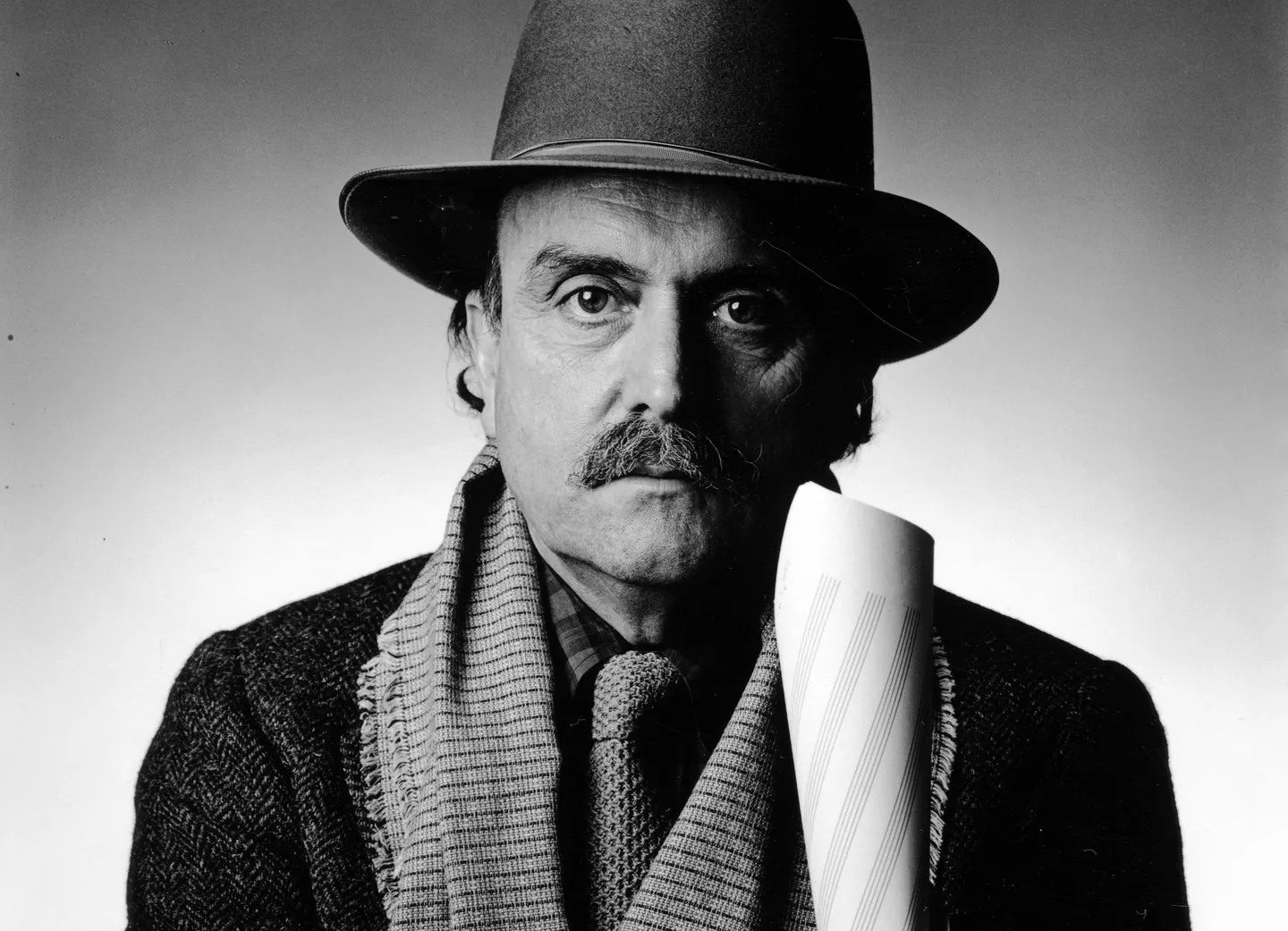
John Tesh came up with the melody for the NBA theme and left it on a voicemail for himself

From Why Is This Interesting? “Tesh was traveling to cover the Tour de France in 1989 when he woke up suddenly in Megève, France, with an idea. Knowing how easily it could vanish, he called his own answering machine back home in the States to capture it, humming energetically into the phone. When he returned home, Tesh took this voicemail, placed the answering machine literally onto his keyboard, and began riffing, gradually bringing in his band to turn a rough voice memo into the iconic, polished composition. The kicker: NBC had put out the call for a new NBA theme song to legendary composers like John Williams and Hans Zimmer. But against the odds, they chose the enthusiastic melody that Tesh first captured in a half-awake voicemail, cementing it as the NBA’s iconic musical signature for more than a decade, becoming the soundtrack to Michael Jordan’s reign and the league’s growth through the 1990s.”

Note: This is a version of my When The Going Gets Weird newsletter, which I send out via Ghost, the open-source publishing platform. You can see other issues and sign up here.

Continue reading “This gonzo journalist from the ’30s said he ate human flesh”