What do we do when the facts don’t matter?

As a journalist by training, I have what you might call an addiction to facts. I believe that there are things that are true and things that are not, and that we can determine one from the other through observation, rational thought, and meticulous research. Obviously, there are some things that remain open to debate (philosophy for example) and areas where the science hasn’t been completely locked down – psychology and most of the humanities fall into this category, I think, along with things like quantum mechanics and the way that the human brain works. What do we mean by consciousness, and how do we know when something possesses it? That kind of thing. On those kinds of topics, debate is plentiful and certainty is difficult to come by. On the other hand, many things are solidly in the realm of the factual – that the Earth is round (ish), that men landed on the moon, that vaccines are pretty much the greatest thing humanity has ever come up with, that jet fuel can melt steel beams, and so on.

The unfortunate reality of the age we live in is that some people disagree with some or all of those statements, and many others that are usually taken for granted as fact. They don’t just disagree about the nature of the universe, they disagree that the Earth is round; they don’t just disagree about the nature of the moon landing, they believe that a conspiracy theory involving the Deep State (whatever that is) has kept the truth from us for decades. And they don’t just question the efficacy of vaccines, but believe the government deliberately created COVID and then injected us to control our minds. What are these disagreements based on? In many cases, it’s what the kids call “vibes.” Reddit posts and bad videos and Facebook links from questionable people who are a) mentally ill, b) pushing some quack remedy, c) trying to generate fear so they can sell advertising, or d) all of the above. All of this is augmented by confirmation bias, fundamental attribution errors, apophenia (a desire to see patterns where they don’t exist), and a host of other cognitive mistakes that human beings are prone to make.

I think about these things a lot, for some pretty obvious reasons [gestures vaguely in all directions] but most recently my thoughts turned in that direction again because I read a recent piece in New York magazine titled “Why calling RFK Jr. anti-science misses the point – Battling over truth, facts, and evidence doesn’t work in a post-expertise world,” by Rachel Bedard, a doctor from Brooklyn. She describes what America is going through as an “epistemological crisis,” particularly in the areas of health and medicine (although I would argue that it extends into many other areas of science and technology). For anyone who is unclear on the meaning of the term, epistemology is the study of the nature, origin, and limits of human knowledge — in other words, how we know what we know. It is an investigation into the nature of belief, and what distinguishes justified belief from mere opinion. Bedard describes the problem in this way:

Note: This is a version of my Torment Nexus newsletter, which I send out via Ghost, the open-source publishing platform. You can see other issues and sign up here.

Continue reading “What do we do when the facts don’t matter?”

What do we do when the facts don’t matter?

As a journalist by training, I have what you might call an addiction to facts. I believe that there are things that are true and things that are not, and that we can determine one from the other through observation, rational thought, and meticulous research. Obviously, there are some things that remain open to debate (philosophy for example) and areas where the science hasn’t been completely locked down – psychology and most of the humanities fall into this category, I think, along with things like quantum mechanics and the way that the human brain works. What do we mean by consciousness, and how do we know when something possesses it? That kind of thing. On those kinds of topics, debate is plentiful and certainty is difficult to come by. On the other hand, many things are solidly in the realm of the factual – that the Earth is round (ish), that men landed on the moon, that vaccines are pretty much the greatest thing humanity has ever come up with, that jet fuel can melt steel beams, and so on.

The unfortunate reality of the age we live in is that some people disagree with some or all of those statements, and many others that are usually taken for granted as fact. They don’t just disagree about the nature of the universe, they disagree that the Earth is round; they don’t just disagree about the nature of the moon landing, they believe that a conspiracy theory involving the Deep State (whatever that is) has kept the truth from us for decades. And they don’t just question the efficacy of vaccines, but believe the government deliberately created COVID and then injected us to control our minds. What are these disagreements based on? In many cases, it’s what the kids call “vibes.” Reddit posts and bad videos and Facebook links from questionable people who are a) mentally ill, b) pushing some quack remedy, c) trying to generate fear so they can sell advertising, or d) all of the above. All of this is augmented by confirmation bias, fundamental attribution errors, apophenia (a desire to see patterns where they don’t exist), and a host of other cognitive mistakes that human beings are prone to make.

I think about these things a lot, for some pretty obvious reasons [gestures vaguely in all directions] but most recently my thoughts turned in that direction again because I read a recent piece in New York magazine titled “Why calling RFK Jr. anti-science misses the point – Battling over truth, facts, and evidence doesn’t work in a post-expertise world,” by Rachel Bedard, a doctor from Brooklyn. She describes what America is going through as an “epistemological crisis,” particularly in the areas of health and medicine (although I would argue that it extends into many other areas of science and technology). For anyone who is unclear on the meaning of the term, epistemology is the study of the nature, origin, and limits of human knowledge — in other words, how we know what we know. It is an investigation into the nature of belief, and what distinguishes justified belief from mere opinion. Bedard describes the problem in this way:

Note: This is a version of my Torment Nexus newsletter, which I send out via Ghost, the open-source publishing platform. You can see other issues and sign up here.

Continue reading “What do we do when the facts don’t matter?”

Saddam Hussein had a Koran made using 27 liters of his own blood

From Atlas Obscura: “A locked vault in a Baghdad mosque contains a Quran written in lovely, sweeping Arabic calligraphy which, if not for its ink, could be displayed in a museum. But this holy book was written in blood — Saddam Hussein’s blood, to be precise. Following an assassination attempt on the life of his son, Uday, the former dictator became a devout Muslim. Ironically though, with infinite resources it’s difficult to demonstrate your piety. In an attempted display of devotion, Saddam had roughly 27 liters of his blood drawn and given to a calligrapher over a period of two years. Over the course of two years the artist, Abbas Shakir Joudi al-Baghdadi, wrote some 600 pages of the Quran using the Iraqi president’s blood as ink.”

Japan has a number of “tsunami stones” to warn future generations of danger

From Wikipedia: “Tsunami stones are placed all around the coasts of Japan. Some simply provide a warning, while others list death tolls, are placed near mass graves or say where homes should be built. They have a flat face and some are as high as 3.0 metres (10 ft) tall. Some are over 600 years old and some have aged so much that the characters written on them have disappeared. Most were placed in about 1896 after an earthquake and two tsunamis that year caused about 22,000 deaths.[3] The tsunami stone in Aneyoshi says: “High dwellings are the peace and harmony of our descendants. … Remember the calamity of the great tsunamis. Do not build any homes below this point.”

Note: This is a version of my When The Going Gets Weird newsletter, which I send out via Ghost, the open-source publishing platform. You can see other issues and sign up here.

Continue reading “Saddam Hussein had a Koran made using 27 liters of his own blood”

Saddam Hussein had a Koran made using 27 liters of his own blood

From Atlas Obscura: “A locked vault in a Baghdad mosque contains a Quran written in lovely, sweeping Arabic calligraphy which, if not for its ink, could be displayed in a museum. But this holy book was written in blood — Saddam Hussein’s blood, to be precise. Following an assassination attempt on the life of his son, Uday, the former dictator became a devout Muslim. Ironically though, with infinite resources it’s difficult to demonstrate your piety. In an attempted display of devotion, Saddam had roughly 27 liters of his blood drawn and given to a calligrapher over a period of two years. Over the course of two years the artist, Abbas Shakir Joudi al-Baghdadi, wrote some 600 pages of the Quran using the Iraqi president’s blood as ink.”

Japan has a number of “tsunami stones” to warn future generations of danger

From Wikipedia: “Tsunami stones are placed all around the coasts of Japan. Some simply provide a warning, while others list death tolls, are placed near mass graves or say where homes should be built. They have a flat face and some are as high as 3.0 metres (10 ft) tall. Some are over 600 years old and some have aged so much that the characters written on them have disappeared. Most were placed in about 1896 after an earthquake and two tsunamis that year caused about 22,000 deaths.[3] The tsunami stone in Aneyoshi says: “High dwellings are the peace and harmony of our descendants. … Remember the calamity of the great tsunamis. Do not build any homes below this point.”

Note: This is a version of my When The Going Gets Weird newsletter, which I send out via Ghost, the open-source publishing platform. You can see other issues and sign up here.

Continue reading “Saddam Hussein had a Koran made using 27 liters of his own blood”

His life depended on the outcome of a game of chess

From Chess.com: “Ossip Bernstein was born in 1882 in the small Ukrainian town of Zhytomyr. Although he wasn’t serious about chess until his late adolescent years, he quickly made a name for himself while studying law in Germany. At nineteen, he almost earned the title of Master in his first tournament. A year later, he did obtain the title, and from then on, his rise to the top was incredible. In 1917, the Bolsheviks seized power and were determined to crush any political resistance from loyalists of the tsar, beginning the era of the “Red Terror.” Bernstein, his wife and his two small children had to flee Moscow but were captured. He was imprisoned in a death camp, and one day a firing squad lined Bernstein and a number of other prisoners against a wall to be shot. Then a superior officer saw a list of the prisoner’s names and asked Bernstein if he was the famous chess master,. When he said yes, the official made him play a game; when Bernstein won in short order, he had him led back to prison and later released.”

The creator of MacPaint spent his later years trying to market a psychedelic vape pen

From Boing Boing: “Bill Atkinson, who died on June 5, 2025 at age 74, was famous for being the creator of MacPaint and QuickDraw. But within a private psychedelic community called OneLight, he was “Grace Within” — a mentor who refined and openly shared designs for the LightWand, a device for administering controlled doses of 5-MeO-DMT (known as Jaguar). Atkinson’s involvement began in 2018 when he encountered the original LightWand at a ceremony. Though initially concerned about making such a powerful substance too accessible, he came to see the device’s potential for safer, more controlled experiences. In 2021, he published detailed open-source instructions on Erowid.org, democratizing access to what had been limited to expensive retreats. He went on to gift over 1,000 LightWand sets and meticulously documented the technology’s effects.

Note: This is a version of my When The Going Gets Weird newsletter, which I send out via Ghost, the open-source publishing platform. You can see other issues and sign up here.

Continue reading “His life depended on the outcome of a game of chess”

His life depended on the outcome of a game of chess

From Chess.com: “Ossip Bernstein was born in 1882 in the small Ukrainian town of Zhytomyr. Although he wasn’t serious about chess until his late adolescent years, he quickly made a name for himself while studying law in Germany. At nineteen, he almost earned the title of Master in his first tournament. A year later, he did obtain the title, and from then on, his rise to the top was incredible. In 1917, the Bolsheviks seized power and were determined to crush any political resistance from loyalists of the tsar, beginning the era of the “Red Terror.” Bernstein, his wife and his two small children had to flee Moscow but were captured. He was imprisoned in a death camp, and one day a firing squad lined Bernstein and a number of other prisoners against a wall to be shot. Then a superior officer saw a list of the prisoner’s names and asked Bernstein if he was the famous chess master,. When he said yes, the official made him play a game; when Bernstein won in short order, he had him led back to prison and later released.”

The creator of MacPaint spent his later years trying to market a psychedelic vape pen

From Boing Boing: “Bill Atkinson, who died on June 5, 2025 at age 74, was famous for being the creator of MacPaint and QuickDraw. But within a private psychedelic community called OneLight, he was “Grace Within” — a mentor who refined and openly shared designs for the LightWand, a device for administering controlled doses of 5-MeO-DMT (known as Jaguar). Atkinson’s involvement began in 2018 when he encountered the original LightWand at a ceremony. Though initially concerned about making such a powerful substance too accessible, he came to see the device’s potential for safer, more controlled experiences. In 2021, he published detailed open-source instructions on Erowid.org, democratizing access to what had been limited to expensive retreats. He went on to gift over 1,000 LightWand sets and meticulously documented the technology’s effects.

Note: This is a version of my When The Going Gets Weird newsletter, which I send out via Ghost, the open-source publishing platform. You can see other issues and sign up here.

Continue reading “His life depended on the outcome of a game of chess”

Why did two Utah football players join a coup in Africa?

From NY Mag: “Marcel Malanga was standing in the foyer of the Palais de la Nation, the home of the leader of the Democratic Republic of the Congo, with an assault rifle slung over his shoulder. It was just before dawn on May 19, 2024, and close by was his best friend from high school back in Utah, Tyler Thompson. Around them, 40 or so rebel soldiers in jungle fatigues were spread out across the palace grounds, fortifying their positions after shooting their way in. Neither he nor Thompson seemed particularly suited to regime change. Malanga, 21 years old at the time, has soft brown eyes and a face pocked from acne. Back home in the Salt Lake City suburbs, he was known for his chaotic energy but lacked the hardened qualities of a true dog of war. Thompson was even less rebellion-ready. Handsome in a benign, midwestern kind of way with a toothy smile and droopy eyes, he had just celebrated his 21st birthday and had never been out of the U.S. before traveling to Africa. He was also an inveterate stoner.”

French megalith could be more than a thousand years older than Stonehenge

From The Art Newspaper: “Excavations at the megalithic complex in Carnac, France, have revealed that it may be the oldest site of its kind in Europe. Archaeologists working at Le Plasker—a newly discovered section of the heritage region—unearthed the foundation pits of standing stones which have been found to date back more than 6,300 years old. This marks the first time that such accurate dates have been assigned to any part of the complex, where thousands of huge stones stand in parallel lines at different sites. Carnac was originally excavated in the 19th century, but these early investigators found it difficult to assign clear dates to the monuments and left little for future archaeologists to discover. The rarity of organic material such as charcoal — used for radiocarbon dating — further hampered efforts to establish a chronology, leading experts to develop a wide range of theories about when the stones were erected.”

Note: This is a version of my When The Going Gets Weird newsletter, which I send out via Ghost, the open-source publishing platform. You can see other issues and sign up here.

Continue reading “Why did two Utah football players join a coup in Africa?”

Why did two Utah football players join a coup in Africa?

From NY Mag: “Marcel Malanga was standing in the foyer of the Palais de la Nation, the home of the leader of the Democratic Republic of the Congo, with an assault rifle slung over his shoulder. It was just before dawn on May 19, 2024, and close by was his best friend from high school back in Utah, Tyler Thompson. Around them, 40 or so rebel soldiers in jungle fatigues were spread out across the palace grounds, fortifying their positions after shooting their way in. Neither he nor Thompson seemed particularly suited to regime change. Malanga, 21 years old at the time, has soft brown eyes and a face pocked from acne. Back home in the Salt Lake City suburbs, he was known for his chaotic energy but lacked the hardened qualities of a true dog of war. Thompson was even less rebellion-ready. Handsome in a benign, midwestern kind of way with a toothy smile and droopy eyes, he had just celebrated his 21st birthday and had never been out of the U.S. before traveling to Africa. He was also an inveterate stoner.”

French megalith could be more than a thousand years older than Stonehenge

From The Art Newspaper: “Excavations at the megalithic complex in Carnac, France, have revealed that it may be the oldest site of its kind in Europe. Archaeologists working at Le Plasker—a newly discovered section of the heritage region—unearthed the foundation pits of standing stones which have been found to date back more than 6,300 years old. This marks the first time that such accurate dates have been assigned to any part of the complex, where thousands of huge stones stand in parallel lines at different sites. Carnac was originally excavated in the 19th century, but these early investigators found it difficult to assign clear dates to the monuments and left little for future archaeologists to discover. The rarity of organic material such as charcoal — used for radiocarbon dating — further hampered efforts to establish a chronology, leading experts to develop a wide range of theories about when the stones were erected.”

Note: This is a version of my When The Going Gets Weird newsletter, which I send out via Ghost, the open-source publishing platform. You can see other issues and sign up here.

Continue reading “Why did two Utah football players join a coup in Africa?”

Annie Oakley shot a cigarette out of Kaiser Wilhelm II’s mouth

From the New York Times: “Annie Oakley, the most expert woman rifle shot ever known, died in Greenville, Ohio, a vivid and picturesque character known all over the world. Those who saw her at the height of her fame in the days of Buffalo Bill’s Wild West Show remember a slight figure in flannel shirt, short skirts and leggins who unerringly smashed glass balls with a rifle, shot the ash off a man’s cigarette at fifty yards and in many other ways demonstrated remarkable skill with firearms. Probably the most spectacular incident occurred in Berlin, when the famous cigarette-shooting trick was performed on no less a personage than the Crown Prince, later Kaiser Wilhelm II. Annie Oakley’s bullet passed just four inches from his head. She had been giving exhibitions, and the Crown Prince announced that it was his wish to have himself as the subject. Her hand was steady, her eye keen. Her rifle cracked and the Crown Prince’s ash was gone.”

China moved an entire city block of buildings using hundreds of walking robots

From New Atlas: “How do you relocate an entire 8,270-ton, 43,380-sq-ft, 100-year-old Shikumen brick building complex so you can build a multi-level subterranean shopping center, parking lot and subway connections under it? With robots, of course. That’s exactly what engineers of the Shanghai Construction No 2 Co Ltd did in Shanghai. The Huayanli Shikumen-style complex – a fusion of Western row-houses with Chinese courtyards representative of the urban Chinese middle-class – was built in the 1920s and 30s and had to be temporarily relocated to make way for the 570,500-sq-f underground development. To make it work, engineers used 3D scanning, self-guided drilling robots, thousands of feet of conveyor belts to haul away dirt and debris, and AI that could distinguish between soil structures. The kicker was the 432 tiny “walking” robots that suspended the entire city block above them at 33 feet per day.”

Note: This is a version of my When The Going Gets Weird newsletter, which I send out via Ghost, the open-source publishing platform. You can see other issues and sign up here.

Continue reading “Annie Oakley shot a cigarette out of Kaiser Wilhelm II’s mouth”

Annie Oakley shot a cigarette out of Kaiser Wilhelm II’s mouth

From the New York Times: “Annie Oakley, the most expert woman rifle shot ever known, died in Greenville, Ohio, a vivid and picturesque character known all over the world. Those who saw her at the height of her fame in the days of Buffalo Bill’s Wild West Show remember a slight figure in flannel shirt, short skirts and leggins who unerringly smashed glass balls with a rifle, shot the ash off a man’s cigarette at fifty yards and in many other ways demonstrated remarkable skill with firearms. Probably the most spectacular incident occurred in Berlin, when the famous cigarette-shooting trick was performed on no less a personage than the Crown Prince, later Kaiser Wilhelm II. Annie Oakley’s bullet passed just four inches from his head. She had been giving exhibitions, and the Crown Prince announced that it was his wish to have himself as the subject. Her hand was steady, her eye keen. Her rifle cracked and the Crown Prince’s ash was gone.”

China moved an entire city block of buildings using hundreds of walking robots

From New Atlas: “How do you relocate an entire 8,270-ton, 43,380-sq-ft, 100-year-old Shikumen brick building complex so you can build a multi-level subterranean shopping center, parking lot and subway connections under it? With robots, of course. That’s exactly what engineers of the Shanghai Construction No 2 Co Ltd did in Shanghai. The Huayanli Shikumen-style complex – a fusion of Western row-houses with Chinese courtyards representative of the urban Chinese middle-class – was built in the 1920s and 30s and had to be temporarily relocated to make way for the 570,500-sq-f underground development. To make it work, engineers used 3D scanning, self-guided drilling robots, thousands of feet of conveyor belts to haul away dirt and debris, and AI that could distinguish between soil structures. The kicker was the 432 tiny “walking” robots that suspended the entire city block above them at 33 feet per day.”

Note: This is a version of my When The Going Gets Weird newsletter, which I send out via Ghost, the open-source publishing platform. You can see other issues and sign up here.

Continue reading “Annie Oakley shot a cigarette out of Kaiser Wilhelm II’s mouth”

He tried to build his own nuclear reactor to get a Boy Scout badge

om Harper’s: “Golf Manor is the kind of place where nothing unusual is supposed to happen. In short, it is the kind of place where, on a typical day, the only thing lurking around the corner is a Mister Softee ice-cream truck. But June 26, 1995, was not a typical day. Ask Dottie Pease. As she turned down Pinto Drive, Pease saw eleven men swarming across her carefully manicured lawn. Their attention seemed to be focused on the back yard of the house next door, specifically on a large wooden potting shed that abutted the chain-link fence dividing her property from her neighbor’s. Three of the men had donned ventilated moon suits and were proceeding to dismantle the potting shed with electric saws, stuffing the pieces of wood into large steel drums emblazoned with radioactive warning signs. When asked, most mumble something about a chemical spill. The truth is far more bizarre: the Golf Manor Superfund cleanup was provoked by the boy next door, David Hahn, who attempted to build a nuclear breeder reactor in his mother’s potting shed as part of a Boy Scout merit-badge project.”

A bioscience company wants to recreate the Moa, the largest bird that ever lived

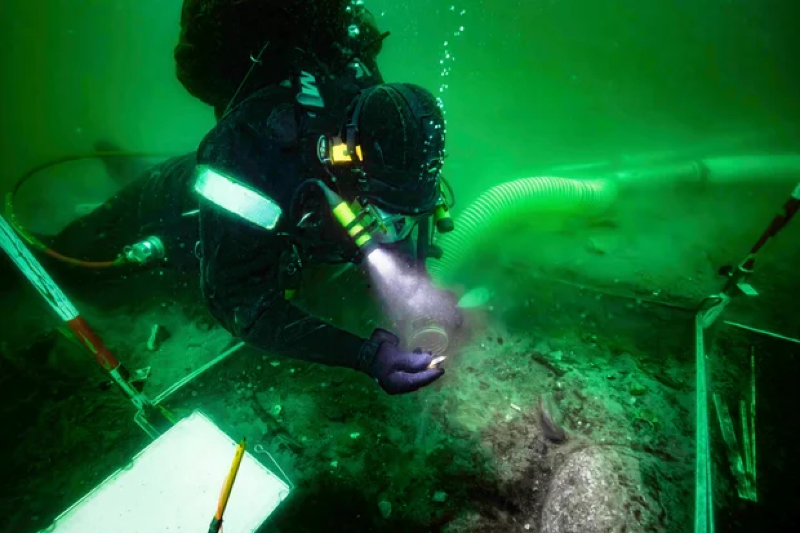
From IFL Science: “Humans once lived among enormous, wingless birds in New Zealand, but within a few hundred years of our species arrival, they were wiped out. Now, Colossal Biosciences has announced its plans to functionally de-extinct the moa, building complete genomes for all nine species as part of a Māori-led initiative. “When humans first arrived on Aotearoa New Zealand about 800 to 900 years ago, there were nine  species of these dinosaur-sized giant birds,” said Colossal Advisor Dr Paul Scofield, Senior Curator of Natural History at Canterbury Museum. “Within the first hundred and fifty years of human presence, all nine species became extinct.” The nine species of moa ranged in size from something not far off a turkey to the South Island giant moa, Dinornis robustus, which was 11.8 feet tall and weighed approximately 507 pounds.”

Note: This is a version of my When The Going Gets Weird newsletter, which I send out via Ghost, the open-source publishing platform. You can see other issues and sign up here.

Continue reading “He tried to build his own nuclear reactor to get a Boy Scout badge”

He tried to build his own nuclear reactor to get a Boy Scout badge

From Harper’s: “Golf Manor is the kind of place where nothing unusual is supposed to happen. In short, it is the kind of place where, on a typical day, the only thing lurking around the corner is a Mister Softee ice-cream truck. But June 26, 1995, was not a typical day. Ask Dottie Pease. As she turned down Pinto Drive, Pease saw eleven men swarming across her carefully manicured lawn. Their attention seemed to be focused on the back yard of the house next door, specifically on a large wooden potting shed that abutted the chain-link fence dividing her property from her neighbor’s. Three of the men had donned ventilated moon suits and were proceeding to dismantle the potting shed with electric saws, stuffing the pieces of wood into large steel drums emblazoned with radioactive warning signs. When asked, most mumble something about a chemical spill. The truth is far more bizarre: the Golf Manor Superfund cleanup was provoked by the boy next door, David Hahn, who attempted to build a nuclear breeder reactor in his mother’s potting shed as part of a Boy Scout merit-badge project.”

A bioscience company wants to recreate the Moa, the largest bird that ever lived

From IFL Science: “Humans once lived among enormous, wingless birds in New Zealand, but within a few hundred years of our species arrival, they were wiped out. Now, Colossal Biosciences has announced its plans to functionally de-extinct the moa, building complete genomes for all nine species as part of a Māori-led initiative. “When humans first arrived on Aotearoa New Zealand about 800 to 900 years ago, there were nine  species of these dinosaur-sized giant birds,” said Colossal Advisor Dr Paul Scofield, Senior Curator of Natural History at Canterbury Museum. “Within the first hundred and fifty years of human presence, all nine species became extinct.” The nine species of moa ranged in size from something not far off a turkey to the South Island giant moa, Dinornis robustus, which was 11.8 feet tall and weighed approximately 507 pounds.”

Note: This is a version of my When The Going Gets Weird newsletter, which I send out via Ghost, the open-source publishing platform. You can see other issues and sign up here.

Continue reading “He tried to build his own nuclear reactor to get a Boy Scout badge”

We shouldn’t blame AI for the stupid things that people do

You might have noticed that there’s a tiny bit of anxiety about artificial intelligence these days — its design, its implementation, its uses and misuses, its reason for existing at all. Is it ruining society? Is it making our kids stupid? Is it going to kill us? Etc. A lot of this anxiety takes the form of articles about terrible things that AI is either doing directly or is somehow involved in. AI is stealing the work of underpaid artists! AI is telling people to put glue on their pizza! AI is convincing people they are gods or have supernatural powers! AI is making people commit suicide! And so on. I should point out that I’m not making light of any of these outcomes (except maybe the pizza thing), and especially not the last two — it’s not easy when someone you love is emotionally disturbed or mentally ill, and the effects of these kinds of disorders can be profound.

That said, however, I think there’s a problem with much of this kind of coverage of artificial intelligence, and it’s similar to some of the early coverage of the internet, or of many other new technologies (the printing press, for example). I recall a spate of stories blaming Craigslist for thefts and murders and a host of other things, because the thief or killer had used Craigslist to find the house they robbed or the person they murdered. This got lots of clicks for the outlets in question, but it never made sense to me — what if the thief or murderer made contact with someone using the phone, or a newspaper classified ad? Would we blame AT&T, or the publisher, or the guy who sold the classified?

Maybe we would do the latter if the ad said “Male, 34, looking for house to rob,” or “Wanted: someone to murder,” but apart from that it seems odd to blame the intermediary, unless they could have anticipated the eventual outcome. If someone puts glue on their pizza because ChatGPT tells them to, whose fault is that? It’s clear that the AI screwed up in providing this advice — although in many cases the advice comes from human beings making jokes or engaging in pranks, rather than an AI confabulation (as AI pioneer Geoff Hinton likes to call them). But a human being still had to decide to do something stupid as a result. If you try to use a child’s inflatable bath toy as a life preserver and die, is the manufacturer at fault for not including a warning label advising you not to?

Note: This is a version of my Torment Nexus newsletter, which I send out via Ghost, the open-source publishing platform. You can see other issues and sign up here.

Continue reading “We shouldn’t blame AI for the stupid things that people do”