
A quick swim in the sea in Taormina, Sicily

Links that interest me and maybe you

From David Gauvey Herbert in NY Mag: “In January 2010, a team of detectives and a prosecutor flew to Philadelphia to present a case to a league of elite investigators called the Vidocq Society, which met once a month to listen to the facts of cold cases. The group’s co-founder, Richard Walter, was billed as one of America’s preeminent criminal profilers. But that quickly unravelled: Since at least 1982, he has touted phony credentials and a bogus work history. He claims to have helped solve murder cases that, in reality, he had limited or no involvement with — and even one murder that may not have occurred at all. These lies did not prevent him from serving as an expert witness in trials across the country. His specialty was providing criminal profiles that neatly implicated defendants, imputing motives to them that could support harsher charges and win over juries. Convictions in at least three murder cases in which he testified have since been overturned. In 2003, a federal judge declared him a “charlatan.”

Christopher Spata writes for the Tampa Bay Times: “At the Spring Valley School, three dozen students ages 5 to 18 are trusted to do what they want. There are no classes, grades or homework. There are no “teachers,” only “staff.” Students decide when it’s time to graduate. Democracy rules, and students’ voting power far outweighs that of the school’s four adults. The kids at Spring Valley can fire or hire staff, admit or expel students and spend its budget. If you call, it’s likely a 15-year-old will answer the phone. When a Tampa Bay Times reporter asked to observe a day inside the tiny private school, the students considered the request and voted to allow it. Spring Valley has doubled tours for prospective families to twice a week, and an expansion of the 2,500-square-foot schoolhouse begins this summer. Students and staff voted recently to increase tuition from $4,850 to $6,717, the first significant increase in over a decade.”
Note: This is a version of my personal newsletter, which I send out via Ghost, the open-source publishing platform. You can see other issues and sign up here.
Continue reading “The fake criminal profiler who wanted to be Sherlock Holmes”


The outbreak began in July 1518 when a woman began to dance fervently in a street in Strasbourg. By early September, the outbreak began to subside. Historical documents, including “physician notes, cathedral sermons, local and regional chronicles, and even notes issued by the Strasbourg city council” are clear that the victims danced; it is not known why. Historical sources agree that there was an outbreak of dancing after a single woman started dancing. It lasted for such a long time that it even attracted the attention of the Strasbourg magistrate and bishop, and some number of doctors ultimately intervened, putting the afflicted in a hospital. Events similar to this are said to have occurred throughout the medieval age including 11th century in Kölbigk, Saxony, where it was believed to be the result of demonic possession or divine judgment. In 15th century Apulia, Italy a woman was bitten by a tarantula, and the venom made her dance convulsively. The only way to cure the bite was to “shimmy” and to have the right sort of music available, which came to be an accepted remedy.

Claire Barrett writes for History.net: “In the summer of 1861, a former riverboat pilot named Sam Clemens went to war, according to the St. Louis Magazine, on a small yellow mule carrying a valise, a carpetbag, two gray blankets, a homemade quilt, a squirrel rifle, 20 yards of rope, a frying pan and, perhaps most importantly of all, an umbrella. The 25-year-old Missourian, alongside 14 other idealistic young men, answered Gov. Claiborne Fox Jackson’s call of 50,000 militia to defend their home state. They called themselves the Marion Rangers, with Twain entering their ranks as a second lieutenant. Clemens had grown up amid slavery in the South. His father had owned slaves. So had his neighbors. In 1860 Twain had voted for John Bell in the presidential election, who, although a Tennessee slaveholder, had opposed secession. Twain’s vote was seemingly a vote for the status quo he had grown up around. But as the war approached Missouri, Twain decided to take a stand — albeit a brief one. In all, the famed author’s stint lasted two weeks.”
Note: This is a version of my personal newsletter, which I send out via Ghost, the open-source publishing platform. You can see other issues and sign up here.
Continue reading “The infamous “dancing plague” in Europe in the 16th century”


Ashawnta Jackson writes for JSTOR Daily: “Elizabeth Wilkinson had a score to settle. Writing to the London Journal in 1722, she informs its readers that she and Hannah Highfield ‘had some words.’ And though words might have started it, they weren’t going to end it. Wilkinson challenged Highfield to a fight: “I do invite her to meet me on the stage and box with me for three guineas,” she wrote, “each woman holding half-a-crown in each hand, and the first woman that drops her money to lose the battle.” Highfield accepted that invitation, promising “that she will not fail…to give her more blows than words, desiring home blows, and of her no favor. She may expect a good thrumping.” Though calling out your enemy in a newspaper ad might be unusual, the fight certainly wasn’t. Randy Roberts writes, “female pugilism was so popular that the women crowned their first champion at approximately the same time as the males.”

From Sisi Jiang at Kotaku: “Erryn Rhoden is an ordinary person who works at her family’s roofing company in Columbus, Ohio. She’s also the top-ranked player in her semifinal bracket for the Candy Crush Saga All Stars Tournament, the biggest Candy Crush tournament in history, which she entered by accident. That makes her one of the most successful esports athletes in the entire country right now. Candy Crush is the most popular match-3 game of all time. Players eliminate blocks by matching three or more candies by swapping their positions until they’re next to each other. Overall Candy Crush progress is measured by the number of levels that you’ve completed. You complete levels by fulfilling their level’s objectives, such as breaking particularly sturdy blocks or accumulating a certain number of special candies that you can create by matching regular candy tiles in a certain way. If you finish a level with time remaining on the timer or in fewer moves, you get bonus points at the end.”
Note: This is a version of my personal newsletter, which I send out via Ghost, the open-source publishing platform. You can see other issues and sign up here.
Continue reading “Women have been fist-fighting since the early 1700’s”


A 50-year-old Spanish extreme athlete who spent 500 days living 70 metres deep in a cave outside Granada with no contact with the outside world said the time flew by, and she did not want to come out. Beatriz Flamini, an elite sportswoman and mountaineer, is said to have broken a world record for the longest time spent in a cave, in an experiment closely monitored by scientists seeking to learn more about the capacities of the human mind and circadian rhythms. She was 48 when she went into the cave, and celebrated two birthdays alone underground. She began her challenge on Nov. 20, 2021 — before the outbreak of the Ukraine war, the resultant cost of living crisis, the end of Spain’s lengthy COVID-19 mask requirement and the death of Britain’s Queen Elizabeth II. She emerged into the light of spring in southern Spain on Friday wearing dark glasses, carrying her equipment and smiling broadly. She described her experience as “excellent, unbeatable,” and said that time had flown by. “When they came in to get me, I was asleep. I thought something had happened. I said: ‘Already? Surely not.’ I hadn’t finished my book.”

Dan Lewis explains: “The first mechanical alarm clock was patented in the late 1800s, but this was before the Industrial Revolution. Society’s ability to mass-produce mechanical ways to wake us up wasn’t coming until at least the 1920s. Workers, though — and that constituted someone in just about every family — still needed to be woken up each morning. Absent a mechanical solution, how did people wake up in the morning? One answer? A person with a very long stick. In England, at least, these people were called “knocker-ups” or “knocker-uppers,” a name which described the act they’d perform each morning. The knocker-up would come to your window, give it a few taps, and then wait to make sure you had awoken. If you had, great — he or she moved onto the next house. If not, they were typically charged with trying again, as knocker-ups were often only paid if they waited to ensure that the customer had, indeed, woken up. The job paid a few pence a week and was often performed by the elderly, by women, or by off-duty policemen.
Note: This is a version of my personal newsletter, which I send out via Ghost, the open-source publishing platform. You can see other issues and sign up here.
Continue reading “Spanish athlete emerges from a cave after 500 days”
Trung Phan writes: “Hello Kitty has been around since 1974 and, as recently as 2013, was selling $8 billion worth of merchandise annually. Hello Kitty merchandise has made $89B in lifetime sales, which is roughly equal to the combined all-time sales for Batman, the Marvel Cinematic Universe, and James Bond. The company behind Hello Kitty is a Japanese firm called Sanrio, which has a very interesting story. Its founder Shintaro Tsuji was obsessed with Walt Disney. And he built a merchandise and licensing machine in an attempt to match the global influence of his idol. Hello Kitty entered the picture in 1974. Sanrio designer Yuko Shimizu dreamed up a cat-like character that would become Sanrio’s answer to Walt Disney’s Mickey Mouse (one of Tsuji’s main inspirations).

Charles Gaines writes about a case involving a wealthy Birmingham businessman who is awoken from his sleep by an audacious pair of criminals — and their two kids — who claim to have acquired the house he is sleeping in, and he subsequently gets taken for the most terrifying and bewildering ride of his life. “Every night when he goes to bed, Elton B. Stephens Jr. pulls up an app on his phone called SnoreLab that records his snoring and breathing overnight, along with any other sounds made nearby—such as those of the Kafkaesque nightmare he finds himself waking to this morning, a nightmare for which nothing in his blithe seventy-five years has prepared him. (Note: Despite the fact that it seems like someone had to have made it up, the dialogue in this article, up to when Elton leaves the house, is taken directly from the SnoreLab recording, though some of it has been edited for clarity and/or reordered.)”
Note: This is a version of my personal newsletter, which I send out via Ghost, the open-source publishing platform. You can see other issues and sign up here.
Continue reading “Hello Kitty is one of the most profitable franchises of all time”
The first Star Wars movies were filmed in a number of exotic locations: The lush and dense California Redwoods served as the forest moon of Endor, Hoth scenes were filmed on the frozen tundra of Norway’s Hardangerjokulen Glacier, and the set of the Lars Homestead was famously built in Tunisia, North Africa surrounded by sands and sun. This is where the war in the stars almost came too close to home, thanks to a border dispute, a crazed dictator, and a group of junk-trading Jawas. While a miniature was used for full shots of the Jawa’s mobile droid and salvage shop making its way through the desert, for scenes that required actor participation a large background prop of the lower tread and ramps of the sandcrawler was built. This tank-like treaded structure immediately drew the ire of Libyan dictator Moammar Gaddafi, who demanded that Tunisia cease it’s military buildup near the Libyan border. Lucas immediately complied with the demands and moved the filming to a more discreet location.
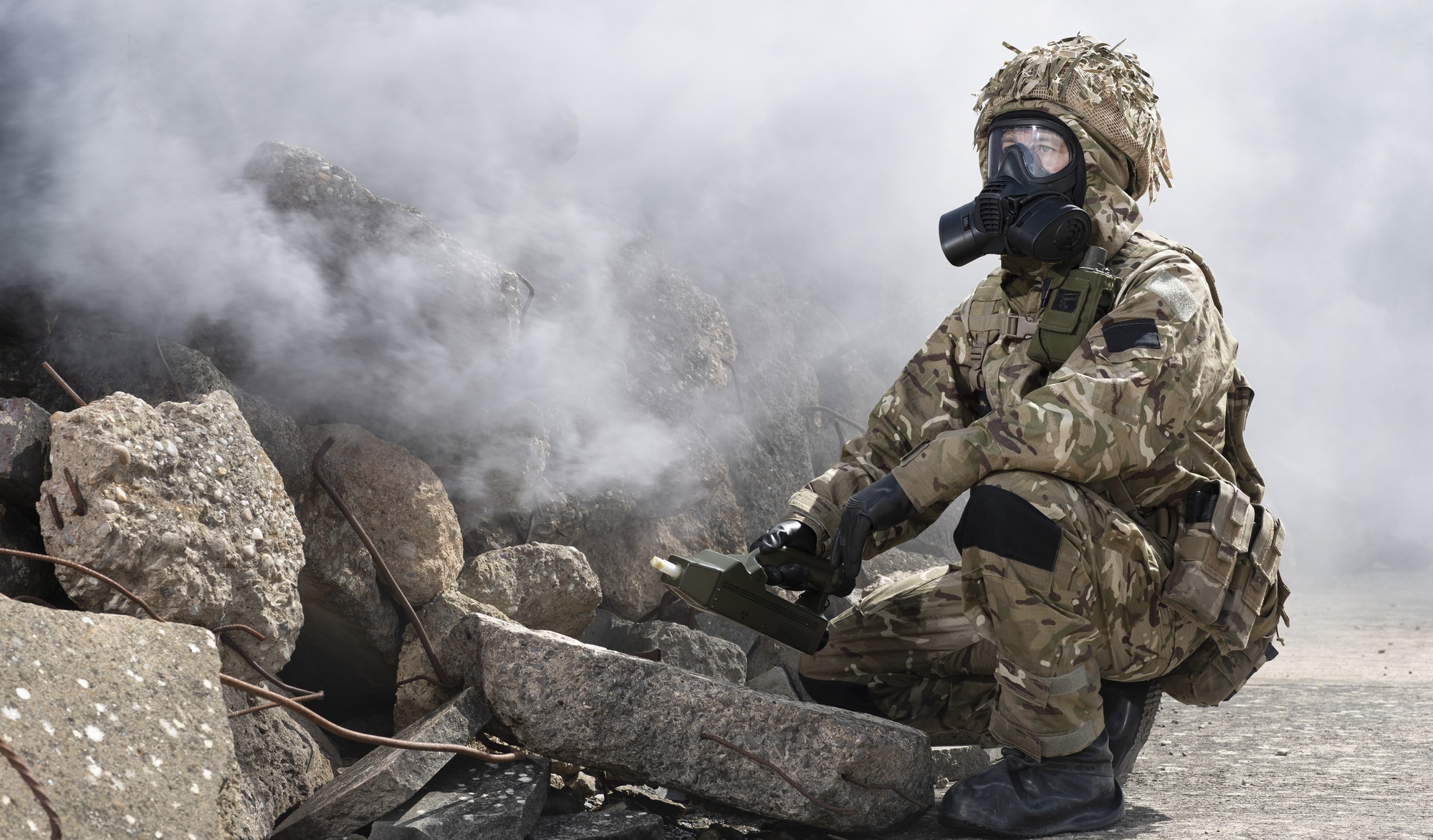
It took less than six hours for drug-developing AI to invent 40,000 potentially lethal molecules. Researchers put AI normally used to search for helpful drugs into a kind of “bad actor” mode to show how easily it could be abused at a biological arms control conference. All the researchers had to do was tweak their methodology to seek out, rather than weed out toxicity. The AI came up with tens of thousands of new substances, some of which are similar to VX, the most potent nerve agent ever developed. Shaken, they published their findings this month in the journal Nature Machine Intelligence. “The biggest thing that jumped out at first was that a lot of the generated compounds were predicted to be actually more toxic than VX. And the reason that’s surprising is because VX is basically one of the most potent compounds known,” one of the scientists said.
Note: This is a version of my personal newsletter, which I send out via Ghost, the open-source publishing platform. You can see other issues and sign up here.
Continue reading “The real-life war that the movie ‘Star Wars’ almost caused”