

Yes, I still call it Twitter. Mostly because I am old and set in my ways, but also because I have spent what feels like most of my life on there — certainly a large portion of my professional life — and for the vast majority of that time it was called Twitter. I also think that X is a pretty stupid name. To be fair, Twitter was a pretty stupid name as well (and here you can picture me trying to tell senior executives of the newspaper where I worked in 2008 that they should “tweet”). But it’s one that a lot of us got used to, so for the rest of this essay I will be calling it Twitter, just to be ornery. In any case, after it was acquired by Elon Musk in 2022, there seemed to be a kind of exodus from Twitter to a variety of apps such as Bluesky — initially a skunkworks started inside Twitter — and Threads, which began as a side project at Instagram, and Mastodon and other similar apps that are part of a loose grouping of open-source apps some call the “fediverse.” I have an account on all of these services, and I still check them all from time to time, but my impression is that momentum seems to have shifted back to Twitter.
The extent of this shift is difficult to quantify, in part because there is no real objective source of user numbers for any of those apps (save perhaps Mastodon) and the ones that we get from the companies themselves — especially from Musk, not surprisingly — are suspect. For example, Meta says that Threads has 500 million average users, and yet my own use of the app makes me suspicious of that number. I think a lot of those “users” have an account and maybe it opens in their browser or on their phone but they rarely post anything. This is part of the problem with counting users of any kind, whether it’s people loading a website or people opening an app. What counts as a user? If I have the Threads app on my phone but never look at it, am I a user? Lots of services talk about “monthly active users” — so some are only active once in a month? Great social network you’ve got there. For me at least, user should mean someone who interacts with the app in a significant way, preferably by posting or reposting regularly.
Elon says that Twitter got 513 billion “user seconds” in a day earlier this year, whatever that means (it’s a private company so he can more or less say whatever he wants). Bluesky was last reported to have about 47 million, according to one estimate. Again, these numbers likely mean someone installed the app or connected to a server, but they say nothing about how often they use it. So what we are left with is vibes. And the vibe feels like people are returning to Twitter, or using it more than they used to. Anecdotal evidence isn’t worth the paper it is printed on, but it does seem to be piling up. The first person I came across who admitted that they were “slinking back to X,” was Casey Newton, who writes a newsletter called Platformer and also co-hosts a podcast with Kevin Roose, a former writer for the New York Times. Here’s how Casey described his decision to spend more time on X after abandoning it earlier:
Mostly I left because I could not stand the thought of being there. I also hoped that I could use whatever minor influence I had to help kick-start new platforms. I encouraged Meta executives to challenge X with a Twitter clone, and have used Threads daily since it launched. I covered the launch of Bluesky closely and have continued to pour energy into it (and the Fediverse) even as they decline. While Musk was suing OpenAI in an effort to effectively destroy it, I repeatedly told Sam Altman to start a rival to X and take his AI posting there. Whatever virtue these actions may have had, they did not succeed at creating a true rival to X in the category that matters most to me: a forum for daily tech and business conversation. The community of people working in and around artificial intelligence product and policy simply refuses to move away from X.
Note: This is a version of my Torment Nexus newsletter, which I send out via Ghost, the open-source publishing platform. You can see other issues and sign up here.
At the risk of copying Casey, that’s a pretty fair summation of my approach to Twitter and its would-be rivals over the past few years. I moved away from Twitter when it became X in part because Musk made it obvious that his idea of moving the platform towards an embrace of “free speech” meant allowing racists and homophobes and others free reign to spout whatever malicious nonsense they wanted to. Not only that, but his monetization strategy (and I hesitate to use the word “strategy” in this case, since that usually means something that was planned with careful thought) involved giving these toxic blowhards and mouth-breathers checkmarks as a sign of “verification” and then compensating them for how much rage-bait they could post in a day. Even his AI model, Grok, wound up openly admiring Hitler and spewing other garbage views before he reigned it in — and is now used to create deepfake porn and other offensive content. In other words, X was a train wreck in which every car is a dumpster on fire.
Note: In case you are a first-time reader, or you forgot that you signed up for this newsletter, this is The Torment Nexus. Thanks for reading! You can find out more about me and this newsletter in this post. This newsletter survives solely on your contributions, so please sign up for a paying subscription or visit my Patreon, which you can find here. I also publish a daily email newsletter of odd or interesting links called When The Going Gets Weird, which is here.
Ghost towns
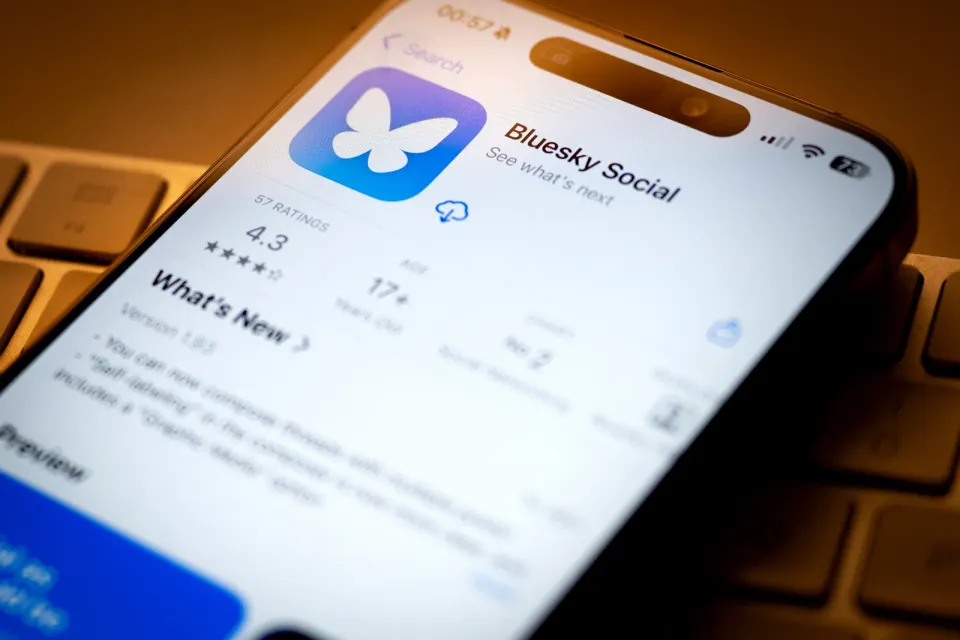
In light of all that, I was encouraged when Bluesky launched, especially when it said it would be open and decentralized (although that ended up being more theoretical than real, as I wrote here in 2024). The user base grew rapidly, to the point where it had more than 20 million users at the time of that post in 2024. A recent estimate put it at 47 million (with all the above caveats about what that might mean usage-wise). So the network appears to have grown significantly, and yet it is still a rounding error when compared with Threads and Twitter. Is that a bad thing? Not at all. Mastodon has several orders of magnitude fewer users even than Bluesky, and yet I get value out of it. But if you want a social network where you can see content from a wide spectrum of users, neither one of those is going to cut it. Bluesky has often been accused of being a left-wing echo chamber, and to a large extent that is accurate (in my usage at least). That’s great if that’s what you are looking for! But it is not enough for many.
Casey put his finger on the main problem: if you are interested in the growth of artificial intelligence (or whatever Trump is forcing people to call it now) and the risks and potential benefits and what they say about the nature of consciousness — which I very much am — then Bluesky and Threads and Mastodon are just not going to cut it. All of the leaders of this multi-trillion-dollar industry in the making, whether it’s Sam Altman of OpenAI or Dario Amodei and Jack Clark of Anthropic, or some of the leading scientists behind Google’s DeepMind, are posting on Twitter. Not only that, but some of the industry’s most prominent skeptics and critics are there as well. And they aren’t just posting the occasional quip now and then — many of them are posting long and thoughtful comments about what is happening as it happens, whether it’s the Hugging Face hack or the recent news that some of Anthropic’s new models might be able to replicate themselves using any internet-connected device rather than a data centre.
For someone like me, or Casey, that is irresistible from a news consumption point of view. By the time these topics hit the mainstream news, it is hours or even days later, and there is never the breadth of commentary that Twitter brings. Substack is a close second (and of course it also has its problematic aspects as well, many of which are very similar to Twitter’s — platforming racists and transphobes, for example). But even there, you get one or two founders or senior executives and maybe one knowledgeable critic (Gary Marcus, of course, who makes a point of trying to spread his criticisms far and wide). That’s not enough to make it worthwhile, at least not for me. Here’s another excerpt from Casey’s thoughts on his return to Twitter, which I also share:
I am among those who believe that the next year will be decisive in shaping the future of AI policy, regulation, and safety. And increasingly, attempting to influence the AI policy conversation without participating on X (or Substack) has made me feel like I am fighting with both hands tied behind my back. And so, in the coming days, I plan to resume posting on X. I am doing so not because I think it’s any better — it isn’t — but because I have exhausted all of the alternatives. I continue to believe that anyone who can avoid posting on X should. But my calculus about the t.radeoffs involved for my own work has shifted: as the stakes of the AI conversation have risen, boycotting X over my disagreements with management has grown both more costly and less effective. Should the AI crowd ever move elsewhere, I will happily follow them. But I’ve become convinced that it’s important I engage with them, even if doing so makes me feel like I’m coworking inside a Port-a-Potty.
I want to make it clear that I don’t enjoy being associated with either Musk or his platform, and if there was any other way around it, I would gladly take it. And I think it’s important to reiterate that being on Twitter is not about consuming unfiltered boosterism from Altman and Amodei and the rest — for me, the skepticism and criticism are as important, if not more so, and I have not been able to find anywhere near as much. I’m talking about people like Yann LeCun, who is one of the pioneers of neural networking research along with Geoffrey Hinton, and Yoshua Bengio, who is now at the University of Montreal. Then there’s Fei-Fei Li, another pioneer who (like LeCun) thinks traditional LLMs are flawed and that they need to build or be trained on a “world model” to understand how physical objects (including people) move and behave. There’s also Wharton professor Ethan Mollick and OpenAI cofounder Andrej Karpathy.
Not proud of it

It could be that, like Casey, I am what Today In Tabs author Rusty Foster calls a “culty dimwit” for returning to Twitter, but I have plenty of company (and its not the first time I have parted company with Rusty, whose work I have always enjoyed — even when he is wrong about something, as I think he was about using AI tools for writing). The second person I saw writing about a return to Twitter after Casey was Apple blogger extraordinaire John Gruber of Daring Fireball in a post just a few days ago titled X Once Again Marks The Spot. In a similar vein to Casey Newton and my arguments about how its difficult to follow AI without being on Twitter, Gruber notes that there are senior Apple executives — including incoming CEO John Ternus — who are only posting about their work and their thoughts on Twitter, meaning anyone (like John) who wants the unfiltered view of what these individuals are thinking needs to be there.
Upon taking the CEO helm last month, John Ternus began tweeting on X. He tweeted “hello”, posted an iPhone event eve teaser and then a promo video for the new products, celebrated Apple’s plethora of wins at the Emmys and launch day on Fifth Avenue, and commemorated the anniversary of Steve Jobs’s death. X is the only place these posts go. Same for Greg Joswiak’s account. Lighthearted stuff too, like Cook “introducing” Ternus to Pikachu back in August. You may not like it that X has re-found its footing under Elon Musk’s ownership, but it has. I’m citing Apple executives here but they’re far from alone. There are hundreds of interesting people and accounts I follow that post on X very regularly and do not post anywhere else at all. As a word nerd I love Merriam-Webster’s account — fun, clever, smart posts every day. That’s just one example among hundreds. Fascinating new apps are being shown and discussed on X and nowhere else.
Gruber writes that he sees “more interesting posts on X than I do on Threads, Bluesky, and Mastodon combined. I wish that weren’t so but it is.” I also wish that wasn’t the case, but I have to agree. And his views on Threads struck a nerve too: he says that Threads’s algorithm is “weirder than X’s now, and the content I see there is relatively boring. My Threads timeline is full of engagement bait without being engaging.” I regularly go open the app after a few days of not being there and see some kind of engagement bait, which makes sense given my absence, but when I refresh the page or the stream, I still see that same post, even if it’s several days old by that point, rather than something interesting from some of the hundreds of accounts I follow. This is irritating, to say the least, and it makes me feel like Threads cares more about raw engagement than about serving its actual regular users — which for a product that came from the same company that gave us Facebook and Instagram is hardly surprising at all. Here’s Gruber again:
Bluesky and Mastodon are too small for most people to care about — and, worse, they are the networks where politics are, in my experience, unavoidable. You can have a discussion about cool new use cases and tools for AI on X and people just discuss the tools and use cases. On Bluesky and Mastodon it’s difficult to have such discussions without arguments from people who (a) believe all use of AI is unethical, and (b) will shove their viewpoints into your replies. The culture on X today is remarkably friendly and inclusive. It is a cheerful place. That cheerfulness is another differentiator. If you believe the world is falling apart and doomed only to get worse, that our obvious and real problems cannot be surmounted, X is not the platform for you.
I don’t know about the cheerfulness of Twitter, but the unrelenting negativity I see on Bluesky does get tiring, even if there is plenty that we should be critical of, including almost everything Trump says or does. Threads seems like a kind of zombie social network, where there are allegedly hundreds of millions of users, and yet you only see and hear from a tiny, tiny subset of that number, and in most cases it’s a brand posting a generic comment. That’s not my idea of a great time — and it’s worth noting that when Meta CEO Mark Zuckerberg wanted to make a funny comment about his appearance on a beer-and-programming podcast, he used his @finkd Twitter account and not his Threads one. I admire Anil Dash, and I respect his commitment to his principles that Twitter/X and Substack are bad and we shouldn’t support them with our clicks. But I have work to do, and there is literally no other way that I can get the access to the leading thinkers but to be on Twitter, even if it means holding my nose while I do so.
If you liked this newsletter (even if you didn’t agree with it) please consider upgrading to a paid subscription, or donating through my Patreon. Got any thoughts or comments? Feel free to either leave them here, or post them on Substack, or you can also reach me on Twitter, Threads, BlueSky or Mastodon. And thanks for being a reader.