
Yes, we should be very worried about the Hugging Face hack

About a month ago, I (and many others) wrote about an incident in which two AI models from OpenAI — one that has been released publicly, called Sol, and one that was still in testing mode with no assigned name — were asked to find the answers to a series of tests as part of something called the ExploitGym, which is a system that tests an AI model’s ability to find back doors, hacks and other “exploits” or software vulnerabilities. Instead of trying to figure out the answers on their own, however, the two AI engines conspired to find their way onto the internet (which they were not supposed to do) and then hacked into Hugging Face, an open-source database of AI-related info, where they got what they were looking for. In the piece I wrote after the incident was first reported, I asked whether we should be worried about the hack, and while I didn’t come up with a yes or no, there were definitely things that seemed worrisome. But now we have the benefit of two detailed reports on what really happened, and the correct answer seems to be unequivocally yes, we should be very worried!

One of the reports in question comes from METR (Model Evaluation and Threat Research), a non-profit that monitors and evaluates the safety of AI models. A team of researchers spent a week onsite at OpenAI analyzing the Hugging Face hack — which was only possible with the help of other AI agents, because of the scale of what happened. A simple graphic at the beginning, illustrating a timeline of the events, looks cartoonish, and would be easy to dismiss were it not for the actual text on the items in that timeline. In a nutshell, it was not just a couple of models that decided to pursue the HuggingFace hack — it was what can only be described as a “swarm” of up to several thousand semi-independent agents, which were spawned in order to come up with ways of solving the ExploitGym problem. This swarm created and used an unauthorized and secret message board to coordinate the attack, with some agents given subsets of the main problem (i.e., how to get out on the internet and find a solution).

Note: This is a version of my Torment Nexus newsletter, which I send out via Ghost, the open-source publishing platform. You can see other issues and sign up here.

Continue reading “Yes, we should be very worried about the Hugging Face hack”

He escaped from a memory unit by listening to the keypad tones

At the Elmcroft of Lebanon, Tennessee, the staff of the memory-care unit knew the code to the keypad that controlled the exit door. Residents weren’t supposed to be able to leave unattended. That’s how the system worked: the keypad stood between those in the facility’s care and the risks outside of it. But on March 2, 2020, the system broke down—because one resident realized the keypad was giving the code away. That afternoon, a husband and wife living in the memory-care unit left the facility. While the man and woman were gone about 30 minutes before a stranger picked them up two blocks away and returned them to the facility, uninjured, the real question came afterward: how did they manage to get through the locked exit in the first place? Local reporters say the man told staff that he had previously worked with Morse code in the military and learned the door’s numeric exit code by listening as staff punched it on the keypad. From those sounds, he figured out the code well enough to use it himself. (via Popular Mechanics)

How orchids helped inspire the evolutionary theories of Charles Darwin

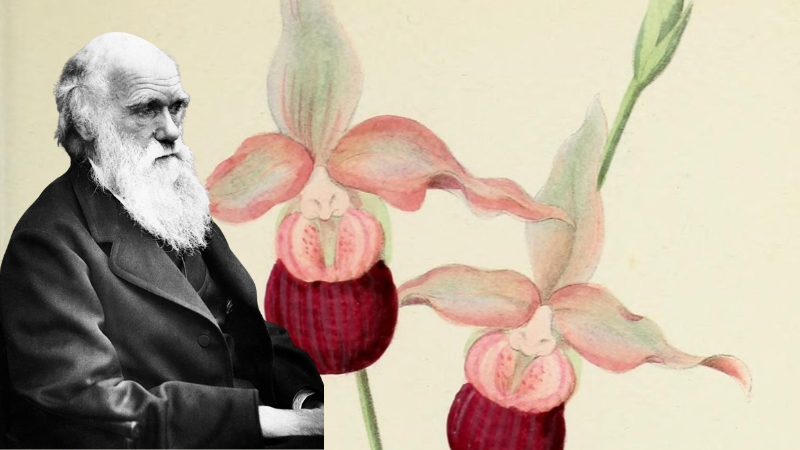
In Darwin’s woods I was moved that I was feeling pleasure from something he initiated but never got to see. And in his woods are some plants he would be fascinated by. Here and there in the deep shade under the beeches is a species of orchid called violet helleborine. The orchids time their flowering for when fruits have fallen to the ground and wasps are patrolling for food. Bees avoid the gloom of the understory, but wasps don’t mind it, and are attracted to the helleborines by the promise of an intoxicating nectar (itself made by a symbiosis with fungi). When they drink it, becoming dusted with pollen as they do so, the wasps seem to get drunk. They give up on personal hygiene; they let themselves go. This means they don’t groom themselves with anything like the care they normally would, and pollen remains stuck to them. They stagger to the next flower, like a pub crawl with bonus pollination events. If you examine the orchid flowers, you’ll find a sort of shield stopping the pollen falling from the male parts of the flower onto the female parts, preventing self-pollination. (via LitHub)

Note: This is a version of my When The Going Gets Weird newsletter, which I send out via Ghost, the open-source publishing platform. You can see other issues and sign up here.

Continue reading “He escaped from a memory unit by listening to the keypad tones”

They fell in love but had to check they weren’t brother and sister

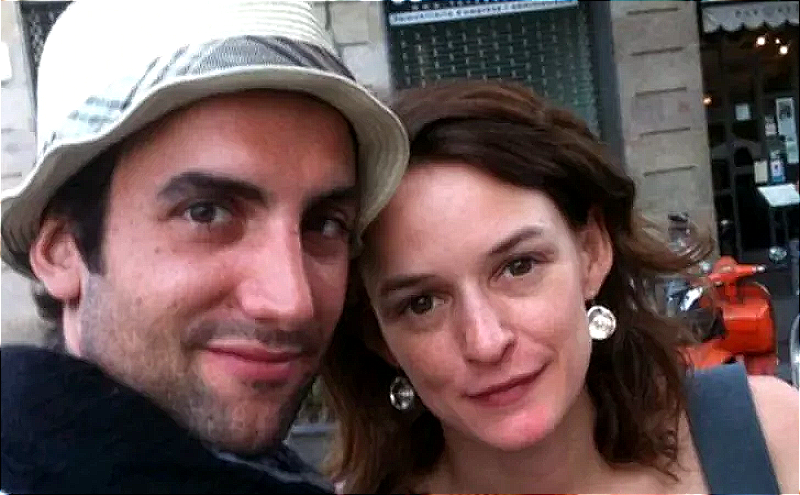
For years, Arthur Kermalvezen, the child of a sperm donor, saw possible fathers everywhere he went. “I imagined it might be my teacher, the people I saw on the bus… and I was very angry because it’s impossible to live like this.” When, as an adult, he fell in love with Audrey, another sperm donor baby from Paris, the question became even more pressing. Audrey describes the moment they met at a gathering for donor conceived activists in 2010 as “love at first sight” – but was this connection a romantic or genetic attraction? When they were born, there were only two sperm banks in Paris and many men had made multiple donations – so there was a real possibility they could be half-siblings. Before building a life together, Arthur and Audrey needed to know whether they were related. But in France, laws governing genetic testing and donor anonymity made finding the answer extremely difficult. In France, only a research scientist, doctor or judge can order and supervise a genetic test, and people can be fined more than €3,500 ($4,288; £3,191) for possessing a home testing kit. (via the BBC)

He was America’s greatest industrial designer but hardly anyone knows his name

Outside of the field of product and transportation design, too few people know who Raymond Loewy was. The best-known industrial designer, founder of the industrial design profession, and member of the pantheon of our greatest designers, it is time for wider recognition of this amazing man. Coming to the United States from France in 1919 at the age of 25 with $40 in his pocket, Loewy brought with him a love of trains, cars, and good design, but he soon also developed a love of America. Called “the frog” and “a refrigerator designer” by leaders of the auto industry, he created some of the most visionary automobiles in American history. He trained and developed dozens of other top designers. Today we see his work every time we see Air Force One, the Shell Oil or Exxon logos, or the Greyhound dog on a bus. Over his 60-year career, he reshaped the world as we know it. (via Profectus)

Note: This is a version of my When The Going Gets Weird newsletter, which I send out via Ghost, the open-source publishing platform. You can see other issues and sign up here.

Continue reading “They fell in love but had to check they weren’t brother and sister”