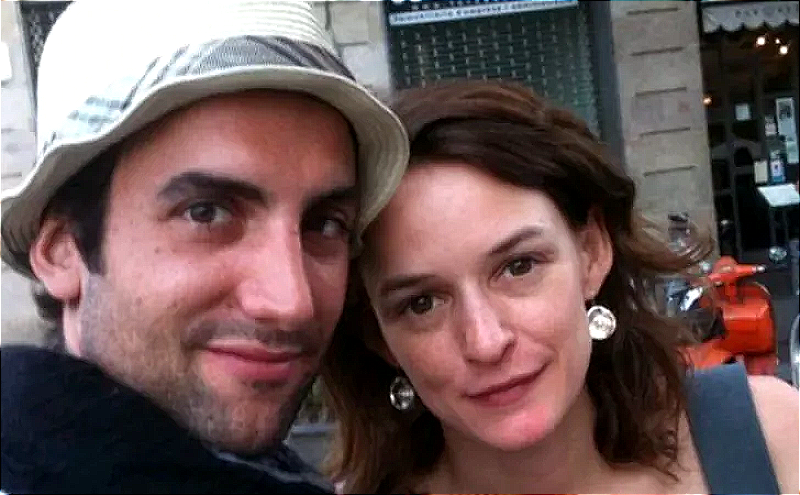
For years, Arthur Kermalvezen, the child of a sperm donor, saw possible fathers everywhere he went. “I imagined it might be my teacher, the people I saw on the bus… and I was very angry because it’s impossible to live like this.” When, as an adult, he fell in love with Audrey, another sperm donor baby from Paris, the question became even more pressing. Audrey describes the moment they met at a gathering for donor conceived activists in 2010 as “love at first sight” – but was this connection a romantic or genetic attraction? When they were born, there were only two sperm banks in Paris and many men had made multiple donations – so there was a real possibility they could be half-siblings. Before building a life together, Arthur and Audrey needed to know whether they were related. But in France, laws governing genetic testing and donor anonymity made finding the answer extremely difficult. In France, only a research scientist, doctor or judge can order and supervise a genetic test, and people can be fined more than €3,500 ($4,288; £3,191) for possessing a home testing kit. (via the BBC)
He was America’s greatest industrial designer but hardly anyone knows his name

Outside of the field of product and transportation design, too few people know who Raymond Loewy was. The best-known industrial designer, founder of the industrial design profession, and member of the pantheon of our greatest designers, it is time for wider recognition of this amazing man. Coming to the United States from France in 1919 at the age of 25 with $40 in his pocket, Loewy brought with him a love of trains, cars, and good design, but he soon also developed a love of America. Called “the frog” and “a refrigerator designer” by leaders of the auto industry, he created some of the most visionary automobiles in American history. He trained and developed dozens of other top designers. Today we see his work every time we see Air Force One, the Shell Oil or Exxon logos, or the Greyhound dog on a bus. Over his 60-year career, he reshaped the world as we know it. (via Profectus)
Note: This is a version of my When The Going Gets Weird newsletter, which I send out via Ghost, the open-source publishing platform. You can see other issues and sign up here.
This Greek island used to be a military prison but now it hosts a rare seal colony
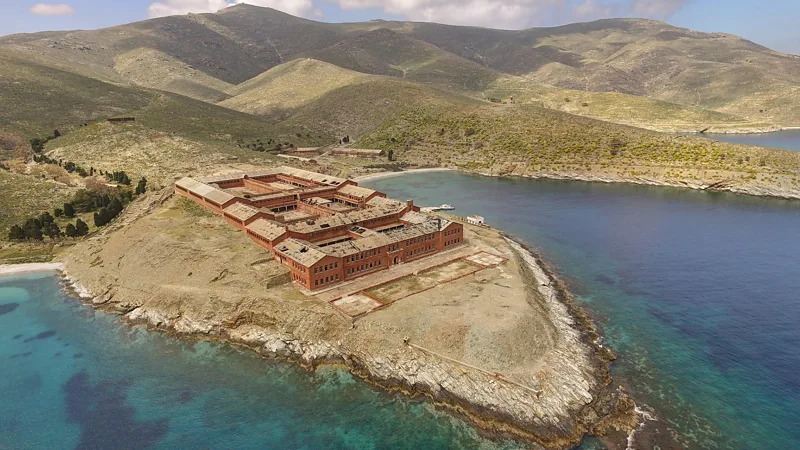
We’ve journeyed just half an hour from Syros, the administrative heart of the Cycladic islands, southeast of mainland Greece. Sail in any direction and you’ll find quintessentially Greek islands like Mykonos or Andros – whitewashed houses scattered on hillsides like sugar cubes tipped from a bowl, ferries arriving on schedule, tavernas open. Gyaros never got that memo. It offers only scree and scrub, appearing empty, lifeless even. But it is not. The reason is rooted in a particularly dark and violent period of Greece’s history. An authoritarian regime followed by military training left this island untouched by development, a forgotten relic of a turbulent past. Then, in 2004, an unexpected photograph focussed attention on this apparently desolate place once more, but for very different reasons. Devil Island, it turned out, had become a wildlife haven, offering a sanctuary for a rare seal. (via the BBC)
Hi everyone! Mathew Ingram here. I am able to continue writing this newsletter in part because of your financial help and support, which you can do either through my Patreon or by upgrading your subscription to a monthly contribution. I enjoy gathering all of these links and sharing them with you, but it does take time, and your support makes it possible for me to do that. I also write a weekly newsletter of technology analysis called The Torment Nexus.
Tasmania is the world’s largest producer of legal medical-grade opium
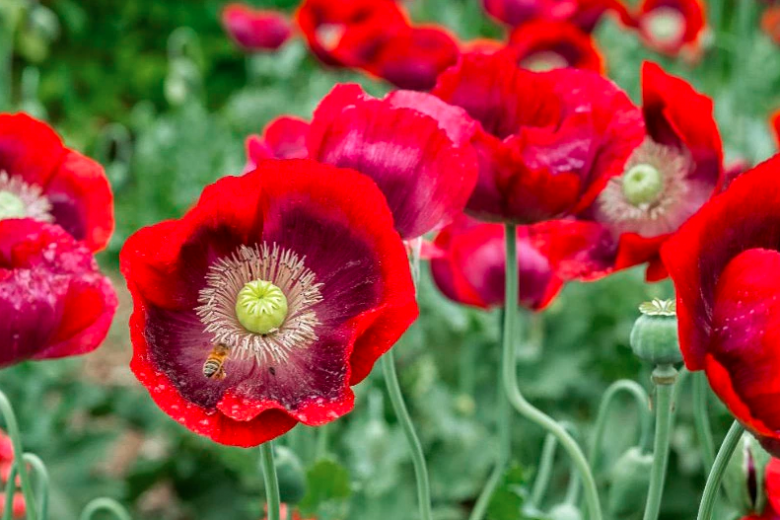
The Tasmanian opium industry was established in Tasmania in 1966. Tasmania is the world’s largest producer of legal narcotic opium, producing more than 50% of the world’s supply. Opium produced in Tasmania generally gets produced into opiate medications such as morphine, codeine and oxycodone. Extractas Bioscience (formerly known as Tasmanian Alkaloids) is Tasmania’s largest corporate grower of opium poppies. The father of Jeremy Rockliff, the current Premier of Tasmania worked for Extractas during his life as a poppy producer. A downy mildew outbreak in the 2014 poppy-growing season led to one Tasmanian company to look into growing poppies in the Northern Territory and Victoria of Australia. Following the outbreak, the Northern Territory Government passed legislation allowing for the supervised production of opium plants for legal wholesale to produce narcotic medications. Demand for Tasmanian poppy products fell sharply in 2015 following changes in prescription policies in the United States. (via Wikipedia)
Scientists dropped gophers into a volcano forty years ago and they saved an ecosystem
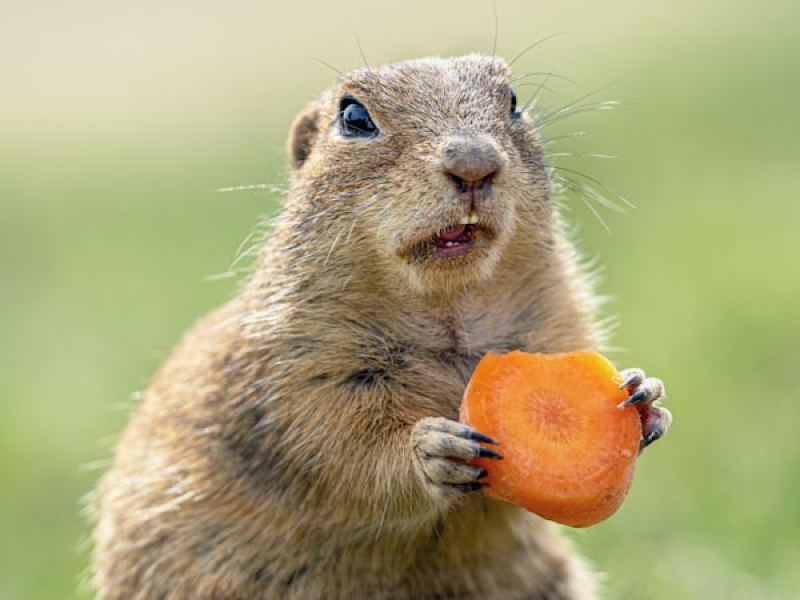
It would probably be pretty alarming to learn that, in the early 1980s, scientists decided to drop off a bunch of gophers at the site of a volcanic eruption. But don’t worry, it’s not as bad as it sounds. In fact, according to a report from the University of California, this particular gopher-volcano encounter proved to be such a net positive that its effects are still being felt 43 years later. It starts with the eruption of Mount St. Helens in May of 1980. It was the most destructive volcanic event in American history, claiming 57 lives and causing staggering ecological damage. Faced with a devastation that would take the local environment a substantial amount of time to recover from, scientists were open to unorthodox ideas that might speed the process along. Specifically, as laid out in the University of California’s report, the thinking was “by digging up beneficial bacteria and fungi, gophers might be able to help regenerate lost plant and animal life on the mountain.” So, in May 1983, three years after the devastating Mount St. Helens eruption, that’s exactly what scientists did. (via Popular Mechanics)
Sneaking into New York’s abandoned City Hall subway station

Acknowledgements: I find a lot of these links myself, but I also get some from other places that I rely on as “serendipity engines,” such as The Morning News from Rosecrans Baldwin and Andrew Womack, Jodi Ettenberg’s Curious About Everything, Dan Lewis’s Now I Know, Robert Cottrell and Caroline Crampton’s The Browser, Clive Thompson’s Linkfest and Why Is This Interesting by Noah Brier and Colin Nagy. If you come across something you think should be included here, feel free to email me at mathew @ mathewingram dot com