

More than 14 million older adults fall every year in the U.S., perhaps none so often as 91-year-old Dale Sanders. By his count, Sanders fell 71 times while reclaiming his record as the oldest hiker to complete the Appalachian Trail. Six were what he calls hard falls, including one that led to a brief hospitalization and another just 200 yards from the finish. But none were enough to permanently divert him from the 2,193-mile (3,530-kilometer) trail that runs between Springer Mountain in Georgia and Mount Katahdin in Maine. The Appalachian Trail Conservancy defines a thru-hike as completing all of the trail’s sections in any order within a year, allowing for pauses. Sanders started Sept. 6 in West Virginia, hopscotched around with some brief breaks and finished Monday atop Maine’s highest peak, where he paused to pray at the sign marking the summit. Sanders, whose trail name is Grey Beard, first set the Appalachian Trail record in 2017 at age 82. Four years later, his 83-year-old friend M.J. Eberhart, aka Nimblewill Nomad, took the title. But within months, Sanders announced his comeback plan. (via PBS)
Moby Dick wasn’t exciting enough so Hollywood invented an evil half-brother for Captain Ahab
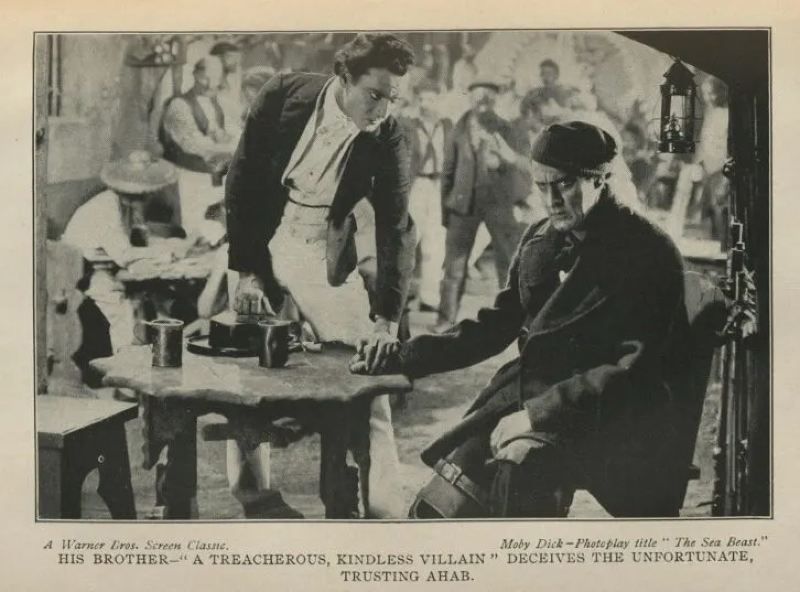
The Sea Beast, the first film adaptation of Moby-Dick, begins with a leather-bound edition of the novel opening to page one, but the phrase “Call me Ishmael” is nowhere to be found. That’s because there’s no Ishmael in this movie at all. Instead, theatergoers a hundred years ago were introduced to a new character: Captain Ahab’s evil younger brother, Derek. Yes, Derek. This silent film, released in 1926, offers the story of a dreamy and handsome young harpooner named Ahab Ceeley, cut down in his prime by both fraternal and cetaceous violence. The Hollywood leading man John Barrymore plays Ahab as a valiant lover, wooing the beautiful Esther with his nautical prowess and igniting the envy of his jealous half brother, who hopes to steal Esther’s heart. The dastardly Derek stealthily shoves his sibling into the jaws of a vicious sperm whale, then convinces the now-disabled Ahab that his sweetheart could never accept him in his disfigured condition. Plunged into a steely despair, the captain focuses his hate on the legendary Moby Dick—at least until he discovers the truth. “Your worst enemy ain’t Moby Dick,” a sailor eventually informs him, “it’s your half brother, Derek.” (via The Paris Review)
Note: This is a version of my When The Going Gets Weird newsletter, which I send out via Ghost, the open-source publishing platform. You can see other issues and sign up here.
Members of this exclusive club get special ties for being shot into the air at 700 miles per hour

Ron Bath was flying his RF-4 Phantom military jet at nearly 700 miles an hour over the Nevada desert when it smashed into a bird, destroying one of the engines and part of the wing. Bath managed to land at his base in Reno, but there was still a problem: He couldn’t steer or apply the brakes. As the plane slowed, it rolled off the side of the runway and into a ditch filled with rainwater. The Phantom’s front landing gear collapsed, piercing the floorboard under the cockpit and rupturing the charge on his ejection seat. “Next thing I know is I’m looking down at my airplane and it’s getting smaller and smaller and smaller and smaller, and I’m just shooting up into the sky,” said Bath. Seven seconds after he shot through the glass canopy, Bath smashed into the ground, breaking his back and neck. What he didn’t know on that day nearly 40 years ago was he had just earned entry into one of the world’s most exclusive clubs. Much like the myth of automatically getting straight A’s if your college roommate dies, there is folklore around military pilots who eject from jets and live to tell. Can you keep your seat? Do you get a tie? (via the WSJ)
Hi everyone! Mathew Ingram here. I am able to continue writing this newsletter in part because of your financial help and support, which you can do either through my Patreon or by upgrading your subscription to a monthly contribution. I enjoy gathering all of these links and sharing them with you, but it does take time, and your support makes it possible for me to do that. I also write a weekly newsletter of technology analysis called The Torment Nexus.
In the 1860s London was gripped by a panic over the rise of “garroting” robberies
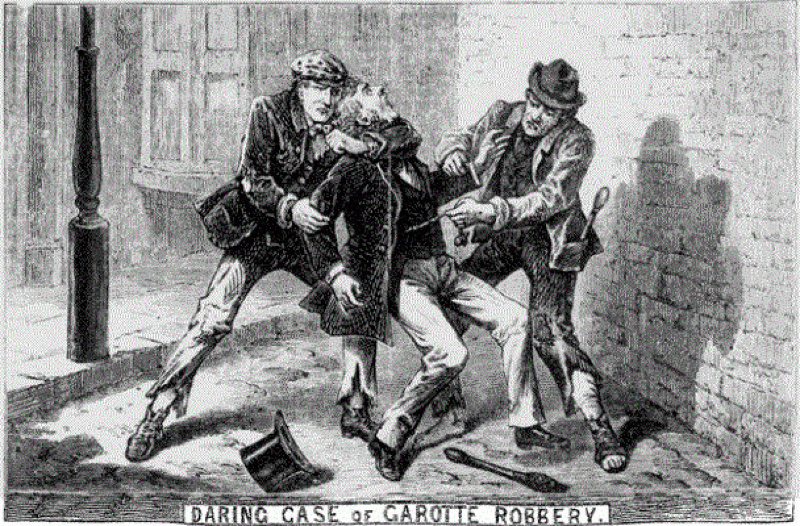
During the early 1860s, reports of violent robberies known as garrottings filled British newspapers. Victims were said to be attacked from behind, choked into unconsciousness, and robbed before their assailants vanished. As sensational accounts multiplied, fear spread far beyond the actual crime scenes. Respectable citizens grew afraid to walk alone at night, politicians demanded action, and newspapers warned that London was facing a new and terrifying criminal menace. The word “garrotte” originated in Spain, where it referred to a method of execution involving strangulation. In Britain, however, the term acquired a different meaning. A garrotter was a robber who attacked victims from behind, gripping their throat or covering their mouth while accomplices searched their pockets. The panic began after a series of highly publicized robberies in London. Newspapers reported cases in which victims claimed they had been suddenly seized, partially strangled, and relieved of their valuables. Some attacks were undoubtedly genuine, but sensational reporting transformed a local crime problem into a national crisis. (via Amusing Planet)
This dolphin terrifies fish so they lose their lunch and then it eats it
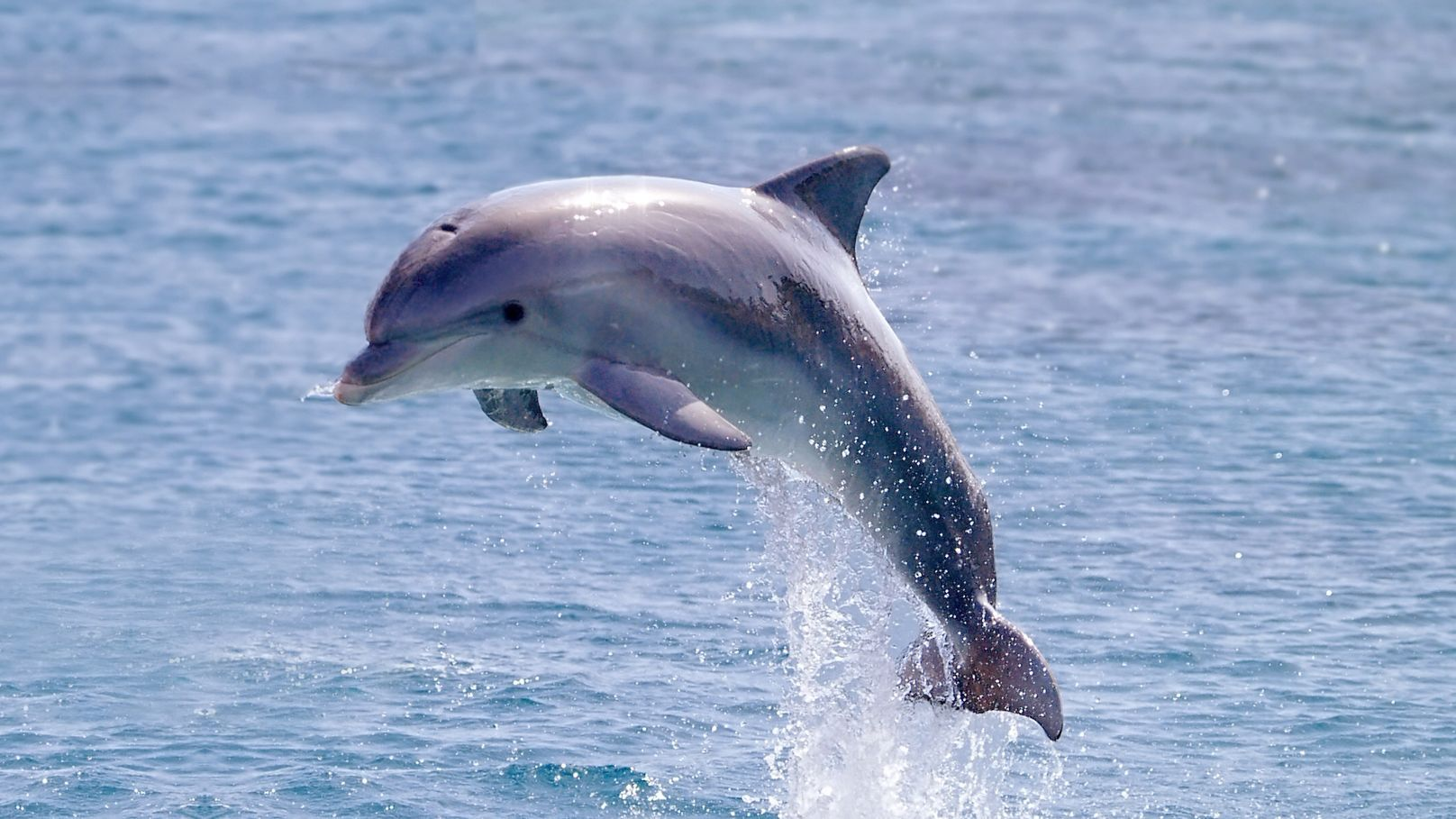
New videos reveal how a male dolphin has perfected a never-before-seen hunting technique for his species: he terrorizes fish until they vomit — and then feeds on their regurgitated food. The observations, aside from being gross, offer some of the most compelling evidence of kleptoparasitism — the act of stealing food from other animals — in a cetacean. While diving off Lady Elliot Island in Australia’s southern Great Barrier Reef between 2021 and 2025, researchers and divers documented 20 occasions when this male individual — a common bottlenose dolphin nicknamed “Bubbles” — hunted for regurgitated food from bigeye trevallies. Bubbles succeeded in his quarry 11 times. The nasty catch goes as follows: The dolphin approaches a school of fish and searches for a target. Once he has identified the unlucky fish, he starts chasing it, isolating it from the group. The chase continues until the fish vomits whatever food it has in its belly, and the dolphin snaps up the regurgitated material. (via Scientific American)
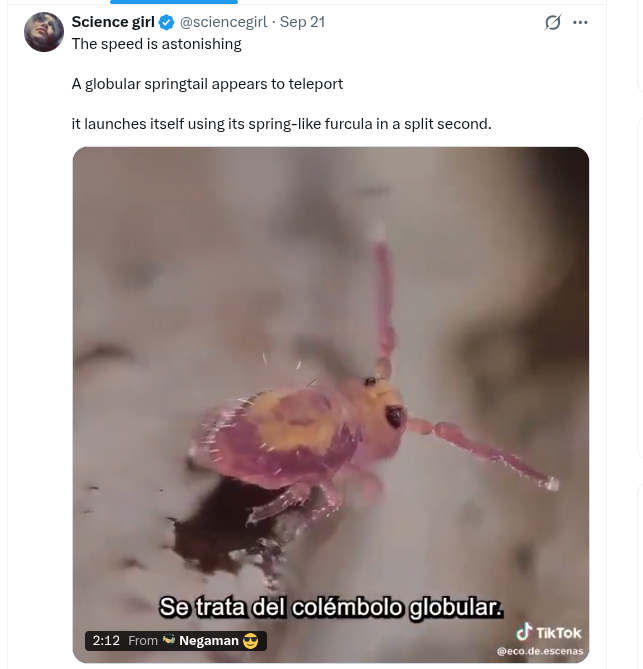
These tiny creatures can do a backflip out of danger so quickly they literally disappear
Acknowledgements: I find a lot of these links myself, but I also get some from other places that I rely on as “serendipity engines,” such as The Morning News from Rosecrans Baldwin and Andrew Womack, Jodi Ettenberg’s Curious About Everything, Dan Lewis’s Now I Know, Robert Cottrell and Caroline Crampton’s The Browser, Clive Thompson’s Linkfest and Why Is This Interesting by Noah Brier and Colin Nagy. If you come across something you think should be included here, feel free to email me at mathew @ mathewingram dot com