

Harvard scientist Avi Loeb has been doing interviews all week because of his take on 3I/ATLAS, an interstellar object that has captured public fascination. The astronomy community generally agrees it’s a comet — potentially the oldest one ever seen. But Loeb has repeatedly pointed to what he contends are unexplained anomalies. Over the past eight years, has gained worldwide notoriety for advancing provocative notions, propelling him ever deeper into the pop-culture zeitgeist. Three weeks before this interview, he’d flown to a NASCAR event in California in which a race car, emblazoned with Loeb’s face, was dedicated to the interstellar object. Earlier in 2025, he landed on the front page of The New York Times. A recent Loeb appearance on The Joe Rogan Experience racked up a combined audience of 6.4 million and just last month, the Trump Administration appointed Loeb to lead a scientific advisory council on UFOs — or unidentified aerial phenomena, in government parlance. (via Popular Mechanics)
Jeremy Bentham coined almost as many words as Shakespeare and may have invented jogging
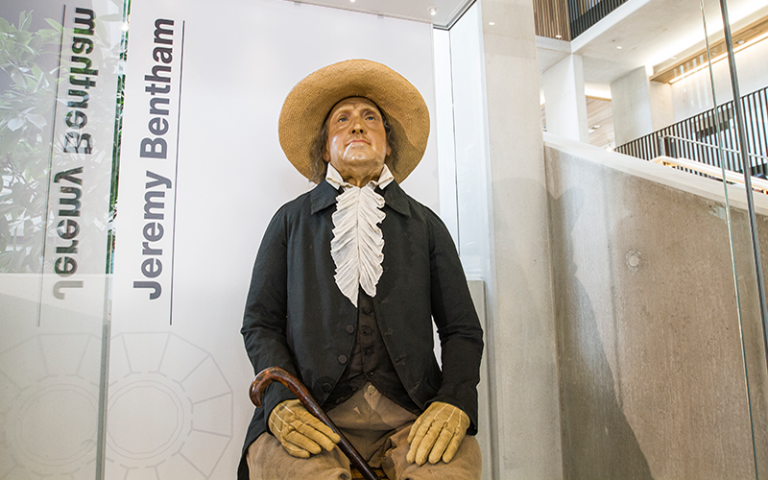
Have you ever wondered who coined the words ‘maximise’ and ‘minimise’? Like many prolific writers, Bentham sometimes had to create his own terms to describe concepts he explored. Ranging from the common ‘international’, to the rare ‘scribblatory’, Jeremy’s words infiltrate our language in their very own literary panopticon – you never know when a Bentham original slips in. Bentham appears to have been a regular jogger—or, as he put it, ‘circumgyrater’. According to the journalist George Wheatley, who stayed with the eighty-one year-old Bentham in March 1831, before both breakfast and dinner Bentham would take ‘a few turns in the garden, which … he calls circumgyrating’, which Wheatley described as a ‘trotting or taking up a kind of trotting step’. Bentham started studying Latin at the age of three, and by twelve years old, he was enrolled at Queen’s College in Oxford to follow in his father’s footsteps and study law. (via University College)
Note: This is a version of my When The Going Gets Weird newsletter, which I send out via Ghost, the open-source publishing platform. You can see other issues and sign up here.
Did soldiers from a Roman legion somehow wind up settling in China?
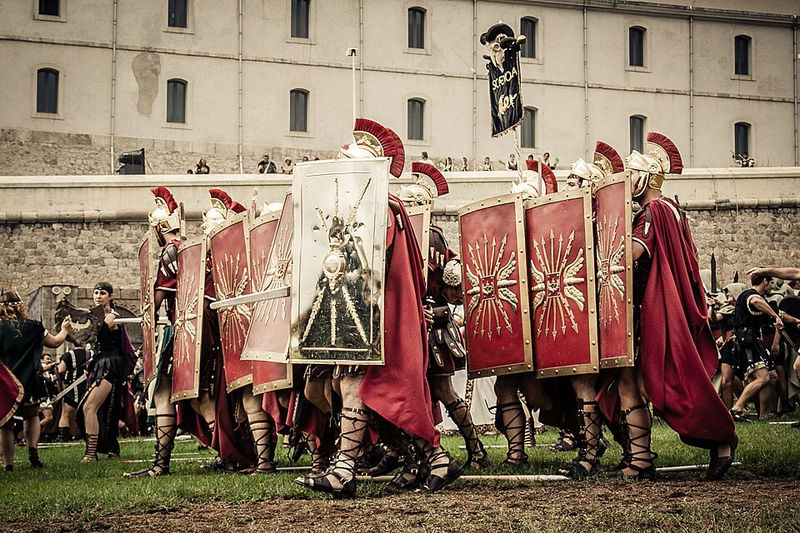
A remote village in north-western China, on the edge of the Gobi desert, is said to have been founded by Roman soldiers. According to this controversial theory, the village of Zhelaizhai in China’s Gansu Province was established by Roman legionaries who were captured after a disastrous battle, carried across Central Asia, and eventually settled on the far eastern edge of the known world. While most historians remain sceptical of the claim, the story has become one of the most fascinating legends linking the ancient civilizations of Rome and China. The modern theory was largely developed by the Oxford sinologist Homer H. Dubs in the 1940s and 1950s. Dubs became fascinated by references in Chinese historical records to a place called “Liqian” during the Han Dynasty. At the time, “Liqian” was sometimes used by Chinese writers to refer to the Roman world or territories associated with it. Dubs wondered whether the settlement’s name indicated that people from the Roman Empire had once lived there. (via Amusing Planet)
Hi everyone! Mathew Ingram here. I am able to continue writing this newsletter in part because of your financial help and support, which you can do either through my Patreon or by upgrading your subscription to a monthly contribution. I enjoy gathering all of these links and sharing them with you, but it does take time, and your support makes it possible for me to do that. I also write a weekly newsletter of technology analysis called The Torment Nexus.
Arthur Conan Doyle wrote a tiny Sherlock Holmes story for Queen Mary’s dollhouse
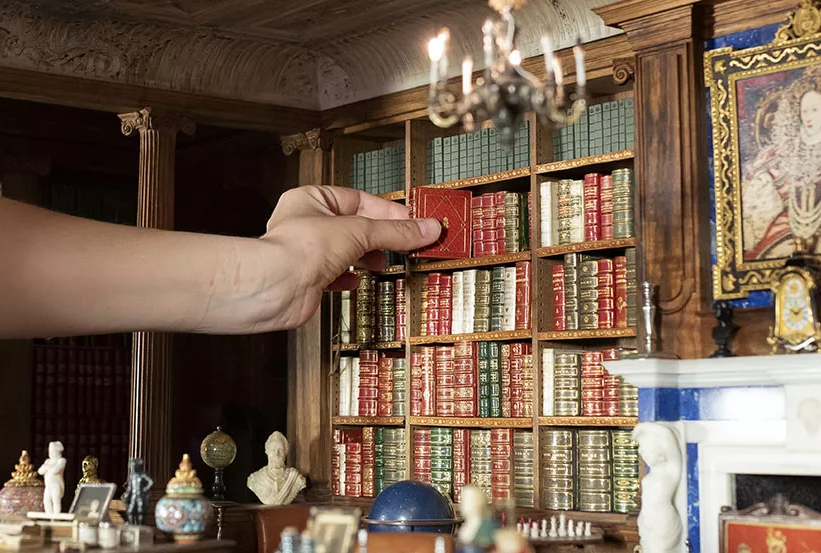
In the 1920s, it was not unusual for the library within a household to include a gun room, study and smoking room. The Library in Queen Mary’s Dolls’ House reflects this trend. The room is paneled in walnut and provides the perfect environment for gaming, writing and reading. Princess Marie Louise and her friend, the author E.V. Lucas, acted as librarians. They took charge of cataloguing and organising the books. The collection was intended to provide a representative, rather than complete, library. In addition to containing printed reference books and standards of great literature, the princess commissioned books by living authors. She contacted around 200 renowned writers of the day. Most were delighted to contribute, but a few, including George Bernard Shaw, refused. Authors who donated included J.M. Barrie and Sir Arthur Conan Doyle. His miniature book, How Watson Learned the Trick, is a new Sherlock Holmes story that Doyle hand-wrote for the Dolls’ House. (via Royal Collection Trust)
Indigenous societies were using dice 12,000 years ago at the end of the last Ice Age
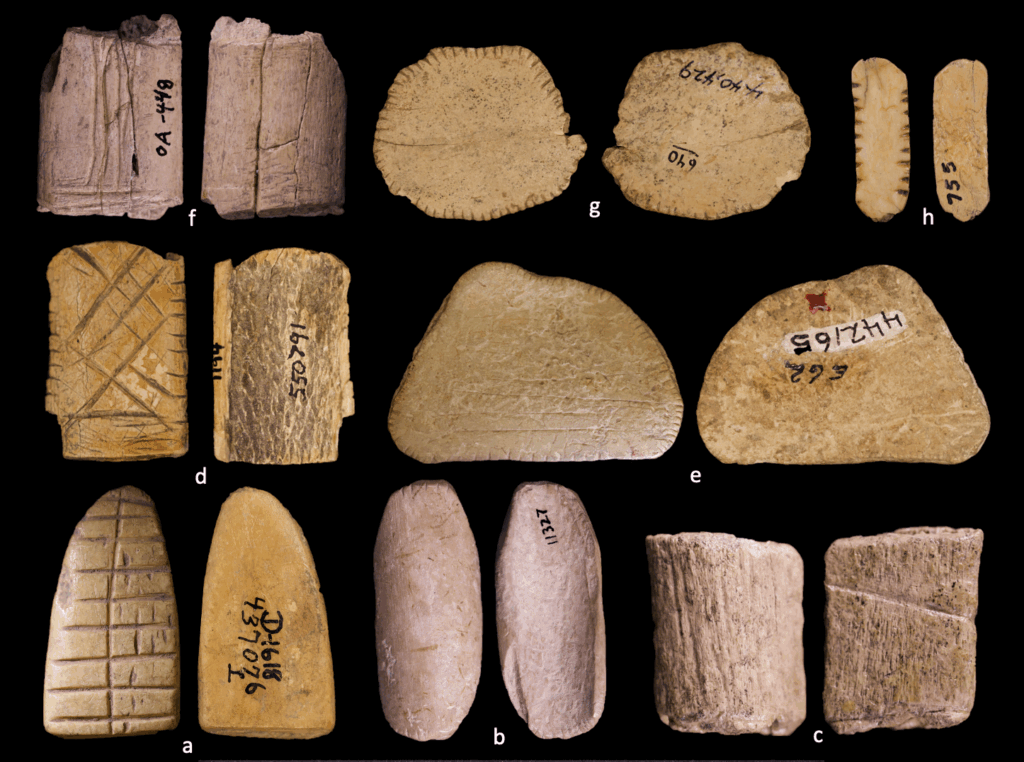
A new Colorado State University study presents evidence that the earliest known dice in human history were made and used by Native American hunter-gatherers on the western Great Plains more than 12,000 years ago – at the end of the last Ice Age and long before the earliest known dice from Bronze Age societies in the Old World. Research by Ph.D. student Robert J. Madden indicates that dice, games of chance and gambling have been a persistent feature of Native American culture for at least the last 12,000 years, with the earliest examples appearing at archaeological sites in Wyoming, Colorado and New Mexico. These artifacts predate the earliest known Old World dice by more than 6,000 years. “Historians have traditionally treated dice and probability as Old World innovations,” Madden said. “What the archaeological record shows is that ancient Native American groups were deliberately making objects designed to produce random outcomes and using those outcomes in structured games thousands of years earlier than previously recognized.” (via Colorado State)
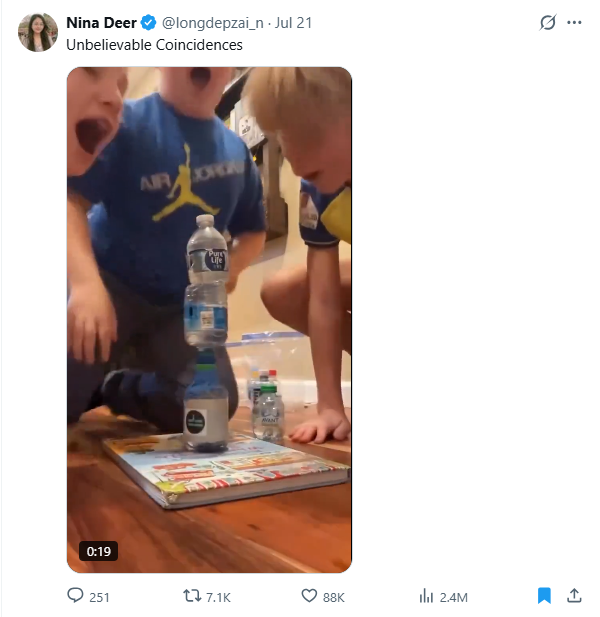
Sometimes things just work out
Acknowledgements: I find a lot of these links myself, but I also get some from other places that I rely on as “serendipity engines,” such as The Morning News from Rosecrans Baldwin and Andrew Womack, Jodi Ettenberg’s Curious About Everything, Dan Lewis’s Now I Know, Robert Cottrell and Caroline Crampton’s The Browser, Clive Thompson’s Linkfest and Why Is This Interesting by Noah Brier and Colin Nagy. If you come across something you think should be included here, feel free to email me at mathew @ mathewingram dot com