
They shared an unforgettable moment

Links that interest me and maybe you

From CBS News: “Two high school seniors had proved a mathematical puzzle that was thought to be impossible for 2,000 years. Ne’Kiya Jackson and Calcea Johnson were working on a school-wide math contest that came with a cash prize. The seniors were familiar with the Pythagorean Theorem, a fundamental principle of geometry. You may remember it from high school: a² + b² = c². When you know the length of two sides of a right triangle, you can figure out the length of the third. What no one told them was there had been more than 300 documented proofs of the Pythagorean Theorem using algebra and geometry, but a proof using trigonometry was thought to be impossible.”
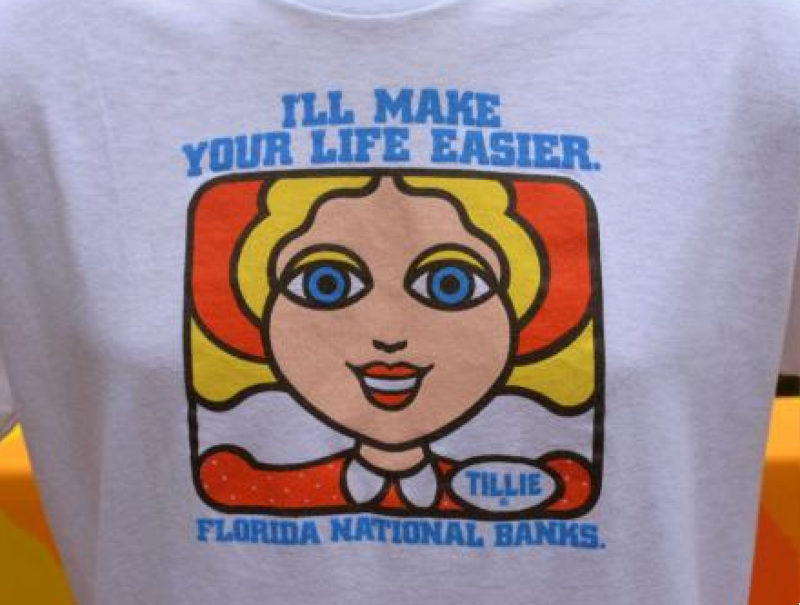
From The Hustle: “I did jingle and voice-over work for hundreds of companies — Coca-Cola, McDonald’s, Macy’s, Goodyear, Papa John’s, IBM. I am the voice you hear over the loudspeaker at Delta Airlines gates, and also on a bunch of GPS and phone systems. And then in the early ‘70s, The First National Bank of Atlanta, now Wells Fargo, started introducing some of the earliest ATM machines, but nobody would use them! People didn’t trust computers yet. So, they decided to personalize the machine by putting a little face of a smiling girl on it. They called her “Tillie the All-Time Teller,” and they hired me to sing a jingle in her voice. It became the first successful ATM machine in the United States.”
Note: This is a version of my personal newsletter, which I send out via Ghost, the open-source publishing platform. You can see other issues and sign up here.
Continue reading “Teens found a trigonometry proof for the Pythagorean Theorem”
via the excellent Depths Of Wikipedia account run by Annie Rauwerda

From JSTOR Daily: “Before he became the founder of chiropractic, Daniel David Palmer was a Spiritualist and practitioner of animal magnetism. Palmer claimed to have received communication from a deceased physician who taught him the principles of chiropractic—a term he invented in 1896, combining the Greek words cheir and praktos to mean “done by hand.” Palmer considered introducing Chiropractic as a religion in its own right but ultimately settled on describing it as an amalgamation of Christian Science and modern medicine. He wrote that it was based on adjusting the body to permit the free flow of “Innate Intelligence,” or just “Innate,” which he explained as “a segment of that Intelligence which fills the universe.”

From LongNow: “An early victim of Russia’s invasion of Ukraine was the genetic riches of one of the traditional breadbaskets of humanity. In the first months of the conflict, Russian shells hit the Plant Genetic Resources Bank in Kharkiv. Founded in 1908, the gene bank preserved the seeds of 160,000 varieties of crops and plant seeds from around the world, and was the repository for many unique cultivars of Ukrainian barley, peas, and wheat. Tens of thousands of samples, some of them centuries old, were reduced to ash. Even under Nazi Germany, when the whole of Ukraine was under occupation, the bank was not destroyed. They knew their descendants might need it. After all, every country’s food security depends on such banks of genetic resources.”
Note: This is a version of my personal newsletter, which I send out via Ghost, the open-source publishing platform. You can see other issues and sign up here.
Continue reading “The inventor of chiropractic thought of it as a religion”


From the NYT: “Most people think of endangered languages as far-flung or exotic. “You go to some distant mountain or island, and you collect stories,” the linguist Ross Perlin says, describing a typical view of how such languages are studied. But of the 700 or so speakers of Seke, most of whom can be found in a cluster of villages in Nepal, more than 150 have lived in or around two apartment buildings in Brooklyn. Bishnupriya Manipuri, a minority language of Bangladesh and India, has become a minority language of Queens. There are more endangered languages in and around New York City than have ever existed anywhere else, says Perlin, who has spent 11 years trying to document them.”

From Now I Know: “In the 1970s, fishermen near Fort Lauderdale found the area’s natural coral reefs were dying, so some of them had an idea: they decided to throw a lot of automobile tires in the water. In the preceding few years, a number of places around the world had done something similar, with a seemingly positive effect. Someone — it’s unclear who was first — postulated that discarded tires could function as artificial reefs. It was a win-win situation, and one that seemed to make sense. Small reefs made of discarded tires were created in multiple places throughout the world. But over time, this idea turned into a disaster, causing the type of harm they were supposed to remediate.”
Note: This is a version of my personal newsletter, which I send out via Ghost, the open-source publishing platform. You can see other issues and sign up here.
Continue reading “New York is the capital of endangered languages”

From Now I Know: “In 2006, 21-year-old Kris married Brandon Smith, the boy she had been dating throughout most of high school and beyond. But two years into their marriage, tragedy struck. Brandon was in a car accident and barely survived. It took two months before Brandon regained consciousness, but he wasn’t the same person. He had post-traumatic amnesia and now needed constant care with no hopes of recovery. For the next few years, Kris took care of Brandon, putting her life on hold as a result. He needed around-the-clock care, so she moved him into a nursing home nearby, and then she filed for divorce. But Kris didn’t abandon Brandon. She adopted him.”

From U of Ottawa: “Students from St. Brother André Elementary School’s Program for Gifted Learners (PGL) were interested in the effects of cosmic radiation on the molecular structure of epinephrine, a medication found in EpiPens used in emergencies to treat severe allergic reactions. The PGL students had their experiment accepted by the Cubes in Space program, meaning that it was sent into space with NASA. The John Holmes Mass Spectrometry Core Facility in the uOttawa’s Faculty of Science analyzed the returned samples to find the epinephrine sent into space returned only 87% pure, with the remaining 13% transformed into extremely poisonous benzoic acid derivatives.”
Note: This is a version of my personal newsletter, which I send out via Ghost, the open-source publishing platform. You can see other issues and sign up here.
Continue reading “After her husband had a brain injury she adopted him”

From John Hawks: “The poster is a dentist and visited his parents house to see the new travertine they installed. It’s no surprise that he recognized something right away: A section cut at a slight angle through a very humanlike jaw. The Reddit user who posted the story has followed up with some updates over the course of the day. The travertine was sourced in Turkey, and a close search of some of the other installed panels revealed some other interesting possible fossils, although none are as strikingly identifiable as the mandible. This naturally raises a broader question: How many other people have installed travertine with human fossils inside? Travertine is known to commonly include fossils, of algae, plants, and small animals—and humans as well, it seems.”
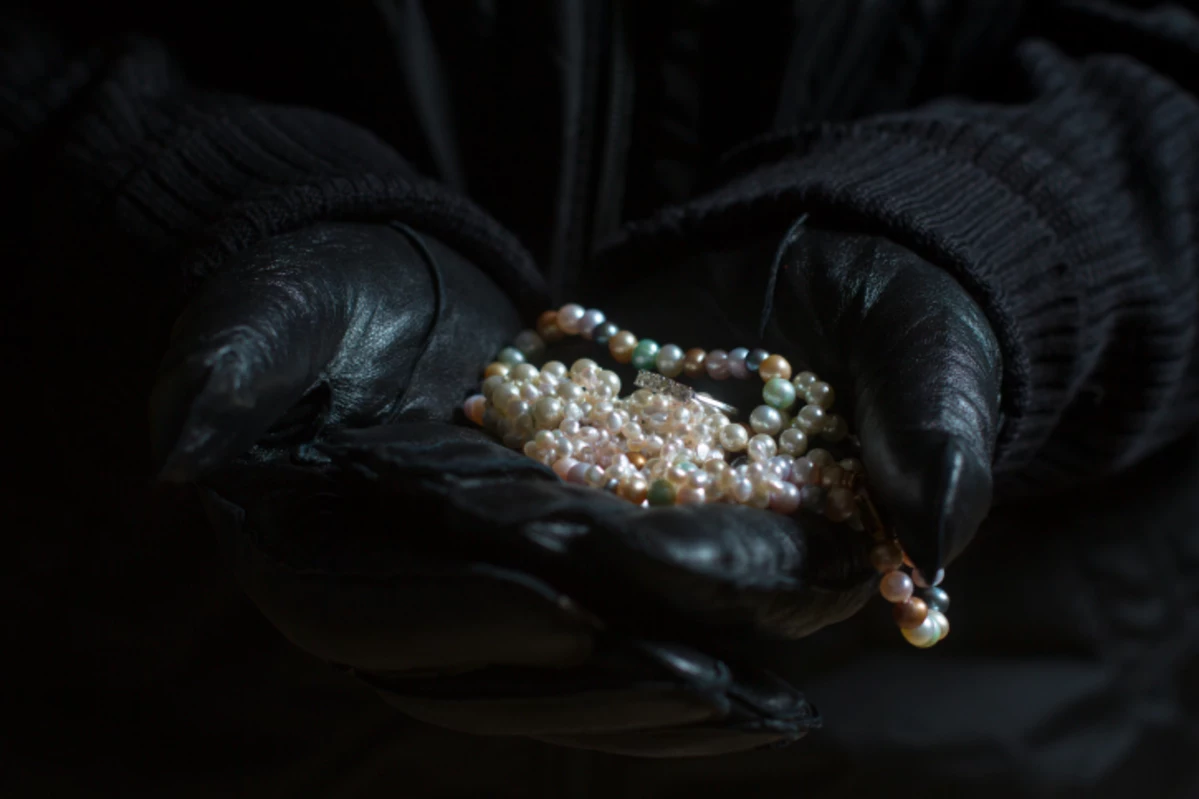
From The Art Newspaper: “A Danish museum has assisted the British Museum in securing the return of 290 Greek and Roman gems which had been stolen over a 25-year period. The theft was revealed by the London museum a few weeks after a senior curator was quietly suspended. Last October, 290 stolen items were handed over to the Thorvaldsens Museum in Copenhagen for safekeeping and these were returned to the BM in January. The 290 items had been deposited at the Copenhagen museum by Ittai Gradel, the Danish antique gem collector and dealer who had acquired them from a single source between 2010 and 2013. At that time, Gradel had no idea that they might have been stolen.”
Note: This is a version of my personal newsletter, which I send out via Ghost, the open-source publishing platform. You can see other issues and sign up here.
Continue reading “He found a human jawbone in his parents’ tile floor”

From The New Yorker: “There are more than four hundred startups in what is called the advanced air mobility industry. The term covers everything from actual flying-car-ish contraptions to more traditional-looking airplanes, but it generally refers to evtols. For the most part, these crafts bear a greater resemblance to helicopter-plane hybrids than to automobiles, and they can’t be driven on the road; they might better be described as electric aerial vehicles with the ability to hover and the no-fuss point-to-point flexibility of a car. Some are single-seat playthings: Jetson One, a Swedish company, has developed a craft that looks like a little aerodynamic cage and handles like Luke Skywalker’s X-wing. Others fly themselves: EHang, a Chinese company, has been testing an autonomous passenger drone with a quadcopter design.”

From Atlas Obscura: “Spectators on shore point with outstretched fingers to the nearing athletes as they furiously raft towards land. Paddling past the numerous sea turtles that glide around the bay, Tumaheke Durán Veri Veri arrives first. He heaves his hand-woven raft onto the sand and runs barefoot up to the island’s main road. He then hoists a 44-pound bundle of bananas over his shoulders and begins to run. This is the Tau’a Rapa Nui; a demanding sporting event that honors the Rapa Nui’s ancestral tradition. It begins with the rafting, called Vaka Ama; followed by the banana-weighted run, the Aka Venga; and ends with a bodyboard-type paddle race: Natación con Pora.”
Note: This is a version of my personal newsletter, which I send out via Ghost, the open-source publishing platform. You can see other issues and sign up here.
Continue reading “Is the Jetson-like future with flying cars finally here?”
After almost four years of debating a law that would force ByteDance, the Chinese company that owns TikTok, to sell the app or be banned in the US, Congress finally passed legislation that does exactly that (I’ve written for CJR a number of times over the years about the back-and-forth in Washington regarding a TikTok ban, including here and here and here.) So what happens now? Before ByteDance either sells TikTok or is banned, there are a number of hurdles, roadblocks, and potential landmines that stand in the way—including the Chinese government, which has made it clear that it will not allow ByteDance to relinquish control of TikTok without a fight.
Just a few weeks ago, a sale-or-ban law looked to be doomed. The House of Representatives voted overwhelmingly in favor of one version of the law on March 13, but then it seemed to lose momentum in the Senate. Some senators said they supported the ban, but Maria Cantwell—a Democrat who chairs the Senate Commerce Committee—seemed skeptical of the law, saying she wasn’t sure that it could withstand a legal challenge. She also criticized the House bill for only giving ByteDance six months to find a buyer or face a ban, but when the House introduced a new version of the TikTok bill that increased the length of time that ByteDance had to find a buyer to as long as a year, Cantwell and others changed their minds and voted in favor.
Washington sources believe that ByteDance made a “series of miscalculations” in its attempts to forestall the passage of such a law. They told the Wall Street Journal that Shou Zi Chew, TikTok’s CEO, failed to build support on Capitol Hill, and instead relied on negotiations with the Committee on Foreign Investment in the U.S. over “a complex restructuring that never panned out.” Chew testified before Congress and ByteDance felt that he did well, and the company got support from the Club for Growth, a group backed by Jeff Yass, a major TikTok shareholder. But despite these successes, the Journal wrote, opinion on Capitol Hill was “already shifting against” the company.
Note: This was originally published as the daily email newsletter for the Columbia Journalism Review, where I am the chief digital writer
Continue reading “A new law will ban TikTok unless it is sold. So what happens now?”