
(from Northwestern comp-sci prof Jessica Hullman)

Links that interest me and maybe you

(from Northwestern comp-sci prof Jessica Hullman)

Referencing my desire to disprove that AI is “merely a stochastic parrot,” Claude told me that “political theory may be the one field where ‘stochastic parrot’ is actually a compliment, since the whole discipline consists of creatively recombining things Tocqueville and Mill already said.” Ouch.
Professors at top universities are — in good part because of what it now takes to get a good job in the field — more focused on publishing erudite contributions to niche debates in scholarly journals which only a handful of their colleagues will ever read than on teaching and mentoring the ever-dwindling ranks of their students.
Yascha Mounk gets an AI to write an academic paper in political theory and says the result is more or less indistinguishable from papers written by experts in the field

Around 2,000 strange tunnels have been found around central Europe. These aren’t like the well-known catacombs of Paris or Rome. Known as the erdstall, these passages are extremely narrow, never more than two feet wide nor high enough for an adult to walk in, and sometimes the passages become seemingly impossibly narrow, with some as small as 16 inches in diameter. Determining their age and purpose is made difficult by the fact that almost no archaeological evidence has been found inside any of them. A ploughshare was found in one, millstones in a couple others, but apart from that the erdstall are eerily empty. Carbon analyses of coal and pottery fragments found within point to construction dates of around 900 to 1200 AD, but no written records from the Middle Ages mention the erdstall’s existence. (via Weird Medieval Guys)

Animals have played pivotal roles on the front lines of many battles. Horses, elephants, and even dolphins have been employed for their strength, intelligence, and adaptability. During World War II, one brave animal stood out as a hero for using an unlikely defense tactic against the enemy: her urine. Juliana was the name of a Great Dane who had even greater instincts. In April 1941, amid the ongoing German bombing campaign known as the Blitz, explosives rained down across the U.K. When a bomb fell through the roof of the house where Juliana lived with her owner, the fast-acting pooch made her way over to the incendiary device and extinguished its flame by urinating on it. Juliana’s bravery earned her a medal from the Blue Cross. (via History Facts)
Note: This is a version of my When The Going Gets Weird newsletter, which I send out via Ghost, the open-source publishing platform. You can see other issues and sign up here.
Continue reading “There are thousands of secret tunnels throughout Europe”It’s the kind of headline that might seem either like a hypothetical philosophical concern, or a deeply worrying revelation, depending on how you feel about AI: Anthropic CEO Dario Amodei recently said the company is “no longer sure whether Claude is conscious.” On the one hand, whether an AI is or is not “conscious” could be seen as a question for the philosophically inclined, or for psychologists and other academics who specialize in such things. Does it really matter? What do we even mean when we say something is conscious? It’s a grey area (literally, as in grey matter). At the same time, however, it’s at least mildly concerning that a company that has been building and releasing sophisticated AI doesn’t really know what it has created. Do we need to be worried about Claude or any other significantly developed artificial intelligence achieving human-like consciousness and then doing something we might not like? Anthropic says it doesn’t think so, but also admits that it doesn’t really know.
Like it or not, this is where we are when it comes to AI. And if we’re looking for things to be optimistic about, I think Anthropic at least deserves some credit for being so forthcoming about the risks and rewards of its AI engines, and for providing a vast amount of detail about the machinery underneath Claude’s hood (which is more than other AI companies are doing). The company’s so-called “system cards,” which might sound like flash cards handed out at press conferences, are 300-page documents that list the tests and challenges Claude has either passed or failed, along with any concerns about things like “deceptive behavior,” where the AI says one thing and does another.
Anthropic also employs a number of risk-oriented and ethics-focused staffers who pay attention to such things, along with an in-house philosopher named Amanda Askell, whose job is to train Claude to be a decent artificial person, whatever that means. Presumably exterminating the human race is off the table! All that said, however, there are definitely some elements of what is happening at Anthropic (and presumably elsewhere, since Claude isn’t dramatically different than ChatGPT or Gemini or any of the other AI engines) that are… worth considering. As Futurism noted in its piece about whether Claude is conscious:
Note: This is a version of my Torment Nexus newsletter, which I send out via Ghost, the open-source publishing platform. You can see other issues and sign up here.
Continue reading “Is it bad that Anthropic doesn’t know if Claude is conscious?”
“You know that island between Mozambique and Madagascar that you visited,” she said. “Was it called Anjouan? Well, there’s been a coup.” Actually, there had been 24 coups in as many years, the pace accelerating after 1997 and culminating with two in 2001. On an island no bigger than the Isle of Wight, this means that a significant proportion of the adult population has indulged in some storming of the presidential palace, albeit usually short-lived. To be honest, any able-bodied person with some pluck and peripheral vision stands a good chance: the Maoist revolutionary, Ali Soilih, took over in 1975 armed with little more than the spokes from a bicycle wheel; the French mercenary, Bob Denard, succeeded 20 years later with a dozen soldiers all aged over 60. When I left to sail to Anjouan, an ex-Foreign Legion man warned me that, despite being an unarmed lone traveller, I would be viewed as an invasion force. (via The Guardian)

Absent from other primates — and even Denisovans and Neanderthals — the bony, protruding chin is a uniquely human characteristic. As such, it’s tempting to indulge in another uniquely human trait and come up with a reason it was honed by natural selection. Supporting the lower jaw to facilitate chewing or acting as a secondary sexual characteristic to advertise maturity to mates, are two such stories. To investigate theories of the evolution of the chin, researchers examined gene sequences involved in the development of the head and jaw for evidence of evolution. Specifically, the team looked at whether sequences involved in producing the chin itself were subject to direct selection, whether they arose neutrally due to genetic drift, or whether they were merely a byproduct of evolution acting upon other traits (a spandrel). They found that the evidence pointed toward the chin being an accident. (via Nautilus)
Note: This is a version of my When The Going Gets Weird newsletter, which I send out via Ghost, the open-source publishing platform. You can see other issues and sign up here.
Continue reading “This tiny island had a coup almost every year for 24 years”
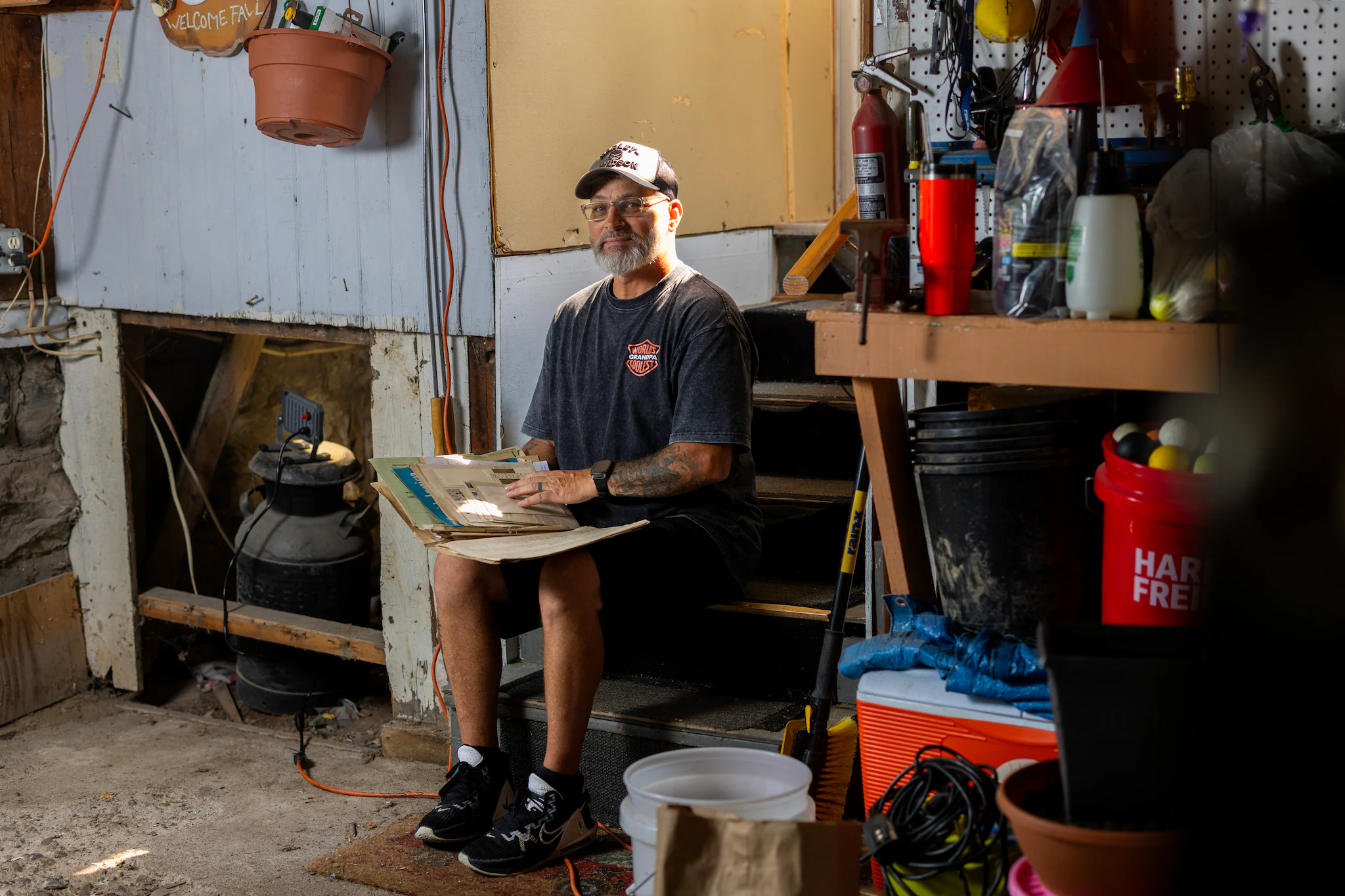
There are tears in the audience as Patrick Darling’s song begins to play. It’s a heartfelt song written for his great-grandfather, whom he never got the chance to meet. But this performance is emotional for another reason: It’s Darling’s first time on stage with his bandmates since he lost the ability to sing two years ago. The 32-year-old musician was diagnosed with amyotrophic lateral sclerosis (ALS) when he was 29 years old, which affects the nerves that supply the body’s muscles. People with ALS eventually lose the ability to control their muscles, including those that allow them to move, speak, and breathe. Darling’s last stage performance was over two years ago. By that point, he had already lost the ability to stand and play his instruments and was struggling to sing or speak. But recently, he was able to re-create his lost voice using an AI tool trained on snippets of old audio recordings. (via MIT Tech Review)

A woman who had been living in a sign of a Michigan grocery store for about a year was captured on police body cam footage telling police it was a “safe spot” for her to live. The saga began about a month ago when a contractor working on the roof of the Family Fare store in Midland noticed an extension cord running into a door on the back of the sign. When he opened the door, he was greeted by the 34-year-old woman. Officer Brennon Warren of the Midland Police Department told The Associated Press that the woman had made herself quite comfortable in the sign’s approximate 40-square feet. “There was some flooring that was laid down. A mini desk,” he said. “Her clothing. A Keurig coffee maker. A printer and a computer — things you’d have in your home.” Police did not name the woman, but said she was cooperative and agreed to leave. She was not charged with any crimes. the woman told officers she’d been living in the sign for about a year, but officers never learned how she was accessing the roof every day. (via Global News)
Note: This is a version of my When The Going Gets Weird newsletter, which I send out via Ghost, the open-source publishing platform. You can see other issues and sign up here.
Continue reading “ALS stole his voice but AI let him sing again one more time”
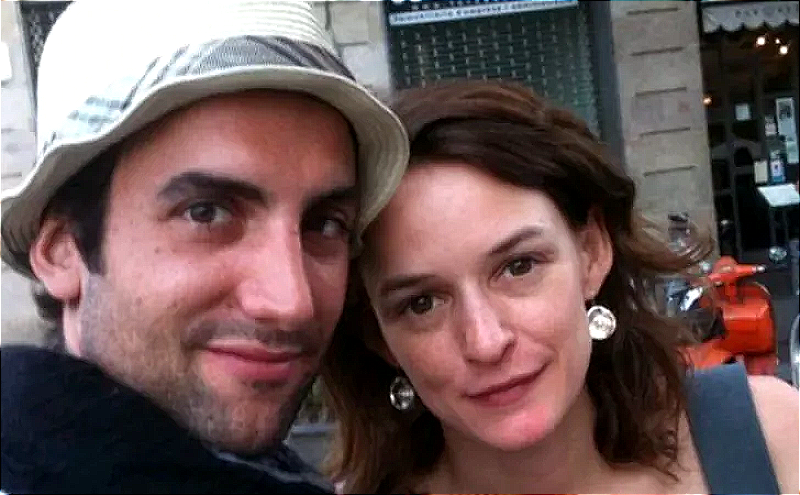
In the delicate jargon of the fertility industry, a woman who carries a child for someone else is said to be going on a “journey.” Kayla Elliott began hers in February, 2024. Elliott already had four children, but she was intrigued by the prospect of bearing another. She’d loved the natural rush of pregnancy and as a surrogate, she could earn money for her family.Within days, Elliott received a brief message from Mark Surrogacy, an agency in Los Angeles, who wanted to know if she was interested in working with a Chinese couple. She was sent a dating-style profile with a photo of a paunchy sixty-four-year-old, Guojun Xuan, with his arm draped around a woman identified as his wife, Silvia, who was thirty-six and had short-cropped black hair. They lived in Arcadia, an affluent city in L.A. County, and shared a daughter who, they said, longed for a sibling. Then another surrogate, who lived in Pennsylvania, shared something she’d heard about the couple: they already had thirteen children. (via the New Yorker)

In 1897, the all-Black 25th Infantry Regiment Bicycle Corps embarked on an epic ride of more than 1,900 miles from Fort Missoula, Montana, to St. Louis, Missouri, as part of an experiment by the U.S. Army to determine the effectiveness of moving troops by bicycle. Called “The Great Experiment” in national newspapers, the journey took 41 days to complete. The route was chosen specifically to experience as many different conditions, climates and landscape formations as possible. The 25th Infantry was one of six racially segregated units formed by the Army after the Civil War. Soldiers in these units were required to continuously prove themselves to their white counterparts because of the perception that Black soldiers were inferior in courage and ability. Members of the Bicycle Corps demonstrated the opposite was true. (via Missouri State Parks)
Note: This is a version of my When The Going Gets Weird newsletter, which I send out via Ghost, the open-source publishing platform. You can see other issues and sign up here.
Continue reading “Mysterious Chinese couple have dozens of surrogate kids”
In the run-up to this year’s Winter Olympics, and even as the Games have got underway, a scandal has been brewing: allegedly, some competitive ski jumpers may have artificially enlarged their crotch area by injecting their genitals with engorging chemicals or stuffing their underwear to create bigger bulges. The apparent reason: to alter their suit measurements and, reportedly, to gain a boost in jumps.The allegations, dubbed “Penisgate,” have caught not only the Internet’s attention but also the World Anti-Doping Agency’s eye. It raises an important science question: How does a slight increase in a jumper’s suit surface area change their jumping distance? Let’s start with the crotch. According to rules issued by the International Ski and Snowboard Federation (FIS), the body that regulates ski jumping, “crotch height” measurements for an athlete’s suit are taken by laser. So, in theory, if an athlete’s crotch is a little larger, they would get a slightly roomier suit than they might otherwise. (via Scientific American)

A remarkable high school aerospace program in Sandpoint, Idaho, reached a milestone that few youth aviation initiatives ever achieve — FAA airworthiness certification for not one, but two student-built aircraft. Now those planes have taken flight, piloted by a former student who helped build one of them. When the Federal Aviation Administration inspector signed off on airworthiness certificates for a Van’s RV-12 and a Zenith STOL CH 750, it validated years of Saturday morning labor by middle and high school students who’d gathered in rented hangars at Sandpoint Airport. But getting the FAA’s approval stamp was only half the story. The real vindication came when Eric Gray, a former ACES (Aerospace Center of Excellence Sandpoint) student who’d worked on the Zenith during his own high school years, climbed into the cockpit as the qualified test pilot for both aircraft. It’s the kind of full-circle moment that validates not just the technical competency of the program, but its deeper mission, to create a pipeline from teenage curiosity to aerospace careers.(via KitPlanes)
Note: This is a version of my When The Going Gets Weird newsletter, which I send out via Ghost, the open-source publishing platform. You can see other issues and sign up here.
Continue reading “Why did Olympic ski jumpers try to make their penises larger?”
Hidden inside a historic 19th century house on East Fourth Street in Manhattan is a secret sanctuary. Ever since the Merchant’s House Museum opened its doors to the public in 1936, visitors have lined up to get a taste of “old New York.” The Treadwell family lived there from 1835 until 1933. Their residence is frozen in time, from a ruby-red front parlor complete with its original piano to the kitchen with its cast-iron coal-burning stove. But when visitors head upstairs to the bedrooms on the second floor, there’s something strategically hidden within the walls of Manhattan’s first landmarked building: a link to the Underground Railroad. When you remove the heavy bottom drawer in a chest of drawers, you can see a rectangular opening cut into the floorboards, which leads to an enclosed space and a ladder that leads down to the ground floor. (via NY1)

The Codex Gigas, also known as the Devil’s Bible, is famous for two reasons: it is believed to be the world’s largest preserved medieval manuscript, at over three feet tall and weighing over 160 pounds (Codex Gigas means “giant book”) and it also contains a large, full-page portrait of the Devil. The Codex Gigas was originally created for a Bohemian monastery, but was brought to Sweden as spoils of war in the 17th century. Among other things, the manuscript contains a complete Bible, historical texts, magic formulas and spells. A work of this kind would have typically been the work of several scribes whose contributions would be obvious through differences in their handwriting. Not so for the Codex Gigas, whose 620 pages show exactly one handwriting style. For a single person to complete a such a large book would have taken over 20 years. (via the NLS)
Note: This is a version of my When The Going Gets Weird newsletter, which I send out via Ghost, the open-source publishing platform. You can see other issues and sign up here.
Continue reading “NY home contains a hidden door to the Underground Railroad”
If you watched the Super Bowl last weekend and are either located in the United States or have access to the American commercials, you might have seen a heartwarming ad for a new feature of Amazon’s Ring doorbell cameras, called Search Party. The ad shows people putting up posters about their missing pets. A little girl’s new puppy seems to be missing, so her dad turns to the Ring Neighborhood app and Search Party makes hundreds of doorbell cameras in the neighborhood come to life. The footage from them is used to identify the missing dog in a matter of minutes. We should be grateful that we have technologies that can help us in such situations, right? Well, no. In effect, what Amazon showed us was a massive, panopticon-style video-surveillance network. Does this sound heartwarming? Not really. Especially when it’s combined with other disturbing things that are going on in the United States surveillance-wise.
Privacy expert Chris Gilliard told 404 Media that the ad was “a clumsy attempt by Ring to put a cuddly face on a rather dystopian reality: widespread networked surveillance by a company that has cozy relationships with law enforcement and other equally invasive surveillance companies.” Senator Ed Markey posted on X that the Search Party feature “definitely isn’t about dogs — it’s about mass surveillance.” Coincidentally, Ring recently announced a new feature called Familiar Faces, which it says uses AI to recognize people who have appeared on your Ring doorbell camera multiple times. It can recognize them up to 13 feet away from the camera, and it works along with Ring’s 24/7 Continuous Recording feature. It also notes that the feature is “not available in: Texas, Illinois, Portland (OR), or Quebec (Canada) due to legislation.”
Ring spokesperson Emma Daniels told The Verge that Search Party is only designed to match images of dogs and is “not capable of processing human biometrics” – or at least not yet, anyway. She added that the facial recognition feature (which isn’t enabled by default) is separate from Search Party, and operates on the individual account level, with no communal sharing. Asked whether the Search Party feature could be used to recognize human beings rather than just dogs, she demurred, and also evaded the question when asked whether Ring’s facial-recognition software could be used to track individuals, or be used by police agencies or ICE. Using an existing feature, Ring users can currently share footage from their cameras voluntarily with local law enforcement agencies through a feature called Community Requests.
Note: This is a version of my Torment Nexus newsletter, which I send out via Ghost, the open-source publishing platform. You can see other issues and sign up here.
Continue reading “Building the Panopticon: The doorbell camera version”
One procedure has enabled the births of more than 10 million babies around the world, and nearly 3 percent of United States births per year — and it only became available relatively recently. People have had children via in vitro fertilization, or IVF, since 1978, though it took around a decade for the technique to become more widely accessible. Boston-based physician John Rock was the first to test the technique with human eggs. Lab technician Miriam Menkin assisted him by extracting eggs from ovaries removed from hysterectomy patients. She put these eggs in solution, cultured them, and added sperm in a petri dish. Over nearly six years, she attempted to fertilize more than 100 eggs without success. Finally, in February 1944, she saw success after increasing the contact between the sperm and egg from 30 minutes to an hour — an accidental adjustment because she, the mother of an infant, had fallen asleep during the experiment. (via Nautilus)

It’s safe to say that most people don’t love the cold weather. It’s uncomfortable, you need to wear layers, and the bite in the air can physically hurt. But for some people, cold weather could actually kill them. There’s a real medical condition behind that sentence, and it’s called cold urticaria. It’s a rare disorder where exposure to cold temperatures causes the immune system to misfire. Instead of adapting to a temperature drop, the body reacts as if it’s under attack. Skin can erupt into hives. Swelling can spread across the whole body. Blood pressure can drop. In severe cases, the reaction escalates into anaphylaxis. Cold urticaria has been documented for centuries. Today, researchers know the condition affects about six out of every 10,000 people and appears nearly twice as often in women as in men. Symptoms usually begin in early adulthood, but children and older adults can develop the condition too. (via Vice)
Note: This is a version of my When The Going Gets Weird newsletter, which I send out via Ghost, the open-source publishing platform. You can see other issues and sign up here.
Continue reading “She paved the way for IVF technology by falling asleep”

Does an mini-Stonehenge stand underwater in Grand Traverse Bay, part of Lake Michigan? In 2007, looking for shipwrecks in this area, which was a busy 19th- and 20th-century maritime trade route, Mark Holley, professor of underwater archaeology at Northwestern Michigan University, first came across a rock that he said bears a prehistoric carving of a mastodon. On further investigation, he discovered a Stonehenge-like arrangement of ancient stones. There’s an outer ring of stones, about 40 feet in diameter, and an inner ring about 20 feet in diameter, both made of local granite. They stand 40 feet below the water’s surface, and the stones are some 9,000 years old. At that time, said Holley, the lake bed was dry. One theory is that it’s a smaller version of a prehistoric hunting structure found under Lake Huron, erected to herd caribou. (via ArtNet)

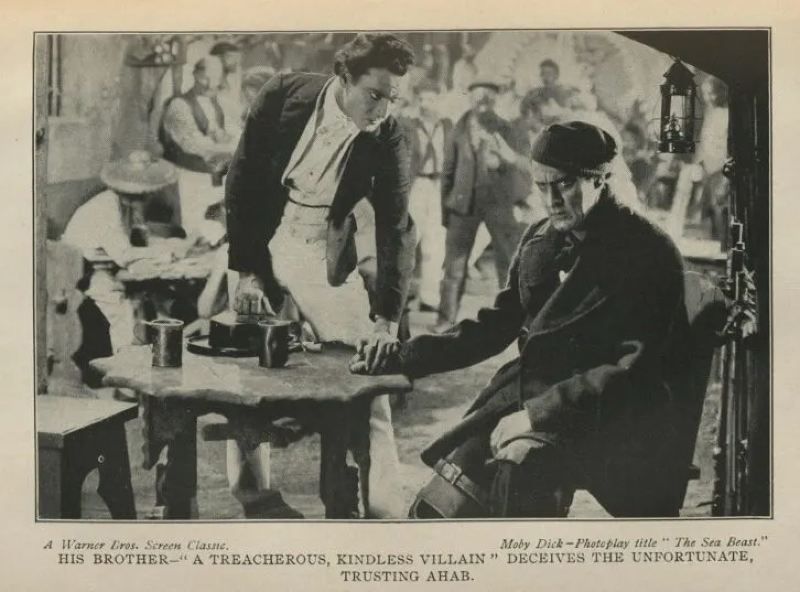
Bonaparte trained as a lawyer. In that role and as a politician and diplomat, he served in the Council of Five Hundred and as the French ambassador to the Papal States. He was later crowned the king of Naples and Sicily after his brother conquered the region, and following that he became the king of Spain. Later, Bonaparte travelled to the United States onboard the Commerce under the name of M. Bouchard and arrived on 15 July 1815. Between 1817–1832, Bonaparte lived primarily in the United States (where he sold the jewels he had taken from Spain). He first settled in New York City and Philadelphia, where his house became the centre of activity for French emigres. In 1823, he was elected as a member to the American Philosophical Society. Later he purchased an estate, called Point Breeze, in Bordentown, New Jersey. (via Wikipedia)
Note: This is a version of my When The Going Gets Weird newsletter, which I send out via Ghost, the open-source publishing platform. You can see other issues and sign up here.
Continue reading “What is the Stonehenge-like structure in Lake Michigan?”
There is a memorable scene in “Oppenheimer,” the blockbuster film about the building of the atomic bomb, in which Luis Alvarez, a physicist at the University of California, Berkeley, is reading a newspaper while getting a haircut. Suddenly, Alvarez leaps from his seat and sprints down the road to find his colleague, the theoretical physicist J. Robert Oppenheimer.“Oppie! Oppie!” he shouts. “They’ve done it. Hahn and Strassmann in Germany. They split the uranium nucleus. They split the atom.”The reference is to two German chemists, Otto Hahn and Fritz Strassmann, who in 1939 unknowingly reported a demonstration of nuclear fission, the splintering of an atom into lighter elements. The discovery was key to the Manhattan Project, the top-secret American effort led by Oppenheimer to develop the first nuclear weapons.Except the scene is not entirely accurate. A major player is missing from the portrayal: Lise Meitner, a physicist who developed the theory of nuclear fission. (via the NYT)

The Capitol Hill mystery soda machine was a vending machine in Capitol Hill, Seattle, notable for its “mystery” buttons which dispensed unusual drink flavors. It is unknown who restocked the machine; this originally caused the development of a local legend that the machine was haunted. The machine reportedly operated from the late 1990s until its unexplained disappearance in 2018. It was located in front of Broadway Locksmith on East John Street in Seattle, Washington. It was a 1970s-made Coca-Cola-branded unit, but dispensed drinks from various manufacturers. A drink could be ordered using one of the “mystery” buttons and some of the dispensed drinks were unusual varieties which were no longer being manufactured. Broadway Locksmith provided electricity to power the machine but employees said they didn’t stock the machine. (via Wikipedia)
Note: This is a version of my When The Going Gets Weird newsletter, which I send out via Ghost, the open-source publishing platform. You can see other issues and sign up here.
Continue reading “The mother of the atomic bomb who never won a Nobel Prize”