Great day for a fall hike

Links that interest me and maybe you
Note: This is a version of my personal newsletter, which I send out via Ghost, the open-source publishing platform. You can see other issues and sign up here.
In San Jose, California, kindergarteners are sitting at the edge of an outdoor pool when a sleek two-meter-long mass breaches in front of them, water dripping off its smooth gray skin. It stops and enthusiastically nods, splashing the children as their jaws drop in awe. A thin, barely perceptible cord running from its navel to a control panel nearby is the only obvious sign that this is no dolphin—it’s a robot. Delle, a prototype animatronic dolphin currently undergoing testing in San Jose, became a media sensation in 2020 because of its hyperrealistic features. Created by Edge Innovations—the Hollywood special effects company behind the killer whale in Free Willy, the snake in Anaconda, and the dolphin in Flipper—Delle was designed to revolutionize traditional captive animal demonstrations.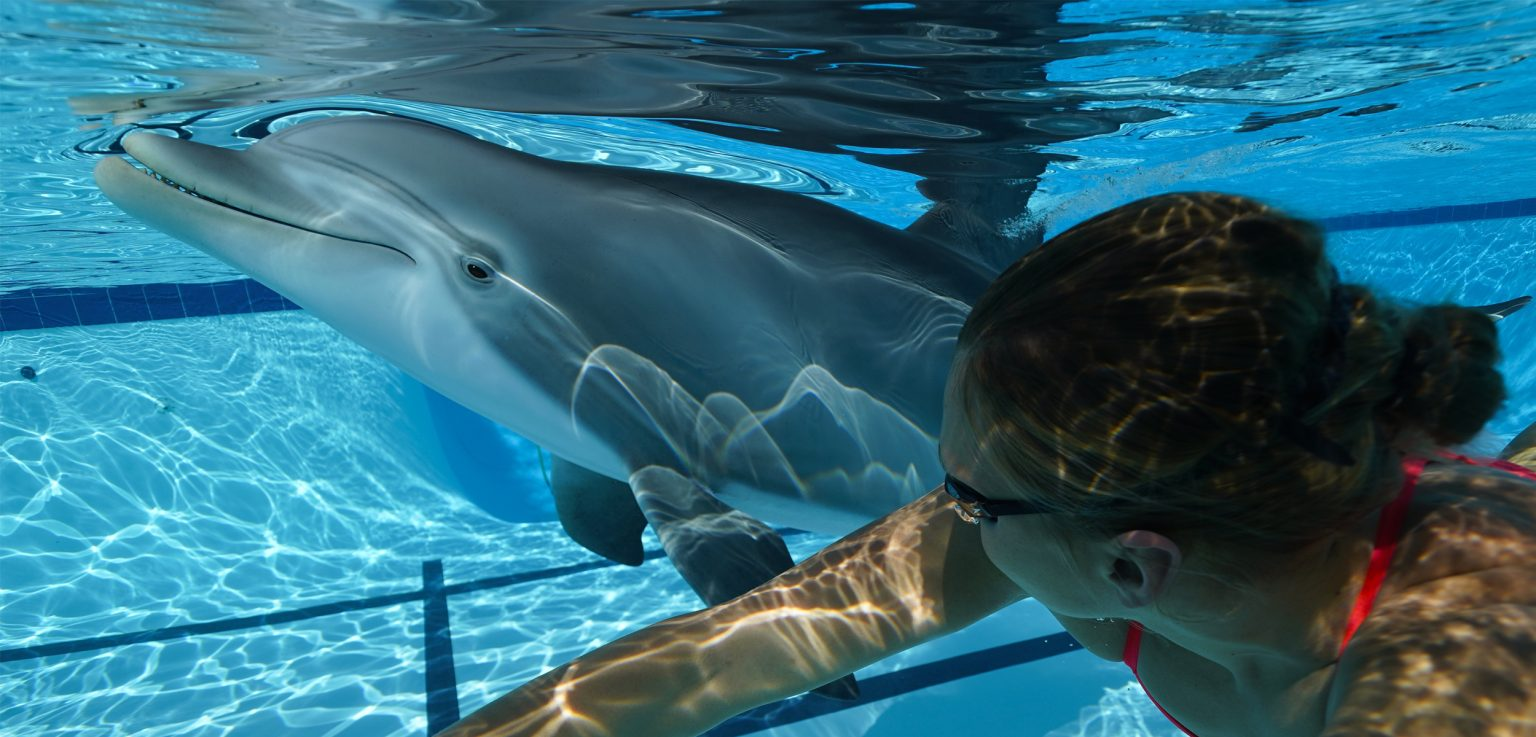
On March 25, 2020, Hannah Davis was texting with two friends when she realized that she couldn’t understand one of their messages. In hindsight, that was the first sign that she had COVID-19. It was also her first experience with the phenomenon known as “brain fog,” and the moment when her old life contracted into her current one. She once worked in artificial intelligence and analyzed complex systems without hesitation, but now “runs into a mental wall” when faced with tasks as simple as filling out forms. Her memory, once vivid, feels frayed and fleeting. Former mundanities—buying food, making meals, cleaning up—can be agonizingly difficult. Her inner world—what she calls “the extras of thinking, like daydreaming, making plans, imagining”—is gone. The fog “is so encompassing,” she told me, “it affects every area of my life.”
Continue reading “Would you swim with a robot dolphin?”Note: This was originally published as the daily newsletter at the Columbia Journalism Review, where I am the chief digital writer
For the past several years, critics on both sides of the political spectrum have argued that Section 230 of the Communications Decency Act of 1996 gives social-media platforms such as Facebook, Twitter, and YouTube too much protection from legal liability for the content that appears on their networks. Right-wing critics argue that Section 230 allows social-media companies to censor conservative thinkers and groups without recourse, by removing their content (even though there is no evidence that this occurs), and liberal critics say the platforms use Section 230 as an excuse not to remove things they should be taking down, such as misinformation. Before the 2020 election, Joe Biden said he would abolish Section 230 if he became president, and he has made similar statements since he took office, saying the clause “should be revoked immediately.”
This week, the Supreme Court said it plans to hear two cases that are looking to chip away at Section 230 legal protections. One case claims that Google’s YouTube service violated the federal Anti-Terrorism Act by recommending videos featuring the ISIS terrorist group, and that these videos helped lead to the death of Nohemi Gonzalez, a 23-year-old US citizen who was killed in an ISIS attack in Paris in 2015. In the lawsuit, filed in 2016, Gonzalez’s family claims that while Section 230 protects YouTube from liability for hosting such content, it doesn’t protect the company from liability for promoting that content with its algorithms. The second case involves Twitter, which was also sued for violating the Anti-Terrorism Act; the family of Nawras Alassaf claimed ISIS-related content on Twitter contributed to his death in a terrorist attack in 2017.
The Supreme Court decided not to hear a similar case in 2020, which claimed that Facebook was responsible for attacks in Israel, because the social network promoted posts about the terrorist group Hamas. In March, the court also refused to review a decision which found Facebook was not liable for helping a man traffick a woman for sex. While Justice Clarence Thomas agreed with the decision not to hear that case, he also wrote that the court should consider the issue of “the proper scope of immunity” under Section 230. “Assuming Congress does not step in to clarify Section 230’s scope, we should do so in an appropriate case,” Thomas wrote. “It is hard to see why the protection that Section 230 grants publishers against being held strictly liable for third parties’ content should protect Facebook from liability for its own ‘acts and omissions.’”
Continue reading “Section 230, the platforms, and the Supreme Court”
For the past several years, critics on both sides of the political spectrum have argued that Section 230 of the Communications Decency Act of 1996 gives social-media platforms such as Facebook, Twitter, and YouTube too much protection from legal liability for the content that appears on their networks. Right-wing critics argue that Section 230 allows social-media companies to censor conservative thinkers and groups without recourse, by removing their content (even though there is no evidence that this occurs), and liberal critics say the platforms use Section 230 as an excuse not to remove things they should be taking down, such as misinformation. Before the 2020 election, Joe Biden said he would abolish Section 230 if he became president, and he has made similar statements since he took office, saying the clause “should be revoked immediately.”
This week, the Supreme Court said it plans to hear two cases that are looking to chip away at Section 230 legal protections. One case claims that Google’s YouTube service violated the federal Anti-Terrorism Act by recommending videos featuring the ISIS terrorist group, and that these videos helped lead to the death of Nohemi Gonzalez, a 23-year-old US citizen who was killed in an ISIS attack in Paris in 2015. In the lawsuit, filed in 2016, Gonzalez’s family claims that while Section 230 protects YouTube from liability for hosting such content, it doesn’t protect the company from liability for promoting that content with its algorithms. The second case involves Twitter, which was also sued for violating the Anti-Terrorism Act; the family of Nawras Alassaf claimed ISIS-related content on Twitter contributed to his death in a terrorist attack in 2017.
The Supreme Court decided not to hear a similar case in 2020, which claimed that Facebook was responsible for attacks in Israel, because the social network promoted posts about the terrorist group Hamas. In March, the court also refused to review a decision which found Facebook was not liable for helping a man traffick a woman for sex. While Justice Clarence Thomas agreed with the decision not to hear that case, he also wrote that the court should consider the issue of “the proper scope of immunity” under Section 230. “Assuming Congress does not step in to clarify Section 230’s scope, we should do so in an appropriate case,” Thomas wrote. “It is hard to see why the protection that Section 230 grants publishers against being held strictly liable for third parties’ content should protect Facebook from liability for its own ‘acts and omissions.’”
Note: This was originally published as the daily newsletter for the Columbia Journalism Review, where I am the chief digital writer
Continue reading “Section 230, the platforms, and the Supreme Court”Note: This is a version of my personal newsletter, which I send out via Ghost, the open-source publishing platform. You can see other issues and sign up here.
Jack Thomas writes: “I’ve been a journalist for more than 60 years. So after doctors delivered the news, I sat down to do what came naturally, if painfully: Write this story.” As a teenager, Thomas says he often wondered how his life would change if he knew that he would die soon. “How does a person live with the knowledge that the end is coming? How would I tell family and friends? Would I be depressed? Is there an afterlife? How do you get ready for death, anyhow? I was raised Episcopalian, though I didn’t turn out to be a very good one. Unlike Roman Catholics, Jews, and atheists, we Episcopalians are very good at fence-sitting. We embrace all viewpoints, and as a result, we are as confused as the Unitarians.”
It’s around 8 a.m. on April 27, 2022. A woman outside of Hattiesburg, Mississippi, is relaxing in her hot tub, lulled into a quiet calm as her horses neigh in the distance. Suddenly, a blinding red-yellow light shoots across the sky. In Baton Rouge, Louisiana, a man stuck in traffic sees the same light ignite the heavens—“like a welder’s torch,” he’d later write in an eyewitness account. Moments later, a series of sonic booms thunder across southwestern Mississippi so loudly that NASA would equate the event to the detonation of three tons of TNT. In Tucson, Arizona, Ashley Humphries starts making travel plans with her friend Mark Lyon. In Eureka Springs, Arkansas, Steve Arnold contemplates hopping in his pickup truck. In Connecticut, Roberto Vargas looks into flights. If there really are meteorites on the ground, hundreds of thousands of dollars could be on the line. But these hunters will need to act fast if they want a piece of it—literally.
Continue reading “He just found out he has months to live. Here are his thoughts”

On July 12, in a lawsuit in Delaware’s Chancery Court, Twitter accused Elon Musk of failing to complete his $44 billion acquisition of the company, an offer he initially made in April. Musk subsequently filed a countersuit, in which he alleged that Twitter was not telling the truth about some aspects of its business, including the number of fake and automated accounts on the service. Although the case won’t be heard until October 17, some evidence has been filed in court, as a result of motions by Twitter or Musk. In one such motion that was filed last week, Twitter’s legal team claimed Musk has not turned over all of his text messages related to the deal, as required by the court. In particular, Twitter’s lawyers said there are “substantial gaps… corresponding to critical time periods,” including the period in which Musk was allegedly reconsidering the purchase.
As part of its submission, Twitter entered several pages worth of text messages it had received from Musk, including some from technology investors who appeared to be desperate to get a piece of the Twitter deal. “You have my sword,” Jason Calacanis, an angel investor and entrepreneur, said in one text message, in what seemed to be a reference to the movie Lord of the Rings. Antonio Gracias, another investor and a former member of the Tesla board of directors, told Musk in a message that free speech is “a principle we need to defend with our lives or we are lost to the darkness.” Other texts to Musk included suggestions about what the sender believed were the best ways to fix what’s wrong with Twitter (Mathias Döpfner, CEO of Axel Springer, argued that it would be best if he ran the company). One unnamed texter, identified only as TJ, exhorted Musk to “buy Twitter and delete it” and “please do something to fight woke-ism.”
In a column for The Atlantic, Charlie Warzel argued that the texts with Musk “shatter the myth of the tech genius.” The unavoidable conclusion, he says, is just how “unimpressive, unimaginative, and sycophantic the powerful men in Musk’s contacts appear to be. Whoever said there are no bad ideas in brainstorming never had access to Elon Musk’s phone.” According to one former social-media executive who spoke with Warzel, “the dominant reaction from all the threads I’m in is Everyone looks fucking dumb.” Another common reaction, this executive said, is to ask: “Is this really how business is done? There’s no real strategic thought or analysis. It’s just emotional and done without any real care for consequence.” In one text, Larry Ellison, the CEO of Oracle, says he is in for “a billion … or whatever you recommend;” in another, Marc Andreessen, a top Silicon Valley venture investor, says $250 million is available “with no additional work required.”
Note: This was originally published as the daily newsletter for the Columbia Journalism Review, where I am the chief digital writer
Continue reading “Elon Musk, and the desire to believe in tech saviors”Note: This is a version of my personal newsletter, which I send out via Ghost, the open-source publishing platform. You can see other issues and sign up here.
Susie Goodall wanted to circumnavigate the globe in her sailboat without stopping. She didn’t bargain for what everyone else wanted. In the heaving seas of the Southern Ocean, a small, red-hulled sailboat tossed and rolled, at the mercy of the tail end of a tempest. The boat’s mast was sheared away, its yellow sails sunk deep in the sea. Amid the wreckage of the cabin, Susie Goodall sloshed through water seeping in from the deck, which had cracked when a great wave somersaulted the boat end over end. She was freezing, having been lashed by ocean, rain, and wind. Her hands were raw and bloody. Except for the boat, her companion and home for the 15,000 miles she’d sailed over the past five months, Goodall was alone. The 29-year-old British woman had spent three years readying for this voyage. It demanded more from her than she could have imagined. She loved the planning of it, rigging her boat for a journey that might mean not stepping on land for nearly a year. But she was unprepared for the attention it drew—for the fact that everyone wanted a piece of her story.

Baldwin Lee’s extraordinary pictures from the American South
A new book—the first-ever collection of Baldwin Lee’s work—and a solo exhibition in New York make the case that he is one of the great overlooked luminaries of American picture-making. Selections from his archive of nearly ten thousand pictures, taken in poor Black communities in the American South between 1983 and 1989, have been exhibited sporadically. “I showed enough to get tenure and raises,” he said recently from his home near the University of Tennessee, where he has been teaching for four decades. Lee was never meant to be a photographer. Born and raised in New York, he was the eldest son of a reluctant Chinatown “noodle king,” who had emigrated from Hong Kong, fought in the U.S. Army on D Day, and had his aspirations to become an architect dashed when he inherited his uncle’s thriving business supplying noodles to Chinese restaurants up and down the East Coast.
Continue reading “Alone at the edge of the world”
Note: This is a version of my personal newsletter, which I send out via Ghost, the open-source publishing platform. You can see other issues and sign up here.
The Dallas-based biotechnology company Colossal Biosciences has a vision: “To see the Woolly Mammoth thunder upon the tundra once again.” Founders George Church and Ben Lamm have already racked up an impressive list of high-profile funders and investors, including Peter Thiel, Tony Robbins, Paris Hilton, Winklevoss Capital — and, according to the public portfolio its venture capital arm released this month, the CIA. Colossal says it hopes to use advanced genetic sequencing to resurrect two extinct mammals — not just the giant, ice age mammoth, but also a mid-sized marsupial known as the thylacine, or Tasmanian tiger, that died out less than a century ago. On its website, the company vows: “Combining the science of genetics with the business of discovery, we endeavor to jumpstart nature’s ancestral heartbeat.”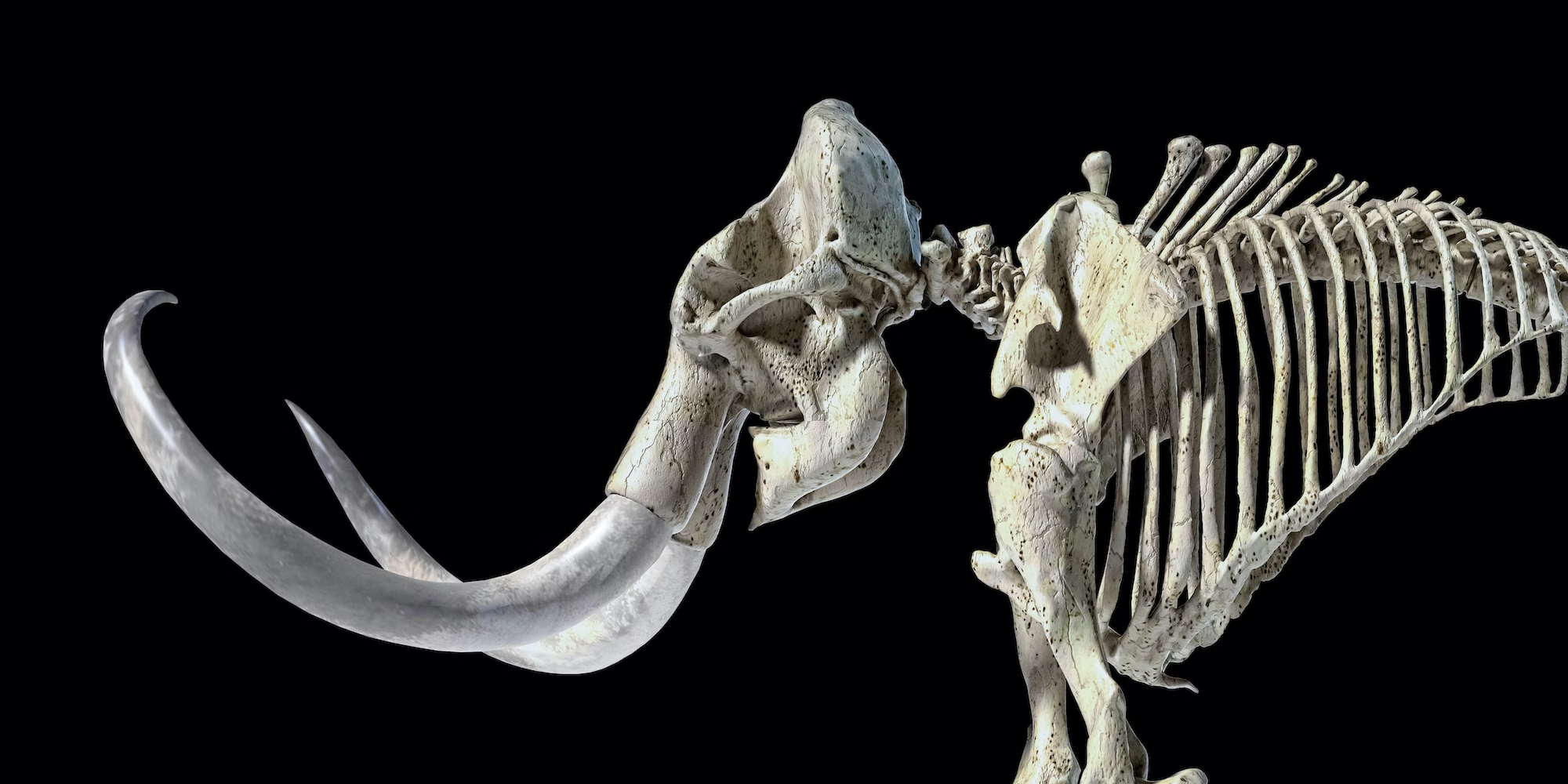
Though seals are probably the gateway to aquatic mammal fandom, connoisseurs of the genre all agree that otters are best in class. These furry powerhouses are not only capable of tender intimacy and novel tool usage, they often just seem to be having the best time ever. So it’s no wonder that they have been a recurring motif throughout art history. “The pose of raised paws signifies the otter’s adoration of the sun god when he rises in the morning,” reads the label on this Ancient Egyptian bronze statuette, dating to between 664 and 30 BCE. “In myth otters were attached to the goddess Wadjet of Lower Egypt, whose cult was centered in Buto, in the northern Delta.”
Continue reading “The CIA has just invested in the woolly mammoth resurrection business”
In June, BuzzFeed News published an investigative report based on leaked audio from more than 80 internal meetings at TikTok, the popular Chinese-owned video-sharing app. Emily Baker-White of BuzzFeed wrote that the recordings—along with fourteen statements from nine TikTok employees—showed that China-based employees of the company “repeatedly accessed nonpublic data about US users of the video-sharing app between September 2021 and January 2022.” As Baker-White pointed out, this directly contradicted a senior TikTok executive’s sworn testimony in an October 2021 Senate hearing, in which the executive said that a “world-renowned, US-based security team” decided who would have access to US customer data. The reality illustrated by BuzzFeed’s recordings, Baker-White wrote, was “exactly the type of behavior that inspired former president Donald Trump to threaten to ban the app in the United States.”
That proposed ban never materialized, although Trump did issue an executive order banning US corporations from doing business with ByteDance. Joe Biden struck down the order, but concerns about TikTok’s Chinese ownership remained. Biden asked the Commerce Department to launch national security reviews of apps with links to foreign adversaries, including China, and BuzzFeed’s reporting about TikTok’s access to US data fueled those concerns. According to the Times, Marco Rubio, the Republican senator from Florida, met with Jake Sullivan, Biden’s national security adviser, last year, and expressed concern about China’s impact on US industrial policy, including Beijing’s influence over TikTok. Sullivan reportedly said he shared those concerns.
On Monday, the Times reported that the Biden administration and TikTok had drafted a preliminary agreement to resolve national security concerns posed by the app. The two sides have “more or less hammered out the foundations of a deal in which TikTok would make changes to its data security and governance without requiring its owner, ByteDance, to sell it,” the Times wrote, while adding that the Biden government and TikTok’s owners were “still wrangling over the potential agreement.” According to the Times, US Deputy Attorney General Lisa Monaco has concerns that the terms of the deal are not tough enough on China, and the Treasury Department is skeptical that the proposed agreement can sufficiently resolve national security issues. The Biden administration’s policy towards Beijing, the Times wrote, “is not substantially different from the posture of the Trump White House, reflecting a suspicion of China.”
Note: This was originally published as the daily newsletter for the Columbia Journalism Review, where I am the chief digital writer
Continue reading “TikTok and Congress try to cut a deal”Zillow Gone Wild — one of my favourite Twitter accounts — posts some pretty amazing (and weird) homes, but this one really takes the cake: it is built into the side of a mountain, and is connected to a chain of caverns that the ad refers to as the “Cave of Chimes,” which appears to be part of Iron Mountain, near Glenwood Springs, Colorado. Most of the house is built into a wide opening in the rock face that looks out over a canyon.


Note: This was originally published as the daily newsletter at the Columbia Journalism Review, where I am the chief digital writer
In June, BuzzFeed News published an investigative report based on leaked audio from more than 80 internal meetings at TikTok, the popular Chinese-owned video-sharing app. Emily Baker-White of BuzzFeed wrote that the recordings—along with fourteen statements from nine TikTok employees—showed that China-based employees of the company “repeatedly accessed nonpublic data about US users of the video-sharing app between September 2021 and January 2022.” As Baker-White pointed out, this directly contradicted a senior TikTok executive’s sworn testimony in an October 2021 Senate hearing, in which the executive said that a “world-renowned, US-based security team” decided who would have access to US customer data. The reality illustrated by BuzzFeed’s recordings, Baker-White wrote, was “exactly the type of behavior that inspired former president Donald Trump to threaten to ban the app in the United States.”
That proposed ban never materialized, although Trump did issue an executive order banning US corporations from doing business with ByteDance. Joe Biden struck down the order, but concerns about TikTok’s Chinese ownership remained. Biden asked the Commerce Department to launch national security reviews of apps with links to foreign adversaries, including China, and BuzzFeed’s reporting about TikTok’s access to US data fueled those concerns. According to the Times, Marco Rubio, the Republican senator from Florida, met with Jake Sullivan, Biden’s national security adviser, last year, and expressed concern about China’s impact on US industrial policy, including Beijing’s influence over TikTok. Sullivan reportedly said he shared those concerns.
On Monday, the Times reported that the Biden administration and TikTok had drafted a preliminary agreement to resolve national security concerns posed by the app. The two sides have “more or less hammered out the foundations of a deal in which TikTok would make changes to its data security and governance without requiring its owner, ByteDance, to sell it,” the Times wrote, while adding that the Biden government and TikTok’s owners were “still wrangling over the potential agreement.” According to the Times, US Deputy Attorney General Lisa Monaco has concerns that the terms of the deal are not tough enough on China, and the Treasury Department is skeptical that the proposed agreement can sufficiently resolve national security issues. The Biden administration’s policy towards Beijing, the Times wrote, “is not substantially different from the posture of the Trump White House, reflecting a suspicion of China.”
Continue reading “TikTok and Congress try to cut a deal”Note: This is a version of my personal newsletter, which I send out via Ghost, the open-source publishing platform. You can see other issues and sign up here.
On September 7, 1674, Antonie Van Leeuwenhoek sent a letter to London’s Royal Society detailing an astonishing discovery. While he was examining algae from a nearby lake through his homemade microscope, a creature “with green and very glittering little scales,” which he estimated to be a thousand times smaller than a mite, had darted across his vision. Two years later, he followed up with another report so extraordinary that microbiologists today refer to it simply as “Letter 18”: Van Leeuwenhoek had looked everywhere and found what he called animalcules (Latin for “little animals”) in everything. This monumental discovery was not made by one of the 17th century’s great scientific minds such as Galileo or Isaac Newton, but by a secretive, self-taught Dutchman, who did it by handcrafting a lens 10 times more powerful than anything built before it.
On Monday, American ski mountaineer Hilaree Nelson and her partner Jim Morrison reached the summit of 26,781-foot Manaslu, the eighth-highest mountain in the world. Soon after the 49-year-old explorer began her descent on skis, she disappeared. On Wednesday, searchers recovered her body. Nelson, a National Geographic Explorer, had a distinctive sense of wanderlust that propelled her through more than 40 expeditions to 16 countries. Along the way, she explored some of the tallest mountains on the planet, often carrying her skis along with her for the ride down. In 2012, she became the first woman to summit two 8,000-meter peaks, Mount Everest and Lhotse, in a single 24-hour push. Six years later, Nelson returned to Lhotse to become the first to ski from its summit.