“The earth is degenerating today. Bribery and corruption abound. Children no longer obey their parents, every man wants to write a book, and it is evident that the end of the world is fast approaching.” – Assyrian tablet, c. 2800 BC
Note: Although I mostly posted this because I think it’s funny, I feel compelled to point out that there is no evidence a tablet like this ever existed or says what it claims to say, according to the folks at Quote Investigator: “This popular tale of a tablet listing eerily familiar societal criticisms has been in circulation for more than one-hundred years, and many versions of the supposed inscription have been described. The earliest instance known to QI of this prototypical claim was printed in the August 1908 issue of a periodical for bicyclists called “Bassett’s Scrap Book”. Despite that, however, it appears to be one of the oldest memes I have ever come across, which has to count for something!
Note: This is a version of my personal newsletter, which I send out via Ghost, the open-source publishing platform. You can see other issues and sign up here.
If you’re a hard-core nerd, you probably already know this, but for those who don’t, it’s a fascinating story: In 1941, Hedy Lamarr, a famous silent-film star, patented the spread-spectrum, frequency-hopping technology that became the underpinnings of cellular telecommunications and WiFi. She got the idea by combining her knowledge of radio-guided torpedoes (which she learned about from her husband, a German arms dealer) with an art project that a musician friend was working on, using player-piano rolls. Lamarr put the two together and came up with a way of sending secure radio signals by skipping from channel to channel in a pre-programmed sequence that could be secretly encoded (like a player-piano roll). Much more than just a pretty face!
Jim Henson’s twisted commercials for a Washington coffee company
Muppet creator Jim Henson is known for his family-friendly puppet TV shows, but before he created the Muppets or joined Sesame Street, he used a very Kermit-like puppet to create some hilariously dark TV spots for a Baltimore/Washington-based company called Wilkins Coffee. The local stations only had ten seconds for station identification, so the Muppet commercials had to be lightning-fast — essentially, eight seconds for the commercial pitch and a two-second shot of the product.” Within those eight seconds, a coffee enthusiast named Wilkins (who bears a resemblance to Kermit the frog) manages to shoot, stab, bludgeon or otherwise do grave bodily harm to a coffee holdout named Wontkins. Henson provided the voices of both characters.
The Cleo I device, the first really compact nuclear weapon, was delivered to Nevada Test Site for the Teapot Tesla test (7 kilotons), 1955, in two large suitcases. The guy carrying them — and eating lunch on one of them — is known only as “summer intern Tommy.” According to two books on the nuclear tests (“From Berkeley to Berlin” and “Nuclear Weapons Technology 101 for Policy Wonks”), the Cleo was split into two parts, each placed into a reinforced Samsonite suitcase.
Walt Arnold, a mechanical engineer responsible for putting the device together in Nevada, was assisted by a young man named Tommy, an electrical-engineering student from San Jose State University hired as a summer intern. Arnold ordered Tommy to manhandle two hefty suitcases out of the Laboratory’s assembly building and put them into the back of a ‘woody’ station wagon.
Then he gave the intern an Army-issue .45-caliber pistol and told him to guard the suitcases. The intern sat in the back of the vehicle with the Cleo, and a priceless photograph shows Tommy eating a sandwich while using one of the suitcases as a lunch table.
Ever since Elon Musk completed his problem-plagued $45 billion takeover of Twitter last month, there has been a steady stream of users, including a number of journalists, signing up for Mastodon, an open-source alternative to Twitter. Unlike Twitter, which is now 100-percent owned and controlled by Musk, no one controls Mastodon—or rather, everyone controls their own version of it. There are thousands of servers running the software, and each one chooses which servers it “federates” or exchanges information with. Don’t like the users who belong to a specific server? Just block them.
Unfortunately for some of the journalists who have joined the service, this mass blocking or “defederation” approach is now being applied to them. A server that caters specifically to journalists was set up recently by Adam Davidson, creator of NPR’s Planet Money podcast. At last count, the server, called journa.host, had about 1,300 users, including some prominent names in the US journalism community (Full disclosure: I have an account on Davidson’s server). Earlier this week, a Mastodon user pointed out that about 45 “instances” are blocking all content from members of journa.host (as of mid-November, that number is about 75).
Among the reasons given for blocking users from Davidson’s server are that it is allegedly populated by “click-bait/tabloid journalists” who “can be expected to collect, search through, and misinterpret anything you say with the goal to share this publicly to an as big audience as possible, enabling hate and harassment to any one as long as it gives them clicks.” Others who have blocked the server say that its members are likely to be “surveillance capitalists,” or “mainstream propagandists.”
Note: This is a version of my personal newsletter, which I send out via Ghost, the open-source publishing platform. You can see other issues and sign up here.
Egyptian mummies, long an object of modern fascination, seem to link us with the ancient past by preserving distinct human form. But this was not the true reason for the intricate process, according to a new British exhibition. The technique was instead a way of transforming dead dignitaries into a shape that the gods would accept. So, rather than ensuring the survival of individual features, mummification aimed to make the occupant of a tomb match a divine formula. “The idea that we inherited from the Victorians, that it was all done to keep a dead body just as it was in life, is not right,” said Campbell Price, a leading Egyptologist whose book will accompany the exhibition. “It is flawed, and we now believe it was intended to steer them towards divinity.”
We’ve hit an information-scaling threshhold
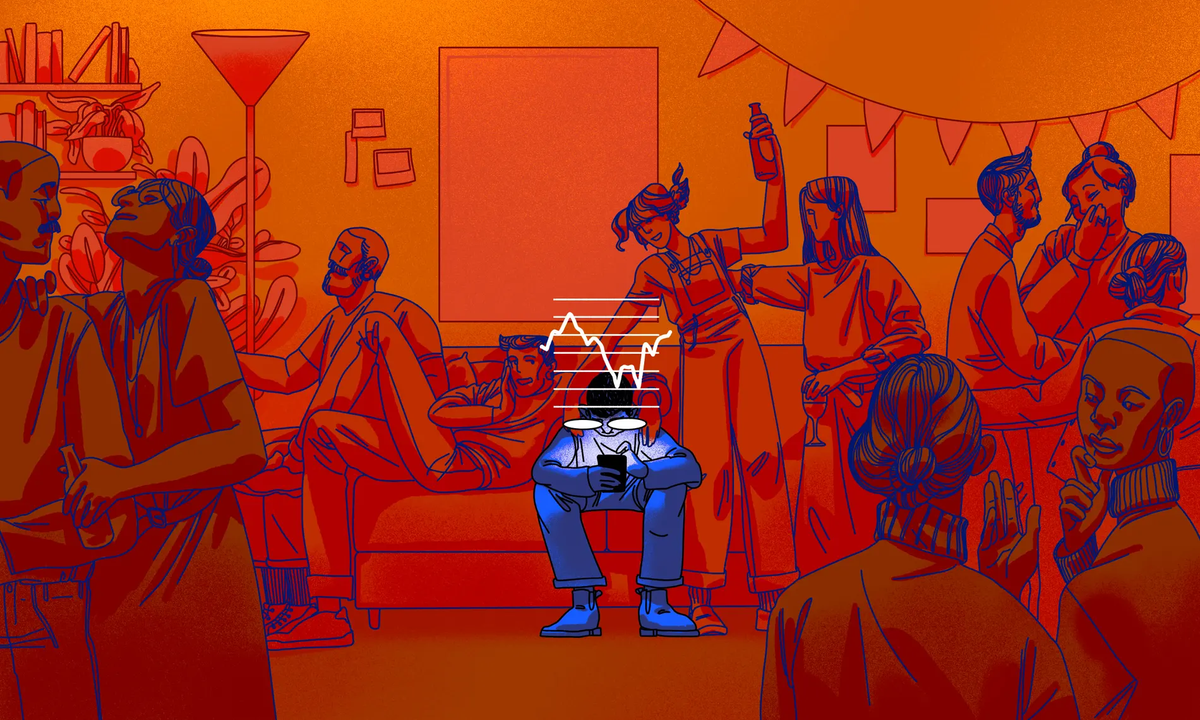
The internet has massively increased the complexity of our information environment, but hasn’t yet produced the tools to make sense of it. Old forms of social sensemaking—institutions, universities, democracy, tradition—all seem to be DDOS’d by the new information environment. They can’t keep up! We fractally fragment understandings, then algorithmically amplify the confusion to maximize engagement. The most effective coordination mechanisms left seem to be memes and conspiracy theories. Paul Tillich posits that when social sensemaking fails to keep up with reality, we experience it as a kind of mass neurosis. Everybody has a crisis of meaning at the same time. Life stops making sense. Anyone living through 2016 onward knows that feeling. The Permaweird.
Note: This is a version of my personal newsletter, which I send out via Ghost, the open-source publishing platform. You can see other issues and sign up here.
I usually link to print articles here, but I’m making an exception for this short documentary, which was produced by Madonna and premiered at the Tribeca Film Festival. It’s from 2019, but I only just came across it. It’s about a man from Malawi named Lazarus Chigwandali, who grew up as an albino in a country where albinos are often treated with fear and suspicion — and in some cases actually murdered or mutilated, since there is a belief that albino body parts have magic powers. As we learn about his life, we see Lazarus playing his homemade guitar/banjo — which is made out of a box, with some crude wooden pegs, a nail and some wire for strings. He has since recorded an album.
These three Canadian brothers stole $230 million from investors
Josh Cartu and his brothers collected race cars, hung out with celebrities and bounced between luxury villas in private jets. But behind that playboy façade was a dark secret: thousands of jilted investors and an army of investigators on their tail. While the money poured in, Josh described his lifestyle in lavish detail to Forbes and the Financial Times. He explained his fortune in half-truths: he said he made his money creating online gaming software, which he licensed to casinos around the world, and that he amplified his earnings by buying and selling real estate and investing in crypto. What he left out was that much of his income came from fleecing unsuspecting people of their savings.
It’s hard to believe now, with the snow that’s in the forecast, but only a week or so ago I spent a great couple of hours paddling around in my shorts and a T-shirt, on Lovesick Lake — a small lake to the northeast of Toronto, near Peterborough. The lake was like glass. And I was hot! Hard to believe, almost halfway through November. I realize this is probably a result of climate change and global warming, etc. but I can’t say I didn’t enjoy it anyway 🙂
I came across this documentary — which was produced by Madonna and premiered at the Tribeca Film Festival in 2019 — embedded in a New Yorker article about something completely different. It’s about a man from Malawi named Lazarus Chigwandali, an albino man in a country where albinos are often treated with fear and suspicion — and in some cases actually murdered or mutilated, since there is a belief among some supertitious folk in Africa that albino body parts can be used in witchcraft.
Lazarus talks about growing up as an albino, and how he was treated as a child, and also how he hopes to help change the way his kind are looked at in Malawi. Two of his children are also albino, as was his brother Paul, who died of skin cancer — something albinos are prone to. While we are learning about his life, we see Lazarus playing his homemade guitar/banjo — which is made out of a box, with some crude wooden pegs, a nail and some wire for strings — and shakers tied to his feet, as he sits on a box in the street.
Note: This is a version of my personal newsletter, which I send out via Ghost, the open-source publishing platform. You can see other issues and sign up here.
The Naturalis Biodiversity Center, a popular natural history museum in the Netherlands, owns about 40,000 prehistoric objects collected in the 19th century by the Dutch physician Eugène Dubois from the banks of the Bengawan Solo, a river in Java, and at other digs in Indonesia. The highlight is a femur and skull fragment from Java Man, the first known specimen of Homo erectus, long considered a “missing link” between humans and apes. But the remains are not just a museum centerpiece, they are also the focal point of an international restitution battle: Indonesia has said it wants the femur and skull fragment back. But even that is just the beginning — ultimately, it says it wants the entire Dubois Collection returned. Which raises the question: Who owns prehistory?
Asteroid that created earth’s largest crater was much bigger than some thought
About two billion years ago, an asteroid hurtled toward Earth, crashing into the planet near present-day Johannesburg, creating the largest crater we know of. Based on the size of the crater, scientists previously estimated the asteroid was about 15 kilometers (approximately 9.3 miles) wide, travelling at a velocity of 15 kilometers per second. New research, however, indicates the asteroid may have been much bigger—almost twice as large. New geological evidence shows that the crater is larger than previously thought, and based on those measurements, the asteroid was likely about 20 to 25 kilometers wide, and travelled at a velocity of 15 to 20 kilometers per second. That’s larger than the asteroid that killed off the dinosaurs 66 million years ago.
Note: This is a version of my personal newsletter, which I send out via Ghost, the open-source publishing platform. You can see other issues and sign up here.
The human body and brain undergo a series of profound changes over the course of dying. Some of these, like elevated anxiety and agitation, can be difficult for the patient, family members, and caregivers. In the most extreme cases, the only recourse is palliative sedation, which is essentially putting a person into an induced coma. This option can be a heartbreaking loss for the patient and family members. By contrast, based on several recent clinical trials, there is evidence that a single treatment with psilocybin produces lasting and significant reduction in anxiety and depression for people with a terminal diagnosis. The data to date show that using psilocybin in a controlled therapeutic environment decreases death anxiety and increases quality of life.
This annual wild sheep roundup in Iceland is more fun than it sounds
Iceland’s annual rettir, as it’s called, is a roundup of wild sheep that takes place across Iceland each September. The centuries-old tradition involves sorting these woolly creatures after a summer of free-grazing on mountain grasses and berries in the highlands, where natural predators are nonexistent. These days, the rettir has morphed from its roots as a necessity among farmers into a multigenerational celebration that includes family and friends, with many (including lots of children) taking part in the activity, while others watch from the sidelines snapping photos and enjoying steaming cups of coffee.
Note: This is a version of my personal newsletter, which I send out via Ghost, the open-source publishing platform. You can see other issues and sign up here.
Please don’t lick the toads. The U.S. National Park Service made the plea last week to help protect the Sonoran desert toad, which secretes a toxin unlike any other found on the planet. The effects of the toxin depend on your perspective. Some call it a dangerous poison that can make people sick and can even be deadly. Others call it the “God molecule,” a hallucinogenic so potent it is often compared to a religious experience. But keep your tongue off the toads, the Park Service said in a Facebook post. “As we say with most things you come across in a national park, whether it be a banana slug, unfamiliar mushroom, or a large toad with glowing eyes in the dead of night, please refrain from licking,” it said.
The epic hunt to track down the Dark Web’s biggest kingpin
On the morning of July 5, 2017, a gray Toyota Camry slowly turned into the cul-de-sac of a quiet neighborhood in Bangkok—a moderately upscale subdivision on the western edge of the city. Behind the wheel sat a woman who went by the nickname Nueng. A slight, 46-year-old agent of the Royal Thai Police with a boyish haircut, she wore a white polo shirt and black pants, because both she and her partner were undercover. For more than two years, law enforcement agents from around the world had been hunting the dark-web mastermind known as Alpha02, a shadowy figure who oversaw millions of dollars a day in narcotics sales and had built the largest digital drug and crime bazaar in history.
This kind of thing fascinates me — the former mistress of the ex-king of Spain, Juan Carlos IV (who abdicated due under a cloud of corruption allegations) is Corinna zu Sayn-Wittgenstein, whose full name is Corinna zu Sayn-Wittgenstein-Sayn. She got the name by marrying Casimir, who is supposedly a prince of Sayn-Wittgenstein-Sayn. And what is that, you might ask? It was a kind of mini-country that existed briefly in the 1600s as part of what is now Germany, and the hereditary rulers of it continue to call themselves princes, and presumably have wealth they inherited (stole) from when they ran things.
Why does it have the name Sayn in it twice? Great question. Who knows! There are actually a dozen or so other former fiefdoms with Sayn in the name, including Sayn-Homburg, Sayn-Wittgenstein-Berleburg. and Sponheim-Sayn. Classic European nonsense really. On a related note, I remember coming across a photo of Donald Trump when he was president, meeting with a couple who were described as the “Prince and Princess of the Kingdom of the Two Sicilies.” And what was that? Same kind of thing — a thing that existed in the 1800s for about 50 years, including Sicily and Naples, before Italy became a country.
The best part is that Prince Carlo, who says he’s the hereditary leader of this imaginary country, is only one of two claimants to the non-existent throne (which also apparently gives him control over the Sacred Military Constantinian Order of Saint George, whatever that is). Apparently after the death of the last uncontested head of the house, Ferdinand Pius, in 1960, the non-existent throne was supposed to go to his nephew, Infante Alfonso, son of Ferdinand’s brother Carlos. But Carlos married María de las Mercedes, Princess of Asturias, who was the heir presumptive to the throne of Spain, in 1901.
Note: This is a version of my personal newsletter, which I send out via Ghost, the open-source publishing platform. You can see other issues and sign up here.
Alex Hurst writes for The Guardian: “I kept the news in all the way out of the terminal until halfway through the airport parking garage, which was as far as I could hold it. It was the kind of announcement that was too voluminous for the inside of a car, so I blurted it out to my parents in the open air in a half-mumble, half-laugh. “So, umm, I turned $15,000 into $1.2m in the past year.” They both stopped and looked at me, silent. “Are you on drugs?” my mom finally asked, anxiety flashing across her face. I opened up my investment account on my iPhone and showed her the balance. “Are you one of those … GameStop people?” she said.
An endless conversation between Werner Herzog and Slavoj Zizek
Have you ever wondered what it might be like to listen in on a never-ending dialogue between infamous Bavarian director Werner Herzog – perhaps one of the most philosophical of the major filmmakers – and Slovenian philosopher Slavoj Zizek? Well, now you can. Or at least you can approximate it, thanks to an art project that used machine learning to come up with virtual versions of Herzog and Zizek. When you open the site, you are taken to a random point in the dialogue, and every day, a new segment of conversation is added. In theory, says the site “this conversation could continue until the end of time.”
Note: This is a version of my personal newsletter, which I send out via Ghost, the open-source publishing platform. You can see other issues and sign up here.
From a Rolling Stone article in 1984, about the strange events surrounding the death of Jerry Lee Lewis’s fifth wife: “The killer was in his bedroom, behind the door of iron bars, as Sonny Daniels, the first ambulance man, moved down the long hall to the guest bedroom to check the report: “Unconscious party at the Jerry Lee Lewis residence.” Sonny probed with his big, blunt fingers at a slender wrist: it was cold. Then he moved the covers back, his thick hand on the woman’s neck where the carotid pulse should be: The neck retained its body warmth, but no pulse. The Killer was there within seconds. If he’d been sleeping on the big canopied bed, he must have been sleeping in his bathrobe.”
Everyone hates daylight saving time – so why do we still have it?
Pushing back the clock in winter is meant to give schoolchildren more morning sunlight on the way to school and to ensure more daylight during working hours for construction workers and other outdoor laborers. Whether the benefits in safety and energy savings outweigh the costs of shifted sleep cycles, drowsy commuters and confusion from misaligned clocks is a long-running source of disagreement. But 59 percent of people across the U.S., according to a poll from March, support ditching the clock change in favor of permanent daylight saving time.