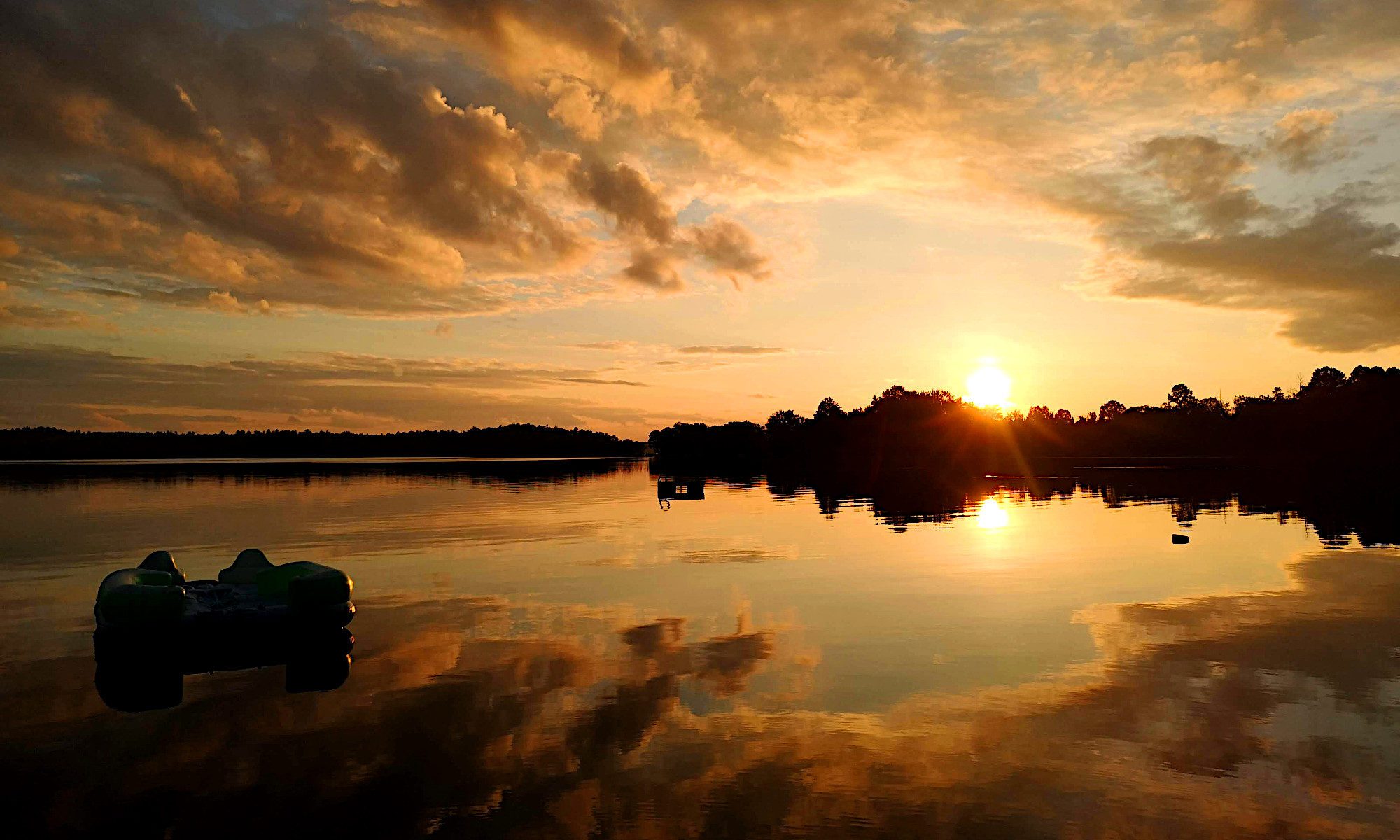
Moonrise over the mountains

When we were in Calgary for the weekend, we went out to visit the mountains, because I still miss them, and we had a great lunch at the Banff Centre for the Arts and then took a drive up to Lake Minnewanka, just in time to catch the last rays of the sun on the mountains and the moon rising above the peaks.

Physicists created a tiny black hole inside a quantum computer

Note: This is a version of my personal newsletter, which I send out via Ghost, the open-source publishing platform. You can see other issues and sign up here.

A group of researchers announced on Wednesday that they had simulated a pair of black holes in a quantum computer and sent a message between them through a shortcut in space-time called a wormhole. Physicists described the achievement as another small step in the effort to understand the relation between gravity, which shapes the universe, and quantum mechanics, which governs the subatomic realm of particles. “This is important because what we have here in its construct and structure is a baby wormhole,” said Maria Spiropulu, a physicist at the California Institute of Technology and the leader of a consortium called Quantum Communication Channels for Fundamental Physics. “And we hope that we can make adult wormholes and toddler wormholes step-by-step.”

What it’s like to be a food writer when you can taste everything you see

Julia Skinner writes about what it’s like to write about food with synesthesia, which in her case means that everything she looks at has a taste: “Some people hear colors. Some taste sounds. A few, like me, can taste everything around us. The condition of synesthesia—experiencing one or multiple senses through another sense—offers a world informed by the intersection of our experiences rather than the boundaries between them, a world that exists between sense and sensation. In my world, I experience flavors on my palate unique to each thing I see. Here are a few of the flavors I experience: The road itself “tastes” kind of like blueberry Pop Rocks, while the light poles are almost like smooth, cool black licorice. Each building has its own flavor, some informed by the color of the facade—Argosy’s, with its dark-stained wood, is caramelly.”

Continue reading “Physicists created a tiny black hole inside a quantum computer”

The death of the key change in modern music

Note: This is a version of my personal newsletter, which I send out via Ghost, the open-source publishing platform. You can see other issues and sign up here.

Almost one quarter of the Number One hits on the American music charts between 1958 and 1990 were in multiple keys, like Michael Jackson’s “Man in the Mirror,” where the key change is one of the most memorable things about the song. At the 2 minute and 52 second mark, Jackson sings “change” backed by a gospel choir, as the key moves from G major to G# major. More than half of the key changes found in number one hits between 1958 and 1990 employ this change. You can hear it on “My Girl,” “I Wanna Dance With Somebody,” and “Livin’ on a Prayer,” among many others. What’s odd is that after 1990, key changes are employed much less frequently, if at all, in number one hits.

My great-great-grandfather and an American tragedy

Michael Allen investigates his personal connection to the Sand Creek Massacre of 1864, in which hundreds of Native Americans were brutally murdered, including women and children: “As dawn broke over the eastern Colorado prairie on Nov. 29, 1864, a hastily assembled regiment of volunteer U.S. cavalrymen approached their target: a peaceful village of Cheyenne and Arapaho wintering on Sand Creek. Somewhere in the ranks rode my great-great-grandfather William M. Allen. His commander, a fiery former Methodist preacher, reminded the men of previous Indian attacks against settlers. “Now boys,” he thundered, “I shan’t say who you shall kill, but remember our murdered women and children.” Over the next nine hours, the troopers slaughtered up to 200 people, at least two-thirds of them noncombatants.

Continue reading “The death of the key change in modern music”

Own a Scottish island with its own castle for $2 million

Note: This is a version of my personal newsletter, which I send out via Ghost, the open-source publishing platform. You can see other issues and sign up here.

The Isle of Vaila is a 757-acre emerald chunk of land topped with a herd of heritage sheep and a 17th-century mansion built to resemble a castle. The longtime owners are selling for $2 million. The island is one of roughly 100 islands in the Shetland Islands archipelago off the northern coast of Scotland, and was the home of Richard Rowland and his wife for 30 years. It may seem remote, but it is only a 10-minute boat ride to the mainland. The 17th-century manor house—designed to mimic a castle—that comes with the island has six bedrooms and modern amenities, as well as a few secret doors and hidden gardens. The island has been inhabited since the Bronze Age.

The weird and true story of Moondog

In the 1960s in New York City lived a blind, often homeless man with a long, flowing beard, who dressed as a Viking and stood sentinel at the corner of West 54th Street and Sixth Avenue in midtown Manhattan. He sold his poetry and performed on custom-built percussion. He’d been there since the ’40s; the Viking gear came later, so that people would stop telling him he looked like Jesus—and to help him cope with navigating a metropolis where metal parking signs were at head level. Most people thought he was mentally ill; they didn’t know he was an acclaimed American composer, recording for notable labels, praised by Leonard Bernstein and Duke Ellington, and who even made a children’s record with a pre-stardom singer named Julie Andrews.

Continue reading “Own a Scottish island with its own castle for $2 million”

The murder that roiled the world of cycling

Note: This is a version of my personal newsletter, which I send out via Ghost, the open-source publishing platform. You can see other issues and sign up here.

One morning in June, before dawn, cyclists began gathering at an intersection in Emporia, Kansas, to remember the victim of a recent murder. The early-morning cyclists were about to begin a memorial ride for Moriah Wilson, one of the sport’s leading athletes. She had died three weeks earlier, in what Amy Charity described as “the most tragic and shocking thing that’s ever happened in this small community.” In May, VeloNews described Wilson as “the winningest woman in the American off-road scene.” Hours after that article appeared online, Wilson was fatally shot, in an apartment in Austin, Texas. The crime was soon understood to be connected to her friendship with Colin Strickland, the biggest star that gravel racing has yet produced.

Twins born from embryos that were frozen 30 years ago

In April 1992, Vanessa Williams’ “Save the Best for Last” topped the Billboard 100, Arkansas Gov. Bill Clinton was running for the White House, “Who’s the Boss?” aired its final episode, and the babies born to Rachel and Philip Ridgeway a couple of weeks ago were frozen as embryos. Born on October 31, Lydia and Timothy Ridgeway were born from what may be the longest-frozen embryos to ever result in a live birth, according to the National Embryo Donation Center. The previous known record holder was Molly Gibson, born in 2020 from an embryo that had been frozen for nearly 27 years. Molly took the record from her sister Emma, whose embryo had been frozen for 24 years.

Continue reading “The murder that roiled the world of cycling”

A 48,500-year-old virus has been revived from Siberian permafrost

Note: This is a version of my personal newsletter, which I send out via Ghost, the open-source publishing platform. You can see other issues and sign up here.

Seven types of viruses that have lain frozen in the Siberian permafrost for thousands of years have been revived. The youngest of these viruses were frozen for 27,000 years, while the oldest was on ice for 48,500 years old – making it the most ancient virus resuscitated so far. “48,500 years is a world record,” says Jean-Michel Claverie at Aix-Marseille University in France, who did the work with his colleagues. Scientists are thawing out these ancient viruses in order to assess their impacts on public health. As the permafrost melts in the Northern Hemisphere, the thawing ice releases tons of trapped chemicals and microbes.

French man wins the right to not have to be ‘fun’ at work

France’s highest court has ruled that a man fired by a Paris-based consulting firm for allegedly failing to be “fun” enough at work was wrongfully dismissed. The man, referred to in court documents as Mr. T, was fired from Cubik Partners in 2015 after refusing to take part in seminars and weekend social events that his lawyers argued, according to court documents, included “excessive alcoholism” and “promiscuity.” Mr. T had argued that the culture in the company involved “humiliating and intrusive practices” including mock sexual acts and crude nicknames. In its judgment this month, the Court of Cassation ruled that the man was entitled to “freedom of expression” and that refusing to participate in social activities was a “fundamental freedom.”

Continue reading “A 48,500-year-old virus has been revived from Siberian permafrost”

Some of the things you think you know are wrong

This is a partial list of some common misconceptions that I enjoy — there’s a much longer list here.

  • The common image of Santa Claus (Father Christmas) as a jolly old man in red robes was not created by The Coca-Cola Company as an advertising gimmick. Santa Claus had already taken this form in American popular culture and advertising by the late 19th century, long before Coca-Cola used his image in the 1930s

  • The Chinese word for “crisis” (危机) is not composed of the symbols for “danger” and “opportunity”; the first does represent danger, but the second instead means “inflection point” (the original meaning of the word “crisis”).[79][80] The myth was perpetuated mainly by a campaign speech from John F. Kennedy

  • The word “crap” did not originate as a back-formation of British plumber Thomas Crapper’s aptronymous surname, nor does his name originate from the word “crap”. The surname “Crapper” is a variant of “Cropper”, which originally referred to someone who harvested crops. The word “crap” ultimately comes from Medieval Latin crappa
Continue reading “Some of the things you think you know are wrong”

This company is trying to recreate extinct animals

Note: This is a version of my personal newsletter, which I send out via Ghost, the open-source publishing platform. You can see other issues and sign up here.

The Jurassic Park movies made it pretty obvious that bringing ancient creatures back to life was a very bad idea, but one company is trying to do it anyway. Sara Ord works at a “de-extinction” company called Colossal Biosciences, where they are trying to bring back everything from an extinct dog-like marsupial called a thylacine, or “Tasmanian tiger,” to a full-blown woolly mammoth. But Colossal isn’t using DNA from a fly trapped in amber, the way they did in the movies – Ord and her team are trying to use gene editing to gradually change the DNA of one creature to make it more like the other. So one project consists of trying to turn Asian elephants into something resembling a woolly mammoth, by adding genes for cold resistance and thick red hair.

Not that long ago, people ate ground-up mummies as medicine

For several hundred years, peaking in the 16th and 17th centuries, many Europeans, including royalty, priests and scientists, routinely used medicines containing human bones, blood and fat for everything from headaches to epilepsy. Mummies were stolen from Egyptian tombs, and skulls were taken from Irish burial sites. Gravediggers robbed and sold body parts. “The question was not, ‘Should you eat human flesh?’ but, ‘What sort of flesh should you eat?’ ” says one researcher. Skull was one common ingredient, taken in powdered form to cure head ailments. Thomas Willis, a 17th-century pioneer of brain science, brewed a drink for apoplexy, or bleeding, that mingled powdered human skull and chocolate. And King Charles II of England sipped “The King’s Drops,” his personal tincture, containing human skull in alcohol.

Continue reading “This company is trying to recreate extinct animals”

Inside the beautiful, brutal world of bonsai

Note: This is a version of my personal newsletter, which I send out via Ghost, the open-source publishing platform. You can see other issues and sign up here.

In the winter of 2002, a young American named Ryan Neil joined an unusual pilgrimage: he and several others flew to Tokyo, to begin a tour of Japan’s finest collections of bonsai trees. The next-youngest adult in the group was fifty-seven. Like many Americans of his generation, Neil had discovered bonsai through the “Karate Kid” films. The karate instructor, Mr. Miyagi, practices the art of bonsai, and in Neil’s young mind it came to represent a romantic ideal: the pursuit of perfection through calm discipline. He decided he wanted to apprentice to a bonsai master in order to learn the secrets of the art – but it turned out to be harder than he could have ever imagined.

Inside the world’s most top secret museum

It is the only place a visitor can see the gun found with Osama bin Laden when he was killed, next to Saddam Hussein’s leather jacket. Welcome to the CIA’s secret in-house museum. Located inside the US intelligence agency’s headquarters in Langley, Virginia, the collection has just been renovated to mark the agency’s 75th anniversary. Among the 600 artefacts on display are the kinds of cold war spy gadgets you might expect – a ‘dead drop rat’ in which messages could be hidden, a covert camera inside a cigarette packet, a pigeon with its own spy-camera and even an exploding martini glass. But there are also details on some of the CIA’s more famous and even recent operations.

Continue reading “Inside the beautiful, brutal world of bonsai”

She fell nearly two miles, got up and walked away

Note: This is a version of my personal newsletter, which I send out via Ghost, the open-source publishing platform. You can see other issues and sign up here.

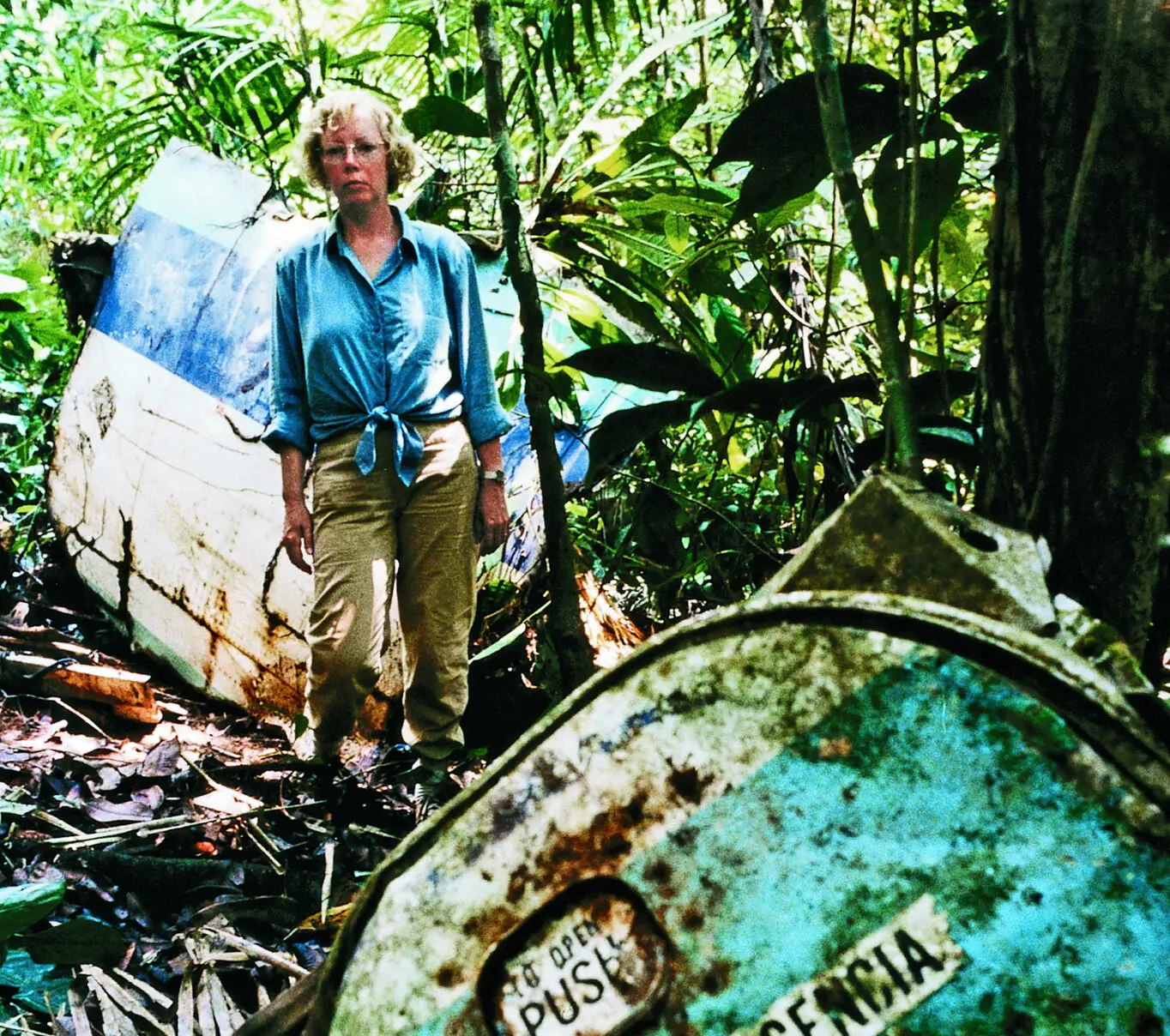
Just before noon on Christmas Eve in 1971, Juliane Diller, then 17, and her mother boarded a flight in Lima. The flight was supposed to last less than an hour. About 25 minutes after takeoff, the plane flew into a thunderstorm, and the teenager watched a bolt of lightning strike the right wing. She remembers the aircraft nose-diving. As she plunged, the three-seat bench into which she was belted spun like the winged seed of a maple tree toward the jungle canopy. She blacked out, only to regain consciousness alone, under the bench seat, in a torn minidress — on Christmas morning. She had fallen some 10,000 feet, nearly two miles. It took her 11 days to walk out of the jungle.
Gran Abuelo in Chile could be the world’s oldest living tree

In a secluded valley in southern Chile, a lone alerce tree stands above the canopy of an ancient forest. Green shoots sprout from the crevices in its thick, dark trunks, huddled like the pipes of a great cathedral organ, and water streams down its lichen-streaked bark on to the forest floor from bulbous knots in the wood. “It was like a waterfall of green, a great presence before me,” remembers the climate scientist Jonathan Barichivich, 41, of the first time he encountered the Gran Abuelo, or “great-grandfather”, tree as a child. “I never thought about how old the Gran Abuelo could be,” he said. However, Barichivich’s recent groundbreaking study has shown the 100ft giant could be the world’s oldest living tree, at more than 5,400 years old.

Continue reading “She fell nearly two miles, got up and walked away”
Oldest known sentence discovered, on a lice comb

Note: This is a version of my personal newsletter, which I send out via Ghost, the open-source publishing platform. You can see other issues and sign up here.

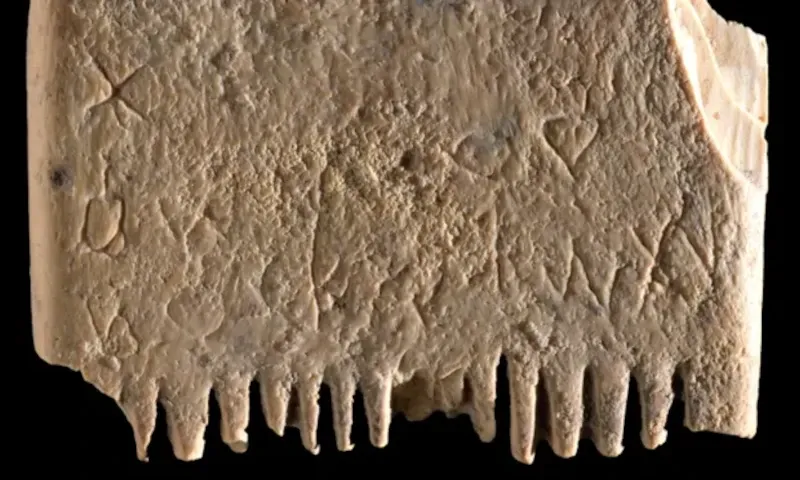
It’s a simple sentence that captures the hopes and fears of modern-day parents as much as the bronze age Canaanite who owned the doubled-edged ivory comb on which the words appear. Believed to be the oldest known sentence written in the earliest alphabet, the inscription on the luxury item reads: “May this tusk root out the lice of the hair and the beard.” It was unearthed in Lachish, a Canaanite city state in the second millennium BCE and the second most important city in the kingdom of Judah. Efforts to obtain an age for the comb from carbon dating proved futile, but researchers believe it was made around 1700 BCE.

How Ukraine blew up a key Russian bridge

Last month, a truck laden with explosives drove across the Kerch bridge, a critical artery connecting Russia with its troops fighting in southern Ukraine. A train traveled alongside. The truck detonated at a critically vulnerable spot — about halfway between a pair of reinforced concrete piers, maximizing damage to the roadway. The explosion was large enough to rupture fuel tanks in the passing train, setting it on fire. The detonation was also well placed to pull an even larger portion of the roadway off its joints and into the sea. The attack, which killed four people, was a critical moment in the war.

Continue reading “Oldest known sentence discovered, on a lice comb”

The introspective echoes of a journey

Blues come dressed like introspective echoes of a journey.
And yes, I have searched the rooms of the moon on cold summer nights.
And yes, I have refought those unfinished encounters.
      Still, they remain unfinished.
And yes, I have at times wished myself something different.

The tragedies are sung nightly at the funerals of the poet;
The revisited soul is wrapped in the aura of familiarity. 

— from I Have Folded My Sorrows by Bob Kaufman

Oldest known sentence discovered, on a lice comb

Note: This is a version of my personal newsletter, which I send out via Ghost, the open-source publishing platform. You can see other issues and sign up here.

It’s a simple sentence that captures the hopes and fears of modern-day parents as much as the bronze age Canaanite who owned the doubled-edged ivory comb on which the words appear. Believed to be the oldest known sentence written in the earliest alphabet, the inscription on the luxury item reads: “May this tusk root out the lice of the hair and the beard.” It was unearthed in Lachish, a Canaanite city state in the second millennium BCE and the second most important city in the kingdom of Judah. Efforts to obtain an age for the comb from carbon dating proved futile, but researchers believe it was made around 1700 BCE.

How Ukraine blew up a key Russian bridge

Last month, a truck laden with explosives drove across the Kerch bridge, a critical artery connecting Russia with its troops fighting in southern Ukraine. A train traveled alongside. The truck detonated at a critically vulnerable spot — about halfway between a pair of reinforced concrete piers, maximizing damage to the roadway. The explosion was large enough to rupture fuel tanks in the passing train, setting it on fire. The detonation was also well placed to pull an even larger portion of the roadway off its joints and into the sea. The attack, which killed four people, was a critical moment in the war.

Continue reading “Oldest known sentence discovered, on a lice comb”

An investigation into the rise of what some call “Pretendians”

Note: This is a version of my personal newsletter, which I send out via Ghost, the open-source publishing platform. You can see other issues and sign up here.

In June of 2018, artist Gina Adams took the stage at Dartmouth College in New Hampshire. She talked nervously about being selected as summer artist-in-residence for the department of studio art, then greeted the audience in Anishinaabemowin, and talked about her Ojibwe grandfather. The following year, the Emily Carr University of Art & Design in Vancouver posted five positions, and Adams was hired for one of them. She was described as “a contemporary Indigenous hybrid artist of Ojibwa Anishinaabe and Lakota descent.” In March of 2021, however, a Twitter account called NoMoreRed­Face posted a tweet that read: “Would you FAKE a residential school survivor backstory to sell $35,000 quilts and land a tenure track professorship in Aboriginal art?” The tweet then named Gina Adams, saying that “research suggests” she did just that.

How China’s imperial palace, the Forbidden City, became a public museum

When Zhu Di, the third emperor of the Ming dynasty, ordered a grand palace built in Beijing in 1406, he probably didn’t envision vast crowds of commoners lining up to enter every weekend. The palace, which became known as the Forbidden City, was the exclusive residence of 28 emperors from the Ming and Qing dynasties. It became a museum in 1925, and the story of how it got there is filled with intrigue and disaster — at one point, administrators decided to make an inventory of all the priceless artifacts in the palace’s collection, but many couldn’t be found. Hearing the news, many of the eunuchs who used to be employed in the city panicked, since they often smuggled treasures from the palace and sold them to antique dealers in the city. In order to cover their tracks, they set the palace on fire.

Continue reading “An investigation into the rise of what some call “Pretendians””