
Christmas snow
Links that interest me and maybe you
What follows is from Griefbacon, the great email newsletter from writer Helena Fitzgerald. It’s ostensibly about why the movie “The Lion In Winter” is a great Christmas movie, but it is really about love and family and relationships.
“The Lion in Winter doesn’t really take place in the 12th century, any more than a stripper dressed up as a fireman can really save you from a fire. It takes place in 1968, and it takes place right now. It takes place in this week of this year, and this week of last year and next year, too, as crowds gather at train stations and airports, as cars clog up the highways between the cities and the suburbs to drive the interstate backward from adulthood to childhood. It takes place in every home where someone is setting the table, in every grocery store where someone is standing in line, in every apartment where a new couple is anxiously getting ready to host one or both of their parents, and in every group chat where siblings are resentfully double-tapping heart and “haha” reactions.
In a castle in France in 1183, where indoor heating hasn’t yet been invented, a bunch of family members, all of whom are to one degree or another estranged, gather for Christmas dinner, to bring up old grudges, and whine behind one another’s backs. We hate people and we love them at the same time, we have the same arguments and we don’t resolve anything, we’re vicious and petty to the people in our families and nothing comes out of it except agreeing to do it all again next year.
If the only thing that keeps us alive sometimes is spite, well, maybe there’s a romance to that too. Love is the haunted house that costs forty dollars but guarantees that you’ll die. We show up to the arcade again in the sunlight of whatever next day comes, scrubbed clean of the blood from the night before, ready to get our hearts smashed up by the people we have loved the longest, even if that’s just ourselves, feeling so lucky to get one more chance at it. We love people and we die of it, but it’s also what keeps us alive.”
Note: This is a version of my personal newsletter, which I send out via Ghost, the open-source publishing platform. You can see other issues and sign up here.
As I’ve probably mentioned a number of times, I write and publish a daily email newsletter called “When The Going Gets Weird,” (based on a quote by Hunter S. Thompson). I used to publish it through a service called Nuzzel, which was founded by Jonathan Abrams (who also coincidentally founded Friendster, one of the first social networks). I switched to Revue when it bought Nuzzel, and then Twitter bought Revue (and is now shutting it down) so I decided to try Ghost, an open-source solution for newsletter publishing. I’ve also been experimenting with Substack, although I’m less enamored of a centralized entity like that for mostly philosophical reasons.
Lots of people use their newsletters to write thoughtful essays about the issues of the day, and I admire that, but I chose to take a different path. I decided to focus on interesting and/or offbeat stories, inspired by early bloggers like Jason Kottke. I used to collect these stories and just tweet them out or write a blog post about them here on my personal blog, but eventually there were so many that I thought I could do a newsletter. Maybe I will run out at some point, or the supply will dry up and I will have to decrease the frequency, but for now at least I am doing it daily.
Anyway, I thought I would collect some of my favourite stories from the past year, for those who haven’t been able to read them all and those who read them but want to be reminded:.
Librarian keeps the love notes and doodles she finds written in books:
“In her 20 years as a librarian, Sharon McKellar has unearthed all kinds of left-behind personal items — from doodles to recipes to old photographs — nestled between the pages of returned library books. She carefully removes them and reads them, then she scans and uploads them to the library’s website after scrubbing any personal identifying information.”
Photo of nearest star turns out to be slice of chorizo:
“A photo tweeted by a famous French physicist supposedly of Proxima Centauri by the James Webb Space Telescope was actually a slice of chorizo. Étienne Klein, research director at France’s Alternative Energies and Atomic Energy Commission posted the photo last week, claiming it showed the closest star to the sun. Klein told French news outlet Le Point that his intention had been to educate people about fake news online.”
Continue reading “The best of my “When The Going Gets Weird” newsletter”The term “Luddite” has come to mean someone who is opposed to technology, because the conventional wisdom about the movement of the same name is that it was started by artisanal weavers who hated the new automated looms that were stealing their jobs. But this isn’t really an accurate description of what happened. According to historians who specialize in the period, the Luddites were artisanal weavers who resisted the arrival of factory-style manufacturing. But it wasn’t the technology that bothered most of them per se — it was that the factories using the new looms paid workers less and treated them poorly. In other words, it was more of a labour issue than a technological one.
“Luddism,” the sociologist Donald MacKenzie writes, “was neither mindless, nor completely irrational, nor completely unsuccessful.” The Luddites took their name from Ned Ludd, allegedly a stocking maker in the 1700s who destroyed two machines by throwing his clogs into them. But there’s no evidence that a person by that name actually existed, which raises the possibility that the story was created by an earlier group of activists opposed to the mechanization of labour.
“[T]he Luddites did indeed understand the advantages which mechanization would bring,” Raymond Boudon, a sociologist at Paris-Sorbonne University, wrote in his Analysis of Ideology. But “their machine-wrecking was an attempt to show the owners of the new textile mills that they were a force to be reckoned with, that they had a ‘nuisance value’. By acting in this way, their main objective was to gain concessions from the employers.”

Note: This is a version of my personal newsletter, which I send out via Ghost, the open-source publishing platform. You can see other issues and sign up here.
On a dark and stormy night in May this year, exactly 125 years to the day that Bram Stoker published the definitive vampire novel, two people pored over a document more than 500 years old in a room in Transylvania, signed by Dracula himself. Gleb and Svetlana Zilberstein’s mission? To extract genetic material from the letters written by Vlad Dracula, the historical inspiration for Stoker’s vampiric count, left there by his sweat, fingerprints and saliva. And from that, the pair – who have been dubbed “protein detectives” – can build up a picture of not only the physical makeup of the Wallachian warlord, who became known as Vlad the Impaler for his practice of displaying his enemies on stakes, but also the environmental conditions in which he lived.
Until about a decade ago, an average of 80 to 100 satellites per year were launched into varying orbits. Some reentered Earth’s atmosphere quickly, while others will remain in orbit for decades. This now seems quaint. In the last five years, driven largely by the rise of communications networks such as SpaceX’s Starlink and a proliferation of small satellites, the number of objects launched into space has increased dramatically. In 2017, according to the United Nations Office for Outer Space Affairs, the annual number exceeded 300. By 2020, the annual number of objects launched exceeded 1,000 for the first time, and this year, the total number of satellites launched has already surpassed 2,000.
Continue reading “A 550-year-old clue to the life of Vlad the Impaler”Note: This is a version of my personal newsletter, which I send out via Ghost, the open-source publishing platform. You can see other issues and sign up here.
A long-lost avant garde painting was returned to Hungary after nine decades thanks to a sharp-eyed art historian, who spotted it being used as a prop in the Hollywood film Stuart Little. Gergely Barki, a researcher at Hungary’s national gallery in Budapest, noticed Sleeping Lady with Black Vase by Róbert Berény as he watched television with his daughter Lola. “I couldn’t believe my eyes when I saw Bereny’s long-lost masterpiece on the wall behind Hugh Laurie. I nearly dropped Lola from my lap,” said Barki. The painting disappeared in the 1920s, but Barki recognised it immediately even though he had only seen a faded black-and-white photo from an exhibition in 1928. A former set designer had bought it for next to nothing in an antiques shop in Pasadena.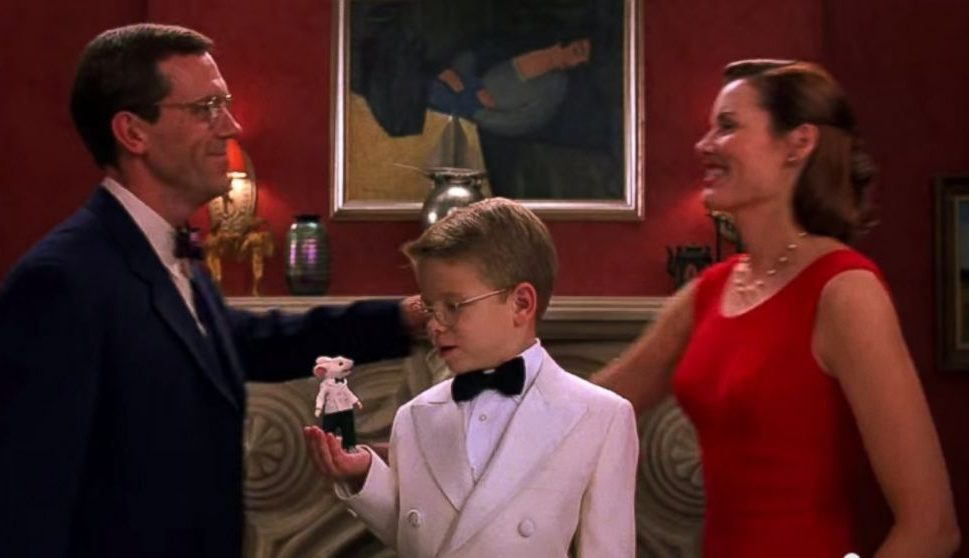
A Sanskrit grammatical problem which has perplexed scholars since the 5th Century BC has been solved by a University of Cambridge PhD student. Rishi Rajpopat, 27, decoded a rule taught by Panini, a master of the ancient Sanskrit language who lived around 2,500 years ago. Sanskrit is mostly spoken in India by an estimated 25,000 people, the university said. Mr Rajpopat said he had “a eureka moment in Cambridge” after spending nine months “getting nowhere”. “I closed the books for a month and just enjoyed the summer – swimming, cycling, cooking, praying and meditating,” he said. “Then, begrudgingly I went back to work, and, within minutes, as I turned the pages, these patterns starting emerging, and it all started to make sense.”
Continue reading “Stuart Little leads art historian to long-lost Hungarian masterpiece”Note: This is a version of my personal newsletter, which I send out via Ghost, the open-source publishing platform. You can see other issues and sign up here.
On the witness stand, Stu Bykofsky confessed that he didn’t really want a going-away party. After 47 years as a journalist at The Philadelphia Inquirer and Philadelphia Daily News, Bykofsky found out that the editors at the Inquirer were taking his beloved column away from him. Two days before his scheduled departure, Bykofsky found out that regardless of his wishes, his colleagues were hellbent on throwing a going away party for him.It was at this official going-away party in the newsroom, on the Friday afternoon of July 12, 2019, that Inga Saffron, the Inquirer’s Pulitzer-Prize winning architecture critic, trashed Byko as an ethically-challenged, crusty old misogynist who had “a taste for child prostitutes in Thailand.”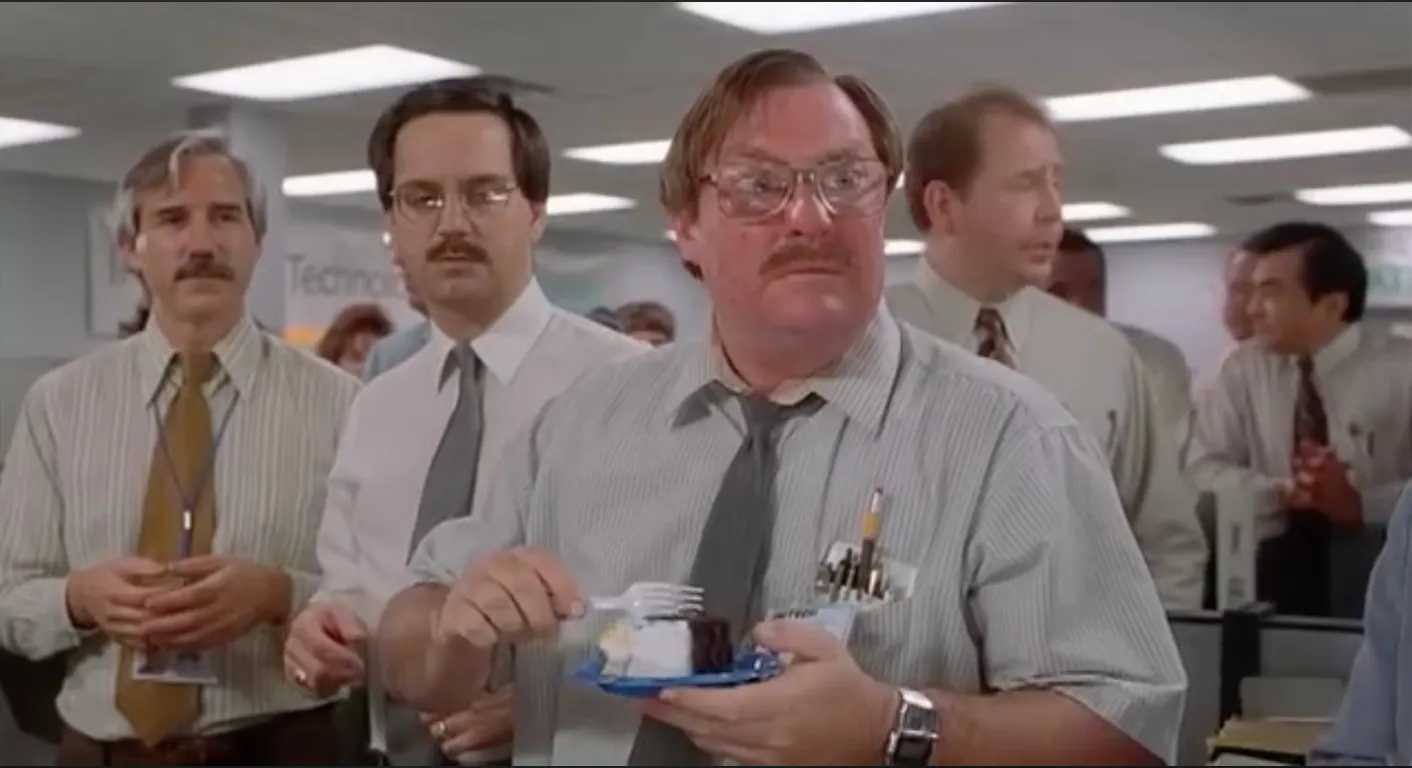
Under peeling paint and missing cornices, Essie Gregory stood on the steps of the huge, ramshackle mansion in the heart of the Bedford-Stuyvesant neighborhood of Brooklyn with a small group of visitors. Ms. Gregory, 74, opened the front door, giving her guests a rare glimpse inside the New York headquarters of the United Order of Tents Eastern District No. 3. And despite the rundown nature of the building, it was still possible to imagine it as it once was. For generations, the Tents — members of a secret society of Black women whose 19th-century founders were enslaved — held meetings upstairs, cooked meals in the kitchen and performed secret ceremonies in the parlor.
Continue reading “The office party from hell”Note: This is a version of my personal newsletter, which I send out via Ghost, the open-source publishing platform. You can see other issues and sign up here.
Director James Cameron wants to put an end to a debate that has gone on since the movie first hit theaters, exactly 25 years ago today. Namely, could Rose have scooched over to make room for Jack on that floating hunk of wood, keeping him out of the freezing water and saving his life? Many fans have argued with zeal that both Jack and Rose could have plausibly fit on the door. Cameron disagreed, saying in that episode that “Jack has to die,” and he has long dismissed the idea that the question is even up for debate. However, the director says he is hoping to close the door on the dispute for good, with a scientific approach.
Ada Lovelace, known as the first computer programmer, was born on Dec. 10, 1815, more than a century before digital electronic computers were developed. Lovelace has been hailed as a model for girls in science, technology, engineering and math. But Lovelace – properly Ada King, Countess of Lovelace after her marriage – drew on many different fields for her innovative work, including languages, music and needlecraft, in addition to mathematical logic. Lovelace drew on all of these and more when she wrote her computer program – which in reality was a set of instructions for a mechanical calculator, the so-called Analytical Engine designed by inventor Charles Babbage.
Continue reading “James Cameron wants to put the Titanic debate to rest”
Note: This is a version of my personal newsletter, which I send out via Ghost, the open-source publishing platform. You can see other issues and sign up here.
As a teenager, Judith Love Cohen went to a guidance counselor to talk about her future and professed her deep love of math. But the counselor had other advice. She said: “I think you ought to go to a nice finishing school and learn to be a lady.” Instead, Cohen pursued her dreams. She studied engineering at USC and later helped design the program that saved the Apollo 13 astronauts. In retirement, Cohen produced books encouraging young girls to follow in her footsteps. Although her son, Jack Black, is certainly the most famous of the family, his mother has a remarkable story all her own.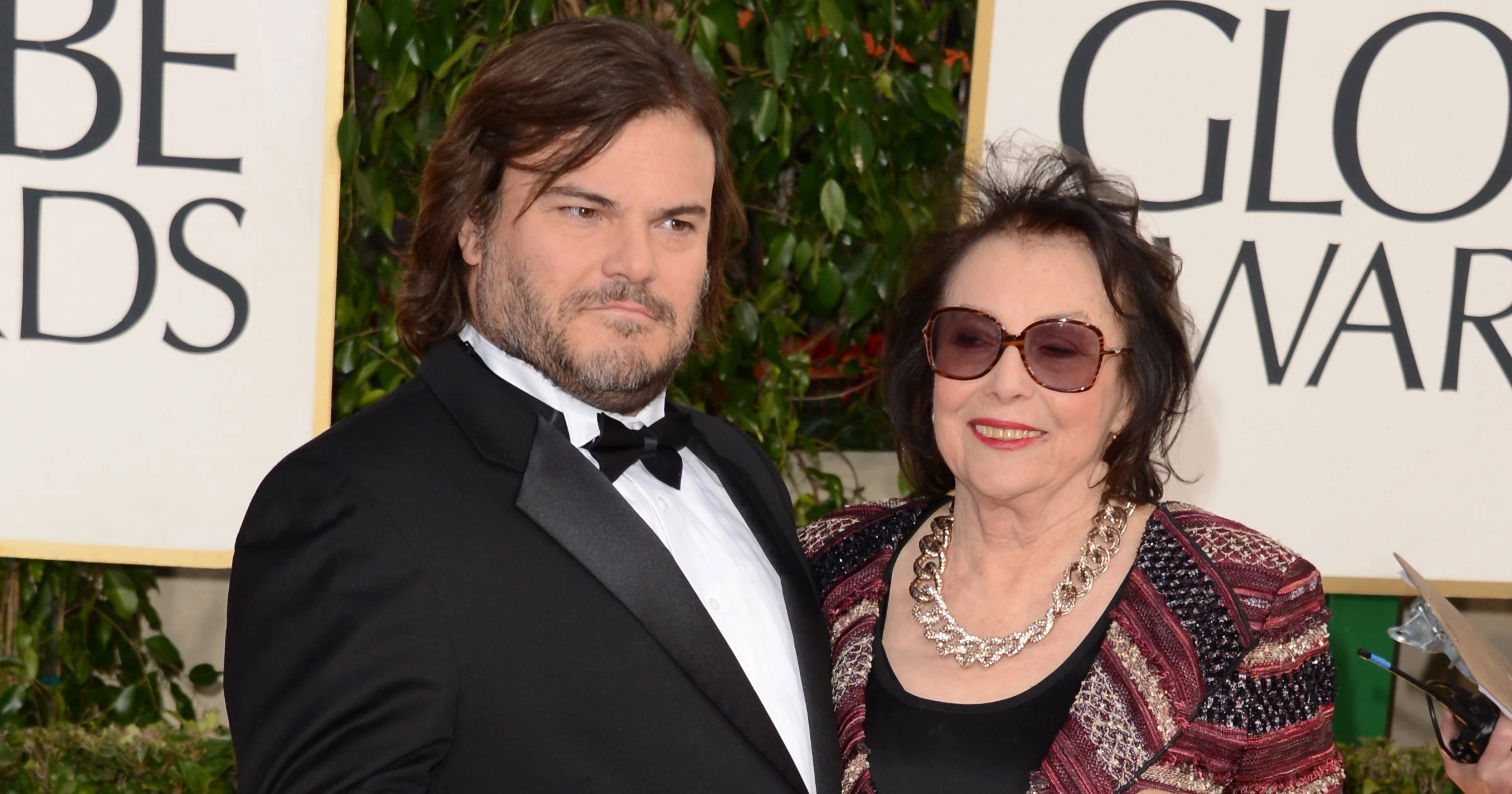
The Cotswold mansion where Evelyn Waugh wrote Brideshead Revisited has sold at auction for £3.16m despite buyers being warned that sitting tenants – who are paying a weekly rent of £5 a week – are refusing to leave the property. Piers Court, at Stinchcombe, a village about halfway between Bristol and Cheltenham, was sold to an unnamed bidder in an online auction on Thursday after the owner defaulted on a loan secured against the eight-bedroom, six-bathroom property. The sale went ahead despite the tenants, who described themselves as “Evelyn Waugh superfans”, refusing to vacate the property which they rent for just £250 a year in a deal with its previous owner, Jason Blain, a former BBC executive who bought the property for £2.9m in 2019.
Continue reading “How Jack Black’s mother helped save NASA’s Apollo 13 mission”I haven’t written much about Twitter here, because it’s exhausting even trying to keep up with what’s happening, to be quite honest. I suspected that Elon’s ownership might be a train wreck, but I didn’t expect what happened — a train wreck in which each car of the train is a dumpster, and they are all on fire. And Elon is standing on top of the train, laughing maniacally and pouring gasoline everywhere. Is he a chaos agent, like Donald Trump, where he just enjoys watching things burn? Perhaps. Or it’s possible that he — like a number of tech bros, including Marc Andreessen — believes that everything, including journalism and morality, needs to be torn down and rebuilt by technology.
An Elon fanboy scoffed at criticism of his handling of Twitter recently, and said it would be easy as pie for a guy who puts rockets into space, etc. But the reality is that putting rockets into space or building an electric car is light-years easier than running a social network like Twitter, especially if you choose to rewrite the rules of public behavior and reinvent moderation at the same time as you are trying to convert the platform from advertising to subscription revenue. It’s not that it’s hard technically, but it involves all kinds of tradeoffs, and all of these have to do with human beings, the most complex mechanisms ever.

Note: This is a version of my personal newsletter, which I send out via Ghost, the open-source publishing platform. You can see other issues and sign up here.
The Artemis I mission, an unmanned flight to the moon and back, just returned with some spectacular photos. The mission was a test to see whether NASA could get a capsule to the moon and back, before the space program tries to send astronauts back there. As veteran blogger Jason Kottke points out, visual imaging has been an integral part of even the earliest space missions — strap a camera to a spacecraft, let the people see what space looks like, and they will be inspired. And the photographs returned by Artemis I’s Orion spacecraft are certainly inspirational. So Jason picked his favorites, and I agree they are stunning.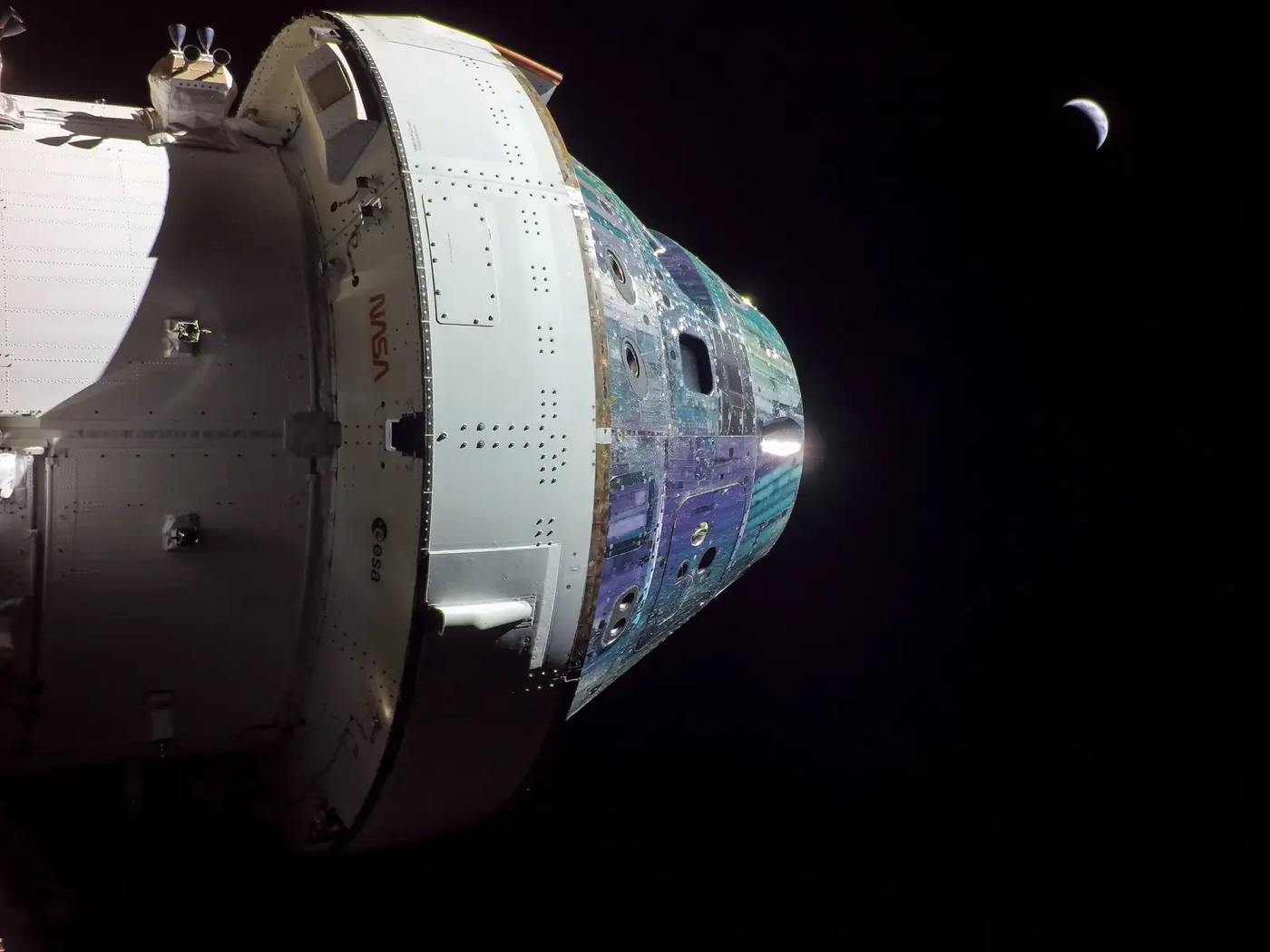
If you’ve never experienced the Bulwer-Lytton Ficton Contest, you are in for a real treat. As the website says, it’s the place where www stands for wretched writers welcome. Here’s the grand prize winner: “I knew she was trouble the second she walked into my 24-hour deli, laundromat, and detective agency, and after dropping a load of unmentionables in one of the heavy-duty machines (a mistake that would soon turn deadly) she turned to me, asking for two things: find her missing husband and make her a salami on rye with spicy mustard, breaking into tears when I told her I couldn’t help—I was fresh out of salami.”
Continue reading “The best images from NASA’s mission to the moon”Note: This is a version of my personal newsletter, which I send out via Ghost, the open-source publishing platform. You can see other issues and sign up here.
It gives me great pleasure to link to this excellent piece on the underlying weirdness of Canada’s national creature, the beaver. “There is an element of the sacred in the beaver, if only in its deep weirdness. One million years ago, beavers the size of bears roamed North America. They pose an evolutionary puzzle, like the platypus, or birds, which share some DNA with dinosaurs. When they dive, they seem more like marine mammals than terrestrial species, more seal than rodent. Their dexterous forepaws look startlingly human with their five nimble fingers and naked palms. They groom their lustrous fur with catlike fastidiousness. Their mammalian beauty ends abruptly in the gooselike hind feet, each as wide as the beaver’s head. The feet are followed by a reptilian tail, which, it has been observed, looks like the result of some terrible accident, run over by a tractor tire, the treads leaving a pattern of indentations that resemble scales.”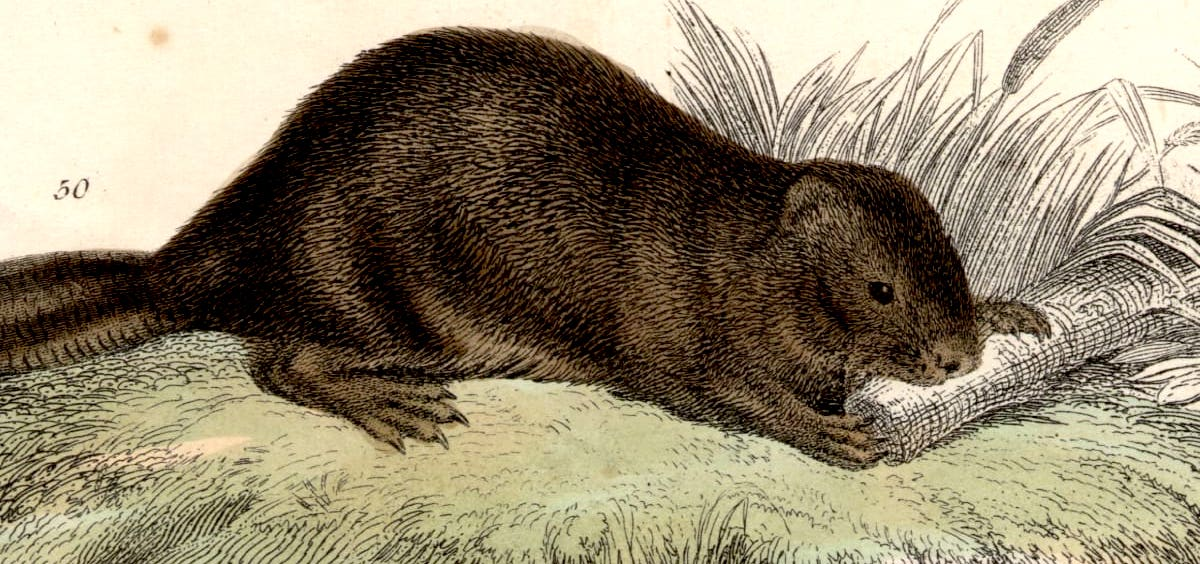
Sasha DiGiulian writes about how she and her team conquered a 16-metre big wall called Rayu, in northern Spain. “During dinner, the bartender told us that a local climber we’d been coordinating with wagered we’d need to be rescued by helicopter from the mountain within the first week of our expedition. ‘The mountain is very dangerous,’ the local climber said. ‘Maybe it would be a good idea for you to try the easier routes on the left side.’ Men have underestimated my climbing abilities for as long as I can remember. I signed my first sponsorship deal when I was 12 years old, a decade and a half ago, and I’ve been on enough trips since to anticipate that some guy is always going to assume he knows more than me, or suggest an easier climb. I’ve learned to tune it out. Yet something felt different in Posada de Valdeón.”
Continue reading “Beavers: Part bear, part bird, part monkey, part lizard”Note: This is a version of my personal newsletter, which I send out via Ghost, the open-source publishing platform. You can see other issues and sign up here.
Scientists studying fusion energy at Lawrence Livermore National Laboratory in California announced on Tuesday that they had crossed a long-awaited milestone in reproducing the power of the sun in a laboratory. That sparked public excitement as scientists have for decades talked about how fusion, the nuclear reaction that makes stars shine, could provide a future source of bountiful energy. The result announced on Tuesday is the first fusion reaction in a laboratory setting that actually produced more energy than it took to start the reaction. “This is such a wonderful example of a possibility realized, a scientific milestone achieved, and a road ahead to the possibilities for clean energy,” said Arati Prabhakar, the White House science adviser.
Benj Edwards recalls how he started a BBS – an online bulletin board system – when he was just 11 years old, and some of the lessons that he learned while running it for the next 30 years: “Thirty years ago last week, my BBS came online for the first time,” he writes. “I was only 11 years old, working from my dad’s Tandy 1800HD laptop and a 2400 baud modem. The Cave BBS soon grew into a bustling 24-hour system with over 1,000 users. After a seven-year pause between 1998 and 2005, I’ve been running it again ever since. Here’s the story of how it started and the challenges I faced along the way.”
Continue reading “Scientists report nuclear fusion breakthrough”Note: This is a version of my personal newsletter, which I send out via Ghost, the open-source publishing platform. You can see other issues and sign up here.
Sarah Marshall asks why we are so fascinated with serial killers: “How are we even to know that Samuel Little had a photographic memory if almost all the women in his drawings look so much like one another? Why did the seventy-nine-year-old man who happened to be the most prolific murderer in American history also happen to have one of the most impressive memories in American history? And if you’ve committed just a handful of murders—an unremarkable number, one that won’t even get you on the leaderboard—then wouldn’t it be, well, not a terrible idea to confess to a few dozen more? What if it makes you into something special, and helps the police close unsolved cases all over the country, and makes a great story for the people on TV, who will all want to talk to you now?”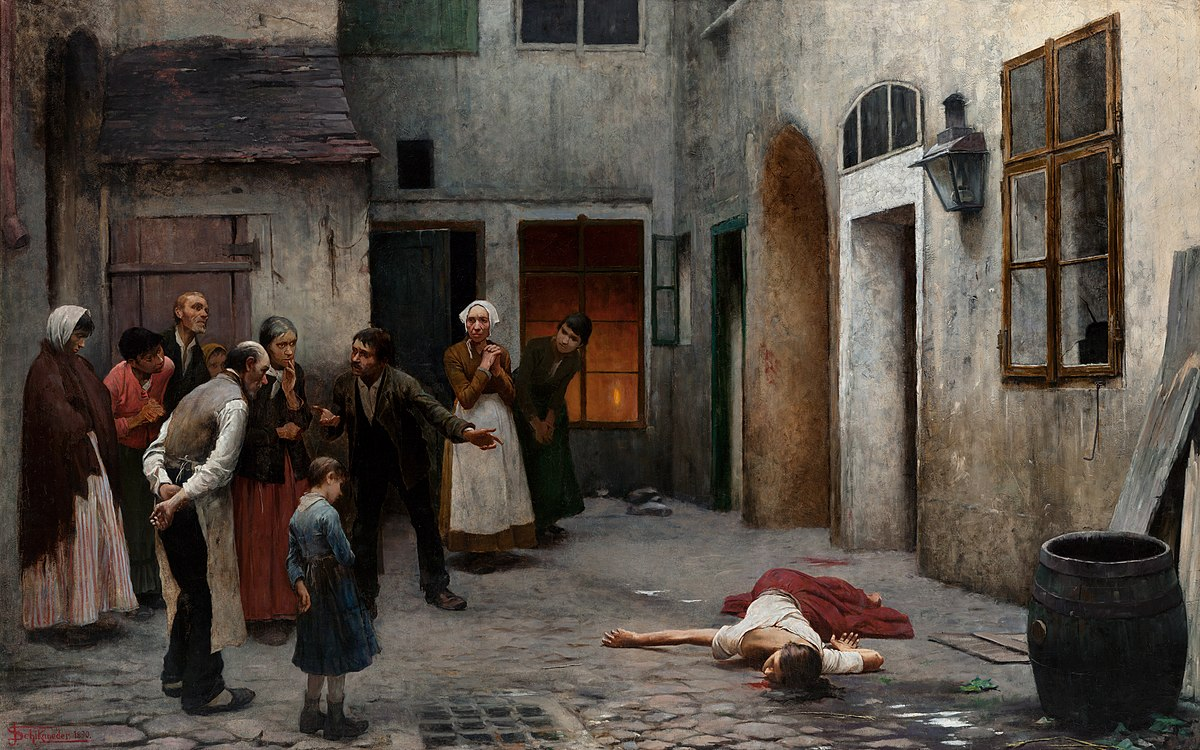
Bathing in massive public baths was once a hallmark of what it meant to be Roman. But in the late Roman Empire, many of these baths closed to the public or were turned into other structures altogether. New research by Jordan Pickett, an archaeologist and environmental historian at the University of Georgia, reveals that a combination of social, financial, and environmental challenges contributed to the decline of large public bathing complexes in Rome and elsewhere in the Empire. While popular myths for the disappearance of Roman bathing once focused on Christian opposition to nudity, his research focuses on social and environmental history as pivotal ways for understanding the decline in large-scale bathing in the late Roman Empire.
Continue reading “The serial-killer media industrial complex”