Hi there. My name is Mathew Ingram, and until recently I was the chief digital writer for the Columbia Journalism Review in New York. I live in Canada. I post things I've written for work here, but also a daily newsletter called When The Going Gets Weird, which you can find here, and one about technology and culture called The Torment Nexus.
My editor’s note on yesterday’s version of the When The Going Gets Weird newsletter (which is here or at newsletter.mathewingram.com) got so long, and triggered so many conversations on Mastodon and elsewhere that I thought I would create a separate post about it for anyone who is interested. If debates about the technical and/or ethical challenges involved in getting around paywalls doesn’t interest you, please feel free to move on 🙂
Update: I got into a private debate about this with a prominent author and journalist on Mastodon, and I’ve included some of that below
In a nutshell, I’ve been including workarounds for paywalled articles for a little while now in the newsletter. When I first started it, I just included links and if there was a paywall then I figured people would either ignore it, or try an incognito browser or use some other workaround of their own. But the more I thought about it, the more that approach seeemed thoughtless and inconsiderate, so I started using two tools to produce links that got through paywalls.
One of them is called 12ft.io, and its motto is (or used to be) “Show me a ten-foot paywall, I’ll show you a 12-foot ladder.” But that tool stopped working for me recently — there’s just an error message from something called Vercel. As it turns out, Vercel is a hosting provider, and they shut off 12ft.io’s access to the site because of an alleged breach of their Terms of Service. I found this out because someone pointed me to a post on Twitter from the founder, Tom Millar, which says that he had no notice of the shutdown.
Editor’s Note: Sorry to interrupt your reading, but I thought I would mention something that will hopefully make things easier for some of you. In yesterday’s newsletter there was a story titled “The grift, the Indian prince, and a shocking twist,” from a subscription newsletter called AirMail (founded by Graydon Carter, former editor of Vanity Fair). Since the newsletter has a hard paywall, I included a link that got around the payall, using a service called 12ft.io. But that service seems to have shut down, at least temporarily, and so has another I used to use called archive.today. So I have saved a copy of that story to a shared folder on Instapaper, which you should be able to access here. For the Bloomberg story included here, that method didn’t work, so I have copied the entire story to my website, and included a link to the page.
As a professional journalist, I realize this is somewhat hypocritical of me. Don’t paywalls help support journalism? Perhaps. But then, Graydon Carter is extremely wealthy, and so is Bloomberg, so I don’t feel that bad about getting around their hard paywall for a single story. They could make their paywalls more porous, and give readers who come only once in a while a free story, but they choose not to do that. So I am helping them 🙂 And I am promoting their work as well, by allowing you to read these stories. That’s my rationale, anyway. I’m planning to do this for other similar stories in the future – either putting them in the shared Instapaper folder or posting them to my site (which no one ever goes to). If the links don’t work or you can’t access the shared folder, let me know and I will find another way. And now, back to the links!
Update: 12ft.io was apparently taken down without warning by its hosting service, for alleged terms of service violations.As for archive.today (also at archive.is, archive.ph etc.) it doesn’t work for me on Chrome but it does in Firefox. If you have problems with any of my links please let me know and I will find a way to get the article to you!
From Daniel Villareal at LGBTQ Nation: “Flames shot through the crowded Up Stairs Lounge as bartender Buddy Rasmussen opened the front door to see who had been ringing the downstairs buzzer. Someone had lit the popular bar’s stairwell carpet on fire, and it burned its way up the wooden stairs into the bar, quickly igniting the lounge’s red wallpaper, curtains, and posters of Burt Reynolds naked on a bearskin rug and Olympic swimmer Mark Spitz wearing his seven gold medals, a star-spangled Speedo, and a smile. Some patrons saw the blaze and ran for the nearest exits or down the stairwell, emerging with their clothes on fire as neighbors raced to pour pitchers of water onto them. Many were too shocked by the exploding blaze to move. The June 24, 1973, conflagration, likely set by a sex worker ejected from the New Orleans bar earlier that night, killed 32 people and injured at least 15 others.”
Lululemon founder is racing to cure the rare disease destroying his muscles
From Ari Altstedter for Bloomberg: On the outskirts of Silicon Valley, at a private clinic inside a two-story office building near the highway, Chip Wilson was undergoing an experimental medical procedure to retain the use of his legs. Wilson is 68 and has a net worth of $7.1 billion, thanks largely to his development in the late 1990s of a type of yoga pants he could sell to women for $100 a pair. The company he founded, Lululemon Athletica, more or less invented an apparel category, athleisure, which it continued to dominate even after he stepped away in 2013 following some particularly insensitive comments about how the pants looked on some women’s bodies. Unknown to the public, throughout his long career Wilson was watching his own body slowly waste away.”
Note: This is a version of my personal newsletter, which I send out via Ghost, the open-source publishing platform. You can see other issues and sign up here.
Note: This is a Bloomberg story that I included in my email newsletter When The Going Gets Weird (which you can find here), as a way of allowing readers behind the Bloomberg paywall. I am not monetizing this story in any way, and if asked I will take it down.
On the outskirts of Silicon Valley, at a private clinic inside a two-story office building near the highway, Chip Wilson was undergoing an experimental medical procedure to retain the use of his legs. Wilson is 68 and has a net worth of $7.1 billion, thanks largely to his development in the late 1990s of a type of yoga pants he could sell to women for $100 a pair. The company he founded, Lululemon Athletica, more or less invented an apparel category, athleisure, which it continued to dominate even after he stepped away in 2013 following some particularly insensitive comments about how the pants looked on some women’s bodies.
Unknown to the public, throughout his long career Wilson was watching his own body slowly waste away from muscular dystrophy. Lying supine as Matt Cook, the clinic’s proprietor, ran an ultrasound wand over his legs, Wilson surveyed the damage the disease had done. Where images of healthy muscles are largely black, with only specks and striations of white indicating fat, Wilson’s were heavily marbled.
“His muscles kind of look like Kobe beef,” Cook remarked. It was the result of inflammation, the first stage of the muscle death wrought by the disease. Cook, who started off as an anesthesiologist before getting into regenerative medicine, has been using two experimental techniques to stem or even reverse the process. The one Wilson was undergoing involves injecting plasma distilled from his own blood into the inflamed areas, a treatment long used by professional athletes to overcome injury but unproven against muscular dystrophy. The other involves injections of stem cells, which secrete a protein Cook thinks might work even better. Because stem cell therapies are restricted in the US, Wilson’s twice-yearly sessions require him to fly from Vancouver, where he lives, to Tijuana, Mexico, stopping to pick up Cook on the way.
From Hannah Ghorashi for Air Mail: “My husband received a call from his acquaintance Amar Singh—a women’s-rights activist, art patron, film producer, and Indian prince—and said he had a wild story to tell him. It concerned Amar’s relationship with a young Swedish woman named Liza-Johanna Holgersson, whom he had met online. They had broken up on August 6 when, he claimed, he had discovered she had been living a secret life. She had, he said, been a grifter, a con woman, taking him and multiple other men for a ride. But what I thought would be a cautionary tale of online dating among the 0.1 percent became something else: by the end of my research, I had twice been offered bribes to stop writing Amar’s story. Both times they had been offered to me by Amar.”
How many ghost sightings were due to carbon-monoxide poisoning?
From Jeanette Winterson for The Paris Review: “There’s a theory I like that suggests why the nineteenth century is so rich in ghost stories and hauntings. Carbon monoxide poisoning from gas lamps. Street lighting and indoor lighting burned coal gas, which is sooty and noxious. It gives off methane and carbon monoxide. Outdoors, the flickering flames of the gas lamps pumped carbon monoxide into the air—air that was often trapped low down in the narrow streets and cramped courtyards of industrial cities and towns. Indoors, windows closed against the chilly weather prevented fresh oxygen from reaching those sitting up late by lamplight. Low-level carbon monoxide poisoning produces symptoms of choking, dizziness, paranoia, including feelings of dread, and hallucinations. Where better to hallucinate than in the already dark and shadowy streets of Victorian London? Or in the stifling interiors?”
Note: This is a version of my personal newsletter, which I send out via Ghost, the open-source publishing platform. You can see other issues and sign up here.
From Jon Schuppe for NBC: “Seven months of searching for her lost son brought Bettersten Wade to a dirt road leading into the woods, past an empty horse stable and a scrapyard. The last time she’d seen her middle child, Dexter Wade, 37, was on the night of March 5, as he left home with a friend. She reported him missing, and Jackson police told her they’d been unable to find him, she said. It wasn’t until 172 excruciating days after his disappearance that Bettersten learned the truth: Dexter had been killed less than an hour after he’d left home, struck by a Jackson police car as he crossed a nearby interstate highway. Police had known Dexter’s name, and hers, but failed to contact her, instead letting his body go unclaimed for months in the county morgue.”
Do you think your plastic is being recycled? A huge amount of it is not
From Douglas Main at MIT Technology Review: “To date, humans have created around 11 billion metric tons of plastic. This amount surpasses the biomass of all animals, both terrestrial and marine. About 430 million tons of plastic is produced yearly, according to the United Nations Environment Programme. One-third of this total takes the form of single-use plastics, which humans interact with for seconds or minutes before discarding. A total of 95% of the plastic used in packaging is disposed of after one use, a loss to the economy of up to $120 billion annually. One-third of this packaging is not collected. What doesn’t get reused or recycled does not chemically degrade but rather becomes a fixture of our world; it breaks apart to form microplastics.”
Note: This is a version of my personal newsletter, which I send out via Ghost, the open-source publishing platform. You can see other issues and sign up here.
As artificial intelligence programs have become ubiquitous over the past year, so have lawsuits from authors and other creative professionals who argue that their work has been essential to that ubiquity—the “large language models” (or LLMs) that power text-generating AI tools are trained on content that has been scraped from the web, without its authors’ consent—and that they deserve to be paid for it. Last week, my colleague Yona Roberts Golding wrote about how media outlets, specifically, are weighing legal action against companies that offer AI products, including OpenAI, Meta, and Google. They may have a case: a 2021 analysis of a dataset used by many AI programs showed that half of its top ten sources were news outlets. As Roberts Golding noted, Karla Ortiz, a conceptual artist and one of the plaintiffs in a lawsuit against three AI services, recently told a roundtable hosted by the Federal Trade Commission that the creative economy only works “when the basic tenets of consent, credit, compensation, and transparency are followed.”
As Roberts Golding pointed out, however, AI companies maintain that their datasets are protected by the “fair use” doctrine in copyright law, which allows for copyrighted work to be repurposed under certain limited conditions. Matthew Butterick, Ortiz’s lawyer, told Roberts Golding that he is not convinced by this argument; LLMs are “being held out commercially as replacing authors,” he said, noting that AI-generated books have already been sold on Amazon, under real or fake names. Most copyright experts would probably agree that duplicating a book word for word isn’t fair use. But some observers believe that the scraping of books and other content to train LLMs likely is protected by the fair use exception—or, at least, that it should be. In any case, new debates around news content, copyright, and AI are building on similar debates around other types of creative content—debates that have been live throughout AI’s recent period of rapid development, and that build on much older legal concepts and arguments.
From Mike Baker for the New York Times: “Stacy Chapin walked into a conference ballroom at the annual CrimeCon gathering in Orlando, Fla., and let out a gasp. Nearly 3,000 people were packed inside, all to hear a college professor from Alabama conduct a “forensic analysis” of how Ms. Chapin’s son and three of his college friends had been brutally murdered in Idaho last year. Ms. Chapin backed herself into an alcove to observe the discussion, muttering as the speaker mispronounced the name of her son’s girlfriend, who was also one of the victims, then botched the description of the landscape around the crime scene. Within minutes Ms. Chapin was quietly pushing herself out a side door.”
Paving the way for female runners: Bobbi Gibb and the Boston Marathon
From Jen Miller for ESPN in 2016: “In 1966, women didn’t really run, certainly not long distances. At the time, the Amateur Athletic Union (AAU), the national ruling body on amateur sports at the time, limited women’s races to 1.5 miles. The thought was that women were not physiologically able to run a marathon. And Bobbi Gibb wanted to change that. Even when the Boston Athletic Association rejected her application to run the Boston Marathon that year, she still showed up. She dressed in a black bathing suit, her brother’s Bermuda shorts and boys’ running shoes. She’d clipped her hair shorter than she usually wore it, pulled it back and covered her head with a blue hoodie. She hid in the bushes, and when half the pack went by, she stepped into the race.”
Note: This is a version of my personal newsletter, which I send out via Ghost, the open-source publishing platform. You can see other issues and sign up here.
From Robert Kolker for the New York Times: “The beginning of the story was strangely familiar, like the opening scene in a shopworn police procedural: A woman runs screaming down a street in Oak Beach, a secluded gated community on Long Island’s South Shore, only to vanish, it seems, into thin air. It was almost dawn on May 1, 2010. None of this made the news, not at first. A missing sex worker rarely does. Not even when another woman advertising on Craigslist, Megan Waterman, was reported missing a month later. Then the police started finding human remains in the underbrush — 10 in all, including a man and a toddler. This summer, after more than 13 years, the police finally made an arrest in the Gilgo Beach murders. Rex Heuermann is a 59-year-old architect and married father of two who commuted to Manhattan from his home in Massapequa Park, a bustling bedroom community in central Long Island. Heuermann had been in plain sight the whole time in any number of ways.”
An artist who has struggled with mental illness reviews a book about madness
From Lorna Collins for The Polyphony: “I am not necessarily reading this book (only) to inform my own knowledge. I am reading it as someone who has experienced madness, from the perspective of being diagnosed or mis-diagnosed – depending on your perspective – as psychotic or schizophrenic, currently given the label of ‘organic hallucinosis’. As I am reading about the philosophy of psychiatry in Morgan’s book, I find myself (my hallucinations) reacting violently. I do not usually include my visionary perspectives in an academic review. But these experiences seem to show something valid about the field defined in this book, if not the book itself. I see words floating and trembling in front of me, becoming physical. They are separated from my mind, separated from sense, hanging in helium balloons, suspended, mid-air, in front of me.”
Note: This is a version of my personal newsletter, which I send out via Ghost, the open-source publishing platform. You can see other issues and sign up here.
From Kate Yoder from Mother Jones: “One-third of American kitchens have gas stoves—and evidence is piling up that they’re polluting homes with toxic chemicals. A study this summer found that using a single gas stove burner on high can raise levels of cancer-causing benzene above what’s been observed from secondhand smoke. It turns out gas stoves have much more in common with cigarettes. A new investigation by NPR and the Climate Investigations Center found that the gas industry tried to downplay the health risks of gas stoves for decades, turning to many of the same public-relations tactics the tobacco industry used to cover up the risks of smoking. Gas utilities even hired some of the same PR firms and scientists that Big Tobacco did.”
A look at the underlying causes of the Salem witch trials in the 17th century
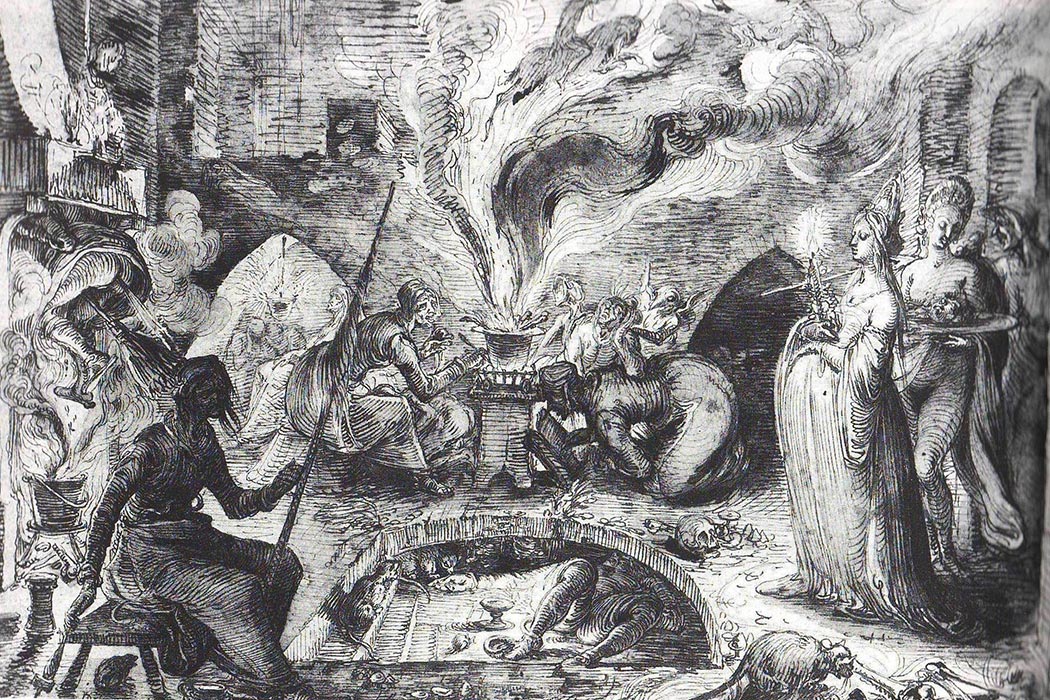
From Vicki Saxon for JSTOR Daily: “In February 1692, the Massachusetts Bay Colony town of Salem Village found itself at the center of a notorious case of mass hysteria: eight young women accused their neighbors of witchcraft. Trials ensued and, when the episode concluded in May 1693, fourteen women, five men, and two dogs had been executed for their supposed supernatural crimes. But what caused the mass hysteria, false accusations, and lapses in due process? Emily Oster posits that the “little ice age” caused economic deterioration and food shortages that led to anti-witch fervor. But Linnda Caporael argues that the girls suffered from convulsive ergotism, a condition caused by a type of fungus found in rye and other grains. It produces hallucinatory, LSD-like effects and can cause victims to suffer from vertigo, crawling sensations on the skin, extremity tingling, headaches, hallucinations, and seizure-like muscle contractions.”
Note: This is a version of my personal newsletter, which I send out via Ghost, the open-source publishing platform. You can see other issues and sign up here.
From Dan Lewis at Now I Know: “Pop-up stores like Spirit Halloween or Halloween City start dotting suburban and urban landscapes starting in late August, making it rather easy for a parent who can’t sew (or who lacks the time and patience) to fork over $25 or so on a Batman, hot dog, Barbie, or inflatable alien abduction costume. But there’s one costume you won’t find for sale in any of those places, and that’s Smokey Bear. In 1944, forest fires became an increasing threat in the United States, for two reasons: first, many firefighters and would-be firefighters were called into military service, and second, Japan had launched a handful of incendiary balloon attacks against the U.S. mainland in an effort to start fires. In the 1950s, Congress passed the Smokey Bear Act, giving full authority to manage Smokey’s likeness to the Forest Service. The Forest Service strictly controls the official Smokey Bear costumes — you can sometimes rent one via the Service’s website, but it comes with many restrictions.”
How horror films became Hollywood’s best financial investment
From Daniel Parris at Stats Significant:”The Exorcist premiered in the winter of 1973 to overwhelming public interest, captivating audiences with its harrowing story of demonic possession. The film smashed box office records, becoming one of the highest-grossing movies of all time and a critical darling nominated for 10 Academy Awards, including Best Picture. To date, The Exorcist has grossed over $441M worldwide on an initial budget of $12M. The film’s immense box office success showcased the genre’s artistic and economic promise, demonstrating its potential for high returns and, more importantly, its relatively inexpensive production costs. Unlike big-budget action franchises, horror films are produced on meager budgets in hopes of achieving modest returns. When examining average ROI by genre, horror films stand out as a significant outlier, averaging a 173% return (i.e. profit) on production costs. The best investment in Hollywood history was The Blair Witch Project, which had a 124,220% return.”
Note: This is a version of my personal newsletter, which I send out via Ghost, the open-source publishing platform. You can see other issues and sign up here.









/https://tf-cmsv2-smithsonianmag-media.s3.amazonaws.com/filer/f6/30/f6300fcc-c929-4e30-adaa-fc3b62a495a5/42-18260830edit.jpg)