Twitter throttles tweets as Meta launches a competitor

Last Friday, Twitter suddenly started blocking anyone not logged into a Twitter account from seeing public tweets, reversing a feature that the platform had allowed since it launched in 2007. As The Verge reported, Twitter didn’t announce any policy change, and so it was initially unclear whether the block was intentional or just the latest in a series of technical glitches to have bedeviled the platform since Musk acquired it last year. Musk eventually tweeted that the change was a “temporary emergency measure” necessitated by what he described as the rampant “scraping,” or copying, of tweets by third parties in an act that he called “data pillaging.” At time of writing, the restriction appeared to have been lifted, according to Search Engine Roundtable. The group chats breathed a sigh of relief.

This wasn’t the end of the Twitter drama, however. On Saturday, Musk announced that logged-in users would also face restrictions when viewing tweets, in the form of a “rate limit” that would be determined based on their account status. Musk said that unverified users—in other words, anyone who hasn’t paid eight dollars a month for a subscription to the Twitter Blue service, or been awarded verified status by virtue of being an advertiser or celebrity—would be able to see a maximum of six hundred posts per day; verified accounts would be capped at six thousand. Musk later added that, in the near future, the rate limits would increase to eight hundred and eight thousand tweets per day for unverified and verified users, respectively, with new unverified accounts capped at four hundred. 

As The Verge noted, Musk blamed the scraping of Twitter, in part, on companies that are trying to harvest data to train artificial-intelligence engines, but he didn’t mention that the incident might have been driven, at least in part, by his own decisions. Twitter recently imposed fees for access to its software API, which allows third-party services to pull tweets to display in their apps. And, since taking over the company, Musk has laid off more than three quarters of its staff, many of whom were involved in maintaining its technical infrastructure. Last November, an unnamed Twitter engineer told the MIT Technology Review that after watching the layoffs at the company, he was convinced that, in the future, “things will be broken more often [and] things will be broken for longer periods of time.” In March, a change by a single engineer led to an outage; two months later, the much-hyped live launch of Ron DeSantis’s presidential campaign via the Twitter Spaces feature was crippled by glitches. There have been other such examples.

Note: This was originally published as the daily newsletter at the Columbia Journalism Review, where I am the chief digital writer

Continue reading “Twitter throttles tweets as Meta launches a competitor”

We may have accidentally killed whatever life there was on Mars

Drik Schulze-Makuch writes for Big Think: “In the mid-1970s, NASA sent two Viking landers to the surface of Mars equipped with instruments that conducted the only life detection experiments ever conducted on another planet. At the time of those landings, scientists had very little understanding of the Martian environment. Since Earth is a water planet, it seemed reasonable that adding water might coax life to show itself in the extremely dry Martian environment. In hindsight, it is possible that approach was too much of a good thing. For microbes that live within salt rocks, pouring water over them might overwhelm them. In technical terms, we would say that we were hyperhydrating them, but in simple terms, it would be more like drowning them.”

What we think of as exercise now used to literally be torture

Britannica on the treadmill | Digital Transformation & Adaptation |  Britannica

From Dan Lewis at Now I Know: “The word ‘treadmill’ first entered the English language in 1822, according to the Online Etymology Dictionary. Most exercise equipment (think ‘bike’ or ‘weights’ or ‘jump rope’) describes either how to use the equipment or what makes the item useful for a workout. The word ‘treadmill’ has the ‘tread’ part, signaling that it’s used for walking, but it also has the ‘mill’ part, which suggests that it’s used for grinding something down. And while exercise can definitely be a grind, that saying wasn’t one back in the early 1800s. The early treadmills were a lot like sawmills or windmills or millstones, and the first treadmills weren’t found at your local gym — they were found in prisons. The people on them were inmates, and this was part of their sentence.”

Note: This is a version of my personal newsletter, which I send out via Ghost, the open-source publishing platform. You can see other issues and sign up here.

Continue reading “We may have accidentally killed whatever life there was on Mars”

Everyone in town thought they knew who killed Susan Woods

From Bryan Burrough at Texas Monthly magazine: “They found her naked body 36 years ago now, her head sunk into a bathtub full of black water, hands tied behind her with a tank top. She had been a quiet, shy woman, five foot seven, with lustrous brown hair cascading past her shoulders and an easy smile that friends didn’t see as much as they once had. Susan was thirty years old and living alone that summer, left by a biker-ish husband who had fled the state, waiting for her divorce to go through. She was a local girl, a little lonely, a little sad, trying hard to put her life back in order. When she missed her shift at the sandpaper factory two days running, a supervisor called her father, Joe Atkins.”

Martina Navratilova and Chris Evert were bitter rivals, and then they both got cancer

From Sally Jenkins at the New York Times: “They have known each other for 50 years now, outlasting most marriages. Aside from blood kin, Navratilova points out, “I’ve known Chris longer than anybody else in my life, and so it is for her.” Lately, they have never been closer — a fact they refuse to cheapen with sentimentality. “It’s been up and down, the friendship,” Evert says. At the ages of 68 and 66, respectively, Evert and Navratilova have found themselves more intertwined than ever, by an unwelcome factor. You want to meet an opponent who draws you nearer in mutual understanding? Try having cancer at the same time. “It was like, are you kidding me?” Evert says.”

Note: This is a version of my personal newsletter, which I send out via Ghost, the open-source publishing platform. You can see other issues and sign up here.

Continue reading “Everyone in town thought they knew who killed Susan Woods”

How Edison pretended that he had invented the light bulb

From Tara Isabella Burton for the Smithsonian magazine: “In the autumn of 1878, Thomas Alva Edison had a problem. He hadn’t invented the light bulb—yet. Or, to put it more precisely, he had invented a light bulb, but he couldn’t keep it lit for more than a few minutes at a time. He still hadn’t figured out how to regulate the temperature of the light bulb’s internal filament, meaning the incandescent bulb would immediately overheat, and the filament would promptly melt down. Unfortunately, Edison was running out of time. All over North America and Europe, inventors like him were working on—and patenting—their own electric projects. Sooner or later, somebody would wind up harnessing electricity. Two Canadians, Henry Woodward and Mathew Evans, had already patented an inefficient design four years before.”

The Sicilian mafia got its start controlling the market for oranges and lemons

Mafia in the United States - Today, Italian-American & History

From research by Arcangelo Dimico, Alessia Isopi and Ola Olsson: “Since its first appearance in the late 1800s, the reasons behind the rise of the Sicilian mafia have remained a puzzle. We argue that the mafia arose as a response to an exogenous shock in the demand for oranges and lemons, following Lind’s discovery in the late eighteenth century that citrus fruits cured scurvy. More specifically, we claim that mafia appeared in locations where producers made high profits from citrus production for export. Operating in an environment with a weak rule of law, the mafia protected citrus production from predation and acted as intermediaries between producers and exporters. Using original data from a parliamentary inquiry in 1881–1886 on Sicilian towns, the Damiani Inquiry.”

Note: This is a version of my personal newsletter, which I send out via Ghost, the open-source publishing platform. You can see other issues and sign up here.

Continue reading “How Edison pretended that he had invented the light bulb”

The Why

I want to be in rooms full of people I love.
The world goes white then green again
like the mind telling the body it is not alone.
The body saying something I can almost hear
above the sound of a dog barking
because he feels himself tied and tremendously alone.
Who would you believe?
I walk the great streets of New York City
where many great people have lived
and think how great it is to live and die on earth
even if it means having known nothing
of the why. Nothing of the why.

Alex Dimitrov (2013)

A girl vanished in Vatican City and her fate remains a mystery

From Gillian Brockell for the Washington Post: “The mystery of what happened to Emanuela Orlandi has been a national obsession in Italy for 40 years, as of this month, but it went international last year with the release of the Netflix documentary “Vatican Girl: The Disappearance of Emanuela Orlandi.” In the four-part series, Orlandi’s family members, their attorney, police investigators and several Italian journalists go through the case, all of them concluding that the Vatican knows more than it has said. The Orlandi family had lived and worked in the city for more than 100 years, serving seven popes as ushers and messengers. In the 1980s, usher Ercole Orlandi lived in an apartment there with his wife, son and four daughters. Emanuela was the second youngest.”

The biggest fraud in modern physics

Quantum Physics Overview, Concepts, and History

From Deep Space on Medium: “At the beginning of the 21st century, experimental physics saw a startling breakthrough thanks to the work ofJan Hendrik Schön. This German physicist who worked at Bell Labs was a real prodigy. He set up daring and breakthrough experiments that pushed physics far ahead of the curve. At one period of his career, Schön published one article every eight days, in the most prestigious scientific journals, such as Nature and Science. Schön’s biggest success was that he was supposedly able to create a transistor working at the molecular level from organic materials. But other scientists could not replicate Schön’s results — it seemed that everything Schön wrote about worked only when he was in charge of the experiment.”

Note: This is a version of my personal newsletter, which I send out via Ghost, the open-source publishing platform. You can see other issues and sign up here.

Continue reading “A girl vanished in Vatican City and her fate remains a mystery”

Most people want two very different things from social media, and they are in conflict

From Alex Goldman, former co-host of the Reply All podcast:

“I think what I have come to realize from the past few months of Twitter’s rapid decay, and my dalliances with its competitors is that most people want two different things from social media, and they are essentially irreconcilably in conflict. On the one hand, I want as vast a reach as possible – I am very glad to have had Twitter over the past decade to promote things I make, ask questions of the crowd, interact directly with people who are much too famous or obscure for me to have met any other way. I have made close friends and met musical and journalistic collaborators on Twitter.

The downside of everyone being is one place is that everyone has as much access to you as you do to them. Every crank and weirdo on the internet can make a twitter account and start a fight with you for any innocuous post. Which is, of course, how we get twitter discourse, main characters, and so on, but it doesn’t actually feel all that fun. Posting on twitter right now is the social media equivalent of counting the seconds between lightning and thunder. You post, and then you can only hold your breath before some drive by dipshit comes by to pick a fight with you.”

Disney turned a Clinton robot into an animatronic Trump

Alex Goldman writes: “For years, there has been a popular conspiracy theory that goes like this: in 2016 the folks in charge at Disney, much like large swaths of the country, believed Hillary Clinton would win, and even before she was elected were hard at work on a Hillary animatronic for the Walt Disney World Hall of Presidents attraction. When they were surprised by a Donald Trump victory, they were forced to hastily repurpose the Hillary animatronic as a Donald Trump one, to comedically grotesque effect. When I tweeted about it, I ended my tweet with an ask that any imagineers with information on the veracity of this theory to reach out. Imagine my delight when one did.”

Editor’s note: My apologies for missing yesterday’s newsletter – my granddaughter, who just turned one, was visiting us and so I got distracted and forgot to send the newsletter 🙂

In the early 2000’s, the Earth shifted on its axis, and scientists finally figured out why

Raymond Zhong writes for the New York Times: “Around the turn of the millennium, Earth’s spin started going off-kilter, and nobody could quite say why. For decades, scientists had been watching the average position of our planet’s rotational axis, the imaginary rod around which it turns, gently wander south, away from the geographic North Pole and toward Canada. Suddenly, though, it made a sharp turn and started heading east. In time, researchers realized melting of the polar ice sheets had changed the way mass was distributed around the planet. And now they’ve identified another factor: colossal quantities of water pumped out of the ground for crops and households.”

Note: This is a version of my personal newsletter, which I send out via Ghost, the open-source publishing platform. You can see other issues and sign up here.

Continue reading “Disney turned a Clinton robot into an animatronic Trump”

Marc Andreessen on tech and the media

From an interview with Ben Thompson of Stratechery:

“For all the issues with tech and tech media, it’s just a minor sub-segment of this broader shift in how media works and in how public discourse works in public opinion formation and public debate happens. That media landscape I would argue has been changing for a very long time, it’s certainly been going through a high rate of change, I would argue even pre the Internet with the arrival of talk radio and then cable television. But certainly the Internet has accelerated that change so I think the whole landscape is changing.

There’s this endless tension on the media side: if you ask journalists what their mission in life is, they’ll basically usually tell you two things, which is to objectively report the truth number one, and then number two, speak truth to power. Or they sometimes say, “Comfort the afflicted and afflict the comfortable.” There’s an inherent tension between those two poles because are you trying to equally represent all sides or are you trying to specifically take a stand, presumably on behalf of the people against power? I would characterize it as the entire media broadly is trying to navigate its way through that question of goals and then trying to navigate its way through what have been profound changes in technology in the media landscape.

A lot of those changes have been caused by tech. Like I say, we in many ways are the dog that caught the bus in this industry, which is we did cause some of these changes to happen. So those changes, the system has to work through those changes. Does the system ever stabilize ever again in the same way that it had in the 1950s or 1960s? I think probably not and so as a consequence, I think the whole landscape probably will stay unsettled for a very long time. I don’t know what it’ll look like in a decade, but I think people like me are going to have to adapt just like everybody else.”

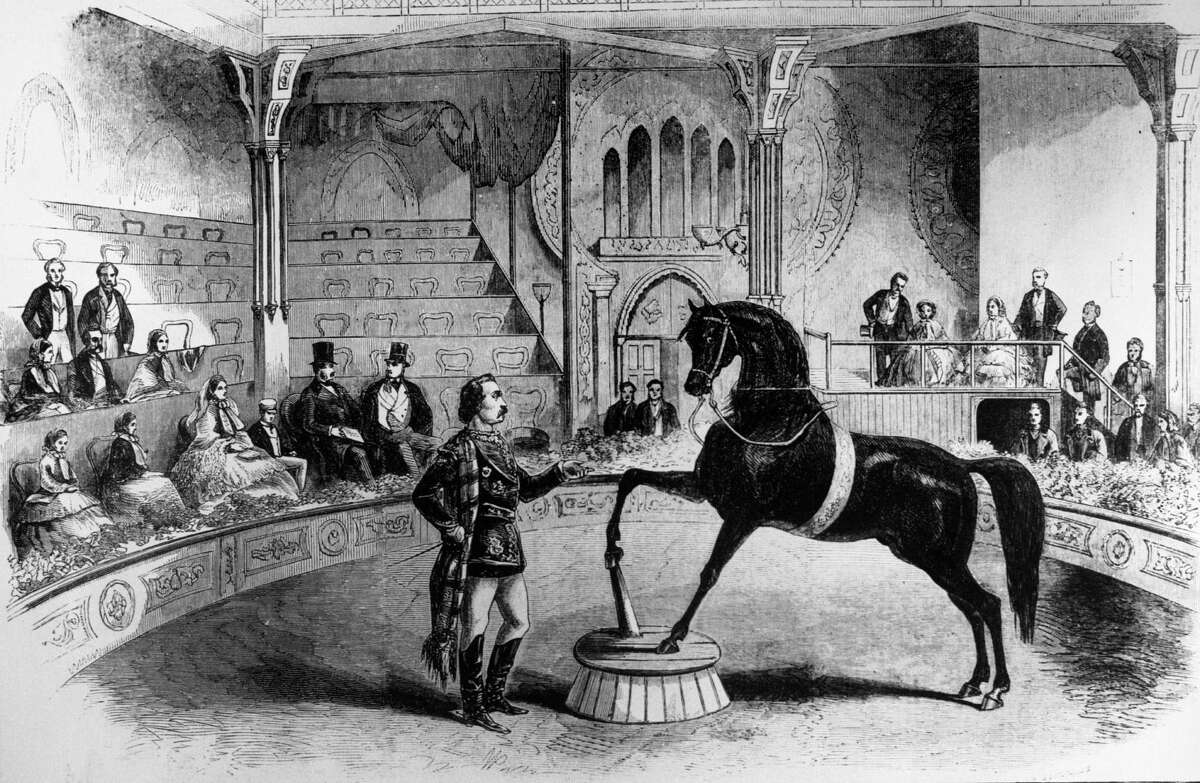
Cycloramas were the virtual reality of the 19th century

From Allison Meier at JSTOR Daily: “In the fall of 1886, New Yorkers were transported to the Battle of Gettysburg. That is to say, they flocked to a circular structure in downtown Brooklyn. The inside walls of the curious room were covered with a 360-degree painting, on which soldiers charged and cannons fired. As Scientific American described at the time, the floorboards were covered with sod and “real trees, evergreens and others, with shrubbery, portions of fences, and the like are set about, and tufts of grass, wheat, and similar things, lend their aid to fill up the scene.” Skylights illuminated the canvas and props while leaving the spectator area dark, and mannequins were posed alongside the painted scene. So convincing were these dummies that the police got called one evening to stop a robbery and apprehended two fake soldiers.”

What medieval manuscripts reveal about the hidden history of whales

New Whale Behavior May Be Inspiration For Ancient Norse Sea Creature Myth |  IFLScience

From Nina Goldman for the Smithsonian magazine: “The creature was enormous. Sailors said it “looked more like an island than a fish.” When feeding, according to a 13th-century Old Norse manuscript, the beast, known as the hafgufa, would rest with its mouth open wide, luring in unsuspecting fish, then snap its jaws shut to capture them. Hair-raising accounts of a similar sea monster were recorded by Alexandrian scribes as early as the second century A.D.; these accounts spread through Europe and Asia in Arabic, Coptic, Latin and Old English translations. Now researchers argue the mighty hafgufa, and similar sea monsters described by the ancients, were not mythical creatures but rather whales engaged in a behavior that was only recently documented: “trap feeding.”

Note: This is a version of my personal newsletter, which I send out via Ghost, the open-source publishing platform. You can see other issues and sign up here.

Continue reading “Cycloramas were the virtual reality of the 19th century”

What it’s like to steal and eat a $120,000 banana

Noh Hyun-soo writes for The Guardian: “I’d been to Seoul’s Leeum Museum of Art years ago, but last Aprilwas my first visit to see the artwork Comedian by Maurizio Cattelan, which is a banana duct-taped to a wall. It’s a work of conceptual art and comes with a certificate of authenticity giving precise diagrams and instructions for its correct display. It was famously sold for $120,000 at Art Basel Miami in 2019. The banana is changed every few days. There were a lot of visitors, and about 10 people were standing around Comedian. The atmosphere inside the museum was calm. Interestingly, when I got close to another artwork to see it more clearly an alarm sounded and the guards stopped me. But when I approached Comedian, there was no alarm. So there was nothing stopping me when I pulled off the tape to remove the banana from the wall and peeled it.”

How I helped create the “Dark Side of the Rainbow” Internet meme

The Pink Floyd and 'Wizard of Oz' collaboration is twisted

From Charlie Savage for the New York Times: “The phenomenon of watching ‘The Wizard of Oz’ while listening to Pink Floyd’s ‘Dark Side of the Moon’ is sometimes called ‘The Dark Side of the Rainbow’: If you start the album at just the right time, the music and lyrics uncannily align with the movie’s visuals. Some coincidences are lyrical, as when Dorothy runs away from home at the line ‘No one told you when to run.’ Some are tonal, as when the tornado sequence seems practically choreographed to Clare Torry’s wordless vocals in ‘The Great Gig in the Sky’ — rising to a frenzy as the twister rolls in and then shifting to dreaminess just as Dorothy is knocked unconscious.”

Note: This is a version of my personal newsletter, which I send out via Ghost, the open-source publishing platform. You can see other issues and sign up here.

Continue reading “What it’s like to steal and eat a $120,000 banana”

How a former car dealer has flown 23 million miles for free

From Rick Reilly for the Washington Post: “His name is Tom Stuker, and he’s the biggest mistake United Airlines ever made. In 1990,United offered a lifetime pass for $290,000. Stuker jumped on it and has pretty much lived in seat 1B — his favorite — ever since. He once went 12 straight days without sleeping in a bed. Just kept jetting from Newark to San Francisco to Bangkok to Dubai and back again, the equivalent of four trips around the world, leaving the sky only for the airport lounge. Why? Duh. For the miles. Once you get them, you can sell them, trade them, win auctions with them. Stuker has lived like a sultan on United miles ever since — lavish hotel suites all over the world, weeks-long Crystal cruises, gourmet meals from Perth to Paris.”

A little-known local surfer beat out the world’s biggest surfing superstars

From Gabriella Paiella for GQ Sports: “How did a North Shore local named Luke Shepardson win the most prestigious big-wave competition on the planet, beating some of surfing’s brightest stars? Even on an ordinary day, surfing is imbued with the mystical, every wave hinging on chance and elemental collision—a storm in Japan will create a swell thousands of miles away in Hawaii. But the waves produced during the Eddie are perhaps the most sacred on earth. To be invited to ride them means being one of the 40 most-esteemed surfers in the world, as chosen by a committee of your peers. On the beach and along the cliffs that line Waimea Bay, some 50,000 spectators would soon squeeze together for a chance to see greatness, to witness ineffable bravery, and to take part in the grand human tradition of watching some guys (and a few women) do truly crazy shit.”

Note: This is a version of my personal newsletter, which I send out via Ghost, the open-source publishing platform. You can see other issues and sign up here.

Continue reading “How a former car dealer has flown 23 million miles for free”