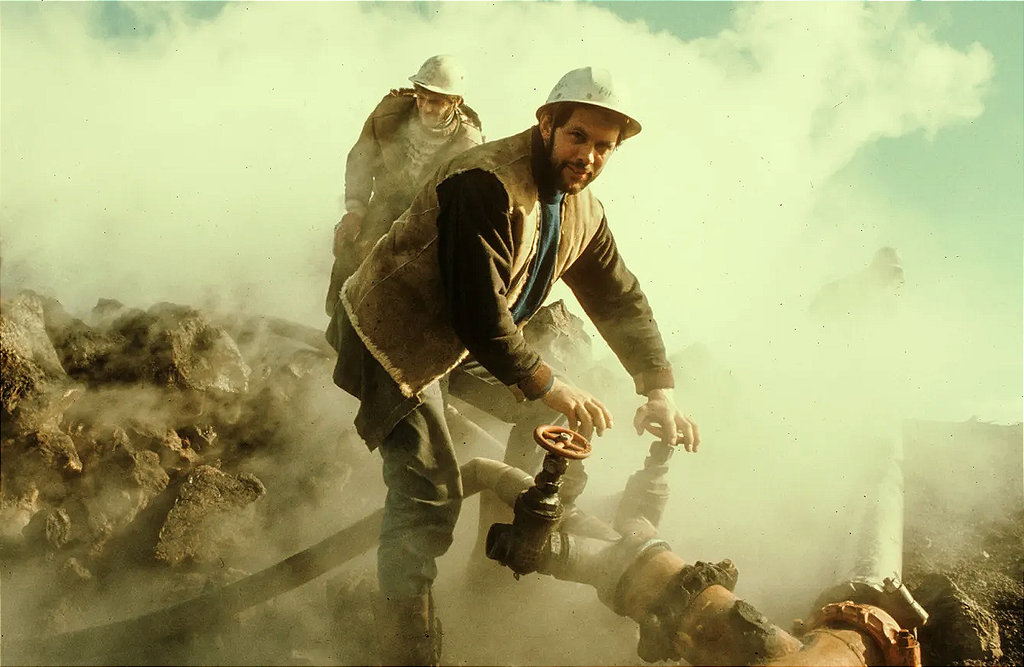
On January 23, 1973, the 5,000 residents of the tiny Icelandic island of Heimaey — located just four miles off Iceland’s southern coast — woke up to the Earth splitting open. In the dead of night, a mile-long volcanic fissure ripped through the ground just a half-mile from the town of Vestmannaeyjar, marking the birth of a new volcano named Eldfell. Fountains of molten basaltic lava shot hundreds of feet into the sky, raining ash and glowing, golf-ball-sized rocks onto rooftops. Within hours, a makeshift fleet of local fishing boats evacuated almost the entire population to the mainland. The people were safe, but their town faced an existential threat. The threat went far beyond a local crisis. Not only were the townspeople of Vestmannaeyjar completely reliant on the harbor, but all of Iceland depended on this tiny island’s fishing industry for a massive chunk of its exports. If the advancing lava choked off that narrow bay, it would deal a devastating blow to the entire nation’s economy. (via Popular Science)
MIT requires that every graduating student must know how to swim. But why?
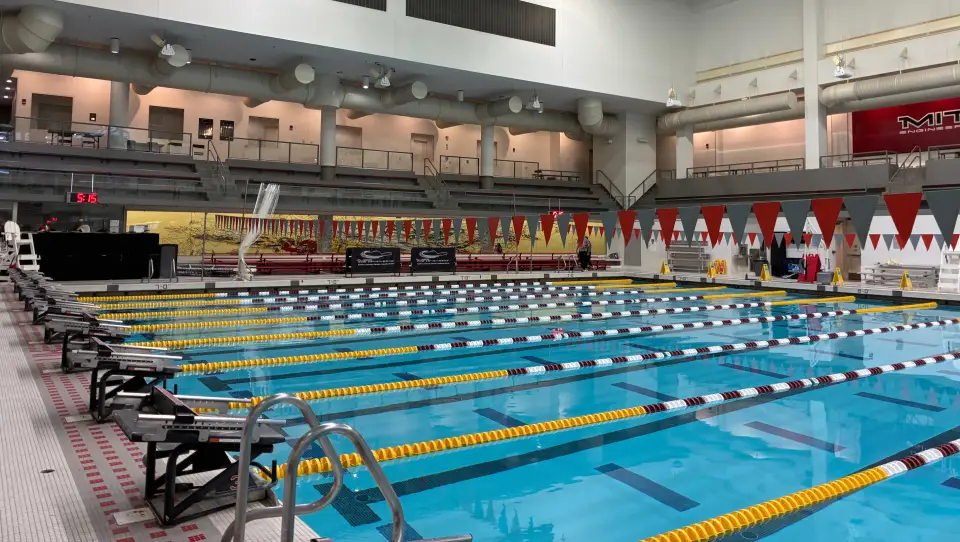
The legend on MIT’s campus goes that students once had to leap into the Charles River and swim across its dirty water without stopping to graduate. That was never true. But the institution does require all students to prove their swimming ability — in the heated indoor pool. Students can either take swim lessons or complete a 100-yard test. Swim tests used to be common at American colleges, but MIT now finds itself increasingly in the minority. It’s one of the few schools that’s clinging to the test, arguing that swimming is an important life skill. Since the requirement suddenly rose in popularity around World War II, many schools have dropped it due to equity or practical concerns. The tradition dates back more than a century. Cornell claims credit as the first college to mandate swimming in 1905. MIT began its practice during World War II. Poor recordkeeping makes it hard to know the true origins of why schools implemented this standard, but many schools cite drowning rates among service members. (via WGBH)
Note: This is a version of my When The Going Gets Weird newsletter, which I send out via Ghost, the open-source publishing platform. You can see other issues and sign up here.
Builders renovating a house in Belgium found 9 million Euros worth of gold bars and coins
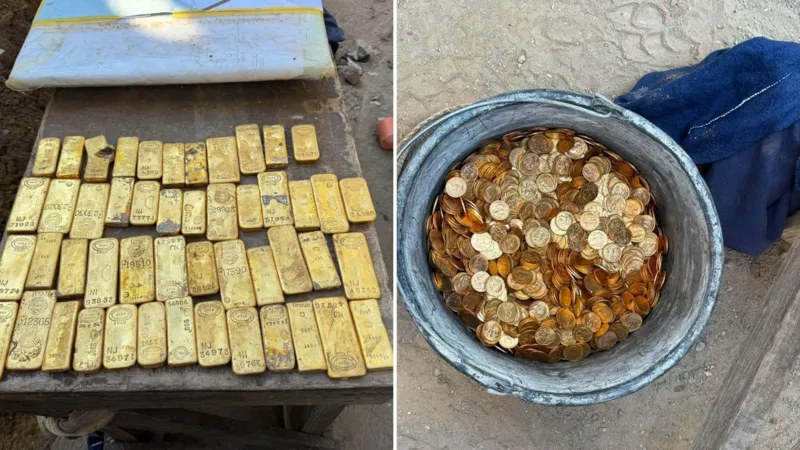
Builders renovating a house in Belgium have discovered a stash of gold reportedly worth €9m (£7.6m) sealed into the walls of its cellar. The construction workers stumbled across the hidden trove of gold bars and coins while drilling to lay new sewage pipes in the property in east Flanders earlier this week, local media report. The discovery has sparked interest in who might get to keep the hoard – with both the builders and the local charity that owns the site having a chance of claiming it. After launching an investigation, police warned people against attending the site to search for more treasure, saying the house was “turned upside down” and all the gold had been moved to a secure location. The builders – including an 18-year-old working a summer job – unearthed the stash while working on the building’s foundations. Soon after, they alerted police to the discovery and explained that keeping it for themselves was not an option. (via the BBC)
Hi everyone! Mathew Ingram here. I am able to continue writing this newsletter in part because of your financial help and support, which you can do either through my Patreon or by upgrading your subscription to a monthly contribution. I enjoy gathering all of these links and sharing them with you, but it does take time, and your support makes it possible for me to do that. I also write a weekly newsletter of technology analysis called The Torment Nexus.
No one is sure where the dollar sign came from
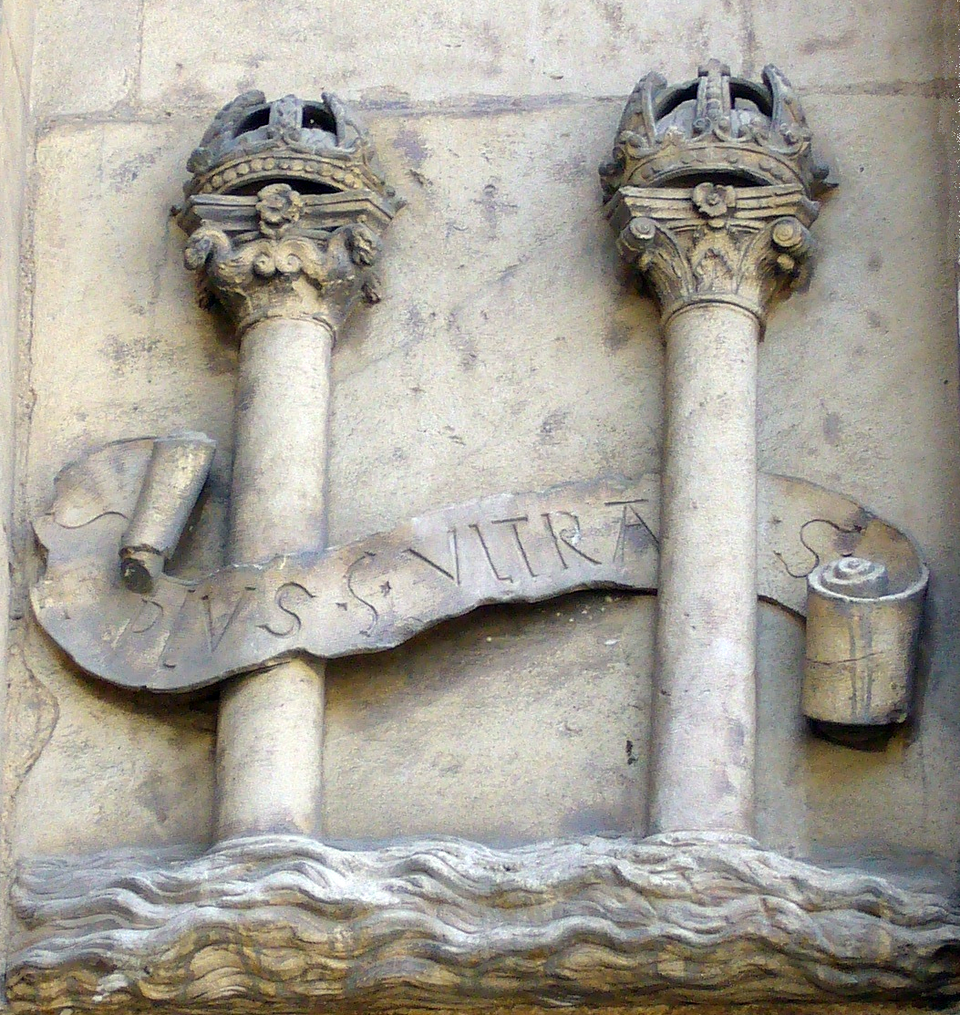
The dollar sign (also known as the peso sign) is a currency symbol consisting of a capital S crossed with one or two vertical strokes. The symbol appears in business correspondence in the 1770s from the West Indies referring to the Spanish American peso, also known as “Spanish dollar” or “piece of eight” in British America. The Spanish coins provided the model for the currency that the United States adopted in 1792. It is still uncertain, however, how the dollar sign came to represent the Spanish American peso. There are currently several competing hypotheses: The most widely accepted theory holds that the dollar sign developed out of an abbreviation for the Spanish and Spanish-American ps for pesos. Another hypothesis derives the sign from a depiction of the Pillars of Hercules, a classical symbol for two sides of the Strait of Gibraltar, with a ribbon wrapped in the form of an ‘S’. Another hypothesis notes that the English word “dollar” for the Spanish piece of eight originally came from Joachimsthaler or thaler, a similar large German silver coin that was widely used in Europe. (via Wikipedia)
In Torajan culture families keep the dead with them in some cases for years
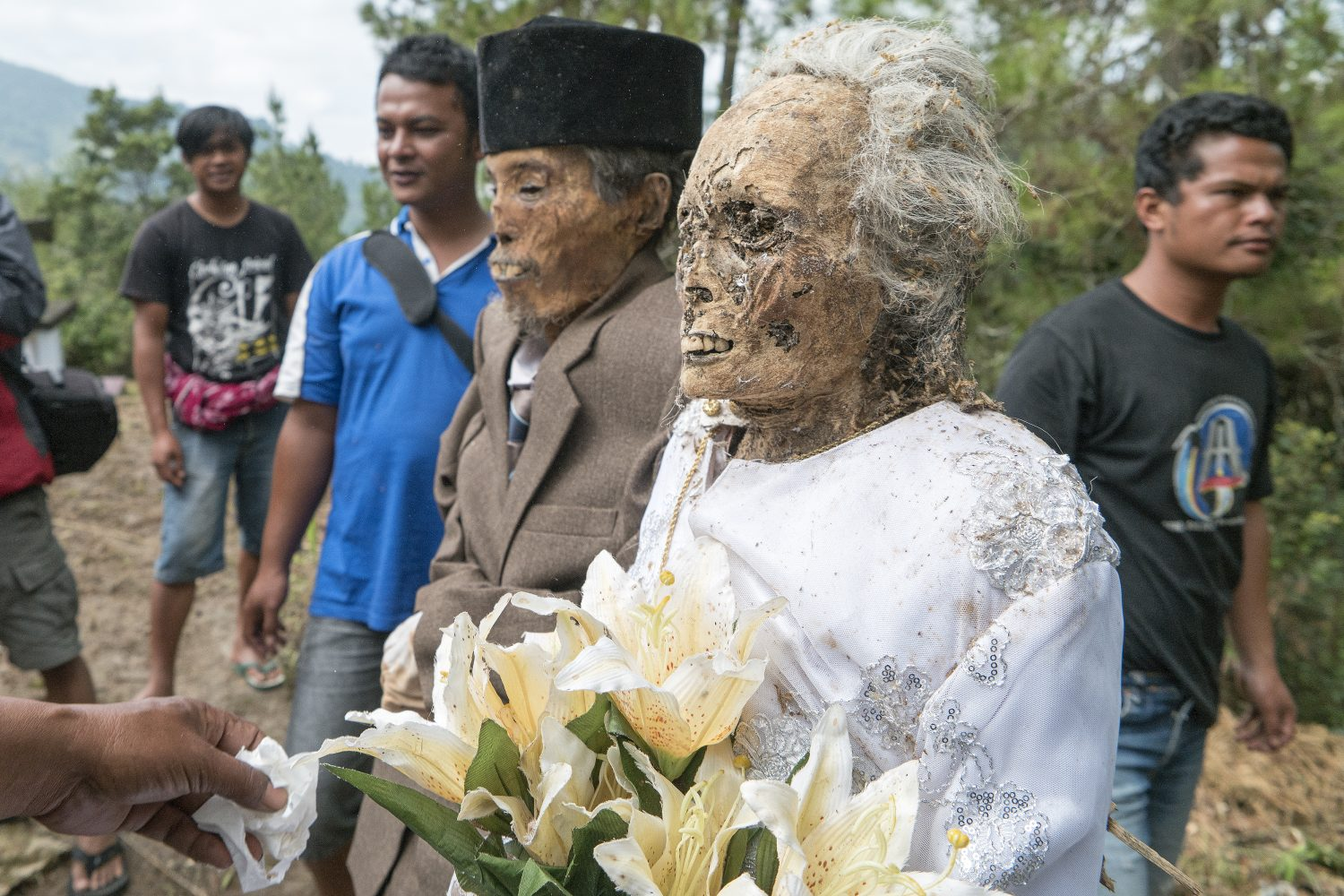
When a person dies, relatives mourn the passing by treating the body as a living entity. They believe that by keeping the deceased in their homes, they are not really dead, but are instead considered “sick”, and should be cared for as such. Depending on social status, the body is cleaned, clothed and fed over the course of weeks, months or even years. The Torajan funeral called ‘Rambu Solo’ is an extremely expensive event and families can spend tens of thousands, keeping the body at home until they can save enough to properly conduct the funeral rites. While this practice may seem strange or disturbing to many cultures, the Torajan have no fear of the dead, and their love for the person outweighs any concerns or feelings of discomfort about seeing death and decomposition. Meals, activities, prayers, and all other aspects of daily home life are spent with the deceased person’s body. Once a funeral date has been decided, the family will purchase a water buffalo to use as a sacrifice. They believe that buffaloes are the ‘vehicle’ in which the dead rides to the afterlife at Puya, the land of the spirits. (via Heritage Daily)
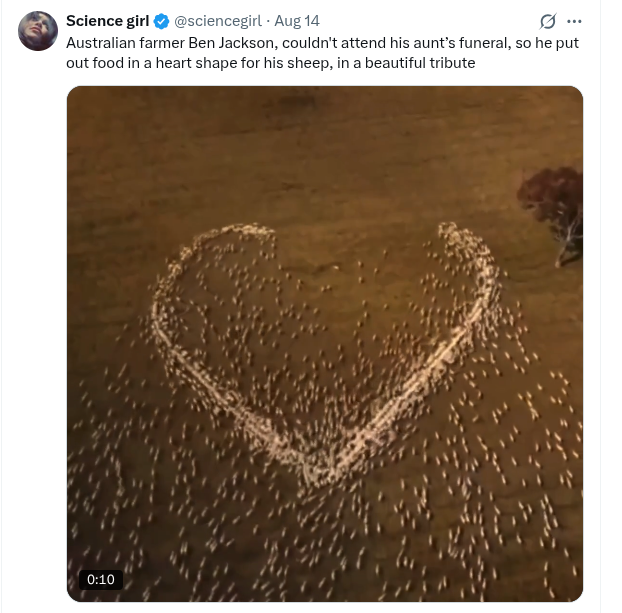
He couldn’t attend his aunt’s funeral so he laid food for his sheep in the shape of a heart
Acknowledgements: I find a lot of these links myself, but I also get some from other places that I rely on as “serendipity engines,” such as The Morning News from Rosecrans Baldwin and Andrew Womack, Jodi Ettenberg’s Curious About Everything, Dan Lewis’s Now I Know, Robert Cottrell and Caroline Crampton’s The Browser, Clive Thompson’s Linkfest and Why Is This Interesting by Noah Brier and Colin Nagy. If you come across something you think should be included here, feel free to email me at mathew @ mathewingram dot com