
Hitoshi Imamura was a Japanese general who served in the Imperial Japanese Army during World War II. He surrendered the Japanese forces in New Guinea and the southern Pacific Islands to Australian forces, representing the Allies, in September 1945, and was detained by the Australian Army, as he and troops under his command were accused of war crimes, including the execution of Allied prisoners of war. , and was subsequently convicted of war crimes. He was tried by an Australian military court at Rabaul on 1–16 May 1947 and convicted and sentenced to imprisonment for ten years. Imamura served his imprisonment at Sugamo Prison in Tokyo until he was released in 1954. He considered his imprisonment too light with respect to his responsibility for the crimes of his subordinates, so he had a replica of the prison built in his garden, and he stayed there until his death in 1968. (via Wikipedia)
Deep-fried pufferfish ovaries are a Japanese delicacy that can kill you
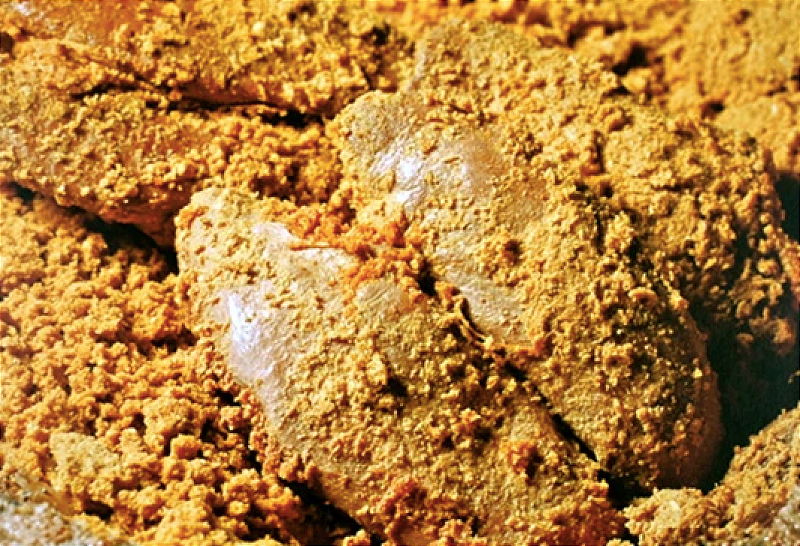
Want to try a unique delicacy that unless properly treated will kill you? It takes three years to make it right, so be warned. Ovaries of the Japanese pufferfish, called fugu, are pickled in salt and bran in Hakusan’s Mikawa district to eliminate toxic poison. It is anything but a quick process. Only 21 agencies in Ishikawa Prefecture have won permission to make pickled fugu ovary across Japan. Fifteen of them are individuals, meaning just six produce the specialty as companies. Spottyback pufferfish are sliced and trimmed during their May-June breeding season. Recovered ovaries are washed in groundwater and preserved with salt. Ovaries shrink in size over the course of a year, reducing the poison level to one-tenth of their former level. Bran is then applied to the bottoms of casks made of Japanese cedar wood, and ovaries are pickled in them. A sardine sauce is at times added over the course of two years. When the outside of the casks turns pinkish, that is a sign the contents are ready for eating. (via Asahi Shimbun)
Note: This is a version of my When The Going Gets Weird newsletter, which I send out via Ghost, the open-source publishing platform. You can see other issues and sign up here.
Continue reading “He thought his sentence was too light so he built his own prison”