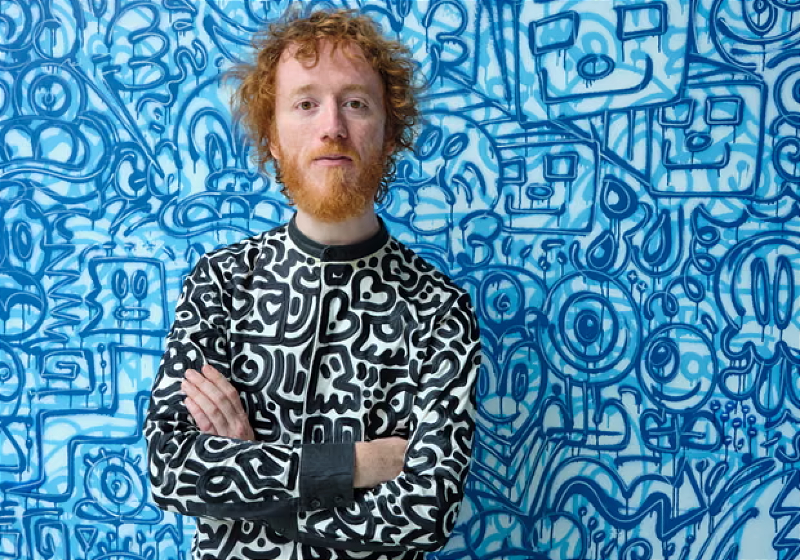
During his student days, Sam started to experiment with the idea of an artistic alter ego – a character to accompany his work. He turned up to give a third-year presentation in a fully doodled suit, replete with doodled accessories (fedora, briefcase), announcing he was The Doodle Man from Doodle Land. Then, in 2017, a passerby filmed him at work. That recording ended up going viral on Facebook, and his online influence started to snowball: hundreds of thousands of followers flocked to his accounts. Lucrative brand collaborations followed. That’s when he got the keys to this house, and filled it with doodles – on the walls, the ceilings, the floors, everywhere. And then it all fell apart. At the hospital where he was eventually committed, he was convinced that people were trying to kill him and was running around shouting: ‘I’m Mr Doodle, and I need help.’ He was diagnosed as having a psychotic episode. (via The Guardian)
The unkillable soldier fought in three wars, lost an eye and a hand and died in his 80s
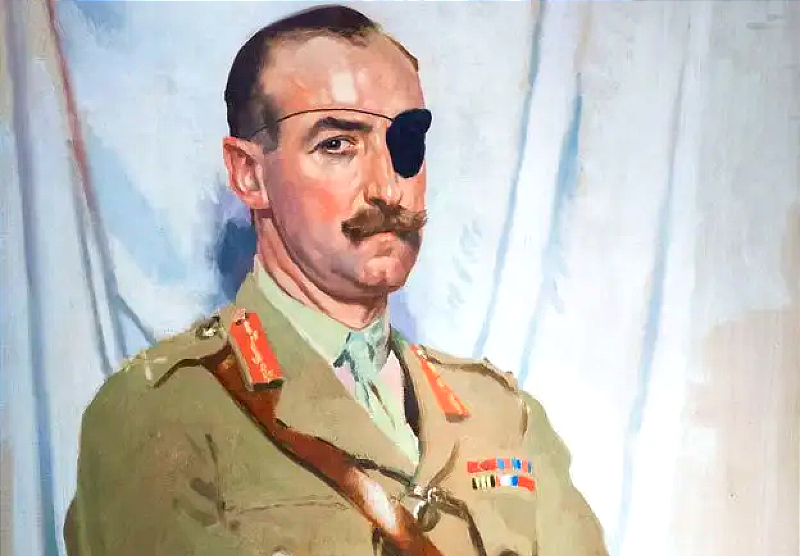
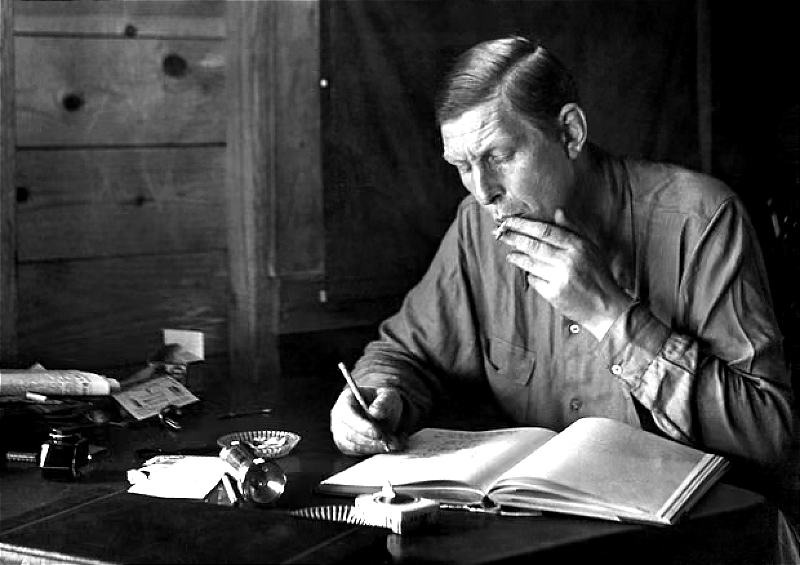
Carton de Wiart served in the Boer War, World War One and World War Two. In the process he was shot in the face, losing his left eye, and was also shot through the skull, hip, leg, ankle and ear. Despite being one of the most battle-scarred soldiers in the history of the British Army, he wrote in his autobiography: “Frankly, I had enjoyed the war.” In WW1 he was severely wounded on eight occasions and mentioned in despatches six times. Having previously lost an eye and a hand in battle, Carton de Wiart, as commanding officer, was seen by his men pulling the pins of grenades out with his teeth and hurling them with his one good arm during the Battle of the Somme. In 1899 he saw the opportunity to experience his first taste of war. Abandoning his studies, he left for South Africa to serve as a trooper in the British Army during the second Boer War. As he was under military age, wasn’t a British subject and didn’t have his father’s consent, he pretended to be 25 and signed up under a pseudonym. (via the BBC)
Note: This is a version of my When The Going Gets Weird newsletter, which I send out via Ghost, the open-source publishing platform. You can see other issues and sign up here.
Continue reading “His doodles made him famous then put him in the psych ward”