mesh: the hits just keep on coming

I’m getting so fired up about the people we have coming to join us at the mesh conference (May 30 and 31 at the MaRS Discovery District in Toronto) that I thought I would list some of them here, just to give you a taste — there’s lots more at www.meshconference.com and also listed on the blog there. But here are some of the highlights for me:

  • Mike Arrington, obviously — the founder and editor of TechCrunch is pretty much the poster boy for Web 2.0 and also at the epicenter of what’s going on with new media.
  • Jim Buckmaster — the CEO of Craigslist, which isn’t just a phenomenally successful social network, but also an incredible story of how the founders have deliberately avoided making money.
  • Rachel Sklar — Toronto-born former lawyer who is now the editor of the Eat The Press section of Huffington Post, a giant in the field of new media and a wonderful writer to boot.
  • Jeff Howe — a Wired contributing editor and veteran journalist who invented the term “crowdsourcing” and is now working on a book about the concept of content produced by users.
  • Simon Pulsifer — Canada’s own “king of Wikipedia,” who has written more than 2,000 entries in the open-source encyclopedia and edited almost 100,000.
  • Mike Masnick — the founder of Techdirt, a key source of creative thinking about Web 2.0 and technology in general, as well as a people-powered consulting company.

There are lots more too: How about Garth Turner, blogger/author and MP? Or Christine Herron, a venture capitalist with The Omidyar Network. Or Scott Feschuk, writer/comedian and former Paul Martin speechwriter. Video-blogger Loren Feldman from 1938media. Andrew Coyne, columnist and gadfly. McLean Mashingaidze-Greaves, creator of CBC’s Zed and now Rapspace.tv. And dozens more. Better hurry — tickets are going fast 🙂

Kurt Vonnegut — so it goes

Kurt Vonnegut was already fairly famous by the time I became a fan — which would have been in my late teens — but I still felt like someone who had discovered a cool, underground band that no one else was into. His books weren’t quite science fiction, and weren’t quite fantasy, but a weird mish-mash of genres, complete with hand-drawn illustrations of bums and other things. They were strange, and funny, and fantastic.

Kurtv.jpgI found out that Vonnegut had died by reading my feeds, from a post at Paul Kedrosky’s blog. I knew that he was elderly and not well, and therefore his death didn’t come as a total surprise — just as Warren Zevon’s didn’t come as a total surprise, since he had cancer — but it still hit me hard. The world was a lot more fun with both of those guys in it. And while I never made the connection until a long time later, Vonnegut books were a lot like Zevon songs: irreverent, and yet filled with beautiful imagery and ideas; poignant and funny, sometimes goofy, always rebellious — almost like free-form poetry.

As I said on Paul’s blog, I would put books like Slaughterhouse Five and Breakfast of Champions and Cat’s Cradle up against almost any book published in the past 50 years. I have read them and re-read them and they just keep getting better every time. Some people have no doubt read his books and mistaken Vonnegut’s simplicity and irreverence for slapstick, and many authors have tried to reproduce that tone and come off sounding like idiots.

But Vonnegut always had a point — sometimes a funny one, and sometimes an uncomfortable one — and he made it by using the strange and the fantastic as a mirror to show us our true selves. (10 Zen Monkeys has an interesting story about one of the TV screenplays Vonnegut wrote that was turned into a tele-play with Sammy Davis Jr.)

CBS does deals with (almost) everyone

Update:

Cory at Lost Remote has some details about what some of the partners CBS signed the deal with (described below) plan to do with the content — with Brightcove’s the most interesting.

Original post:

Well, another TV network seems to have decided to jump headfirst into this whole Interweb thing: CBS, which is home to such shows as CSI, Survivor and The David Letterman Show, has announced that it will be working with just about every social network, portal and video-sharing site or service in the known universe — with a couple of notable exceptions, of course.

snipshot_d419u9bs1l0p.jpgThe press release mentions that the network’s partners include AOL, Microsoft, CNET Networks, Comcast, Joost, Bebo, Brightcove, Netvibes, Sling Media and Veoh. And that’s on top of existing deals with Yahoo, Amazon and Apple. You might notice a few names missing, such as — oh, say Google and YouTube. Or MySpace. It’s probably a coincidence that MySpace is busy developing its own video network, and that Google and YouTube are currently embroiled in a nasty legal dispute with certain networks over their content.

Of course, CBS already has an existing deal with YouTube that includes a “channel” with some of its content. So why didn’t it mention that in the press release? It mentioned existing deals with Yahoo and Apple. It seems that Joost is the new favourite — likely because it is much more like the broadcast model that network execs are familiar with. Viacom has already gotten cozy with Joost after dumping YouTube.

To be fair to CBS, this deal looks even broader than NBC’s much-hyped National Broadband Broadcasting Network or NBBC. Video will be distributed through all of the outlets mentioned above, all of it free and ad-supported (DRM wasn’t discussed), and none of the deals are exclusive. A shotgun approach, perhaps — but at least CBS is taking a shot at serving viewers in different ways, and it should get some credit for that.

PaidContent has some of the details (or rumours) about revenue sharing here, and it sounds like Canadians might actually get to watch some of the content, since CBS says in the release that “select clips and full-length sports programming” will be available worldwide.

mesh social — for political junkies

We had a great time (and we hope you did too) at the last mesh meetup, but we just can’t resist the opportunity to get together again — and this time, we’re sending a shout out to anyone from the political side of the blogosphere and Web 2.0 land.

snipshot_d412wb0pmea2.jpgOne of the panels we’ve got planned for the upcoming mesh conference is looking at how the Web is affecting politics and the political process, and we’ve got a stellar cast of characters to look at the issue: blogger and National Post columnist Andrew Coyne, blogging M.P. Garth Turner, former Paul Martin speechwriter and humorist Scott Feschuk and Phil de Vellis, the creator of the “Vote Different” YouTube video.

It doesn’t matter if you’re a political blogger or just someone who’s interested in how the Web is impacting social and political change — or maybe you just like beer and pool. Come on out on May 9 at The Charlotte Room – details here. And if you know anyone else who might want to come, please spread the word.

MySpace vs Photobucket: obvious, but dumb

What MySpace has done with Photobucket — blocking users from posting video clips that are hosted at Photobucket — is totally understandable and hardly surprising, particularly given the company’s past behaviour, as Mike Arrington at TechCrunch points out. It’s in MySpace’s interests to constrain its users in that sense, and it no doubt seems like a great idea every time someone brings it up at one of the board meetings with News Corp. types (see update below).

snipshot_d419mcw9pw1t.jpgRegardless of how obvious and unsurprising it might be, I think MySpace is making a mistake. The tendency to try and wall users in, or control what they are posting, or force them to use your tools, takes you down a road that inevitably leads to what I call AOHell. That’s what people used to call America Online, back in the good old days of the late 1990s — and not just because they kept bombarding you with sign-up disks and/or made it virtually impossible to cancel your account once you got trapped in their spider’s web. AOL was the quintessential walled garden of content, and it virtually killed the company, and TimeWarner along with it.

Yes, it’s good to be aware of what MySpace controls and doesn’t control if you are a user, and you may want to look at getting your own blog somewhere else, as the Scobleizer recommends. And it’s good for companies to be aware of how much their business depends on someone else, as Om points out. But that doesn’t make what MySpace is doing any less stupid.

As Steve O’Hear notes at ZDNet, part of what helped MySpace take over from Friendster as the king of the social-networking scene was that it was more open and allowed users to do more. Notice that I didn’t say “do more, but only with MySpace’s built-in tools.” Greg Sterling of Screenwerk found the quote I was trying to recall from News Corp.’s COO about people sponging off MySpace.

Update:

According to a statement from Fox Interactive Media that Om has posted, MySpace blocked Photobucket because the company was encouraging its users to post clips promoting an “ad-sponsored” video contest. My point remains the same. Should MySpace allow users to post things with ads that come from other companies? I know it’s counterintuitive, but I would argue that it should. Either you’re a social network or you’re not. Tony Hung has more.

Maxthon — much ado about nothing

Everyone seems pretty excited at news that Google has invested a whopping $1-million (say it with a Doctor Evil sneer — it’s more fun) in Maxthon, the browser that seems to have taken China by storm. Mike Arrington at TechCrunch says that it’s just part of a larger strategic arrangement between the two, and that set tongues wagging all over the blogosphere.

snipshot_d4eh2qlm1mw.jpgWhat does Google have in mind for Maxthon? What does this mean for Firefox? I don’t think it means much of anything, to tell you the truth. And it’s not just the fact that $1-million is about what Google spends on anchovies for the free gourmet pizza they serve in the Googleplex cafeteria every Wednesday afternoon. I also can’t see Google getting all worked up about a browser that is effectively an add-on for Internet Exploder Explorer.

And yes, I know you can change the rendering engine to Gecko (which powers the Firefox browser). It’s still an add-on, or a front end, or whatever you want to call it. And yes, it has lots of cool features, and I know it had tabs before IE. Whatever. I think the main interest for Google is the Chinese angle, and the fact that converting Maxthon’s built-in search to Google power would be a foot in the door where Baidu currently dominates.

Kareem — a big company’s nightmare

Surfing through my feed reader this morning, I came across a post from Kareem Mayan about why he left a job at Fox Interactive Media (the News Corp. unit that controls MySpace). The bottom line — at least from my reading of his post — is that while he got to do some interesting things at the company, he just didn’t feel challenged or motivated.

kareem.jpgKareem, who I met at last year’s mesh conference and is originally from Toronto, is a smart young guy who I’m sure lots of companies would jump at hiring. But he left to run a small startup that is working on something in the field of education. Why? Here’s what he says:

“After too many days of being miserable, I realized it was because I wasn’t happy with my job. I was earning a lot of money, had just gotten a promotion, lived in a beautiful apartment near the beach with my rad girlfriend, but none of it was floating my boat.”

If you’re a big company like FIM or News Corp., you need people like Kareem — but you are destined to lose them because doing something challenging and meaningful means more than having a big job with a fancy title and a nice raise or a corner office.

Just one thing, Kareem: Can I have your beautiful apartment near the beach? 🙂

You are your own code of conduct

“When Anu the Sublime, King of the Anunaki, and Bel, the lord of Heaven and earth, who decreed the fate of the land, assigned to Marduk, the over-ruling son of Ea, God of righteousness, dominion over earthly man…” (the Code of Hammurabi)

I have a lot of respect for Tim O’Reilly. He seems like a standup guy, and I think he wants what’s best for everyone after the whole Kathy Sierra incident. But I’m going to have to agree with Mike Arrington, Dave Taylor, Tony Hung and others (including Jeff Jarvis, Marketing Pilgrim and Ryan Sholin) that Tim’s proposed “code of conduct” for the blogosphere — which comes complete with either a cheesy sheriff’s badge or a stick of dynamite icon for the sidebar of your blog — is a dumb idea. Well-meaning, but dumb.

snipshot_d4t7rk895k0.jpgTim’s post on the code is here, and there’s a New York Times story on it here, which notes that Tim and Jimmy Wales have been working together to put the code together (if I were being mean, I would suggest that what Jimmy really needs is a better code for dealing with Wikipedia frauds like Essjay). And it is worthwhile remembering that Tim’s code is a first draft. The code is to be developed through a wiki-style process.

My friend Rob Hyndman is right that the impulse for this code is a good one. We do need to take ownership of our communities, and how we behave in them, even if those communities are made up of a few blogs roped together by a common interest. And as Cynthia Brumfield notes at IPDemocracy, comparing a voluntary code of conduct with Iran — as the Scobleizer does — is really going over the top.

Tony says that all we need is a well-formed and clearly stated comment policy, and it’s interesting that even the head of Waggener Erdstrom (Microsoft’s PR agency) isn’t in favour of the code. (If you’re interested in a different badge than the ones Tim is offering, check out Accordion Guy’s version here).

I think part of what is appealing about the blogosphere (at least for me) is that it is still to some extent a Wild West-type frontier, — although the settlers and landowners are definitely moving in — and with that comes the risk of unpleasant behaviour. What happened to Kathy Sierra, and has happened to others, should not be tolerated. But I think codes of conduct should be a personal matter, rather than a quasi-legislated thing. Just my two cents.

P.S.

Wish I had thought to go with the “badges — we don’t need no stinking badges” thing instead of the Code of Hammurabi. Oh well. A bunch of people popped up with the line in the comments section of Tim’s blog, which incidentally has some comments that are well worth reading. For further reading, Shelley Powers cuts to the chase as usual, Tom Evslin has a typically thoughtful piece, and Tristan Louis takes a long look at the issues as well.

Twitter — like SMS but for the Web

Joi Ito has a great post about how Twitter is a lot like SMS — something that most of the developed world (and even some of the less developed world) has been used to for some time now, but which still strikes most of us in North American as a novelty.

“Twitter was funny for me because it was like the whole “laptop crowd” getting the “aha” that Europe and Asia had with SMS awhile back…

…the idea that the Internet isn’t about “cyberspace” that turns on when you open your laptop, but that the Internet was something that you could carry around with you and that could ping you when it needed you.”

I wonder what non-North American readers think of all the hand-wringing about how Twitter and similar apps are going to destroy our lives.

Mr. Softee dead? No, just boring

Lots of chat going on about Paul Graham’s post on Microsoft and how it is dead. As my friend Tony Hung points out over at Deep Jive Interests, this is a wonderful piece of linkbait from the noted programmer and angel investor behind Y Combinator and Startup Camp. But I still think that Paul has put his finger on something important.

snipshot_d414lr9t4ghn.jpgIt’s obvious that even Paul Graham doesn’t believe that Mr. Softee is actually dead — and he admits near the end that the company is clearly still alive as a business entity, since it has tens of billions of dollars pouring in every month. What he seems to be arguing is that the software behemoth is no longer dangerous, no longer competitively interesting. In other words, it is boring — in the same way that IBM became boring in the 1980s, after Microsoft came along.

Tony is right that Microsoft is stll extremely powerful, and rich, and therefore has the luxury of time. And even for fans of Google and web-based apps like me, it’s obvious that MSFT will be a force for some time to come. But Paul is still making an important point, which is that Microsoft is no longer doing the things that appear to be the future — whether it’s the future of search, or mobile apps, or web apps. It is the IBM of the new century.

Hey, I’m on Techmeme — cha-ching!

According to Talking Biz News, the writers-turned-bloggers at Business 2.0 magazine — who were directed to start blogs by editor Josh Quittner — have received their first paycheques based on their blogs. As part of the deal that saw everyone start blogging, Quittner said he would be paying his writers a bonus based on how much traffic their blogs got.

snipshot_d4r4o7qirkw.jpgThe Business 2.0 editor — who watched one of his writers, Om Malik, leave the magazine to start his blog empire last year — says the top blogs at the magazine, including Business 2.0 Beta, got cheques that were in the thousands of dollars. Others got cheques for hundreds of dollars, and some got less than $100. The lowest-earning, says Quittner, also got a little advice about maybe reconsidering the subject matter or approach of their blogs.

This is a fascinating experiment, as far as I’m concerned. Will the payments that the top bloggers are getting start to breed resentment within the Business 2.0 offices? Will some of the lowest-earning bloggers change their strategy to try and boost traffic? How soon until someone tries a few SEO black-hat techniques, like ghost linking to sites about mesothelioma?

Hey Google — stop linking to us

Sam Zell — the so-called “vulture capital” investor whose nickname is “The Grave Dancer” — knows a lot about real estate, but does he know anything about newspapers and/or the Internet? Hard to say. But his first statement about the latter, in a story in the Washington Post, doesn’t exactly fill me with confidence. In fact, I think it shows he has a lot left to learn.

SamZell.jpgSam has apparently decided to parrot the line taken by a Belgian copyright agency and by the World Newspaper Association, among others, who argue that Google News is “stealing” content from newspapers such as the Chicago Tribune (which Zell just acquired), and needs to be stopped. This simply isn’t true, as I have argued before, including here and here. On the contrary, newspapers get a tremendous benefit from being indexed by Google News, just as websites get a tremendous benefit from being indexed by Google’s search.

In the Q&A session after a speech, Zell drops this incredible bomb:

“If all of the newspapers in America did not allow Google to steal their content, how profitable would Google be?” Zell said during the question period after his speech. “Not very.”

Either Zell is trying to be deliberately provocative, or he’s a complete ignoramus. Number one, Google makes virtually nothing from Google News — since the search engine doesn’t sell advertising on any of its news content pages — and number two, even if all the newspaper content from all the major newspapers were removed from the search engine, Google would no doubt still be happily making billions of dollars.

Nice to see that Jason Calacanis agrees with me. He has a rant about Zell here.

Note:

In other Google News-related news, Agence-France Press has signed a deal with Google, after suing the search engine for using its content — a deal that sounds very similar to the one Associated Press signed after launching a similar suit.

No doubt newspapers are hoping for a similar type of outcome, in which Google (presumably) pays them for their content. But Danny Sullivan makes an interesting point about the AP and AFP settlements: much of the traffic that newspapers are geting now will likely dry up, since any hits that used to go to wire stories from AP and AFP will now go to the original posted at Google News, rather than the copies at any AP or AFP member newspapers.

Given the amount of wire copy that most newspapers rely on to fill their website and print editions, that could become a serious Achilles heel.

Update:

Lucas Grindley has posted a comment on my media blog with a link to his blog, where he argues that Mr. Zell might be right, and that newspapers should a) resign from AP if it doesn’t stop providing their content to Google, and b) charge a fee to Google for indexing stories, and force the search engine to provide only headlines instead of the whole first paragraph.

With all due respect to Lucas, his theory about Google News being some Machiavellian effort to increase remnant inventory on newspaper websites so they are forced to use AdSense is ridiculous. Google indexes newspapers and sends readers to their sites — monetizing that traffic is up to them. If they fail, that is hardly Google’s fault.

And holding back news, or charging fees to Google to index newspaper headlines, is equally ridiculous. Does Sam Zell charge the real estate section of the newspaper to list his properties? No, he pays them. Same principle.

Further reading:

More on Zell’s comments from Rex Hammock, Frank Gruber at Somewhat Frank and Doc Searls, and there’s also an excellent and insightful post (as always) from my friend Tony Hung at Deep Jive Interests. Ad Age magazine also has a good look at the issue here, and makes the point that newspapers aren’t like real estate (although they might once have been). And David Olive has a nice opinion piece at the Toronto Star as well — thanks to Tony for pointing that one out to me.

Get your Politics 2.0 at YouTube

From Marshall Kirkpatrick at Splashcast comes word of an interesting development at YouTube: the launch of a dedicated politics “channel,” hosted (if that’s the right word) by news and politics editor Steve Grove, which aims to aggregate all the political video clips that get uploaded to the Tube (so far there are only 10, and the channel has about 500 subscribers).

snipshot_d41i48t8e8pr.jpgBut I would expect this channel is going to involve more than just aggregating — or at least I hope so. I (and plenty of other people) have already seen Steve Grove interview Phil De Vellis, aka ParkRidge47, about why he created the Hillary Clinton Vote Different/1984 video, and if the new YouTube “editor” does more of that kind of interviewing things could get very interesting indeed (Phil De Vellis, incidentally, is going to be a panelist at the upcoming mesh conference in Toronto, which I am helping to organize).

With YouTube hosting a politics channel, and Huffington Post working with NewAssignment.net to field a bunch of citizen journalists, the upcoming U.S. election campaign could be very interesting indeed. If YouTube were still a small startup, this might be seen as a “power to the people” kind of move, but now that the video site is part of the Googleplex, there are already some — like Republican media strategist David All — who are concerned about the amount of power and influence Google has.

Now those are some geek dads

Wired magazine has been adding blogs over the past little while, and one of the new ones that I haven’t checked out until recently is GeekDad. Last night I took a look at it (after someone in the TorCamp “chat swarm” on Skype mentioned it), and it’s a pretty good read — and very eclectic. So I scanned the list of authors, and noticed some familiar names, including:

  • Chris Anderson, Wired magazine’s editor-in-chief
  • Steve Jurvetson, founding partner of Draper Fisher Jurvetson
  • Kevin Kelly, editor at large for Wired magazine
  • Warren Packard, managing director of Draper Fisher Jurvetson
  • Thomas Hawk, CEO of Zooomr
  • Adam Grosser of Foundation Capital
  • Andrew Anker, general manager of Six Apart
  • Todd Lappin, inventor of the Telstar Logistics parking scam

All in all, quite a high-powered list of geek dads. I will definitely be keeping an eye on what they post, even if all my youngest daughter cares about right now is Webkinz — which the Globe had a story about today.

Conflict of interest, Web 2.0-style

Update:

Bambi Francisco has decided to leave her job at Marketwatch and run Vator.tv full-time, which I think is the right move to make, and I wish her well. And Pete Cashmore notes that the whole conflict of interest brouhaha (or is it more of a kerfuffle?) has actually been pretty good marketing for Vator.

Original post:

When is a conflict of interest not a conflict of interest? When it involves a Web startup, apparently. Both the Wall Street Journal and ZDNet have written about Vator.tv, and how one of the key players behind the company — which does interviews with CEOs of various startups — is Bambi Francisco, the wonderfully-named tech writer for Marketwatch.com.

bambi.jpgThere are a couple of obvious problem with this, one of the first being that interviewing CEOs of startups is Bambi’s actual job, and now she is starting a company to do that separate from Marketwatch. But it gets worse: according to both the WSJ and ZDNet, Ms. Francisco owns a stake in Vator.tv, and her main partner and financial backer in the venture is none other than Peter Thiel, a cofounder of PayPal and now a venture capitalist. Bambi’s coverage at Marketwatch has also mentioned both Mr. Thiel and some of the various technology companies that he has invested in or advises.
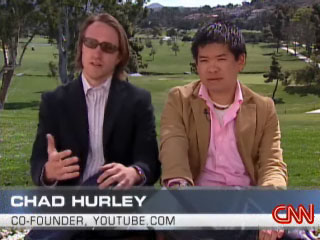
Could this be any more clear-cut an example of conflict? I don’t see how. And yet, Marketwatch editor David Callaway tells ZDNet that:

“the rigid rules of the past may not always apply to new media. Is there a potential for a conflict in Bambi’s case? Yes. Do I think we can avoid it? Yes.”

Matt Marshall of VentureBeat seems to feel that Ms. Francisco has been wronged in some way by the coverage of this story, and that it is “a non-scandal,” and many may agree with him. I am not one of them. However, he also comes to what I think is the correct conclusion: Bambi has to leave Marketwatch (to avoid what he calls “complications,” and what I would call conflicts). Either that or she has to sever her financial relationship with Vator, or make Marketwatch a partner in the venture.

An internal memo from David Callaway to Marketwatch staff is here, but it doesn’t do much to clarify the situation (at least not to me). Let’s review one thing that Mr. Callaway seems to have missed: A conflict of interest doesn’t exist or not exist because *you* say it does — it’s something that your readers or viewers get to decide on. And in many cases, the appearance of a conflict is just as bad as having an actual conflict. Staci Kramer at PaidContent is right — making this about old vs. new media is a copout.