CIA officer says he stopped Iran from getting the nuclear bomb

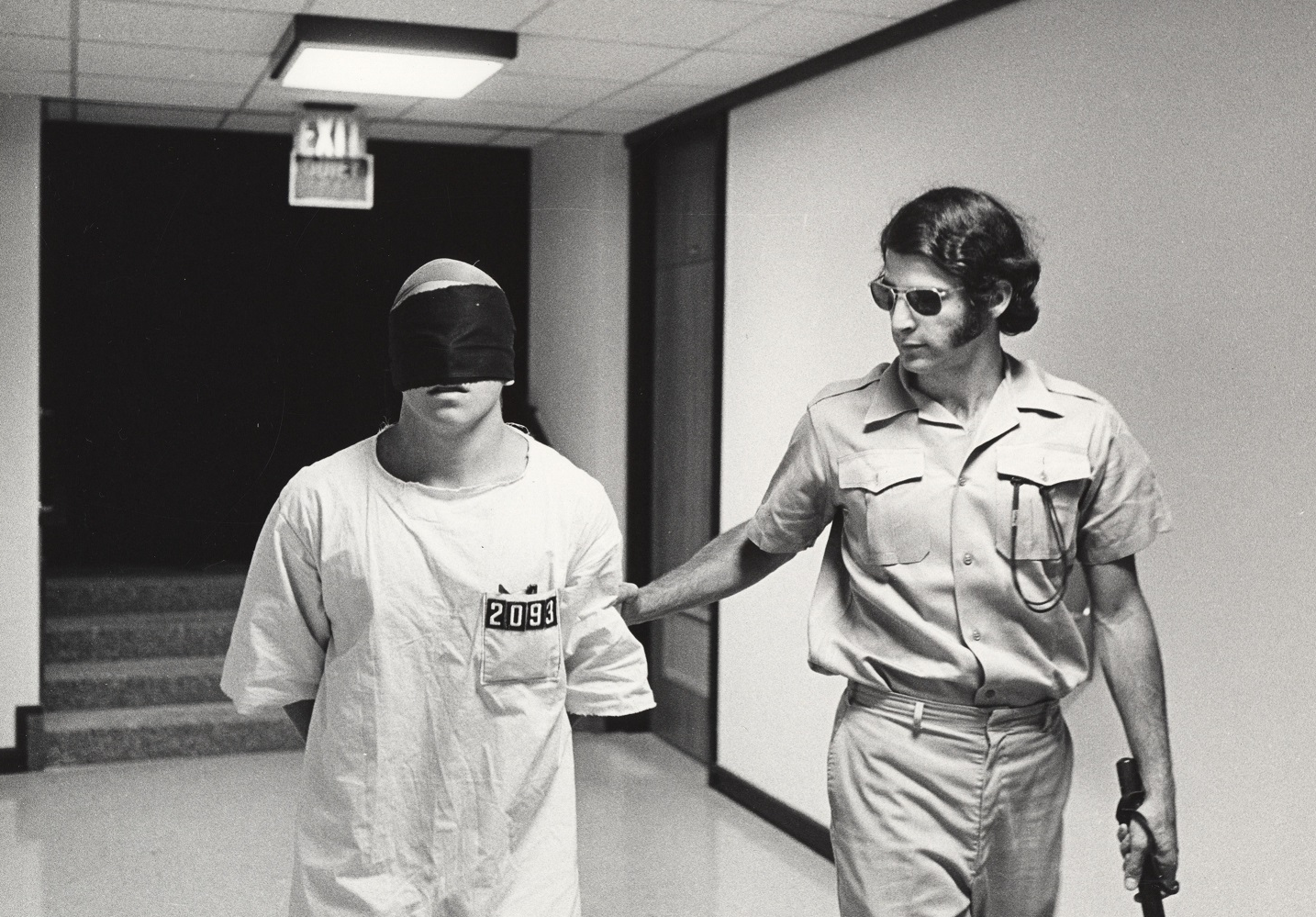
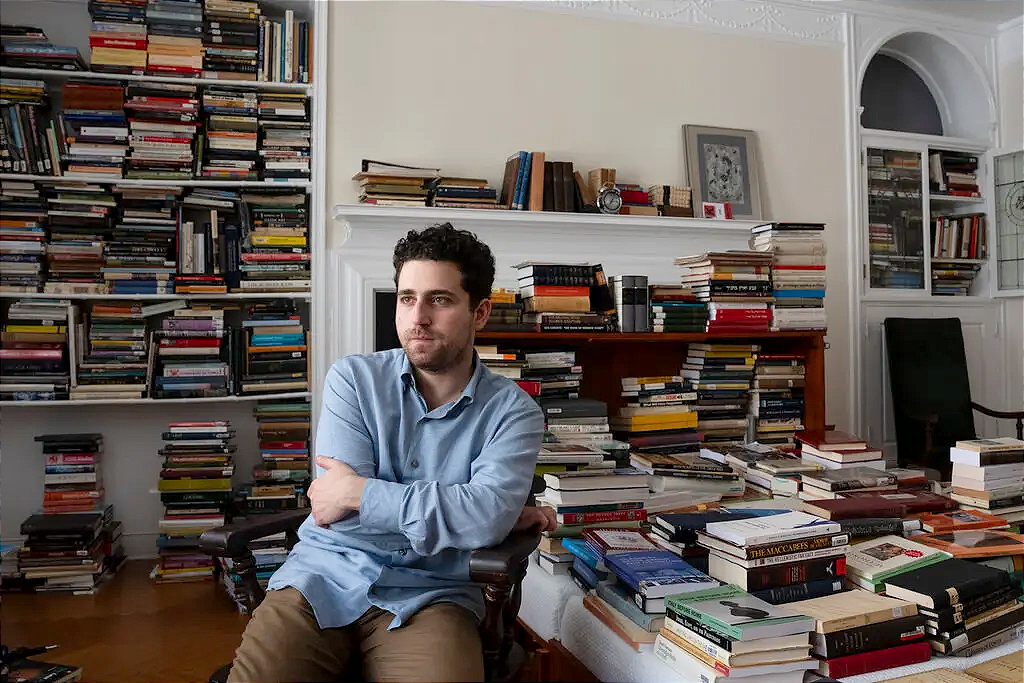
Chalker told me that he wanted to repair his reputation. He had always been an American patriot, he insisted, and to prove it he was willing to talk publicly, for the first time, about his years of clandestine work for the C.I.A. — which, he said, had “prevented Iran from getting a nuke.” He insisted that he had helped obtain pivotal information that laid the groundwork for more than a decade of American efforts to disrupt the Iranian nuclear-weapons program, from the Stuxnet cyberattacks, which occurred around 2010, to the Obama Administration’s nuclear deal, in 2015, to the U.S. air strikes in the summer of 2025. Chalker told me that, as he understood it, the Pentagon had suggested running commando operations to kill key Iranian scientists, as Israel subsequently did. But the C.I.A. proposed recruiting those scientists to defect instead, as U.S. spies had once courted Soviet physicists, and that he was involved in this program. (via The New Yorker)

These snakes become deadly killers by eating poisonous frogs and absorbing their toxins

Red-necked keelback snakes are highly toxic—mere drops of their pungent yellow poison could blind a mongoose and stop its heart within minutes. But the snakes don’t make that toxin themselves; rather, they steal it from the poisonous toads they eat.After a red-necked keelback (Rhabdophis subminiatus) eats a true toad (a member of the Bufonidae family), the snake’s intestines soak up the toxic bufadienolide molecules from the amphibian’s skin. The toxins are then shuttled into more than a dozen pairs of storage pockets in the snakes’ necks called nuchal glands. Then the snakes act fearless. They rise and jut their necks at mongooses and other would-be predators as if to say, “Go ahead — I dare you.” That brazen attitude doesn’t last, though. If their dinner has been nontoxic recently — poison-free frogs or fish, for example — these reptiles often hurriedly slither away rather than pick a fight they might lose. (via Scientific American)

Note: This is a version of my When The Going Gets Weird newsletter, which I send out via Ghost, the open-source publishing platform. You can see other issues and sign up here.

Continue reading “CIA officer says he stopped Iran from getting the nuclear bomb”

Social media may be bad for you but the remedy could be worse

Meta has been found guilty in two separate but related cases involving the alleged harms of its social platforms in the past couple of weeks. In one, a jury found that Facebook and Instagram harmed a young user with features that were addictive and either caused or exacerbated her mental distress. Meta had to pay the relatively paltry sum of $4.2 million (YouTube, which was also part of the suit, had to pay $1.8 million), but the dollar value — a sum that Meta likely makes every 10 minutes on the average day — isn’t the important part. In many ways, the decision was a landmark ruling, and when combined with the second case against Meta it could either trigger or help fuel a firestorm of related lawsuits. In the second case, a jury found that the company failed to protect its younger users from child predators, and Meta was told to pay $375 million.

Governments have been trying for at least a couple of decades to go after social platforms, arguing that they cause significant harm to users, especially younger ones. The problem is that for the last 30 years, digital platforms have been protected by something called Section 230, a clause in the Communications Decency Act of 1997, which in turn is part of the Telecommunications Act. Section 230 has been called “the 26 words that created the internet” (which is good or bad, depending on whether you like the internet or not). Without going into detail, the clause says that digital platforms like Meta and TikTok aren’t responsible for the content that their users post (it also protects people who write blogs and newsletters, but that often gets overlooked). Critics have called it a get-out-of-responsibility-free card, but haven’t managed to kill it.

So how have the courts in the two recent cases against Meta gotten past this restriction? By using an argument that gained currency in the 1990s, during lawsuits against big tobacco companies and asbestos makers. In effect, the lawyers in the cases against Meta didn’t argue that the content on Facebook and Instagram harms people, because that is protected by Section 230 — instead, they argued that the actual structure of those social products is by itself inherently addictive and therefore damaging. In other words, the argument isn’t that Facebook and Instagram are harmful accidentally, or because the company isn’t paying attention, but because they are harmful by design. As the New York Times explained in an analysis of the two recent cases:

Note: This is a version of my Torment Nexus newsletter, which I send out via Ghost, the open-source publishing platform. You can see other issues and sign up here.

Continue reading “Social media may be bad for you but the remedy could be worse”

An adrenaline junkie’s quest to become a cocaine kingpin

The British de Havilland DH-112 Venom is one of the most iconic combat jets of the Cold War, with a distinctive two-pronged tail design that stretched out far behind the main body of the aircraft and a striking red and black paint job. That was the aircraft 50-year-old Marty Tibbitts flew one summer afternoon at a Wisconsin air show in July 2018. A millionaire who made his money launching call center businesses, he regularly flew historical aircraft. People on the ground saw the Venom’s wings rock back and forth, then the plane stalled. Tibbitts crashed into a nearby barn and flames engulfed the plane and set the barn and other buildings on fire too. As news of Tibbitts’ death spread, his wife received a phone call from one of those business associates: Tibbitts, it turned out, had a secret life. The pair commissioned the construction of an elaborate underwater drone that would be stuffed with cocaine and latch onto ships with magnets. Tibbitts was the money and brains behind the operation. (via 404 Media)

WNBA players had an ace up their sleeve in pay negotiations: A Nobel Prize-winning economist

After Claudia Goldin became the first woman to win a solo Nobel in economics in 2023, she received hundreds of invitations and requests. She accepted just three.One of them was advising the WNBA players union as the women prepared to negotiate a new labor deal with the league. When Goldin replied via email to Terri Carmichael Jackson, executive director of the players union, “I remember just reading it and screaming,” Jackson said. Goldin had one requirement: She refused to be paid. This month, the two sides reached a collective bargaining agreement that gave Women’s National Basketball Association players a nearly 400% raise. Starting this season, players’ average salary will top $580,000. It isn’t just the biggest pay increase in U.S. league history. It is the biggest increase any union anywhere has ever negotiated. (via the WSJ)

Note: This is a version of my When The Going Gets Weird newsletter, which I send out via Ghost, the open-source publishing platform. You can see other issues and sign up here.

Continue reading “An adrenaline junkie’s quest to become a cocaine kingpin”

Only scientists and the military can visit this tiny Brazilian island

Ilha da Queimada Grande, to give it its Portuguese name, is a lump of rock sitting 33km off the Brazilian mainland. It has come to be known as Snake Island because of the thousands of venomous snakes that occupy its 43 hectares. The golden lancehead is a species of pit viper found nowhere else in the world. It has been evolving in isolation since rising sea levels cut it off from the mainland 11,000 years ago. At less than a metre in length, it is significantly smaller than its closest relatives, but has a reputation for being one of the most dangerous snakes on the planet. Stories abound about the potency of its venom, which is said to be fast-acting and lead to an agonising death. It is claimed there is one snake for every square metre of Ilha da Queimada Grande. Little surprise, perhaps, that only scientists and the military are permitted to visit. (via Discover Wildlife)

Can you survive inside a tornado? This scientist managed to do just that

I have seen the center of a monster. Most people describe the sound of a tornado as like a freight train, but up close, it’s more like a thousand screaming jet engines. I am one of the few people on Earth who has driven into a tornado and lived to tell the tale.While it might sound like a scene from a Hollywood blockbuster involving a high-tech armored truck, my experience was much more dangerous and terrifying.I am an atmospheric scientist who studies tornadoes, but I am only alive today because of split-second decisions and a massive amount of dumb luck. It started in northwest Kansas, where I was studying supercell thunderstorms – the kind that produce tornadoes – with a team of students from the University of Michigan.We were positioned under a thunderstorm that was so dark, we had to turn on our vehicles’ headlights in the middle of the day. Suddenly, a tornado formed and began charging directly toward us.The students were in other vehicles and got away, but my car was quickly swallowed by a cloud of flying debris so thick that I couldn’t even see my own hood. (via Scientific American)

Note: This is a version of my When The Going Gets Weird newsletter, which I send out via Ghost, the open-source publishing platform. You can see other issues and sign up here.

Continue reading “Only scientists and the military can visit this tiny Brazilian island”

Quadruple amputee cornhole pro shoots man while driving

A noted professional cornhole player who is a quadruple amputee is behind bars after authorities said he shot and killed a front seat passenger Sunday night while he was driving in Maryland. Dayton Webber, 27, was behind the wheel when he opened fire on Bradrick Michael Wells during an argument as they were traveling in a car in the town of La Plata, the Charles County Sheriff’s Office said in a statement. Webber, who lives in La Plata, pulled over and asked the backseat passengers to help pull Wells out of the car, but they refused, flagged down La Plata police and reported the shooting, the sheriff’s office said. Webber competes in the American Cornhole League, which called the case “an extremely serious matter.” Webber’s arms and legs were amputated to save his life from a serious streptococcus pneumonia blood infection when he was 10 months old. He said doctors gave him a 3% chance of surviving. (via CNN)

This librarian maintains a comprehensive list of all the items found inside borrowed books

Photographs, to-do lists, airplane tickets and quirky drawings by children are part of thousands of lost and forgotten items in library books carefully collected for years by a librarian in California. The items are now part of a collection called “Found in a Library Book” at the Oakland Public Library. Among the items are a ticket to an Oakland Athletics baseball game on April 25, 2013 and a ticket to a Heineken beer-related event dated Nov. 19, 2002. Any item found in a returned book throughout the library system gets sent to librarian Sharon McKellar, who began collecting the items 10 years ago. A few days ago, she opened envelopes containing polaroid photos, two post-it notes stuck to each other with a list of ingredients on one and a list of bible verses on another and a single square sheet of toilet paper.”I like imagining where these came from,” said McKellar, who has been with the library since 2003. (via Reuters)

That time when Catholic Europe and Protestant England each had their own calendar

The adoption of the Gregorian calendar in 1583 by Pope Gregory XII refined the schedule of leap years to more accurately reflect the length of the year, and corrected the creep of the calendar since the Roman Empire by jumping ahead ten calendar days. As you can imagine, Protestant Europe was less inclined to follow the Pope’s directives on changing the calendar, and several countries, including England, clung to the less-accurate Julian calendar. The use of different calendars created a confusing interregnum during which events happened on different dates depending on who was keeping score, England or Catholic Europe. For example, the English defeated the Spanish Armada at Gravelines on July 29, 1588 in England or August 8, 1588 in Europe. William Shakespeare died on April 23, 1616 in England, which was May 2, 1616 in Europe. Isaac Newton was born in England on Christmas Day 1642, a more memorable day than Europe’s January 4, 1643. (via Why Is This Interesting?)

Hi everyone! Mathew Ingram here. I am able to continue writing this newsletter in part because of your financial help and support, which you can do either through my Patreon or by upgrading your subscription to a monthly contribution. I enjoy gathering all of these links and sharing them with you, but it does take time, and your support makes it possible for me to do that. I also write a weekly newsletter of technology analysis called The Torment Nexus.

The mystery of the legless lizards of Taiwan

Slithering through the damp leaf litter, deep in the forests of Taiwan is an elusive creature that’s been causing confusion for decades—the Formosan legless lizard. But first, what makes this limbless reptile a lizard and not a snake? For starters, it has ears, or at least tiny external earholes, which snakes lack. It also has eyelids and can blink with them, while snakes have transparent, fused membranes protecting their eyes. Finally, it has a lateral groove on each side of its body which allows the skin to expand. While its appearance may confound those unfamiliar with the finer points of reptile classification, the distinction between snake and lizard wasn’t the source of the confusion. Instead, early naturalists originally believed there were two legless lizards lurking in the forests of Taiwan: one displayed striking blue spots, while the other lacked them. Complicating things further, the original specimen for scientists to refer back to vanished shortly after World War II. (via Nautilus)

First glimpse of sperm whale birth reveals teamwork to support newborn

A sperm whale giving birth has been assisted by 10 other females in her social unit, the first time such an event has ever been observed in non-primates. In July 2023, scientists who have been monitoring a group of sperm whales in the Caribbean since 2005 noticed that all 11 females in the group had gathered near the surface. By chance, the researchers had drones in the air and were able to observe and record the event. Shortly afterwards, the flukes of a calf started emerging from its mother. The delivery took place over the next half hour, during which the other females coordinated themselves to protect the mother and newborn. As soon as the calf was born, the female whales gathered around and took turns making sure that it was kept lifted at the surface so it could breathe and had time for its flukes to fully unfurl. In the first few hours, newborn sperm whales aren’t buoyant and cannot stay at the surface on their own, so such assistance is thought to be critical to prevent calves from drowning. (via New Scientist)

The Rolling Stones song Satisfaction played on rubber chickens by a man in a tuxedo

Acknowledgements: I find a lot of these links myself, but I also get some from other places that I rely on as “serendipity engines,” such as The Morning News from Rosecrans Baldwin and Andrew Womack, Jodi Ettenberg’s Curious About Everything, Dan Lewis’s Now I Know, Robert Cottrell and Caroline Crampton’s The Browser, Clive Thompson’s Linkfest and Why Is This Interesting by Noah Brier and Colin Nagy. If you come across something you think should be included here, feel free to email me at mathew @ mathewingram dot com

He was the most successful double agent of all time

Juan Pujol was born in Barcelona in 1912 to a family of moderate means and liberal political beliefs. The onset of war in 1939 convinced him that he should make a contribution to the good of humanity. He decided contact the British authorities and offer to spy against Germany. Each time his approaches were rebuffed. In contrast, Pujol had no difficulty making contact with German Intelligence in Madrid, sayinghe was a Spanish government official of fanatical pro-Nazi persuasions. He was given a crash course in espionage. Instead of travelling to England, Pujol actually moved to Lisbon and began work creating a network of wholly imaginary sub-agents. By 1944 Pujol and Harris, working together, had invented no fewer than 27 sub-agents, each with full life stories. The fictional agents included such characters as a Venezuelan in Glasgow, an indiscreet US army sergeant and a Welsh nationalist leading a group of Fascists called the “Brothers of the Aryan World Order” in Swansea. (via MI5)

People who lose their vision sometimes develop a condition where they see imaginary things

For those stricken with Charles Bonnet Syndrome, the world is occasionally adorned with vivid yet unreal images. Some see surfaces covered in non-existent patterns such as brickwork or tiles, while others see phantom objects in astonishing detail, including people, animals, buildings, or whatever else their minds may conjure. These images linger for as little as several seconds or for as much as several hours, appearing and vanishing abruptly. They may consist of commonplace items such as bottles or hats, or brain-bending nonsense such as dancing children with giant flowers for heads. Most of those afflicted with Charles Bonnet Syndrome are people in the early stages of sight loss, and the hallucinations usually begin while their vision is still present but slowly diminishing. (via Damn Interesting)

Note: This is a version of my When The Going Gets Weird newsletter, which I send out via Ghost, the open-source publishing platform. You can see other issues and sign up here.

Continue reading “He was the most successful double agent of all time”

His obsession with jewelled eggs destroyed his family

When I was growing up, my mother used to refer to the egg as “your father’s ego”, while to the rest of the world it was known as the Argyle Library Egg by Kutchinsky. I felt a mix of pride and bafflement towards my father’s creation. I was thrilled to take its Guinness World Records certificate to school to show my friends, but I didn’t understand why anyone would want an egg that big which wasn’t made out of chocolate. But after the egg, life was never the same. It came to bear responsibility for the loss of our century-old business, the implosion of my parents’ marriage and Dad’s untimely death. After the family firm was sold, the egg was seized by creditors and locked away. It vanished but its shadow lingered. Mum raged against it as if it were human. A villain that stole her livelihood and husband, and robbed her children of a father. I was meant to hate it, too. But I couldn’t. Just like I couldn’t hate Dad when he left. (via The Guardian)

Buster Keaton’s films were all destroyed and then James Mason bought his house

During Buster Keaton’s golden era, he helped to design his house behind the Beverly Hills Hotel. The house contained a movie theatre, complete with a projector, perfect for showing guests unfinished films. Although Keaton loved the villa, when he divorced Natalie, she took his fortune and property. According to filmmaker Jim Jarmusch, when Keaton’s career was disintegrating, “the studio said, ‘look, all of your films… we are reclaiming the silver out of the copies of these films.’ […] So all of these masterpieces that Buster Keaton created were gone. And they were gone. And he lived his life until the 1950s, just accepting that all of this work that he had done will never ever be seen.” However, in 1948, Pamela Mason, the wife of British actor James Mason, became enamoured by his former house. While refurbishing it, the Masons took down a wall in part of a screening room and found pristine prints of Keaton’s films. (via Far Out magazine)

Note: This is a version of my When The Going Gets Weird newsletter, which I send out via Ghost, the open-source publishing platform. You can see other issues and sign up here.

Continue reading “His obsession with jewelled eggs destroyed his family”

Are we having the wrong nightmares about AI?

There are lots of potential nightmares when it comes to artificial intelligence. In a recent Torment Nexus I wrote about how the U.S. government seems hell-bent on using AI to engage in mass surveillance of American citizens (and probably lots of other people as well) and also to pilot autonomous murder drones. Obviously both of these things would be bad, especially given the fact that AI models love to hallucinate or “confabulate,” as AI pioneer Geoffrey Hinton likes to call it. And then there’s the science-fiction style nightmares — like the invention of Skynet, the all-powerful AI from the Terminator movies, or the killer robots from the movie I, Robot (which were controlled by a human being, to be fair). Or the somewhat bizarre nightmares of the effective altruism crowd, such as the paperclip problem or the Roko’s Basilisk thought experiment, which posits that if there is an all-powerful AI, it might be mad that we didn’t bring it into being sooner, and punish anyone who wasn’t spending every minute of their day doing so.

There’s also just the general nightmare around what happens if an AI becomes conscious. As I wrote in another recent Torment Nexus, a large part of the discussion is concentrated on whether an AI could become conscious in the way we understand that term, and there is also some debate over whether maybe some of the current ones have already achieved that goal. This is connected to the debate over whether we are close to achieving AIs with what some call “artificial general intelligence” or AGI — which is usually understood to mean intelligence that can do most of the tasks that an average human being can, across a wide range of skills, as opposed to AIs that are good at math or code. My favourite part of this discussion is that it reinforces the fact that we — even experts in the fields of psychology and sociology — aren’t a hundred percent sure what consciousness consists of, and how to prove that human beings have it, let alone whether AIs do. And if an AI does become conscious in a way that we recognize, then what? How should we respond to it, if at all? What does it require of us? I’ve written about that as well.

Then there are more prosaic nightmares about the potential disruption caused by AI, such as the impact on the job market and the economy. We’ve already seen a hint of that impact, whether it’s on journalists or programmers or marketing copywriters — companies like Block and Atlassian have decided they don’t need as many employees (although some believe that these layoffs are for other reasons, such as overspending on hiring during times of low interest rates, and that AI is just an excuse). For the near future at least, economists expect that there will always be a need for humans in the loop, as the saying goes, if only to double-check for hallucinations or check the AI’s work in some other way. But in the longer term, it seems at least possible that a large category of jobs could either go away entirely or become significantly reduced, to the point where the human in the loop is just a babysitter or someone who checks a box. So that’s a separate kind of nightmare from the “giant robots exterminate mankind” variety.

Note: This is a version of my Torment Nexus newsletter, which I send out via Ghost, the open-source publishing platform. You can see other issues and sign up here.

Continue reading “Are we having the wrong nightmares about AI?”

He said he was kidnapped and forced to play football for his life

Mauricio Morales was leading a group of migrants he had found at a bus station through Mexico City’s San Rafael neighbor­hood. They had just crossed a busy boulevard and were making their way down a side street when the five large utility vans lurched to a stop in front of them. Men with machine guns, wearing tactical gear, spilled out and started barking orders and threats. Were they police? Military? Mau couldn’t tell. Within seconds, the migrants were being shoved into the vans. When Mau tried to resist, something hard hit him on the head, and he fell to the ground. As he was loaded into the back of one of the vans, he heard gunshots. After some research, they discovered that they had inadvertently kidnapped a world-class athlete—­an Olympic runner who’d competed in Beijing, London, and Rio de Janeiro. This was serendipitous, Don Paco explained, because he happened to be in the market for athletes. (via The Atlantic)

This American high roller lost a staggering $200 million gambling in Las Vegas

Terrance Watanabe inherited Oriental Trading Company, a company selling party supplies, arts and crafts, toys, novelties, and school supplies founded by his father Harry Watanabe. After selling his company, Watanabe became known for his lavish gambling habits. In 2007, he was reported to have lost $127 million at Caesars Palace and The Rio in Las Vegas after having gambled a total of $825 million. He was banned from Wynn Las Vegas for compulsive gambling. Watanabe is estimated to have lost approximately $204 million. Caesars Entertainment was fined $225,000 by the New Jersey Gaming Commission for allowing Watanabe to continue gambling in a highly intoxicated state. Caesars Rewards created a special tier for him known as Chairman” which ranks above Seven Stars. Watanabe received tickets to the Rolling Stones, $12,500 a month for airfare, and $500,000 in credit at the gift stores. Harrah’s also offered 15% cash back on table losses greater than $500,000 and other incentives. (via Wikipedia)

Note: This is a version of my When The Going Gets Weird newsletter, which I send out via Ghost, the open-source publishing platform. You can see other issues and sign up here.

Continue reading “He said he was kidnapped and forced to play football for his life”

Amelia Earhart sent distress signals that were ignored

Dozens of previously dismissed radio signals were actually credible transmissions from Amelia Earhart, according to a new study of the alleged post-loss signals from Earhart’s plane. The transmissions started riding the air waves just hours after the pilot sent her last in-flight message. The study, presented by researchers of The International Group for Historic Aircraft Recovery, sheds new light on what may have happened to the legendary aviator 75 years ago. “Amelia Earhart did not simply vanish on July 2, 1937. Radio distress calls believed to have been sent from the missing plane dominated the headlines and drove much of the U.S. Coast Guard and Navy search,” said Ric Gillespie. “When the search failed, all of the reported post-loss radio signals were categorically dismissed as bogus and have been largely ignored ever since,” he added. (via NBC News)

Platypus biology turns out to be even weirder than scientists originally thought

One glance at the platypus and you’ll forgive the naturalists who assumed it was a clever hoax upon first encountering preserved specimens more than 200 years ago. After all, the creatures appear to be a jumble of contradictions—they look like beavers but have duck bills, they’re mammals that lay eggs, and they produce milk without nipples. Platypuses glow under ultraviolet light, sense electricity through their bills, have a bewildering multitude of sex chromosomes, and the males possess venomous spurs behind their legs. Now, new research has added another oddity to the list: biologists from Belgium looked at platypus melanosomes—specialized pigment-bearing organelles inside cells—under an electron microscope. To their surprise, they discovered that the melanosomes were hollow and spherical. Previously, only birds were thought to possess hollow melanosomes, which produce more vibrant iridescent colors. (via Nautilus)

Note: This is a version of my When The Going Gets Weird newsletter, which I send out via Ghost, the open-source publishing platform. You can see other issues and sign up here.

Continue reading “Amelia Earhart sent distress signals that were ignored”

A skull sitting in a bank vault in Paris could be Henry IV’s

After his assassination on May 14, 1610, King Henry IV was embalmed and prepared for the grave. This was followed by about seven weeks of preparation and ceremony before he was buried at the basilica of Saint Denis, the traditional resting place of French kings. And there he rested until 1793, when the Revolution came calling. The government decided to celebrate the one year anniversary of the First Republic by desecrating the graves of all the royals buried at Saint Denis. When they opened his tomb, Henri’s body was apparently in a remarkable state of preservation. So much so they supposedly made a new death mask from his well-preserved face! They even propped him up for two days on display before adding him to the mass grave. Time passed, Napoleon did his thing, and Louis XVIII, who was Louis XVI‘s brother, was on the throne. As a Bourbon, he wanted to honor his ancestors and have the bones dug up and placed back in Saint Denis. And here’s where it gets even weirder. (via Paris Gone By)

What it’s like to take a guided tour of an abandoned shopping mall

Aryeh is here to take us to the mall — or, more accurately, to several malls, most of which are almost completely abandoned. In his spare time, he runs an organization called Liminal Assembly, which shuttles people through a series of decaying suburban shopping malls around the Greater Toronto Area, places that seem stuck in purgatory. Last winter, I stumbled upon an Instagram post advertising a party being held at an aging retail complex in Toronto’s Yorkville neighbourhood. Cumberland Terrace had somehow occupied the corner of Bay and Bloor Streets since the 1970s, wedged between luxury towers and some of Canada’s most expensive commercial real estate. I’d cut through its ghostly pathways hundreds of times en route to the subway, perplexed by its perpetually shuttered food court and wall of pay phones, its increasingly dwindling storefronts. It seemed out of place, occupying neither past nor present. (via Hazlitt)

Note: This is a version of my When The Going Gets Weird newsletter, which I send out via Ghost, the open-source publishing platform. You can see other issues and sign up here.

Continue reading “A skull sitting in a bank vault in Paris could be Henry IV’s”

Pokemon Go created a 3D map of the world – but for what?

You may have seen the recent headlines about how a company called Niantic Spatial is using a database of real-world locations that was originally compiled by players of the mobile game Pokemon Go — a game that launched about a decade ago and quickly became an obsession for tens of millions of people, young and old. Niantic Spatial says it plans to use the 3D models and locations to make it easier for delivery robots to find specific addresses in order to drop off pizza or groceries or whatever they are doing. The company was spun off from Niantic last year, after it sold Pokemon Go and its other games to a company called Scopely, which is ultimately owned by the sovereign investment fund of Saudi Arabia. Pokemon Go and other Niantic games will still run on Niantic Spatial’s data, but the world they helped build will be used for something else now.

Niantic Spatial, not surprisingly, is pretty excited about how all this data has helped the company build what it calls a Visual Position System, using more than a million location models as the core of its Spatial Platform. The company is also pitching its tools to companies that want to create virtual reality or augmented reality experiences that can be hosted online or beamed into VR and AR glasses from Meta and others. However, some current and former Pokemon Go players don’t seem to love the idea that they and their smartphones were dragooned into a massive surveillance program that mapped real-world locations without their knowledge. “500 million people played pokemon go, scanned every street, building, and corner on earth [and] thought they were catching pikachu,” said one user on X. “Niantic was building a 30 billion image AI map of the world now powering delivery robots… you were the product the whole time.”

The company’s website says that in addition to the database of more than 30 billion images and locations from Pokemon Go, it is also doing its own real-time three-dimensional data capture using drones and other technologies, so that its customers can generate models of their stores or warehouses or mining operations and what have you. In many cases, Niantic says, traditional global positioning systems don’t provide enough granularity or detail within large cities for delivery robots to find specific physical addresses, but its location models can do so in almost every single major city in the world. “AI that understands the physical world,” Niantic says. “We are building a living model of the world that people and machines can talk to.” The Large Geospatial Model (LGM) is built on “real world data from ground and overhead sensors.”

Note: This is a version of my Torment Nexus newsletter, which I send out via Ghost, the open-source publishing platform. You can see other issues and sign up here.

Continue reading “Pokemon Go created a 3D map of the world – but for what?”

Dostoevsky wrote a book in a month to pay off gambling debts

At the age of 39, Dostoevsky starts publishing a literary magazine called Time with his brother. The following year the magazine is forced to close, due to a misunderstanding with the government about an article they published concerning Russia. Dostoevsky travels to Europe and experiences his first loss at the roulette wheel. He is reduced to pawning his possessions to survive. In April 1864, his first wife dies, and two months later, so does his brother. He invests all of the money he has in a new magazine, and also unwisely assumes all his brother’s debts, which means his financial freedom is tied to the success of the magazine. The magazine collapses a year later due to lack of funds. Dostoevsky signs a merciless contract with a publisher that requires him to deliver a book within a year, or he will lose the rights to anything he writes for the next nine years. He returns to Europe and loses all the money he has. (via Roulette Star)

He’s planning to sail a boat that is four feet wide and less than five feet long across the Atlantic

There’s a long history of people sailing across an ocean by themselves, or attempting to. Usually they are in small boats, which are easier to handle, which gives us the term “microyacht.” As the boats got smaller, the competitive nature of the sport went from the accomplishment of making it across the ocean to racing other solo sailors to seeing who can make the smallest boat to get there in. Andrew Bedwell is no novice in solo sailing, or even microyachting. His newest boat is the smallest yet, and will set a new world record if he makes it across the Atlantic in May. The microyacht, called the Big C V2, is only 4.5 feet wide. How long is it? He won’t reveal that, but it is shorter than the current record holder, which was 5 feet, 4 inches long (1.63 meters). It is made of aluminum and carries solar panels, a power system, food and water, sails, and even has room for Bedwell to stretch his legs out when sitting inside. (via Neatorama)

Note: This is a version of my When The Going Gets Weird newsletter, which I send out via Ghost, the open-source publishing platform. You can see other issues and sign up here.

Continue reading “Dostoevsky wrote a book in a month to pay off gambling debts”

After she killed her husband she wrote a book on grief

A Utah woman who wrote a children’s book about coping with grief after her husband’s death was convicted of aggravated murder in his death by poisoning him with fentanyl. Jurors on Monday also found Kouri Richins guilty of fraudulently claiming insurance benefits after the death of Eric Richins in March 2022 at their home outside the ski town of Park City. Prosecutors say Kouri Richins slipped five times the lethal dose of the synthetic opioid into a cocktail that he drank. She was also convicted of other felony charges, including an attempted murder charge in what authorities alleged was another effort to poison her husband weeks earlier on Valentine’s Day with a fentanyl-laced sandwich. Richins was $4.5 million US in debt and falsely believed that when her husband died, she would inherit his estate worth more than $4 million US. After her husband’s death, Richins self-published a children’s book about grief to help her sons and other kids cope with the loss of a parent. (via the CBC)

That time the Soviet Union fired a secret space cannon while in orbit

A quarter-century after the Cold War came to a close, the only cannon that actually fired in space has finally come to light. Installed on the Almaz space station in the 1970s, the R-23M Kartech was derived from a powerful aircraft weapon; Aron Rikhter designed the original 23-millimeter cannon for the Tupolev Tu-22 Blinder supersonic bomber. That gun is relatively well known, but its space-based cousin has largely remained in obscurity. From the dawn of the Space Age, the prospect of American spacecraft approaching and inspecting Soviet military satellites—which, according to the Kremlin’s propaganda, were not even supposed to exist—terrified the secrecy-obsessed Soviet military. A team of scientists developed a 14.5-millimeter rapid-fire cannon that reportedly could hit targets as far as two miles away. Depending who you ask, the 37-pound weapon could fire from 950 to 5,000 shots per minute, blasting 200-gram shells at a velocity of 690 meters per second. (via Popular Mechanics)

Note: This is a version of my When The Going Gets Weird newsletter, which I send out via Ghost, the open-source publishing platform. You can see other issues and sign up here.

Continue reading “After she killed her husband she wrote a book on grief”

He says the infamous skyjacker D. B. Cooper was his father

The FBI is reinvestigating infamous thief D.B. Cooper’s unsolved 1971 skyjacking of Northwest Orient Flight 305, despite having publicly declared the case closed in 2016. Richard Floyd McCoy Jr., a Vietnam veteran and experienced skydiver who carried out an almost identical skyjacking five months after Cooper, is one suspect being closely examined. His son, Richard McCoy III, supplied the bureau with a DNA sample to test against any remaining evidence roughly six months ago. He has also handed over one of his dad’s old parachutes and a logbook detailing practice jumps his father conducted before the Cooper hijacking and his copycat stunt in 1972. Rick told The U.S. Sun that he’s convinced his dad was DB Cooper. He claims his mom, Karen McCoy, told him and his sister on numerous occasions that their dad was the infamous skyjacker and that she helped plan both of his heists. (via The Sun)

Darwin’s kids doodled all over the original copy of his famous book On The Origin Of Species

Charles Darwin was not the only artistic, creative mind in the Darwin household. While Darwin’s manuscripts and journals are full of sketches of the natural world, many of his children inherited a similar love of art and nature. Darwin and his wife and first cousin Emma had ten children together – six boys and four girls, seven of whom survived into adulthood. At some point the Darwin children found their father’s masterpiece, On the Origin of Species by Means of Natural Selectionor the Preservation of Favoured Races in the Struggle for Life (1859), and drew all over it. George Darwin drew a taxonomy of the British infantry. Francis Darwin doodled a salad. One of them drew a caricature of Darwin. Scholars suspect that many of the drawings came from Francis, who went on to follow his father’s footsteps and become a botanist himself. The pictures show a young mind with a keen interst in the outdoors—from the swarms of gnats clustered around a flower to the flock of birds in the English sky. (via The Smithsonian)

Note: This is a version of my When The Going Gets Weird newsletter, which I send out via Ghost, the open-source publishing platform. You can see other issues and sign up here.

Continue reading “He says the infamous skyjacker D. B. Cooper was his father”