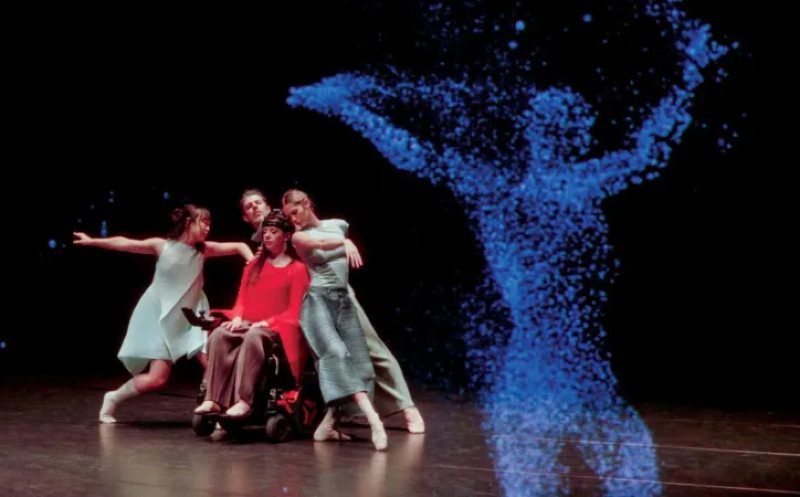

A ragtag group of artists have taken over Bombay Beach

It is easy to miss California’s biggest environmental disaster. Driving north on Highway 111, you wouldn’t expect to find an inland sea. If it’s summer, the thermometer in your car could read 115 degrees. But amid the shimmering heat, there are signs of water. All around you, rows of broccoli, lettuce, and alfalfa stretch in every direction. In the fields, farmworkers bend and straighten. The air is sharp with cow dung. A pall of dust hangs over everything. You are sixty miles north of the Mexican border. You’re driving out of poverty and into money, away from one of the poorest counties in California and toward towns named for oases. Palm Springs. Rancho Mirage. The left turn is easy to miss, the brown sign a seeming anachronism: “Bombay Beach.” Surely there is no town here, you think, let alone a beach. But if you continue, you’ll see hints of life. In the distance, a squat building hangs on under the punishing sun. (via The Believer)

Three-year-old chess prodigy becomes youngest player to earn official rating

India’s Sarwagya Singh Kushwaha has become the youngest player in chess history to earn an official Fide rating at the age of three years, seven months and 20 days. The chess prodigy edged out the previous record of compatriot Anish Sarkar, who was three years, eight months and 19 days when he reached the milestone in November last year. Kushwaha, who is enrolled in nursery school in the Indian state of Madhya Pradesh, holds a rapid rating of 1,572. To achieve a rating from Fide, the International Chess Federation, a player needs to beat at least one Fide-rated player. A rating is a score that measures a chess player’s strengths based on their performances and is not the same as a ranking. World No 1 Magnus Carlsenis the top in rapid chess with a rating of 2,824. Kushwaha defeated three rated players in events across his state and other parts of the country to secure his record-breaking status. (via The Guardian)

Note: This is a version of my When The Going Gets Weird newsletter, which I send out via Ghost, the open-source publishing platform. You can see other issues and sign up here.

Continue reading “A ragtag group of artists have taken over Bombay Beach”

A volcanic eruption may have led to the spread of the Black Death

The infamous Black Death — a pandemic that killed as many as one third to one half of Europeans within just a few years — may have been aided in its devastation by an unknown volcanic eruption. That’s the hypothesis presented in research published December 4 in Communications Earth & Environment, which argues that the eruption triggered several seasons of climate instability and crop failures. That instability, in turn, forced several Italian states to import grain stores from new sources—specifically, from regions surrounding the Black Sea. Riding along on those grain stores, the researchers posit, were fleas infected with Yersinia pestis, the bacterium that causes the plague. (via Scientific American)

Research shows cold pizza might be better for you than hot pizza

Your first thought on hearing this is probably “Why? Why is leftover pizza healthier for me?” And the answer has to do with what happens when you cool the delicious crust. When you cool a pizza to below 40 degrees Fahrenheit, some of the starches in the dough will start to mingle together to form these long chains called resistant starches. They resist digestion, and another word for a carbohydrate that resists digestion is fiber! And even if you reheat the pizza, the chains stay intact, so your body doesn’t break them down to sugar. They mostly pass through. This could help reduce blood sugar spikes for people with diabetes or people who just need more fiber for a healthier gut. And this seems to work for a lot of starches, like rice, pasta, potatoes—even beans and lentils. Heating then cooling the starch changes its properties. It’s like tempering chocolate or forging a stronger steel. (via Scientific American)

Note: This is a version of my When The Going Gets Weird newsletter, which I send out via Ghost, the open-source publishing platform. You can see other issues and sign up here.

Continue reading “A volcanic eruption may have led to the spread of the Black Death”

How playing Santa Claus at Macy’s changed his life

Santa Claus was nursing a beer at an uptown dive bar. The neighborhood was gentrifying, and management seemed eager to accommodate—there was scented soap in the bathroom and twenty-two-dollar lobster rolls. But the place couldn’t outrun the regulars. They drank tumblers of Irish whiskey filled to the brim, illicit pours they secured with ten-dollar tips to a curvy Dominican bartender. Santa — Billy — was fiftyish, with a modest gut, gray hair, a lustrous beard, and a caddish gaze that followed the bartender up and down the rail. He was dressed in sweatpants and a T-shirt. For the price of three beers, he told me his story. As a young man, Billy had come to New York to be an actor. These were bad years, shameful even. He lost his job. He lost his wife. Lost touch with his young son too. He was overweight and undershaved. A friend had a weird idea: Billy could try playing Santa Claus at Macy’s. And that’s what Billy did. (via Esquire)

It’s illegal to sell chewing gum in Singapore and has been since 1992

The sale of chewing gum in Singapore has been illegal since 1992. Some motivations for the ban included stopping the placement of used chewing gum in inappropriate and costly places, such as the sensors of subway doors, inside lock cylinders, and on elevator buttons. Chewing gum was causing maintenance problems in high-rise public-housing apartments, with vandals disposing of spent gum in mailboxes, inside keyholes, and on lift buttons. Gum stuck on the seats of public buses was also considered a problem. Since 2004, an exception has existed for therapeutic, dental, and nicotine chewing gum, which can be bought from a doctor or registered pharmacist. It is not illegal to chew gum in Singapore, but it is against the law to import it and sell it, apart from the aforementioned exceptions. According to a BBC News article, it is legal for a traveler to bring in a small amount of chewing gum for personal use, and there is a fine for spitting the gum out in an inappropriate place.   (via Wikipedia)

Note: This is a version of my When The Going Gets Weird newsletter, which I send out via Ghost, the open-source publishing platform. You can see other issues and sign up here.

Continue reading “How playing Santa Claus at Macy’s changed his life”

One of my favourite stories of the year

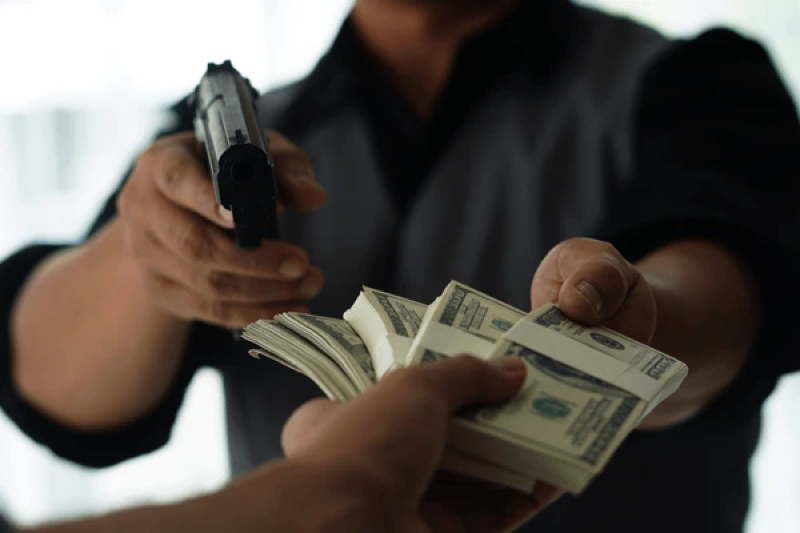
If you didn’t see the image at the top of this post, it appeared on the photo wires and in many newspapers and other media outlets following the brazen robbery of the Louvre in Paris, where a group of thieves stole jewellery and other artifacts worth about $100 million (some of the thieves have since been caught). But the theft itself isn’t my favourite part of this story — not even the part where the password the Louvre allegedly used for their video surveillance system was the word “password.” The photo instantly went viral because of the extremely dapper individual in the fedora and vest with the umbrella — “please let this be the French detective assigned to the case,” said one post.

The best part was when the dapper chap’s real identity was revealed a few days later: his name is Pedro Elias Garzon Delvaux, and he is a 15-year-old who lives with his parents and grandfather in Rambouillet, 30km from Paris. He is a fan of Sherlock Holmes and Hercule Poirot, and just likes dressing up in that kind of outfit, especially when he is going out to visit places like the Louvre. He just happened to be walking by the police cordon when a photographer snapped that shot. It’s just so perfect, so serendipitous. And he sounds like a terrific young man — he says “I like to be chic — I go to school like this.” But not with the fedora, that’s reserved for weekends, holidays and museum visits.

I guess books are okay…

but nothing beats a good hand-illustrated manuscript, am I right? You know, by a monk who really knows his stuff. Or a good old papyrus for that matter. I mean, it was good enough for our ancestors, right? They did okay with their papyruses and whatnot. What do we need with all these so-called “books.” Dumb word anyway. Waste of time and money.

They tried to raise an army and invade an island near Haiti

Two men from North Texas have been charged over violent plans that included an armed coup on the Haitian island of Gonave, according to the Justice Department. Gavin Weisenburg, 21 years old of Allen, and Tanner Thomas, 20 years old of Argyle, along with other co-conspirators planned to murder all men on the Haitian territory before taking over the island, and enslaving the women and children as “sex slaves,” according to an indictment filed in U.S. District Court on Thursday. “The co-conspirators conducted research, reconnaissance, recruiting, planning, and sought training to effectuate their plan,” the indictment reads. “It was the goal of the conspiracy to take military control of the Island of Gonave by murdering all the men on the island and capturing all the women.” Both men are charged with conspiracy to kill or kidnap persons in a foreign country and face one count of producing child pornography. (via NPR)

The man who wrote Apocalypse Now also created the Ultimate Fighting Championship

John Milius got an Academy Award nomination for penning the Apocalypse Now screenplay and also wrote and directed Conan the Barbarian. But, Milius’s larger-than-life persona extends far beyond the world of cinema. For 29 years, UFC has been a juggernaut in the world of combat sports. While CEO Dana White has long been viewed as the face of the organization, it was Milius, along with several others, who helped to conceptualize UFC in the first place. Milius saw himself in many of the male characters that he crafted, which led to him pursuing several high-octane activities, including shooting guns, surfing, and Brazilian jiu-jitsu. Milius’s teacher was a man named Rorion Gracie, a skilled BJJ practitioner whose father Helio actually helped develop the now widely-popular self-defense martial art. Eventually, Milius’s interest in Brazilian jiu-jitsu morphed from a pastime to a lucrative business opportunity. (via MovieWeb)

Note: This is a version of my When The Going Gets Weird newsletter, which I send out via Ghost, the open-source publishing platform. You can see other issues and sign up here.

Continue reading “They tried to raise an army and invade an island near Haiti”