
Twenty-five years ago today the Globe leaped into the future

I remember it like it was yesterday, even though it was a quarter of a century ago: The day the Globe and Mail newspaper in Toronto flipped the switch (or switches) and a live news website suddenly appeared at globeandmail.com. Imagine — actual news being posted on the internet directly from computers! It was a spectacular thing at the time, real groundbreaking stuff — although as I am writing about it I feel the same way I do when I tell my children that we used to have a dial phone and a party line (ask your grandparents about that last one). The launch was five years after a colleague and I mocked up a website using borrowed HTML and showed it to some of the senior editors at the paper, as an illustration of what we might be able to do if we got on the old information superhighway. The New York Times was getting online, I said, as well as smaller entrepreneurial papers like the News and Observer. There was little to no interest. After all, the internet was a plaything for nerds, not a place where real people did real things!

Not surprisingly, I like to describe this story in a way that makes me seem like a visionary and the Globe like a stodgy stick-in-the-mud (which it was, of course). But in addition to uncertainty about the whole internet thing — and a marked preference for proprietary solutions like Pointcast — there were other business considerations in play as well, as my former boss Ed Greenspon hints at in his LinkedIn post recalling the launch (which was apparently codenamed Rowboat, something I didn’t know until today). At the time, the Globe had a very lucrative deal selling something called InfoGlobe — an old-fashioned text database of news stories — to corporate customers and libraries for huge sums of money, and no one wanted to kill the goose that laid the golden eggs by messing around with some nerdy vision of access for everyone via the Interweb. Also, the Globe was in the midst of a bitter newspaper war with Conrad Black’s National Post, and all the publisher cared about was getting more people reading the paper version.

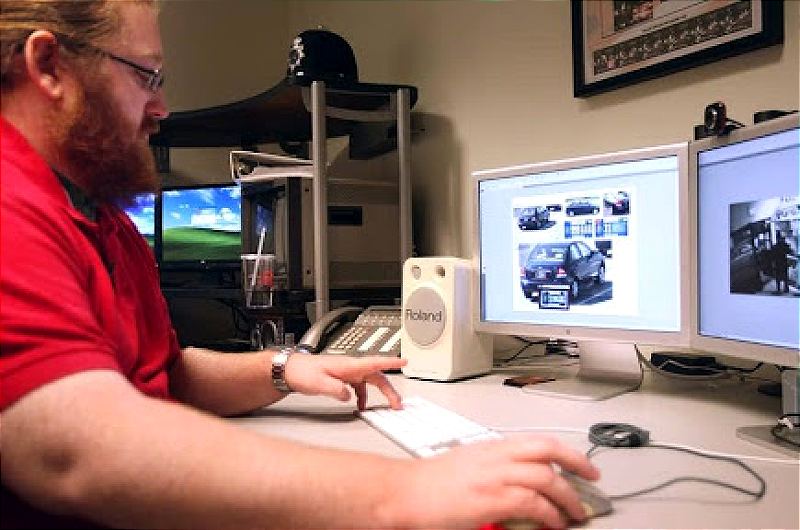
Somehow, despite all these obstacles, and thanks to the efforts of Ed and Neil Campbell and a host of others, the site went live on this day in 2000. It looks comical now, the height of late 1990s web design (below is a somewhat blurry printout of what it looked like on launch day, courtesy of Kenny Yum), but it was a magical thing. I wrote a launch column in which I said the internet was the best thing to happen to journalism since the typewriter. I believed it at the time, and in some ways I still believe it — even though I have seen in the years since that launch all the myriad ways in which both journalists and non-journalists can foul that nest. But at the time, we knew nothing about Gamergate, or 4chan, or Russia’s Internet Research Agency, or the fact that in the future, people would use the internet primarily to start fights with people from other backgrounds, and to push conspiracy theories about September 11 and the moon landing and how online retailers are shipping children around in furniture as part of a sex trafficking ring run by Hillary Clinton.

Continue reading “Twenty-five years ago today the Globe leaped into the future”

That time I paddled to the US and back

While trying to ignore [gestures vaguely in all directions] my wife and I decided to join her brother and sister-in-law at their campsite at Brown’s Bay near Gananoque, on the St. Lawrence River, home of the so-called Thousand Islands (I’m sure there are far more than a thousand). I’ve seen many of them from the Thousand Islands Bridge, which is a major Canada-US border crossing, but I’ve never spent much time there. And since I try never to go anywhere without my kayak (unless it’s wintertime of course) I decided to head out into the river from Brown’s Bay.

I knew from looking at Google Maps that the Canada-US border was partway across the river, which looked to be about five miles across where we were. Wouldn’t it be funny, I thought, if I paddled across the border and into the US? There were some interesting-looking islands that appeared to be fairly close (about 1.5 miles according to Google), so I paddled up the shore with the intention of paddling down-wind at an angle to get to the islands, since the waves seemed too heavy to risk going across the wind.

About halfway across the deeper part of the river (not the deepest, though, because  the shipping lane that freighters use on the other side of the border is far deeper) I started to wonder whether I had made a mistake. The waves were quite high, with white caps every so often, and I was cutting at such an angle that they washed over me from time to time. And I didn’t have a skirt, so nothing to keep them from swamping the boat (I do know how to do a deep-water self-rescue in a kayak though, so please don’t be alarmed).

Continue reading “That time I paddled to the US and back”

Marc Garneau’s tips on waiting for the shuttle to take off

A Canadian legend passed away this week when former Canadian astronaut and cabinet minister Marc Garneau died at the age of 76, after a battle with not just one type of cancer but two (lymphoma and leukemia), both of which he was diagnosed with earlier this year. He was a former combat engineer in the Canadian Navy and became the first Canadian to go into space in 1984 on the space shuttle Challenger, and after that became the president of the Canadian Space Agency and a mentor to all the Canadian astronauts that followed, including everyone’s favourite singing astronaut, Chris Hadfield. After that he was elected as a member of Parliament and served in a variety of roles for 14 years, including as Transport Minister and Minister of Foreign Affairs.

In a previous lifetime, when I was a reporter with the Globe and Mail newspaper in Toronto, I got to spend some time with both Marc Garneau and Chris Hadfield at Kennedy Space Center in Florida in 2005, for what was referred to as the “Return To Flight” mission — the launch of STS-114, the first shuttle to be sent up after a hiatus of more than two years, following the loss of the space shuttle Columbia, which exploded on re-entry in 2003. As part of the 2005 mission, Macdonald Dettweiler — creator of the original Canadarm, or what was officially known as the Shuttle Remote Manipulator System — spent a lot of time and money expanding the arm’s capabilities, adding a sophisticated camera so that it could scan almost the entire exterior of the shuttle, to see if there were any gaps in the tiles or other anomalies that might cause it to explode.

I attended a number of briefings at MDA’s offices in Toronto, at least one of which was given by my Chris Hadfield, who at the time had been up in space twice and was the first Canadian to do a spacewalk. In July of 2005 I flew down to Florida and drove to Cocoa Beach, a tiny surfing town off the coast about 15 kms south of Kennedy Space Center, known for surfing and for being the home of the sexy genie in the TV show I Dream of Jeannie. By sheer coincidence, I wound up staying at what I thought was a nondescript chain motel, but turned out to be a motel that used to be owned by the five original Apollo astronauts. The story I heard (which I never confirmed) was that they used to stay across the street at the Holiday Inn, and then a friend said that if the whole space thing took off they might want their own hotel, so they built one. The only evidence was a small plaque out by the tiny swimming pool.

Continue reading “Marc Garneau’s tips on waiting for the shuttle to take off”

The man who painted every iconic movie poster for the last forty years

I had never heard the name Drew Struzan before, but I certainly know his work — he has painted almost every iconic movie poster I can remember from my misspent youth, including the early Star Wars posters, one for the original Blade Runner, plus posters for everything from Raiders of the Lost Ark and The Goonies to Hook and Hellboy and The Shawshank Redemption. Apparently he is 78 years old and his Alzheimer’s has progressed to the point where he can no longer draw or paint, which is sad.

About his career, Struzan has said: “I was poor and hungry, and illustration was the shortest path to a slice of bread, as compared to a gallery showing. I had nothing as a child. I drew on toilet paper with pencils – that was the only paper around. Probably why I love drawing so much today is because it was just all I had at the time.” In addition to movie posters he would also create album cover artwork for a long line of musical artists, including Tony Orlando and Dawn, The Beach Boys, Bee Gees, Roy Orbison, Black Sabbath, Glenn Miller, Iron Butterfly, Bach, Earth, Wind & Fire, and Liberace.

Struzan once lamented on the decline of traditional art in an e-mail exchange:

I love the texture of paint made of colored earth, of oil from the trees and of canvas and paper. I love the expression of paint from a brush or a hand smearing charcoal, the dripping of paint and moisture of water, the smell of the materials. I delight in the changeable nature of a painting with new morning light or in the afternoon when the sun turns a painting orange or by firelight at night. I love to see it, hold it, touch it, smell it, and create it. My gift is to share my life by allowing others to see into my heart and spirit through such tangible, comprehensible and familiar means. The paint is part of the expression.

Treasure Island: The enduring enigma of Tucker’s Cross

From Mental Floss: “It was 1955, and Tucker, 30, was underwater in Bermuda. He was diving at the site of a shipwreck, which he would later learn to be the 16th-century Spanish ship the San Pedro. On the seventh day, Tucker was tugging on a piece of wood 30 feet below the surface when he made the discovery of a lifetime. The 22-karat cross, barely bigger than the palm of his hand, featured seven green emeralds unharmed by hundreds of years spent in the water. One dealer who got wind of the discovery offered Tucker $25,000 for it, the equivalent of $280,000 today. Another offer came from Clare Boothe Luce, the U.S. ambassador to Italy who held the cross’s Catholic symbolism in high esteem. She told Tucker she was prepared to pay $100,000 for it, or $1.1 million today. But Bermuda acquired Tucker’s cross, and they kept it on public display at the Bermuda Aquarium. In 1975, it was temporarily relocated for a special occasion: a visit from Queen Elizabeth II. Then it suddenly disappeared.”

Do cartoon rabbits eat carrots because Bugs Bunny imitated Clark Gable?

From Snack Stack: “We know that real rabbits aren’t huge fans of carrots. Is our association between animal and vegetable based not on nature but on a cartoon in which Bugs Bunny parodies Clark Gable in “It Happened One Night?” It’s true that wild rabbits aren’t going around digging up carrots just for a treat. They’re content with grass and clover and leaves and maybe the above-ground vegetables in the local gardens. I had to do some fact-checking. Is Bugs Bunny really imitating Clark Gable when he eats carrots? Yes, this checks out. This fact is discussed in the documentary “Bugs Bunny: Superstar,” released in 1975 and narrated by Orson Welles. And what about the idea that Bugs Bunny created the cultural belief that rabbits love carrots? It’s fairly easy to fact-check this. All we have to do is see if “bunnies eat carrots” was a common belief prior to 1940, the year that Bugs made his veggie-chomping debut in “A Wild Hare.”

Note: This is a version of my When The Going Gets Weird newsletter, which I send out via Ghost, the open-source publishing platform. You can see other issues and sign up here.

Continue reading “Treasure Island: The enduring enigma of Tucker’s Cross”

Google faces a potential breakup on multiple fronts

There’s been a lot of attention recently on the government’s antitrust case against Meta — including a recent piece at CJR by Klaudia Jaźwińska — in part because Mark Zuckerberg, the founder and CEO, spent three days testifying in front of Congress about his company’s alleged anti-competitive tactics. That case is just starting to get under way. But another Silicon Valley behemoth is arguably in an even worse position, having lost not one but two landmark antitrust decisions, about two different aspects of its business. That tech giant is Google, and it has been found in separate cases to be guilty of illegally anti-competitive conduct in both its search and its online advertising operations. As these cases proceed through the remedy phase, the government is expected to argue that Google should be forced to sell off significant chunks of its business, and those sales — if and when they actually come to pass — could change the way that online publishing works in some fundamental ways.

The latest decision against Google came last week, when Judge Leonie Brinkema of the US District Court for the Eastern District of Virginia said in a 115-page ruling that Google had acted illegally to maintain a monopoly in online advertising technology. The Justice Department and a group of states sued the company in 2023, arguing that its monopoly over various parts of the online ad industry allowed the company to charge higher prices and squeeze out competitors. Judge Brinkema said the government proved that Google “willfully engaged in a series of anticompetitive acts to acquire and maintain monopoly power in the publisher ad server and ad exchange markets for open-web display advertising.” She added that Google “tied its publisher ad server and ad exchange together through contractual policies and technological integration, which enabled the company to establish and protect its monopoly power.”

Note: This was originally published as the daily email newsletter for the Columbia Journalism Review where I was the chief digital writer

Continue reading “Google faces a potential breakup on multiple fronts”

The hunt for the Mad Bomber captivated New York in the ’40s

From NPR: “Beginning in 1940, a man named George Metesky hid 33 pipe bombs in public spaces in New York City. Twenty-two of those bombs exploded, injuring 15 people. Until he was captured in 1957, Metesky was known to the press, the police and an increasingly anxious populace as the “Mad Bomber.” Metesky hid his bombs in phone booths or public restrooms, terrorizing the city in a way that is echoed in today’s terrorism threats. Why did it take so long to catch him? He became very adept at melting into society and kind of cruising under the radar; one of his lawyers referred to him as someone who could pass as your next-door neighbor. In the photos of him, Metesky — under arrest and often surrounded by police officers — grins inexplicably. Those photos graced the cover of newspapers like the Hearst-owned New York Journal-American, whose publisher, Seymour Berkson, played a significant role in the manhunt.”

An English surgeon in the 1700s blinded both Johann Sebastian Bach and Georg Handel

From La Brujula Verde: “Despite being a royal surgeon, John Taylor had a huge failure rate, with hundreds of people who not only failed to heal but were blinded forever. A good example of this could be his two most famous patients. Bach suffered from serious health problems, including a progressive blindness that made his work difficult and practically impossible. Current experts believe that this was due to diabetes, although he also had considerable blepharitis. Taylor was hired to try and fix his vision, operating on him in March 1750 in Leipzig. He considered that it was cataracts, so he opened his eyeball and crushed his lens. Bach did not recover his vision for the rest of his life. Händel also suffered from vision problems in one eye. It was thought to be due to an accident he suffered while travelling by carriage in Holland in the summer of 1750. He underwent a cataract operation performed by Taylor and lost his vision completely.”

Note: This is a version of my When The Going Gets Weird newsletter, which I send out via Ghost, the open-source publishing platform. You can see other issues and sign up here.

Continue reading “The hunt for the Mad Bomber captivated New York in the ’40s”

A Complete Unknown: Pluses and minuses

Watched the Dylan movie last night, and was pleasantly surprised. I was afraid that Timothee Chalamet might phone it in by acting with his puppy-dog eyes, looking up from under his eyebrows all the time — and there is some of that — but I came away mostly impressed. He did a respectable job of playing the young Dylan, surly and moody but also brilliant. And his guitar playing and singing was impressive from someone who didn’t play before he started filming the movie. I knew he could do a good job of that part when I saw him on Saturday Night Live, when he chose to do several little-known Dylan songs — and did them extremely well. The actress who plays Joan Baez also does an incredible job, and I have to give some props to Ed Norton too, who played Pete Seeger to a T and even learned how to play the banjo for the part, which is not an easy thing to do.

Liberties were taken with the script, obviously. Elle Fanning’s character, who is supposed to be Suze Rotolo, never went to the Newport Folk Festival with Dylan on his motorcyle (he wasn’t even riding a motorcycle at that point), and Johnny Cash comes off as a bit of a cartoon. Joan Baez comes off a little nicer than I think she was in real life (I think even Joan would agree with me there) and events are squished together in various ways. The concert scene at Newport where Dylan played electric is played up a lot more than I think it was in real life (although I wasn’t there) — from what I’ve read, Pete Seeger was mostly upset that the sound was terrible, not that it was electric, and some of those who were there said that the crowd booed because the set was too short, not because they were folk purists who didn’t like electric music. Dylan’s electric album was already out and very popular by then.

The movie also leaves out a bunch of people who were instrumental (sorry) in Dylan’s career, like Dave Van Ronk and Ramblin’ Jack Elliott — and Dylan’s first wife, whom he had already married by the end of the time period the movie covers. Anyway, long story short I thought it was pretty good. The only thing that makes me wonder how realistic some of it is is that Dylan was a producer, and had script approval, and apparently even inserted a scene that never happened (although the director refuses to say which one). Dylan has always been the least reliable narrator of his own life, going back to when he buried Robert Zimmerman in Hibbing, Minnesota and invented the character he became in New York. But what a character 🙂 At one point in the movie, Chalamet says that “if anyone is going to hold your attention on stage, you have to kind of be a freak,” and I don’t know if Dylan ever said that, but he’s not wrong.

Always wanted to live in a church in New Orleans?

As a lapsed Catholic, I no longer believe in the religious part of what happens inside Catholic churches, but I still really admire their architecture, so I am a sucker for a renovated church that has been turned into a single-family home, and this one in New Orleans is right up my alley. It’s only $1.25 million, so definitely affordable 🙂 It’s got five bedrooms and five bathrooms, and offers about 5,000 square feet of living space on a 5,800-square-foot lot. It was built in 1917.

Continue reading “Always wanted to live in a church in New Orleans?”

That time I helped write a story for the infamous Weekly World News tabloid

If you are of a certain age (I won’t say how old exactly), you might remember a tabloid newspaper called The Weekly World News — a black-and-white paper featuring huge headlines with multiple exclamation marks about Elvis living on the moon, or a mutant child known only as “Bat-Boy.” It was usually sold in a rack by the cashier in the grocery store, along with its sister paper the National Enquirer, The Sun, and other rags, and before the Internet came along it was the source of an almost infinite number of hilarious and bizarre urban legends and stories, most of which were clearly fake. It also featured a column by a right-wing lunatic known as “Ed Anger,” who hated foreigners, yoga, speed limits and pineapple on pizza and was a big fan of the electric chair and beer.

I loved reading the Weekly World News, and after I started down the path to becoming a journalist, I often joked about ending my career — as some British tabloid veterans apparently did — living in Boca Raton, Florida where the paper was based, and inventing ridiculous stories about aliens, complete with photos and artists renderings. It sounded like a ton of fun. And then, after I had graduated from journalism school and was working at my first job as a reporter for a weekly newsmagazine in Alberta, I wound up helping the editors of the Weekly World News publish a story — and this one was 100-percent real, even though it sounded like something made up.

Continue reading “That time I helped write a story for the infamous Weekly World News tabloid”