
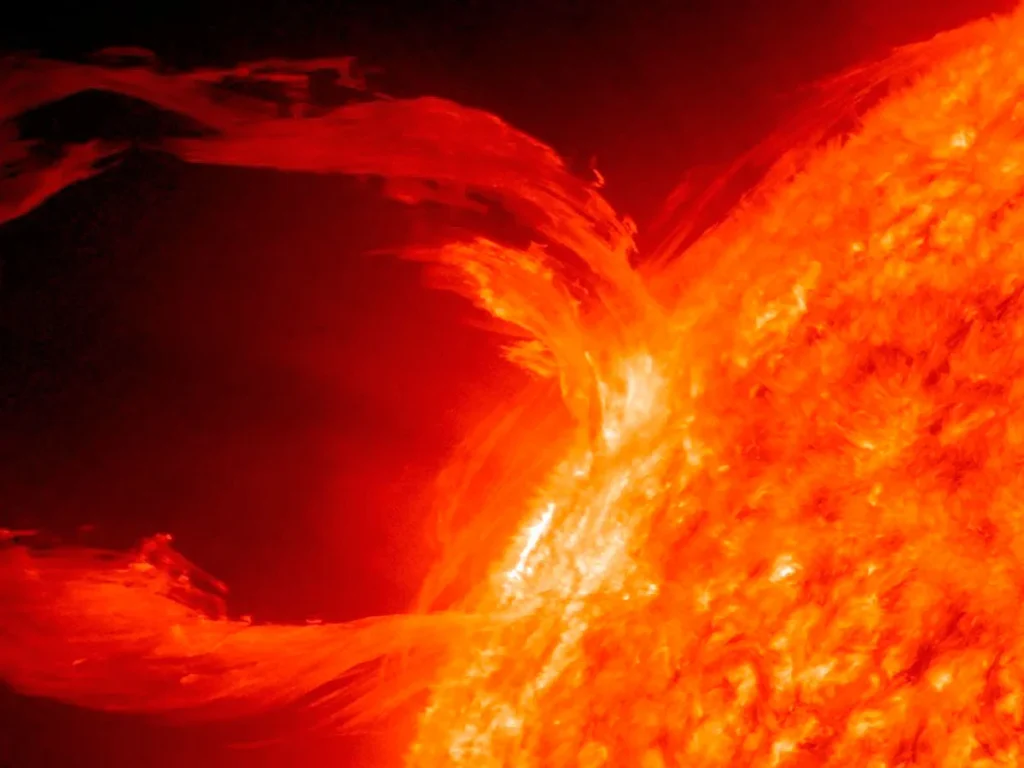
Detective work by a team of space-weather experts has discovered the truth about a historical event that had been thought to be the first-ever case of technological disruption by geomagnetic activity from the sun, but has now been shown to have taken place seven years later. From it being too hot or too wet to leaves on the track or cows on the line, there’s a fine tradition of what the British public consider to be flimsy excuses for delays on the trains. Yet an 1871 edition of the journal Nature describes a very different event that caused a train departing Exeter, in Devon on the south-west coast of the U.K., to be delayed by 16 minutes: a solar storm that flooded the railway signals’ electrical telegraph network with current. The event has been cited as the first example of a solar storm disrupting technology, but when a team led by Wild went back through historical records to investigate they found that things didn’t add up. (via Space.com)
New York City’s new robo-toilets kick you out after 10 minutes whether you’re finished or not
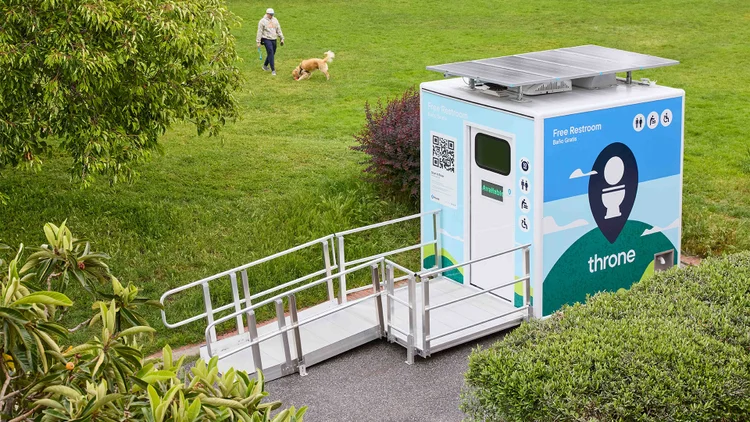
As of June 2025, New York City had just 975 operating public restrooms across its five boroughs, or one per every 8,697 residents. To start making it easier to go while on the go, the city is installing 17 new modular bathrooms—aka robotoilets—equipped with amenities like running water, temperature control, and baby-changing stations. The bathrooms, made and operated by Throne Labs, are already being erected around NYC, with the first two open as of this week and two more coming on Thursday. But as Mamdani put it, these bathrooms are “not a place to scroll on your phone.” Users are meant to do their business, then get a move on within 10 minutes—or face the consequences. How do the new bathrooms keep patrons from lingering? There’s a simple fail-safe: After 10 minutes in the bathroom, the doors will automatically open. (via Fast Company)
Note: This is a version of my When The Going Gets Weird newsletter, which I send out via Ghost, the open-source publishing platform. You can see other issues and sign up here.
Her work as a programmer at Los Alamos helped lead to chaos theory but she got little credit
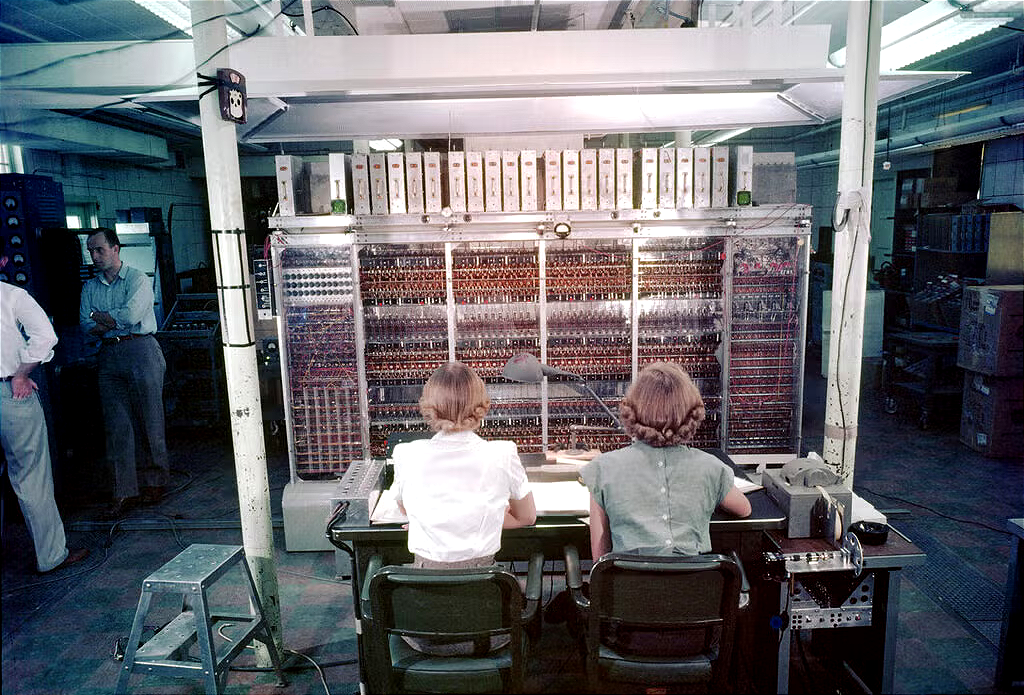
Mary Tsingou arrived at Los Alamos Scientific Laboratory in 1952, seven years after the testing facility in New Mexico helped propel the world into an age of nuclear proliferation. She was a recent college graduate with a mathematics degree and joined the cohort — almost all women — of “human computers.” She was soon given the opportunity to work as an early programmer of MANIAC I, the lab’s first fully electronic computer. Her coding work — translating equations into the MANIAC-approved language of holes punched on tape — led to the creation in 1955 of the Fermi-Pasta-Ulam (FPU) problem, named after the men who worked on the numerical experiment.When the report was published, Ms. Tsingou was not listed as an author. Instead, her name was placed in a footnote. The groundbreaking computational physics experiment observed surprising physical behaviors that propelled the development of nonlinear science, one of whose branches is chaos theory. (via the NYT)
Hi everyone! Mathew Ingram here. I am able to continue writing this newsletter in part because of your financial help and support, which you can do either through my Patreon or by upgrading your subscription to a monthly contribution. I enjoy gathering all of these links and sharing them with you, but it does take time, and your support makes it possible for me to do that. I also write a weekly newsletter of technology analysis called The Torment Nexus.
Why a pound of random coins is almost always worth about twenty US dollars
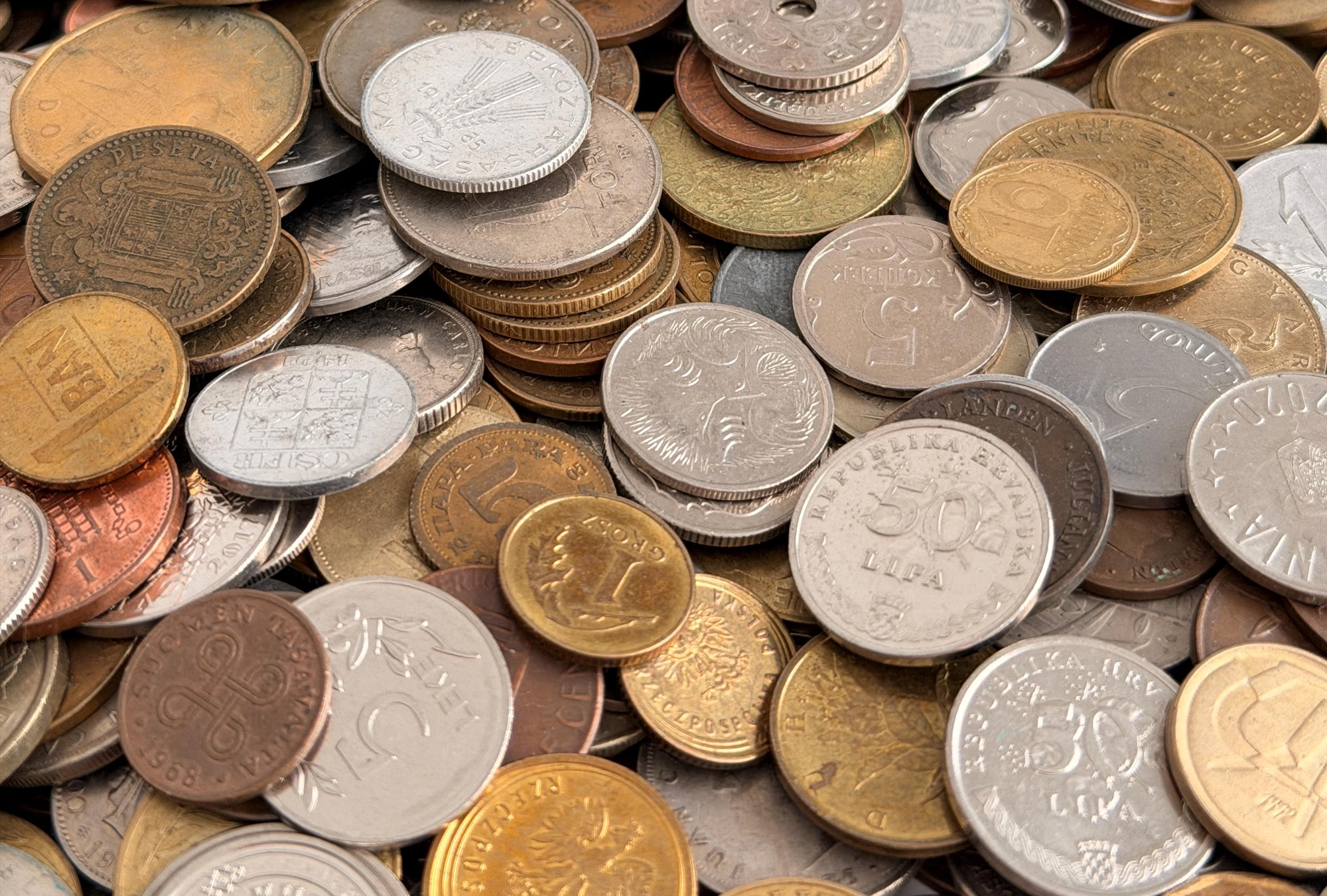
Here’s a fun bar bet you can try yourself. You’ll need a relatively big pile of U.S. dimes, quarters, and half dollars — no pennies, nickels, or dollar coins, or this won’t work — and a regular kitchen scale. (I’m not sure if you’ll be able to find that in your local bar, so either come prepared or lend me some literary license.) Place a few handfuls of coins on the scale, adding or removing until the lot weighs as close as you can get to one pound as possible. Then make your bet: Tell your friend (or whomever is on the other side of the bet) that you can predict the total value of those coins within, say, ten cents. And then “predict” that their value is exactly twenty dollars. You should win virtually every time — because a pound of any amount of those three coins should come out to that amount, regardless of the individual numbers of any one denomination coin. Why? It’s a mix of history and just plain dumb luck. (via Now I Know)
In 1996 a family took to the road in a motor home for a year and detailed the trip on a website
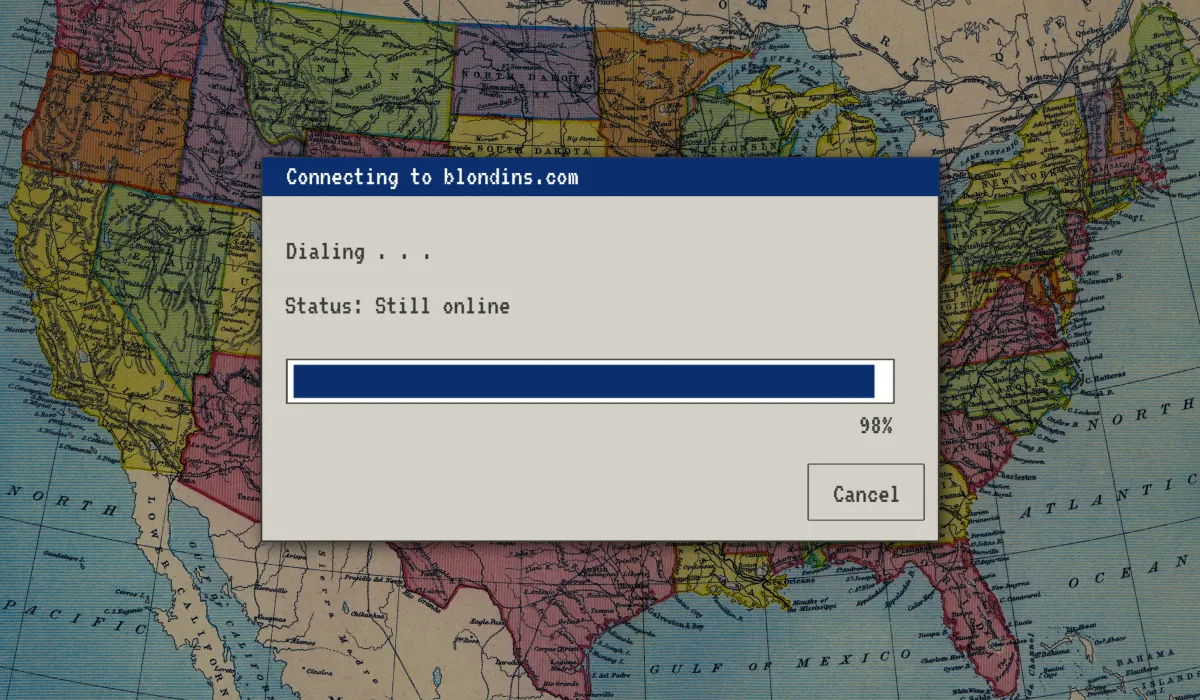
We left Boyne City, Michigan, in the fall of 1996 in a 34-foot Coachmen motorhome towing a minivan, with three children, a golden retriever and a desktop computer on a stand bolted to the floor where a chair used to be. What we built over the following nine months — 25,000 miles through 40 states — would go on to earn a Yahoo! Cool Site designation, a presentation at a US Department of Education national conference, and a place in the federal Education Resources Information Center archive. We filed over 1,500 emails and website dispatches from museum lobbies, hotel reception desks, libraries, and wherever we could find a phone jack and someone willing to let us run a telephone cord to their wall. Google would not exist for another two years. The word “blog” had not yet been coined. We were doing something that had no name and no manual, and we were doing it over a dial-up modem while living in a motorhome. (via Longreads)
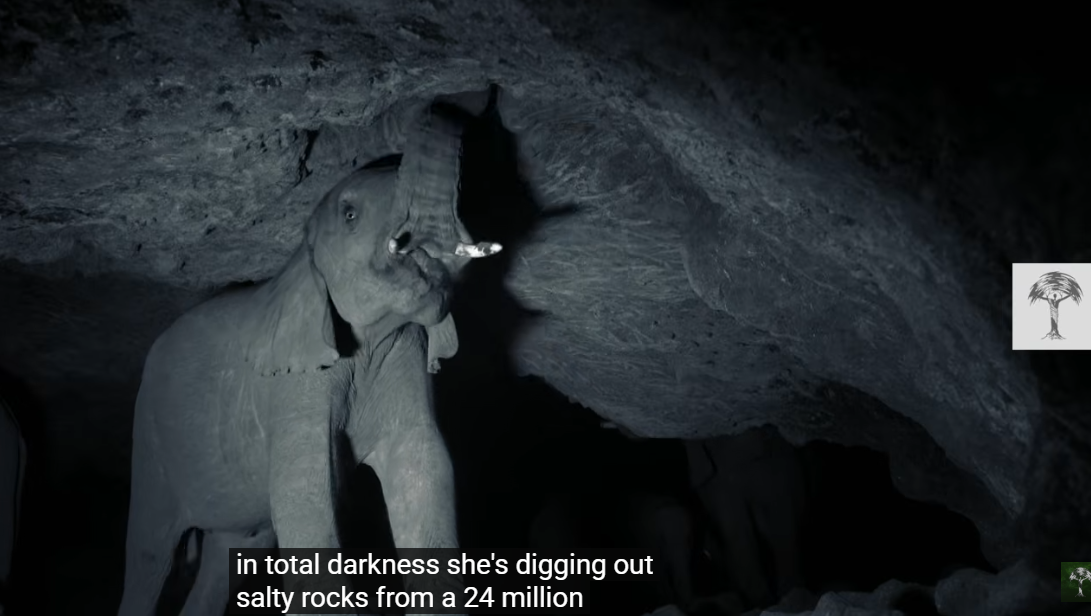
Watch these African elephants dig salt from a cavern in a volcano
Acknowledgements: I find a lot of these links myself, but I also get some from other places that I rely on as “serendipity engines,” such as The Morning News from Rosecrans Baldwin and Andrew Womack, Jodi Ettenberg’s Curious About Everything, Dan Lewis’s Now I Know, Robert Cottrell and Caroline Crampton’s The Browser, Clive Thompson’s Linkfest and Why Is This Interesting by Noah Brier and Colin Nagy. If you come across something you think should be included here, feel free to email me at mathew @ mathewingram dot com