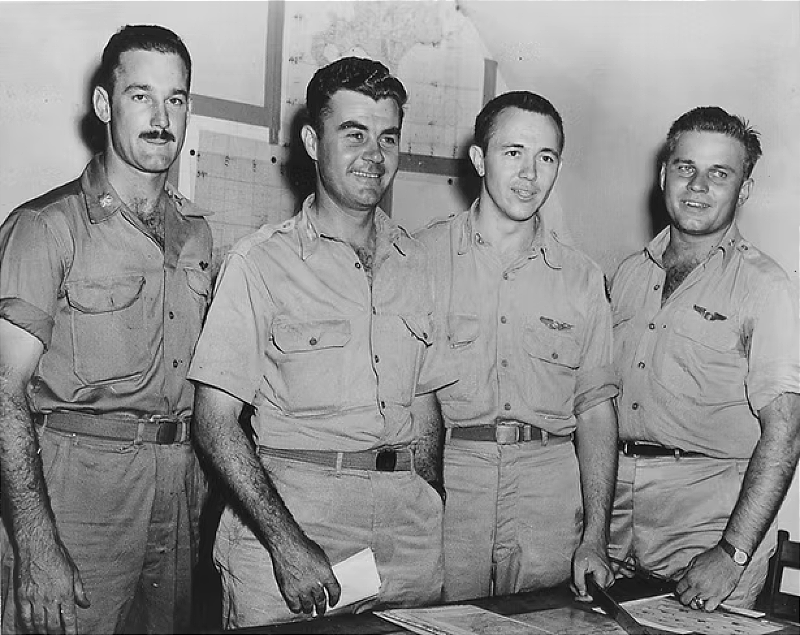
Ask most people who flew the plane that dropped the first atomic bomb and you’ll get one name: Paul Tibbets. He’s the one who named the Enola Gay after his mother, the one who spent decades insisting he never lost a night’s sleep over Hiroshima, the one whose life has been written up in a bestselling autobiography and a dozen documentaries. Sitting next to him that morning was a co-pilot named Robert Lewis, a man who was actually supposed to be flying that plane as its commander, and whose reaction to what he’d just witnessed is one of the most quoted lines to come out of the entire mission. Almost nobody knows the rest of his story. Lewis wasn’t originally supposed to be the co-pilot of anything. He was the regular aircraft commander of the Superfortress 44-86292, the B-29 that would become the Enola Gay, and had flown it on its first six missions with his own hand-picked crew. (via Utterly Interesting)
Proof that Australian convict pirates hijacked a ship and sailed to Japan in 1830
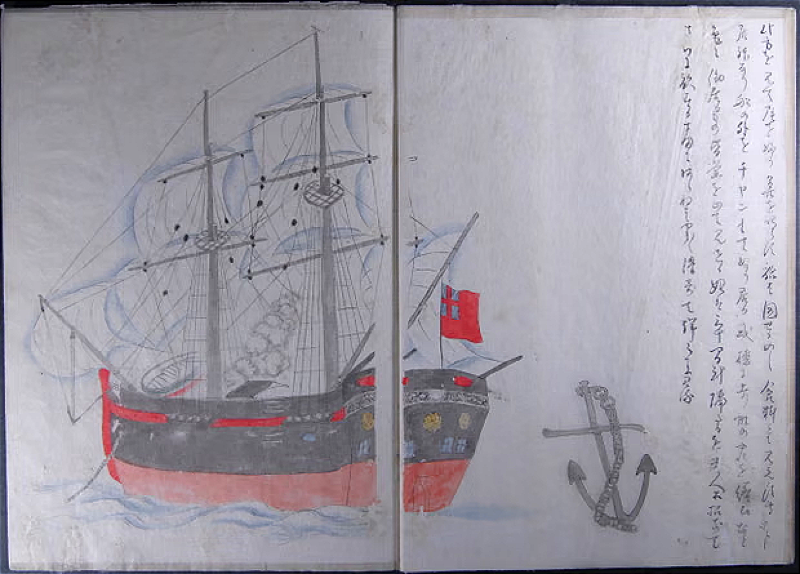
An amateur historian has unearthed compelling evidence that the first Australian maritime foray into Japanese waters was by convict pirates on an audacious escape from Tasmania almost two centuries ago. Fresh translations of samurai accounts of a “barbarian” ship in 1830 give startling corroboration to a story modern scholars had long dismissed as convict fantasy: that a ragtag crew of criminals encountered a forbidden Japan at the height of its feudal isolation. The brig Cyprus was hijacked by convicts bound from Hobart to Macquarie Harbour in 1829, in a mutiny that took them all the way to China. Its maverick skipper was William Swallow, a onetime British cargo ship apprentice in the Napoleonic wars, who in a piracy trial in London the following year told of a samurai cannonball in Japan knocking a telescope from his hand. (via The Guardian)
Note: This is a version of my When The Going Gets Weird newsletter, which I send out via Ghost, the open-source publishing platform. You can see other issues and sign up here.
Scientists don’t actually know how long fungi can live and the reasons are kind of weird
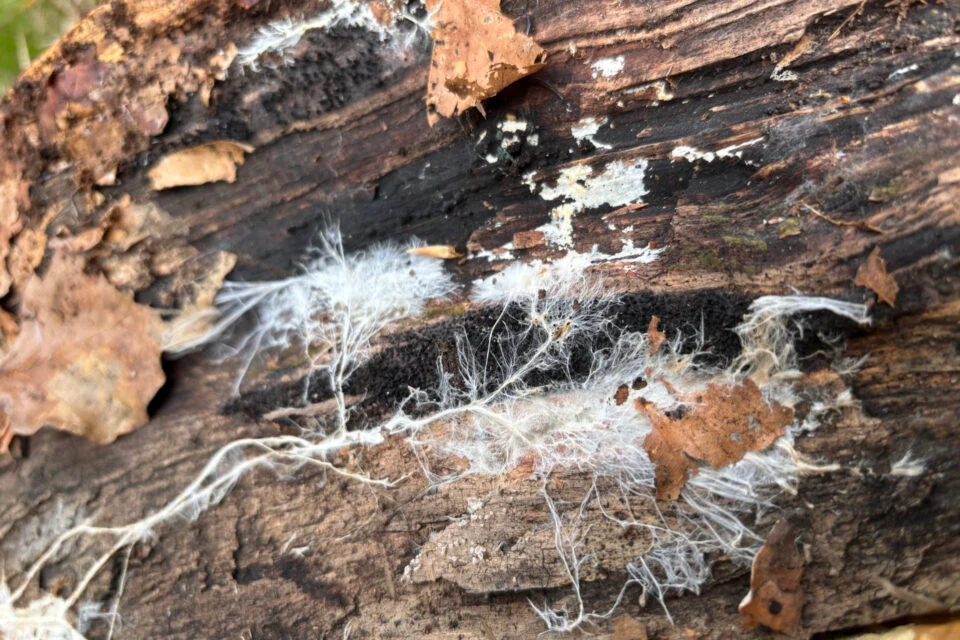
Fungi are everywhere and anywhere, seemingly at any given time. For scientists, studying fungi has led to key insights in medicine, paleontology, astrobiology, and more. But they still aren’t sure how to do this seemingly simple thing: find out how old they are. Researchers investigated this long-overlooked biological mystery in an opinion paper published today in Trends in Microbiology. The team examined the biological and logistical reasons behind why it’s so difficult to gauge fungal age. To put the issue in context, we “don’t really know if 10 years or 500 years is ‘old’ for a fungus or how much it differs between fungal species and lifestyles,” Kristin Aleklett, the study’s senior author and a biologist at Lund University in Sweden, said in a statement. “There is this large kingdom of organisms living alongside us that we still know so little about.” (via Gizmodo)
Hi everyone! Mathew Ingram here. I am able to continue writing this newsletter in part because of your financial help and support, which you can do either through my Patreon or by upgrading your subscription to a monthly contribution. I enjoy gathering all of these links and sharing them with you, but it does take time, and your support makes it possible for me to do that. I also write a weekly newsletter of technology analysis called The Torment Nexus.
A millenarian cult emerged in British Guiana in the 1800s and committed mass suicide
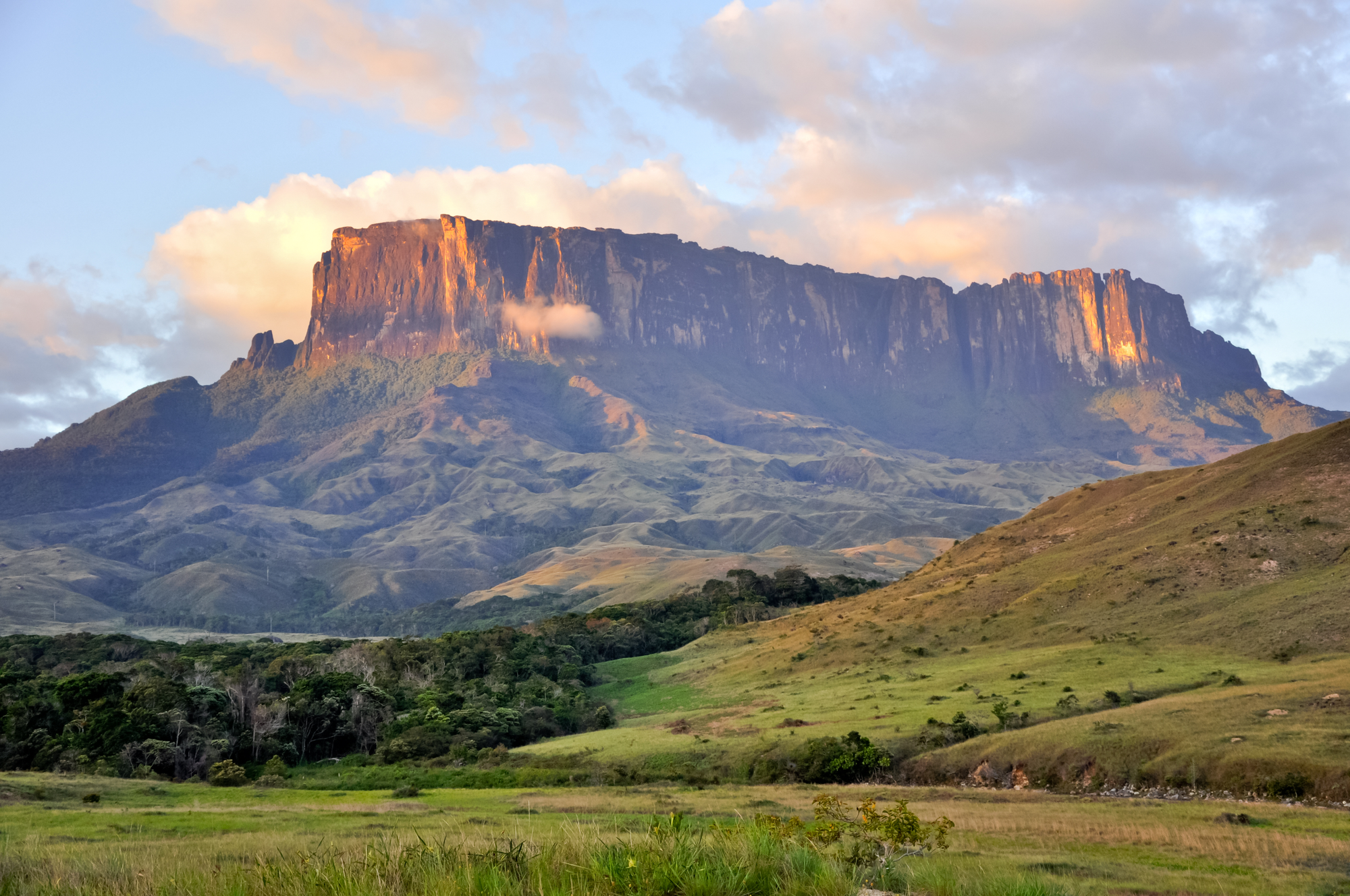
Bekeranta was a millenarian indigenous community in British Guiana in the mid-19th century, led by Awakaipu, an Arekuna man. In the mid-1840s, at Awakaipu’s direction, members of the community committed a mass murder–suicide at the base of Kukenán-tepui. Awakaipu preached that the members of his community would become white in both appearance and power if they followed his leadership. However, after leading the community for some time, Awakaipu eventually grew paranoid and believed others were plotting against him. He then declared that the way for his followers to become white was for them to kill each other; Awakaipu claimed that following their deaths, the spirits of the dead would rise up to the peak of Mount Roraima and reincarnate with white skin. Roughly 400 people died, including men, women and children. After the dead failed to resurrect, a party of survivors clubbed Awakaipu to death. (via Wikipedia)
Researchers say homing pigeon navigation relies on superparamagnetic macrophages
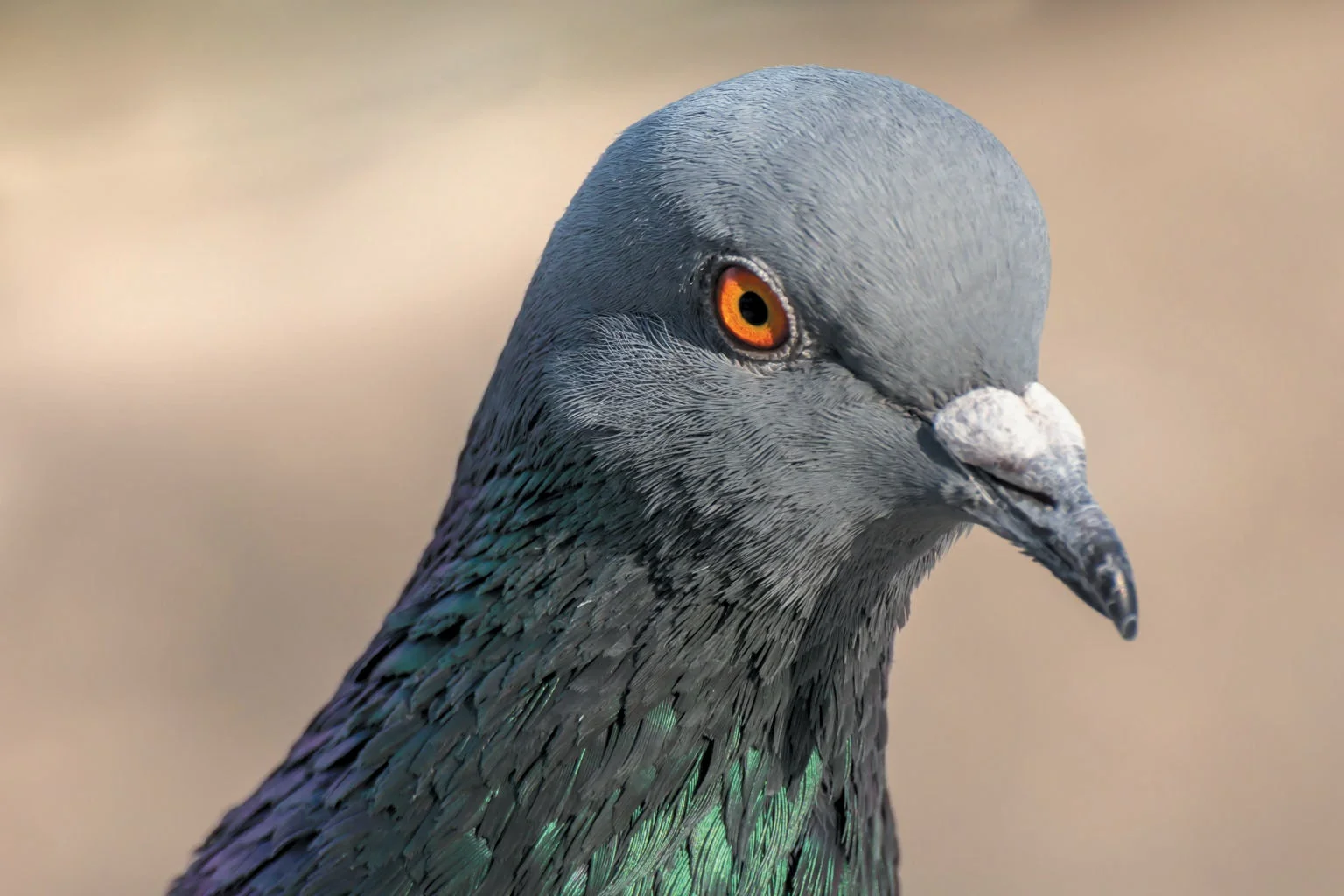
It has long been known that birds rely, at least in part, on magnetoreception to orient their movements. The mechanisms underlying this reception appear to be numerous and are still being discovered. Physiological connections have been found in the head, including the beak, eyes, and brain, but Lisowski et al. have now identified the presence of superparamagnetic macrophages in the liver (see the Perspective by Spiro and Drakesmith). On cloudy days when they could not see the sun, pigeons whose magnetic macrophages had been depleted were unable to navigate home. Orientation was unimpaired in birds without macrophages when the sun was visible, suggesting that this was their primary cue. We propose that in homing pigeons, superparamagnetic macrophages in the liver are required for finding magnetic direction. (via Science.org)
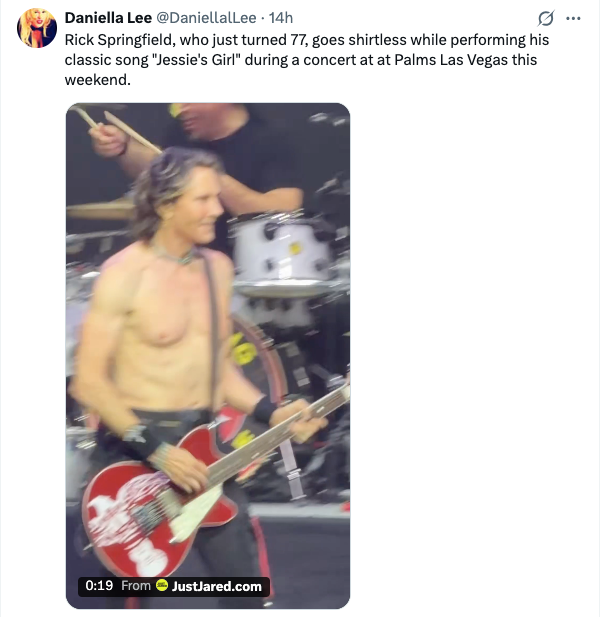
Rick Springfield who just turned 77 stuns the crowd by playing shirtless
Acknowledgements: I find a lot of these links myself, but I also get some from other places that I rely on as “serendipity engines,” such as The Morning News from Rosecrans Baldwin and Andrew Womack, Jodi Ettenberg’s Curious About Everything, Dan Lewis’s Now I Know, Robert Cottrell and Caroline Crampton’s The Browser, Clive Thompson’s Linkfest and Why Is This Interesting by Noah Brier and Colin Nagy. If you come across something you think should be included here, feel free to email me at mathew @ mathewingram dot com