Beekeeper jailed for opening the hives to protect a neighbor

A beekeeper has been jailed for six months after she set swarms of her insects on sheriff’s deputies attempting to carry out an eviction at a friend’s house. Rebecca Woods insisted she only released her truckload of hives to allow the bees to enjoy the “lovely, flowering landscape” near the home of an elderly friend and cancer patient. But a district court in Springfield, Massachusetts, heard that Woods, 59, admitted under questioning that she was trying to save him from eviction by freeing the bees in the presence of the deputies who had shown up to serve papers. Several officers were stung on their heads and faces, and one required hospital treatment. One deputy is seen frantically waving his arms, trying to shoo the insects away. Woods, who put on her beekeeper’s suit during the incident, had driven up to the property with the hives stacked on a trailer pulled by her blue SUV, and proceeded to lift the lids of a number of them. (via The Guardian)

The company that owns the salvage rights to the Titanic wants to sell off artefacts

More than a century after the Titanic sank in the North Atlantic, the company that owns exclusive salvage rights to the shipwreck wants to auction about 100 artifacts raised from the ocean floor during the first recovery effort nearly 40 years ago.The doomed vessel’s wreckage has been an object of fascination and controversy since it was found in 1985, and the newly proposed sale is already stirring fresh debate over the fate of the thousands of items pulled from the site.When the company, R.M.S. Titanic, last proposed selling artifacts, in 2016, it was struggling through bankruptcy and the plan drew objections from the U.S. and French governments, as well as from UNESCO and other cultural institutions. The latest potential sale was proposed in a document that R.M.S. submitted in March to the federal court in Norfolk, Va., which oversees the recovery effort and may have to approve the auction. (via the New York Times)

Note: This is a version of my When The Going Gets Weird newsletter, which I send out via Ghost, the open-source publishing platform. You can see other issues and sign up here.

Continue reading “Beekeeper jailed for opening the hives to protect a neighbor”

Hear me out: AI also does things that are good

I could be wrong, but I feel like this post is going to be similar to the one I wrote recently about crypto stablecoins. I know some readers never got past the headline, because they were busy imagining all the bad things about crypto — the rug pulls and the graft and so on. One reader even pointed out that my post probably didn’t make it past many people’s spam filters, since the headline contained a word that many people and algorithms ignore on contact. So be it! In any case, this one is probably going to get an overwhelmingly negative response as well, because I think many people have already decided that AI is and always will be terrible — given things like the water use (which I wrote about here) and the plagiarism (which I wrote about here) and convincing people they are immortal or should unalive themselves, etc. (which I wrote about here). If you fall into that category you probably haven’t even made it this far, so I might as well just continue with my thesis: namely, that AI is doing some positive things.

I’ve been collecting examples of things that AI is doing that are clearly beneficial, either to an individual or to society in general — or if not inarguably beneficial then at least not obviously bad — and they have been piling up. I will freely admit here that some of these are still hypothetical, meaning AI has been used in research or hypothetical situations but has had some success that appears to be broadly applicable. One of the things that made me decide to write about it, despite my conviction that it will be unpopular, is a piece I read by someone named Carlo Iacono who writes a blog called Hybrid Horizons (from what I can gather, he is a university librarian from Australia). In the piece, Iacono argues that many of those writing about artificial intelligence have been looking at its effects on the wrong part of the world. Here’s an excerpt:

There is an app in Lagos that can tell you whether your malaria medication is real or counterfeit. It costs sixty dollars. It uses a spectrometer the size of a thumb drive and an AI algorithm trained on the molecular fingerprints of four hundred drugs. A pharmacist holds the device against a blister pack, waits twenty seconds, and the screen tells her whether the pills will treat a child’s fever or do nothing while the parasite multiplies. The company behind it was founded by a Nigerian pharmacist who, at fifteen, swallowed a counterfeit asthma medication and spent twenty-one days in a coma. He survived, studied at Yale, and built a system that now operates in over five thousand pharmacies across Nigeria, Kenya and Uganda. In 2024, it identified and removed 1.3 million counterfeit medications from the supply chain.

Note: This is a version of my Torment Nexus newsletter, which I send out via Ghost, the open-source publishing platform. You can see other issues and sign up here.

Continue reading “Hear me out: AI also does things that are good”

Secret chambers have been discovered in a Giza pyramid

Researchers from Cairo University and the Technical University of Munich (TUM) have located two air-filled spaces within Giza’s Menkaure pyramid that hint at a possible secret entrance. The Menkaure pyramid is the smallest of the three main pyramids on Cairo’s Giza plateau. Built for the Fourth Dynasty ruler Menkaure, it was completed in the 26th century BC. It was excavated between 1906 to 1910, but has not been fully explored since then. Working within the ScanPyramids project, the research team used non-invasive ground-penetrating radar, ultrasound, and electrical resistivity tomography (ERT) to confirm the presence of voids behind this area. Their discovery supports the theory, suggested by researcher Stijn van den Hoven in 2019, that a second entrance might exist at that location. In 2023 it found a previously undiscovered corridor at the Great Pyramid of Giza using advanced scanning techniques. (via Art News)

Researchers built an AI chatbot that only knows the world before 1931

The internet’s chatbots have read every forum rant, leaked Slack log, and confident blog post your uncle ever wrote about chemtrails. The results are predictable: they reflect the state of the internet, and it isn’t pretty. Wouldn’t it be nice if we had a chatbot that only draws on knowledge from before the internet, reality TV, or AI-slop content ever existed? Three researchers have created just that: a chatbot that hasn’t read anything published after 1930. Talkie is a 13-billion-parameter language model trained on digital scans of English-language texts published before the end of 1930. That cutoff aligns with the current US public domain year, meaning anything published until the end of that year is fair game and there are no lawsuits from irate IP-holders to worry about. You can download it from GitHub or chat with it through a web interface (via Malwarebytes)

Note: This is a version of my When The Going Gets Weird newsletter, which I send out via Ghost, the open-source publishing platform. You can see other issues and sign up here.

Continue reading “Secret chambers have been discovered in a Giza pyramid”

A heroic quest to find the best free restaurant bread in the US

Here is the promise you and I must cling to across the thousands of words that follow: At some point within this text, I will reveal to you what—after 555 responses, 13,000 miles of travel, and months of monomaniacal research—I have determined to be the best free restaurant bread in America. I will not attempt to slither to the moral high ground, arguing that best is a meaningless measure, or insisting that all bread is dear in its own way. Even if you attempt to betray me—for instance, by merely scanning the text that follows for the phrase Here it is: the best free restaurant bread in America—I will uphold my end of the bargain. Though it strikes the ear as an insoluble query, there is a correct answer—right now, known only to God (and to me, an agent of his will), but erelong to the steadfast reader. (via The Atlantic)

A newspaper boy dropped a nickel on the ground and it popped open to reveal a microfilm

On June 22, 1953, a fourteen-year-old newspaper boy collecting for the Brooklyn Eagle was paid with a nickel that felt too light to him. When he dropped it on the ground, it popped open, revealing that it contained microfilm. The microfilm contained a series of numbers. After agent Louis Hahn of the FBI obtained the nickel and the microfilm, the agency tried to find out where the nickel had come from and what the numbers meant. On the microfilm, there were five digits together in each number, 21 sets of five in seven columns and another 20 sets in three columns, making a total of 207 sets. There was no key for the numbers. The FBI tried for nearly four years to find the origin of the nickel and the meaning of the numbers. It was only when KGB agent Reino Häyhänen chose to defect in May 1957 that the nickel was linked to the KGB. (via Wikipedia)

Note: This is a version of my When The Going Gets Weird newsletter, which I send out via Ghost, the open-source publishing platform. You can see other issues and sign up here.

Continue reading “A heroic quest to find the best free restaurant bread in the US”

The occult history of NASA’s Jet Propulsion Laboratory

Jack Parsons was one of the most influential figures in the history of the American space program. He also stood accused of espionage, and held a deep fascination with the occult. By 1939, Parsons and his wife Helen Parsons-Smith had fully embraced the teachings of the Ordo Templis Orientis, a central hub for Aleister Crowley’s spiritual and religious philosophy. Crowley taught that a Thelemite’s central ambition was to achieve a higher state of existence by embracing one’s “True Will,” or one’s ultimate purpose beyond selfishness or ego. In pursuit of that goal, many aspects of Parsons’s life blurred the boundaries between science and mysticism. As a Thelemite, he performed ritual magic, including banishing impure elements with pentagrams, invocating the power of the “Holy Guardian Angel,” and offering daily adorations to the sun. (via Supercluster)

These two women are twins but due to a rare event they have different fathers

Lavinia and Michelle know that those of us who haven’t shared a womb with a sibling can be fascinated by twins: their similarities, how they differ, whether there’s any kind of mysterious synergy between them. They aren’t identical twins. They share the same striking eyes, but the lower halves of their faces are different. Their personalities differ, too. But they share many things, including the almost inconceivable circumstances that brought them into the world, and which only came to light four years ago, when they were 45 and both took DNA tests from the genealogy firm Ancestry. Their results of those tests revealed something never before documented in British history. Lavinia and Michelle are twins who grew together in the same womb, were born from the same mother, and delivered within minutes of each other – but have different fathers. (via The Guardian)

Note: This is a version of my When The Going Gets Weird newsletter, which I send out via Ghost, the open-source publishing platform. You can see other issues and sign up here.

Continue reading “The occult history of NASA’s Jet Propulsion Laboratory”

A trip to Perugia, Turin and the Ligurian seaside

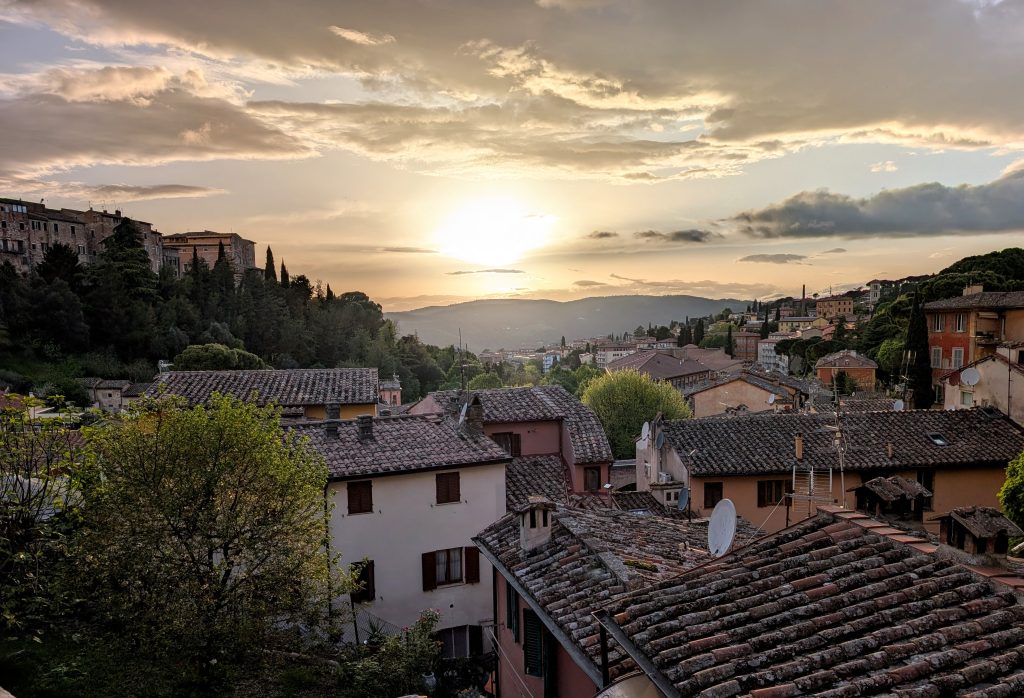
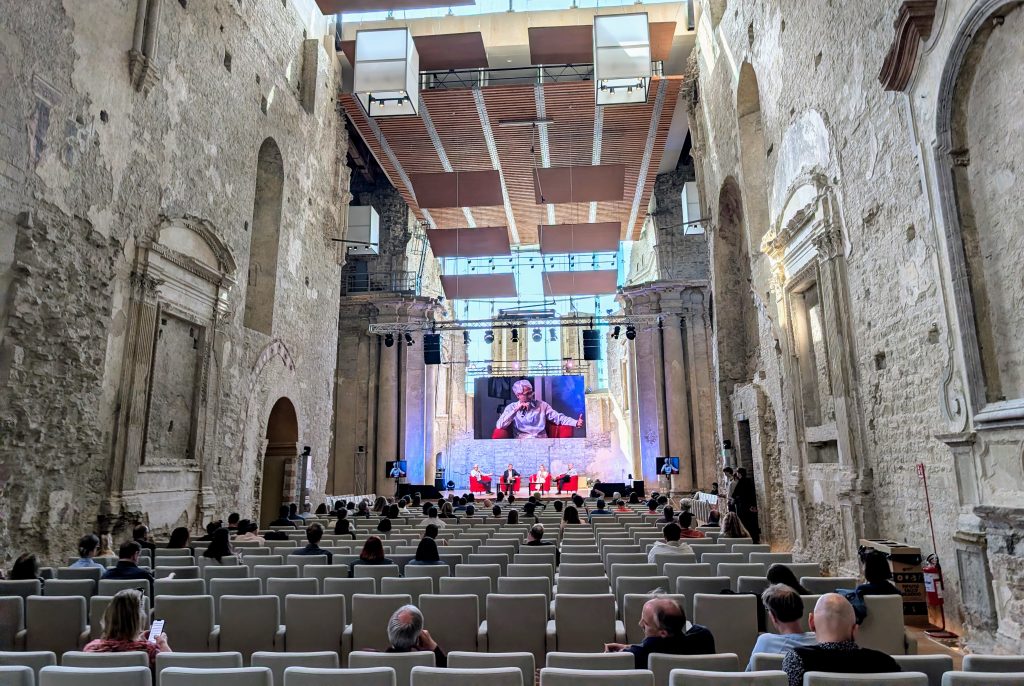
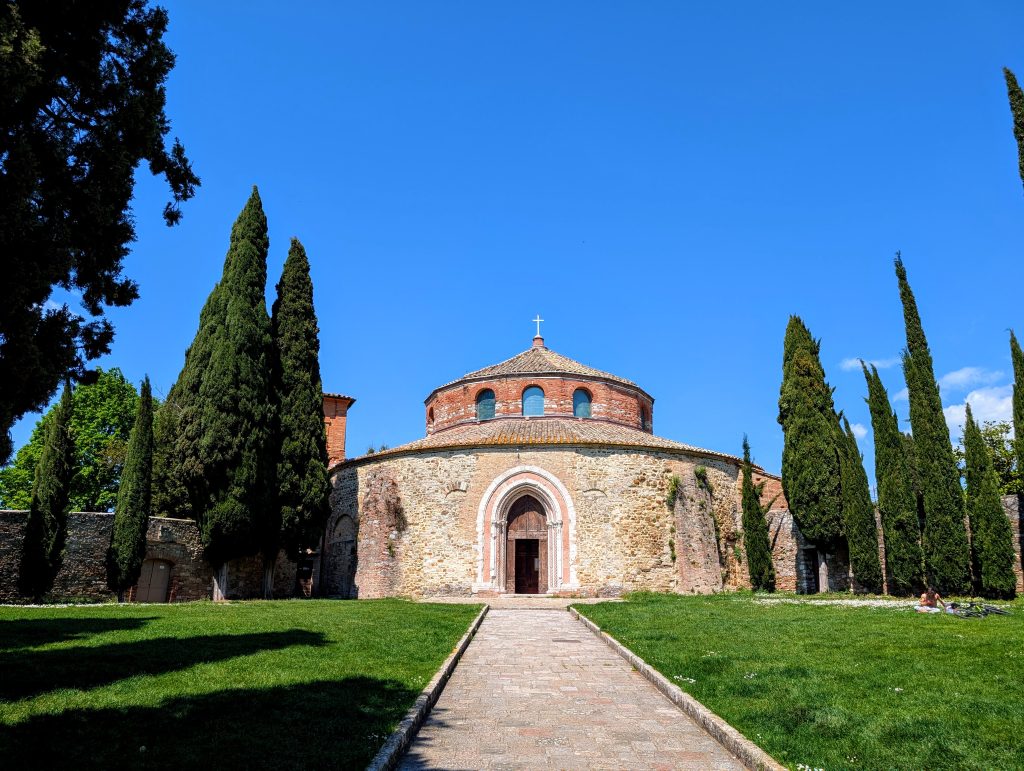
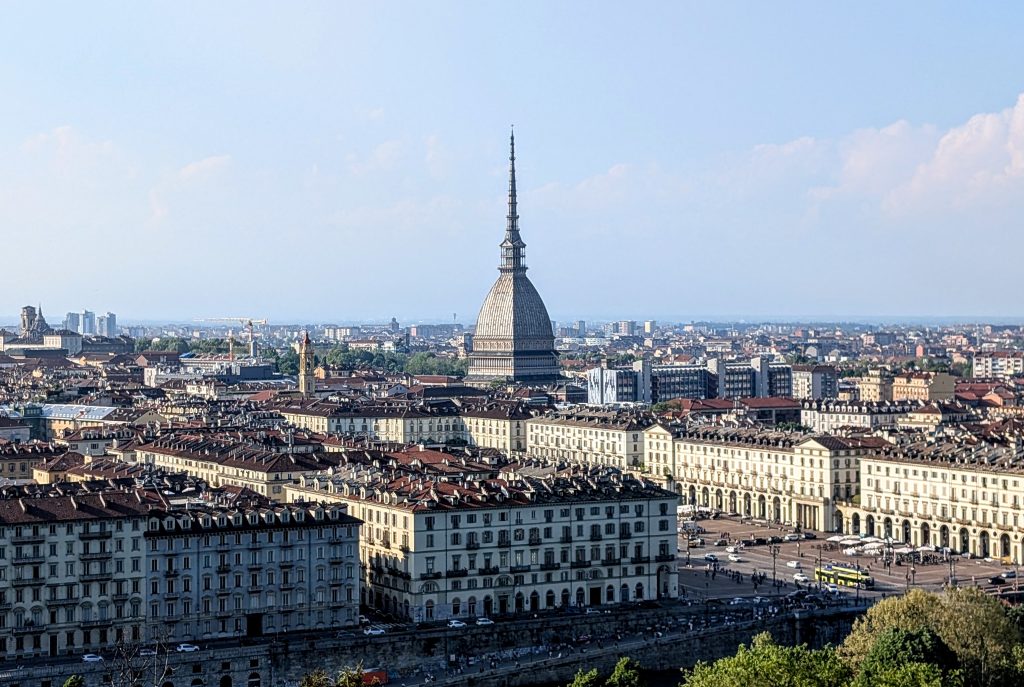
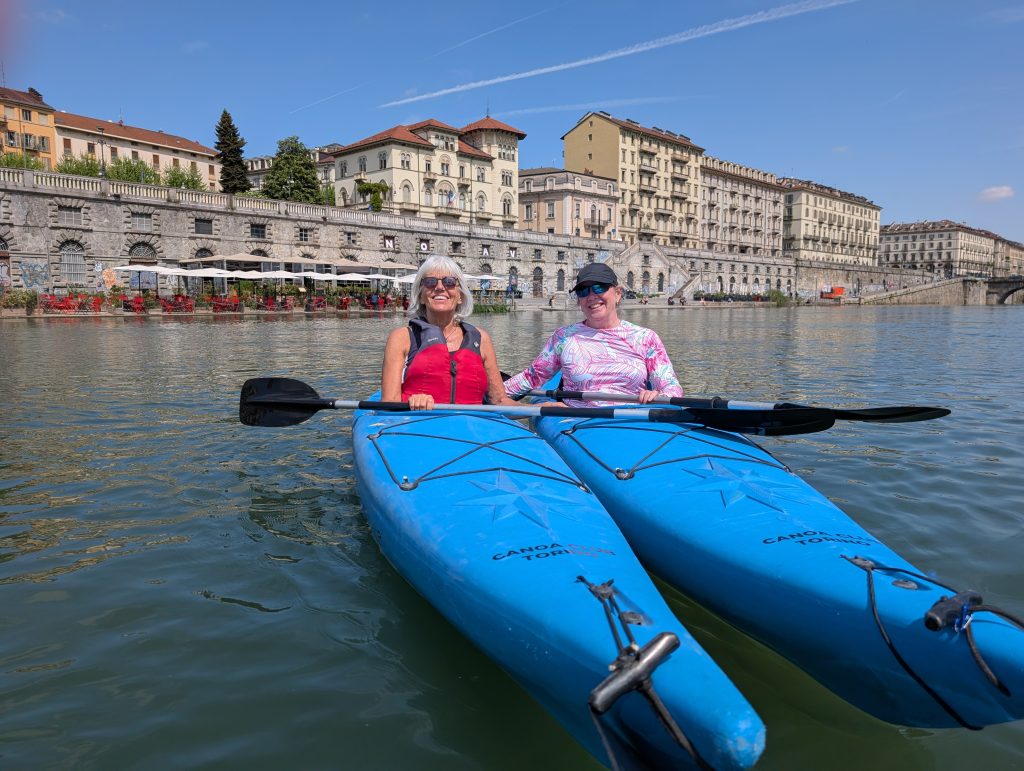
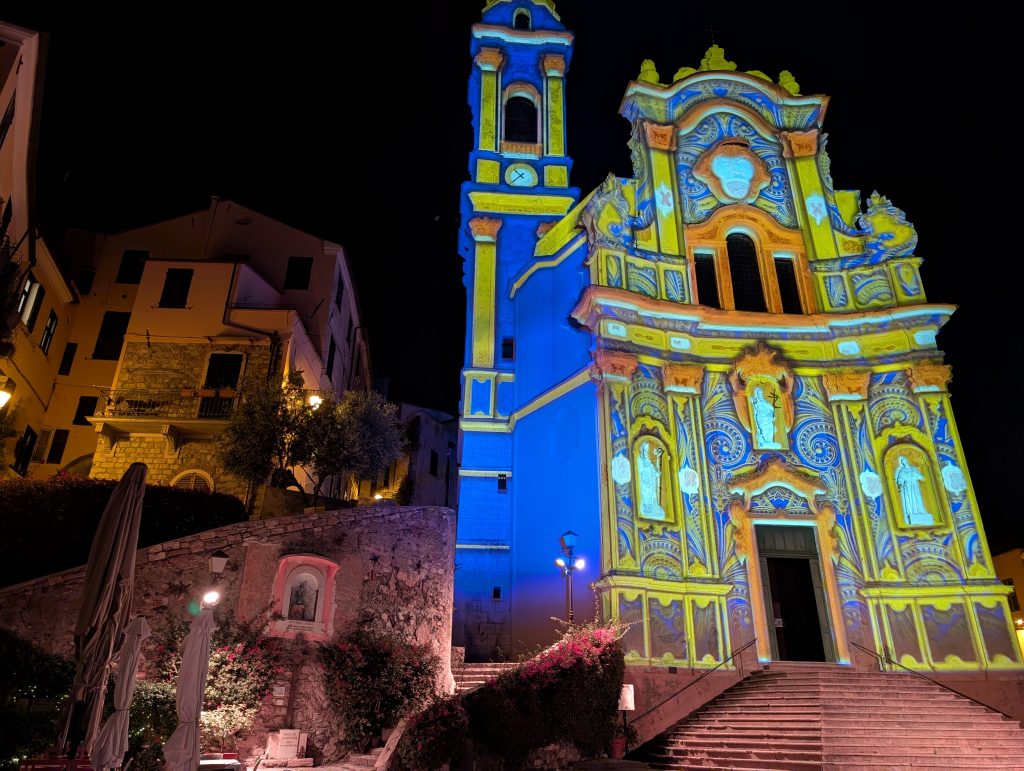
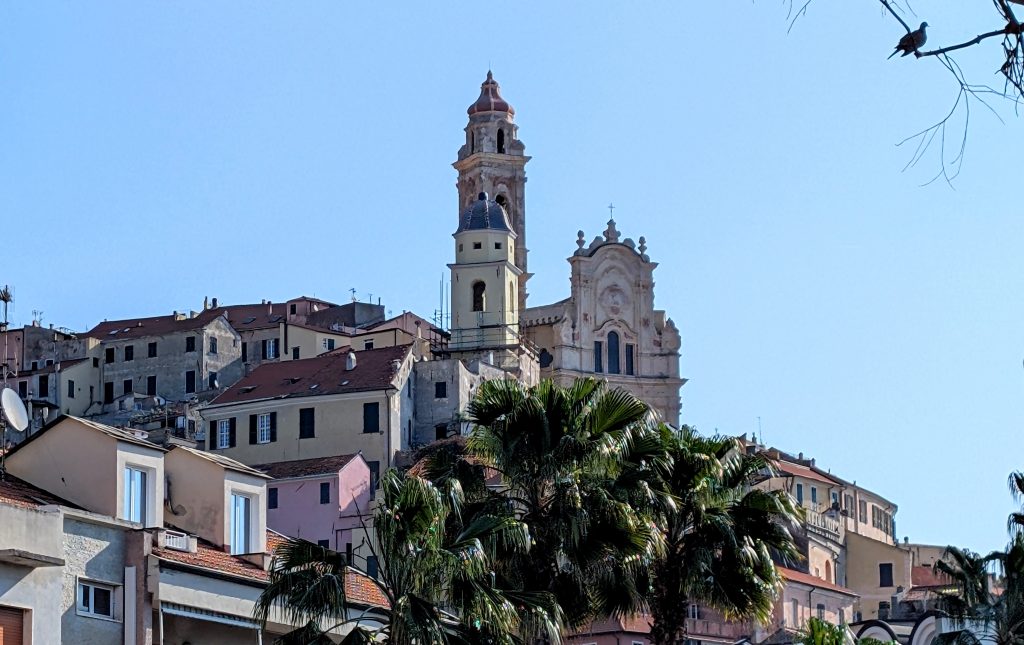
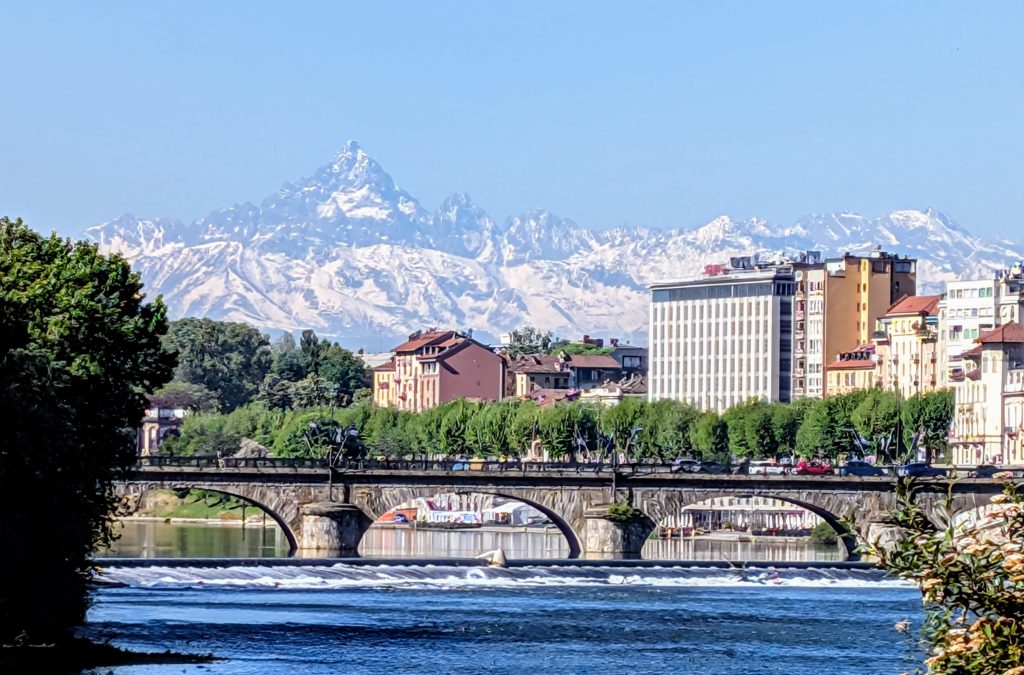
My wife and I have spent a number of years travelling to Perugia, a small town in Umbria, just a couple of hours north of Rome, for the fantastic journalism festival that is put on there by our friends Arianna and Christopher (Arianna was adamant that it not be called a conference when they started it). We haven’t been for the past couple of years for a number of reasons, but this was the 20th anniversary of the festival, so we had to go — and it was our 10th visit; we went for the first time in 2013 (in addition to the past couple of years when we didn’t attend, we missed a couple due to COVID). It was great to be back in the old city, which dates back to the Etruscan empire in the year 300 or so. One of the things we make sure to visit every year is a fascinating circular church that was originally a pagan temple, built in about 500 AD or so. You can just walk in and look around whenever you want — it is still used as a church — and nearby is an ancient tower from the same period that has a small museum you can visit as well.

Across from the main conference hotel there’s an escalator that goes down into the ruins of an ancient palace known as the Rocco Paolina, named for Pope Paul III, who built it in the 1500s after he took control of the city following the great Salt War. It seems that the new pope decided to levy a new tax on salt, which enraged the Perugians — according to legend, traditional Perugian bread is baked without salt, in memory of this grudge from 500 years ago. The pope squashed the rebellion with his armies, and took control of the city, and it remained under papal control until Italy was unified in 1860. Also, from what I understand, a guy named Frank from Assisi was injured in a war between Perugia and Assisi (which is about a two-hour drive away across a valley) in the year 1200 or so, and later got really religious and decided to become a monk, and eventually became Saint Francis of Assisi. The murals in his cathedral are truly spectacular.

Continue reading “A trip to Perugia, Turin and the Ligurian seaside”

Friends for 60 years found out that they were brothers

Alan Robinson and Walter Macfarlane were born in Hawaii 15 months apart. The duo met in 6th grade and have been friends for 60 years. While they’ve shared a very close bond, they never thought they were related, until a DNA website revealed their relationship. Robinson was adopted, and Macfarlane did not know who his father was, so the pair were always searching individually for information on their families. For years, Macfarlane had tried unsuccessfully to find clues about his father. With the help of his daughter, they began sifting through matches he got on a DNA website. One of the top matches was username Robi737.  Macfarlane-Flores told KHON-TV, that her father’s best friend, Robinson, flew 737 airplanes for Aloha Airlines, and his nickname was Robi. The pair soon learned that they shared a birth mother. (via USA Today)

Archeologists have found honey in 3,000-year-old Egyptian tombs that is still edible

Modern archeologists, excavating ancient Egyptian tombs, have often found something unexpected amongst the tombs’ artifacts: pots of honey, thousands of years old, and yet still preserved. Through millennia, the archeologists discover, the food remains unspoiled, an unmistakable testament to the eternal shelf-life of honey. There are a few other examples of foods that keep–indefinitely–in their raw state: salt, sugar, dried rice are a few. But there’s something about honey; it can remain preserved in a completely edible form, and while you wouldn’t want to chow down on raw rice or straight salt, one could ostensibly dip into a thousand year old jar of honey and enjoy it, without preparation, as if it were a day old. Moreover, honey’s longevity lends it other properties – mainly medicinal – that other resilient foods don’t have. Which raises the question: what exactly makes honey such a special food? (via The Smithsonian)

Note: This is a version of my When The Going Gets Weird newsletter, which I send out via Ghost, the open-source publishing platform. You can see other issues and sign up here.

Continue reading “Friends for 60 years found out that they were brothers”