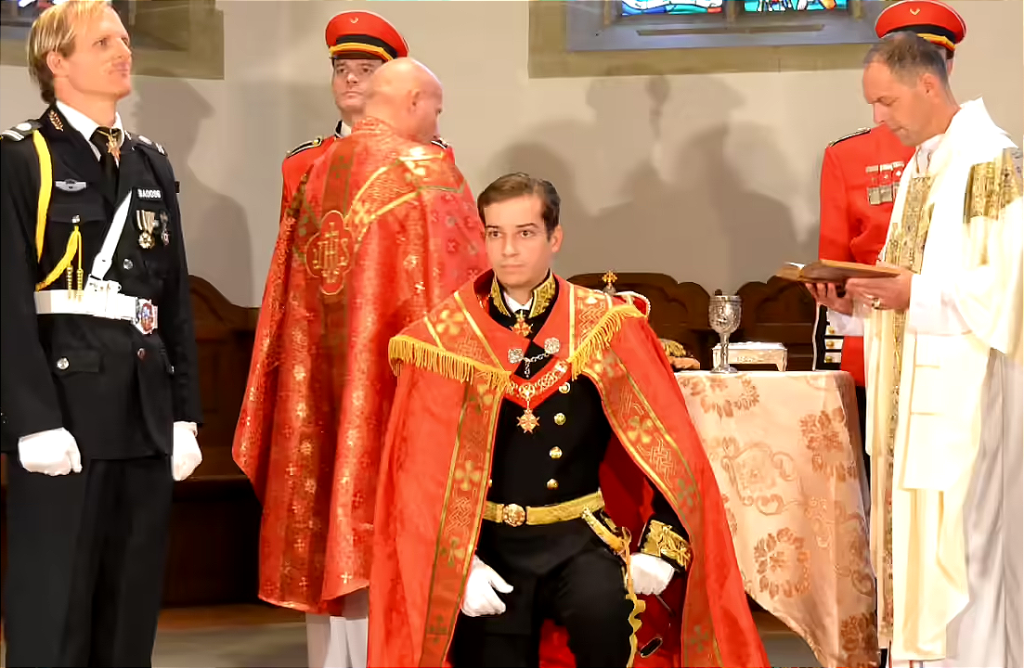
A Swiss man named Jonas Lauwiner has drawn attention after declaring himself the “king of Switzerland” and assembling a patchwork of land parcels without paying for them. His unusual rise is not based on conquest or wealth but on exploiting a little-known legal provision that allows claims over ownerless or unregistered land. By identifying overlooked plots, including fragments of roads and small properties, he has gradually built what he calls an “empire”. While his royal title has no legal standing, his land acquisitions are real, placing him at the centre of a growing debate about law, ownership and power in modern Switzerland. Lauwiner’s strategy relies on provisions within the Swiss Civil Code Article 658, which allows individuals to claim land that has no registered owner. By systematically identifying these gaps, he has accumulated more than 110,000 square metres of land across different regions. (via the Times of India)
A Renaissance dispute over how to divvy up winnings spawned probability theory
You and I are playing a simple game of chance. We each throw $50 into a pot and start flipping a coin. Heads, you get a point; tails, I get one. The first person to reach 10 points walks away with the full $100 and you are ahead. Suddenly my phone rings: there’s an emergency, and I must leave in a hurry. Now we have a problem. You don’t want to just hand me my $50 back because you’re winning. But I’m reluctant to give you the whole pot because I still have a chance to mount a comeback. What is the fairest way to split the cash? Known as the “problem of the division of the stakes,” this puzzle stumped mathematicians for more than 150 years. Two greats of 17th-century math, Blaise Pascal and Pierre de Fermat, corresponded about the problem in a famous series of letters. They not only discovered the correct way to share the pot but also created the foundations of modern probability theory in the process. (via Scientific American)
Note: This is a version of my When The Going Gets Weird newsletter, which I send out via Ghost, the open-source publishing platform. You can see other issues and sign up here.
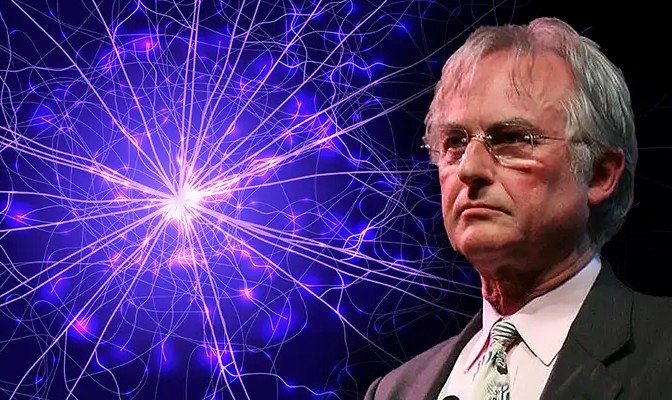
The memes pretty much write themselves: Richard Dawkins, renowned evolutionary biologist and author of a famous treatise called The God Delusion, wrote an essay at UnHerd recently about how he came to the conclusion that Claude, the AI from Anthropic, is conscious. Writers like Gary Marcus, a cognitive scientist and LLM skeptic, couldn’t resist: It’s the Claude Delusion! It’s perfect. It even rhymes. And the icing on the cake of this particular meme is that Dawkins coined the term “meme” in one of his earlier works. Dawkins, says Marcus, is a brilliant man but he is sadly deluded, and (not surprisingly) could have avoided all of this if he had just read more Gary Marcus essays on artificial intelligence and consciousness. Philosopher and historian Émile Torres writes that it’s blindingly obvious that Dawkins is suffering from what some call “early-stage AI psychosis.” In fact, he argues that it is the same kind of delusion Dawkins accuses religious believers of in his book — seeing unexplained phenomena and assuming that it is evidence of God (or, in his case, that AI is conscious).
Dawkins’ piece triggered a lot of similar responses, like this from philosopher Jason Blakely, who wrote that Dawkins “began his career anthropomorphizing DNA & now ends it duped into thinking algorithms are persons.” Some argue that Dawkins — although he has never won a Nobel Prize — is suffering from what is sometimes called Nobel Disease, a term coined to describe genius-level thinkers in various disciplines who come up with wacky and/or offensive theories about other areas of thought and research. One classic example is James Watson, the famous biologist who won a Nobel Prize for co-discovering the molecular structure of DNA, and then expounded his theories on how black people are on average less intelligent than white people, and that exposure to sunlight in tropical regions and higher levels of melanin cause dark-skinned people to have a higher sex drive. Another Nobel Prize winner argued that autism is caused primarily by mothers who are emotionally distant from their children.
On that scale, at least, Dawkins’ delusion seems fairly mild. After all, didn’t a Google engineer named Blake Lemoine write a similar essay about how he came to believe that Google’s AI engine was conscious? And that was in 2022! This latest essay isn’t the first time Dawkins has gone down this particular road: over a year ago, he wrote an essay about an “interview” he had with ChatGPT, in which he probed the AI engine on whether it was conscious or not. Hilariously, the AI argued that it was not conscious, but Dawkins seemed convinced it was. As more than one person has pointed out — and as ChatGPT itself noted in the interview — Dawkins appears to misunderstand the Turing test. It was not a test ofconsciousness, but simply a test of how intelligent an artificial entity could appear to external observers. No one (I don’t think) is arguing that AI models aren’t intelligent, and in fact they have smashed the Turing Test multiple times. Here’s ChatGPT from Dawkins’ essay last year:
Note: This is a version of my Torment Nexus newsletter, which I send out via Ghost, the open-source publishing platform. You can see other issues and sign up here.
One July morning in 2023, I was driving my son to an art class when my friend Amy Ryan called. The Gilgo Beach serial killer had just been identified and taken into custody.“You will not believe who it is,” she reported: “It’sRex Heuermann.” However unlikely it was that the two of us — lifelong New Yorkers in middle age, one a journalist, the other, an Oscar- and Tony-nominated actress — would know a serial killer merely by way of our domestic routines, it is in fact where we had landed. Heuermann was a consulting architect who worked with the stewards of several well-kept prewar apartment buildings in Brooklyn. I dealt with him briefly over the reconstruction of a courtyard garden when I served on my co-op board in Brooklyn Heights. I sat in occasional basement meetings with him talking about, as I vaguely recall, things like drainage efficiency. But Heuermann had been in Amy’s apartment, arguing with her architect. (via the NYT)
This 400-year-old Lithuanian oak was just named the European Tree of the Year
The 400 year old Oak of Laukiai once stood almost forgotten, known only to the people of the small Rukai village. A year ago, however, the local community restored the area around the tree and organised a celebration in its honour, bringing people together and reminding them of its quiet strength. Today, the sixth generation of the Laukiai people is growing up alongside this oak. The Old Wild Apple Tree, which placed second, has withstood wind, rain, snowstorms, and heat waves for more than 150 years, growing in harsh conditions at an altitude of 860 meters. From a place called Diel, it quietly watches over the village below – a silent observer of its joys, troubles, and changes. The third placed Crooked Elmof Szyslowiec rises above the moat on an island near the former castle of the Szydłowiecki and Radziwiłł families. Its unusual shape comes from its location, forcing it to lean toward the water. This year, for the first time, the trees competed for Tree points instead of votes. (via Tree of The Year)
Note: This is a version of my When The Going Gets Weird newsletter, which I send out via Ghost, the open-source publishing platform. You can see other issues and sign up here.
The screeching of peeling tape is a familiar albeit annoying sound. However, despite decades of study, its source has remained elusive. The peeling of adhesive tape from a solid surface is known to progress with a stick-slip mechanism. Indeed, numerous studies investigated the chaotic trajectory of these motions and the associated pulling forces, which is important for disparate phenomena, such as fracture mechanics, triboluminescence, and earthquake dynamics. However, the early studies missed a crucial aspect of the slip mechanism, which relies on a sequence of transverse cracks which can travel supersonically, relative to the air, across the width of the adhesive under the tape as it detaches from the solid substrate. This sound is produced by a discrete train of weak shocks emanating from the fine fractures which travel supersonically with respect to the surrounding air, in the transverse direction. (via Physical Review)
He discovered the jet stream but no one noticed because he published it in Esperanto
Had Japanese meteorologist Wasaburo Ooishi not been an Esperantist, U.S. scientists during World War II might have been more aware of a national vulnerability. Between 1923 and 1925, Ooishi completed almost 1,300 observations of fierce high-altitude winds, later named the jetstream. The somewhat eccentric Ooishi was not only the director of Japan’s Tateno atmospheric observatory but also the head of the Japan Esperanto Society, proponents of the artificially constructed language. Ooishi announced his discovery in the Tateno observatory’s annual reports, which he published in Esperanto. Not surprisingly, his research was ignored, and the U.S. military was caught off guard by two consequences of the invisible jetstream. The first surprise came in 1944 when B-29 pilots flying toward targets in Japan discovered at their cruising altitudes winds as high as 230 mph. The winds caused bombs to miss targets and, as headwinds, required bombers to use far more fuel than expected. (via the Smithsonian)
Super Glue was invented accidentally and forgotten then rediscovered
The incredibly stable adhesive known as Super Glue was invented by accident in 1942 by Dr. Harry Coover while he was working for Eastman-Kodak’s chemical division in Rochester, New York. During World War II, Coover was part of a team conducting research with chemicals known as cyanoacrylates in an effort to find a way to make a clear plastic that could be used for precision gunsights for soldiers. While working with the chemicals, the researchers discovered that they were extremely sticky, and this property made them very difficult to work with. Moisture causes the chemicals to polymerize, and since virtually all objects have a thin layer of moisture on them, bonding would occur in virtually every testing instance. They rejected cyanoacrylates as a feasible option and moved on with their research. Six years later, in 1951, Coover was transferred to Kodak’s chemical plant in Kingsport, Tennessee. That’s when he re-discovered the cyanoacrylates and recognized new potential in them. (via MIT)
Hi everyone! Mathew Ingram here. I am able to continue writing this newsletter in part because of your financial help and support, which you can do either through my Patreon or by upgrading your subscription to a monthly contribution. I enjoy gathering all of these links and sharing them with you, but it does take time, and your support makes it possible for me to do that. I also write a weekly newsletter of technology analysis called The Torment Nexus.
Scientists think they’ve found the mysterious “sunstone” that the Vikings used to navigate
To avoid getting lost on their voyages across the North Atlantic 1000 years ago, Vikings relied on the sun to determine their heading. (This was long before magnetic compasses were available in Europe.) But cloudy days could have sent their ships dangerously off course, especially during the all-day summer sun at those far-north latitudes. The Norse sagas mention a mysterious “sunstone” used for navigation. The trick for locating the position of the hidden sun is to detect polarization, the orientation of light waves along their path. Even on a cloudy day, the sky still forms a pattern of concentric rings of polarized light with the sun at its center. If you have a crystal that depolarizes light, you can determine the location of the rings around the hidden sun. Calcite is such a crystal. It has a property called birefringence: Light passing through calcite is split along two paths, forming a double image on the far side. (via Science.org)
Wagner designed a wooden horn that was to be used during his opera Tristan und Isolde
About 4 1/2 hours after the first notes of Wagner’s “Tristan und Isolde,” a startling sound emerges from the wings, one many in the audience likely have never heard before. A nearly 4-foot wooden horn known as a holztrompete, specially constructed to the composer’s somewhat ambiguous specifications, signals the arrival of the ship carrying Isolde and King Marke to Brittany, inspiring a mortally wounded Tristan to hang on to life for a few more moments. A new production of the opera features a specially constructed horn that measures a minimum 46.5 inches and lengthens slightly if the tuning slide is turned. While the Wagner Tuba was invented in the 1850s by the composer for his Ring Cycle to bridge the sounds of horn and trombones, the holztrompete’s details are more nebulous. Wagner said it should have “the effect of a very powerful natural instrument, such as the alphorn” and that he wanted it to be “at least three feet long, made of wood, almost trumpet-like, slightly curved downwards.” (via AP)
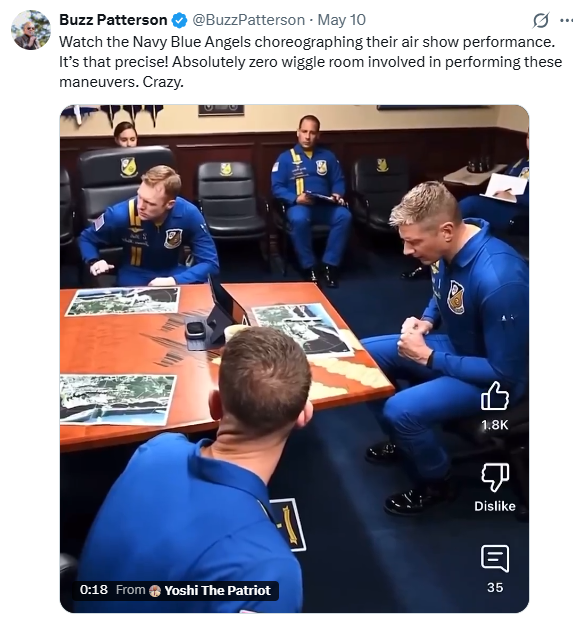
Blue Angel aerobatic pilots choreograph their performance by picturing every move
Acknowledgements: I find a lot of these links myself, but I also get some from other places that I rely on as “serendipity engines,” such as The Morning News from Rosecrans Baldwin and Andrew Womack, Jodi Ettenberg’s Curious About Everything, Dan Lewis’s Now I Know, Robert Cottrell and Caroline Crampton’s The Browser, Clive Thompson’s Linkfest and Why Is This Interesting by Noah Brier and Colin Nagy. If you come across something you think should be included here, feel free to email me at mathew @ mathewingram dot com
A police officer has recalled the moment he was lowered from a helicopter into a crocodile-infested river in South Africa as part of an effort to recover human remains. Captain Johan Potgieter was tasked with capturing a crocodile suspected of eating a businessman who had been swept away by floodwater. “The crocodile itself was lying on an island… there really was no other way to get to it except from the air,” he told the BBC. Since the operation, remains have been found inside the 15ft and 1,100lb crocodile. DNA tests are underway to confirm their identity. The man’s car had become stranded attempting to cross a low bridge in the flooded Komati River last week. By the time the police got to the scene, it was empty, leading them to suspect he had been swept away by the water. Drones and helicopters were used to in the search mission which led police to a small island where a number of crocodiles lay in the sun. (via the BBC)
People with schizophrenia don’t fall for the same visual illusions that non-schizophrenics do
Normal human subjects are readily fooled by a 3D representation of a face mask, but schizophrenics are not. This visual trick is known as the hollow mask illusion and consists of a 3D representation of a hollow, concave mask of a face, viewed pointing inwards. When healthy individuals look at this, more than 99% of the time what they report seeing is a normal face that is convex. This illusion exploits the brain’s system for making sense of the visual world by superimposing what it expects to see, based on past experience and memories, with what it is actually seeing. Yet patients diagnosed with schizophrenia almost never fall for it and instead report seeing a “hollow” face. But why? To find out a joint UK and German study published in the journal Neuroimage brain scanned 16 healthy volunteers and 13 schizophrenics as they experienced the illusion, which was presented to them using a 3D headset. (via The Naked Scientists)
Note: This is a version of my When The Going Gets Weird newsletter, which I send out via Ghost, the open-source publishing platform. You can see other issues and sign up here.
A police officer has recalled the moment he was lowered from a helicopter into a crocodile-infested river in South Africa as part of an effort to recover human remains. Captain Johan Potgieter was tasked with capturing a crocodile suspected of eating a businessman who had been swept away by floodwater. “The crocodile itself was lying on an island… there really was no other way to get to it except from the air,” he told the BBC. Since the operation, remains have been found inside the 15ft and 1,100lb crocodile. DNA tests are underway to confirm their identity. The man’s car had become stranded attempting to cross a low bridge in the flooded Komati River last week. By the time the police got to the scene, it was empty, leading them to suspect he had been swept away by the water. Drones and helicopters were used to in the search mission which led police to a small island where a number of crocodiles lay in the sun. (via the BBC)
People with schizophrenia don’t fall for the same visual illusions that non-schizophrenics do
Normal human subjects are readily fooled by a 3D representation of a face mask, but schizophrenics are not. This visual trick is known as the hollow mask illusion and consists of a 3D representation of a hollow, concave mask of a face, viewed pointing inwards. When healthy individuals look at this, more than 99% of the time what they report seeing is a normal face that is convex. This illusion exploits the brain’s system for making sense of the visual world by superimposing what it expects to see, based on past experience and memories, with what it is actually seeing. Yet patients diagnosed with schizophrenia almost never fall for it and instead report seeing a “hollow” face. But why? To find out a joint UK and German study published in the journal Neuroimage brain scanned 16 healthy volunteers and 13 schizophrenics as they experienced the illusion, which was presented to them using a 3D headset. (via The Naked Scientists)
Note: This is a version of my When The Going Gets Weird newsletter, which I send out via Ghost, the open-source publishing platform. You can see other issues and sign up here.
At 21, Rodney Wilkinson was the best fencer in South Africa: national champion in foil and sabre, second in epee. He had toured Europe and Argentina. He had not stood on the Olympic podium, because South Africa was banned. The apartheid state had taken that from him, along with everything else it took from everyone. Eleven years after the incident, the same man was working as a contract engineer at the Koeberg nuclear power station, 19 miles north of Cape Town. He was furious with the regime that had conscripted him, sent him to fight a war in Angola he didn’t believe in, and made his country a pariah. In an act of folly or courage, in December 1982 he walked four bombs into South Africa’s only nuclear power station, weeks before it was due to come online. On 17 December, he pulled the pins, made it out of the control room, had a farewell drink with his colleagues, and then disappeared. (via The Guardian)
He accidentally discovered that his wife was a world-class Tetris player
I contacted Kelly Flewin, a 29-year-old gas station attendant in Winnipeg, Manitoba, and the senior referee at twingalaxies.com, who told me that any record in one of the more popular classic games would always set the classic gaming world on fire. “It’s funny,” I told him. “We have an old Nintendo Game Boy floating around the house, and my wife will sometimes dig it out to play on airplanes and long car rides. She’s weirdly good at it. She can get 500 or 600 lines, no problem.” After I hung up the phone, I went to the bedroom and woke my wife, Lori. “Honey,” I said. “You’re not going to believe this, but I just got off the phone with a guy who’s in charge of video game world records, and he said the world record for Game Boy Tetris is 327 lines, and he wants us to go to New Hampshire this spring so you can try to break the world record live in front of the judges at the world’s largest classic video game tournament. (via Boston.com)
Note: This is a version of my When The Going Gets Weird newsletter, which I send out via Ghost, the open-source publishing platform. You can see other issues and sign up here.
A beekeeper has been jailed for six months after she set swarms of her insects on sheriff’s deputies attempting to carry out an eviction at a friend’s house. Rebecca Woods insisted she only released her truckload of hives to allow the bees to enjoy the “lovely, flowering landscape” near the home of an elderly friend and cancer patient. But a district court in Springfield, Massachusetts, heard that Woods, 59, admitted under questioning that she was trying to save him from eviction by freeing the bees in the presence of the deputies who had shown up to serve papers. Several officers were stung on their heads and faces, and one required hospital treatment. One deputy is seen frantically waving his arms, trying to shoo the insects away. Woods, who put on her beekeeper’s suit during the incident, had driven up to the property with the hives stacked on a trailer pulled by her blue SUV, and proceeded to lift the lids of a number of them. (via The Guardian)
The company that owns the salvage rights to the Titanic wants to sell off artefacts
More than a century after the Titanic sank in the North Atlantic, the company that owns exclusive salvage rights to the shipwreck wants to auction about 100 artifacts raised from the ocean floor during the first recovery effort nearly 40 years ago.The doomed vessel’s wreckage has been an object of fascination and controversy since it was found in 1985, and the newly proposed sale is already stirring fresh debate over the fate of the thousands of items pulled from the site.When the company, R.M.S. Titanic, last proposed selling artifacts, in 2016, it was struggling through bankruptcy and the plan drew objections from the U.S. and French governments, as well as from UNESCO and other cultural institutions. The latest potential sale was proposed in a document that R.M.S. submitted in March to the federal court in Norfolk, Va., which oversees the recovery effort and may have to approve the auction. (via the New York Times)
Note: This is a version of my When The Going Gets Weird newsletter, which I send out via Ghost, the open-source publishing platform. You can see other issues and sign up here.
I could be wrong, but I feel like this post is going to be similar to the one I wrote recently about crypto stablecoins. I know some readers never got past the headline, because they were busy imagining all the bad things about crypto — the rug pulls and the graft and so on. One reader even pointed out that my post probably didn’t make it past many people’s spam filters, since the headline contained a word that many people and algorithms ignore on contact. So be it! In any case, this one is probably going to get an overwhelmingly negative response as well, because I think many people have already decided that AI is and always will be terrible — given things like the water use (which I wrote about here) and the plagiarism (which I wrote about here) and convincing people they are immortal or should unalive themselves, etc. (which I wrote about here). If you fall into that category you probably haven’t even made it this far, so I might as well just continue with my thesis: namely, that AI is doing some positive things.
I’ve been collecting examples of things that AI is doing that are clearly beneficial, either to an individual or to society in general — or if not inarguably beneficial then at least not obviously bad — and they have been piling up. I will freely admit here that some of these are still hypothetical, meaning AI has been used in research or hypothetical situations but has had some success that appears to be broadly applicable. One of the things that made me decide to write about it, despite my conviction that it will be unpopular, is a piece I read by someone named Carlo Iacono who writes a blog called Hybrid Horizons (from what I can gather, he is a university librarian from Australia). In the piece, Iacono argues that many of those writing about artificial intelligence have been looking at its effects on the wrong part of the world. Here’s an excerpt:
There is an app in Lagos that can tell you whether your malaria medication is real or counterfeit. It costs sixty dollars. It uses a spectrometer the size of a thumb drive and an AI algorithm trained on the molecular fingerprints of four hundred drugs. A pharmacist holds the device against a blister pack, waits twenty seconds, and the screen tells her whether the pills will treat a child’s fever or do nothing while the parasite multiplies. The company behind it was founded by a Nigerian pharmacist who, at fifteen, swallowed a counterfeit asthma medication and spent twenty-one days in a coma. He survived, studied at Yale, and built a system that now operates in over five thousand pharmacies across Nigeria, Kenya and Uganda. In 2024, it identified and removed 1.3 million counterfeit medications from the supply chain.
Note: This is a version of my Torment Nexus newsletter, which I send out via Ghost, the open-source publishing platform. You can see other issues and sign up here.
Researchers from Cairo University and the Technical University of Munich (TUM) have located two air-filled spaces within Giza’s Menkaure pyramid that hint at a possible secret entrance. The Menkaure pyramid is the smallest of the three main pyramids on Cairo’s Giza plateau. Built for the Fourth Dynasty ruler Menkaure, it was completed in the 26th century BC. It was excavated between 1906 to 1910, but has not been fully explored since then. Working within the ScanPyramids project, the research team used non-invasive ground-penetrating radar, ultrasound, and electrical resistivity tomography (ERT) to confirm the presence of voids behind this area. Their discovery supports the theory, suggested by researcher Stijn van den Hoven in 2019, that a second entrance might exist at that location. In 2023 it found a previously undiscovered corridor at the Great Pyramid of Giza using advanced scanning techniques. (via Art News)
Researchers built an AI chatbot that only knows the world before 1931
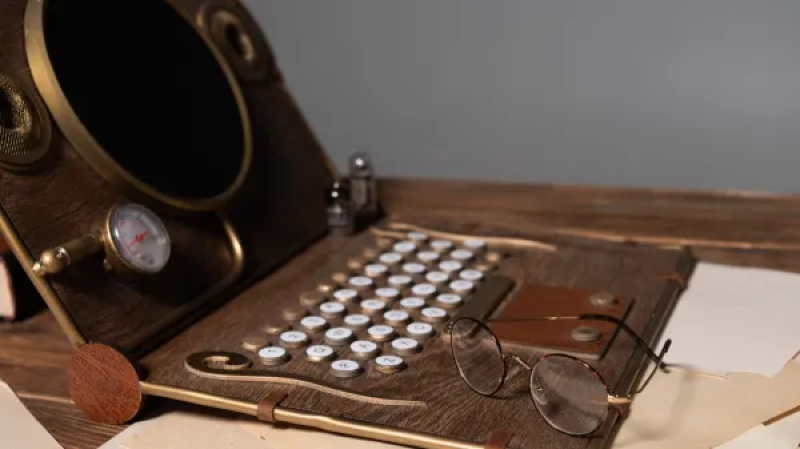
The internet’s chatbots have read every forum rant, leaked Slack log, and confident blog post your uncle ever wrote about chemtrails. The results are predictable: they reflect the state of the internet, and it isn’t pretty. Wouldn’t it be nice if we had a chatbot that only draws on knowledge from before the internet, reality TV, or AI-slop content ever existed? Three researchers have created just that: a chatbot that hasn’t read anything published after 1930. Talkie is a 13-billion-parameter language model trained on digital scans of English-language texts published before the end of 1930. That cutoff aligns with the current US public domain year, meaning anything published until the end of that year is fair game and there are no lawsuits from irate IP-holders to worry about. You can download it from GitHub or chat with it through a web interface (via Malwarebytes)
Note: This is a version of my When The Going Gets Weird newsletter, which I send out via Ghost, the open-source publishing platform. You can see other issues and sign up here.
Here is the promise you and I must cling to across the thousands of words that follow: At some point within this text, I will reveal to you what—after 555 responses, 13,000 miles of travel, and months of monomaniacal research—I have determined to be the best free restaurant bread in America. I will not attempt to slither to the moral high ground, arguing that best is a meaningless measure, or insisting that all bread is dear in its own way. Even if you attempt to betray me—for instance, by merely scanning the text that follows for the phrase Here it is: the best free restaurant bread in America—I will uphold my end of the bargain. Though it strikes the ear as an insoluble query, there is a correct answer—right now, known only to God (and to me, an agent of his will), but erelong to the steadfast reader. (via The Atlantic)
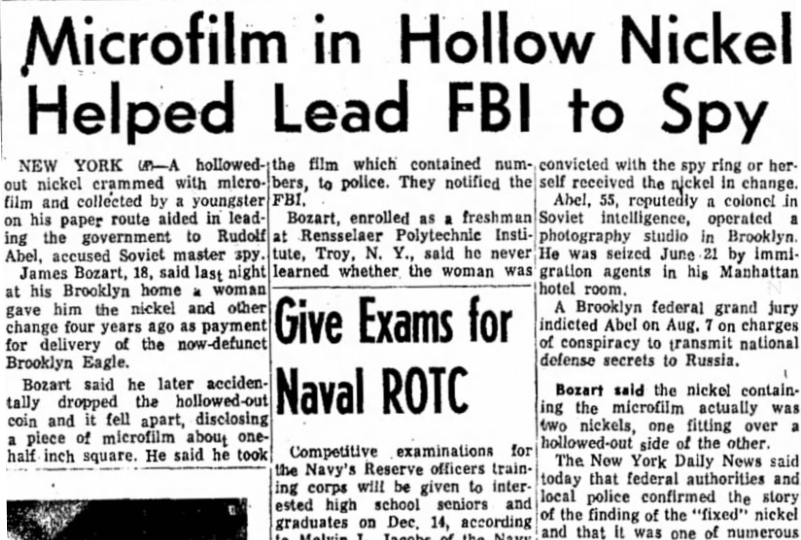
A newspaper boy dropped a nickel on the ground and it popped open to reveal a microfilm
On June 22, 1953, a fourteen-year-old newspaper boy collecting for the Brooklyn Eagle was paid with a nickel that felt too light to him. When he dropped it on the ground, it popped open, revealing that it contained microfilm. The microfilm contained a series of numbers. After agent Louis Hahn of the FBI obtained the nickel and the microfilm, the agency tried to find out where the nickel had come from and what the numbers meant. On the microfilm, there were five digits together in each number, 21 sets of five in seven columns and another 20 sets in three columns, making a total of 207 sets. There was no key for the numbers. The FBI tried for nearly four years to find the origin of the nickel and the meaning of the numbers. It was only when KGB agent Reino Häyhänen chose to defect in May 1957 that the nickel was linked to the KGB. (via Wikipedia)
Note: This is a version of my When The Going Gets Weird newsletter, which I send out via Ghost, the open-source publishing platform. You can see other issues and sign up here.
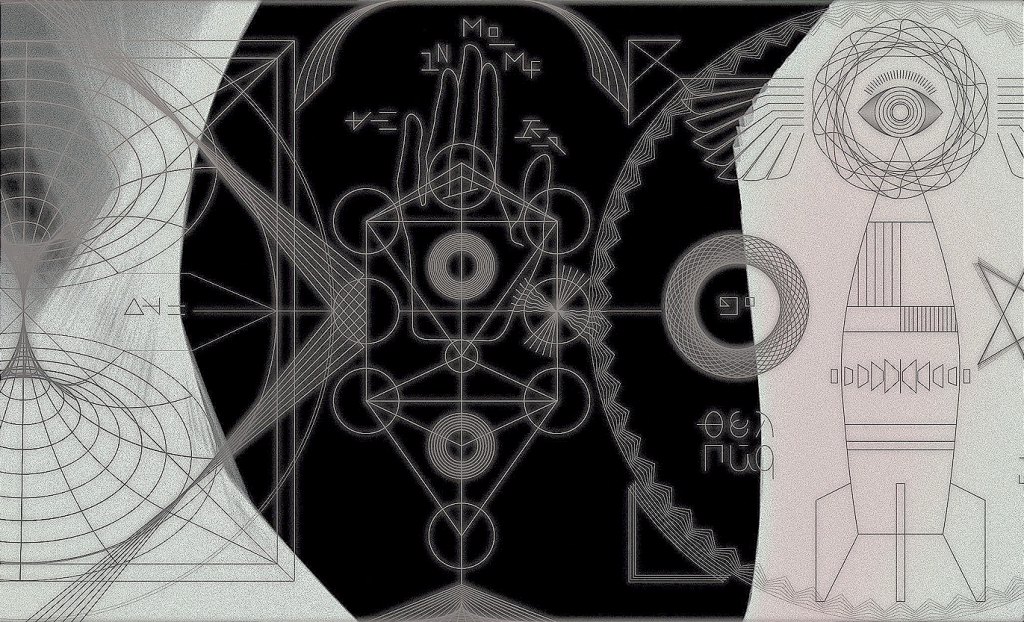
Jack Parsons was one of the most influential figures in the history of the American space program. He also stood accused of espionage, and held a deep fascination with the occult. By 1939, Parsons and his wife Helen Parsons-Smith had fully embraced the teachings of the Ordo Templis Orientis, a central hub for Aleister Crowley’s spiritual and religious philosophy. Crowley taught that a Thelemite’s central ambition was to achieve a higher state of existence by embracing one’s “True Will,” or one’s ultimate purpose beyond selfishness or ego. In pursuit of that goal, many aspects of Parsons’s life blurred the boundaries between science and mysticism. As a Thelemite, he performed ritual magic, including banishing impure elements with pentagrams, invocating the power of the “Holy Guardian Angel,” and offering daily adorations to the sun. (via Supercluster)
These two women are twins but due to a rare event they have different fathers
Lavinia and Michelle know that those of us who haven’t shared a womb with a sibling can be fascinated by twins: their similarities, how they differ, whether there’s any kind of mysterious synergy between them. They aren’t identical twins. They share the same striking eyes, but the lower halves of their faces are different. Their personalities differ, too. But they share many things, including the almost inconceivable circumstances that brought them into the world, and which only came to light four years ago, when they were 45 and both took DNA tests from the genealogy firm Ancestry. Their results of those tests revealed something never before documented in British history. Lavinia and Michelle are twins who grew together in the same womb, were born from the same mother, and delivered within minutes of each other – but have different fathers. (via The Guardian)
Note: This is a version of my When The Going Gets Weird newsletter, which I send out via Ghost, the open-source publishing platform. You can see other issues and sign up here.