
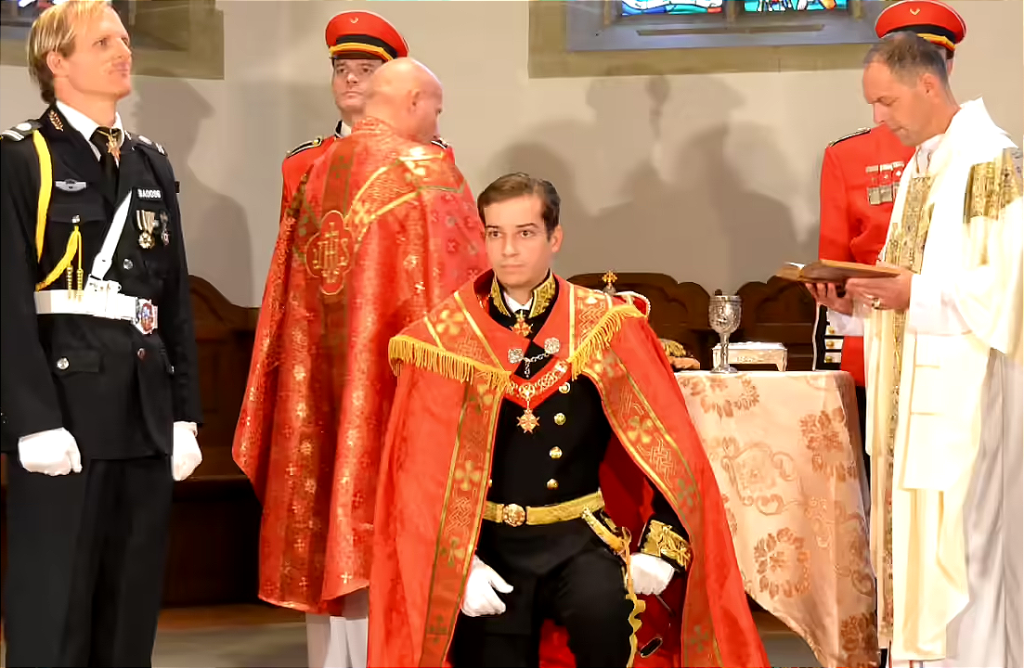
A Swiss man named Jonas Lauwiner has drawn attention after declaring himself the “king of Switzerland” and assembling a patchwork of land parcels without paying for them. His unusual rise is not based on conquest or wealth but on exploiting a little-known legal provision that allows claims over ownerless or unregistered land. By identifying overlooked plots, including fragments of roads and small properties, he has gradually built what he calls an “empire”. While his royal title has no legal standing, his land acquisitions are real, placing him at the centre of a growing debate about law, ownership and power in modern Switzerland. Lauwiner’s strategy relies on provisions within the Swiss Civil Code Article 658, which allows individuals to claim land that has no registered owner. By systematically identifying these gaps, he has accumulated more than 110,000 square metres of land across different regions. (via the Times of India)
A Renaissance dispute over how to divvy up winnings spawned probability theory

You and I are playing a simple game of chance. We each throw $50 into a pot and start flipping a coin. Heads, you get a point; tails, I get one. The first person to reach 10 points walks away with the full $100 and you are ahead. Suddenly my phone rings: there’s an emergency, and I must leave in a hurry. Now we have a problem. You don’t want to just hand me my $50 back because you’re winning. But I’m reluctant to give you the whole pot because I still have a chance to mount a comeback. What is the fairest way to split the cash? Known as the “problem of the division of the stakes,” this puzzle stumped mathematicians for more than 150 years. Two greats of 17th-century math, Blaise Pascal and Pierre de Fermat, corresponded about the problem in a famous series of letters. They not only discovered the correct way to share the pot but also created the foundations of modern probability theory in the process. (via Scientific American)
Note: This is a version of my When The Going Gets Weird newsletter, which I send out via Ghost, the open-source publishing platform. You can see other issues and sign up here.
Before he became a lovable sheriff Andy Griffith played a charismatic drifter
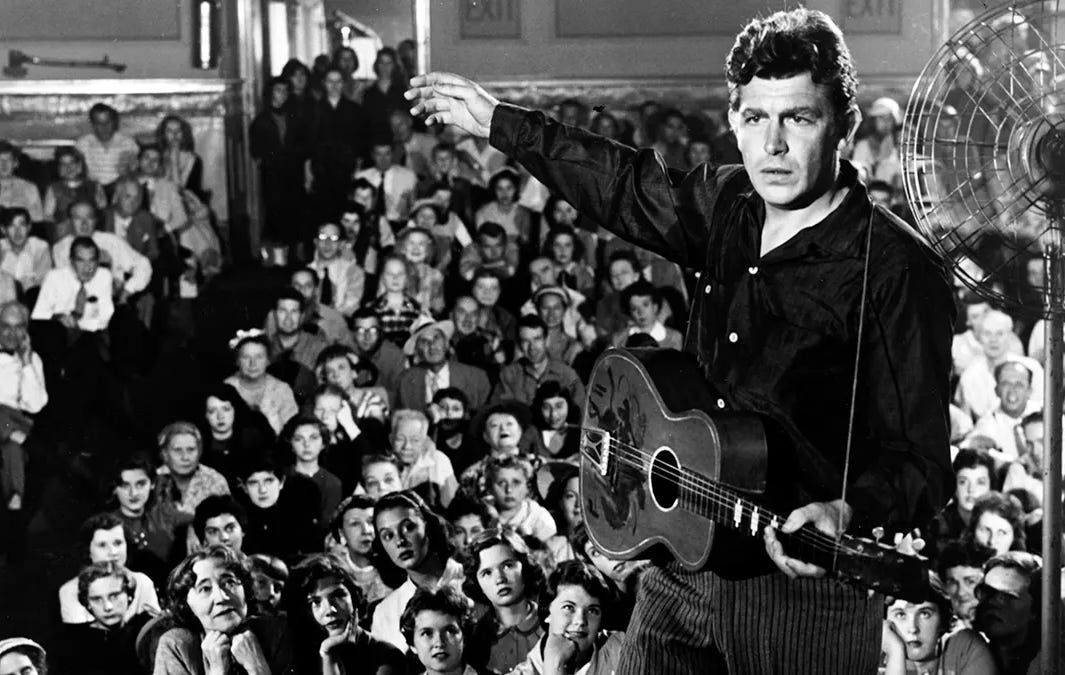
When people think of The Andy Griffith Show, they think of warmth. Of front porches and quiet wisdom and a sheriff who could solve problems with a smile instead of a gun. But Andy Griffith came close to being defined by something very different, because before Mayberry, there was A Face in the Crowd. Released in 1957 and directed by Elia Kazan, it cast Griffith as Rhodes — a charismatic drifter who rises to media power and reveals a deeply manipulative, dangerous core. It was, by any measure, a stunning performance. Lonesome Rhodes enters as a charming nobody — a drifter with a guitar and a quick smile who’s discovered in an Arkansas jail and handed a microphone. But what begins as harmless, down-home entertainment steadily morphs into something far more unsettling. As Rhodes rises through radio and into television, he reveals a darker core: manipulative and intoxicated by power. (via Woman’s World)
Hi everyone! Mathew Ingram here. I am able to continue writing this newsletter in part because of your financial help and support, which you can do either through my Patreon or by upgrading your subscription to a monthly contribution. I enjoy gathering all of these links and sharing them with you, but it does take time, and your support makes it possible for me to do that. I also write a weekly newsletter of technology analysis called The Torment Nexus.
The inventor of razor blades thought that all corporations should be owned by the public
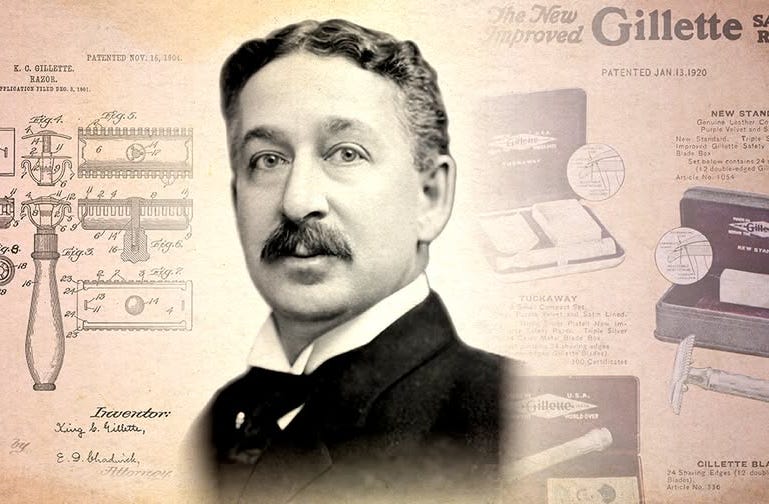
King Camp Gillette invented a bestselling safety razor and was the founder of the Gillette razor company. Gillette was also a Utopian Socialist. He published a book titled The Human Drift, which advocated that all industry should be taken over by a single corporation owned by the public, and that everyone in the US should live in a giant city called Metropolis powered by Niagara Falls. A later book, World Corporation, was a prospectus for a company set up to create this vision. He offered Theodore Roosevelt the presidency of the company, with a fee of one million dollars. (Roosevelt declined the offer.) King Gillette purchased property for a large ranch in the Santa Monica Mountains near Calabasas in Southern California in 1926. Elizabeth Clare Prophet, founder of the Church Universal and Triumphant, purchased the property in 1978, and ran her New Age church at the site until 1986. Since 2008, the ranch has been used for the NBC reality show The Biggest Loser. (via Wikipedia)
The Slenderfork had red and green lights on it to tell you when to eat or stop eating

Overweight people are often told they’re “digging their grave with their fork”. Not so if they’re eating with a diet control utensil called Slenderfork, the brain child of an overweight man in Massachusetts. Inventor and manufacturer of Slenderfork is Joe Caruso who was looking for a way to lose weight. His answer: A fork with a battery operated light that signals when to eat and when to stop. “It works on the principle of behavior modification,” says Caruso. “If you slow down your eating, you won’t eat as much. It takes 20 minutes for the stomach to signal the brain that it is full, and fast eaters will over-eat before their stomach says stop.” The fork has a red light and green light at the top of the handle, and an on-off switch. When turned on, the timing mechanism starts to work. While the green light is on (for about 6 seconds) you eat. Then, while the red light goes on (for about 25 seconds) you chew your food until the green light signals you to eat again. It’s powered by two hearing aid batteries and sells for $14.95. (via Weird Universe)
This dance troupe performs on stilts like the ones French shepherds used to use

Acknowledgements: I find a lot of these links myself, but I also get some from other places that I rely on as “serendipity engines,” such as The Morning News from Rosecrans Baldwin and Andrew Womack, Jodi Ettenberg’s Curious About Everything, Dan Lewis’s Now I Know, Robert Cottrell and Caroline Crampton’s The Browser, Clive Thompson’s Linkfest and Why Is This Interesting by Noah Brier and Colin Nagy. If you come across something you think should be included here, feel free to email me at mathew @ mathewingram dot com