A Nepali climbing guide thought to have died on Mount Everest has been found crawling down to Base Camp, six days after he was last seen alive. Dawa Sherpa was last seen above Camp 3, at around 24,600ft, while coming down the mountain after summiting. Hopes for his survival were slim as the air at that altitude is thin – but on Thursday, a cleaning crew spotted the experienced climber, who had frostbite on his hands but appeared to be in good health, sliding slowly down. Five people have died so far in this year’s climbing, three of them Nepalis who were involved in the Everest preparations. Dawa Sherpa – also known as Hillary Dawa Sherpa after famed mountaineer Edmund Hillary – was “slowly sliding through” the Khumbu Icefall toward Base Camp when he was found, Pemba Sherpa said. “As far as I know, no one has survived alone at that altitude on Everest so far. This is a miracle to have survived for six days.” (via the BBC)
Former homeless dropout and professional gambler is an internationally renowned artist
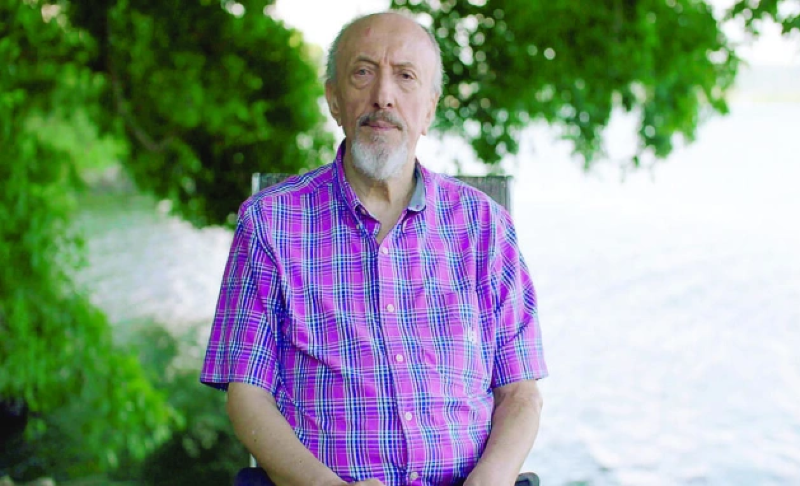
As a child growing up in Kentucky in the sixties, George Widener exhibited exceptional arithmetical skills. He was also a compulsive drawer with a photographic memory and an interest in machines. He joined the US military at 18 to work in intelligence, based in West Germany, using his pattern recognition skills to analyse photos from the Stasi and the KGB. He says that he left the military because of his poor social skills and enrolled at the University of Texas to study engineering. But his mind was so full of numbers and dates that he was unable to cope with the course. He ended up living in hostels and on the streets. Eventually he was put in hospital and diagnosed with Asperger’s Syndrome. One way he has channelled his arithmetical ability is in gambling. He has learned how to count cards, a system of winning at blackjack by memorising cards and calculating their values. Another way he coped with his condition was by combining his interest in dates with his drawing. (via The Guardian)
Famous architect Antoni Gaudi died because he was mistaken for a beggar
Born in Spain in 1852, architect Antoni Gaudí became famous for working at the forefront of Catalan Modernism. In 1883, Gaudí began designing Sagrada Família, the Roman Catholic basilica in Barcelona associated with his name. Gaudí didn’t marry or have children, instead focusing steadfastly on his work. He engaged in extreme fasting, shunned meat and alcohol, and reportedly ate only lettuce dipped in milk for a typical lunch. After several of his close friends died in the early 1910s, he threw himself further into his work. He moved into his workshop inside the Sagrada Família, and his hygiene habits went sharply downhill; he wore shabby, ragged clothing, and stopped shaving. On June 7, 1926, during his daily walk to confession, Gaudí was hit by a tram. Because of the 73-year-old’s unkempt appearance (and the fact that he didn’t have identification in his pocket), people who witnessed the accident thought he was a beggar and taxi drivers wouldn’t bother taking a beggar to the hospital. (via Mental Floss)
Hi everyone! Mathew Ingram here. I am able to continue writing this newsletter in part because of your financial help and support, which you can do either through my Patreon or by upgrading your subscription to a monthly contribution. I enjoy gathering all of these links and sharing them with you, but it does take time, and your support makes it possible for me to do that. I also write a weekly newsletter of technology analysis called The Torment Nexus.
Experts say a rare Stradivarius violin that was looted by the Nazis has been found
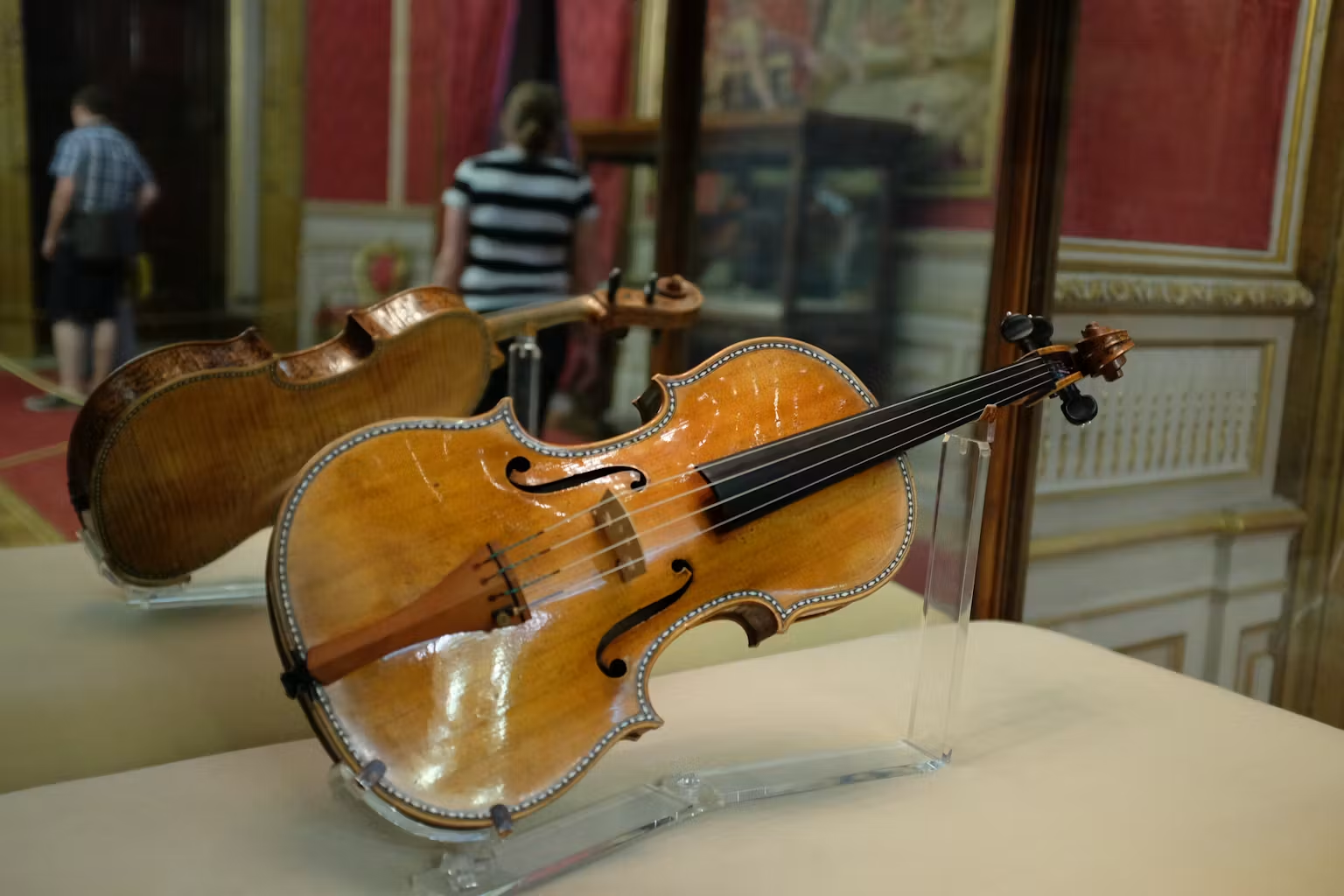
The most sublime of the violins made by Antonio Stradivarius (Cremona, c. 1644-1737) have names like roses: there is the Countess Polignac and the Davidov, the Lady Tennant and the Molitor. Stradivarius’s technique evolved with time; his violins’ bodies grew longer and deeper, their sound richer. In 1719, at the height of his Golden Period, he made nine known violins. Of those nine violins, two were lost in World War II — until now, when one seems to have surfaced. Pascale Bernheim is a founding director of a Paris group that is devoted to tracking down musical instruments looted during World War II. In April, her organization announced that it had located a legendary instrument: a Stradivarius that hadn’t been seen since 1944. The violin is worth at least ten million euros, but its current owner — a Strasbourg luthier — refuses to acknowledge that his instrument is the long-lost Lauterbach. (via European Review of Books)
Study shows that bees can use tools to solve problems without any training
A new study published in Science on Thursday found that bees utilized tools to solve complex problems to win a sugary treat, even if they had never been trained to use the tools. Some of the bees even cheated — skipping the problem altogether — to reap the reward, the researchers found. This isn’t the first time bumblebees have been seen to use tools to get what they want. A 2016 study found that such bees could learn to pull a string to receive a reward — and that untrained bees could learn this trick from their more educated peers. Still, it adds to the evidence that creative problem-solving and tool use aren’t just the domain of larger-brained animals, such as birds and apes. Bumblebees’ brains are relatively primitive — they have around one million neurons, compared with the 86 billion or so in human brains — yet the new experiment indicates that complex problem-solving doesn’t require complex gray matter. (via Scientific American)
Russell Crowe gives Ryan Gosling a hard time about all his endorsements
Acknowledgements: I find a lot of these links myself, but I also get some from other places that I rely on as “serendipity engines,” such as The Morning News from Rosecrans Baldwin and Andrew Womack, Jodi Ettenberg’s Curious About Everything, Dan Lewis’s Now I Know, Robert Cottrell and Caroline Crampton’s The Browser, Clive Thompson’s Linkfest and Why Is This Interesting by Noah Brier and Colin Nagy. If you come across something you think should be included here, feel free to email me at mathew @ mathewingram dot com
On December 7, 1877, Thomas Edison walked into the offices of Scientific American and placed a metal device on a desk. With a turn of a crank, Edison astonished the dozen or so staffers who had gathered around the contraption.The machine spoke. “Good morning,” it said in Edison’s voice. “How do you do?” SciAm’s editors described the demonstration in the December 22, 1877, issue. “There can be no doubt,” they wrote, “but that the inflections are those of nothing else than the human voice.”Accompanying the report was adetailed sketch of Edison’s device, which the inventor called a phonograph. Virtually overnight, the article catapulted Edison to fame and established the phonograph as the first machine to record and reproduce human speech. But was it? On May 15, 2026, at the annual meeting of the Association for Recorded Sound Collections in Memphis, an audio historian proposed another candidate for the title — one that preceded Edison’s by nearly a century. (via Scientific American)
Pacific islanders saved his life in 1943 and he spent the rest of it repaying them
On June 5, 1943, Fred Hargesheimer was shot down by a Japanese fighter while on a mission over the Japanese-held island of New Britain in the southwest Pacific. He parachuted into the jungle, where he barely survived for 31 days until local hunters found him. They took him to their coastal village, and for seven months hid him from Japanese patrols, fed him and nursed him back to health. In February 1944 he was picked up by an American submarine. After returning to the United States following the war, Mr. Hargesheimer married and began a sales career. But he could never forget those who saved him. After revisiting the village of Ea Ea in 1960, he came home, raised $15,000 over three years and returned in 1963 with his son to contract for the building of the villagers’ first school. In the decades to come, Mr. Hargesheimer built a clinic, another school and libraries in Ea Ea, renamed Nantabu, and surrounding villages. (via the New York Times)
A Soviet scientist cracked the code of the Mayan language and said his cat helped him do it
From a young age, Yuri knew he wanted to dedicate his life to history. He entered Kharkiv State University to study at the Faculty of History, but World War II interrupted his education and forced him to move to Moscow. There, he continued his studies at the same faculty at Moscow State University. His interests went beyond history into ethnography, which led him to write his thesis on shamanic practices. Even then, he was fascinated by Maya writing — despite everyone around him insisting it could never be deciphered. At the time, decoding the Maya hieroglyphs was considered impossible. There were no keys or reference materials to guide the work. This meant Yuri had to do more than just decipher texts — he had to invent an entire system for working with these complex inscriptions from scratch. He had a cat named Asya, and he often said she inspired his greatest breakthrough: the method for deciphering the Maya script. (via Palme School)
Hi everyone! Mathew Ingram here. I am able to continue writing this newsletter in part because of your financial help and support, which you can do either through my Patreon or by upgrading your subscription to a monthly contribution. I enjoy gathering all of these links and sharing them with you, but it does take time, and your support makes it possible for me to do that. I also write a weekly newsletter of technology analysis called The Torment Nexus.
His autistic child would only drink from one specific cup so the company custom made it
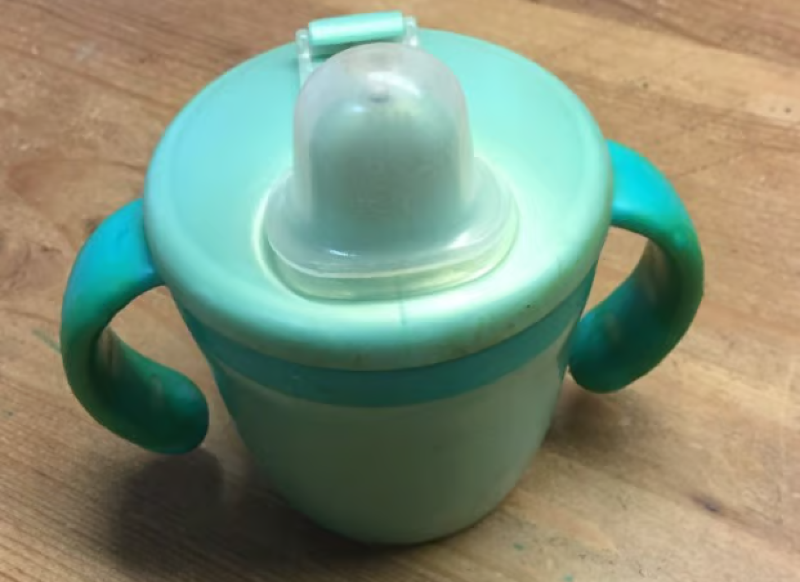
in 2004 or so, Ben Carter, then age 2, started using the cup pictured above. Fast forward to 2016, and he was still using the cup. Ben, then age 14, was on the severe end of the autism spectrum. His father posted to Twitter that Ben would only drink from this specific blue cup — he doesn’t drink from anything else, to the point of requiring two emergency trips to the hospital due to severe dehydration. Unfortunately, Tommee Tippee retired this specific line of cups. Giving Ben a newer version didn’t work. So he took to social media. Hundreds if not thousands helped spread Marc’s message. And ultimately, the Tommee Tippee company noticed. The company searched for the mold for the original cup, located it — and got to work. Per a company spokesperson, Tommee Tippee was “able to start production on a run of the original cup,” producing 500 or so, enough to “ensure that Ben has a lifetime supply.” (via Now I Know)
Charles Darwin’s grandfather proposed his own theory of evolution seventy years earlier
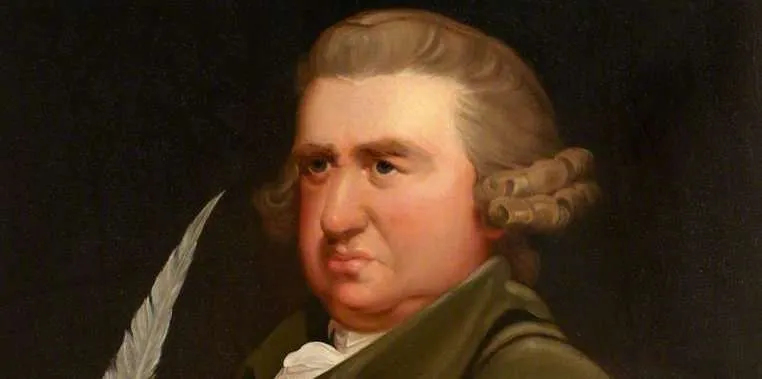
Erasmus Robert Darwin was an English physician. He was also a natural philosopher, inventor, and poet. His poems included much natural history, including a statement of evolution and the relatedness of all forms of life. He was a founding member of the Lunar Society of Birmingham, a discussion group of pioneering industrialists and natural philosophers. Darwin’s final long poem, The Temple of Nature, was published posthumously in 1803. The poem was originally titled The Origin of Society. It is considered his best poetic work. It centres on his own conception of evolution. The poem traces the progression of life from micro-organisms to civilised society. The poem contains a passage that describes the struggle for existence. Percy Bysshe Shelley specifically mentions Darwin in the first sentence of the 1818 Preface to Frankenstein to support his contention that the creation of life is possible. (via Wikipedia)
This kid’s bird descriptions and imitations are mind-boggling
Acknowledgements: I find a lot of these links myself, but I also get some from other places that I rely on as “serendipity engines,” such as The Morning News from Rosecrans Baldwin and Andrew Womack, Jodi Ettenberg’s Curious About Everything, Dan Lewis’s Now I Know, Robert Cottrell and Caroline Crampton’s The Browser, Clive Thompson’s Linkfest and Why Is This Interesting by Noah Brier and Colin Nagy. If you come across something you think should be included here, feel free to email me at mathew @ mathewingram dot com
Before I get into this week’s post, it occurred to me that some of you might be frustrated at how often I write about AI — things like whether it makes sense to think of AI engines as conscious, whether we should be afraid of it destroying humanity as we know it, whether it’s bad that people sometimes fall in love with chatbots, whether AI data centres use too much electricity and water, etc. Perhaps you are sick of hearing about AI all the time! Or it’s possible that you have already made up your mind that it is bad. For me, this newsletter is a way of thinking out loud about this type of thing, which is why I rarely come down hard on one side (something I was chastised for recently by a reader). Also, the name of the newsletter is The Torment Nexus (explanation here, for those who aren’t aware of the reference) and what could be more tormented or nexus-like than artificial intelligence? Anyway, I encourage you to stick with me as I explore some of these AI-related questions, unless it is just too much for you (either the topic or my indecisiveness on it), in which case bon voyage!
When reading about the recent funding by Anthropic — which appears to have won the race with OpenAI for who is going to do an initial public stock offering first — I confess I find it hard to wrap my head around the numbers being floated, whether in Anthropic’s recent funding round, its unofficial results, or the coverage of its proposed IPO. This company — which according toNew York Times writer Kevin Roose was just “a 160-person start-up in Jackson Square with no products and no revenue” three years ago — is expected to have a market value of close to $1 trillion US dollars, unless something drastic happens between now and issue time. I’ve been writing about technology stocks since Netscape first went public in 1995, and this is unlike anything I’ve ever seen, not just in terms of magnitude but in terms of the speed with which Anthropic has reached this (theoretical) valuation. The company — which was created by Dario Amodei, his sister Daniela, and a number of other former OpenAI staffers — is less than six years old.
Just a little over two months ago, OpenAI — which jump-started the AI gold rush with the release of ChatGPT in 2022 — announced that it had raised $122 billion in a funding round that put its value at $730 billion, a number that the New York Times notes it took roughly a decade to achieve. Anthropic has eclipsed it in half the time. Since I’ve already mentioned 1995, which marked the beginning of one of the great tech-stock IPO runs in history (at least history up to that point) it’s worth noting that according to technology analyst Benedict Evans, the $965-billion theoretical value of Anthropic’s IPO is more than the total market cap at issue of every single venture-backed IPO in the USA from 1995 to 2000. That encompasses the entirety of the dot-com bubble, which at the time was described as a completely unjustified orgy of stupidity (among other things).
Note: This is a version of my Torment Nexus newsletter, which I send out via Ghost, the open-source publishing platform. You can see other issues and sign up here.
Romanian-born mathematician Stefan Mandel used simple probability and a massive ticket-buying operation to win lottery jackpots 14 times. Born into a poor Jewish family in Romania in 1931, Mandel developed a passion for mathematics at a young age but could not pursue an academic career because of financial hardship. Instead, he worked as an accountant to support his family. His monthly salary of $88 was barely enough to support his family. Mandel said that he needed a way to “get some serious money, quickly.” Having spent years studying probability theory and the work of Italian mathematician Leonardo Fibonacci, he began exploring the lottery, convinced mathematics could improve the odds. After years of research, he developed a number-picking algorithm based on a method he called “combinatorial condensation.” The strategy relied on a simple principle: identify lotteries where the jackpot exceeded the cost of buying every possible number combination. If enough tickets covering all combinations could be purchased, a profit could be guaranteed. (via VnExpress)
Every spring a team of biologists counts over 50,000 puffins on this remote Welsh island
Skomer Island, located of the coast of Pembrokeshire, is an internationally important seabird island. Every year, The Wildlife Trust of South and West Wales (WTSWW) undertake their annual count to monitor the population of Puffins that return to the island every spring to breed. Puffin counting may sound like an easy job, but with over 50,000, it’s no mean feat. Every spring, the Skomer team set out on a calm, clear evening with binoculars and notepad in hand to count every single Puffin on land, in the sky and at sea. The island is broken up into seven sections, and the team must work against the clock and the elements to make sure they have accounted for every single Puffin. Timing is key – too early in the season and the bulk of birds won’t have returned, too late and they’ll be settled on eggs in their burrows. And there’s method to the Puffin madness – they use the same method today that the wardens have used since the 1980s. This means they can compare over 40 years of Puffin population data. (via Welsh Wildlife)
He had to learn how to walk again after he got a rare virus from a tick but it wasn’t Lyme
Martin Novar remembers flashes of his 65th birthday on Nov. 2, 2025. But he doesn’t remember anything else from that month. Memory is a tricky thing for Novar nowadays. When we made plans to meet at his house on Lake Owassa in Frankford Township for this story, he called three hours before the scheduled meeting, wondering where I was and offering directions. It’s not personal. He can’t remember any clients he’s had in the last year either and, after more than 20 years as an attorney, Novar was forced to give up his legal practice. He also doesn’t remember taking a hike with his dog, Raven, in the lush woodlands surrounding his Sussex County home in mid-November. He’d taken dozens of hikes like it before. Novar stayed at his partner Karen Ezra’s apartment in Brooklyn; when they spoke on the phone Thanksgiving morning, Novar was unintelligible. A lumbar puncture, also known as a spinal tap, showed that Novar was suffering fromencephalitis, or inflammation in the brain. (via NJ.com)
Hi everyone! Mathew Ingram here. I am able to continue writing this newsletter in part because of your financial help and support, which you can do either through my Patreon or by upgrading your subscription to a monthly contribution. I enjoy gathering all of these links and sharing them with you, but it does take time, and your support makes it possible for me to do that. I also write a weekly newsletter of technology analysis called The Torment Nexus.
In a Bond film where he drove on cobblestones they used Coca-Cola so the car would grip
There are two main vehicular-chase set pieces in No Time to Die. There’s an off-road battle set in Scotland’s countryside that features lots of SUVs—including Land Rover’s new Defender — of which many are launched spectacularly skyward. Then there’s a chase through the medieval streets of Matera in southern Italy. The Matera chase involves Jaguar XE sedans and Triumph motorcycles for the bad guys and the old DB5 for Bond. Only, the DB5 in this chase does things no DB5 could actually do. Like powerslides, donuts with Gatling guns poking out of the headlight buckets, and lurid drifts that go on for weeks. Since the replicas weren’t built for sale to the public or to be licensed to operate on public roads, they didn’t have to meet any government’s vehicle regulations. The interior is simply a welded roll cage, a single racing seat, a large wood steering wheel, and some bottom-hinged racing pedals. “We poured Coca-Cola on the ground to get some grip,” Higgins explains in his Manx accent. “The Coke seems to work better than anything. It was incredible how well it was working.” (via Car and Driver)
The train station in Cambridge got attention from a surprising audience: mathematicians
Cambridge North Station is clad in aluminum panels with a geometrical cutout design. The architecture firm, Atkins, originally claimed that the pattern was derived from Cambridge alumnus John Conway’s “Game of Life,” but eagle-eyed mathematicians soon realized that was incorrect. The design is in fact based on a mathematical rule studied by Stephen Wolfram, an Oxford alumnus, much to the dismay of rival university Cambridge. Though the firm’s website still references Conway, a Senior Architectural Designer at Atkins has since confirmed that it was, in fact, Wolfram’s Rule 30 that they used in the design. The mathematical façade transforms the building’s appearance from night to day —for the technically-minded, the pattern shown conforms to Wolfram’s rule 135 in the day, while at night the interior lights invert the pattern to rule 30. (via Arch Daily)
Look at this super-cute little blue octopus that was just discovered
Acknowledgements: I find a lot of these links myself, but I also get some from other places that I rely on as “serendipity engines,” such as The Morning News from Rosecrans Baldwin and Andrew Womack, Jodi Ettenberg’s Curious About Everything, Dan Lewis’s Now I Know, Robert Cottrell and Caroline Crampton’s The Browser, Clive Thompson’s Linkfest and Why Is This Interesting by Noah Brier and Colin Nagy. If you come across something you think should be included here, feel free to email me at mathew @ mathewingram dot com
A Georgia man convicted of leading an $11 million fraud scheme while in custody through contraband phones is now on the run after officials say he escaped from a federal prison camp. The United States Marshals Service, the Federal Bureau of Investigation, and other law enforcement agencies are searching for 34-year-old Arthur Cofield. According to authorities with the Federal Bureau of Prisons, Cofield was discovered missing from the minimum-security camp next to the Federal Corrections Institution in Jessup on Tuesday afternoon. At the time of his escape, Cofield was serving a sentence of over 11 years for identity theft and conspiracy to commit mail fraud, wire fraud, and bank fraud. Federal prosecutors announced new charges against Cofield in a December 2020 press release. At the time, the Atlanta man was serving a prison sentence for armed robbery in Butts County and faced an attempted murder charge in Fulton County. (via CBS)
A Soviet moon rover was silent for 40 years and then started sending signals again
For nearly 40 years, Lunokhod 1 was neither destroyed nor forgotten in the usual sense. The Soviet rover had simply become impossible to locate with enough precision to remain scientifically useful. In 2010, that changed when researchers identified its exact position and recovered a laser signal that brought it back into active lunar research. The rover itself never resumed operation. What returned was its reflector, still capable of sending light back to Earth after decades of silence.Lunokhod 1 reached the Moon aboard the Soviet Luna 17 mission on November 17, 1970, becoming the first remote-controlled rover to operate on another world. Designed for a shorter lifespan, it remained active through11 lunar day-night cycles before communications ceased in 1971. (via Daily Galaxy)
Note: This is a version of my When The Going Gets Weird newsletter, which I send out via Ghost, the open-source publishing platform. You can see other issues and sign up here.
I like to save things. Particularly interesting websites and news articles. Some of them are just for my personal use (projects I want to work on, etc.) and some are for inclusion in one of my newsletters: either When The Going Gets Weird, which is a daily collection of interesting and/or weird news stories and links, or The Torment Nexus, which is a weekly long-form analysis of a topic related to technology and society (both are published for free here on my website and also on Ghost and Substack). If for whatever reason you don’t save bookmarks — perhaps you live in the moment, perhaps you have a photographic memory — this post is unlikely to be of interest to you! But if you do save a lot of bookmarks, a tool called Raindrop is one of the best I have found for doing so.
For an indication of my bookmark-hoarding problem, I currently have about 170,000 bookmarks and links saved in Raindrop, in a variety of folders. For many years I used Instapaper for doing this, but it was a little too sparse for my liking, both in terms of the UI and the features it included. I switched to Pocket for awhile, because it had a more visual interface and was owned by Mozilla, and I eventually built up a huge repository of links there, but last year Mozilla said it was shutting the service down. Like many others, I had to not only export hundreds of thousands of bookmarks but also find a new home for them, so I researched a bunch of different open-source options, and wound up with Raindrop (I’m sure there are others that work for you and that’s fine).
The process of exporting 150,000 bookmarks and then importing them into a new service is not one I would recommend, since most services can’t handle that kind of load all at once, so you have to do it in batches. If you go here, you can see the conversation between me and the obviously irritated developer/maintainer (I assume) when I complained that the import of my hundreds of thousands of bookmarks from Instapaper kept failing — it handled the import of a huge number from Pocket, but when I tried to import from a CSV I downloaded from Instapaper the service kept giving me an error that said “You creating enormous load. Contact with us.” So I sent emails but got no response.
As you can see from the Reddit thread, the maintainer said “We do not have a total limit of bookmarks you can add to Raindrop. But we do prevent importing 100,000+ of bookmarks in short period of time. Please wait a week, when you will be able to import more.” So long story short, that’s what I did and it worked great. I don’t know who I was speaking with, but both the website and Google Play say Raindrop is the work of Rustem Mussabekov, a young developer originally from Kazakhstan who now reportedly lives in St. Petersburg.
One of the best parts about Raindrop is that it saves a copy of the website, so that if the article disappears or becomes unobtainable for some other reason, there is a local copy to refer to. It also has auto-tagging and auto-filtering built in, to make organizing easier, and full-text search. It’s also cross-platform — you can add an extension to any browser to save links, and you can access your links either through raindrop.io or through apps for both iPhone and Android. And so far both the service and its apps and website have been rock-solid even when filtering or moving hundreds of thousands of bookmarks. If you are in the market for a bookmark manager, I highly recommend Raindrop (I am not getting paid for this endorsement, for the record, just a fan).
A Kitchener, Ont., teen has won the best project award for innovation at the Canada-Wide Science Fair. Eigenpulse: Eliminating Demographic Bias in Pulse Oximetry and Remote PPG from First Principles was the name of the project by Gurnoor Kaur, a Grade 11 student at Cameron Height Collegiate Institute in Kitchener. The judges at the Edmonton competition say the 17-year-old’s work fixes a 35-year-old problem in blood oxygen sensors, which has led to higher mortality in Black patients. She noticed on systems that monitored vital signs and detected oxygen, there can be a demographic bias, so on lighter skin patients, the error is lower than it is on darker skin patients. “There is a mathematical instability in current cardiac models and to be able to resolve that, you need to add a missing term,” she said. “I solved the mathematical instability and using that I was able to start to remove this demographic bias.” (via the CBC)
In 1920 doctors said eating canned salmon made prisoners in New York into human magnets
Dr. John B. Ransom, in a report sent to the Superintendent of Prisons, declared that thirty-two convicts of Clinton prison at Dannemora had been turned into human magnets as the result of a peculiar poisoning that had been baffling medical scientists for the last week or more. Dr. Ransom is the prison physician, and he called to his assistance in determining the mysterious ailment of the prisoners. They found that whenever any of the men touched steel sparks would fly and their finger tips would violently vibrate the filaments of electric bulbs. They traced the trouble to what is termed the deadly botulinus germ, which they believe came from canned salmon served to the men about two weeks ago. While knowing that this germ generates electricity, they are unable to understand how it turns the victims into human electrodes. (via the New York Times)
Note: This is a version of my When The Going Gets Weird newsletter, which I send out via Ghost, the open-source publishing platform. You can see other issues and sign up here.
A Kitchener, Ont., teen has won the best project award for innovation at the Canada-Wide Science Fair. Eigenpulse: Eliminating Demographic Bias in Pulse Oximetry and Remote PPG from First Principles was the name of the project by Gurnoor Kaur, a Grade 11 student at Cameron Height Collegiate Institute in Kitchener. The judges at the Edmonton competition say the 17-year-old’s work fixes a 35-year-old problem in blood oxygen sensors, which has led to higher mortality in Black patients. She noticed on systems that monitored vital signs and detected oxygen, there can be a demographic bias, so on lighter skin patients, the error is lower than it is on darker skin patients. “There is a mathematical instability in current cardiac models and to be able to resolve that, you need to add a missing term,” she said. “I solved the mathematical instability and using that I was able to start to remove this demographic bias.” (via the CBC)
In 1920 doctors said eating canned salmon made prisoners in New York into human magnets
Dr. John B. Ransom, in a report sent to the Superintendent of Prisons, declared that thirty-two convicts of Clinton prison at Dannemora had been turned into human magnets as the result of a peculiar poisoning that had been baffling medical scientists for the last week or more. Dr. Ransom is the prison physician, and he called to his assistance in determining the mysterious ailment of the prisoners. They found that whenever any of the men touched steel sparks would fly and their finger tips would violently vibrate the filaments of electric bulbs. They traced the trouble to what is termed the deadly botulinus germ, which they believe came from canned salmon served to the men about two weeks ago. While knowing that this germ generates electricity, they are unable to understand how it turns the victims into human electrodes. (via the New York Times)
Note: This is a version of my When The Going Gets Weird newsletter, which I send out via Ghost, the open-source publishing platform. You can see other issues and sign up here.