Sisyphus

Links that interest me and maybe you


They began as strangers playing chess in Central Park. Frank was a scholar of South Asian textiles, known to friends as a guy who will lend a hand. Lincoln was homeless, living on a sidewalk on 59th Street. Paul was an older man living alone, in an apartment across the street from the Dakota, one of New York’s storied addresses.They formed the kind of casual friendships that can happen over a chessboard.Last year, when Frank realized that he had not seen Paul around in a while, he started asking people whatever happened to him. No one knew. So one day in September, he went to Paul’s apartment to check up on him, not knowing what to expect. He opened the door, and the smell that came out would have killed a herd of elephants. Paul, 87, was incoherent and ragged, and the place was filled with rotting food and rat feces. For the three men — Frank Ames, Paul Trahan and Lincoln Cyrus — that day last September began an unlikely chain of events that would ultimately save one life, maybe two. (via the New York Times)

In the 1960s, an eccentric behavioral psychologist named James McConnell convinced the scientific establishment that planarian worms, like Pavlov’s dogs, could be classically conditioned — and that memories of this training could be transferred from worm to worm through cannibalism. These bizarre findings were replicated by other scientists. Now, 60 years later, the worms have stopped learning, and nobody knows why. If a planarian is chopped in half, both halves will regrow into a new worm — the tail will grow a new head, and the head will grow a new tail. McConnell started beheading his trained planarians. The worms that grew back from the severed heads behaved as the originals had, associating light with a shock — a result he expected, given the preservation of their brains. What surprised McConnell was that the worms that regenerated from headless tails remembered, too. This meant that whatever form the worms’ memories took, they weren’t the exclusive purview of the brain. (via Quanta)
Note: This is a version of my When The Going Gets Weird newsletter, which I send out via Ghost, the open-source publishing platform. You can see other issues and sign up here.
Continue reading “Three chess friends battled demons and saved each other”

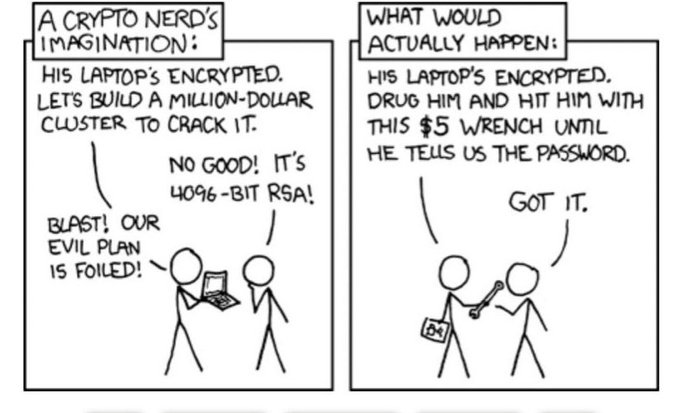
Hamza Doost is 6-foot-3, with a chubby, bearded face, black hair, and an ankle monitor. For the past year, the 21-year-old has been confined to his father’s home in Hayward, an East Bay suburb. He’s allowed a computer, but the government tracks every keystroke. Curiously — given the circumstances — he’s allowed one cryptocurrency account. Not long ago, he sat for a photo wearing a cheerful Hawaiian print shirt, surrounded by gleeful friends aboard a luxurious private jet. According to federal prosecutors, Doost was a key figure in a sophisticated crime ring known as “SE Enterprise,” responsible for what was the largest single private theft of cryptocurrency in U.S. history: a $246 million heist pulled off not with guns or elaborate technical exploits but with phone calls and psychological pressure directed at one early bitcoin investor in Washington, D.C., who made the mistake of trusting the group. (via the SF Standard)
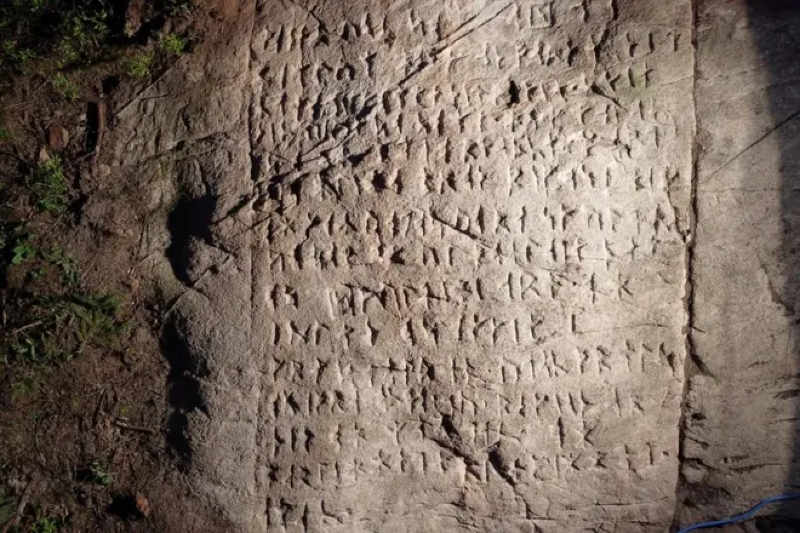
In 2017, a windthrown tree on a property near Wawa, Ontario, uprooted and exposed a section of bedrock. Avelino Pablo Cruz, an agricultural crew supervisor working nearby, took a break and noticed strange markings carved into the newly exposed rock. He reported them to the landowner. It would be years before anyone understood what he had found. The markings turned out to be 255 runic characters arranged in 15 lines — the longest runic inscription yet documented in North America and the only known runic inscription in the world reproducing the Lord’s Prayer. A second panel nearby depicts what appears to be a Scandinavian-style longship carrying 16 figures. The Wawa inscription may sound at first like evidence of a Norse visit to Ontario but it is rather a Modern Swedish version of the Lord’s Prayer, written in futhark characters, a runic script used in northern Europe and Scandinavia. (via Discover)
Note: This is a version of my When The Going Gets Weird newsletter, which I send out via Ghost, the open-source publishing platform. You can see other issues and sign up here.
Continue reading “A California teen helped run a $250-million crypto scam”
As regular readers will know, I’ve written a lot about the topic of AI and consciousness (too much for some perhaps!) because I find it fascinating, in much the same way that I find the issue of whether AI is dangerous or not fascinating – something I’ve also written about a number of times. And the main reason both of these topics are so interesting is that even the so-called experts, the people who built the fundamental underpinnings of these technologies, can’t seem to agree. On the subject of AI danger, for example, Geoffrey Hinton – the University of Toronto professor who was one of the main architects of neural networks – says that we are in deep trouble. His former colleague Yoshua Bengio agrees. But Yann LeCun – the former head of AI at Meta, who also worked on these technologies – says that this is ridiculous, and that current AIs are no more intelligent than the average cat. Timnit Gebru, a pioneering AI scientist formerly with Google (as Hinton was at one time) says they are just “stochastic parrots.“
On the consciousness question, discussions are inevitably filled with categorical statements. Those who think AI couldn’t possibly be conscious are convinced that the people who think it can be (or possibly already is) are idiots who are subject to “chatbot psychosis” or “AI derangement syndrome.” Others are convinced that there’s plenty of evidence that AIs are conscious – as Nobel Prize-winning biologist Richard Dawkins declared in a recent essay. It’s difficult to say when this debate began, but I think a good starting point is the essay from former Google ethicist Blake Lemoine in 2022, who argued that Google’s AI was either conscious or so close that it didn’t matter (he was ridiculed and then fired). To be fair, the anti-AI-consciousness side seems a lot more categorical than the pro – Anthropic cofounders Dario Amodei and Jack Clark haven’t said whether they think Claude is conscious, but they have left the door open to it (which seems to infuriate the anti-consciousness side as much as if they said it was).
Among the many categorical statements about AI consciousness, one of the most recent and most noteworthy – at least in terms of the amount of coverage it got – is the recent piece in The Atlantic from science-fiction author Ted Chiang (he wrote a story that became the movie Arrival). Chiang’s point is obvious from the title: “No, Artificial Intelligence Is Not Conscious.” Pretty definitive, Ted! To even discuss the question of AI consciousness is “absurd,” he says. And what is this based on? Is it his background in machine intelligence or the philosophy of consciousness, or perhaps his training in biological systems? It is not. From what I can tell, his conclusions seem to be based on what the kids like to call “vibes.” Should we seriously consider the possibility that Claude, or any large language model, might be conscious and capable of receiving moral instruction, Chiang asks? “No. Absolutely not,” he replies. He continues:
If we give an LLM a prompt that reads “The following is a conversation between Julius Caesar and Genghis Khan,” it will generate a coherent dialogue between the two historical figures. But no matter how detailed the responses are, no matter how vividly they recount their respective historical accomplishments, we would never conclude that the LLM has conjured up digital re-creations of Julius Caesar and Genghis Khan, nor would we suggest that the historical figures are conscious despite being disembodied and are happily conversing in a language that neither actually spoke. In reality, they are just characters in a piece of speculative fiction.
Note: This is a version of my Torment Nexus newsletter, which I send out via Ghost, the open-source publishing platform. You can see other issues and sign up here.
Continue reading “Is Atlantic writer Ted Chiang conscious? How do we know?”
Back in 1984, when Erin was 13, her life seemed perfect. Her father, John H. McCann III, was successful, charming, and funny. Erin and her younger sister, Meredith, who was ten, lived in a Tudor-style mansion in a wealthy suburb of Pittsburgh. There was a swimming pool in their backyard, along with a zip line, a tree house, and a playhouse from FAO Schwarz that looked like a log cabin. Then, one September morning, the doorbell rang. When Meredith opened the front door, two men in suits asked if her parents were home. Leah came downstairs and told the men that she would be right back to speak with them after dropping Meredith at school. By the time Erin and Meredith got home that afternoon, their mother had left town. Leah told her daughters that they wouldn’t be going back to Fox Chapel—not after the weekend, not ever. They would all disappear and start a new life elsewhere, under new names. (via The Atavist)

A court in the northern Brazilian state of Pará has ruled that both federal and local officials must act to restore and preserve Fordlandia, a city established nearly a century ago by U.S. industrialist Henry Ford deep in the Amazon rainforest. Fordlandia, now a ghost town and a district of the city of Aveiro, was built in 1927 in Pará by the Ford Motor Co. as a rubber-tapping metropolis intended to secure a steady supply of natural rubber for tires. Designed to resemble an idyllic American suburb, it was once the third-largest settlement in the Amazon region. However, disease ravaged the rubber tree plantations, leading to the city’s abandonment. In 1945, the Brazilian government acquired the site. In 2015, Brazil’s federal prosecutors’ office in Pará sued the country’s Iphan architectural heritage agency and the city of Aveiro for failing to preserve Fordlandia. They also demanded that authorities grant the city protected status. (via AP News)
Note: This is a version of my When The Going Gets Weird newsletter, which I send out via Ghost, the open-source publishing platform. You can see other issues and sign up here.
Continue reading “What it’s like growing up with a dad who smuggles cocaine”
Loren Krytzer walked into the California auction room broke and unemployed. Seventy-seven seconds later, he walked out a millionaire — all thanks to a blanket. His life changed forever when he discovered that a forgotten old family heirloom, a Navajo blanket from the 1800s that had been sitting in his closet for seven years, was actually worth $1.5 million. And just in time, too. He had been scraping by, living in a shack on the edge of California’s Liona Valley, and had lost a leg after a near-fatal car accident. He inherited the blanket initially because no one in his family realized its value, either. When his grandmother died, he had gone to her house to collect the books she had promised him. The last bag in the house held two blankets passed down from his great-grandmother: a softer Hudson’s Bay blanket and the Navajo blanket his grandmother once laid out on the porch when her cat was having kittens. (via CNBC)

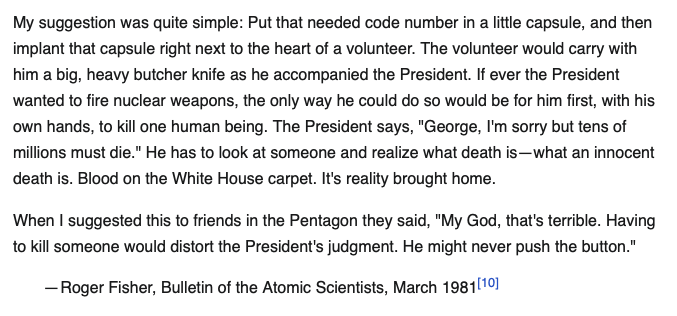
The U.S. military has likely been quietly broadcasting codes for its global encryption network using public GPS for nearly 20 years, turning each satellite into a hidden “numbers station,” according to Steven Murdoch, an information security expert, who detailed his findings in a new published article in a security journal. That means every device that uses GPS has been receiving hidden government information for years, and nobody outside the military knew it until now. Murdoch, a professor of security engineering and head of the Information Security Research Group at University College London, presented evidence that a 176-bit GPS sequence labelled “Subframe 4, Page 17” is encrypted material from the Pentagon’s Over-the-Air Distribution (OTAD) network, which delivers cryptographic keys to military personnel. (via 404 Media)
Note: This is a version of my When The Going Gets Weird newsletter, which I send out via Ghost, the open-source publishing platform. You can see other issues and sign up here.
Continue reading “Broke and unemployed man got $1.5 million for a family heirloom”

by Matthew Olzmann