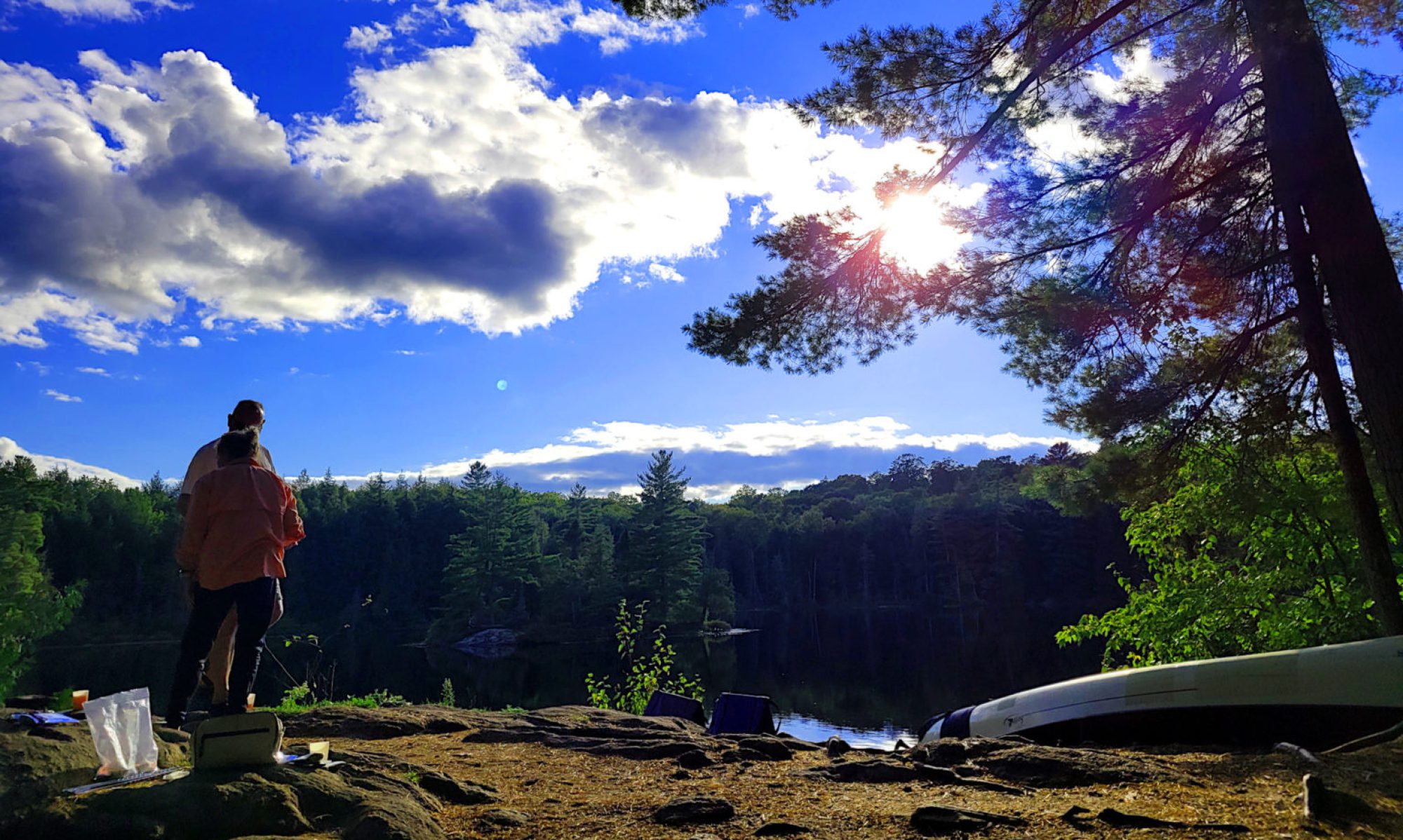
Boat dinner


Links that interest me and maybe you


om Harper’s: “Golf Manor is the kind of place where nothing unusual is supposed to happen. In short, it is the kind of place where, on a typical day, the only thing lurking around the corner is a Mister Softee ice-cream truck. But June 26, 1995, was not a typical day. Ask Dottie Pease. As she turned down Pinto Drive, Pease saw eleven men swarming across her carefully manicured lawn. Their attention seemed to be focused on the back yard of the house next door, specifically on a large wooden potting shed that abutted the chain-link fence dividing her property from her neighbor’s. Three of the men had donned ventilated moon suits and were proceeding to dismantle the potting shed with electric saws, stuffing the pieces of wood into large steel drums emblazoned with radioactive warning signs. When asked, most mumble something about a chemical spill. The truth is far more bizarre: the Golf Manor Superfund cleanup was provoked by the boy next door, David Hahn, who attempted to build a nuclear breeder reactor in his mother’s potting shed as part of a Boy Scout merit-badge project.”

From IFL Science: “Humans once lived among enormous, wingless birds in New Zealand, but within a few hundred years of our species arrival, they were wiped out. Now, Colossal Biosciences has announced its plans to functionally de-extinct the moa, building complete genomes for all nine species as part of a Māori-led initiative. “When humans first arrived on Aotearoa New Zealand about 800 to 900 years ago, there were nine species of these dinosaur-sized giant birds,” said Colossal Advisor Dr Paul Scofield, Senior Curator of Natural History at Canterbury Museum. “Within the first hundred and fifty years of human presence, all nine species became extinct.” The nine species of moa ranged in size from something not far off a turkey to the South Island giant moa, Dinornis robustus, which was 11.8 feet tall and weighed approximately 507 pounds.”
Note: This is a version of my When The Going Gets Weird newsletter, which I send out via Ghost, the open-source publishing platform. You can see other issues and sign up here.
Continue reading “He tried to build his own nuclear reactor to get a Boy Scout badge”
From Harper’s: “Golf Manor is the kind of place where nothing unusual is supposed to happen. In short, it is the kind of place where, on a typical day, the only thing lurking around the corner is a Mister Softee ice-cream truck. But June 26, 1995, was not a typical day. Ask Dottie Pease. As she turned down Pinto Drive, Pease saw eleven men swarming across her carefully manicured lawn. Their attention seemed to be focused on the back yard of the house next door, specifically on a large wooden potting shed that abutted the chain-link fence dividing her property from her neighbor’s. Three of the men had donned ventilated moon suits and were proceeding to dismantle the potting shed with electric saws, stuffing the pieces of wood into large steel drums emblazoned with radioactive warning signs. When asked, most mumble something about a chemical spill. The truth is far more bizarre: the Golf Manor Superfund cleanup was provoked by the boy next door, David Hahn, who attempted to build a nuclear breeder reactor in his mother’s potting shed as part of a Boy Scout merit-badge project.”

From IFL Science: “Humans once lived among enormous, wingless birds in New Zealand, but within a few hundred years of our species arrival, they were wiped out. Now, Colossal Biosciences has announced its plans to functionally de-extinct the moa, building complete genomes for all nine species as part of a Māori-led initiative. “When humans first arrived on Aotearoa New Zealand about 800 to 900 years ago, there were nine species of these dinosaur-sized giant birds,” said Colossal Advisor Dr Paul Scofield, Senior Curator of Natural History at Canterbury Museum. “Within the first hundred and fifty years of human presence, all nine species became extinct.” The nine species of moa ranged in size from something not far off a turkey to the South Island giant moa, Dinornis robustus, which was 11.8 feet tall and weighed approximately 507 pounds.”
Note: This is a version of my When The Going Gets Weird newsletter, which I send out via Ghost, the open-source publishing platform. You can see other issues and sign up here.
Continue reading “He tried to build his own nuclear reactor to get a Boy Scout badge”
You might have noticed that there’s a tiny bit of anxiety about artificial intelligence these days — its design, its implementation, its uses and misuses, its reason for existing at all. Is it ruining society? Is it making our kids stupid? Is it going to kill us? Etc. A lot of this anxiety takes the form of articles about terrible things that AI is either doing directly or is somehow involved in. AI is stealing the work of underpaid artists! AI is telling people to put glue on their pizza! AI is convincing people they are gods or have supernatural powers! AI is making people commit suicide! And so on. I should point out that I’m not making light of any of these outcomes (except maybe the pizza thing), and especially not the last two — it’s not easy when someone you love is emotionally disturbed or mentally ill, and the effects of these kinds of disorders can be profound.
That said, however, I think there’s a problem with much of this kind of coverage of artificial intelligence, and it’s similar to some of the early coverage of the internet, or of many other new technologies (the printing press, for example). I recall a spate of stories blaming Craigslist for thefts and murders and a host of other things, because the thief or killer had used Craigslist to find the house they robbed or the person they murdered. This got lots of clicks for the outlets in question, but it never made sense to me — what if the thief or murderer made contact with someone using the phone, or a newspaper classified ad? Would we blame AT&T, or the publisher, or the guy who sold the classified?
Maybe we would do the latter if the ad said “Male, 34, looking for house to rob,” or “Wanted: someone to murder,” but apart from that it seems odd to blame the intermediary, unless they could have anticipated the eventual outcome. If someone puts glue on their pizza because ChatGPT tells them to, whose fault is that? It’s clear that the AI screwed up in providing this advice — although in many cases the advice comes from human beings making jokes or engaging in pranks, rather than an AI confabulation (as AI pioneer Geoff Hinton likes to call them). But a human being still had to decide to do something stupid as a result. If you try to use a child’s inflatable bath toy as a life preserver and die, is the manufacturer at fault for not including a warning label advising you not to?
Note: This is a version of my Torment Nexus newsletter, which I send out via Ghost, the open-source publishing platform. You can see other issues and sign up here.
Continue reading “We shouldn’t blame AI for the stupid things that people do”
You might have noticed that there’s a tiny bit of anxiety about artificial intelligence these days — its design, its implementation, its uses and misuses, its reason for existing at all. Is it ruining society? Is it making our kids stupid? Is it going to kill us? Etc. A lot of this anxiety takes the form of articles about terrible things that AI is either doing directly or is somehow involved in. AI is stealing the work of underpaid artists! AI is telling people to put glue on their pizza! AI is convincing people they are gods or have supernatural powers! AI is making people commit suicide! And so on. I should point out that I’m not making light of any of these outcomes (except maybe the pizza thing), and especially not the last two — it’s not easy when someone you love is emotionally disturbed or mentally ill, and the effects of these kinds of disorders can be profound.
That said, however, I think there’s a problem with much of this kind of coverage of artificial intelligence, and it’s similar to some of the early coverage of the internet, or of many other new technologies (the printing press, for example). I recall a spate of stories blaming Craigslist for thefts and murders and a host of other things, because the thief or killer had used Craigslist to find the house they robbed or the person they murdered. This got lots of clicks for the outlets in question, but it never made sense to me — what if the thief or murderer made contact with someone using the phone, or a newspaper classified ad? Would we blame AT&T, or the publisher, or the guy who sold the classified?
Maybe we would do the latter if the ad said “Male, 34, looking for house to rob,” or “Wanted: someone to murder,” but apart from that it seems odd to blame the intermediary, unless they could have anticipated the eventual outcome. If someone puts glue on their pizza because ChatGPT tells them to, whose fault is that? It’s clear that the AI screwed up in providing this advice — although in many cases the advice comes from human beings making jokes or engaging in pranks, rather than an AI confabulation (as AI pioneer Geoff Hinton likes to call them). But a human being still had to decide to do something stupid as a result. If you try to use a child’s inflatable bath toy as a life preserver and die, is the manufacturer at fault for not including a warning label advising you not to?
Note: This is a version of my Torment Nexus newsletter, which I send out via Ghost, the open-source publishing platform. You can see other issues and sign up here.
Continue reading “We shouldn’t blame AI for the stupid things that people do”
From the BBC: “The Geiger counter starts flashing and buzzing as I hold it against the 100-year-old Parisian doorknob. I am standing in the doorway between the historical lab and office of Marie Curie, the Polish-born, Paris-based scientist who invented the word “radioactivity” – and here is an especially startling trace of her. The museum that houses the lab has invited me in here to track radioactive handprints left by her when she worked here in the early 20th Century. Here, on the doorknob, is one such trace. There’s another one on the back of her chair. Many more of these invisible traces are dotted all over her archived notes, books and private furniture, some only discovered in recent years. Marie Curie worked here from 1914 until 1934, the year of her death, handling radioactive elements including radium, which she and her husband Pierre Curie had discovered in 1898. For most of her life, she did this with bare hands.”

From Scientific American: “Gather some children’s blocks and place them on a table. Take one block and slowly push it over the table’s edge, inch by inch, until it’s on the brink of falling. If you possess patience and a steady hand, you should be able to balance it so that exactly half of it hangs off the edge. Nudge it any farther, and gravity wins. Now take two blocks and start over. Stacking one on top of the other, how far can you get the end of the top block to poke over the table’s edge? Keep going. Stacking as many blocks as you can, what is the farthest overhang you can achieve before the whole structure topples? Is it possible for the tower to extend a full block length beyond the lip of the table? The answer is that the stacked bridge can stretch forever. In principle, a freestanding stack of blocks can span the Grand Canyon, no glue required.”
Note: This is a version of my When The Going Gets Weird newsletter, which I send out via Ghost, the open-source publishing platform. You can see other issues and sign up here.
Continue reading “Marie Curie’s radioactive prints can still be found all over Paris”
From the BBC: “The Geiger counter starts flashing and buzzing as I hold it against the 100-year-old Parisian doorknob. I am standing in the doorway between the historical lab and office of Marie Curie, the Polish-born, Paris-based scientist who invented the word “radioactivity” – and here is an especially startling trace of her. The museum that houses the lab has invited me in here to track radioactive handprints left by her when she worked here in the early 20th Century. Here, on the doorknob, is one such trace. There’s another one on the back of her chair. Many more of these invisible traces are dotted all over her archived notes, books and private furniture, some only discovered in recent years. Marie Curie worked here from 1914 until 1934, the year of her death, handling radioactive elements including radium, which she and her husband Pierre Curie had discovered in 1898. For most of her life, she did this with bare hands.”

From Scientific American: “Gather some children’s blocks and place them on a table. Take one block and slowly push it over the table’s edge, inch by inch, until it’s on the brink of falling. If you possess patience and a steady hand, you should be able to balance it so that exactly half of it hangs off the edge. Nudge it any farther, and gravity wins. Now take two blocks and start over. Stacking one on top of the other, how far can you get the end of the top block to poke over the table’s edge? Keep going. Stacking as many blocks as you can, what is the farthest overhang you can achieve before the whole structure topples? Is it possible for the tower to extend a full block length beyond the lip of the table? The answer is that the stacked bridge can stretch forever. In principle, a freestanding stack of blocks can span the Grand Canyon, no glue required.”
Note: This is a version of my When The Going Gets Weird newsletter, which I send out via Ghost, the open-source publishing platform. You can see other issues and sign up here.
Continue reading “Marie Curie’s radioactive prints can still be found all over Paris”
From ABC.net: “Two men are walking down a desert track. They are from different worlds, but they have one thing in common. They know what it’s like to be alone in the vast outback wilderness of central Australia. They know how the heat sears your skin, the way thirst chokes your throat, and the sound dingoes make when they howl in the night. The lives of these men — an Aboriginal elder and a well-to-do American — intersected in bizarre circumstances a quarter of a century ago. In 1999, Robert Bogucki deliberately walked into the Great Sandy Desert, triggering one of the biggest land searches Australia had ever seen, and a fierce public backlash. He was found after six weeks alone in the wilderness, in what became known as the “Miracle in the Desert”. It’s an incredible story, but the questions of why Robert did what he did, and what he learnt when he skirted so close to death, remained unresolved. Until now.”

From Scientific American: “Teeth from an elderly man who lived around the time that the earliest pyramids were built have yielded the first full human genome sequence from ancient Egypt. The remains are 4,800 to 4,500 years old, overlapping with a period in Egyptian history known as the Old Kingdom or the Age of Pyramids. They harbour signs of ancestry similar to that of other ancient North Africans, as well as of people from the Middle East, researchers report in Nature. Numerous labs have tried to extract DNA from ancient Egyptian remains. In 1985, evolutionary geneticist Svante Pääbo reported the first ancient DNA sequences from any human: several thousand DNA letters from a 2,400-year-old Egyptian mummy of a child. But Pääbo, who won a Nobel prize in 2022 for other work, later realized that the sequences were contaminated with modern DNA — possibly his own. A 2017 study generated limited genome data from three Egyptian mummies that lived between 3,600 and 2,000 years ago.”
Note: This is a version of my When The Going Gets Weird newsletter, which I send out via Ghost, the open-source publishing platform. You can see other issues and sign up here.
Continue reading “He survived for six weeks alone in the Australian Outback”
From ABC.net: “Two men are walking down a desert track. They are from different worlds, but they have one thing in common. They know what it’s like to be alone in the vast outback wilderness of central Australia. They know how the heat sears your skin, the way thirst chokes your throat, and the sound dingoes make when they howl in the night. The lives of these men — an Aboriginal elder and a well-to-do American — intersected in bizarre circumstances a quarter of a century ago. In 1999, Robert Bogucki deliberately walked into the Great Sandy Desert, triggering one of the biggest land searches Australia had ever seen, and a fierce public backlash. He was found after six weeks alone in the wilderness, in what became known as the “Miracle in the Desert”. It’s an incredible story, but the questions of why Robert did what he did, and what he learnt when he skirted so close to death, remained unresolved. Until now.”

From Scientific American: “Teeth from an elderly man who lived around the time that the earliest pyramids were built have yielded the first full human genome sequence from ancient Egypt. The remains are 4,800 to 4,500 years old, overlapping with a period in Egyptian history known as the Old Kingdom or the Age of Pyramids. They harbour signs of ancestry similar to that of other ancient North Africans, as well as of people from the Middle East, researchers report in Nature. Numerous labs have tried to extract DNA from ancient Egyptian remains. In 1985, evolutionary geneticist Svante Pääbo reported the first ancient DNA sequences from any human: several thousand DNA letters from a 2,400-year-old Egyptian mummy of a child. But Pääbo, who won a Nobel prize in 2022 for other work, later realized that the sequences were contaminated with modern DNA — possibly his own. A 2017 study generated limited genome data from three Egyptian mummies that lived between 3,600 and 2,000 years ago.”
Note: This is a version of my When The Going Gets Weird newsletter, which I send out via Ghost, the open-source publishing platform. You can see other issues and sign up here.
Continue reading “He survived for six weeks alone in the Australian Outback”
From Academia: “Daniel Hudson Burnham, the Chicago architect and city planner, is recognized for his work on the development of American tall office building; for the construction of World’s Columbian Exposition of 1893; and for his city plans for Washington, D.C., Cleveland, San Francisco, and Chicago. What is not so well known is how his Swedenborgian faith infuenced his work, especially his 1909 Plan of Chicago. Burnham’s encompassing large-scale view was related to his religious beliefs that posited the correspondence of the physical realm to that of spiritual. Emanuel Swedenborg was a Swedish scientist and engineer who, beginning in the mid 1740s, underwent a spiritual awakening. The focus of his work changed to the mystical aspects of human experience. He believed that all Christian churches were dead and in need of revitalization and the key to revitalization was to be found in a new interpretation of scripture. His followers founded the Church of the New Jerusalem, sometimes referred to as the New Church.”

From Rest of World: “One morning in January, Byju Raveendran sat in the back seat of his shiny black Cadillac as it sped through Dubai. Just three years prior, the schoolteachers’ son had appeared on the Forbes list of richest Indians as founder and CEO of Byju’s, then one of the world’s most valuable education technology companies. By 2017, marquee investors like the Chan Zuckerberg Initiative had vaulted Byju’s into the upper echelons of global edtech companies, sparking a worldwide acquisitions spree. In 2022, the company was valued at about $22 billion. But things unraveled — slowly at first, and then all of a sudden. In September 2023, the Board of Control for Cricket took Byju’s to court. The plaintiffs alleged that $533 million of the loan had been siphoned to a sham hedge fund registered at the address of an International House of Pancakes restaurant in Miami. The fund was run by a 23-year-old who’d purportedly spent part of the funds on a Ferrari, a Lamborghini, and a Rolls-Royce.”
Note: This is a version of my When The Going Gets Weird newsletter, which I send out via Ghost, the open-source publishing platform. You can see other issues and sign up here.
Continue reading “The design of Chicago was influenced by a Swedish mystic”
From Academia: “Daniel Hudson Burnham, the Chicago architect and city planner, is recognized for his work on the development of American tall office building; for the construction of World’s Columbian Exposition of 1893; and for his city plans for Washington, D.C., Cleveland, San Francisco, and Chicago. What is not so well known is how his Swedenborgian faith infuenced his work, especially his 1909 Plan of Chicago. Burnham’s encompassing large-scale view was related to his religious beliefs that posited the correspondence of the physical realm to that of spiritual. Emanuel Swedenborg was a Swedish scientist and engineer who, beginning in the mid 1740s, underwent a spiritual awakening. The focus of his work changed to the mystical aspects of human experience. He believed that all Christian churches were dead and in need of revitalization and the key to revitalization was to be found in a new interpretation of scripture. His followers founded the Church of the New Jerusalem, sometimes referred to as the New Church.”

From Rest of World: “One morning in January, Byju Raveendran sat in the back seat of his shiny black Cadillac as it sped through Dubai. Just three years prior, the schoolteachers’ son had appeared on the Forbes list of richest Indians as founder and CEO of Byju’s, then one of the world’s most valuable education technology companies. By 2017, marquee investors like the Chan Zuckerberg Initiative had vaulted Byju’s into the upper echelons of global edtech companies, sparking a worldwide acquisitions spree. In 2022, the company was valued at about $22 billion. But things unraveled — slowly at first, and then all of a sudden. In September 2023, the Board of Control for Cricket took Byju’s to court. The plaintiffs alleged that $533 million of the loan had been siphoned to a sham hedge fund registered at the address of an International House of Pancakes restaurant in Miami. The fund was run by a 23-year-old who’d purportedly spent part of the funds on a Ferrari, a Lamborghini, and a Rolls-Royce.”
Note: This is a version of my When The Going Gets Weird newsletter, which I send out via Ghost, the open-source publishing platform. You can see other issues and sign up here.
Continue reading “The design of Chicago was influenced by a Swedish mystic”
From the Library of Congress: “Thomas Paine was a national hero, best known as the author of Common Sense, which convinced many Americans to join the fight against the British. Over time, however, he became a social outcast, particularly for his controversial views on organized religion. He died in poverty on June 8, 1809 and only six people attended the burial — his isolated grave was all but forgotten until a onetime foe dug up his skeleton ten years after his death. William Cobbett had once been Paine’s bitterest enemy, but he became disillusioned with the Tory class he had so staunchly defended and came to believe that he had done Paine a great injustice. Cobbett was horrified when he visited Paine’s neglected grave, so he dug him up and tried to have a memorial created in Britain. Upon Cobbett’s death in 1835, the bones then were passed to a day laborer, then Cobbett’s secretary, then oblivion. According to legend, some of the bones were lost or destroyed, made into buttons, or sold off individually.”

From ABC News: “Female European common frogs were observed engaging in “tonic immobility,” essentially feigning their own death to avoid mating, according to a study published Wednesday in Royal Society Open Science. The phenomenon seems to have evolved in order for females to survive an intense and potentially dangerous mating season, Carolin Dittrich, an evolutionary and behavioral ecologist who conducted the research as part of the Natural History Museum Berlin, told ABC News. European common frogs engage in an “explosive” breeding season, a short season in which males fiercely compete for access to females, which results in scrambling and fighting. Males also may harass, coerce or intimidate females into mating, according to the study. Amid the chaos, female frogs are at risk of getting trapped in “mating balls,” in which several males cling to them to vie for their attention, which could lead to their death.”
Note: This is a version of my When The Going Gets Weird newsletter, which I send out via Ghost, the open-source publishing platform. You can see other issues and sign up here.
Continue reading “No one knows what happened to Thomas Paine’s body”
From the Library of Congress: “Thomas Paine was a national hero, best known as the author of Common Sense, which convinced many Americans to join the fight against the British. Over time, however, he became a social outcast, particularly for his controversial views on organized religion. He died in poverty on June 8, 1809 and only six people attended the burial — his isolated grave was all but forgotten until a onetime foe dug up his skeleton ten years after his death. William Cobbett had once been Paine’s bitterest enemy, but he became disillusioned with the Tory class he had so staunchly defended and came to believe that he had done Paine a great injustice. Cobbett was horrified when he visited Paine’s neglected grave, so he dug him up and tried to have a memorial created in Britain. Upon Cobbett’s death in 1835, the bones then were passed to a day laborer, then Cobbett’s secretary, then oblivion. According to legend, some of the bones were lost or destroyed, made into buttons, or sold off individually.”

From ABC News: “Female European common frogs were observed engaging in “tonic immobility,” essentially feigning their own death to avoid mating, according to a study published Wednesday in Royal Society Open Science. The phenomenon seems to have evolved in order for females to survive an intense and potentially dangerous mating season, Carolin Dittrich, an evolutionary and behavioral ecologist who conducted the research as part of the Natural History Museum Berlin, told ABC News. European common frogs engage in an “explosive” breeding season, a short season in which males fiercely compete for access to females, which results in scrambling and fighting. Males also may harass, coerce or intimidate females into mating, according to the study. Amid the chaos, female frogs are at risk of getting trapped in “mating balls,” in which several males cling to them to vie for their attention, which could lead to their death.”
Note: This is a version of my When The Going Gets Weird newsletter, which I send out via Ghost, the open-source publishing platform. You can see other issues and sign up here.
Continue reading “No one knows what happened to Thomas Paine’s body”
From Now I Know: “Some believe that July 4, 1776, is not truly America’s independence day. That honor should fall to either July 2, 1776, or August 2, 1776. On June 11, 1776, the Continental Congress created a sub-committee of five delegates – Thomas Jefferson, John Adams, Benjamin Franklin, Roger R. Livingston, and Roger Sherman – empowered to write a first draft of a declaration of independence. Jefferson took the lead and the quintet delivered their draft on June 28th. After a few days of debates and revisions, the Congress voted to declare independence – on July 2nd, not July 4th. nstead, we Americans celebrate independence on the 4th, the day the Continental Congress ratified the text of the document. Ratified – but not signed. According to National Geographic, many of those who signed the famous piece of parchment were not present on the 4th of July and the document wasn’t signed until August 2nd.”

From Scientific American: “Spider corpses turned into robots sounds like the far-fetched plotline of a B horror movie. But researchers from Rice University have created just that—dead wolf spiders that can be used as machines to pick up and put down objects. In a paper published in Advanced Science, researchers have dubbed the use of biotic materials as robotic components “necrobotics.” They say this area of research could be used to create biodegradable grippers for very small objects. “We understand that many people are put off by the sight of a spider, but from an engineering point of view, the spider’s mechanism of movement is very interesting,” said Faye Yap, a mechanical engineer at Rice. The research began in 2019, when the scientists noticed a dead spider curled up in their lab. Yap and her colleagues did a quick search and discovered that spiders have a hydraulic pressure system that controls their limbs.”
Note: This is a version of my When The Going Gets Weird newsletter, which I send out via Ghost, the open-source publishing platform. You can see other issues and sign up here.
Continue reading “Independence Day should be on July 2nd or August 2nd”
I’d like to apologize in advance for the topic of this week’s newsletter, which I fear may not interest all (or perhaps even most) of you. It would be nice to think that lots of people care about the nuances of how news and information gets published, and the challenges that the modern web and social media and tech monopolies (among other things) pose to our information ecosystem, but a long career as a journalist writing about tech — including publishing technology like Substack — has convinced me that this is very much not the case! So if you are one of those people for whom this topic induces snoring, please feel free to ignore this week’s newsletter and then come back later 😄
If you are reading this newsletter via Substack, the headline might seem a little confusing. Don’t I use Substack to publish The Torment Nexus? I sure do, because I want to reach potential readers in as many ways as possible, and lots of people use Substack. However, I also publish this newsletter using Ghost — an open-source platform — and I simultaneously post all of the newsletters to my personal website, which runs on WordPress (a platform that I confess also has some problematic aspects). Unlike many of the people who publish on Substack, I don’t have a paywall that kicks in at a certain point, or hides posts or premium options behind a subscription. I rely on donations through both Substack and Ghost to support my newsletters (including my daily newsletter When The Going Gets Weird), and I also have a Patreon portal where you can send money if you want to support my work with a specific amount of your choosing.
As you can probably gather from the above description, I am not backing one specific horse in the web publishing race. If you want to read my writing via Substack that’s great, and if you want to read it via Ghost that’s also great, but if you’d rather use the old-fashioned open web that’s fine too. This makes monetization somewhat more difficult, since people can easily get my newsletter without paying and therefore there isn’t a compelling reason for subscribing or donating (apart from just the fact that you like me or my writing). But I am willing to live with that because I think the free and open exchange of information is a crucial aspect of the web — although it is becoming less and less common all the time. And that’s part of why I don’t think that Substack is the real future of web publishing, or at least shouldn’t be the future.
Note: This is a version of my Torment Nexus newsletter, which I send out via Ghost, the open-source publishing platform. You can see other issues and sign up here.
Continue reading “Why Substack shouldn’t be the future of online publishing”