
The Meta antitrust case started out weak and got worse

The Federal Trade Commission’s antitrust case against Meta was dismissed in its entirety on February 18th by Judge James Boasberg of the District Court for the District of Columbia. Just to recap for those who haven’t been following every bump and hurdle of this five-year case, the FTC first charged Meta with having an illegal monopoly and maintaining that monopoly via anti-competitive behavior in December of 2020 (I wrote about the lawsuit for the Columbia Journalism Review, where I was the chief digital writer at the time). The case was rejected the following year by the very same Judge Boasberg because he said the FTC had failed to prove that Meta had a monopoly over a distinct market (I wrote about that for CJR too). However, the judge gave the FTC a chance to re-file the case provided it came up with more evidence of a monopoly, so it tried to do so – and on Tuesday, the judge threw that case out just like he did the previous one, saying the evidence provided failed to prove the FTC’s case. From Politico:

Meta’s acquisition of Instagram and WhatsApp did not create an illegal social media monopoly, a federal judge ruled Tuesday, a decision that solidifies the future of the $1.5 trillion tech giant. Judge James Boasberg in Washington rejected the Federal Trade Commission’s claim that Facebook’s parent company monopolized the “personal social networking” market for connecting with friends and family. “As it has forecast in prior Opinions over the years, the FTC has an uphill battle to establish the contours of any separate PSN market and Defendant’s monopoly therein,” Boasberg wrote. “The Court ultimately concludes that the agency has not carried its burden: Meta holds no monopoly in the relevant market.”

One of the key points in the FTC case – which was originally joined by a similar lawsuit filed on behalf of 46 states, although the latter was also thrown out by Boasberg in 2021 – was that because of its allegedly monopolistic position in the personal social-networking market, the company should not have been allowed to acquire either Instagram (which it bought in 2012 for $1 billion) or WhatsApp, which it acquired in 2014 for $22 billion. According to the FTC, Instagram cemented Meta’s dominance over photo-related social networking, and WhatsApp entrenched its position in person-to-person text messaging – especially in non-US countries, since WhatsApp is free and when it was acquired many countries charged users for sending text messages. Meta, not surprisingly, pointed out that both acquisitions were approved by the Federal Trade Commission at the time they were done, but the FTC was unmoved. Here’s how the New York Times summarized the case when it was first launched in 2020:

Note: This is a version of my Torment Nexus newsletter, which I send out via Ghost, the open-source publishing platform. You can see other issues and sign up here.

Continue reading “The Meta antitrust case started out weak and got worse”

They invited a homeless man to dinner and he stayed for 45 years

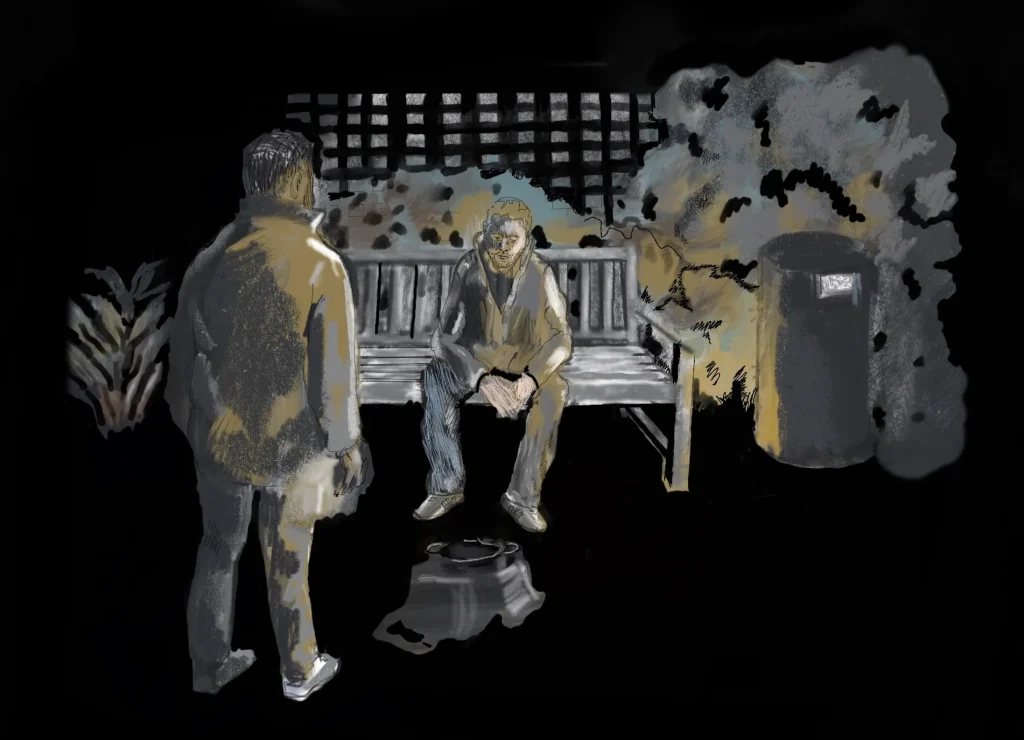
Rob Parsons and his wife Diane were listening to the radio and getting ready for Christmas on 23 December 1975 when they heard a knock at the door of their Cardiff home. The couple contemplated ignoring it – they’d already overcompensated the small carol singer murdering Once in Royal David’s City – but Rob, now 77, switched off the radio and went to the door. On the step was a man with several day’s stubble, dirty creased clothes and messy brown hair. “Don’t you know who I am?” he asked. “I’m Ronnie Lockwood,” the man said, as he handed over black bin bag with all his possessions and a frozen chicken into Rob’s hands. Rob asked what the frozen chicken was for. “He said somebody had given it to him for Christmas, but he can’t cook. So I brought him inside and Diane made him a roast,” Rob remembers. They let him stay in the spare room for a couple of months while Ronnie got himself established as a dustman. However, those months turned into years, which turned into decades. (via Metro UK)

The Unabomber’s brother identified him after he re-worded this common phrase in his manifesto

The common phrase “You can’t have your cake and eat it too” seems a little off to some people. You can obviously have your cake and then you can eat it. Wikipedia’s editors note that “some find the common form of the proverb to be incorrect or illogical and instead prefer: ‘You can’t eat your cake and then have it too.’ This used to be the most common form of the expression until the 1930s–1940s. In 1995, the Unabomber wrote a 35,000 word manifesto and sent it to the Washington Post, New York Times, and others. At the time, the mystery around the identity of the bomber intrigued many, including a man named David Kaczynski. David’s wife had urged him to read the full thing, as some themes reminded her of the rants of David’s reclusive brother, Ted Kaczynski. And David immediately saw some phrases that reminded him of Ted. One passage that jumped off the page: “As for the negative consequences of eliminating industrial society—well, you can’t eat your cake and have it too. (via Now I Know)

Note: This is a version of my When The Going Gets Weird newsletter, which I send out via Ghost, the open-source publishing platform. You can see other issues and sign up here.

Continue reading “They invited a homeless man to dinner and he stayed for 45 years”

Russian missiles are too fast so Ukraine jams them with music

The Kinzhal is one of Russia’s most fearsome missiles. Streaking at Mach 5.7 as high as 15.5 miles in the air, the 4.7-ton missile can deliver a 1,000-pound warhead over a distance of 300 miles. It’s so fast that Ukraine’s best kinetic air defenses, its U.S.-made Patriot missiles, often struggle to hit incoming Kinzhals. Good news for Ukraine. One of the country’s most popular strategic electronic warfare systems, Lima EW, now works against the Kinzhal, according to the system’s user. Not only are the operators from the Night Watch unit using Lima EW to take down Kinzhals — around a dozen in just the last two weeks — they’re doing it in style: by replacing the incoming missiles’ satellite navigation signals with a popular patriotic Ukrainian anthem, “Our Father Is Bandera.” Bandera was a popular Ukrainian insurgent during World War II. (via Trench Art)

Researchers have found evidence that the ancient Egyptians dabbled in opiates

A detailed chemical analysis of residues found in an alabaster vase dedicated to King Xerxes, who ruled an ancient empire in what is now Iran from 486 to 465 B.C., identified traces of the narcotic substance. The results provide the most conclusive evidence yet that opiates were a major part of daily life in ancient Egyptian society, say the researchers, who work in the Yale Ancient Pharmacology Program. They published their findings in the Journal of Eastern Mediterranean Archaeology.“When a rare, expertly crafted alabastron bearing a king’s name yields the same opium signature found in more humble tomb assemblages from hundreds of years earlier, we can’t dismiss the results as accidental contamination or the experimentation of the socially elite,” wrote Yale researcher Christopher Rentonone of the study authors, in an email. (via Nautilus)

Note: This is a version of my When The Going Gets Weird newsletter, which I send out via Ghost, the open-source publishing platform. You can see other issues and sign up here.

Continue reading “Russian missiles are too fast so Ukraine jams them with music”

He created a Dr. Frankenstein 30 years before Mary Shelley

Long before Mary Shelley’s Frankenstein was published in 1818, an author penned a story that resembles it on more than one account: François‐Félix Nogaret, Le Miroir des événemens actuals, ou la belle au plus offrant (The Looking Glass of Actuality, or Beauty to the Highest Bidder, 1790). Nogaret’s story about an inventor named Frankenstein who builds an artificial man is an astounding precursor, especially since the Revolution and its attempt to make a “new man” have long focused interpretations of Shelley’s work. Both texts ask whether technological innovation will help or hinder human progress, and provide answers reflecting their differing historical and ideological contexts. What seemed possible in 1790 was later viewed with skepticism, including by Nogaret himself in subsequent editions of Le Miroir (1795, 1800). The tension between enthusiasm and disdain for the project of improving upon nature or remaking mankind, prefigured in the changes between the two editions of Nogaret’s novella, resonates profoundly in Frankenstein. (via Taylor & Francis)

A British man looking for a lost hammer found a hoard of Roman coins worth $6 million

The Hoxne Hoard is the largest hoard of late Roman silver and gold discovered in Britain, and the largest collection of gold and silver coins of the fourth and fifth centuries found anywhere within the former Roman Empire. It was found by Eric Lawes, a metal detectorist in the village of Hoxne in Suffolk, England in 1992.  The hoard was buried in an oak box or small chest filled with items in precious metal, sorted mostly by type, with some in smaller wooden boxes and others in bags or wrapped in fabric. Remnants of the chest and fittings, such as hinges and locks, were recovered in the excavation. The coins of the hoard date it after AD 407.  Tenant farmer Peter Whatling had lost a hammer and asked his friend Eric Lawes, a retired gardener and amateur metal detectorist, to help look for it. The hammer was later donated to the British Museum. (via Wikipedia)

Note: This is a version of my When The Going Gets Weird newsletter, which I send out via Ghost, the open-source publishing platform. You can see other issues and sign up here.

Continue reading “He created a Dr. Frankenstein 30 years before Mary Shelley”

He changed life in the Gulf by inventing a camel-racing robot

Before he found himself on the Al-Shahaniya racetrack on the outskirts of Doha, Esan Maruff had never seen a camel race. It was May 2005, and Maruff’s robotics team was on-site for a Qatar-funded research project — to make human jockeys obsolete by building a camel-racing robot. Looking back, he still seems shocked that his new job at a robotics lab dropped him into the middle of one of the region’s most persistent human rights violations: child trafficking. Children have been groomed to ride camels in the Gulf States since the 1970s, in an endless pursuit for lighter-weight jockeys and faster race times. As camel racing evolved into a professional sport in the 1980s and ’90s, the demand for new jockeys bred a network of traffickers who bought young boys from debt-ridden families in Pakistan, Bangladesh, and Sudan to sell in the Gulf. Racing injuries, physical abuse, inhumane living conditions, and deaths were all documented by human rights organizations in jockey camps. (via Rest of World)

She started out researching Shakespeare and helped invent modern cryptography

Elizebeth Friedman graduated from Hillsdale College in Michigan with a major in English literature. In 1916, while working at the Newberry Research Library in Chicago, she was recruited by George Fabyan to work on his 500-acre estate at Riverbank, his private “think tank.” Fabyan, a wealthy textile merchant, told Friedman she would assist in the attempt to prove that Sir Francis Bacon had authored Shakespeare’s plays and sonnets using a cipher contained within. Up until the creation of the Army’s Cipher Bureau, Riverbank was the only facility capable of exploiting and solving enciphered messages. Her career embraces cryptology against international smuggling and drug running in various parts of the world and she later became a consultant to and created communications security systems for the International Monetary Fund. (via the NSA)

Note: This is a version of my When The Going Gets Weird newsletter, which I send out via Ghost, the open-source publishing platform. You can see other issues and sign up here.

Continue reading “He changed life in the Gulf by inventing a camel-racing robot”

During World War I the UK banned landscape painting

With the outbreak of the First World War, the British people grew paranoid that undercover German agents were infiltrating the nation, and the notion that artists might be spies drew some of its credence from none other than Robert Baden-Powell, founder of the scouting movement. Baden-Powell revealed how he and other British spies on the continent had posed as artists and disguised their plans of forts, harbours and industrial areas as innocent sketches of stained glass windows or ivy leaves. With the declaration of war in August 1914, the Defence of the Realm Act made it illegal to make “any photograph, sketch, plan, model, or other representation of any naval or military work, or of any dock or harbour, or with the intent to assist the enemy, of any other place or thing.” The society painter and Royal Academician John Lavery was arrested for painting the Fleet at the Forth Bridge. (via Cambridge University)

He solved a famous math problem, turned down a $1 million prize and then disappeared

On a cold day in November, a man living quietly in Russia posted a paper to a public server that was the foundation for one of the most important math proofs in over a century. The paper was the first of three published over the next year solving the long-standing Poincaré conjecture, a hypothesis posed nearly a century earlier by Henri Poincaré. In 2006, mathematicians John Morgan and Gang Tian published a 473-page paper showing that Perelman’s work did in fact prove the elusive conjecture. Perelman was offered the prestigious Fields Medal and the Clay Millennium math prize, which came with a $1-million award. He turned them down, resigned from his position at the Steklov Institute in 2005 and has since ferociously avoided the limelight. It’s unclear whether he is still working on math in his St. Petersburg apartment, where as of the early 2010s, his neighbors said he was caring for his elderly mother. (via LiveScience)

Note: This is a version of my When The Going Gets Weird newsletter, which I send out via Ghost, the open-source publishing platform. You can see other issues and sign up here.

Continue reading “During World War I the UK banned landscape painting”

The Internet Archive should be protected not attacked

In a recent edition of The Torment Nexus, I wrote about Wikipedia, which I argued was one of the best things the internet ever created (or that we all created with the help of the internet). In my opinion, there is another thing that ranks right up there with Wikipedia on the list of great things, and that is the Internet Archive. Just as Jimmy Wales created Wikipedia as a crowdsourced repository of information, Brewster Kahle created the Internet Archive as a repository for as much of the internet as he could save. Want to find the original Google.com page from 1998? Or a version of the Apple website from 1996? Or the original version of Wikipedia from 2001? The archive’s Wayback Machine can find it. And much like Wikipedia – which has come under fire from Elon Musk’s competing Grokipedia and others who dislike the truth and want to replace it with their preferred version – the Internet Archive has been and continues to be under attack on a variety of fronts, mostly from commercial interests who dislike free information.

There’s a conventional wisdom that “the internet never forgets,” and therefore anything that has been posted will survive forever, but the internet and the web forget things all the time. This was one of the reasons why Kahle and others decided to create the Internet Archive in 1996 – because of what became known as “link rot,” where websites disappear for one reason or another, and then everyone who linked to them is left with a dead link where that information used to be. I’ve had to deal with this on a more personal level multiple times, when companies I worked for removed their archives and articles I worked on disappeared instantly – which is why I use a service called Authory, so I have a personal archive of everything I’ve published. Here’s how Kahle described the rationale behind the Archive in a piece for Scientific American in 1997:

The early manuscripts at the Library of Alexandria were burned, much of early printing was not saved, and many early films were recycled for their silver content. While the Internet’s World Wide Web is unprecedented in spreading the popular voice of millions that would never have been published before, no one recorded these documents and images from 1 year ago. The history of early materials of each medium is one of loss and eventual partial reconstruction through fragments. Even though the documents on the Internet are the easy documents to collect and archive, the average lifetime of a document is 75 days and then it is gone. While the changing nature of the Internet brings a freshness and vitality, it also creates problems for historians and users alike.

Note: This is a version of my Torment Nexus newsletter, which I send out via Ghost, the open-source publishing platform. You can see other issues and sign up here.

Continue reading “The Internet Archive should be protected not attacked”