
Send this to a random number

Links that interest me and maybe you

Elon Musk and Sam Altman are engaged in a courtroom clash of the titans over the origins of OpenAI, now one of the most important artificial intelligence companies in the world. In San Francisco federal court, they are suing each other in a dizzying series of claims and counterclaims. In Altman’s corner, there’s an arsenal of elite firms — including Morrison & Foerster and Wachtell Lipton Rosen & Katz — with a long track record representing Silicon Valley royalty. Musk has turned to a pair of boutique litigation shops. And at one firm, one of Musk’s lawyers is a clown. Jaymie Parkkinen has been in the trenches of the litigation, signing his name to some of the most contentious discovery disputes. In a July hearing, he singlehandedly faced down three lawyers representing OpenAI and Microsoft in the lawsuit. Outside of his work, he juggles clown performances and operates his own “Clown Cardio” business. (via Business Insider)
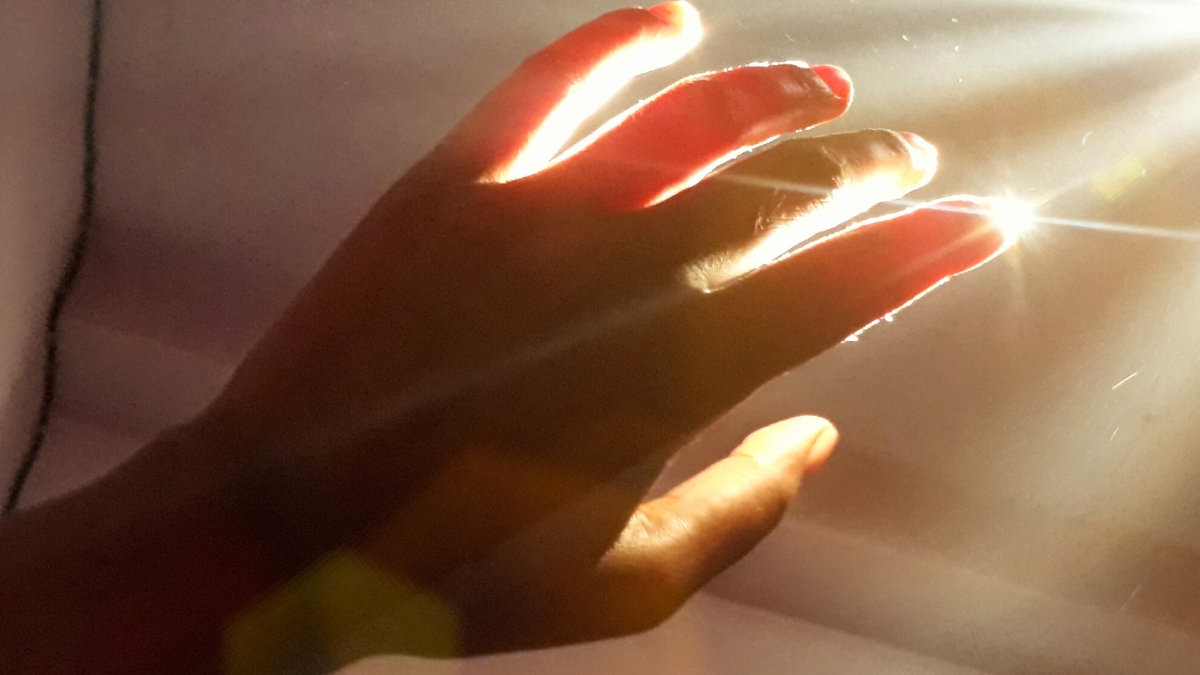
An extraordinary experiment on mice and leaves from two different plant species has uncovered direct physical evidence of an eerie ‘biophoton’ phenomenon ceasing on death, suggesting all living things – including humans – could literally glow with health, until we don’t. The findings might seem a little fringe at first glance. It’s hard not to associate scientific investigations into biological electromagnetic emissions with debunked and paranormal claims of auras and discharges surrounding living organisms. Visible wavelengths of light emitted by biological processes ought to be so faint that they’re easily swamped by ambient electromagnetic waves in the environment. Still, University of Calgary physicist Vahid Salari and his team have claimed to observe just that – an ultraweak photon emission produced by several living animals in strong contrast with their non-living bodies, as well as in a handful of plant leaves. (via Science Alert)
Note: This is a version of my When The Going Gets Weird newsletter, which I send out via Ghost, the open-source publishing platform. You can see other issues and sign up here.
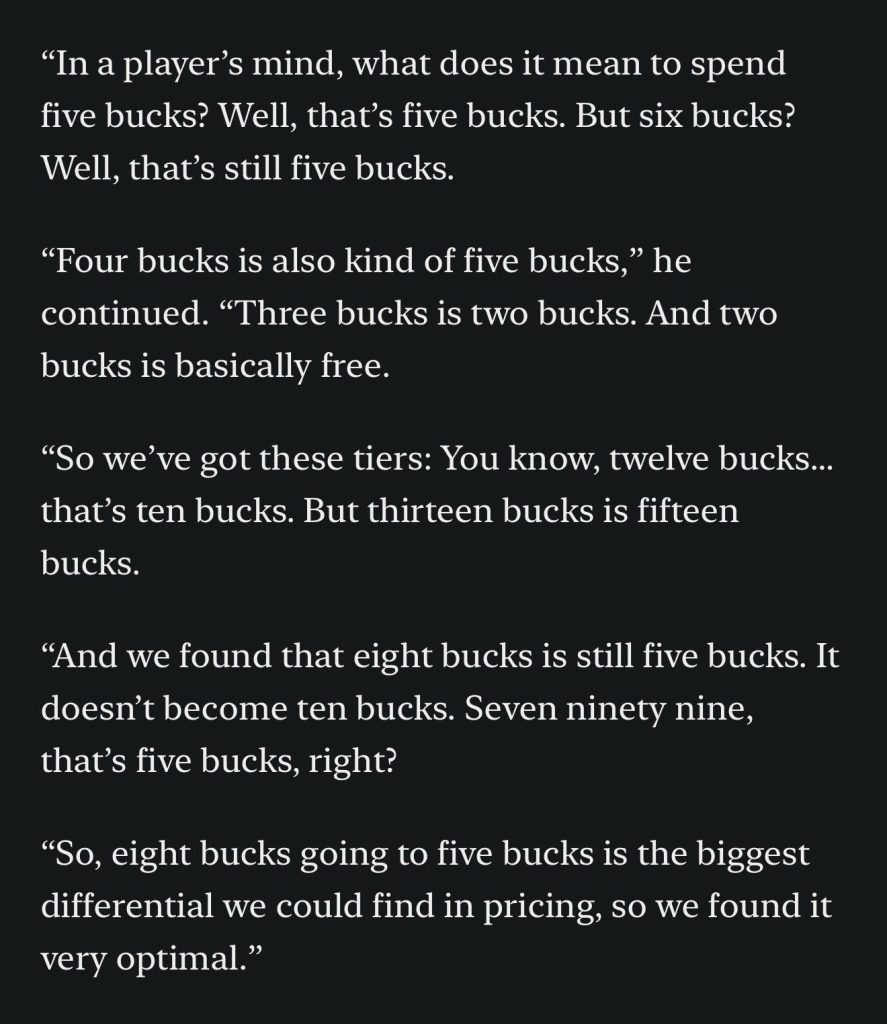
Continue reading “Lawyer representing Elon Musk is an actual working clown”The quote below comes from an interview with the developer of a popular video game, and gives a thumbnail breakdown of how they decided what to charge for the game:

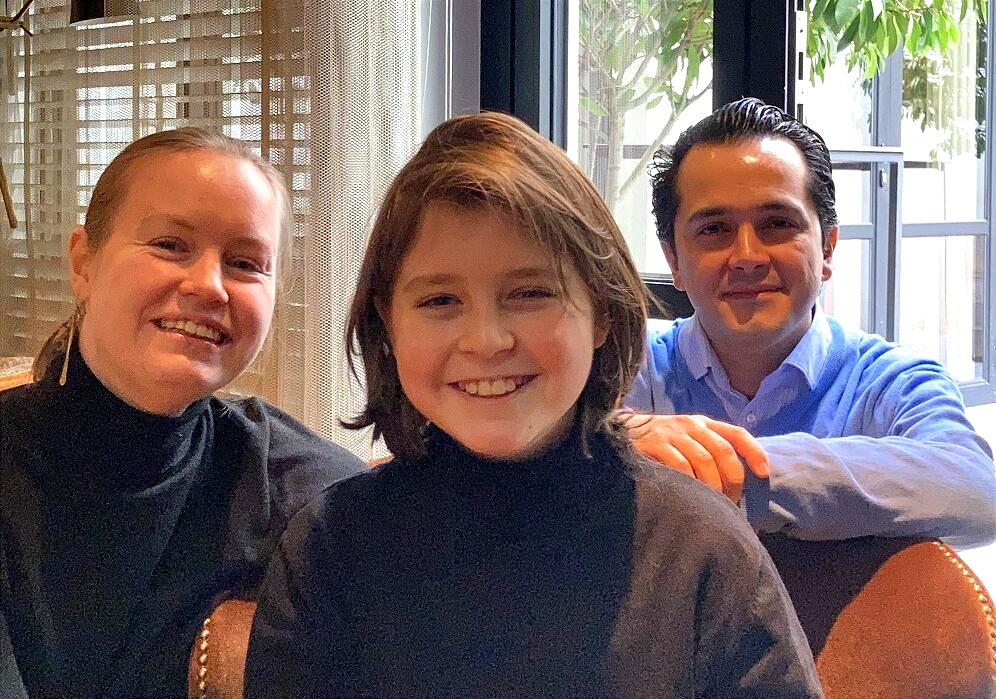
Belgian child prodigy Laurent Simons has officially become a doctor in quantum physics at just 15 years old. On Monday, he successfully defended his doctoral thesis at the University of Antwerp, VTM Nieuws reported. According to VTM, Laurent believes he may be the youngest person ever to obtain a PhD. His latest success marks a new peak in a trajectory that has fascinated the scientific world for years, a journey that began long before his teenage years. Laurent’s academic feats were already making headlines back in 2022. Then aged 12, he had just completed a bachelor’s degree in physics with distinction at the University of Antwerp, finishing the three-year programme in only 18 months. This came after graduating from high school at the age of eight. At the time, he was already being courted by major companies and wealthy benefactors eager to support his scientific ambitions. But Laurent remained unfazed. (via Brussels Times)

The early 20th century was a time of rapid technological innovation and of demanding greater responsiveness of government and society to the needs of the common man. These impulses carried into the field of medicine, where quacks promised to overturn the medical establishment to bring wondrous new cures directly to the people. John Brinkley, among the foremost practitioners of that dark art, made a fortune implanting goat testicles into gullible men to cure sexual dysfunction and other ravages of old age. His medical training was limited, his treatments implausible, and yet, during a career that spanned over a quarter century, he became one of the best-known doctors of his era, through his use of technology, salesmanship, and politicking. Brinkley’s success illustrates how eager the public can be for panaceas, regardless of merit. (via the NLM)
Note: This is a version of my When The Going Gets Weird newsletter, which I send out via Ghost, the open-source publishing platform. You can see other issues and sign up here.
Continue reading “This Belgian teen just got his PhD in quantum physics”
Claudette Colvin, whose refusal in 1955 to give up her seat to a white woman on a segregated bus in Montgomery, Ala., came months before it was overshadowed by a similar act of resistance in the same city by Rosa Parks, a historic moment that helped galvanize the civil rights movement, died on Tuesday in Texas. She was 86. She was just 15 when she boarded a Montgomery city bus on March 2, 1955. The seating was segregated, with Black riders forced to the back. To add to the indignity, Black riders were not allowed to occupy the same row as white riders, which meant that they had to move back even if there were empty seats. Her arrest was big news in Montgomery. Many felt that the time was ripe for a mass protest against local segregation laws, starting with public transit. But local civil rights leaders decided not to make Ms. Colvin their symbol of discrimination. She was, she later said, too dark-skinned and too poor to win the crucial support of Montgomery’s Black middle class. (via the NYT)

Apple employees were once instructed to ensure that the screens of all laptops displayed in its stores were angled at exactly 70 degrees. But a while back, that instruction changed, a source tells Business Insider: Now, Apple laptop screens must all be set at exactly 76 degrees. The reason remains the same: The laptop screens tempt customers to adjust the screens when they look at a new Macbook. That requires them to touch the screen, thus letting them feel the full benefit of that all-metal seamless casing and the dampened hinge that sets the screen just-so. The new angle will make the laptops look just a leeetle bit more closed than they were before. Apple store employees use the Simply Angle app on their iPhones to get this angle just right. Simply Angle is an automated angle-measurer, a bit like a protractor, except that it uses the accelerometer on your iPhone to read off what angle the phone is being held at. (via Business Insider)
Note: This is a version of my When The Going Gets Weird newsletter, which I send out via Ghost, the open-source publishing platform. You can see other issues and sign up here.
Continue reading “She refused to give up her seat months before Rosa Parks”
Last March — which feels like a hundred years ago now — I wrote a post titled “Be careful what you post on social media: They are listening,” in which I looked at how the Immigration and Customs Enforcement branch of Homeland Security had become a kind of secret police force, and was starting to monitor people’s social-media posts, looking for evidence of what the Trump administration loves to refer to as “antifa terrorism,” otherwise known as expressing your thoughts on a variety of topics (otherwise known as free speech). When I wrote that, ICE had recently kidnapped a former student named Mahmoud Khalil — who had a valid green card — for attending a rally on Palestine, and sent him to a prison in Louisiana (he is still fighting a deportation order). In a follow-up post, I wrote about how ICE had detained a grad student — Rumeysa Öztürk — for co-writing an op-ed piece in a campus newspaper that was critical of Israel’s actions in Palestine. In a third post, I wrote about how the Trump administration was building a “Panopticon,” a coordinated surveillance machine to track potential malefactors so that ICE could jail and/or deport them. Here’s an excerpt:
It seems quaint now, but not that long ago, one of the biggest reasons for concern about the surveillance of our behavior by massive internet platforms like Facebook, Google, and Amazon — or by companies buying click data and GPS location from our smartphones — was that they might use that information to flog advertising at us in a more personalized and irritating way. This was supplanted quickly by a fear that our data might be used by foreign agents like the Internet Research Agency, a “troll farm” linked to Russian dictator Vladimir Putin, or by those who wanted to target voters in order to get Trump elected. Those things are bad, obviously, but compared to what is happening now, they seem almost anodyne — like being concerned that you might get a bug bite while on a picnic in the woods, compared with seeing a massive grizzly bear advancing on your location, its teeth bared and its intentions obvious.
In the Panopticon post, I mentioned that — as reported by 404 Media — an ICE contractor known as ShadowDragon had the ability to monitor more than 200 social media and other sites, including Bluesky, OnlyFans, Instagram, etc. The agency had already been using an AI-powered tool called Giant Oak for a number of years to scan social media posts for content deemed “derogatory” to the US. Screenshots published by 404 showed that analysts could search the system for identifiers such as name, address, email address, and country of citizenship, and the software would provide a “ranking” from zero to 100 based on the criteria provided. Analysts could click on a specific person and review images collected from social media or elsewhere, as well as reviewing their “social graph,” potentially showing who the system believed they were connected to.
Note: This is a version of my Torment Nexus newsletter, which I send out via Ghost, the open-source publishing platform. You can see other issues and sign up here.
Continue reading “Surveillance: It was already bad and it’s getting worse”
When Dave Nguyen started chatting with his Uber driver days before Christmas, he discovered that he had never been tobogganing in his life, so something had to change. It was a snowy night downtown, and Nguyen had just finished his company Christmas party at Giovanni’s Restaurant. But Nguyen felt stranded and could not find an Uber for the life of him, so he walked 20 minutes toward the intersection of Wellington and Somerset streets. “Then, lo and behold, an Uber accepted the ride.” The driver was Chance Niyomugabo. The snowy Ottawa night proved a jump-off point for the bromance, which led to the logical place of winter activities that turn snow piles into joy and adventure. Niyomugabo had been in Canada for eight years after arriving from Rwanda. In that time, he had never tried anything wintry; not skiing, not tobogganing. Nguyen, who was off for two weeks because the martial arts studio he worked at as an instructor was closed, asked if Niyomugabo wanted to go tobogganing. (via the Ottawa Citizen)

“This can’t be natural,” thought Yves Fouquet. The geologist was studying a newly produced undersea depth chart, generated with LIDAR technology, for the waters off Finistère — the jagged western tip of France, where the land pushes stubbornly into the Atlantic. What caught his eye was a ruler-straight line, 120 meters (394 feet) long, cutting cleanly across an underwater valley. Nature, as a rule, doesn’t do straight lines. Fouquet’s hunch proved correct, though confirmation had to wait until the following winter, when seaweed die-off had created visibility. That seasonal window allowed marine archaeologists to dive into the cold, choppy waters just off the tiny Breton island of Sein, and map what lay below. Nine meters (30 feet) beneath the waves, they found it: a vast, man-made stone wall, averaging 20 meters (66 feet) wide and two meters (6.6 feet) tall. (via Big Think)
Note: This is a version of my When The Going Gets Weird newsletter, which I send out via Ghost, the open-source publishing platform. You can see other issues and sign up here.
Continue reading “His Uber driver had never been tobogganing so he took him”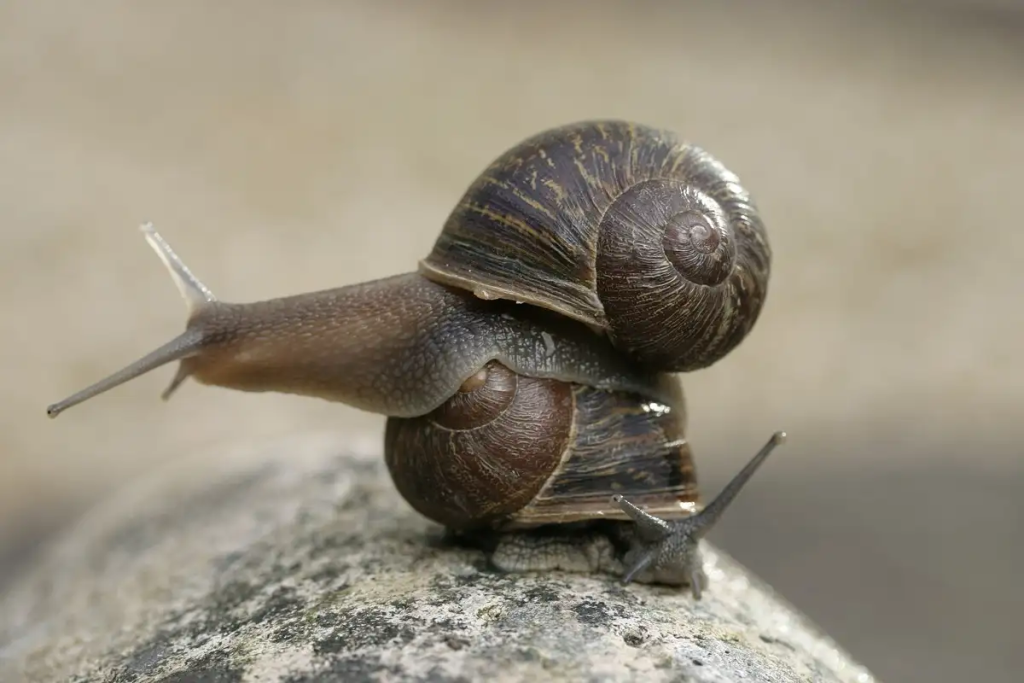
In 2016, a retired scientist in London discovered a garden snail with a shell that coiled counterclockwise — the opposite of nearly every other snail on Earth. He named the snail Jeremy, after Labour leader Jeremy Corbyn (also a lefty), and what followed was an international quest to find the lonely gastropod a mate. The problem: snails with left-coiling shells can’t physically mate with right-coiling snails. Their reproductive organs are on opposite sides. It’s like trying to shake hands with someone whose arm is attached to the wrong shoulder. Scientists at the University of Nottingham launched a public appeal, asking people worldwide to search their gardens for other “sinistral” snails. Two potential mates were eventually found — Lefty from Ipswich and Tomeu from Majorca. But when they arrived, they promptly mated with each other instead of Jeremy, leaving our hero to watch from the sidelines. (via Boing Boing)

With the Second World War shifting into the Cold War, the jet engine made possible a major shift in strategic bomber technology. Where a long-range bomber like the Boeing B-29 could fly from England to Berlin and back, the post-war Convair B-36 Peacemaker could make it to Moscow and back. However, the new bombers were ridiculously vulnerable. Unfortunately, the range of a jet fighter in those days could only be measured in a few hundred miles. That meant that any mission to penetrate Soviet air space would have left the attacking fleet completely vulnerable. But the US Navy’s fleet was protected by fighter planes by putting them on aircraft carriers that acted as floating airfields. Why not turn the bombers into aircraft carriers? That’s where the McDonnell Goblin XF-85 parasite fighter came in. Looking like the offspring of a compact car and a fighter plane, the Goblin was so tiny because it had to fit inside a B-36. (via New Atlas)
Note: This is a version of my When The Going Gets Weird newsletter, which I send out via Ghost, the open-source publishing platform. You can see other issues and sign up here.
Continue reading “The tragic love life of Jeremy the world’s loneliest snail”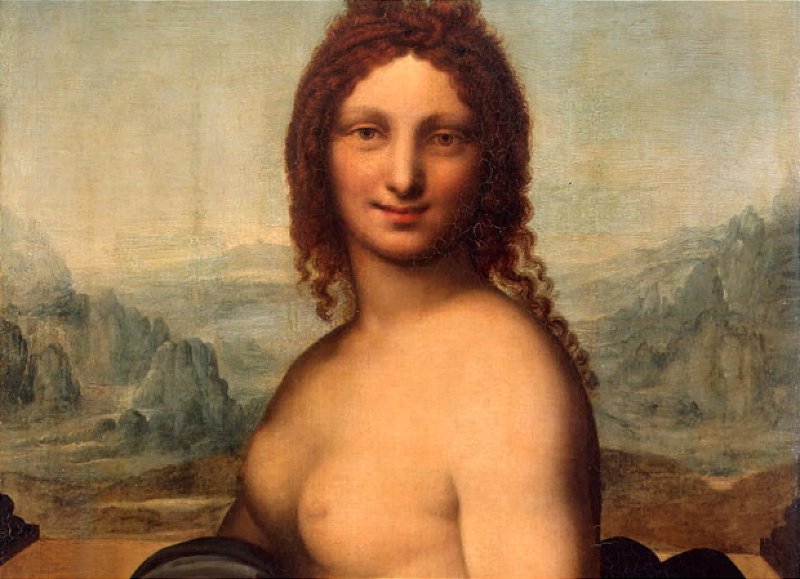
An engraving issued by a publisher called John Boydell gave libertine Georgians the opportunity to hang “Joconda” in their boudoir. It must have been popular because many copies survive. This Mona Lisa sits in a chair with her hands crossed in front of a fading view of distant rock formations. And, like the Mona Lisa in the Louvre, she smiles enigmatically. But there is one key difference: she is naked from the waist up. The print has a caption saying this is a reproduction of the painting by “Lionardo da Vinci” that hangs “in the Gallery at Houghton”. Back then it was famous for the oil paintings amassed by its owner, Britain’s first Prime Minister, Sir Robert Walpole. The nude Mona Lisa no longer attributed to Leonardo but to one of his 16th-century followers. Yet, if the work is by a Leonardo imitator, was there a nude Mona Lisa by him to imitate? And if there was, why did Leonardo paint it and for whom? It is one of the most tantalising, and entertaining, mysteries in art – and I think I may have solved it. (via The Guardian)
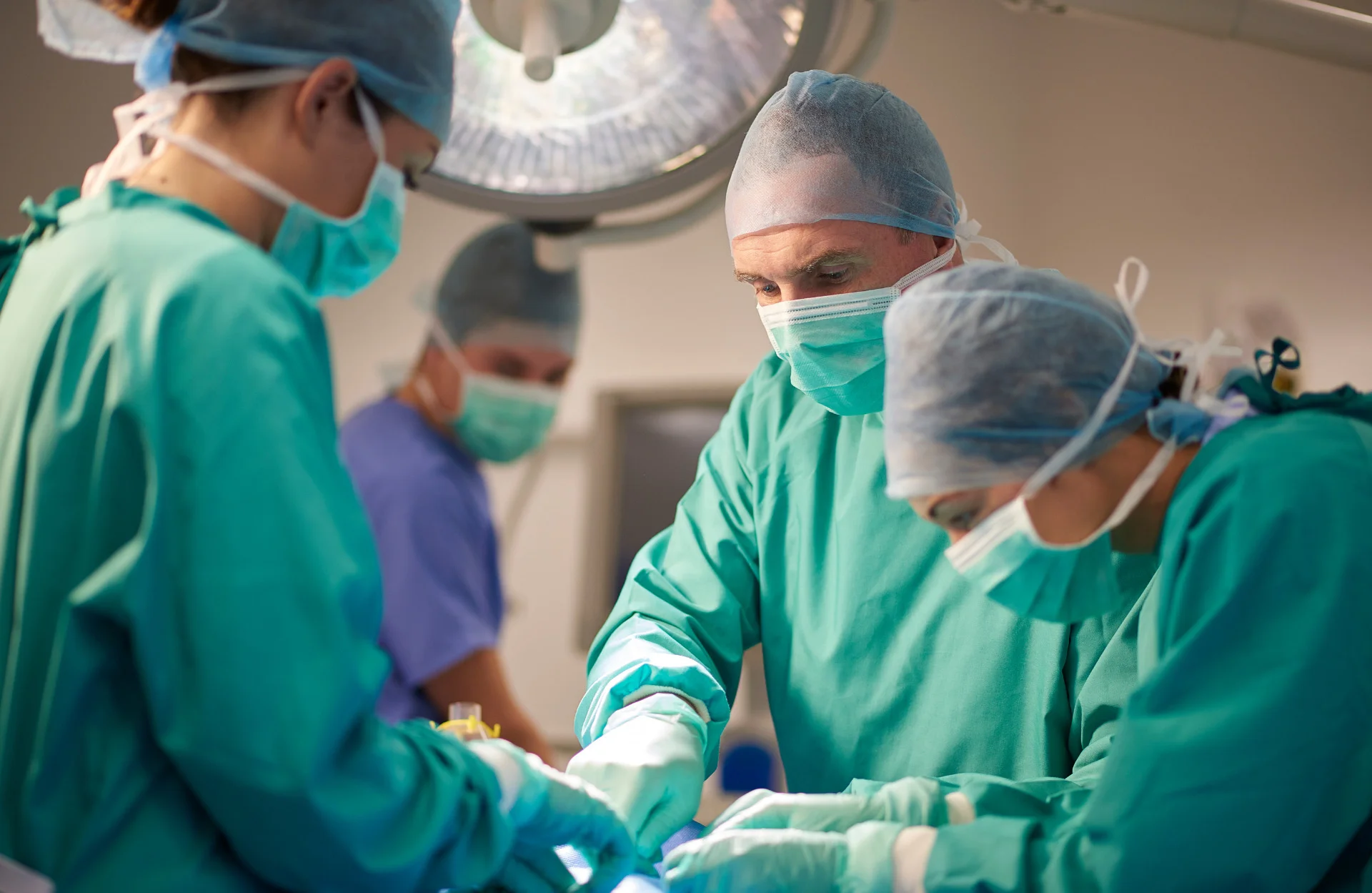
Stephen Chase was 19 years old when he woke up from a knee surgery speaking fluent Spanish. Despite having only minimal knowledge of the language prior to the surgery, he was able to converse fluently in Spanish for about 20 minutes after waking up from the surgery, before going back to English. The father-of-three from Salt Lake City, Utah, doesn’t remember speaking Spanish, just that nurses were asking him to speak English after waking up from the surgery, which made him really confused. He recalls everything he said to them in English, and it was only later that he found out he spoke fluent Spanish. The 33-year-old attorney was diagnosed with Foreign Language Syndrome (FLS) an extremely rare medical condition that can be caused by anaesthesia, with only around 100 confirmed cases on record since it was discovered in 1907. (via Oddity Central)
Note: This is a version of my When The Going Gets Weird newsletter, which I send out via Ghost, the open-source publishing platform. You can see other issues and sign up here.
Continue reading “Leonardo da Vinci may have painted a nude Mona Lisa”
In a recent post at the blog Astral Codex Ten, a writer reviewed a book written by a young Catholic missionary about his time with a tribe in the Amazon rainforest whose language and culture are structured around lived experience rather than a discussion of things that might have theoretically happened (the Piraha language has other peculiarities as well, including the fact that they use no numbers or names for colours):
The men listening to me understood that there was a man named Jesus, and that he wanted others to do what he told them. “The Pirahã men then asked, “Hey Dan, what does Jesus look like? Is he dark like us or light like you?” I said, “Well, I have never actually seen him. He lived a long time ago. But I do have his words.” “Well, Dan, how do you have his words if you have never heard him or seen him?” They then made it clear that if I had not actually seen this guy (and not in any metaphorical sense, but literally), they weren’t interested in any stories I had to tell about him. This is because, as I now knew, the Pirahãs believe only what they see. Sometimes they also believe in things that someone else has told them, so long as that person has personally witnessed what he or she is reporting.
In the end, Everett never converted a single Pirahã. But he did even worse than converting zero people according to Scott Alexander — he lost his own faith after coming to believe that the Pirahã had a good point. After keeping this to himself for many years, he revealed his loss of faith to his family, which led to a divorce and his children breaking contact with him for a number of years afterward.
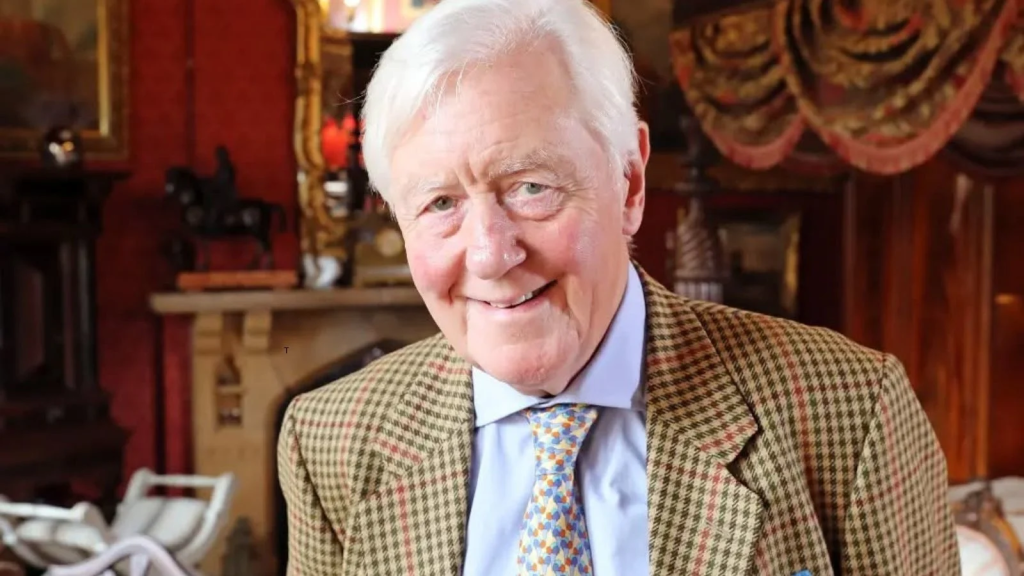
It almost seems like a parody of the British aristocracy: a gentleman named Sir Benjamin Slade, 7th Baronet, is advertising for a mate to give him an “heir and a spare” and to look after his two castles. According to a news article, he is advertising for applicants, offering a salary of £50,000 per year, along with accommodation, meals, and bonus perks, for a woman who “meets his detailed list of requirements.” These include:
Here’s what you are getting, according to his Wikipedia page: Slade was in a relationship with socialite Fiona Aitken, wife of George Herbert, 8th Earl of Carnarvon, for a few years during the 1990s. From 1995 to 2011, his partner was actress Kirsten Hughes until, in his words, she “run off with the handyman”. In 2017, he split from his partner, domestic worker Bridget Convey, because, at the age of 50, she had become too old to supply him with an heir. In the same year, he advertised for a wife, citing that she should have a shotgun licence, a driving license, a coat of arms, and be young enough to have sons. In addition to rejecting candidates from countries beginning with an ‘I’ or with green in the flag (with the exception of Italian and northern Indian women), he says he won’t accept any candidates who are Scottish, lesbians, and/or communists.
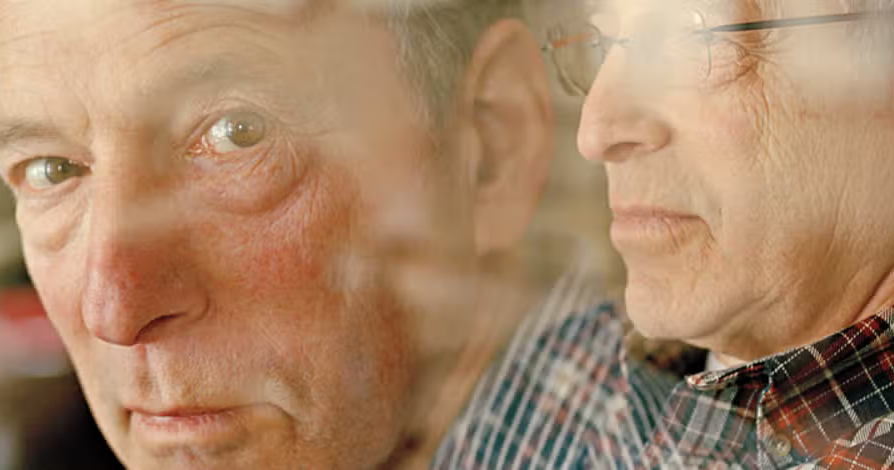
While a handful of genetic mutations are linked to the disease, about 90 percent of cases of Parkinson’s are “sporadic,” meaning the disease does not run in the family. In one of the largest longitudinal twin studies of the disease, Swedish scientists reported in 2011 that of 542 pairs in which at least one twin had Parkinson’s, the majority were “discordant,” meaning that the second twin was unaffected. But the environmental connection is precisely what makes Jack and Jeff so interesting. For almost all of their 68 years, they have lived no more than half a mile apart. They have been exposed to the same air, the same well water, the same dusty farm chores, the same pesticides. They built their homes a five-minute walk from each other. And since 1971 they have worked in the same office, their desks pushed together, at a graphic design firm. (via Nautilus)

Muntjacs are a small stocky type of deer, widespread in British woodlands. They are often overlooked because, being just 50cm high and no bigger than a medium-sized dog, they are hidden by tall vegetation for much of the summer. Muntjac deer are herbivores, and enjoy trees and shrubs, shoots, herbs, berries, nuts and fungi. Muntjac are extremely vocal, hence their other name ‘barking deer’. Though it is called a ‘bark’, the sound is more like a scream and can be mistaken for a fox. Odd though these adaptations are, it is the ‘fangs’ that really seem out of place. Most prominent in the adult male, the elongated upper canines are up to 6cm long. Whereas most male deer use antlers to fight and display their fitness, the male muntjac has only an elementary set. Once again, the tangle of shrubby habitats preferred by this species explains why. Big antlers would simply be impractical; the fangs are for close-up combat. (via Discover Wildlife)
Note: This is a version of my When The Going Gets Weird newsletter, which I send out via Ghost, the open-source publishing platform. You can see other issues and sign up here.
Continue reading “He has Parkinson’s but his identical twin brother doesn’t”
The scaffolding surrounding the Charing Cross railway bridge has received an addition – two bales of hay/straw – because an ancient British law requires it. The law requires that a bale of straw be hung from a bridge as a warning to mariners whenever the height between the river and the bridge’s arches is reduced, as it is at Charing Cross at the moment (due to construction). According to the Port of London Thames Byelaws, Clause 36.2, a bale of straw has to be placed under London bridges “when the headroom of an arch or span of a bridge is reduced from its usual limits”. At night, the bale of straw is harder to see, so some warning lights are also switched on. Quite why a bale of straw is needed has long since been lost to time, but regardless of its origins, whenever the river bylaws are updated, they keep the medieval law intact. (via IanVisits)
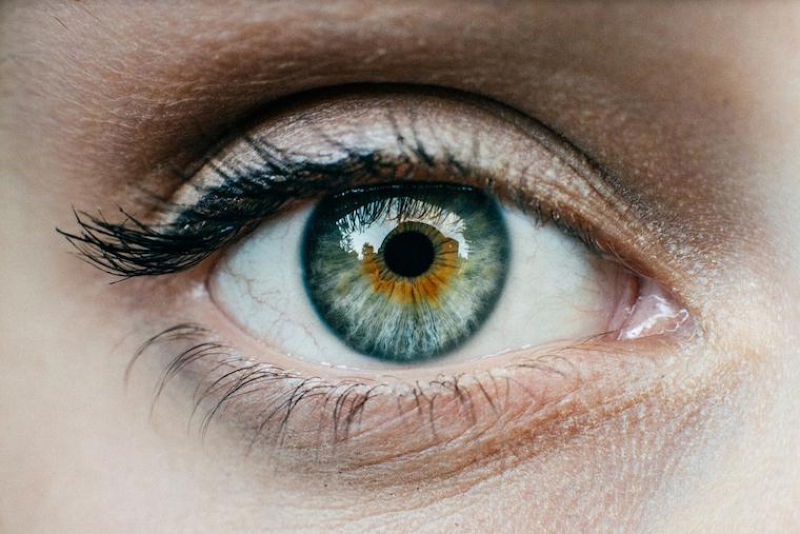
Certain organs and tissues of our body, including the eye, are referred to as immune-privileged organs and tissues, which means under normal conditions the body’s immune cells cannot attack them. However, in some pathological conditions, those proteins are exposed to the immune cells and the disease occurs. The disease known as sympathetic ophthalmia is a rare, bilateral, and vision-threatening condition that occurs due to trauma (or rarely surgery) in one eye. During the injury, previously unexposed proteins of the eye are exposed to the immune cells. In some rare instances, the immune system reacts as it would to any foreign body and attacks the non-traumatized eye. Louise Braille, the inventor of the Braille writing system for the visually impaired is believed to have lost his vision due to sympathetic ophthalmia. (via Amblyoplay)
Note: This is a version of my When The Going Gets Weird newsletter, which I send out via Ghost, the open-source publishing platform. You can see other issues and sign up here.
Continue reading “An ancient law is behind the hay bale hanging from a UK bridge”