
Did a celebrated scientist cover up the poisoning of a baby?

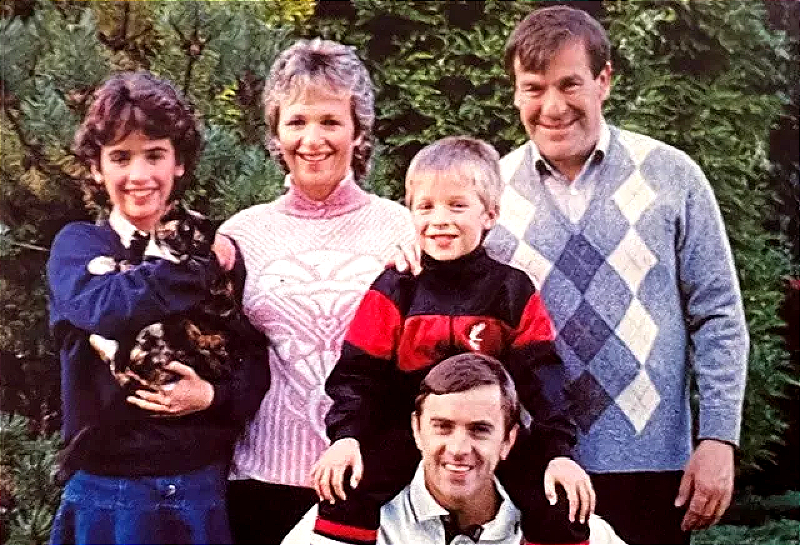
On April 18, 2005, a Canadian woman named Rani Jamieson gave birth to a healthy boy. Afterward, the doctor prescribed her Tylenol No. 3, which combines the mild opioid codeine with acetaminophen. In the next week, Tariq developed normally and surpassed his birth weight. But, at around 6:30 A.M. on April 29th, he stopped eating. Then he stopped breathing. The coroner’s office asked one of Canada’s leading pediatricians and toxicologists, Gideon Koren, to examine Tariq’s file. Koren had been running a program at the Hospital for Sick Children called Motherisk, which provided guidance for pregnant women and new mothers about drugs and breast-feeding. He was widely considered to be among the most capable research scientists in the field. Koren interpreted the toxicology report as a scientific revelation: if mothers with a certain genetic predisposition took even a mild dose of codeine, the amount of morphine that ended up in their breast milk could kill their children. (via The New Yorker)

The world’s oldest joke is 3,000 years old and written in cuneiform etched in clay

Cuneiform, meaning “wedge-shaped,” was developed around 3000 B.C. It was likely created by the Sumerian people. They built one of the world’s first civilizations, which was located in what’s now Iraq. But these tablets weren’t strictly business—they also contained literature that lives on today, including the The Epic of Gilgamesh. And some chunks of Cuneiform-inscribed clay seem to bear traces of humor, even if it doesn’t make us chuckle today.Take a 4,000-year-old tablet found in Iraq in the late 19th century, which appears to record the world’s oldest bar joke. Written in Sumerian, it translates to: “A dog walks into a bar and says, ‘I cannot see a thing. I’ll open this one.’” The meaning has puzzled researchers for decades, but it might have something to do with a neglectful guard dog, according to a curator at the Penn Museum. (via Nautilus)

Note: This is a version of my When The Going Gets Weird newsletter, which I send out via Ghost, the open-source publishing platform. You can see other issues and sign up here.

Continue reading “Did a celebrated scientist cover up the poisoning of a baby?”

He made a $70 bet and 15 years later he won over $170,000

In 2013, sixteen-year-old Harry Wilson made his international debut as a substitute against Belgium, becoming Wales’ youngest ever senior player. His grandfather Peter Edwards, 62, was quoted odds of 2,500/1 when he placed the $70 bet with a bookmaker in Wrexham, and when Wrexham-born Wilson came on in the 87th minute during Wales’ 1-1 draw he won more than $170,000. Mr Edwards said Wilson had showed an interest in football from a young age. “When he was about 18 months old he used to chase a ball around on the carpet before he could walk,” Mr Edwards said. Mr Edwards, of Corwen, Denbighshire, works as an electrical contractor and so is away from home most of the year, spending one weekend a fortnight with his wife Dorothy, 58. “She is over the moon. I retired immediately. I told my manager before the game that if Harry played I wouldn’t be coming back,” said Mr Edwards. (via the BBC)

She was kidnapped as a child and later escaped but then went back to live with her kidnappers

Helena Valero was a 12-year old girl in 1932, when her family was attacked by a group of Yanomami foragers in the northernmost part of the Brazilian Amazon. The family fled across the stream and into the forest but left the young girl in hiding to come back later for her and she was found by the Yanomami. She was moved between different warring groups, married and had four children from two different fathers. Twenty four years later, in 1956, she managed to escape and was reunited with her family. She worked in Manaus and in Tapurucuara for 15 years, but never managed to be fully accepted back into the society into which she was born. In 1971 Father Cocco, a Salesian missionary and Yanomami ethnographer, asked for her help in opening up a new mission and she moved back to the village where she grew up, and later died there. (via Strangers Guide)

Note: This is a version of my When The Going Gets Weird newsletter, which I send out via Ghost, the open-source publishing platform. You can see other issues and sign up here.

Continue reading “He made a $70 bet and 15 years later he won over $170,000”

NYT cooking columnist woke up with no legs and missing fingers

I was born with sickle cell disease, an inherited blood disorder. In December 2023, I went to a hospital in New York City with flulike symptoms and the onset of a sickle cell crisis, for what I thought would be a routine stay. But I did not receive the care I needed, and the results were catastrophic. On the afternoon of Jan. 11, 2024, I woke up from a six-week-long coma, in a different hospital, not knowing how I’d gotten there. This was followed by six more weeks of high fevers and a fog of confusion. A breathing tube had been inserted into my throat. I learned that both my legs would not survive, and neither would my fingers. Several amputations were scheduled, and I would be sent home as a bilateral below-the-knee and digital amputee, navigating the world in an electric wheelchair. I’d later be fitted with prosthetic hands and legs. (via the NYT)

A two-year-old now has two Guinness World Records after sinking two snooker trick shots

A two-year-old has become the holder of two Guinness World Records by becoming the youngest person to perform a pair of trick shots in snooker. Manchester toddler Jude Owens successfully performed a pool bank shot at two years and 302 days old on 12 October last year. The spectacle followed the child completing a snooker double pot just five weeks beforehand, when he was two years and 261 days old. The achievements make Jude officially the youngest person ever to perform both trick shots, as well as being one of the youngest double record holders in Guinness World Records history. Jude’s father, Luke Owens, first noticed his son’s natural ability at home, where snooker quickly became the toddler’s favourite hobby. Owens said that he would use bar stools for his son to reach the table given his height, but that the family now uses a stool they originally used while cooking. (via The Guardian)

Note: This is a version of my When The Going Gets Weird newsletter, which I send out via Ghost, the open-source publishing platform. You can see other issues and sign up here.

Continue reading “NYT cooking columnist woke up with no legs and missing fingers”

A young poet wrote his way out of prison in the early 1900s

It was 1905 and 19-year-old Carter had just started his ten year sentence – arrested for burglarizing the station in Karlstad, MN, while hopping trains westward. He’d taken $24 to buy food and shelter. Not much is known about John Carter — in fact, that’s a penname and the public record’s silent about his personal life. All we know is that he was an Englishman from a well-to-do family, and when he failed the family business he was sent to Canada. After he was arrested, like so many who pass through the prison system, Carter was on his way to spending his sentence hidden from the public eye. But this changed as, trying to pass the time, Carter wrote essays and verse, publishing them in the nation’s major magazines. Through his art he won public support and, eventually, even his freedom, leaving the prison hailed as a brilliant, creative mind. And the judge who helped him get a pardon was the same judge who sentenced him. (via Josh Preston)

The sugar substitute Aspartame was invented thanks to a work-safety violation

he artificial sweetener aspartame, which is found in everything from diet soda to toothpaste to ice cream, was an accidental discovery. In 1965, American chemist James Schlatter was researching drugs to treat ulcers, which at the time were thought to result from too much stomach acid. He sought to develop a drug that could inhibit gastrin, a hormone that prompts stomach acid to form. While testing compounds for this medication, he licked a white powder off of his finger as he picked up a piece of paper — a blatant violation of work safety regulations. He noticed that this powder had a “surprisingly potent sweet taste,” and decided to develop it into an artificial sweetener. Schlatter eventually applied for a patent, which was granted on this day in 1970. Aspartame is up to 200 times sweeter than sugar, yet contains nearly zero calories. Today, you can find aspartame in more than 6,000 food and drink products, and around 40 percent of Americans regularly consume sugar substitutes. (via Nautilus)

Note: This is a version of my When The Going Gets Weird newsletter, which I send out via Ghost, the open-source publishing platform. You can see other issues and sign up here.

Continue reading “A young poet wrote his way out of prison in the early 1900s”

Scientists are inventing mirror cells that could kill us all

It’s 2036, and scientists are working on a new class of drugs. These medications are mirror-image versions of the molecules your body uses to fight disease. Their big advantage is that reverse compounds last longer because destructive enzymes don’t recognize them and rip them apart. The scientists experiment on a mirrored version of the common bacterium Escherichia coli. Unfortunately, a researcher with a small cut on her thumb from dry skin forgets to put on her gloves and touches a surface contaminated with just a few of these cells. Her immune cells, which usually kill off intruders, don’t recognize the mirror proteins on the novel bacteria. Three days later she dies. But while in her house, she had already spread the bacteria around. Her cat carries some into the garden, where they grow in the soil. Worms and insects become infected and transmit the mirror microbes throughout the neighborhood. Her children bring the bacteria to school. More and more people fall ill and begin to die. (via Scientific American)

Network of submerged stone structures rewrites early European prehistory

A new study, published in the International Journal of Nautical Archaeology, documents granite complex structures located at a depth of between seven and nine metres below today’s current sea level. Between 2022 and 2024, a LIDAR survey and numerous diving expeditions confirmed that the structures have a linear alignment and date from approximately 5800–5300 BC during the late Mesolithic period and Neolithic transition. In Brittany, local folklore has long spoken of a sunken city said to lie beneath the western reaches of the Bay of Douarnenez, just 10 kilometres east of Sein Island. The study authors suggest that the presence of human-made stone structures now raises questions about the potential prehistoric origin of the legend. “It is likely that the abandonment of a territory developed by a highly structured society has become deeply rooted in people’s memories.” (via Heritage Daily)

Note: This is a version of my When The Going Gets Weird newsletter, which I send out via Ghost, the open-source publishing platform. You can see other issues and sign up here.

Continue reading “Scientists are inventing mirror cells that could kill us all”

Social media and teen mental health: There is no smoking gun

As I wrote a few weeks ago in a previous edition of Torment Nexus, the Australian law banning kids under 16 from using social media is the first of its kind, but it is unlikely to be the last. The French parliament just voted to pass a similar law, and Malaysia’s new law went into effect January 1, and the communications minister said the government is looking to Australia for guidance on implementing it. Denmark is also moving toward a ban for users under 15, with parental consent allowed from age 13, and Norway is raising the minimum age from to 15. The EU recently voted by an overwhelming majority to set an minimum age of 16 for social media, video-sharing platforms, and AI companions, and France, Spain, Italy, Denmark, and Greece are all testing a European age-verification app that could power such bans. These laws are being driven by concern that social-media use is responsible for an increase in rates of teen depression, anxiety and other mental-health related issues. But is there any proof that this is the case? In a word, no.

As I noted in an earlier post on this topic — which I think approaches the level of a moral panic — the conventional wisdom is diametrically opposed to the vast majority of research on social media and teen depression and anxiety. One of the main reasons why people probably believe it causes harm is a seemingly never-ending stream of news articles claiming this to be the case. “Smartphones and social media are destroying children’s mental health,” the Financial Times wrote, while the Guardian described the smartphone as “a pocket full of poison.” Many of these articles are based on books such as The Anxious Generation, by Jonathan Haidt, a psychologist at the Stern School of Business, which talks about how smartphone use and social media have caused an epidemic of anxiety among young people. Haidt provides research that he says backs up his case, but virtually every other study that has been done on this topic disagrees.

That list of contrarian takes includes two major new studies, one done by psychologists in Australia, and another done by researchers at Manchester in the UK. In the first, which was published in the Journal of the American Medical Association’s Pediatrics journal, reseachers studied over 100,000 Australian teens (grades 4-12) for 3 years. Interestingly enough, they say their results show that the best possible outcome for a self-reported sense of well-being was moderate use of social media. Heavy use of social media was correlated with a lower sense of well-being, but so was no social media use at all. For teen boys, the outcome of no social-media use at all “became increasingly problematic from midadolescence, exceeding risks of high use by late adolescence.”

Note: This is a version of my Torment Nexus newsletter, which I send out via Ghost, the open-source publishing platform. You can see other issues and sign up here.

Continue reading “Social media and teen mental health: There is no smoking gun”

People who have Alzheimer’s almost never get cancer

For decades, researchers have noted that cancer and Alzheimer’s disease are rarely found in the same person, fuelling speculation that one condition might offer some degree of protection from the other. Now, a study in mice provides a possible molecular solution to the medical mystery: a protein produced by cancer cells seems to infiltrate the brain, where it helps to break apart clumps of misfolded proteins that are often associated with Alzheimer’s disease. The study, which was 15 years in the making, was published on 22 January in Cell and could help researchers to design drugs to treat Alzheimer’s disease. Weaver has been interested in that puzzle ever since he began his medical training, when a senior pathologist made an offhand comment: “If you see someone with Alzheimer’s disease, they’ve never had cancer.” (via Nature)

A security guard stole $400,000 he was guarding and still hasn’t been found

It sounds like the plot of a movie: A long-time employee of a cash handling firm snatched nearly $400,000 from three banks whose money he was tasked to protect, then quit his job and disappeared. This appears to be what happened on Kauaʻi on July 19, 2023, according to previously unreported documents from civil and criminal cases filed in the 5th Circuit Court. In September 2025, Kauaʻi prosecutors filed criminal theft charges against Kody Corbett, a former employee of global cash handling firm Loomis. Earlier that year, Loomis also filed a lawsuit against Corbett, which lays out how the alleged crime occurred, largely based on an affidavit from David Bailey, Loomis’s corporate risk manager. Following the incident, Loomis reimbursed the three banks for the lost funds, but the money has not been discovered. Corbett’s whereabouts are also a mystery. A warrant was issued for his arrest this September. (via Civil Beat)

Note: This is a version of my When The Going Gets Weird newsletter, which I send out via Ghost, the open-source publishing platform. You can see other issues and sign up here.

Continue reading “People who have Alzheimer’s almost never get cancer”

Michael Jackson’s pet chimp Bubbles is now in his 40s

Bubbles is a chimpanzee once kept as a pet by the American singer Michael Jackson, who bought him from a Texas research facility in the 1980s. Bubbles frequently traveled with Jackson, drawing attention in the media. In 1987, during the Bad world tour, Bubbles and Jackson drank tea with the mayor of Osaka, Japan. Bubbles was initially kept at the Jackson family home in Encino, Los Angeles, but was moved to Jackson’s home, Neverland Ranch, in 1988. There, he slept in a crib in Jackson’s bedroom, used Jackson’s toilet and ate Jackson’s candy in the Neverland movie theater. By 2003, Bubbles had matured into a large and aggressive adult chimpanzee unsuitable as a pet, like many captive chimpanzees, and was sent to a California animal trainer. When the trainer closed his operation in 2004, Bubbles was moved to the Center for Great Apes, a sanctuary in Florida, where he has lived since 2005. (via Wikipedia)

He thought he had a new job as a soccer coach in Saudi Arabia and then he disappeared

Adrian Heath couldn’t help but think of the places football had taken him. The sport first lifted him out of Knutton, the iron-forging village in Newcastle-under-Lyme, England. It carried him to Stoke City, and then into becoming Everton’s most expensive signing at the time in 1982. He became one of the first English footballers to venture to Spain’s La Liga, signing with Espanyol in 1988. And when his playing days were done, the sport brought him to the United States through coaching stints at Austin Aztex, Orlando City and Minnesota United. For those clubs, he traveled the globe looking for players. He coached a Ballon d’Or winner in Brazilian legend Kaká. This trip to Morocco was supposed to be another adventure: an interview for a coaching job in Saudi Arabia. Heath thought of it as a chance to work on a new continent, experience a different part of the world. Another chapter that football would write in his life. (via The Athletic)

Note: This is a version of my When The Going Gets Weird newsletter, which I send out via Ghost, the open-source publishing platform. You can see other issues and sign up here.

Continue reading “Michael Jackson’s pet chimp Bubbles is now in his 40s”

Pizza-parlor owner got shot and invented the bulletproof vest

Wearing a green hat, spectacles and ear protectors, a man loads .44 Magnum bullets into the chamber of a gun. He hands his car keys to another man and twirls the gun cylinder while invoking Matt Dillon, the fictional marshal of Dodge City in Gunsmoke. He proceeds to turn the gun on himself and, after a tense pause relieved only by birdsong, fires into his chest. The bullet had been stopped by body armour. Davis was the inventor of the modern-day bulletproof vest and shot himself point blank 192 times to prove that it worked. The ex-Marine, bankrupt pizzeria owner and born showman also mythologised his work by producing his own low-budget movies popular with police across America. At its zenith Davis’s company, Second Chance, was worth more than $50m with products being worn by police, soldiers and even the president. (via The Guardian)

An amateur cryptographer claims he has solved the Black Dahlia and Zodiac killer cases

When police questioned Marvin Margolis following the murder of Elizabeth Short, also known as the Black Dahlia, he lied about how well he had known her. The 22-year-old Short had been found mutilated in a weedy lot in South Los Angeles, cut in half with what detectives thought was surgical skill. A generation later and hundreds of miles north, a killer who called himself the Zodiac terrorized the San Francisco Bay Area with five seemingly random murders from 1968 to 1969, taunting police and media for years with letters and cryptograms. A letter he sent in April 1970 to the San Francisco Chronicle said “My name is —” followed by a 13-character string of letters and symbols. It came to be called the Z13 cipher, and its brevity has stymied generations of PhDs. Alex Baber, a 50-year-old West Virginia man who dropped out of high school and taught himself codebreaking, now says he has cracked the Zodiac killer’s identity. (via the LA Times)

Note: This is a version of my When The Going Gets Weird newsletter, which I send out via Ghost, the open-source publishing platform. You can see other issues and sign up here.

Continue reading “Pizza-parlor owner got shot and invented the bulletproof vest”

An heir to the Hermès empire was swindled out of $15B

In September 2022 the board of the Isocrates foundation gathered in Florence for its annual meeting. Its founder, Nicolas Puech, was the largest individual shareholder in Hermès. From 2004 he owned nearly 6% of the company, a stake that would now be worth €13bn ($15bn). Puech, who is part of the Hermès family, has no children. The entirety of his vast fortune was destined for the Isocrates foundation, which he had set up in 2011 on the advice of his Swiss banker of 24 years, Eric Freymond. What followed came as a shock to everyone involved. Freymond returned home to find a letter dismissing him from the board. By October Puech had revoked the powers he had granted Freymond to manage his money. He later filed a criminal complaint in Geneva, accusing Freymond of “massive fraud”. Puech had realised that his Hermès shares were nowhere to be found. Worse still, they had been missing for more than a decade. Hermès itself had no idea where they were. (via The Economist)

She grew up on a farm in Virginia and changed the world by inventing GPS

Gladys West knew from a young age that she didn’t want to be a farmer. But the mathematician, born in 1930 in Dinwiddie County, Virginia, still had to help harvest crops on her family’s small farm. The hard work started before daybreak and lasted well into the blistering heat of the afternoon. She hated the dirt but, while she worked, she kept her mind on the building behind the trees at the end of the farm. It was her school, and even then she knew it would be her ticket to freedom. “I was gonna get an education and I was going to get out of there. I wasn’t going to be stuck there all my life,” West, 89, says firmly, via an interview on Zoom in her home in Virginia. What she could not have guessed was that this focus would shatter the perceptions of black women of the time and even lead to the invention of one of our most widely used inventions – GPS, the global positioning system. (via The Guardian)

Note: This is a version of my When The Going Gets Weird newsletter, which I send out via Ghost, the open-source publishing platform. You can see other issues and sign up here.

Continue reading “An heir to the Hermès empire was swindled out of $15B”

Why blogging is better than social media

A few weeks ago, I wrote a post for The Torment Nexus called “The social web is dying. Is that a good thing? in which I looked at the decline of what we used to call social networking back in the day, or “micro-blogging” even further back (yes, I am dating myself, but just wait until I get going!). Evidence has been growing steadily that social media as we have known it in the past — Twitter, Facebook, Instagram, Snapchat, even TikTok — is not growing at anything like the pace it did before, and in some cases is already shrinking. The Financial Times recently reported that a study it commissioned – an analysis of the online habits of 250,000 adults in more than 50 countries — found social media use peaked in 2022 and has since gone into steady decline. Adults aged 16 and older spent an average of two hours and 20 minutes per day on social platforms at the end of 2024, down by almost 10 per cent since 2022. The share of people who report using social platforms to stay in touch with their friends, express themselves or meet new people has fallen by more than a quarter since 2014. Instead, it has become television.

Why has this happened? Plenty of people have theories, and some of them may even be right. One of the obvious culprits is the corporatization of social media, in which giant tech corporations fueled solely by the profit motive took over, something that the decline and fall of Twitter more or less sums up, at least for me. When it launched in 2007, it was just a somewhat ridiculous toy designed by a handful of people who had no real idea what they were doing — which was part of the fun! Random people shared random thoughts, and it was a great tool for meeting new people from all walks of life. I not only got a job using it, but made some great friends. As it grew, the folks who ran it remained committed to their core beliefs, and among other things helped fuel popular uprisings known collectively as the Arab Spring (most of which failed, but that’s a separate story). As social media grew and became more valuable, corporate raiders with no principles whatsoever took over, and the end result was what my friend Cory Doctorow has colorfully termed “enshittification.”

There are other problems, however — ones that corporations and/or billionaires are not entirely responsible for. Could it be that the dream of social networking, where millions of people could share their innermost thoughts with millions of other people instantaneously, wasn’t actually something worth striving for, and in fact wasn’t beneficial in any way, either for those individuals or for society? In my previous post, I wrote: “It’s entirely possible that social media in the early 2000s worked in part because there were weren’t a lot of people using it, and the real problems started when everybody showed up. Not just because that brought people with widely diverging and in come cases horrible opinions and the urge to share them, but because those massive numbers of people attracted the Facebooks of the world, who then proceeded to enshittify everything.”

Note: This is a version of my Torment Nexus newsletter, which I send out via Ghost, the open-source publishing platform. You can see other issues and sign up here.

Continue reading “Why blogging is better than social media”

The former hustler who is Willie Nelson’s drummer and enforcer

For almost fifty years, Paul English has spent his nights literally watching Willie Nelson’s back, as his drummer. The rest of the time he has functioned as Willie’s more figurative back—a job that runs 24/7. From the drummer’s chair, English sees everything, just like the catcher on a baseball team. His oversight goes far beyond maintaining the odd, minimalist beats that guide Willie’s music. For him, the drummer’s chair is the perfect perspective for running the most storied touring organization in country music. More important than being Willie’s drummer is Paul English’s combined role as the road boss of Willie’s traveling company, tour accountant, protector, collector, and enforcer, roles embellished by his proud past as a hoodlum, pimp, and police character. There’s an understanding shared by one and all: Mess with Willie Nelson and the next thing you’ll see is the wrong end of a gun held by the Devil himself. (via the Oxford American)

This Japanese shrine has been rebuilt every 20 years for over 1,300 years

Deep in the forests of the Japanese Alps, Shinto priests keep watch as woodsmen dressed in ceremonial white chop their axes into two ancient cypress trees, timing their swings so that they strike from three directions. An hour later, the head woodcutter shouts, “A tree is falling!” as one of the 300-year-old trees crashes down, the forest echoing with a deep crack. A moment after, the other cypress topples over. The ritualistic harvesting of this sacred timber is part of a remarkable process that has happened every two decades for the last 1,300 years at Ise Jingu, Japan’s most revered Shinto shrine. Each generation, the Ise complex is knocked down and rebuilt from scratch, a massive, $390 million construction job that takes about nine years. It requires the country’s finest carpenters, woodcutters, builders and artisans to pour their hearts into the smallest details of structures that are doomed from the moment the work begins.(via AP)

Note: This is a version of my When The Going Gets Weird newsletter, which I send out via Ghost, the open-source publishing platform. You can see other issues and sign up here.

Continue reading “The former hustler who is Willie Nelson’s drummer and enforcer”

Why is a cow buried on the campus of the U of Illinois?

Why is there a cow buried on the campus of the University of Illinois, complete with a memorial plaque? Because she was the greatest milking cow of all time, that’s why, and set new records for production that have yet to be broken. Illini Nellie (1927–1940) was a Brown Swiss, and became legen-dairy (sorry) in the 1930s, setting records for milk and milk-fat production for over 12 years in a row. According to the plaque, she produced so much milk that 23.5 families could have consumed a quart of it every day for 10.5 years. Nellie joined University regent John Milton Gregory — whose final resting place is near a shaded path between the Henry Administration Building and Altgeld Hall — as the only Illini to be buried on campus. Her grave, complete with a biographical marker, is at the University’s Lincoln Avenue Dairy. (via the UIAA)

The hunt continues for a stolen Jackson Pollock painting that could be worth $20 million

Merry White crumpled to the gallery floor. She had been walking around the East Building at the National Gallery of Art in 1984 when she’d suddenly found herself standing in front of a painting by Jackson Pollock. She recognized the work — a 1951 painting in black enamel on canvas, splashy but not abstract — and was suddenly so overwhelmed that she felt her legs about to give way. White knew “Number 7, 1951” intimately because her father, Reginald Isaacs, had acquired the painting directly from Pollock. It used to hang over her bed when she was a child. In 1973, thieves broke into her parents’ apartment in Cambridge and stole “Number 7, 1951,” along with two other paintings by Pollock. One of those works, a combination of paint and collaged ink drawings, is still missing. Eric Gleason of Olney Gleason, which represents Pollock’s estate, said the missing artwork could be valued at up to $20 million. (via the Washington Post)

Note: This is a version of my When The Going Gets Weird newsletter, which I send out via Ghost, the open-source publishing platform. You can see other issues and sign up here.

Continue reading “Why is a cow buried on the campus of the U of Illinois?”

Lawyer representing Elon Musk is an actual working clown

Elon Musk and Sam Altman are engaged in a courtroom clash of the titans over the origins of OpenAI, now one of the most important artificial intelligence companies in the world. In San Francisco federal court, they are suing each other in a dizzying series of claims and counterclaims. In Altman’s corner, there’s an arsenal of elite firms — including Morrison & Foerster and Wachtell Lipton Rosen & Katz — with a long track record representing Silicon Valley royalty. Musk has turned to a pair of boutique litigation shops. And at one firm, one of Musk’s lawyers is a clown. Jaymie Parkkinen has been in the trenches of the litigation, signing his name to some of the most contentious discovery disputes. In a July hearing, he singlehandedly faced down three lawyers representing OpenAI and Microsoft in the lawsuit. Outside of his work, he juggles clown performances and operates his own “Clown Cardio” business. (via Business Insider)

Study says living things emit a visible glow that fades in death

An extraordinary experiment on mice and leaves from two different plant species has uncovered direct physical evidence of an eerie ‘biophoton’ phenomenon ceasing on death, suggesting all living things – including humans – could literally glow with health, until we don’t. The findings might seem a little fringe at first glance. It’s hard not to associate scientific investigations into biological electromagnetic emissions with debunked and paranormal claims of auras and discharges surrounding living organisms. Visible wavelengths of light emitted by biological processes ought to be so faint that they’re easily swamped by ambient electromagnetic waves in the environment. Still, University of Calgary physicist Vahid Salari and his team have claimed to observe just that – an ultraweak photon emission produced by several living animals in strong contrast with their non-living bodies, as well as in a handful of plant leaves. (via Science Alert)

Note: This is a version of my When The Going Gets Weird newsletter, which I send out via Ghost, the open-source publishing platform. You can see other issues and sign up here.

Continue reading “Lawyer representing Elon Musk is an actual working clown”

This Belgian teen just got his PhD in quantum physics

Belgian child prodigy Laurent Simons has officially become a doctor in quantum physics at just 15 years old. On Monday, he successfully defended his doctoral thesis at the University of Antwerp, VTM Nieuws reported. According to VTM, Laurent believes he may be the youngest person ever to obtain a PhD. His latest success marks a new peak in a trajectory that has fascinated the scientific world for years, a journey that began long before his teenage years. Laurent’s academic feats were already making headlines back in 2022. Then aged 12, he had just completed a bachelor’s degree in physics with distinction at the University of Antwerp, finishing the three-year programme in only 18 months. This came after graduating from high school at the age of eight. At the time, he was already being courted by major companies and wealthy benefactors eager to support his scientific ambitions. But Laurent remained unfazed. (via Brussels Times)

The early 1900s was a time of medical quacks and John Brinkley was one of the best

The early 20th century was a time of rapid technological innovation and of demanding greater responsiveness of government and society to the needs of the common man. These impulses carried into the field of medicine, where quacks promised to overturn the medical establishment to bring wondrous new cures directly to the people. John Brinkley, among the foremost practitioners of that dark art, made a fortune implanting goat testicles into gullible men to cure sexual dysfunction and other ravages of old age. His medical training was limited, his treatments implausible, and yet, during a career that spanned over a quarter century, he became one of the best-known doctors of his era, through his use of technology, salesmanship, and politicking. Brinkley’s success illustrates how eager the public can be for panaceas, regardless of merit. (via the NLM)

Note: This is a version of my When The Going Gets Weird newsletter, which I send out via Ghost, the open-source publishing platform. You can see other issues and sign up here.

Continue reading “This Belgian teen just got his PhD in quantum physics”