From The Weather Network: “The Nazis managed to install an automatic weather station on the coast of Labrador during WWII and it remained undiscovered by Canadians for more than 30 years. The secret German mission remains one of the only known enemy operations to actually take place on North American soil during the second World War and highlights just how much an impact the weather had on the war. In October 1943, German U-boat U-537 sailed undetected to Martin Bay, off the coast of Labrador in what was then the British Dominion of Newfoundland. There, a crew led by civilian meteorologist Kurt Sommermeyer rushed to set up what was, at the time, an incredibly sophisticated weather station.”
She was a chess prodigy but later walked away from the game
From Slate: “During her brief and polarizing career in a male-dominated sport in a chauvinistic society, a focus on looks over brains was typically how it went for Lisa Lane, who died of cancer on Feb. 28 at age 90. When Bobby Fischer was still a brash wunderkind, Lane was a bona fide grown-up media star. In 1961 alone, she was interviewed on the Today show, was profiled in the New York Times Magazine, and appeared on the cover of Sports Illustrated. She was touted as a great American hope against the scary Russians. Lane marketed herself and elevated chess’s profile in America. Disgusted by the game’s latent sexism and classism, she criticized its leadership and advocated for equal pay. Then, as quickly as she’d arrived, she all but disappeared from the game.”
Note: This is a version of my When The Going Gets Weird newsletter, which I send out via Ghost, the open-source publishing platform. You can see other issues and sign up here.
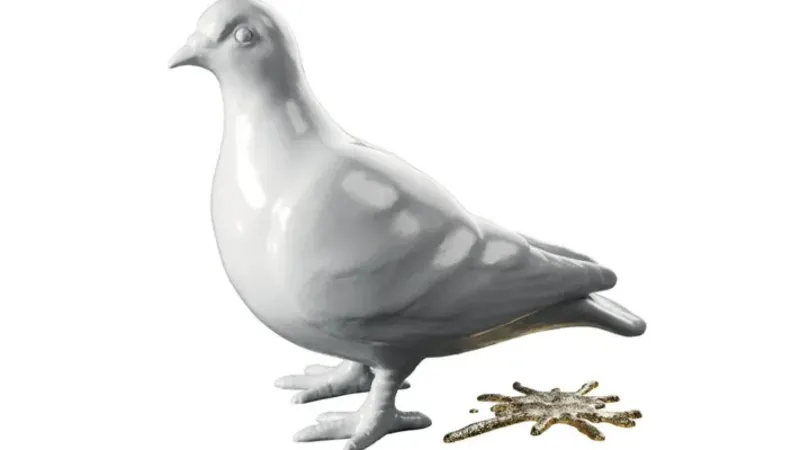
From Science News: “In December 1855 and January 1856, a trio of vessels set sail from the United States to Jarvis and Baker islands, coral atolls in the Pacific Ocean. The ships carried representatives from the American Guano Company and a guano expert tasked with examining the quality of the islands’ bird poop. After estimating the quantity of guano available and taking samples, the entourage claimed the islands in the name of the United States. That move marked the country’s first effort to acquire territory overseas. U.S. ownership of those islands became official in July 1856 with passage of the Guano Islands Act. That act gave the country “permission” to claim sovereignty over any allegedly uninhabited or unclaimed territory to secure access to guano, a prized fertilizer for American tobacco, cotton and wheat fields.”
Dante cast her as his guide in the Divine Comedy. But who was Beatrice Portinari?
From JSTOR Daily: “She was the great love of the Early Renaissance Italian poet Dante Alighieri. He adored her so much that he cast her as his divine guide to the celestial spheres of heaven in the last book of the Divine Comedy. But his would always be an unrequited love: she was promised to someone else, and so was he. Her name was Beatrice Portinari. Beatrice Portinari belonged to a family of bankers and politicians; her father was Folco Portinari, a prior of Florence. Her family’s upper-class social status allowed her to marry into another rich Florentine set. She wed another wealthy banker, Simone de Bardi, in an arranged marriage. Dante’s wife was an Italian woman named Gemma Donati, though he never wrote a single poem about her.”
Note: This is a version of my When The Going Gets Weird newsletter, which I send out via Ghost, the open-source publishing platform. You can see other issues and sign up here.
After deciding to write about Bluesky and its recent meteoric growth, I wrote down the headline above, and then I went to look at what I had written in the past about Bluesky while I was at the Columbia Journalism Review (where I was the chief digital writer until recently). And what did I find but a piece I wrote in May of last year with the identical headline 🙂 Two things we can learn from this, I think: 1) I lack imagination when it comes to headlines, and 2) the question about Bluesky and whether it has staying power, and what its future might look like, has been around for awhile now. I thought about changing the headline on this piece, but then I decided against it — I still think both are valid questions, and if anything they might be even more critical at this point.
Note: In case you are a first-time reader, or you forgot that you signed up for this newsletter, this is The Torment Nexus. You can find out more about me and this newsletter in this post.This newsletter survives solely on your contributions, so please sign up for a paying subscription or visit my Patreon, which you can find here. I also publish a daily email newsletter of odd or interesting links called When The Going Gets Weird, which is here.
The news hook here is that Bluesky’s user base has been climbing rapidly following the election of a certain inveterate liar with multiple fraud convictions and two impeachments as president of the United States, and the corresponding rise of his lieutenant and chief booster, Elon “Dark MAGA” Musk. Perhaps it was the continued slide into right-wing mania, or the way that Musk used the network as his personal hype machine for Trump — along with the $200 million or so that he sank into Trump’s campaign via a super-PAC. In any case, Bluesky has been adding literally hundreds of thousands of users every day — The Verge reported on November 11 that users had grown by 700,000 and the next day, the New York Times said it had grown by a million (you can see a live user counter here).
I have seen this happen from my own perspective, as someone who has had an account for over a year now. I don’t recall the exact number of followers I had prior to the election, but I know it was below a thousand — likely in the 600 range. It is now over 2,300 and every time I check the app it says dozens more have followed me. Some I’ve been connected with on Twitter for a long time, but many are completely unknown to me. According to Clearsky, I am on about 30 lists, or what Bluesky calls “starter packs,” so that probably explains it (my favourite list is the one that some user named “not porn”). Here’s a graph that shows Bluesky’s user growth since early this year, which I found here — it begins in February, which is when Bluesky opened to the public.
Note: This is a version of my Torment Nexus newsletter, which I send out via Ghost, the open-source publishing platform. You can see other issues and sign up here.
From The Guardian: “From 1946-48, the US Public Health Service and the Pan American Sanitary Bureau worked with several Guatemalan government agencies on medical research paid for by the US government that involved deliberately exposing people to sexually transmitted diseases. The researchers apparently were trying to see if penicillin, then relatively new, could prevent infections in the 1,300 people exposed to syphilis, gonorrhea or chancroid. Those infected included soldiers, prostitutes, prisoners and mental patients with syphilis. The commission revealed on Monday that only about 700 of those infected received some sort of treatment. Eighty-three people died. The research came up with no useful medical information, according to some experts.”
A rockstar researcher spun a web of lies and almost got away with it
From The Walrus: “Laskowski revealed that her ambition had drawn her into the web of prolific spider researcher Jonathan Pruitt, a behavioural ecologist at McMaster University in Hamilton, Ontario. Pruitt was a superstar in his field and, in 2018, was named a Canada 150 Research Chair, becoming one of the younger recipients of the prestigious federal one-time grant with funding of $350,000 per year for seven years. He amassed a huge number of publications, many with surprising and influential results. He turned out to be an equally prolific fraud. When Pruitt’s other colleagues and co-authors became aware of outright falsifications in his body of work, they pushed for their own papers co-authored with him to be retracted one by one. But making an honest man of Pruitt would be an impossible task.”
Note: This is a version of my When The Going Gets Weird newsletter, which I send out via Ghost, the open-source publishing platform. You can see other issues and sign up here.
From Psychology Today: “Claire Sylvia was an accomplished dancer when, at the age of 45, she was diagnosed with a rare incurable condition known as primary pulmonary hypertension. The only effective treatment for severe PPH is a heart-lung transplant. Claire’s transplant was unique not just because she was the first person in New England to undergo such an operation, but also because of the changes that occurred following her surgery. She developed a new taste for foods she did not like before receiving her new organs. Once she was allowed to drive, she headed to Kentucky Fried Chicken to satisfy her craving for chicken nuggets, which made no sense to her because she never ate fast food before her transplant. She also noticed that she no longer felt lonely, and felt more independent. She was more confident, assertive.”
The New York real estate queen and the secret she couldn’t keep hidden
From the New York Times: “Alice Mason was throwing one of her black-tie dinner parties. For years, she’d been hosting events that New York City’s social pages fawned over, but she didn’t expect that this one would disrupt a secret she’d kept for much of her life.A Manhattan real estate agent to the elite, Alice typically held six dinner parties a year, almost always with 56 attendees — half women, half men. Her guests, as one socialite put it, were “the A-list of A-lists”: Barbara Walters, Bill Clinton, Gloria Vanderbilt, Alan Greenspan, Norman Mailer, Estée Lauder, Mary Tyler Moore, Jimmy Carter. This party, circa 1990, was for her only child, Dominique Richard, who had just become engaged. A guest’s plus-one would cause a permanent rift between them.”
Note: This is a version of my When The Going Gets Weird newsletter, which I send out via Ghost, the open-source publishing platform. You can see other issues and sign up here.
From The Bulletin: “In the early hours of October 30, 1961, a bomber took off from an airstrip in northern Russia and began its flight through cloudy skies over the frigid Arctic island of Novaya Zemlya. Slung below the plane’s belly was a nuclear bomb the size of a small school bus—the largest and most powerful bomb ever created. At 11:32 a.m., the bombardier released the weapon. As the bomb fell, an enormous parachute unfurled to slow its descent, giving the pilot time to retreat to a safe distance. A minute or so later, the bomb detonated. The flash alone lasted more than a minute. The fireball expanded to nearly six miles in diameter—large enough to include the entire urban core of Washington or San Francisco, or all of midtown and downtown Manhattan. Over several minutes it rose and mushroomed into a massive cloud. Within ten minutes, it had reached a height of 42 miles and a diameter of some 60 miles.”
An astronaut who returned from space had to go to the hospital but no one is saying why
From Ars Technica: “On October 25, one of the astronauts was hospitalized due to what NASA called an unspecified ‘medical issue’ after splashdown aboard a SpaceX Crew Dragon capsule that concluded the 235-day mission. After an overnight stay in a hospital in Florida, NASA said the astronaut was released “in good health” and returned to their home base in Houston to resume normal post-flight activities. The space agency did not identify the astronaut or any details about their condition, citing medical privacy concerns. NASA initially sent all four crew members to the hospital in Pensacola, Florida, for evaluation, but Grebenkin and two of the NASA astronauts were quickly released and cleared to return to Houston. One astronaut remained behind until the next day. “I did not say I was uncomfortable talking about it,” mission pilot and flight surgeon Michael Barratt said. “I said we’re not going to talk about it.”
Note: This is a version of my When The Going Gets Weird newsletter, which I send out via Ghost, the open-source publishing platform. You can see other issues and sign up here.
From the New York Times: “For 60 years, Baltazar Ushca worked a rare but rigorous trade: ice merchant. Once or twice a week, he climbed snow-capped Mount Chimborazo, Ecuador’s highest peak, to hack ice from a glacier with a pickax, wrap the 60-pound blocks in hay and transport them on the backs of his donkeys. He would then sell them to villagers who did not have electricity and needed refrigeration to conserve their food.It started as a family business. But Mr. Ushca, who was 4-foot-11, chipped at the ice decades after modern refrigeration came to his village, by which time his job was nearly obsolete. He became known as the last of his breed, selling his blocks of ice for a few dollars in Ecuador for use in fruit drinks and making ice cream.”
She treated her own breast cancer with viruses that she grew in her lab
From Nature: “A scientist who successfully treated her own breast cancer by injecting the tumour with lab-grown viruses has sparked discussion about the ethics of self-experimentation. Beata Halassy discovered in 2020, aged 49, that she had breast cancer at the site of a previous mastectomy. It was the second recurrence there since her left breast had been removed, and she couldn’t face another bout of chemotherapy. Halassy, a virologist at the University of Zagreb, studied the literature and decided to take matters into her own hands with an unproven treatment. A case report published in Vaccines in August outlines how Halassy self-administered a treatment called oncolytic virotherapy. She has now been cancer-free for four years.”
Note: This is a version of my When The Going Gets Weird newsletter, which I send out via Ghost, the open-source publishing platform. You can see other issues and sign up here.
From The Independent: “Taliesin was an architectural commune set up in 1932 in Wisconsin by Wright and his wife, the mysterious Olgivanna. Staffed by young, eager, and mostly male architects who wanted to learn from the master, it quickly evolved into a place where Olgivanna, Wright’s third wife, could promote the teaching of Georgi Gurdjieff. This bald, mustached, charismatic Russian guru claimed his eyes could not only penetrate a man’s psyche, but also bring a woman to orgasm from across a room. Taliesin became a place where Wright would not only get free in-house labor, but his wife could have total sway over the mental, physical, and sexual lives of the architect’s devoted followers.”
In Denmark an ancient army met a mysterious end
From Atlas Obscura: “In 1944, at the height of World War II, ditchdiggers working in a field known as Alken Enge, on the Jutland Peninsula in Denmark, made a gruesome discovery: human bones. It was quickly determined that the bones were not evidence of a recent murder—they were actually thousands of years old. About 2,000 years ago, during the Iron Age, the Alken Enge water-meadow had been a lake, but the individuals whose remains were scattered around the site had not died from drowning. Their deaths had been more horrific—and what happened to their bodies after death even more macabre. Many of the bones displayed the marks of raw violence: cuts from edged weapons, skulls crushed by axe blows, piercing wounds.”
Note: This is a version of my When The Going Gets Weird newsletter, which I send out via Ghost, the open-source publishing platform. You can see other issues and sign up here.
I know that it’s tempting to blame what happened on Tuesday night — the re-election of a former game-show host and inveterate liar with 34 felony counts and two impeachments as president of the United States — on social media in one form or another. Maybe you think that Musk used Twitter to platform white supremacists and swing voters to Trump, or that Facebook promoted Russian troll accounts posting AI-generated deepfakes of Kamala Harris eating cats and dogs, or that TikTok polarized voters using a combination of soft-core porn and Chinese-style indoctrination videos to change minds — and so on.
In the end, that is too simple an explanation, just as blaming the New York Times’ coverage of the race is too simple, or accusing more than half of the American electorate of being too stupid to see Trump for what he really is. They saw it, and they voted for him anyway. That’s the reality.
It’s become accepted wisdom that platforms like Twitter and Facebook and TikTok spread misinformation far and wide, which convinces people that the world is flat or that birds aren’t real or that people are selling babies and shipping them inside pieces of Wayfair furniture. And it’s taken as fact that these tools increase the polarization of society, turning people against each other in a number of ways, including by inflating social-media “filter bubbles.” We all know this. And particularly when there is an event like a federal election, concern about both of these factors tends to increase. That’s why we see articles like this one from Wired, which talks about how social platforms have “given up” on things like fact-checking misinformation on their networks.
But is there any proof that social media either convinces people to believe things that aren’t true, or that it increases the levels of polarization around political or social issues? I don’t want to give away the ending of this newsletter, but the short answer to both of those questions is no. While social media may make it easier to spread misinformation farther and faster, it hasn’t really changed human nature itself all that much. In other words, social media is more of a symptom than it is a cause.
Note: This is a version of my Torment Nexus newsletter, which I send out via Ghost, the open-source publishing platform. You can see other issues and sign up here.
From National Geographic: “For centuries, farmers have known that their livestock not only gather in large herds but also tend to face the same way when grazing. Experience and folk wisdom offer several possible reasons for this mutual alignment. They stand perpendicularly to the sun’s rays in the cool morning to absorb heat through their large flanks, or they stand in the direction of strong winds to avoid being unduly buffeted. But cows and sheep don’t just line up during chilly spells or high wind. Their motivations have been a mystery until now. Sabine Begali spied on aligned herds of cows and deer using satellite images from Google Earth. The images revealed behaviour that had been going unnoticed for millennia, right under the noses of herdsmen – their herds were lining up in a north-south line like a living compass needle.”
This artist creates sculptures that are smaller than the width of a human hair
From New Atlas: “A sculpture so tiny that it cannot be seen by the naked eye is claimed to be the smallest sculpture of the human form ever created. Measuring 20 x 80 x 100 microns, artist Jonty Hurwitz’s tiny human statue is part of a new series of equally diminutive new sculptures that are at a scale so miniscule that each of the figures is equal in size to the amount your fingernails grow in around about 6 hours, and can only be viewed using a scanning electron microscope. Sculpted with an advanced new nano 3D printing technology coupled with a technique called multiphoton lithography, these works of art are created using a laser and a block of light-sensitive polymer.”
Note: This is a version of my When The Going Gets Weird newsletter, which I send out via Ghost, the open-source publishing platform. You can see other issues and sign up here.
From the Wall Street Journal: “The professional gambler Archie Karas arrived in Las Vegas in December 1992 with $50 to his name. He borrowed $10,000 from a friend and, over roughly the next three years—after a freewheeling and volatile saga of ups and downs, but predominantly ups—reportedly turned that money into $40 million.It was a run of good luck so unfathomable that it’s known in poker circles simply as “The Run.” Many details about The Run have gone fuzzy as the story has been retold in the three decades since, but its essential narrative made Karas a folk hero among gamblers. Shooting craps at his private table at Binion’s Horseshoe casino—betting as much as $300,000 a toss—Karas took in so much money at one point that he possessed every one of the casino’s $5,000 chips: about $18 million worth, he later told Poker News. Karas died Sept. 7 in Los Angeles County at age 73 of undisclosed causes.”
She survived a bombing and he escaped a shark attack and then they found each other
From Esquire: “He remembers the moments just before. Water lapped against Colin Cook’s legs as he straddled his surfboard a hundred yards from the shore of Leftovers Beach, on Oahu. He remembers the sun’s warm glow in the east, a little after 10:00 a.m., and that he had been out some two hours already. He remembers being exhausted but happy—the dopamine high that rushes the system after a long workout. He looked the part of a seasoned surfer that October morning in 2015. She remembers a noise loud enough to go unheard and blow out Celeste’s eardrums. She felt as if she’d been flipped in the air. She looked around. Black smoke clouded Boylston Street, blown-out plated glass was scattered across the sidewalk, and blood—blood everywhere. Kevin came into her vision and told her he was going to cinch her legs with a belt. She looked down and saw that her legs dangled by the skin around her knees.”
Note: This is a version of my When The Going Gets Weird newsletter, which I send out via Ghost, the open-source publishing platform. You can see other issues and sign up here.
From the Harvard Gazette: “The 1990s was the decade of peanut allergy panic. The media covered children who died of a peanut allergy, and doctors began writing more about the issue, speculating on the growing rate of the problem. In 2000 the American Academy of Pediatrics issued a recommendation for children zero to three years old and pregnant and lactating mothers to avoid all peanuts if any child was considered to be at high risk for developing an allergy. Within months, a mass public education crusade was in full swing, and mothers, doing what they thought was best for their children, responded by following the instructions to protect their children. But despite these efforts, things got worse. It seemed that avoiding peanuts at a young age didn’t prevent peanut allergies, it actually created them.”
Crows can hold a grudge that lasts for generations
From the New York Times: “Renowned for their intelligence, crows can mimic human speech, use tools and gather for what seem to be funeral rites when a member of their murder, as groups of crows are known, dies or is killed. They can identify and remember faces, even among large crowds.They also tenaciously hold grudges. When a murder of crows singles out a person as dangerous, its wrath can be alarming, and can be passed along beyond an individual crow’s life span of up to a dozen or so years. How long do crows hold a grudge? Dr. Marzluff believes he has now answered the question: around 17 years.His estimate is based on an experiment that he began in 2006, when Dr. Marzluff captured seven crows with a net while wearing an ogre mask.”
Note: This is a version of my When The Going Gets Weird newsletter, which I send out via Ghost, the open-source publishing platform. You can see other issues and sign up here.
I know the headline on this post probably sounds ridiculous to some (perhaps all) of you reading this, but I’m going to do my best to convince you that I’m right by the end of this piece (maybe some of you can drop me a line via one of the platforms that are mentioned at the very bottom of the page and let me know whether I succeeded or not!) It seems ridiculous, of course, because how could the media industry — in Canada in this case — getting $100 million from Google be a bad thing? Isn’t getting a hundred million dollars an unequivocally good thing? How can I, a journalist who has been fired, laid off, let go, and otherwise made redundant from almost every job I’ve ever had in 35 years, argue that it’s a bad idea? Isn’t the media industry a financial train wreck?
Many (perhaps all) of those statements are true. The media industry — not just in Canada or the US but almost everywhere — is in a perilous state. Advertising revenue has been in freefall for years, even some of the major mainstream publications have been doing waves of cutbacks and layoffs, and there is no end in sight. Obviously, in that kind of environment, some money for news publishers is better than nothing. But I would argue that the strings tied to the Google funding, and the broader context within which that funding is happening — including Bill C-18, which is the Canadian version of Australia’s news-payment law — make it not a good thing. In fact, I think it’s possible that the media industry could wind up worse off rather than better.
Note: In case you are a first-time reader, or you forgot that you signed up for this newsletter, this is The Torment Nexus. You can find out more about me and this newsletter in this post.This newsletter survives solely on your contributions, so please sign up for a paying subscription or visit my Patreon, which you can find here. I also publish a daily email newsletter of odd or interesting links called When The Going Gets Weird, which is here.
I know the headline on this post probably sounds ridiculous to some (perhaps all) of you reading this, but I’m going to do my best to convince you that I’m right by the end of this piece (maybe some of you can drop me a line via one of the platforms that are mentioned at the very bottom of the page and let me know whether I succeeded or not!) It seems ridiculous, of course, because how could the media industry — in Canada in this case — getting $100 million from Google be a bad thing? Isn’t getting a hundred million dollars an unequivocally good thing? How can I, a journalist who has been fired, laid off, let go, and otherwise made redundant from almost every job I’ve ever had in 35 years, argue that it’s a bad idea? Isn’t the media industry a financial train wreck?
Many (perhaps all) of those statements are true. The media industry — not just in Canada or the US but almost everywhere — is in a perilous state. Advertising revenue has been in freefall for years, even some of the major mainstream publications have been doing waves of cutbacks and layoffs, and there is no end in sight. Obviously, in that kind of environment, some money for news publishers is better than nothing. But I would argue that the strings tied to the Google funding, and the broader context within which that funding is happening — including Bill C-18, which is the Canadian version of Australia’s news-payment law — make it not a good thing. In fact, I think it’s possible that the media industry could wind up worse off rather than better.
Note: This is a version of my Torment Nexus newsletter, which I send out via Ghost, the open-source publishing platform. You can see other issues and sign up here.
From Scientific American: “Human echolocation has at times allowed people to ride bikes or play basketball despite being completely blind from a very young age. These echolocators typically perceive their environment by clicking sharply with their tongues and listening to differences in the sounds reflected off objects. Brain-imaging studies reveal that expert echolocators display responses to sound in their brain’s primary visual region, and researchers have speculated that long-term input deprivation could lead to visual regions being repurposed. “There’s been this strong tradition to think of the blind brain as different,” said Lore Thaler, a neuroscientist at Durham University in England. Thaler co-led a 2021 study showing that both blind and sighted people could learn echolocation with just 10 weeks of training.”
Tracking a serial killer: The bodies behind the walls at 10 Rillington Place
From the LRB: “On 24 March 1953, 43-year-old Beresford Wallace Brown was trying to put up a shelf on which to perch his radio while redecorating the ground-floor kitchen of 10 Rillington Place, where he was an upstairs tenant. The wall sounded hollow behind Beresford Brown’s hammer. He stripped off a sheet of wallpaper and spotted a hole in the wooden panel behind it: an alcove. He shone a torch in, and saw the white torso of a woman, her head covered. He and a fellow tenant went to a kiosk to call the police. The police found two more bodies stashed away behind the first one. All three women in the alcove, Kathleen Maloney, Rita Nelson and Hectorina Maclennan, were in their twenties. They had died between January and March.”
Note: This is a version of my When The Going Gets Weird newsletter, which I send out via Ghost, the open-source publishing platform. You can see other issues and sign up here.
From The Guardian: “When Delimar Vera was six years old, the woman she thought was her mother – Carolyn Correa – turned to her and said, “There’s a bad lady who wants to take you away from us, but you’re not going to let her, right?” Vera promised she wasn’t going anywhere; she’d tell the “bad lady” to get off her. “I was a sassy kid,” she says now, 20 years on. Remembering that strange exchange still gives Vera chills. It was Correa herself that had taken Vera away, kidnapping her as a newborn, crossing over from Philadelphia to New Jersey, changing Delimar’s name to Aaliyah and raising her as her own. Vera, 26, tells me the story of her bizarre and traumatic childhood – part horror story, part fairytale, and still in many ways a mystery.”
These twins created their own secret language
From the BBC: “Twins Matthew and Michael Youlden speak 25 languages each. The 26th is Umeri, which they don’t include in their tally. If you’ve not heard of Umeri, there’s good reason for that. Michael and Matthew are the only two people who speak, read and write it, having created it themselves as children. The brothers insist Umeri isn’t an intentionally secret language. An estimated 30-50% of twins develop a shared language or particular communication pattern that is only comprehensible to them, known as cryptophasia. The term translates directly from Greek as secret speech. Nancy Segal, director of the Twin Studies Center at California State University, believes there are now better and more nuanced words for the phenomenon, and prefers to use “private speech”.
Note: This is a version of my When The Going Gets Weird newsletter, which I send out via Ghost, the open-source publishing platform. You can see other issues and sign up here.