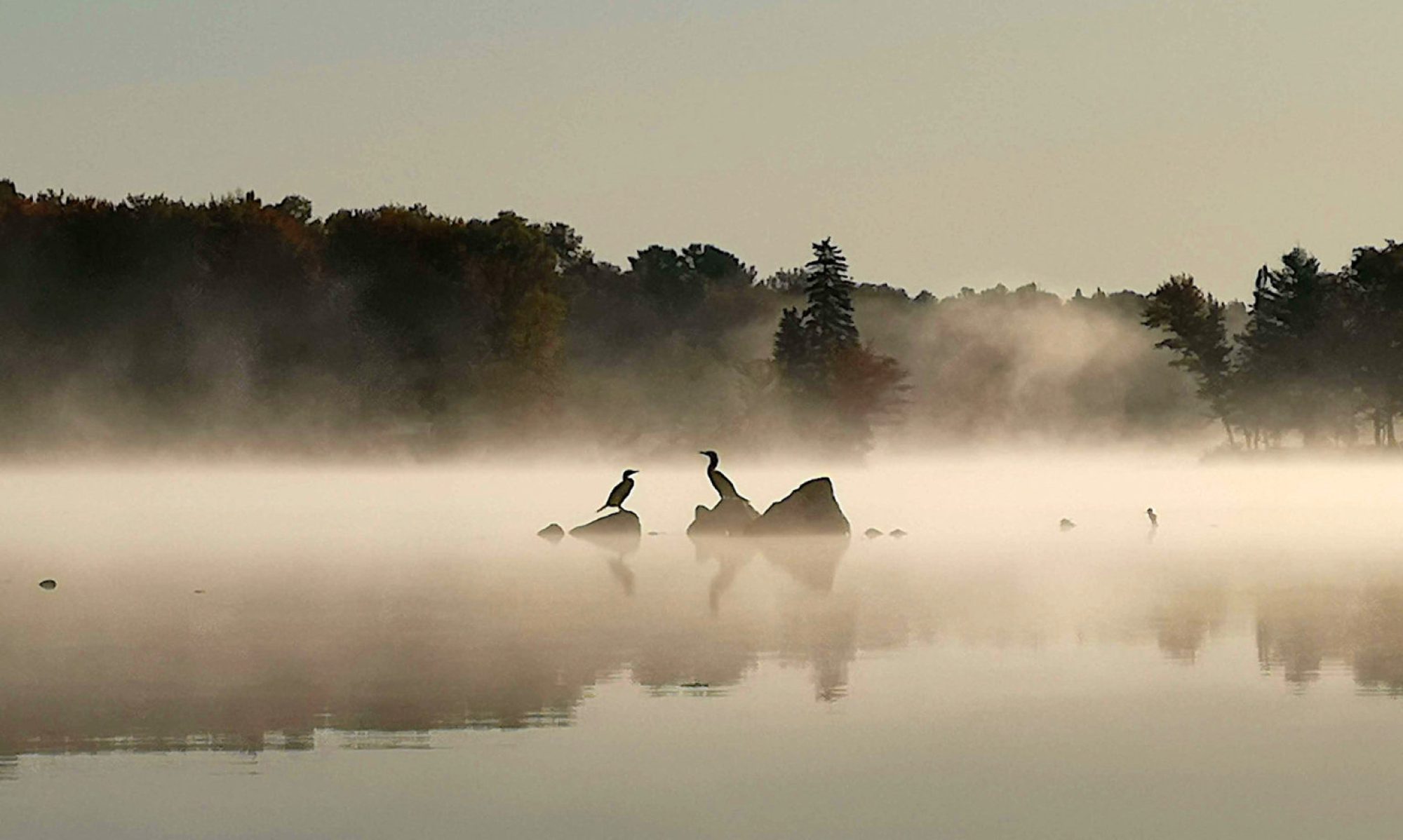

We went camping recently with some friends and family at a place called McRae Point, on the northern end of Lake Simcoe, and since it looked like it was going to be a great weekend — sunny and about 32 Celsius — I decided to bring my kayak just in case it was a good paddling day. And it was! I pushed off in the mid-afternoon and as I rounded the point heading south, I saw a small island ahead of me that didn’t look inhabited, and it was about a mile and a half away, so I thought I would paddle over to it and take a look around. When I took a break from paddling, I looked it up on Google Maps and saw it was called Strawberry Island (previous names: Anatari, Lundy’s Island and Gwillam’s Island).

The websites I found when I searched the name said that it was originally owned by a Great Lakes steamship captain in the 1800s named Charles McInnes, and that he had built a small summer resort on the island, and then paid someone to build a small steamship that could hold about 220 people, so he could ferry guests over to the island from the mainland. A local historian writes that “Captain McInnes’ intention was to build Strawberry Island into a first-class resort and to use The Orillia to ferry hotel guests from the Orillia town dock out to his new wharf at the resort. The resort was built up over a few years to include a large hotel, a dance hall, walking trails, six cottages, bathing houses, picnic lawns, a waterworks system powered by windmill, boats and fishing tackle and an athletic field.”
For several years the resort played host to some major events, and as the article notes “Another major drawing card for the resort was that it was ‘wet.’ Orillia and many surrounding towns did not allow liquor sales at the time but Strawberry Island was part of Ramara Township where the sale of alcohol was permitted.” Apparently this worked for a short time, but it never became a very good business and Captain McInnes tried several different methods to keep it going but eventually he died and his son Jack and family used it as a personal summer getaway for a few years and ran some summer events using the steamship.

Then the island was sold to the Basilian Fathers, a Catholic religious organization, in about 1922 and they built a chapel using the lumber from the six guesthouses and a bunkhouse residence, and used it for religious retreats for decades. There were tennis courts and an athletic field and several different residences were added. Apparently Pope John Paul II stayed there in 2002 and arrived by helicopter, which landed on the athletic field. Eventually the Basilians were looking to get rid of the island and sold it to a development company that wanted to build condos or time-share cottages or something of that nature, but there was a lot of resistance from the local residents and from officials with the county.
So today the island sits empty, except for the ruins of the cabins and guesthouses and the main building that I assume was where people ate dinner, etc. I pulled my kayak up on what looked like a sandy beach, but was actually a massive pile of tiny seashells that was about four feet deep and stretched for about 30 feet. And then I tried to find a way through the underbrush that had grown up, because I could see the roof of a building about 50 feet away from me. The brambles and bushes and underbrush was over my head, but somehow I pushed my way through and saw what must have been a guest cabin for about six guests or possibly families.


I made my way up the concrete steps and avoided some holes in the floorboards and looked inside and it looked like a bomb had gone off — but I expect what had probably happened was groups of teenagers had used it for a party site and/or a place to break things and cause general mayhem. There was still a couch on the porch but it had the stuffing torn out of it and there was broken glass everywhere. There was still furniture inside the building as well, in a similar state, and debris was thick on the floor. Making my way out, I headed right and there were the ruins of a much larger building as well, which I assume was the dining hall and possibly some rooms up above. Much of the roof was missing or had slid off onto the ground, and there was a metal fire-escape type ladder leading up to the second story but it ended in mid-air. The deck was in such rough shape I was afraid to step up onto it.

I looked around a bit, and afterwards I paddled all the way around the island, but I couldn’t see any sign of a chapel or other guesthouses. They must have been lost to the jungle of trees and shrubs that had taken over. To be honest, the whole thing gave me a Blair Witch Project kind of creepy feel, even in the middle of a bright sunny day, so I made my way back through the brambles and back to my kayak and headed back to McRae Point.